0.9 C
New York
Home Blog Page 593

Van Oord held naming ceremonies for two hybrid water injection vessels

0

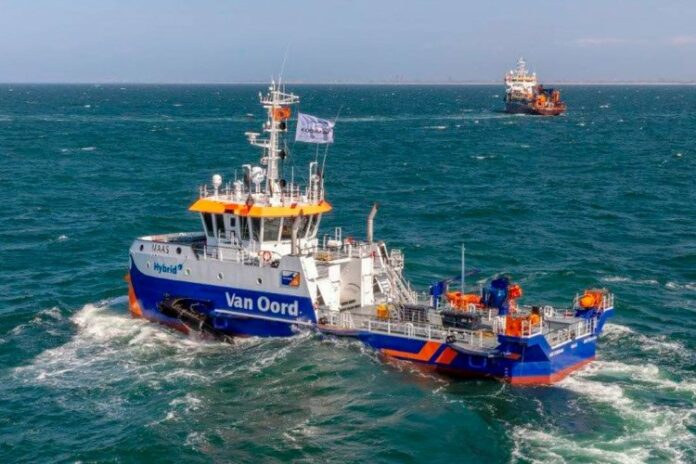
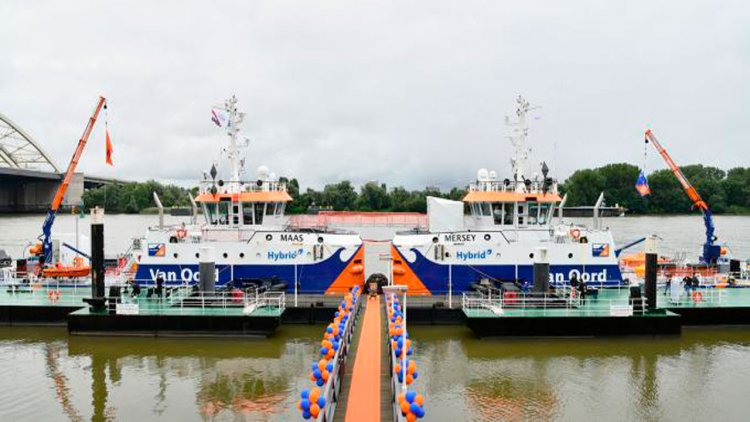
Ms Karin Schinagl, wife of Managing Director Netherlands Ronald Schinagl, named the vessel Maas. Ms Karien van Oord performed the naming ceremony for the Mersey. Until 2020, she was the chair of the Van Oord Family Council and a member of the MerweOord Board of Directors.

The Maas and Mersey represent the new generation of hybrid water injection vessels. This new vessel type is versatile and has water injection dredging, mass flowing and power jetting systems. Water injection dredging is an efficient and environmentally friendly way of maintaining the depth of navigation channels, ports, marinas and rivers. For over 30 years Van Oord has been using this technique all around the world.

The latest technological developments have been applied to both vessels, such as active heave compensation and dynamic positioning, which means that the dredging can be pre-programmed to a great extent and performed more efficiently. Thanks to the maneuverability and very limited draught, the vessels are perfectly suitable for maintenance dredging in shallow harbours  At the same time they can dredge up to 24 metres water depth and are certified as unrestricted seagoing vessels.
The energy management of both vessels was given special attention. Both vessels are equipped with a hybrid energy management system. Consequently, the vessels can store energy in batteries from residual heat that is normally lost. This energy is subsequently used for purposes including propulsion. Diesel-electric engines will reduce CO2 emissions. The new water injection vessels will comply with the new IMO TIER III legislation for reducing NOx emissions and take account of EU STAGE V legislation. The vessels were delivered by Kooiman Marine Group in Zwijndrecht, the Netherlands.

The two vessels were ordered in 2019 and are part of the Van Oord’s fleet investment programme. Maas and Mersey will replace the first generation of WIDs, which were put into service around 1990. The investments in a modern and energy-efficient fleet demonstrate Van Oord’s confidence in the future for dredging.

To become carbon neutral by 2050 – which is Van Oord’s ambition – Van Oord faces a major challenge and opportunity in terms of finding new fuel technologies for its fleet and adapting its operations accordingly. Steps have been made in its investment programme with the construction of three LNG-fuelled trailing suction hopper dredgers and the ordering of a new green cable-laying vessel with the latest sustainable technologies in order to reduce the carbon footprint.
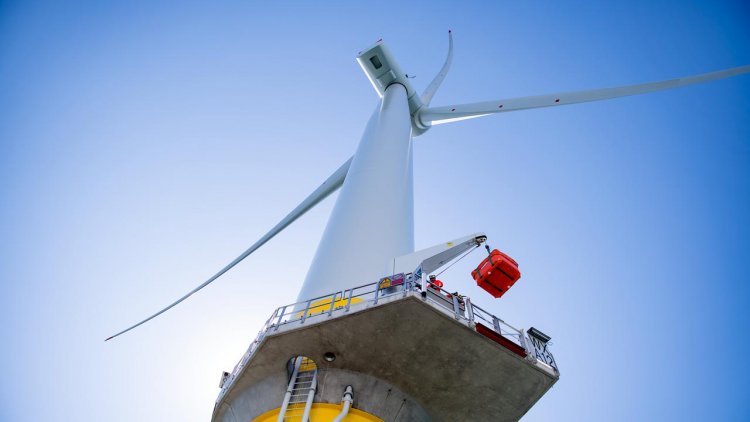
Ørsted to deliver over 2,200 MW of offshore wind to the Garden State

0

The New Jersey Board of Public Utilities (NJBPU) announced it has selected Ocean Wind 2, an offshore wind energy project proposed by Ørsted, for a 20-year Offshore Renewable Energy Credit (OREC) award at the $84.03 price from the State’s second competitive solicitation for offshore wind energy. 

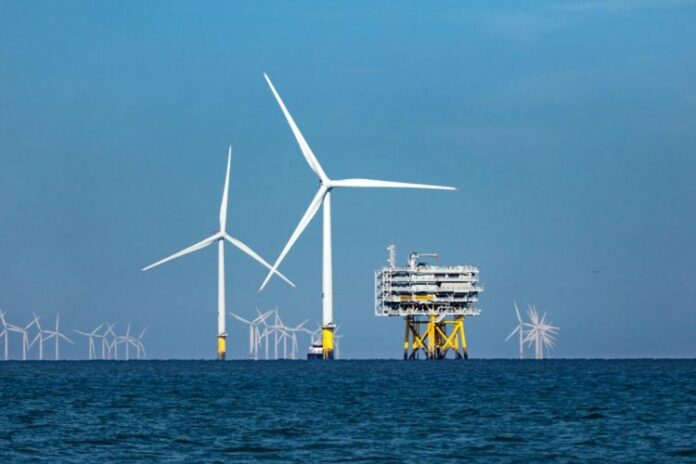
At 1,148 MW, the Ocean Wind 2 project will allow Ørsted to develop the remaining portion of its Ocean Wind federal lease area and will power more than half a million New Jersey homes. Ocean Wind 2 will be located adjacent to the company’s first offshore wind project, Ocean Wind (“Ocean Wind 1”), which was awarded by the NJBPU in 2019. Ocean Wind 1 is being developed in partnership with Public Service Enterprise Group (PSEG), which owns 25% equity in the project.

Ocean Wind 2 will play a significant role in helping the State reach Governor Murphy’s goals of installing 7,500 MW of offshore wind capacity by 2035 and 100 percent clean energy by 2050. Together, Ocean Wind 1 and Ocean Wind 2 will deliver over 2,200 MW of offshore wind to the Garden State.

David Hardy, CEO Ørsted Offshore North America, said:

“With the selection of Ocean Wind 2, New Jersey is now firmly at the heart of the American offshore wind industry. We thank the BPU and Governor Murphy for having the confidence in Ørsted to deliver over 2,000 MW of offshore wind energy, and for further strengthening the partnership between our company and the Garden State. We’re thrilled to grow this global industry alongside the State of New Jersey, as well as help all communities in the State benefit from the offshore wind industry.”

As part of Ørsted’s proposal, Ocean Wind 2 will contribute to an expansion of the EEW Paulsboro monopile facility. The facility will be home to 500 full-time jobs and represents an investment of $250 million into southern New Jersey. Additionally, Ocean Wind 2 will generate over $4.8 billion in net economic benefits for the State of New Jersey, helping to further develop a strong domestic supply chain.

With Ocean Wind 2, Ørsted is also bringing a commitment from leading industry partner, GE Renewables, to locate, what will be one of the country’s first offshore wind nacelle assembly facilities, in New Jersey. This facility will assemble the nacelles for Ocean Wind 2 and other offshore wind projects in the United States. Anticipated to be located at the New Jersey Wind Port, the GE nacelle assembly facility will attract sub-suppliers to the State and consequently more manufacturing jobs. Nacelles are one of the most complex parts of a wind turbine, including generator, drive train and brake assembly, controllers, transformer and switch gear.

In addition to a robust economic development package, Ocean Wind 2 offers significant investments for New Jersey’s environmental justice communities. Ørsted has partnered with Zeem Solutions to rollout 50 electric drayage trucks, associated vehicle infrastructure and mobility training programs for area residents at the Port of Newark.

Ocean Wind 2 will also establish a new 10-year $1.5 million scholarship and career development program with the New Jersey Institute of Technology (NJIT). This scholarship and career development program will create new opportunities for NJIT’s engineering and computer science undergraduate students. The agreement also addresses STEM education gaps for underrepresented students in Newark by aiming to expand a range of STEM outreach events, initiatives, and college-prep programming for local elementary, middle school and high school students at NJIT. Additionally, the scholarship program potentially creates new co-op, internship, and job opportunities for NJIT students at Ørsted’s recently announced North American Digital Operation Headquarters in Newark.

While Ocean Wind 1 has already laid the foundation for small, women-owned and minority owned businesses to enter in the developing offshore wind industry with its $15 million Pro-NJ Grantor Trust, Ocean Wind 2 expands upon the commitment to ensure a strong and inclusive industry. Through a second Pro-NJ Grantor Trust, Ocean Wind 2 will allocate an additional $8 million for businesses, including veteran-owned businesses, who wish to enter the offshore wind industry.

Ørsted’s many commitments to New Jersey in its Ocean Wind 2 bid will help create jobs and new opportunities for small businesses, while further cementing the Garden State’s leading position in the American offshore wind industry.

CADMATIC and NAPA announce new intelligent ship design software solution

0

CADMATIC and NAPA, have announced a new integrated, intelligent ship design software solution to enhance the design process for shipyards and ship design companies. 

The solution combines proven, world-class design tools to fulfill users’ requirements for comprehensive software covering the entire ship lifecycle from newbuilding projects to retrofits and conversions. The integrated solution offers a leading solution for naval architecture, basic and detail design, through to ship production and delivery. The integrated offering combines the most effective solutions for each discipline within the design process.

The joint offering optimizes ship design, engineering and production processes and leverages the power of digital transformation to streamline the design process; effectively consolidating data and creating a greater platform for collaboration and enabling the use of digital twins from the beginning of a project.

The Intelligent Ship Design solution enables successful execution of complex design challenges, like 3D model-based class approval, and collaboration across large multi-site projects while saving time and costs by avoiding the duplication of information across different systems. The solution will subsequently enable customers to win more contracts and fully realize the commercial success of these projects.

CADMATIC and NAPA have worked in partnership for many years and have a long history of delivering high-level integration within their software products and cooperation in selected commercial ventures. The solutions provided by CADMATIC and NAPA are trusted by the leading shipyards and design companies around the world and provide proven value to the global shipbuilding industry.

Jukka Rantala, CEO at CADMATIC, said:

“Together with NAPA, we have the most extensive experience within the market to improve the efficiency and profitability of the shipbuilding industry. We have a long history in shipbuilding and most shipyards and ship design companies in the world trust our advanced solutions and deep knowhow. I’m very excited about this opportunity to combine the forces of the two most advanced software solutions for the benefit of our existing and new clients.” 

Mikko Kuosa, CEO at NAPA, added:

”We strongly believe that by combining the best elements of both NAPA and CADMATIC, we are creating a superior solution that encompasses all the key aspects of ship design and delivers the benefits of a fully 3D based design approach from the early stages all the way to production.”

Vestas and Iberdrola finalise contract on Baltic Eagle offshore project in Germany

0

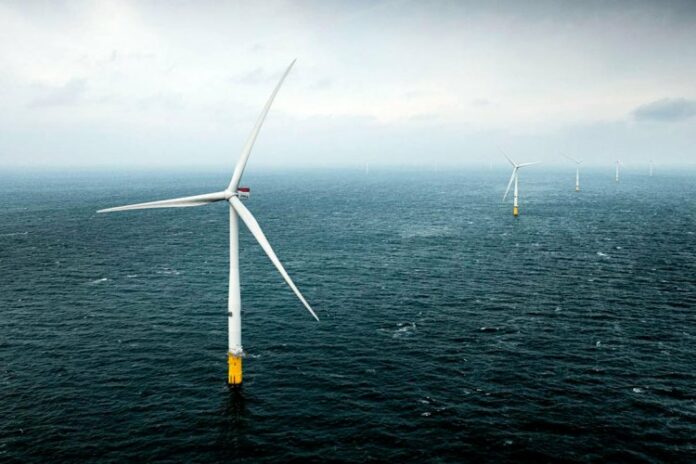
Vestas will deliver V174-9.5 MW turbines to the 476 MW Baltic Eagle project, which will span a 40 km2 area in the Baltic Sea and is located 75 km off the German coast.

Baltic Eagle is Vestas’ fourth offshore project in Germany, adding to the Borkum Riffgrund 2 and Deutsche Bucht projects which were delivered by the joint venture MHI Vestas Offshore Wind.

In delivering this project in collaboration with Iberdrola, Vestas will supply and install the V174-9.5 MW turbines, as well as service the turbines over a period of up to 10 years.

Nils de Baar, President of Vestas Northern & Central Europe, said:

“We are delighted to be establishing our partnership with Iberdrola at the Baltic Eagle project in Germany, delivering our proven V174 platform. We are pleased to be advancing Germany’s clean energy and offshore wind ambitions at Baltic Eagle”.

Iris Stempfle, Iberdrola’s country manager in Germany, said:

“Baltic Eagle continues to progress on track, and we look forward to delivering another major project in the Baltic Sea. Adding to the existing Wikinger project it will enable us to benefit from efficiencies going forward, through technical advancements across the entire value chain and the use of the excellent infrastructure in Sassnitz. We are looking forward to the cooperation with Vestas and their reliable turbine. It is expected to contribute to the considerable performance output in our project and will help us trimming down the cost of offshore wind power in Germany”. 

The project is expected to be completed in 2024.

Wärtsilä signs second renewal of Maintenance Agreement with Rederi Ab Eckerö

0

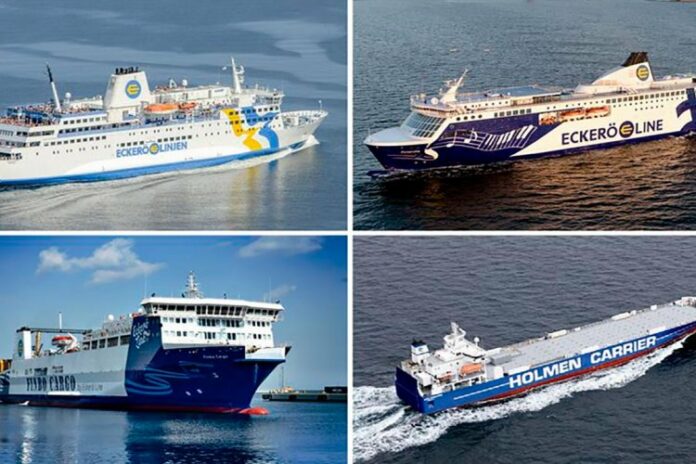
The technology group Wärtsilä has renewed for the second time its Optimised Maintenance agreement with the Åland Islands based shipping group Rederi Ab Eckerö.

Under the terms of this latest 5-year agreement, Wärtsilä will be responsible for maintenance of the main and auxiliary engines in six vessels within the customer’s fleet. Annual performance audits aimed at ensuring optimal operating efficiency will also be carried out. The agreement was signed in May 2021.

Daniel Olsén Technical Manager, Rederi Ab Eckerö, says:

“Our policy is to make every effort to maximise the operating efficiency and minimise the environmental impact of our ships. By working closely with Wärtsilä, who as the manufacturer of the engines is best qualified to maintain them, we are supporting and strengthening this policy.”

Markus Nyström, Senior Account Manager, Wärtsilä Marine Power, says:

“Renewing our agreement for the second time gives a clear indication that the customer is satisfied with the tailor-made services & solutions we deliver. Optimised Maintenance agreement are an important element of Wärtsilä’s Lifecycle Solutions approach to supporting and enhancing our customers’ business performance.”

The agreement is designed to ensure that the contracted vessels’ engines operate safely and with optimal fuel efficiency, and that downtime and unplanned maintenance are minimised. The agreement also provides full cost predictability with fixed fees for the ships’ maintenance activities over a five-year period. The vessels covered include both ferries and cargo ships.

Saga Pure secures stake in Hyon to expand maritime hydrogen solutions

0

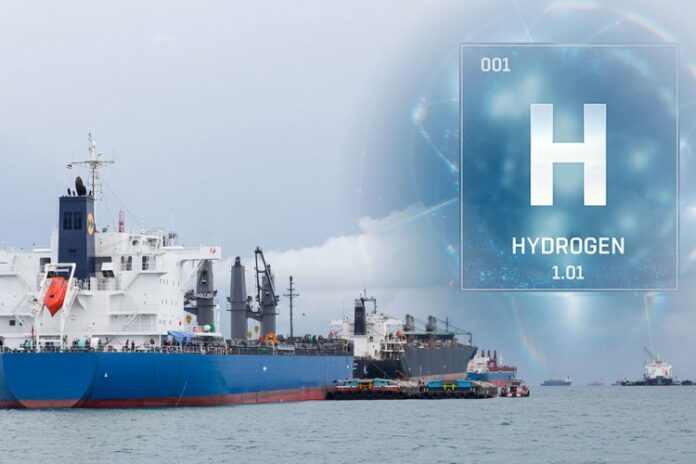
Saga Pure ASA has announced the acquisition of Hyon AS (Hyon), and following a subsequent transaction, Saga Pure, Nel ASA and Norwegian Hydrogen AS will have equal shareholdings in the company. Hyon has a strong position within maritime hydrogen solutions and will mainly focus on developing hydrogen and bunkering solutions for harbors going forward.

Bjørn Simonsen, CEO of Saga Pure, says:

“Sustainability is at the top of the agenda within the maritime sector, and hydrogen will play an important role in the future, maritime fuel mix. An entirely new value chain needs to be developed, and a key part of that is transferring hydrogen from the harbors to the vessels. Hyon is currently developing solutions for production and fueling of hydrogen ships and we look forward to be an active part of the further development of these solutions.”

Jens Berge, CEO of Norwegian Hydrogen AS, says:

“There is a strong demand for green hydrogen in the near future, and we are developing a robust infrastructure for both heavy road transport and maritime sector. Joining a group of strong partners in bringing Hyon forward as a key solution- and technology provider makes a lot of sense to us.”

Saga, Nel and Norwegian Hydrogen will each have an ownership of 29% of Hyon, and key employees will hold the remaining shares. The key employees are Jørn Kristian Lindtvedt, appointed as CEO of the company, and Harald Hansen as Director of Project Development & Commercial. Lindtvedt and Hansen have previously held key positions in relation to the TechnipFMC led “Deep Purple” project, which focuses on solutions for offshore production of hydrogen and intermittency management of wind farms by storing the hydrogen subsea.

The company has built a strong position within hydrogen energy solutions for the maritime sector since 2017, and the main priority for Hyon going forward will be the further development and commercialization of the hydrogen and bunkering solution for harbors. The parties have decided not to disclose the value of the transaction.

Cadeler signs contract with COSCO SHIPPING Heavy Industry

0

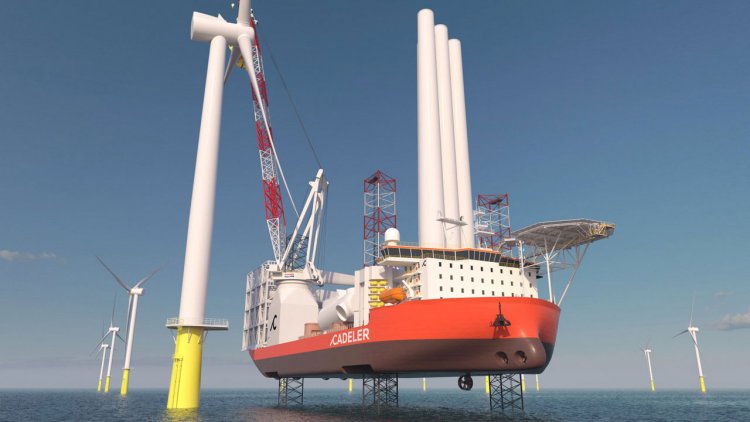
The total order amounts to USD 651 million. The new vessels will, upon completion, be the largest in the industry. The first X-class vessel will be ready by Q3/2024 and has already been commissioned for its first project by Siemens Gamesa

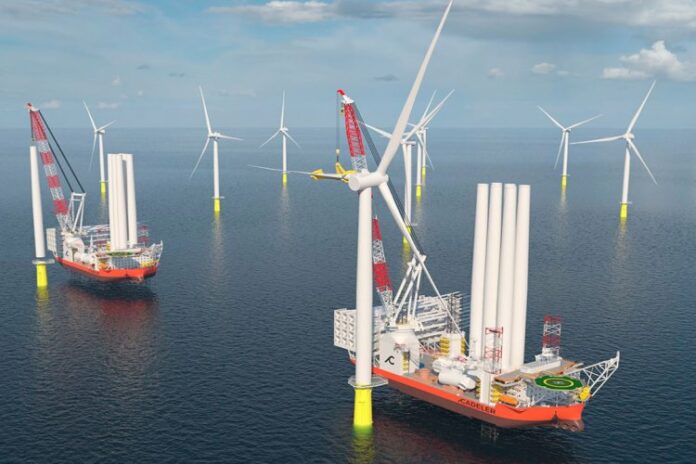
Cadeler is delighted to announce that negotiations with COSCO SHIPPING Heavy Industry Co. Ltd. have been finalized and a contract for construction of two new state-of-the-art wind turbine installation vessels has been signed after a thorough tender process. The two X-class vessels are set to be delivered by Q3/2024 and Q1/2025 respectively. The contract amounts to USD 325.5 million per vessel. The addition of two new vessels will double the size of the current Cadeler fleet.

Mikkel Gleerup, CEO of Cadeler A/S says:

“Expansion of our fleet is an important strategic priority to ensure that we can meet the demand we are seeing from clients for greater installation capacity. By providing energy efficient vessels with very advanced technical specifications and climate-friendly features, we are proud to be taking this step to meet the current and future demand of the industry. Offshore wind plays an increasingly important role in the green energy transition, and the installed offshore wind capacity is expected to grow substantially the coming years across several regions.” 

The new X-class vessels are designed to operate at some of the most difficult sites around the globe and with the most advanced equipment in the industry. Upon completion of the two new builds, Cadeler will have the largest fleet in the industry in terms of loading capacity and ability to transport, service and install the next generation offshore wind turbines.

Mikkel Gleerup adds:

“We are pleased to have finalized our negotiations with COSCO and to deliver on this important milestone for Cadeler within Q2/2021 as planned. Both vessels represent the future of our business and will be state-of-the-art in all aspects, definitely setting new industry standards”.

Liang Yanfeng, Chairman of COSCO SHIPPING Heavy Industry says:

“Building the two new wind turbine installation vessels for Cadeler is a commitment that we take on us with great pride. Throughout the process we are committed to delivering vessels that will meet the high standards set by Cadeler’s clients and the Cadeler organization”.

The construction of both X-class vessels will start immediately at COSCO’s shipyard in Qidong. The construction process will take three years, but even before the keel has been laid, the first X-class vessel has already been contracted for one of the largest offshore windfarms in the world – the 1.4 GW “Sofia” offshore wind power park in the North Sea, owned by RWE. For this project Cadeler will assist Siemens Gamesa with the transport and installation of one hundred 14 MW wind turbines. The project will be located on Dogger Bank 195 km from the nearest point on the UK’s North East coast. The 14 MW turbines are expected be the largest wind turbines in the world at the time of installation. The wind turbines will be 252 meters tall, measured from sea level to the tip of rotor blade, and will have a rotor diameter of 222 meters. 

Marc Becker, CEO of the Siemens Gamesa Offshore Business Unit says:

“For the first commercial installation of what will be the largest offshore wind turbines in production, it is essential that the vessels be as cutting-edge as the machines themselves. We are confident that the X-class vessels from Cadeler will provide the outstanding load capacity, technological achievements, and overall energy efficiency gains we are counting on. They will, in turn, enable us to unlock even more of the potential of wind to power the green energy revolution”. 

The design of the two new X-class vessels incorporates Cadeler’s decade of experience as well as detailed client feedback.

Mikkel Gleerup says:

“Compared to the original specifications of the X-class vessels, our final design includes an upgraded jacking system and main crane. This is to better cater for the wind turbines of tomorrow taking into account the latest input provided from clients and partners”.

With a deck space of 5,600m2, a payload of over 17,600 tons and main crane capacity of above 2,000 tons at 53 meters, the two new hybrid, cyber-secure vessels are very attractive to the industry. The vessels will be able to transport and install seven complete 15MW turbine sets per load or five sets of 20+ MW turbines, cutting down the number of trips needed for each project, thus accelerating installation speed and minimizing the carbon footprint.

Wallenius and Alfa Laval will join forces to make Oceanbird a reality

0

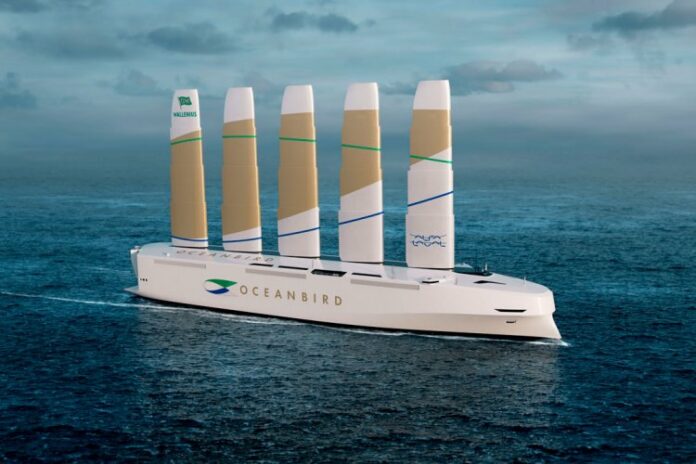
Alfa Laval and Wallenius will form a 50/50 joint venture – AlfaWall Oceanbird – that will supply innovative wind propulsion solutions for cargo vessels and other ship types. The agreement was signed on June 28, 2021. The plan is to have the first Oceanbird system onboard a vessel within five years.

Shipping is responsible for 2-3 percent of global greenhouse gas emissions. The International Maritime Organization (IMO) has targeted a 50 percent reduction of vessel-related greenhouse gas emissions by 2050. Many countries and companies have already set decarbonization targets beyond the ones from the IMO – and the industry is in period of rapid change. To support the transformation towards more sustainable shipping, Alfa Laval continues to develop its toolbox of products and solutions for the industry. As part of this commitment, Alfa Laval is now joining forces with the Wallenius Group in the joint venture: AlfaWall Oceanbird.  The joint venture is subject to customary merger clearance from relevant regulatory authorities.

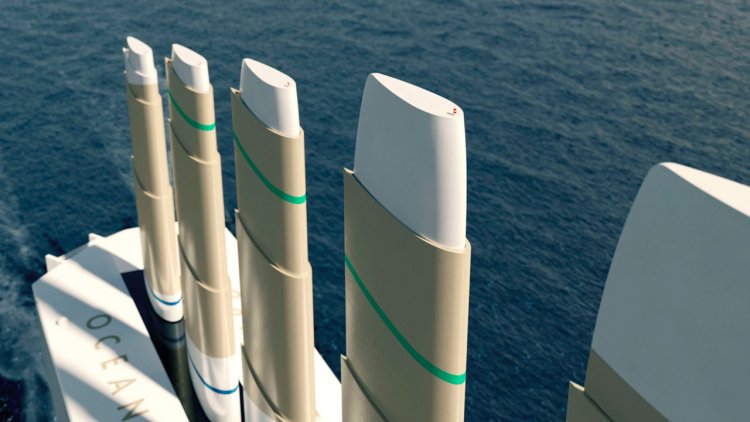
AlfaWall Oceanbird, will develop wind propulsion technologies valid for any vessel type. The first installation will be implemented on a transatlantic car carrier with a capacity of 7,000 cars, and with an average speed of 10 knots it will cut emissions by up to 90 percent compared to today’s most energy-efficient vessels, thereby supporting the maritime industry’s shift towards zero-emission shipping. While the technology is initially developed for cargo vessels, the ambition is to expand it to cruise liners and other vessels based on market demand.

Tom Erixon, President and CEO of Alfa Laval, says:

“Meeting the shipping industry’s decarbonization ambition will require multiple new solutions. In this new joint venture, we will combine the expertise of Alfa Laval and Wallenius, enabling us to develop a completely new and innovative vessel type that can contribute to the decarbonization targets.”

Jonas Kleberg, Chairman and CEO of Wallenius, says:

“At Wallenius we are always striving to move the agenda for truly sustainable shipping. Just as we did with PureBallast, we will now bring Oceanbird into this partnership with Alfa Laval. Together we will provide a powerful solution for sustainable shipping.”

Houlder provides research and compliance vessel concept designs for Marine Scotland

0

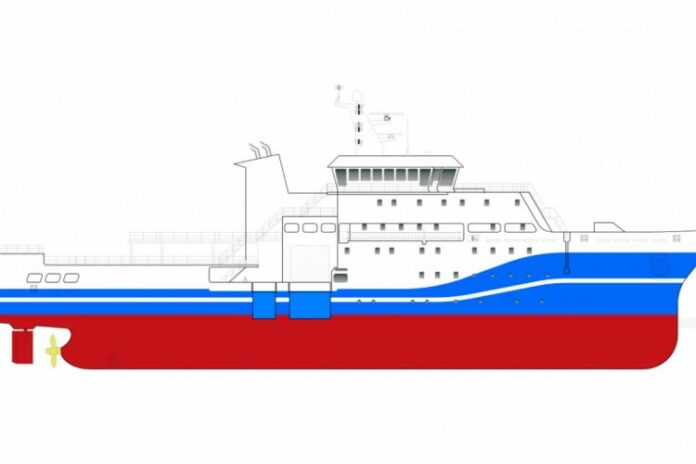
Houlder has been awarded two new contracts by Marine Scotland, the Scottish Government Directorate responsible for the integrated management of Scotland’s seas. The two vessel design contracts ensure support for the design and build of two new vessels which will have enhanced vessel capabilities and be designed to operate in the harsh conditions of the North Atlantic and the North Sea.

Following a fleet evaluation in 2019, Marine Scotland developed a future fleet plan to meet the future needs of marine protection and research in Scotland. In preparation, Marine Scotland has signed two technical service contracts with Houlder to ensure a qualified concept design for two new, state-of-the-art vessel types: a scientific research vessel, and a compliance vessel.

Houlder’s expertise in research vessels and hybrid designs will enable in-depth evaluation of the requirements and design documentation for both vessels, ensuring the vessels are fully fit for purpose. Houlder will provide tender support and shipyard evaluation throughout this process. To ensure a smooth route from concept to delivery, Houlder will use its experience of regulation, hybrid vessel design, and operational and technical expertise, particularly for research vessels.

The new compliance vessel type will be designed for use in the Scottish Zone (200nm EEZ), including the challenging conditions of the North Atlantic and North Sea, and meet the requirements of the Emission Control Area (ECA).

In addition, the new research vessel type will provide enhanced vessel capabilities including increased capacity for more scientists and integration of scientific equipment, facilitating a wider variety of research projects.

Rupert Hare, CEO at Houlder said:

“Solving complex design challenges and meeting ambitious targets, whether technical, operational or environmental, is where we do our best work. Marine Scotland is looking for two high quality vessel types with exceptional capabilities and efficiency and our team is excited to, once again, find the optimum solution.”

Fugro’s Geo-data platform to accelerate delivery of Atlantic Shores Offshore Wind project

0

Fugro has completed the first phase of a 2-year contract with Atlantic Shores Offshore Wind (Atlantic Shores) to build and manage a centralised, cloud hosted Geo-data repository for the company’s lease development off the coast of New Jersey in the US.

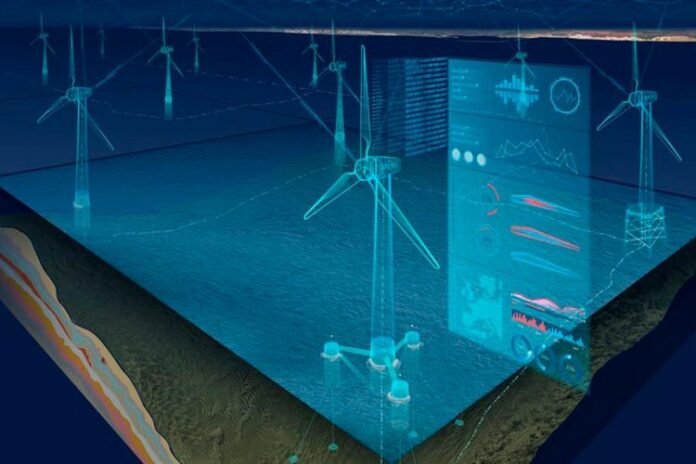
The web-based engagement platform was recently delivered and utilises Fugro’s Gaia technology to provide Atlantic Shores and their stakeholders with a single source of updated Geo-data and documentation. Fugro will maintain the Gaia solution until 2022 to help Atlantic Shores achieve streamlined decision‑making and an accelerated project schedule.

To develop the Geo-data repository, Fugro is integrating public datasets and historical project data with real‑time field data, including information from Fugro’s ongoing metocean, geophysical, geotechnical and environmental programmes. The approach is facilitating real‑time tracking of the site characterisation effort, along with an updated ‘digital twin’ ground model of the lease area. This information is accessible to project stakeholders 24/7 without the need for specialised software or GIS experience; it also includes a data deliverable portal for downloading post-processed datasets.

Deanne Hargrave, Geoscience Manager for Atlantic Shores, said:

“Atlantic Shores is thrilled to leverage Fugro’s Gaia solution for visualising and sharing our wealth of geophysical, geotechnical and environmental data internally with our project team and externally with our stakeholders. Engineering decisions are facilitated, enhanced and expedited from the instant information access that Gaia provides to our team. This comprehensive data solution is advancing the way we work collaboratively and encouraging complete utilisation of the valuable datasets.”

Edward Saade, President of Fugro in the US, said:

“We are pleased to expand our work with Atlantic Shores through this contract and look forward to demonstrating the value of truly integrated Geo-data products and services using Fugro’s Gaia technology for the offshore wind market. As a US industry leader, Atlantic Shores has the potential to make a significant impact to our country’s energy transition, work that aligns perfectly with our own purpose to help build a safe and liveable world.”