0.9 C
New York
Home Blog Page 592

ABB gets verified to meet DNV class notation ‘Cyber Secure SP0’

0

ABB’s automation, propulsion and switchboard systems for vessels have successfully been verified to meet DNV’s class notation ‘Cyber secure SP0’, based on the International Maritime Organization’s (IMO) guidelines for cyber risk management.

Jarle Blomhoff, Group Leader Cyber Safety and Security, DNV, said:

“Risk managers are now putting cyber security to the top of their list, in terms of shipping risks. The DNV Cyber secure class notation is in line with IMO regulations, and provides shipowners, shipyards and maritime insurers a class based formal structure for their cyber security initiatives. We are very pleased to be working with ABB on this type approval, as it demonstrates their intention to show they can deliver systems with a strategic and independently verified approach to cyber risk reduction.”

With this verification, ABB’s systems meet DNV’s ‘Cyber Secure SP0’, in line with IMO Resolution MSC.428(98), which requires the safety management system to take into account cyber risk management in accordance with the International Safety Management (ISM) Code.

Alignment with IMO guidelines for cyber risk management validates the cyber security performance not only of ABB’s physical setup but also for the integrated products and system architecture. Additionally, it will simplify and speed up installation, commissioning and testing on board, reducing costs for the customer and supporting a vessel owner’s management of cyber risks in the operation of their vessel.

Ahmed Hassan, Head of Cyber Security, ABB Marine & Ports, said:

“Strong cyber security is fundamental to safe shipping. At ABB, we have continuously demonstrated our commitment to maritime cyber security through research at our state-of-the-art laboratory and by collaborating with classification societies, shipowners and yards. Managing cyber security is a careful balance between risk, functionality and cost, and completing this key stage in the type approval demonstrates the advancements we have made in this area for our customers.”

Recently, ABB opened a dedicated laboratory to model cyber security risks and help owners and operators to better manage their cyber risk exposure. Further, in 2020, a cruise ship featuring ABB solutions became the first vessel to achieve system compliance under DNV’s framework for integrated cyber security.

Released in 2018, DNV’s Cyber Secure class notation aims to “address the cyber security of a vessel’s main functions and the owner’s operational needs”. It encompasses 10 essential functions such as power generation, propulsion, steering and navigation.
Martin Linge comes on stream in the North Sea

0

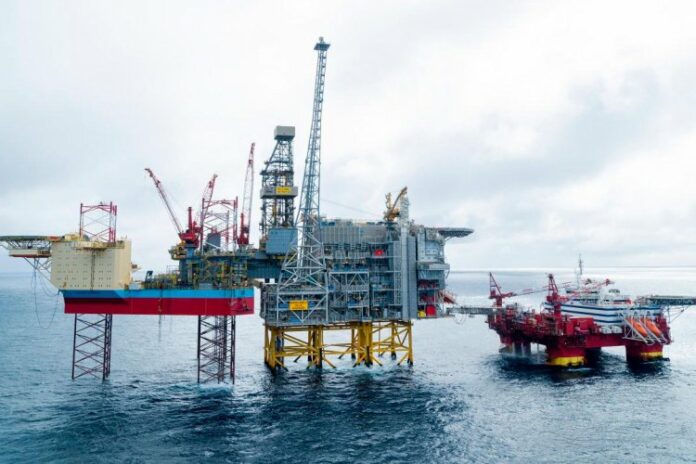
On 30 June at 21.56 CEST, the Martin Linge oil and gas field in the North Sea came on stream. 

Arne Sigve Nylund, Equinor’s executive vice president for Projects, Drilling & Procurements, says:

“This is a big day for everyone working on the Martin Linge project, for Equinor and for our partner Petoro. I would like to thank everyone who has worked hard to deliver this project.”

Expected recoverable resources are approximately 260 million barrels of oil equivalent (boe). At plateau the field will produce around 115 000 boe per day.

Rune Nedregaard, senior vice president for operations south of Exploration & Production Norway, says:

“Martin Linge is an important contribution to Norwegian oil and gas production. Thanks to new infrastructure in this area it will be possible to realise new discoveries in the future. Equinor has formed a cross-disciplinary team who is looking into the opportunities of a wider area surrounding Martin Linge.”

The Martin Linge platform receives power via the world’s longest alternating-current sea cable measuring 163 kilometres from the onshore substation at Kollsnes in Western Norway.

The platform was connected to shore power in December 2018 and was soon followed by the storage vessel on the Martin Linge field. This is the world’s first storage vessel receiving power from shore.

Martin Linge is also the first platform on the Norwegian continental shelf to be put on stream from shore. The production wells and processing plant are operated from the control room in Stavanger, and the offshore operators use tablets in the field to interact with their colleagues in the onshore control room and operations centre. Onshore control room will reduce costs in the operating phase.

The Martin Linge project has faced many challenges. Production was originally scheduled to start in 2016. The costs of the Martin Linge field development have risen to BNOK 63 (2021 NOK), compared to the original 31,5 in the 2012 plan for development and operation (PDO).

Equinor acquired Total’s interests in the field in March 2018. At the same time, it took over the operatorship and responsibility for completing the field development project.

Approximately 2500 people offshore and onshore have worked on preparing the platform for production. In general, offshore completion is challenging for a project extending over several winter seasons. The corona pandemic, with restrictions on personnel and other infection control measures, have also led to further delays.

Nylund says:

“It has been a very demanding job, and more challenging than expected, but we have reached the finish line together with our suppliers and our partner Petoro. Martin Linge will now produce and create jobs and value for society for many years ahead.”

ASIS Boats completes production of two 8m Patrol Boats

0

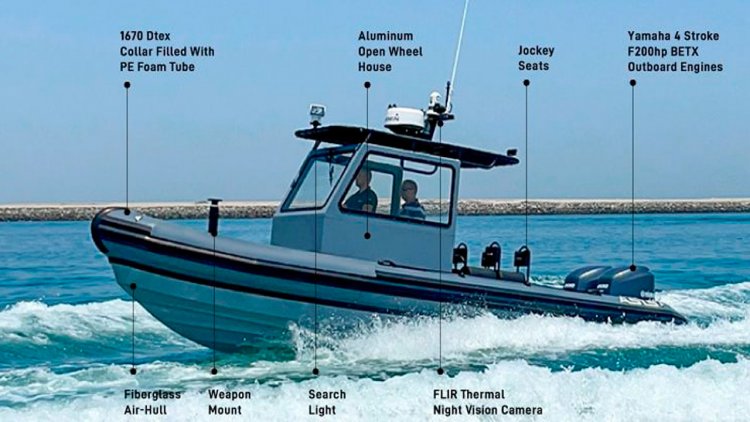
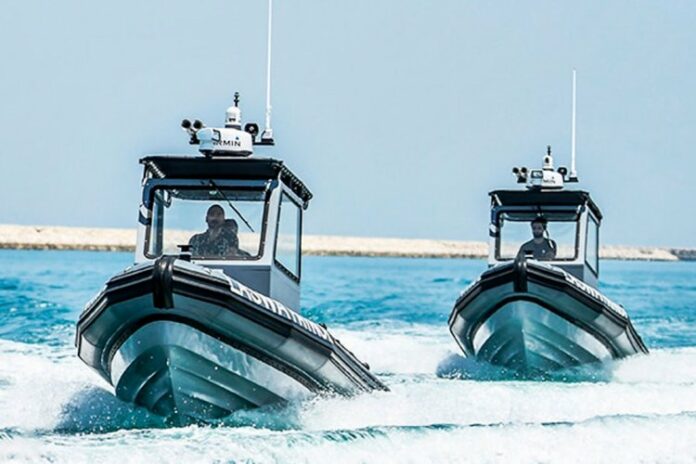
ASIS Boats has just completed the production of two 8m Patrol Boats for a private company that provides construction and vital services in the Oil and Gas sector in West Africa.

Each RHIB is featuring our patented fiberglass air-hull, an aluminum open wheel house, a military grey Neoprene hypalon 1670 Dtex collar filled with PE Foam, double jockey seats for 6 passengers, and two aluminum fuel tanks of a combined total capacity of 600L, allowing the boat to cruise continuously for over a full work day.

The wheelhouse has specially been designed to be easily removable for the purpose of shipping. Knowing that the boat is fitted with our exclusive Hyb Foam® non-deflatable foam tube; a custom design wheelhouse was necessary in order to fit the boat in a 40 foot container and save on the shipping cost.

A weapon mount and FLIR thermal night vision camera have been installed in addition to the Garmin GPS MAP, vision SD Card, and a hull mounted transducer which are all standard on these Patrol Boats. Each Patrol Boat has the capacity to carry up to six seated passengers, while it is certified to carry 15 pax offshore.

The boat is capable of reaching higher cruising speeds of 20 knots and traveling longer distances in safety and comfort, thanks to the twin Yamaha 4 stroke F200hp BETX outboard engines with hydraulic steering.

NKT confirms high-voltage order for the Dogger Bank C offshore wind farm

0

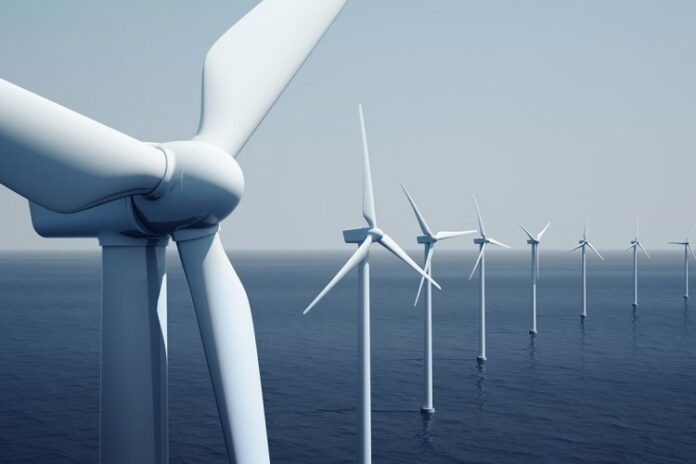
As informed in Company Announcement no. 26 of 23 November 2020, NKT had entered into a Preferred Supplier Agreement (PSA) as main contractor for delivery and installation of high-voltage DC on- and offshore export cable systems to the third phase of the world’s largest offshore wind farm, Dogger Bank C.

Now, NKT has secured the contract award with the project owners Equinor (50%) and SSE Renewables (50%).

The contract award is subject to Dogger Bank C reaching financial close in late 2021. NKT has added the project to its high-voltage order backlog with a contract value of approx. EUR 280m (approx. DKK 2,085m) in market prices, equivalent to approx. EUR 230m (approx. DKK 1,715m) in standard metal prices.

NKT President and CEO Alexander Kara says:

“The order for  Dogger Bank C completes our involvement in the overall Dogger Bank wind farm project, as we were also awarded the export power cable systems for the Dogger Bank A and B phases in 2019. This underlines our ability and knowhow to handle very large turnkey projects. When fully commissioned the Dogger Bank offshore wind farm will be the world’s largest and the first high-voltage DC connected wind farm in the UK.”

The order for NKT comprises the manufacture and delivery of more than 2×250 km total system length of 320 kV DC offshore export power cables, accessories as well as installation by the cable-laying vessel NKT Victoria. Manufacturing is expected from 2022 and with planned commissioning in 2026.

The export power cable systems for the full Dogger Bank wind farm with an installed capacity of more than 3.6GW are all being manufactured at the NKT plant in Karlskrona, Sweden which operates on 100% renewable electricity.

The award of the Dogger Bank C project does not change the 2021 financial outlook for NKT.

Cobham SATCOM enhances critical radio communications

0

Cobham SATCOM has announced the launch of SAILOR 7222 VHF DSC Class A. A next generation SOLAS classified maritime CLASS A VHF radio with new performance features, SAILOR 7222 VHF DSC Class A will raise safety standards in the maritime industry by improving regular and critical communications at sea.

SAILOR 7222 VHF DSC Class A is reliable, highly resilient, and easy to operate on any vessel type in any situation, delivering clear communications that could make the difference between a non-event and a major incident on board. The radio exceeds the standards set by IMO regulations for GMDSS Class A VHF, the new Bridge Alert Management IMO resolution MSC.302(87) coming into force 29 August 2021, as well as IEC 62923-1 & IEC 62923-2. It comes with a new and innovative user-friendly 5.5” TFT touch-screen interface that further streamlines workflows, optimizing operational safety and efficiency. This new feature is critical as it ensures the display can be read day or night regardless of the light conditions on the bridge.​

A further highlight of SAILOR 7222 VHF DSC Class A is its extended replay feature, which builds on a longstanding unique selling point of the SAILOR range to offer users playbacks of up to 480 seconds. This enables simple and fast message verification at any time. The radio’s powerful VHF transceiver design ensures vessels have a powerful and reliable connection during critical situations and in all conditions at sea.

Niels Peter Agdal, Director – Radio, Safety & Tracking at Cobham SATCOM, said:

“We’re proud to bring SAILOR 7222 VHF DSC Class A to the market to support professional mariners on all vessel types, in all conditions. The new radio builds our established technology leadership in the commercial marine and fishing markets, which has already seen Cobham SATCOM successfully install thousands of VHF radios across all vessel types during the last 60 years. With IMO pushing the safety standards in the sector ever higher to offer greater protection to seafarers and ships, we believe SAILOR 7222 VHF DSC Class A will play a critical role in offering safe, reliable and timely compliance with the new regulations, including the updated BAM guidance coming into force in August 2021.”

SAILOR 7222 VHF DSC Class A is quick and easy to install as a standalone device, or as a core component of a SAILOR GMDSS console. Advanced networking functionality also significantly reduces the installation and service burden, when deployed as part of a fully compliant solution, with other compatible SAILOR products, including mini-C, MF/HF, NAVTEX, Portable VHF and AIS.

The radio is a direct successor of SAILOR 6222 VHF DSC Class A, which will not comply with the new BAM requirements. Cobham SATCOM offers software updates for all other radios affected by the BAM requirements, including SAILOR 6110 mini-C (BAM is implemented and released), SAILOR 63XX MF/HF DSC Class A – Series, SAILOR 639X Navtex​ and SAILOR 628X AIS.

Svitzer adds ports of Pecém and Suape to its Brazilian footprint and operations

0

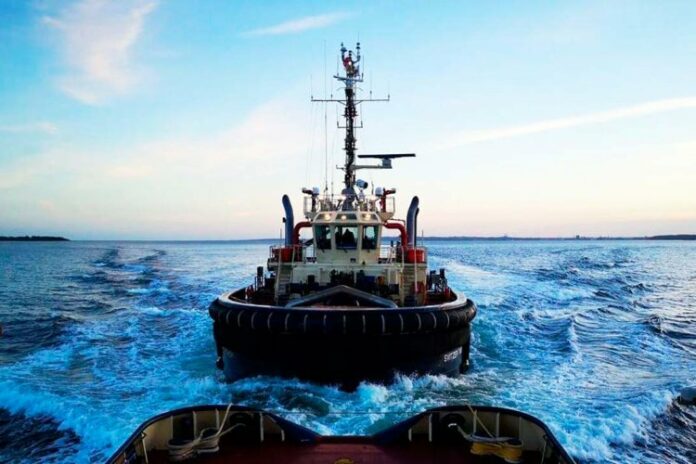
Svitzer, leading global towage provider and part of Maersk, has today announced that it has added the ports of Pecém and Suape to its Brazilian footprint and operations, thus reaching an important milestone in the growth strategy for Svitzer Brazil and Svitzer Americas.

Svitzer has been operating in Brazil since 2015 and has since solidified its presence in the south and southeast of the country, building a thriving business serving and supporting customers across five ports. Now, Svitzer Brazil takes the next important steps in its exciting growth journey by entering the ports of Suape and Pecém in the northeast of the country. To service the customers in the two ports, Svitzer is deploying two powerful ASD tugs to each port – all four built recently in Brazil and fitted with cutting edge equipment.

Commenting on starting operations in Suape and Pecém, Daniel Reedtz Cohen, Managing Director Svitzer Brazil said:

“I am very pleased that we are now able to add Suape and Pecém to our Brazilian footprint – this is a major milestone in our Brazil expansion strategy. The majority of our customers are multinational and multiport customers that appreciate towage operators that are the same and so by improving and expanding our port coverage, we can cater even better to our customers’ needs and support their growth ambitions.”

The expansion in Brazil is an essential element in realising Svitzer Americas’ growth ambitions and strategy to further strengthening its presence and position in the region. As a leading global towage provider, Svitzer brings high safety standards as well as global presence, experience and financial resilience to the table along with in-depth regional and local knowledge – all to the benefit of the customers.

Commenting on Svitzer Americas’ growth ambitions, Arjen van Dijk, Managing Director Svitzer Americas said:

“We are firmly committed to the Americas with operations in 12 countries and we see significant growth potential in the region within both harbour and terminal towage, which are our main segments. As a global and regional operator, we will pursue these opportunities to expand our footprint in selected countries and ports. Brazil remains a key market for us and we are determined to continuously turn our presence, knowledge and skills into value for our customers across the country”

Headquartered in Panama, Svitzer Americas employs 835 people and operates more than 80 vessels, delivering marine services to global and regional customers across 12 countries.

Composite technology designed for space receives ABS Design Approval for use at sea

0

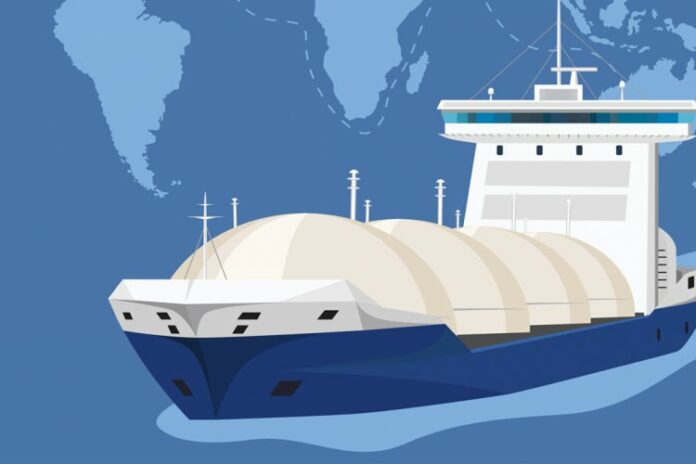
A pioneering project to adapt technology developed for use in space to maritime LNG fuel tanks has received design approval from ABS.

It’s a key milestone in the SpaceTech4Sea project, which sees ABS, OceanFinance and Cimarron Composites joining forces to adapt composite technologies developed for the space industry to shipping.

The project, which is supported by €1m funding from the European Union, explores whether composite technology, which is lighter and potentially more cost-effective, offers a competitive alternative to marine LNG fuel tanks, principally for small, short sea shipping applications where weight is an issue. ABS Design Approval means the next step is a physical vessel installation of the technology which had previously received Approval in Principle from ABS in September 2019.

Patrick Ryan, ABS Senior Vice President, Global Engineering and Technology, said:

“We have been excited about the potential of this technology to reduce barriers to the utilization of LNG as fuel for some time and now it has further underlined that potential by meeting a series of exacting standards. The next challenge is to support its safe application on a vessel.”

Tom DeLay, Cimarron’s, Owner/CEO, said:

“I see this as an exciting opportunity to apply aerospace technology to efforts to improve the environment here on earth. New technology developments often go both directions. The maturity of this technology in maritime applications may uncover developments that help with aerospace applications for high altitude drones or in-space fuel depots. Some new rocket propulsion concepts use liquid methane as a fuel. The advances in liquid methane transport can serve as a steppingstone toward liquid hydrogen transport. I am very excited about working with my partners in the innovative project.”

Ocean Finance CEO, Dr. Panayotis Zacharioudakis, said:

“LNG as marine fuel will face a rapid expansion in the very near future. In the EU particularly, the combination of development of an adequate number of refueling points and the availability of funding resources, e.g., EU Recovery Fund, are expected to attract a lot of interest for LNG-propelled projects and we are ready to offer this game-changing product.”

The team’s goal is creating ultra-lightweight LNG fuel tanks which will attract both new buildings and LNG fuel retrofits by cutting costs, reducing weight and increasing vessels’ capacity. Although the technology can have a wide range of applications, the SpaceTech4Sea project focuses initially on high-speed vessels with small LNG fuel tank capacities. It offers weight savings of up to 80 percent over existing equivalent LNG tank designs, is not affected by corrosion, and also introduces space technology safety standards to marine operations.

Joint group to create new methodology for assessing fuel performance model accuracy

0

Maritime technology company ZeroNorth has today announced the recent creation of a new multilateral working group aimed at forging a new industry-wide standard to measure the accuracy of vessel fuel consumption models.

The working group, which was formed earlier in 2021 and has already met four times, will take advantage of new digital technologies to unlock even more precise fuel consumption predictions, delivering real knowledge and insight, and further enhancing vessel optimisation. Following the most recent meeting, a draft ‘Tier 1’ benchmark is now ready to be tested in the market to gather feedback. 

Representatives from 11 organisations, including ZeroNorth, Cargill, UltraBulk, Western Bulk, Maersk Tankers, Bearing and Propulsion Dynamics met across several workshops to discuss and build the new standard.

Predicting and accurately measuring marine fuel consumption is an important task that crew, owners, operators and charterers have to complete for every vessel travelling the world’s oceans. Technology and theoretical modelling have significantly evolved to create fuel consumption models and speed curves that estimate the amount of fuel that a vessel should consume under certain conditions. This information is an important part of vessel performance optimisation.

Fuel consumption models are generated from an underlying mathematical formula that considers a huge range of parameters, such as the deadweight tonnage of a vessel, its width, engine type, draught and power.

Assessing the relative accuracy of these models is therefore vital to ensure that any optimisation decisions are based on the reality that a vessel faces at any given moment and in a range of conditions.

The working group will now release and begin to test this new standard, which will enable owners, ship managers, operators and charterers to assess the accuracy and bias of their current fuel consumption models, before incorporating feedback in future iterations.

The expectation is that the standard will drive an increase in the accuracy of fuel consumption models over time, generating greater cost and emissions savings across the industry.

Speaking on the announcement, Søren Meyer, CEO, ZeroNorth, said:

“We’re extremely proud to have convened this working group with our colleagues across the industry. Together we all share the goal of solving a key industry challenge in assessing and further evolving the accuracy of vessel fuel consumption models.

“Once finalised, this benchmark will enable our industry to standardise how it measures for vessel fuel consumption. It’s also happening at exactly the right time. Digital solutions will be vital to underpin our sector’s decarbonisation efforts, so it’s important that we understand if fuel consumption models are accurate enough for voyage optimisation.

“The potential to accelerate our collective efforts to cut costs and reduce emissions is massive, so we look forward to more fruitful collaboration with the working group.”

Ocean Yield acquires 49.9% equity interest in one dual-fuel container vessel

0

Ocean Yield ASA has agreed to acquire 49.9% equity interest in one dual-fuel newbuilding container vessel with 18-year bareboat charter to a major European container line.

The vessel, with a capacity of 15,300 TEUs is under construction at Hyundai Heavy Industries in Korea and is expected to be delivered in Q3 2022. The vessel will be fitted with a dual-fuel engine and will be able to operate on LNG. The vessel will commence its 18- year bareboat charter to a major European container line upon delivery. 

The investment will be made through Box Holdings Inc., a joint venture between Ocean Yield and Quantum Pacific Shipping formed in 2016, which already owns six mega container vessels with long-term charters. The transaction is subject to final documentation. 

Box Holdings Inc. is concurrently working on a refinancing of the bank debt relating to the six mega container vessels it currently owns, which is expected to release a significant cash amount that can be made available for new investments and or dividends to the shareholders. It is expected that this refinancing will close during Q3 2021.

Quantum Pacific Shipping is part of the global Quantum Pacific Group, whose interests span a diverse set of industries including energy, natural resources, automotive, sports, medical technologies as well as shipping. Quantum Pacific Shipping’s fleet is managed by Singapore-based Eastern Pacific Shipping. With a history spanning over 60 years, Eastern Pacific Shipping today manages over 180 vessels and 18 million deadweight-tonnes across the dry bulk, container vessel, and tanker segments.

CEO of Ocean Yield, Lars Solbakken said in a comment:

“We are pleased to expand our partnership with Quantum Pacific Shipping, a group with extensive experience in the container segment and an excellent reputation. This investment will contribute to further increase our charter backlog and future dividend capacity.”

CEO of Eastern Pacific Shipping, Cyril Ducau, stated:

“We are happy to again partner with Ocean Yield on this exciting project. Our relationship has only become stronger over time, and we look forward to continuing to grow our business together going forward.” 

First ever ore carrier air lubrication installation on Vale newbuild Sea Victoria

0

Known as air lubrication, the technology is one of the solutions being tested by the company to achieve its climate goals.

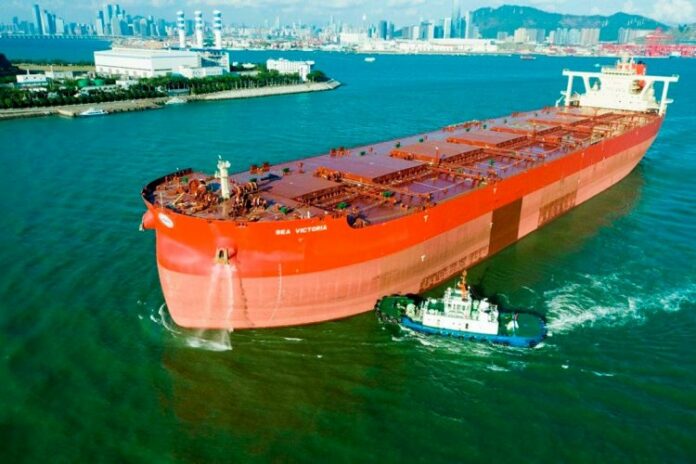
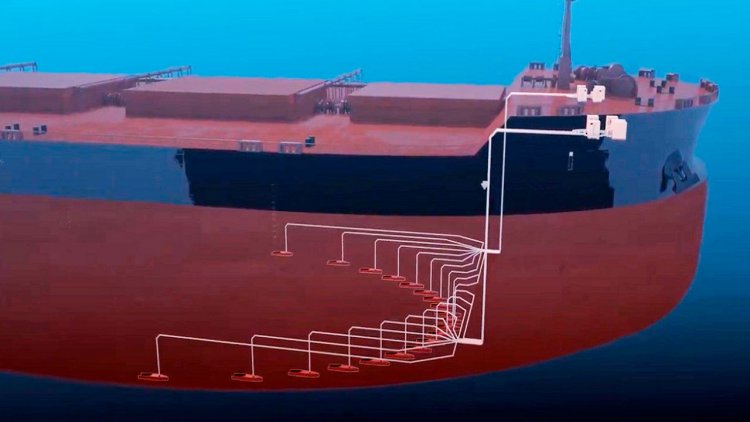
​Air bubbles, produced artificially under the ship’s hull, will help Vale further reduce its greenhouse gas (GHG) emissions from navigation. The technology, known as air lubrication, was installed in the Sea Victoria, a Guaibamax with a capacity of 325 thousand tons. Ten compressors installed on the ship’s deck send air to twenty devices positioned under the ship to produce a carpet of bubbles. These bubbles reduce the friction between the hull and the water, reducing fuel consumption and, consequently, emissions. Sea Victoria, which is already on its way to Brazil, is the first ore carrier in the world to use this technology.

Vale’s navigation team estimates that, if the test is successful, the technology could be replicated on the remainder of the contracted fleet dedicated to transporting the company’s ore. 

Rodrigo Bermelho, Technical Manager – Navigation, Vale, explains:

“Conservative estimates point to a fuel reduction of around 5 to 8%, with a potential reduction of 4.4% in annual emissions from Vale´s maritime transport of iron ore.”

The technology is supplied by the English manufacturer Silverstream. Vale developed the project in partnerships with ITV (Vale Institute of Technology) and the Korean shipowner Pan Ocean to install the technology on one of the VLOCs (Very Large Ore Carrier) dedicated to transport Vale ores. Shanghai Ship Design Research Institute (SDARI) was responsible for the ship design and its integration with the bubbles. The Chinese shipyard, New Times Shipbuilding, prepared the vessel during its construction and the shipyard, Yiu Lian Dockyards (Shekou) LTD, located in the Chinese city of Shenzhen, installed the equipment. The installation took 35 days and the ship was ready on the June 28th.

The adoption of air lubrication is part of Vale´s Ecoshipping program, a program created to meet the challenge of reducing the company’s carbon emissions, in line with what has been discussed within the scope of the International Maritime Organization (IMO). Last year, the company announced that it intends to neutralize its direct and indirect emissions (scopes 1 and 2) in 2050 and still reduce scope 3 emissions by 15% by 2035. Scope 3 emissions are emissions from the company’s value chain, which includes emissions from shipping since the company contracts the ships from third parties to transport their ore. Vale’s emission reduction goals are in line with the ambition of the Paris Agreement. 

Noah Silberschmidt, Founder & CEO, Silverstream Technologies, says:

“The Silverstream® System will drive a step change in fuel and emissions efficiency on the Sea Victoria and prove what is possible on their dry bulk vessels. For the industry at large, we are also proving that there are actions that we can take today to mitigate the environmental impact of our operations.”

Rodrigo Bermelho, Technical Manager – Navigation, Vale, says:

“Vale transports iron ore in the most efficient vessels in the world, but we believe there are still further energy efficiency gains to be captured to reduce fuel consumption and CO2 emissions. This pioneering project shows our commitment to supporting the shipping industry in fulfilling the ambitions of the International Maritime Organization (IMO).”