-4.1 C
New York
Home Blog Page 586

KOTUG and AMC sign MoU to establish a long-term strategic partnership

0

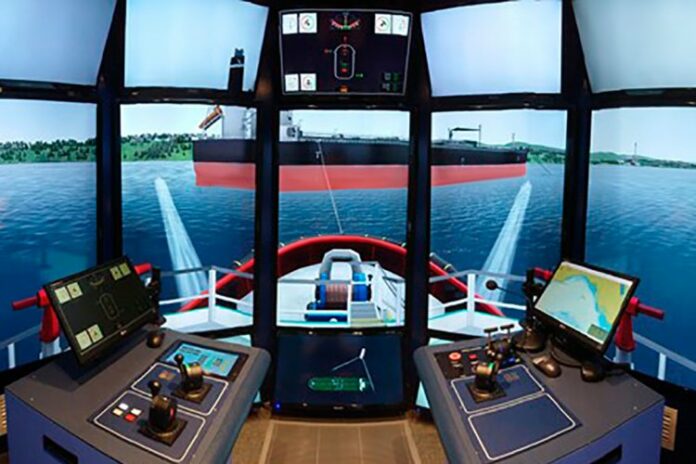
KOTUG Training & Consultancy, the training and consultancy division of KOTUG, and AMC Search, the training and consultancy division of the Australian Maritime College (AMC) signed a Memorandum of Understanding (MoU) to establish a long-term strategic partnership. The MoU encompasses exclusive training of (tug) Masters, ships’ crews and Pilots in Australia by certified KOTUG trainers at AMC’s training facilities in Tasmania.

Facing an increasing demand for qualified maritime professionals, AMC Search is seeking ways to increase its capabilities whilst maintaining its best-in-class training, for which the organisation is renowned. KOTUG fulfills this requirement by offering first-class trainers and training materials. As the only ISO 9001 certified tug training company in the world, KOTUG Training & Consultancy sets high standards for the training facilities it uses. With its training and consultancy division, KOTUG aims to create safe and sound operations with respect for the environment and an excellent level of training and competence while safeguarding the well-being of everyone involved. With a fully equipped and exclusive Maritime Simulation Centre in Tasmania, and operating with similar corporate values, these standards are perfectly met by AMC Search.

Joint Pilot Tug Master training is requested more and more by various ports and terminals in the world to increase port safety and efficiency; therefore, effective and efficient teamwork between Pilots and Tug Masters is one of the key training programmes to be delivered by KOTUG at the AMC Centre for Maritime Simulations in Tasmania.

Patrick Everts, General Manager of KOTUG Training & Consultancy:  

“We are extremely happy with this strategic partnership. Australia is one of the key growth markets and with its modern facilities, AMC Search meets our high standards for training facilities. Our training method consists of three components, classroom and simulator training at state-of-the-art simulators, and on board training. It is a proven didactic method for the best training results, preparing the students for expected and unexpected real-life situations. We are looking forward to starting our training and providing students with our highly regarded KOTUG Training Certificate, ensuring more safety and efficiency to the maritime industry”.

Dean Cook, CEO of AMC Search:

“AMC Search is thrilled to be partnering with the training & consultancy division of KOTUG,  an organisation that has delivered services to the maritime industry for over 100 years. The signing of the MoU will lead to a commercial partnership where Australian tugboat and port operators will have access to training services that will be delivered by world-class trainers in state-of-the-art simulators. With limited availability of tugboat simulation training capability in Australia, we look forward to working with KOTUG Training & Consultancy to help the sector access the training it needs to maintain safety and improve efficiencies.”
 

Piracy and armed robbery incidents at lowest level in 27 years

0

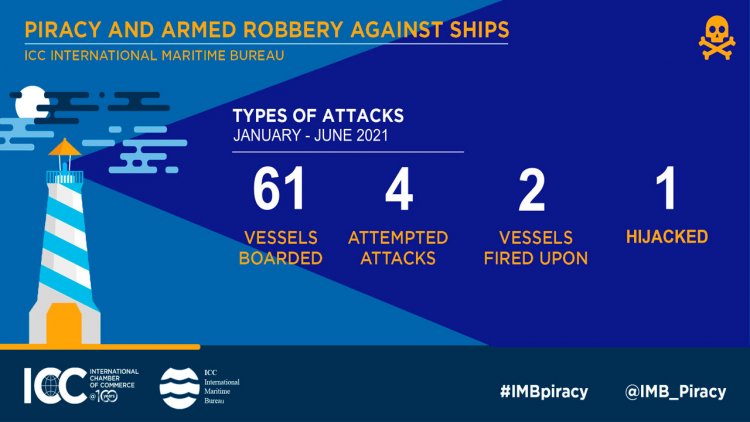
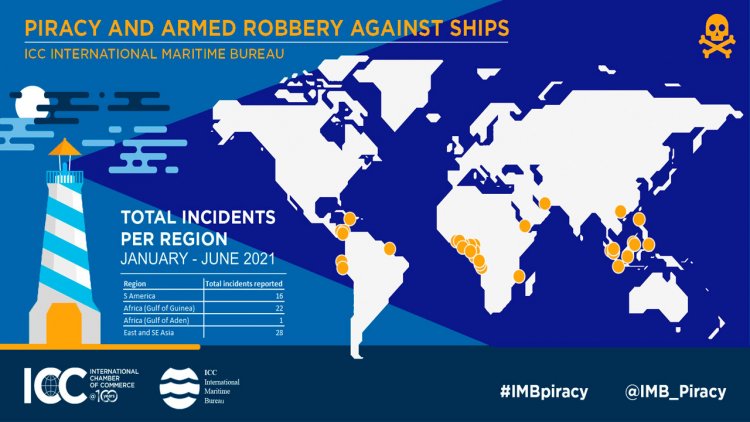
IMB’s latest global piracy report details 68 incidents of piracy and armed robbery against ships – the lowest total since 1994 – down from 98 incidents during the same period last year. In the first six months of 2021, IMB’s Piracy Reporting Centre (PRC) reported 61 vessels boarded, four attempted attacks, two vessels fired upon and one vessel hijacked.

Despite the overall decline in reported incidents, violence against crews has continued with 50 crew kidnapped, three each threatened and taken hostage, two assaulted, one injured and one killed throughout the first half of 2021.

While the reduced numbers of reported incidents is welcome, the IMB PRC continues to caution against complacency. Vessels were boarded in 91% of the reported incidents.

The Gulf of Guinea continues to be particularly dangerous for seafarers with 32% of all reported incidents taking place in the region, according to IMB. The region accounted for all 50 kidnapped crew and the single crew fatality recorded by IMB during the first half of 2021. 

The number of kidnappings recorded in the Gulf of Guinea in the last quarter is the lowest since Q2 2019, but pirates continue to target all vessel types throughout the region. IMB warns that fishing vessels have been hijacked in the Gulf of Guinea and later used as mother ships to target other merchant vessels.

IMB Director Michael Howlett said:

“Whilst IMB welcomes reduced piracy and armed robbery activity in the Gulf of Guinea, the risk to seafarers still remains. By reporting all incidents to the Regional Authorities and IMB PRC, seafarers can maintain pressure against pirates. Bringing together maritime response authorities through initiatives – like Nigeria’s Deep Blue Project and Gulf of Guinea Maritime Collaboration Forum – will continue and strengthen knowledge sharing channels and reduce risk to seafarers in the region.”

In early June, a bulk carrier was approached by a skiff with six pirates while transitioning through the region at around 210nm off the coast of Lagos.In early June, a bulk carrier was approached by a skiff with six pirates while transitioning through the region at around 210nm off the coast of Lagos.

The Singapore Straits recorded 16 incidents in the first six months of 2021, in comparison to 11 during the same period in 2020. These attacks are considered opportunistic in nature, but IMB warns that in seven incidents the perpetrators were armed with knives. In three separate incidents, seafarers were reported to have been either threatened, assaulted or injured.

In comparison to the first half of 2019 and 2020, Callao Anchorage, Peru has experienced a two-fold increase in the number of incidents with nine incidents reported in total for 2021. There were four incidents in Q2 2021 and knives reported in three of these, according to the latest figures from IMB. Perpetrators in the region possess the capacity to carry out violent attacks with two separate incidents of crew being taken hostage and assaulted occurring in the first six months of 2021.

Vessels are advised to take precautionary measures while anchored in Manila Bay, Philippines, as four incidents were reported to IMB for Q2 2021.

ICC Secretary General John W.H. Denton AO said:

“Reporting piracy and armed robbery incidents is the first line of defence against future attacks. Sustained reporting to IMB will enable governments, maritime response agencies and other stakeholders to establish safer waters for our seafarers and smooth flow of goods throughout global supply chains.”

Ukrainian Navy website goes down after Russian cyberattack

0

Ukraine’s navy website experience a cyberattack on July 9, causing the site to be down for several hours, the Ukrainian Ministry of Defence wrote in a statement.

The defence ministry said in a statement late on Friday:

“Russia is purposefully conducting information operations against Ukraine. The structures of information and psychological operations of the Southern Military District of the RF Armed Forces with the support of cyber units of the central subordination, intelligence agencies and the entire Kremlin propaganda machine are involved in these actions.

On July 9, there were cases of hacker attacks on the structures of the aggressor state on the web portal of the Naval Forces of the Armed Forces of Ukraine. As a result, some documents and mostly fake reports related to the Sea Breeze 2021 exercise, which is currently underway in the Black Sea basin, have been published. At the same time, none of the documents was obtained as a result of information leakage from the information and telecommunication systems of the Armed Forces of Ukraine. There was a temporary shutdown of the Ukrainian Navy website, which was caused by the use of vulnerabilities in the framework that was once used to create it. In addition, there have been cases of unsuccessful DDoS attacks against the official web portal of the Ministry of Defence of Ukraine.

It should be noted that international defence cooperation projects and assistance to Ukraine from partner countries traditionally evoke inadequate emotions in the military-political leadership of the Russian Federation. This year’s international military exercises “Sea Breeze – 2021” are no exception.

Now the threats have been eliminated, the work of the Navy website will be restored in a short time. The authorized divisions are working to update resources on the Internet at the proper level of protection.”

Relations between Kyiv and Moscow plummeted after Russia seized Crimea in 2014. Russia also opposes “Sea Breeze” and has said it is monitoring the actions of military forces taking part in the exercises. 

Just days ahead of the start to the Sea Breeze drills last month, Russia’s defence ministry said it had fired warning shots toward a British Royal Navy destroyer as it neared Crimea in the Black Sea. 

Companies collaborate to help decarbonize the industrial basin of Normandy in France

0

Air Liquide, Borealis, Esso S.A.F., TotalEnergies and Yara International ASA have signed a Memorandum of Understanding (MoU) to explore the development of a CO2 infrastructure, including capture and storage, to help decarbonize the industrial basin located in the Normandy region, France. With the objective to reduce CO2 emissions by up to 3 million tons per year by 2030, which is equivalent to the emissions of more than 1 million passenger cars, the first phase will consist in studying the technical and economical feasibility of this project. 

The ability of industrial players to reduce their CO2 emissions in the medium and long term is a key issue for the sustainability of industrial activities and ecosystems in the area of Axe Seine/Normandy. The companies involved in the MoU have agreed to collaborate to assess the technical and economical feasibility of implementing an industrial CO2 capture and storage (CCS) chain, from their industrial facilities to ultimate storage in the North Sea.

François Jackow, executive vice president and a member of the Air Liquide Group’s Executive Committee supervising Europe Industries activities, said:

“Air Liquide is pleased to contribute to this project its unique expertise in CO2 capture and liquefaction technologies. Since 2015 Air Liquide has successfully implemented CryocapTM in its plant in Port Jérôme, Normandy, an innovative proprietary CO2 capture and liquefaction technology, which allows to capture up to 90% of CO2 emissions. This wider initiative illustrates how industrial players can mobilize to decarbonize key industrial basins and contribute to the fight against global warming. It is in line with Air Liquide’s Climate Objectives, which target carbon neutrality by 2050.”

Leo Alders, chief operating officer of Borealis Fertilizer, Technical Nitrogen and Melamine business, said:

“Our strong interest in this project is in the first place driven by the significant GHG reduction that can be achieved. It is our responsibility to society to seek for and engage in solutions for climate challenges. At the same time the project is an innovative and collaborative approach across the leading regional industries, creating new value chains.”

Charles Amyot, CEO of Esso S.A.F. and president of ExxonMobil activities in France, said:

“ExxonMobil has more than 30 years of experience in CCS technology and is advancing plans for more than 20 new CCS opportunities around the world. We are pleased to collaborate on a joint study to assess the feasibility of the deployment of CCS in the Axe Seine / Normandy area, one of the most important technologies required to achieve society’s climate goals.”

Bernard Pinatel, president of Refining & Chemicals and member of the Executive Committee at TotalEnergies, said: “We are pleased to join forces with some major industrial players of the industrial basin of Normandy to collectively engage into a cooperation to reduce the CO2 emissions from our facilities. This collective effort will be facilitated by TotalEnergies’ actions in developing, with partners, CO2 storages in the North Sea such as the Northern Lights and Aramis’ projects. This CCS initiative will contribute to the decarbonization of our Normandy platform and is fully aligned with TotalEnergies’ ambition to get to net zero emissions by 2050.”

Jorge Noval, president, Yara Industrial Solutions, a global division of Yara International ASA, said:

“This alliance will support Yara Industrial Solutions’ journey to decarbonize production units and all of our value chains. Carbon Capture and Storage is essential in achieving our mid-term ambition of a 30% reduction in absolute CO2 emissions in 2030 compared to 2018, meaning a reduction of 200,000 tonnes of CO2 emissions, equivalent to 100,000 tonnes Blue Ammonia at Le Havre production plant. We will implement future technologies to reach carbon neutrality in 2050 in line with Yara’s ambition. The decarbonization of our site in France will allow us to continue developing innovative applications for our industrial customers, and the impact on society will be significant. Our chemical industrial applications are all around us, from construction to automotive, in animal nutrition and NOx emission reduction as examples.”

EnBW selects 15 MW Offshore turbines from Vestas

0

EnBW plans to build its He Dreiht offshore wind farm with the latest generation of wind turbines from Vestas with 15 megawatts per turbine. EnBW and Vestas will finalise the contractual agreements in the coming months and expect to sign by the year-end.

Dr. Georg Stamatelopoulos, COO Generation at EnBW, recounts:

“Ten years ago, offshore wind energy in Germany was still in its infancy. Back then, we built Baltic 1, which was Germany’s first commercial offshore wind farm. Since then, turbine performance has improved more than six-fold in the space of a decade. We are ready to be writing the next chapter in the history of German offshore wind power with He Dreiht,” Stamatelopoulos added.

EnBW secured the project in Germany’s first offshore tender in 2017. One thing that makes the 900-megawatt wind farm special is that it will operate without subsidies. 

Stamatelopoulos says:

“Offshore wind power is not only technically challenging. We have to go into the auctions with wind turbines that are not yet on the market at the time of the planning stage. There is no crystal ball here: the only answer is sound technical forecasting and knowledge of the market. And we made the right choices as project developers, as the outcome shows. We are going to use the most advanced and cost-efficient turbine technology, which means we can install He Dreiht without any subsidies.” 

EnBW He Dreiht will be located in the North Sea, 90 kilometres northwest of Borkum and about 110 kilometres west of Heligoland. It is among the biggest planned offshore wind power projects in Europe and is scheduled to go into operation in 2025. The final investment decision is planned for 2023.

Research: Earth’s cryosphere is shrinking by 87,000 square kilometers per year

0

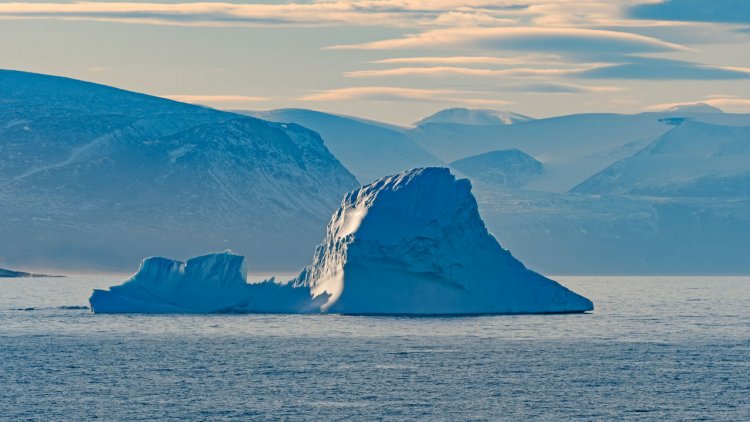
The global cryosphere—all of the areas with frozen water on Earth—shrank by about 87,000 square kilometers (about 33,000 square miles, an area about the size of Lake Superior) per year on average between 1979 and 2016, as a result of climate change, according to a new study. 

The extent of land covered by frozen water is just as important as its mass because the bright white surface reflects sunlight so effectively, cooling the planet. Changes in the size or location of ice and snow can alter air temperatures, change the sea level and even affect ocean currents worldwide.

The new study is published in Earth’s Future, AGU’s journal for interdisciplinary research on the past, present and future of our planet and its inhabitants.

The first author Xiaoqing Peng, a physical geographer at Lanzhou University, said:

“The cryosphere is one of the most sensitive climate indicators and the first one to demonstrate a changing world. Its change in size represents a major global change, rather than a regional or local issue.”

The cryosphere holds almost three-quarters of Earth’s fresh water, and in some mountainous regions, dwindling glaciers threaten drinking water supplies. Many scientists have documented shrinking ice sheets, dwindling snow cover and loss of Arctic sea ice individually due to climate change. But no previous study has considered the entire extent of the cryosphere over Earth’s surface and its response to warming temperatures.

Peng and his co-authors from Lanzhou University calculated the daily extent of the cryosphere and averaged those values to come up with yearly estimates. While the extent of the cryosphere grows and shrinks with the seasons, they found that the average area covered by Earth’s cryosphere has contracted overall since 1979, correlating with rising air temperatures.

The shrinkage primarily occurred in the Northern Hemisphere, with a loss of about 102,000 square kilometers (about 39,300 square miles), or about half the size of Kansas, each year. Those losses are offset slightly by growth in the Southern Hemisphere, where the cryosphere expanded by about 14,000 square kilometers (5,400 square miles) annually. This growth mainly occurred in the sea ice in the Ross Sea around Antarctica, likely due to patterns of wind and ocean currents and the addition of cold meltwater from Antarctic ice sheets.

The estimates showed that not only was the global cryosphere shrinking but that many regions remained frozen for less time. The average first day of freezing now occurs about 3.6 days later than in 1979, and the ice thaws about 5.7 days earlier.

Shawn Marshall, a glaciologist at the University of Calgary, who was not involved in the study, said:

“This kind of analysis is a nice idea for a global index or indicator of climate change.”

Shawn Marshall thinks that a natural next step would be to use these data to examine when ice and snow cover give Earth its peak brightness, to see how changes in albedo impact the climate on a seasonal or monthly basis and how this is changing over time.

To compile their global estimate of the extent of the cryosphere, the authors divided up the planet’s surface into a grid system. They used existing data sets of global sea ice extent, snow cover and frozen soil to classify each cell in the grid as part of the cryosphere if it contained at least one of the three components. Then they estimated the extent of the cryosphere on a daily, monthly and yearly basis and examined how it changed over the 37 years of their study.

The authors say that the global dataset can now be used to further probe the impact of climate change on the cryosphere, and how these changes impact ecosystems, carbon exchange and the timing of plant and animal life cycles.

TechnipFMC and Halliburton’s subsea fiber optic solution selected by OTC and ExxonMobil

0

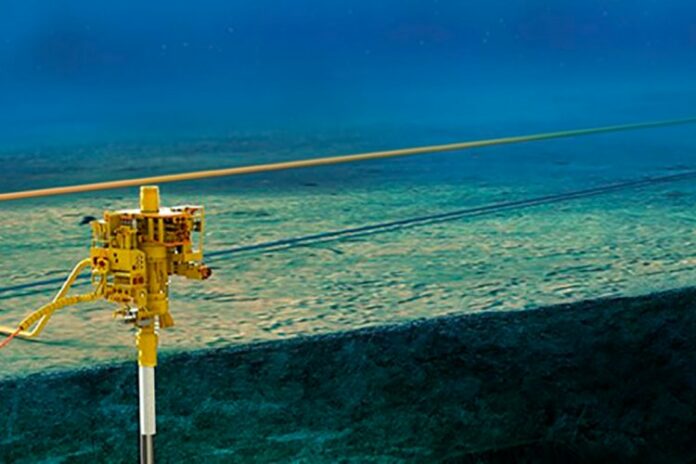
TechnipFMC and Halliburton Company have received an OTC Spotlight on New Technology Award® (SONT) for their Odassea™ Subsea Fiber Optic Solution, an advanced downhole fiber optic sensing system. ExxonMobil selected the solution for its Payara development project in Guyana. The award followed completion of front-end engineering and design studies and qualifications.

Trey Clark, vice president of Halliburton Wireline and Perforating, said:

“We are excited to win OTC’s Spotlight Award and deploy Odassea™ in Payara, the industry’s largest subsea fiber optic sensing project. By collaborating with TechnipFMC, we combine our sensing and subsea expertise to enhance reservoir insight and to lower the total cost of ownership for our customers.”

The Odassea™ service integrates hardware and digital systems to strengthen capabilities in subsea reservoir monitoring and production optimization. Halliburton provides the fiber optic sensing technology and analysis for reservoir diagnostics. TechnipFMC provides the optical connectivity from the topside to the completions. Through this collaboration, operators can accelerate full field subsea fiber optic sensing, design, and execution.

The Payara development, located 200 kilometers offshore Guyana in 1,800 meters water depth, is the third development within the Stabroek block with current discovered recoverable resources estimated at approximately 9 billion oil-equivalent barrels.

Christina Johansen, Senior Vice President of TechnipFMC Subsea Product Management, said:

“To win the SONT award and to help our client enable an enhanced level of reservoir understanding are great achievements. Solutions such as Odassea™ transform our clients’ project economics and demonstrate how we are continuously driving change in the industry.”

TechnipFMC and Halliburton are delivering Odassea™ solutions to multiple other subsea projects at all stages, from conceptual design to execution.

Netherlands: FPS secures recommendation from the CCNR to sail the Rhine on hydrogen

0

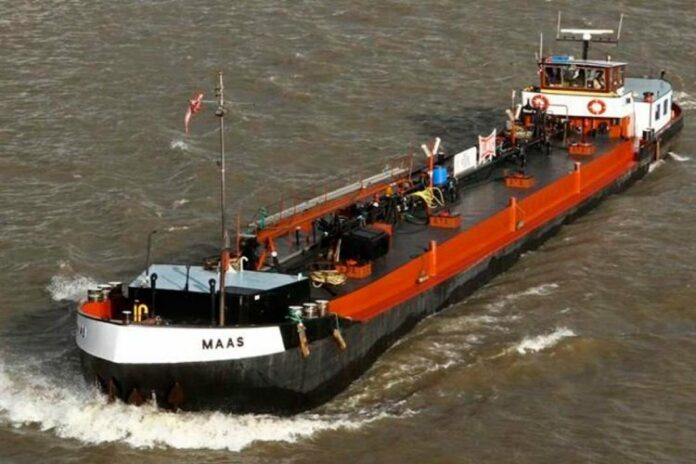
The Central Commission for the Navigation of the Rhine (CCNR) has recommended that Future Proof Shipping’s (FPS) motor cargo vessel “Maas” receives an exemption from the Rhine Vessel Inspection Regulations (RVIR), permitting the use of hydrogen as a fuel for propulsion and power supply on board the vessel.

Having completed a detailed Hazard Identification (HAZID) study with their classification society Lloyd’s Register (LR), the CCNR recommendation was the next target on FPS’s radar. 

The recommendation states that the use of hydrogen as a fuel on board the Maas is considered to be sufficiently safe if a number of critical conditions such as risk assessments, crew training, bunkering and data recording, are met at all times.

Richard Klatten, CEO – Future Proof Shipping, said:

“This landmark exemption will hopefully act as a catalyst to speed up the approval process and establish concrete rules dedicated to hydrogen fuelled vessels, and ultimately clear the path to zero-emission shipping for all who are prepared to make the transition.” 

FPS can now move ahead with the advanced engineering plans for the “Maas” and soon they will be ready to submit documentation for the final stage of class approval from LR.

To receive a recommendation from the CCNR, first a risk analysis and design optimisation study must be completed, with the help of a classification society. The FPS team has been working closely with Lloyd’s Register and the Dutch Ministry of Infrastructure who filed the application for the recommendation with the CCNR, on behalf of FPS.

Bas Joormann, WEA Inland Waterway Product Manager – Lloyd’s Register EMEA, said:

“My congratulations to FPS with the achievement of this milestone. It is impressive to see that a private company has taken this step in the greening of the inland waterway fleet, and as classification society we are proud to have been chosen to contribute. I believe this recommendation will surely help in the further development of requirements for the use of alternative fuels, and I expect that for future projects it will be easier to get the required recommendations.” 

In the absence of specific rules for the design approval of hydrogen fuelled vessels, the “alternative design process”, by which the safety, reliability and dependability of the systems must be demonstrated to be equivalent to that achieved with comparable conventional systems, is currently the only means of approval for hydrogen vessels.

Annelies van Dijk-Volker, Ministry of Infrastructure & Watermanagement – Dutch Representative in CCNR, said:

“The development of techniques for alternative means of propulsion and energy carriers, such as hydrogen and batteries, fits within the ambitions in the Green Deal on Maritime and Inland Shipping and Ports to make inland shipping more sustainable. The Dutch Ministry of Infrastructure & Watermanagement is looking forward to the experiences that will be gained with the application of hydrogen.”

Once the retrofit of the Maas is completed later this year, the vessel will continue to ship container cargo between Rotterdam and Antwerp and is expected to reduce greenhouse gas emissions by 2000 CO2e tonnes annually.

Aker BP: Contract call-off award for the KEG subsea project scope

0

This is in line with Aker BP’s strategy for increased value creation through its alliances and strategic partnerships.

The Alvheim field (PL203), consists of the Kneler, Boa, Kameleon and East Kameleon structures, as well as the Viper-Kobra structures and Gekko discoveries and is also host to other developments in the area. PL203 license owners are Aker BP (operator), ConocoPhillips Scandinavia AS and Lundin Energy Norway AS. The Alvheim field is located in the central North Sea near the UK border.

The Kobra East and Gekko fields will be developed with subsea installations connected to the production vessel on the Alvheim field (Alvheim FPSO).  The selected concept has been designed with flexibility for further future subsea tie-back developments.

The work under the call-off awarded comprises engineering, procurement, fabrication and installation of subsea facilities for the KEG project, including pipelines, umbilicals, subsea x-mas trees, structures and subsea control modules.

Total investments linked to these contracts are projected at around NOK 1.7 billion. Installation campaigns are scheduled to start the 2nd quarter of 2022 and to be completed 1st quarter of 2024.

The awarded contracts relate to the Alliance agreement executed by Aker BP, Aker Solutions and Subsea 7 in 2018, and the underlying long term frame agreements for subsea SPS and SURF scope executed by Aker BP and Aker Solutions and by Aker BP and Subsea 7 in 2015.

Project Management and Engineering will commence immediately. The project as a whole is pending approval from authorities of the PDO submitted 30 June 2021.

Knut Sandvik, senior vice president (SVP) for Aker BP projects, says:

“The subsea alliance between Aker Solutions, Subsea 7 and Aker BP has demonstrated capability and added value through a series of subsea project deliveries to Alvheim in recent years. Close cooperation between all the parties in the project – company internal, between company and suppliers and between suppliers – is instrumental in making the KEG project a success.”

TotalEnergies and GHGSat to monitor offshore methane emissions by satellite

0

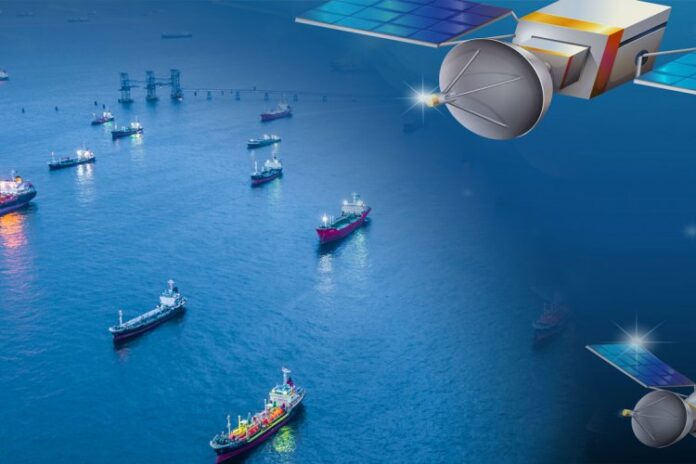
As part of its commitment to identify, quantify and reduce methane emissions linked to its operations, TotalEnergies is partnering with GHGSat to develop a satellite imaging technology to monitor potential methane leak occurrences at offshore facilities. 

This new technology, known as “Glint Mode”, annuls interference effects on data acquisition by observing sun glint on the ocean surface. This satellite imaging can be combined with local measurements for which TotalEnergies has developed the ultra-light AUSEA1 drone-mounted spectrometer, considered to be the most accurate in the world. 

TotalEnergies and GHGSat have been working together since 2018 to refine methane emissions measurement thresholds in order to detect increasingly smaller emissions so that leaks can be prevented as far upstream as possible. In October 2020, the partners set a world record at TotalEnergies’ TADI2 testing complex, which is equipped with leading-edge detection resources, by successfully quantifying the smallest controlled leak detected to date. TotalEnergies and GHGSat are taking a new step with this initiative and will be conducting six satellite observations in Glint Mode of TotalEnergies offshore sites.  

Marie-Noëlle Séméria, Chief Technology Officer at TotalEnergies, said:

“As part of a continuous improvement program, TotalEnergies has decided to initiate a new stage in its collaboration with GHGSat to develop an innovative satellite mapping technology suited to offshore infrastructure. This technology will build on the methane emissions measurement system for which TotalEnergies holds the accuracy record and strengthen our position as a pioneer in developing methane emissions monitoring technologies.”

Stéphane Germain, President of GHGSat, declared:

“GHGSat is excited to expand its emissions monitoring work with TotalEnergies. By adding offshore measurements to its portfolio of satellite, airborne and analytical capabilities, GHGSat continues to enhance its services for market leaders like TotalEnergies.”

This partnership builds on TotalEnergies’ commitment within the United Nations Environmental Programme (UNEP) Oil and Gas Methane Partnership (OGMP) to reduce the industry’s methane emissions.

TotalEnergies’ performance in reducing methane emissions is one of the best in the industry. The Company has cut its emissions nearly in half since 2021 by focusing on different sources – among them flaring, venting and fugitive emissions – and by complying with stringent design standards for new projects to ensure that methane emissions are close to zero. The Company has already reduced routine flaring by more than 90% since 2010 and has pledged to eliminate the practice by 2030. 

TotalEnergies’ objective is to maintain emissions intensity below 0.2% of commercial gas produced for oil and gas facilities and below 0.1% for gas facilities. In 2020, these figures stood at 0.15% and below 0.1%, respectively, in line with the Company’s targets. 

In November 2020, TotalEnergies signed onto a second phase of the United Nations Environment Programme’s Oil and Gas Methane Partnership (OGMP 2.0), supporting a broader, more ambitious reporting framework extended to cover the entire gas value chain and non-operated assets.