-6.4 C
New York
Home Blog Page 585

FUELSAVE and Seadrill announce first partnership to decarbonise offshore drilling

0

Cleantech provider FUELSAVE will deploy its advanced combustion conditioning technology to reduce primary fuel oil consumption and cut Co2 and GHG emissions in the offshore oil and gas sector for the first time, following the signature of a landmark contract with Seadrill, one of the world’s leading offshore drilling contractors.

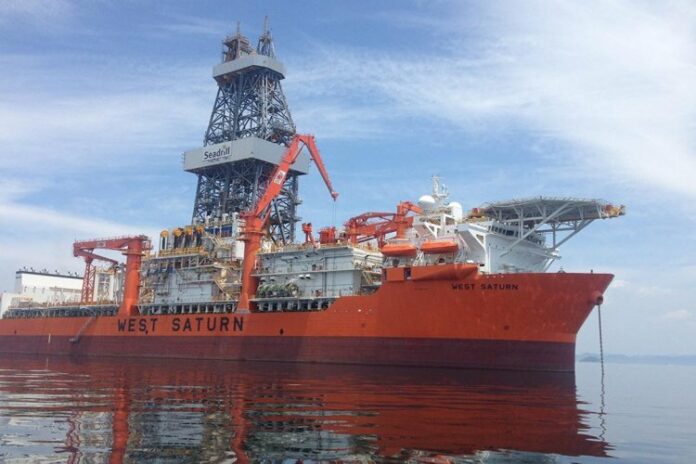
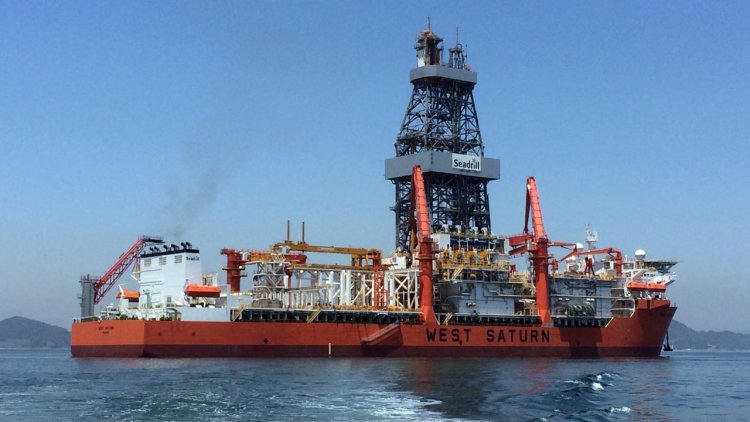
Seadrill’s high-spec 6th generation West Saturn drillship will be fitted with FUELSAVE’s solution FS MARINE+, which optimises combustion through the dynamic injection of hydrogen, oxygen, water and methanol. By making combustion more efficient, the award-winning system significantly reduces fuel consumption and harmful emissions, such as carbon dioxide (CO2), nitrogen oxides (NOX) and black carbon (BC). Emissions of carbon dioxide (CO2) are expected to be cut by 10-15%, and Nitrous Oxide (NOx) by 30-80%, in line with Seadrill’s commitment to reduce emissions and protect the environment.

Three FS MARINE+ units will be deployed on the drillship. There will be one in each engine room, with each unit connected to two engines. This will support a total of 6 HIMSEN 16H32 / 40V engines with 8.000 kW each, or 48.000 kW MCR in total. Each will be specially configured for the vessel’s operational load profile, in line with DP3 configuration.

FUELSAVE’s CEO Marc Sima said:

“Advanced combustion conditioning has a remarkable potential to actively decarbonise the offshore industry by reducing emissions at the source in a safe and efficient manner. Our solution has a unique value proposition for the retrofit market, as the offshore sector understands the importance of decarbonising its activities. We are proud to partner with Seadrill and deploy our solutions in this field for the first time, in collaboration with the American Bureau of Shipping (ABS) as the classification society and HIMSEN as the engine manufacturer, and we look forward to supporting the offshore oil and gas sector throughout its decarbonisation journey.”

“The impact of FS MARINE+ is immediate and significant, with black carbon emissions cut by up to 33% and particulate matter by up to 40%, along with reductions in other greenhouse gas (GHG) emissions, such as nitrogen oxide (NOX) emissions. Because it actually cleans up the combustion, advanced combustion conditioning leads to real emission reductions beyond mere primary fuel savings. Furthermore, the system is easy to retrofit and pays for itself through its OPEX savings from fuel economies, as well as a reduction in lube oil and maintenance-related costs. With more carbon offsetting schemes and tax benefits likely to enter into force in the coming years, the option will be even more attractive for businesses in the foreseeable future.”
Seadrill’s COO Leif Nelson commented:

“This innovative technology will have an immediate impact on our emissions and significantly reduce the environmental footprint of our operations. At a time when the entire sector must move towards sustainability, this solution will be key to support our decarbonisation ambitions.”

Built in 2014, the West Saturn is a 6th generation ultra-deepwater drillship adapted for water depths up to 3,600 metres. The high-spec drillship, which is equipped with features such as a double derrick and automated drilling control, will be deployed in the Bacalhau field in Brazil. Partners in Bacalhau are: Equinor, ExxonMobil, Petrogal Brasil and Pré-sal Petróleo SA.

This is the biggest installation to date for FUELSAVE, a German company which was founded in 2012 to reduce emissions in the transport and maritime sectors and enhance the energy efficiency of various industrial applications. With a strong R&D background and patent portfolio in 11 fields, FUELSAVE is funded by the European Union and features in leading start-up accelerators around the world.
Successful launch of WALLENIUS SOL’s new vessel

0

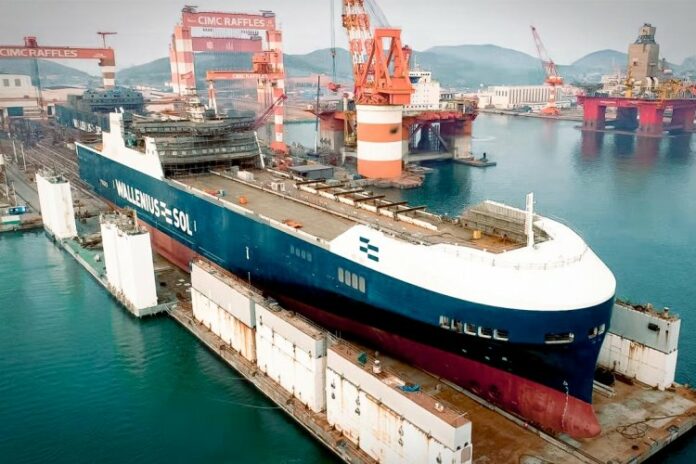
On 9th July 2021, the world’s largest ice-rated multi-fuel RoRo vessel was launched at the CIMC Raffles shipyard in Yantai, China.
 
The construction of WALLENIUS SOL’s new RoRo vessel reached a milestone when the record-breaking ship was launched on Friday 9th July amid much ceremony. A little over a year has passed since construction began, and company CEO Ragnar Johansson followed the launch ceremony from afar due to the pandemic. He says:

‘It’s incredibly exciting to watch a ship growing and see our ideas become reality. These ships will serve us and the growing industries in northern Sweden well for many years to come.’

The ship has a length of 242 metres, a beam of 35.2 metres and is specially designed to meet the harsh winter conditions in the Gulf of Bothnia.

In addition to her conventional RoRo capabilities, the vessel will have a large container capacity. She is expected to be significantly more energy efficient per transported tonne of cargo than other types of ships, while also reducing greenhouse gas emissions by 63%. 
 
Seeing her afloat gives Site Manager Henrik Sundkvist, who has been following her construction closely since March 2020, a special feeling. He says:

‘On the slipway you can see the ship’s entire hull from the bottom up – everything from the bilge keels up to the bridge wings and top mast. Now that she’s in the water, you can only see half the ship, and she takes on a completely different character. It’s an interesting project and there’s a lot of work still to do, but this is a special day at the shipyard, and it gives us pause for reflection. It’s a milestone that gives us new impetus to finish this ship and her sister, which is still on the slipway.’

When a ship of this size is built, there are two common launching methods. One of the most common approaches is to build the ship in an excavated dry dock and then launch it by filling the dry dock with water and allowing the ship to float out.

Sometimes, ships are built in huge dry docks that hold more than one vessel. In this case, the other ships are left behind and the launch vessel is towed out, which is known as semi launching.
 
However, at CIMC Raffles, where WALLENIUS SOL’s new ships are being built, a slipway is used instead. This is a kind of combination of single blocks and concrete structure, which rests on sand and lies in the fore-and-aft direction of the ship. When it’s time to launch, the ship is winched slowly but surely a little over 300 metres from the build site.
 
Because WALLENIUS SOL’s new vessels are longer than usual, they require a special solution whereby two barges are joined together to support the full length of the vessel.

Once on the barges, the ship remains in place for a day or two to retouch the paintwork on the underwater part of the hull, before it is finally lowered into the water on the submersible barges.

DEME Offshore successfully installs DolWin6 HVDC cable with ‘Living Stone’

0

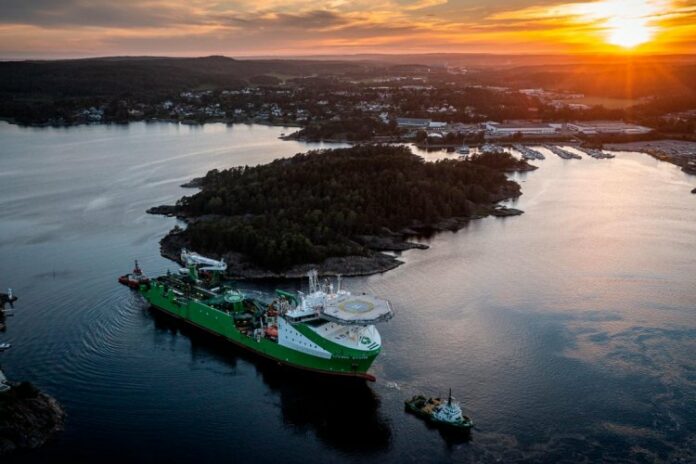
In a groundbreaking project DEME Offshore has successfully installed the DolWin6 High Voltage DC (HVDC) cable in the North Sea deploying its DP3 vessel ‘Living Stone’. This is the first time a cable laying vessel has installed cables while powered on LNG, dramatically reducing emissions.

‘Living Stone’ picked up the cables directly from the Nexans manufacturing facility in Halden, Norway at the beginning of June and transported them to the offshore site in the German Bight. 

DEME’s dedicated vessel really showcased its unique capabilities. ‘Living Stone’ has two turntables so it is ideally suited for installing bundled HVDC cables. The HVDC cable pair was bundled together with the fibre optic cable on board ‘Living Stone’ and seamlessly installed.

DolWin6 has a transmission capacity of 900 MW and is owned and operated by transmission system operator TenneT. The HVDC cable runs from several offshore wind farms in Germany via Norderney to German mainland.

Bart De Poorter, General Manager DEME Offshore Renewables, comments:

“We are pleased to see another campaign successfully concluded by our cable installation vessel ‘Living Stone’. Carrying out the project on LNG is another major milestone, highlighting once more the unrivalled technical capabilities of ‘Living Stone’ and its crew.”

Australia: TotalEnergies enters into an infrastructure agreement with GIP on Gladstone LNG

0

TotalEnergies has completed a transaction with GIP Australia (GIP) in relation to the downstream facilities of the Gladstone LNG Project owned by its subsidiary Total GLNG Australia (TGA), for a consideration of more than US$ 750 million, with effective date January 1, 2021. 

As part of this transaction, GIP will receive a throughput-based tolling fee calculated on TGA’s share of gas processed through the downstream facilities over a period of 15 years. 

TGA retains full control and ownership of its 27.5% interest in the Gladstone LNG Downstream Joint Venture.

Jean-Pierre Sbraire, Chief Financial Officer at TotalEnergies, declared:  

“We have worked closely with GIP to achieve this infrastructure transaction and are happy of this first collaboration with such an experienced infrastructure partner. This monetization of infrastructure assets contributes to focusing further TotalEnergies’ capital on core producing assets and fully reflects TotalEnergies’ active portfolio management.”

The integrated LNG project consists of producing natural gas from the Fairview, Arcadia, Roma and Scotia fields, located in the Bowen-Surat Basin in Queensland, Australia. 

The project also includes transporting the gas over approximately 400 kilometers to a gas liquefaction plant in the industrial port of Gladstone, northeast of Brisbane, on the eastern coast of Australia. The Gladstone LNG liquefaction plant consists of two trains with a total nameplate capacity in excess of 7.8 million tons per year.

The downstream facilities mainly comprise the gas transportation system and the two-train gas liquefaction plant. The Gladstone LNG Project has been exporting LNG since 2015.

AAL delivers four rubber tyred gantry cranes to Port of Oslo

0

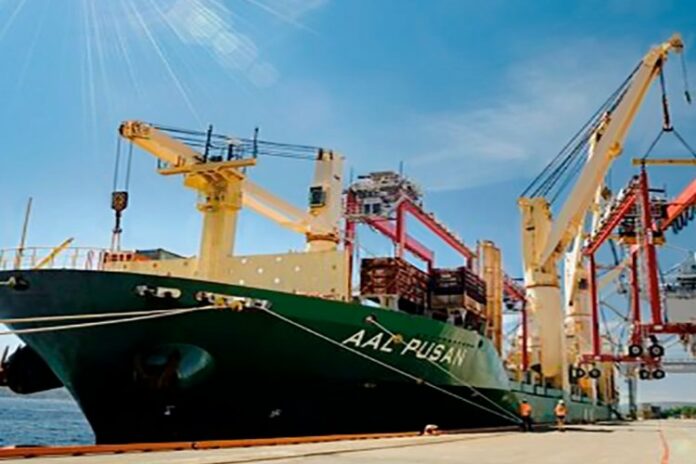
This Summer, AAL Shipping (AAL) delivered four of the largest rubber tyred gantry cranes (RTGs) in the carrier’s history to the Port of Oslo (Oslo Havn KF), Norway.

These new generation mobile units, measuring 36 m in height and 28 m in length, were transported from Taicang in China to Oslo on a single sailing aboard the 31,000 deadweight ‘mega-size’ multipurpose vessel (MPV), the AAL Pusan.

The cranes were engineered and manufactured by Kalmar, part of Cargotec and Rainbow-Cargotec Industries Co. Ltd (RCI) in Taicang and will help to deal with the increased volume of container arrivals from Asia and Europe at Norway’s busiest port – a facility that handled 1.5 million metric tonnes of containers in 2019 alone. The four cranes had a combined weight of almost 700 tonnes. Three of the cranes were fully erected and the fourth was loaded in parts, using the AAL Pusan’s port-side heavy lift cranes (700 tonnes max lift). They were transported from China to Norway along AAL’s monthly ‘Asia – Europe Trade Route’. They will be deployed at the Port of Oslo, Norway’s main logistics hub that handles about 80% of the country’s imported containerised goods.  

Eike Muentz, General Manager Europe, AAL, commented:

“This particular cargo was booked through our Finland office in Porvoo – part of our expanding European office network. Demand for regular and dependable services between Asia and Europe has grown exponentially in 2021, as markets rush to address shortfalls in scheduled development projects and shortages in general stock and commodity levels, depleted due to the pandemic lock-down of the past 18 months. In this sense, we are not just moving project heavy lift cargo like these cranes, but smaller breakbulk parcels, general cargoes, dry bulk commodities, steel, and containers.”

Jan De Nul signs third contract with Dogger Bank Wind Farm

0

Dogger Bank Wind Farm and Jan De Nul Group announce the signing of the final contract for the transport and installation of 87 GE Haliade-X 14 MW offshore wind turbines. 

Dogger Bank C at up to 200 km off the Yorkshire coast is the third Dogger Bank Wind Farm package awarded to Jan De Nul. Following the signature of packages A and B, this will bring the total WTGs to be installed to an impressive 277 units.

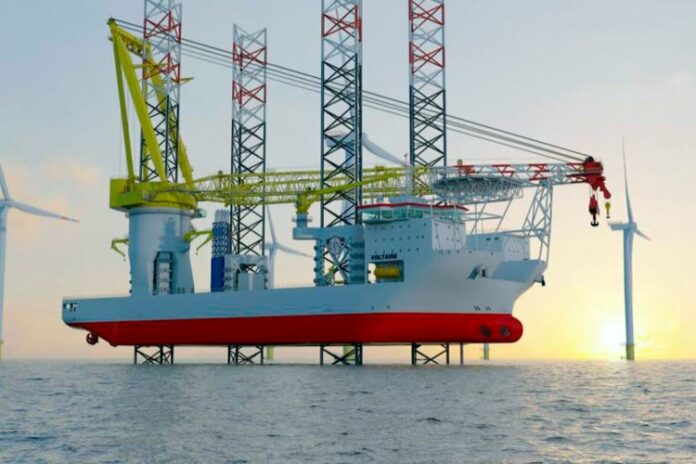
For the delivery and installation of the 14 MW turbines, Jan De Nul Group will mobilise its newest Next Gen Offshore Jack-Up Installation Vessel Voltaire, turning this project into her first assignment. The contract is subject to Dogger Bank C reaching Financial Close in late 2021.

The 3.6 GW Dogger Bank Wind Farm, which is being delivered in the North Sea in three 1.2 GW phases, is set to be the world’s largest offshore wind farm when complete. 

The first two phases, Dogger Bank A and B, each feature 95 units of 13 MW turbines. They are a joint venture between Equinor (40%), SSE Renewables (40%) and Eni (20%). The third phase, Dogger Bank C, is being developed on a different timescale and is owned by SSE Renewables (50%) and Equinor (50%).

Dogger Bank Wind Farm secured 3.6 GW of offshore wind contracts in the UK Government’s 2019 contracts for difference auctions. Record low prices were awarded for the three phases making up Dogger Bank Wind Farm: Dogger Bank A, Dogger Bank B and Dogger Bank C. Dogger Bank C is planned to reach financial close by the end of 2021. 

SSE Renewables is leading the development and construction phases of Dogger Bank Wind Farm and Equinor will lead on operations for its lifetime of up to 35 years. 

Steve Wilson, Dogger Bank Wind Farm’s Project Director at SSE Renewables, said:

“Jan De Nul Group has a great track record for the transportation and installation of turbines on scale, and offshore wind farms don’t come any bigger than ours. With a lifting capacity of more than 3,000 tonnes, the ultra-clean Voltaire vessel is set to become the world’s largest jack-up vessel when it enters service in 2022. Securing this state-of-the-art vessel for all three phases of Dogger Bank Wind Farm is another reminder of how we’re working with our suppliers to drive innovation in offshore wind.” 

Halfdan Brustad, Vice President for Dogger Bank at Equinor, said:

“We are extremely pleased to have secured the Voltaire for the third phase of Dogger Bank, as it will follow the turbine installations for phases A and B. By the time Dogger Bank Wind Farm is complete, this low emissions vessel will have installed 277 of the world’s most powerful turbines at the world’s biggest offshore wind farm; quite a feat for The Voltaire’s first assignment! This continued contract with Jan De Nul demonstrates world class innovation delivering at scale, both important factors in ensuring we build Dogger Bank as efficiently and sustainably as possible.”  

Philippe Hutse, Director Offshore Division at Jan De Nul Group, said:

“Dogger Bank Wind Farm is exactly the type of project we had in mind when we took the decision to build our Voltaire. The scale and characteristics of the offshore Dogger Bank and turbines offer the perfect challenge for this Next Gen Offshore Jack-Up Installation Vessel. We are proud to be recognised in our choices and look forward to working together with industry leaders SSE Renewables and Equinor on the Dogger Bank C phase of this world-leading project. We are excited to take part in the worldwide transition to renewable energies by installing the offshore wind turbines at Dogger Bank A, B and C in the most efficient and clean manner possible.”

This Offshore Jack-Up Installation Vessel Voltaire is currently under construction. She will have a lifting capacity of over 3,000 tonnes and will enter into service in 2022. 

She is named after the pioneering European Enlightenment philosopher and is fitted with a highly advanced exhaust filtering system by means of a Selective Catalytic Reduction system and a Diesel Particulate Filter, making it the very first seagoing installation vessel of its kind to be an Ultra-Low Emission vessel (ULEv), moreover Stage V-certified.

MSC Cruises to expand Saudi Arabia programme with summer 2021 cruises

0

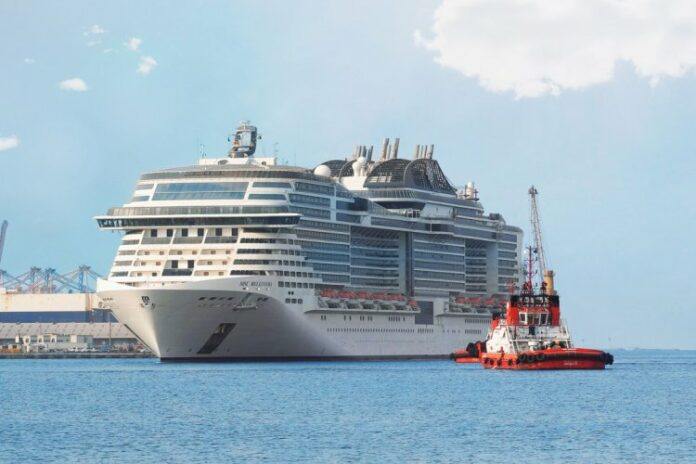
MSC Cruises, the contemporary brand of the Cruise Division of MSC Group, today announced that MSC Bellissima, one of the line’s most modern ships, will sail 21 Red Sea voyages from Jeddah, the commercial hub of Saudi Arabia, between the end of July and late October.

MSC Bellissima is the largest cruise ship ever to sail the waters of the Red Sea and the vessel arrived at the weekend in Jeddah to prepare for her maiden season.

The ship, which first came into services in 2019, will offer 3- and 4-night cruises to Safaga for Luxor, Egypt or Aqaba for Petra, Jordan before returning to her Saudi homeport.

The summer sailings will add to MSC Cruises’ previously announced winter 2021/22 Red Sea voyages from Jeddah starting in November.

Pierfrancesco Vago, Executive Chairman, MSC Cruises said:

“As the tourism industry of Saudi Arabia grows progressively for its own residents and international visitors, we at MSC Cruises are looking forward to make a positive and lasting contribution as more people explore and discover the rich heritage and incredible cultural attractions it has to offer.”

MSC Bellissima will be the eighth MSC Cruises’ ship to resume sailings with passengers on board with a further three vessels preparing to start future voyages, which will see half of the Company’s fleet back at sea by the end of summer.

Five MSC Cruises’ ships are currently sailing in the Mediterranean – MSC Grandiosa MSC Seaside, MSC Orchestra, MSC Splendida and MSC Magnifica, MSC Virtuosa is operating around the UK and MSC Seaview is cruising in the Baltic Sea.

MSC Meraviglia from 2 August will resume Caribbean cruises from Miami and will be joined in the region from 18 September when MSC Divina restarts sailing from Port Canaveral near Orlando in Florida.

MSC Seashore will come into service in August with voyages in the West Mediterranean before the Company’s newest flagship transfers in November to Miami for a season in the Caribbean.

CIMC Raffles to construct dual fuel car carriers for Wallenius

0

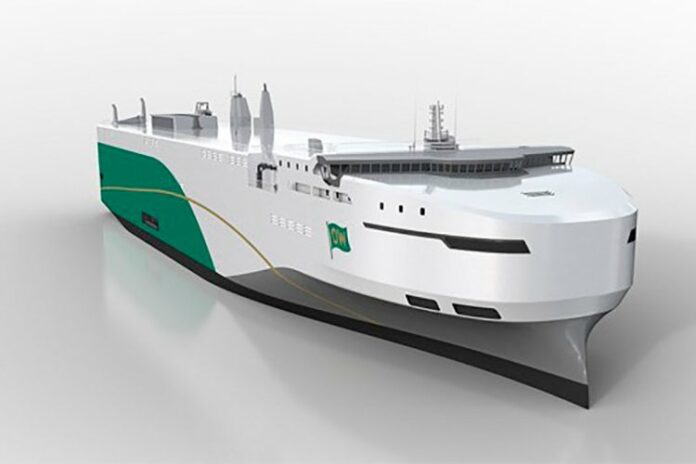
On 30 June 2021, CIMC Raffles signed an EPC contract with Wallenius for 2 + 2 + 2 Next Generation Low Emission 6500CEU PCC vessels through Teams Meeting online. 

Mr. Wang Jianzhong, CEO and President of CIMC Raffles and Mr. Kleberg Jonas, Chairman and CEO of Soya Group and Wallenius Lines signed on behalf of both companies witnessed by the respective management and project teams. This is the 2nd time both companies are cooperating after previous good cooperation., This enhances the market position in the international RoRo/PCTC segment for CIMC Raffles. This new series of vessels will be constructed in the Longkou yard, which is equipped the 1st Laser plus Arc welding system as well as smart production line in China.

The vessel concept was developed by Danish Naval Architect Knud E. Hansen (KEH), one of most renowned Naval Architects and engineering companies in the industry. KEH will continue with the basic design by cooperating with joint force from CIMC Offshore Engineering Institute (OEI). The detailed engineering and shop engineering will be executed by CIMC Raffles OEI while the production of the vessels will be performed in the CIMC Raffles Longkou shipyard in Yantai, China.

The vessels will be Swedish flagged, 200m long, 37m wide with 6,500 CEU and 19 knots speed, equipped with one Type C LNG tank and related fuel gas supply system.

Back in the 1960’s, Wallenius pioneered the RoRo concept. Wallenius Lines is an investor and active owner within the global shipping industry, specifically the international car carrier and Ro-Ro segment which has become the trademark for Wallenius. Two years ago, CIMC Raffles was contracted the series LNG powered MegaRoRo vessels with Wallenius SOL in Stockholm, Sweden. During the construction process, CIMC Raffles project team have been working closely with Wallenius project and site team under the challenge of the global pandemic. While cooperating on that project, the professionalism of both parties has enhanced mutual trust, establishing the foundation of the new cooperation.

Kleberg Jonas said:

“Today is a big day for Wallenius as we confirmed our Next Generation Low Emission Car Carriers. Wallenius is always committed to work with a premium and long-term partner, and we believe CIMC Raffles is our optimal selection. For now, we are also continuously working to develop innovative ship design concept and logistic solutions together with our partners to lead industry and maintain our strong market position.” 

Wang Jianzhong highlighted:

“Global emission cut and low carbon trend arethe new requirement of the clean energy industry. We see that Wallenius is pretty forward-looking by making good use of LNG fuel at the right time with pioneering and innovative green shipping. The strategic vision and sense of social responsibility are admirable. We, CIMC Raffles, are also strong Practitioner with the commitment to design and build various advanced clean energy facilities. We have invested in the world’s most advanced Laser plus Arc welding production line with proven RoRo vessels’ application and delivery as RoRo/PCTC vessel is one of key business segments. We intend to work with Wallenius together continuously as their long-term premier engineering and construction base in China, and look froward to being part of the joint force of the global Low Emission and Green Shipping initiative.”

New Caronte & Tourist ferry will operate with Wärtsilä LNG-fuelled engines

0

The technology group Wärtsilä, will provide the main and auxiliary engines, as well as the fuel storage and supply system, for a new Italian ferry designed to operate on LNG. 

Wärtsilä’s extensive experience in LNG applications, and its broad portfolio of related products, were cited as key considerations in the contract award. The vessel is under construction at the Sefine shipyard in Turkey and has been ordered by Caronte & Tourist Isole Minori, based in Milazzo, Italy. The order with Wärtsilä was placed in the first quarter of 2021.

Given its environmental advantages, LNG continues to gain popularity throughout the shipping industry. The fuel contains no sulphur or particulate matter and emits only low levels of nitrogen oxides (NOx), while CO2 emissions are some 20 percent less than those from HFO fuel. Wärtsilä’s early development of dual-fuel engines and fuel systems capable of handling LNG, together with the global build-up of a delivery and bunkering infrastructure, has been largely instrumental in enabling its viability.

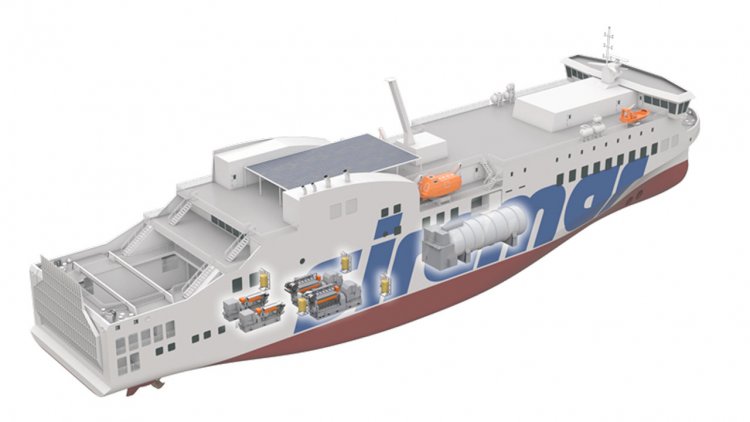
This latest order comprises two Wärtsilä 34DF dual-fuel main engines, two Wärtsilä 20DF dual-fuel auxiliary engines, two Wärtsilä Gas Valve Units, and a Wärtsilä LNGPac fuel storage, supply, and control system. The equipment is scheduled for delivery to the yard in spring 2022, and the ferry is expected to be delivered in 2023.

Luigi Genghi, Managing Director of Caronte & Tourist, says:

“We are very familiar with Wärtsilä and rate both their products and their support very highly. When the decision to operate primarily on LNG fuel was made, it became clear that Wärtsilä was the most experienced and qualified supplier to use.”

Giammario Meloni Senior Sales Manager, Wärtsilä Marine Power, says:

“This is our second project for the same owner and shipyard, and repeat orders are always an encouraging testimony of satisfaction. Our reference list of ferries operating with the Wärtsilä 34DF engine is indeed impressive, and we are pleased to add to it with this order. The flexibility of our dual-fuel technology is important for ferry operators because of the importance of redundancy. Should, for any reason, LNG be not available, the engine can switch to a conventional fuel in milliseconds, and the ferry schedule remains uninterrupted.”

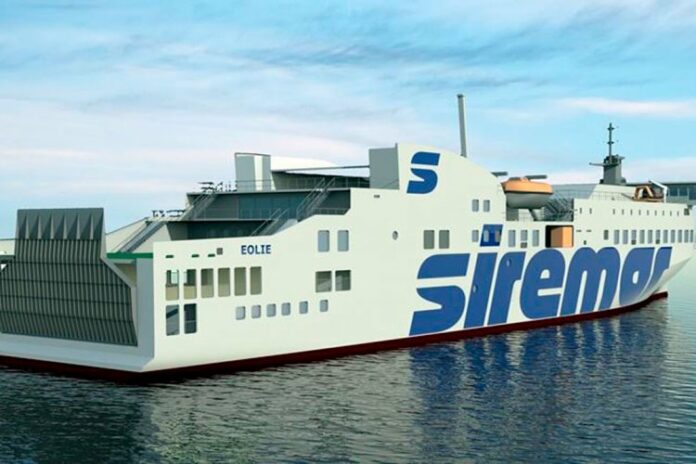
The 109.98 metre long ferry will be capable of accommodating 800 passengers and up to 115 cars on two vehicle decks. It will mainly operate between Milazzo in Sicily and the Aeolian islands.

Seanergy achieves fuel savings of up to 12% through DeepSea’s routing platform

0

DeepSea Technologies has partnered with Seanergy Maritime Holdings Corp. to develop, test, and improve Pythia the world’s first weather routing and voyage optimisation platform tailored to the exact performance of vessels, under all conditions. 

This platform has allowed Seanergy’s Capesize vessels to achieve a reduction of fuel consumption of up to 12%, with average fuel savings of 8%, as recorded over a series of voyages during the first four months of 2021.

Seanergy and DeepSea have worked closely on the development of Pythia with the aim to build a unique performance routing tool tailored to the needs of top-tier shipping companies. Pythia is an industry-first next generation weather routing and voyage optimisation platform which uses AI-based performance models – based on highly detailed real-time data – to analyse 19 different parameters. The AI models accurately track how a vessel performs over time under any conditions, including those related to the weather and the state of the vessel – such as the fouling levels.

As a result of using real-time data, Pythia obtains a highly accurate understanding of the vessel and develops dynamic, tailor-made performance models for each ship, which are then used to determine the optimum routes, speeds, and trims for minimum fuel consumption.

Commenting on the announcement, Roberto Coustas, Co-Founder and CEO of DeepSea Technologies, said:

“Our great work with our partners and friends at Seanergy goes back several years, and now it’s fantastic to be able to take the traditional service of weather routing one step further by collaborating side by side with them. Together, we have managed to evolve weather routing into a true performance routing solution, that adapts to each individual company’s objectives.”

“We are aligned with Seanergy on many of our key objectives. We are both committed to pursuing a more sustainable future for shipping that mitigates the environmental impact of our sector through collaboration.

With this partnership, we are not just trialling and fine-tuning this unique optimisation technology, but also bringing to market the first performance routing platform with a proven track-record of fuel and emissions savings that can push the decarbonisation efforts of the industry forward.”

This collaboration redefines fleet management across the global shipping industry. Stamatis Tsantanis, CEO of Seanergy Maritime Holdings Corp., added:

“Working with our partners at DeepSea and adopting Pythia is crucial for our ongoing ESG strategy. This strategy, which underpins how we aim to reduce fleet carbon emissions in a cost-effective way through technical and operational measures, will enable us to comply with IMO regulations and the United Nations’ Sustainability Goals.

“We believe that our industry’s increasingly ambitious sustainability aspirations and regulation will make non-efficient tonnage much harder to operate. In this environment, we aim to maintain chartering competitiveness and flexibility by striving for high-quality, environmentally compliant vessels with first class fleet operations.”

The partnership journey for DeepSea and Seanergy goes back to 2019, when the two companies started collaborating for the performance optimisation of Seanergy’s vessels. Initially, Seanergy installed DeepSea’s data collection hardware and performance monitoring platform Cassandra onboard four vessels, gaining access to unprecedented levels of insights. Following the significant return on investment achieved through the adoption of both DeepSea’s AI platforms – Cassandra and Pythia – Seanergy is now deploying them across its entire fleet. Now, Seanergy’s fleet is among the most efficient in the industry.