-4.1 C
New York
Home Blog Page 587

Subsea 7 awarded contract offshore Norway

0

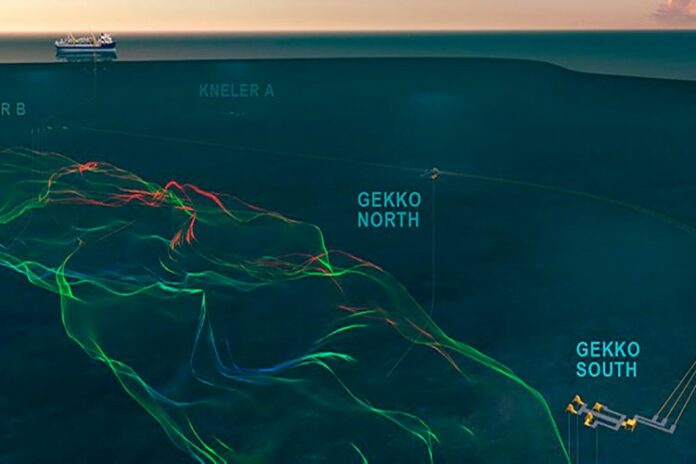
The project involves a subsea tie-back of approximately 8 kilometres to the Alvheim FPSO, via the existing Kneler B subsea manifold.

The contract scope includes engineering, procurement, construction and installation (EPCI) of the pipelines, spools, protection cover and tie-ins using key vessels from Subsea 7’s fleet. The production pipeline is a pipe-in-pipe design.

Project management and engineering will commence immediately at Subsea 7’s offices in Stavanger, Norway. Fabrication of the pipelines will take place at Subsea 7’s spoolbase at Vigra, Norway and offshore operations are expected to take place in 2022 and 2023.

Monica Bjørkmann, Vice President for Subsea 7 Norway said:

“This award continues our long-standing collaboration with Aker BP, through the Aker BP Subsea Alliance. The partnership enables Subsea 7 to engage early in the field development process, optimising design solutions and contributing to a positive final investment decision. Subsea 7 looks forward to continuing our alliance with Aker BP for the KEG field development, with a focus on safe, efficient and reliable operations.”

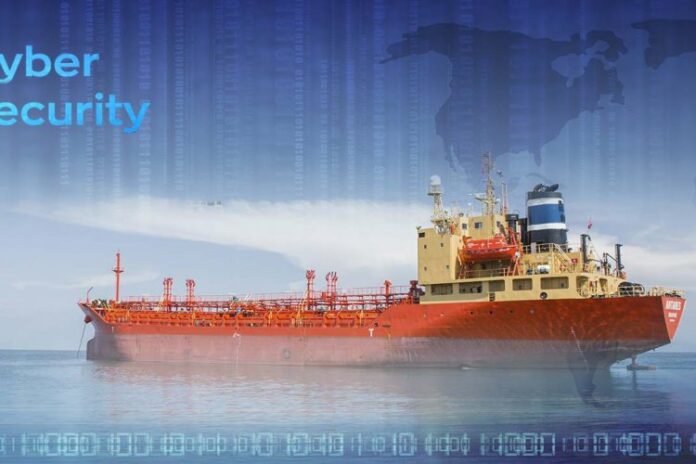
Angel Achieves DNV-GL Cyber Secure Advanced class notation

0

Angel is the first cyber security service designed and developed to meet the unique and diverse requirements of the merchant marine sector. It secures a vessel’s business, IoT and crew networks by providing oversight, security threat alerting and control of the vessel’s entire network.

The DNV-GL Cyber Secure class notation comprises three different qualifiers: Entry, Essential and Advanced. Angel hosted on Infinity Plus / Cube Dell 440 servers has achieved the DNV-GL’s Cyber Secure Advanced class notation, which is designed to meet IMO resolution MSC. 428(98), to ensure that even the most complex ships are cyber secure, and to protect against intentional violations using sophisticated means and specific control system skills.

Angel is easily deployed and once it is installed ship operators can download the DNV-GL certificate to use in their Safety Management System. Order now to ensure that your vessels stay safe, compliant and to give them an advantage in the ongoing digital transformation of the maritime industry:

  • Less risk of cyber security threats and reduced downtime due to cyber attacks
  • Proof of cyber security resilience for your vessels and ensure compliance with the IMO cyber risk resolution
  • Increased charter probability due to better vetting score from charterers and oil majors
  • Regular audits of Angel and Infinity from DNV-GL to verify their continuous compliance with cyber security requirements and focus on upcoming cyber security threats.

Maersk Drilling secures extended well intervention scope for low-emission rig

0

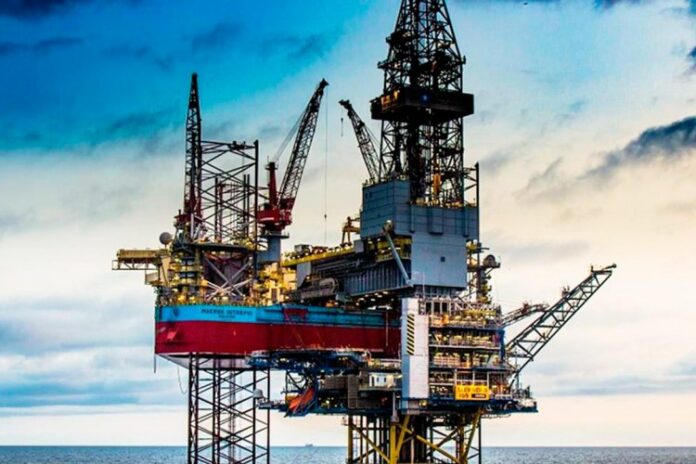
Equinor Energy AS has exercised an option to add additional well intervention work to the previously agreed work scope for the low-emission jack-up rig Maersk Intrepid at the Martin Linge field offshore Norway. 

The added well intervention scope has a firm duration of 31 days, which means that the rig is now contracted until February 2022. The firm value of the contract extension is approximately USD 10.5m, including integrated services but excluding potential performance bonuses.

The contract extension is entered under the Master Framework Agreement between Equinor and Maersk Drilling, in which the parties have committed to collaborate on technology advancements and further initiatives to limit greenhouse gas emissions. The contract with Equinor Energy AS contains a performance bonus scheme based on rewarding reduced CO2 and NOx emissions.

Maersk Intrepid is an ultra-harsh environment CJ70 jack-up rig, designed for year-round operations in the North Sea and featuring hybrid, low-emission upgrades. It was delivered in 2014 and is currently operating at Martin Linge for Equinor.

Alfa Laval invests in innovative air lubrication technology

0

Having acquired a minority stake in Marine Performance Systems B.V., a Rotterdam-based maritime technology company, Alfa Laval will be instrumental in making this long-sought technology a commercial reality.

The idea of using bubbles to reduce a vessel’s friction – which is the largest driver of fuel consumption as it moves through the water – has existed for well over a century. Nonetheless, it has taken time to realize. Alfa Laval has chosen to invest in Marine Performance Systems, whose unique method of producing bubbles with fluidics is a breakthrough that will reduce fuel  consumption by 8–12% at a vessel’s normal service speed.

Frode Lundsteen Hansen, who founded Marine Performance Systems in 2018 with innovators Pieter Kapteijn and Fulko Roos, says:

“The use of fluidics creates a larger air layer of superior quality. Our FluidicAL technology enables truly effective air lubrication, with immediate environmental benefits and substantial savings for shipowners. Alfa Laval shares our belief that this technology will facilitate the transition to green shipping.” 

Sameer Kalra, President, Alfa Laval Marine Division, says:

“The investment brings Alfa Laval full circle, since air lubrication technology for marine vessels was first pursued and patented by our founder Gustav de Laval in 1883. The technology did not result in any product in his time, but our founder’s vision has new importance today. Air lubrication will smooth the marine industry’s path to a sustainable future.”

By reducing the amount of fuel burned, air lubrication will have a direct effect on greenhouse gas emissions. In addition, it will provide critical fuel cost savings for shipowners, who need to offset the expense of rapidly shrinking their environmental footprint.

Lundsteen Hansen explains:

“Fleets cannot be replaced overnight, so existing vessels will need to rely on clean-burning fuels to lower their emissions. In a low-margin industry where fuel represents up to 60% of a shipowner’s costs, the premium price of those fuels is a heavy burden. With very small means, air lubrication can provide significant relief.”

Indeed, the patented FluidicAL technology requires no structural modifications or vessel recertification, which makes it ideal for retrofitting as well as for newbuilds. Compatible with any vessel size and any fuel type, it comprises evenly spaced bands of oscillators under the vessel’s hull. Using high-efficiency fluidics, each oscillator produces tens of thousands of microbubbles per second, creating a stable, uniform layer of air that significantly reduces friction between the hull and the water beneath.

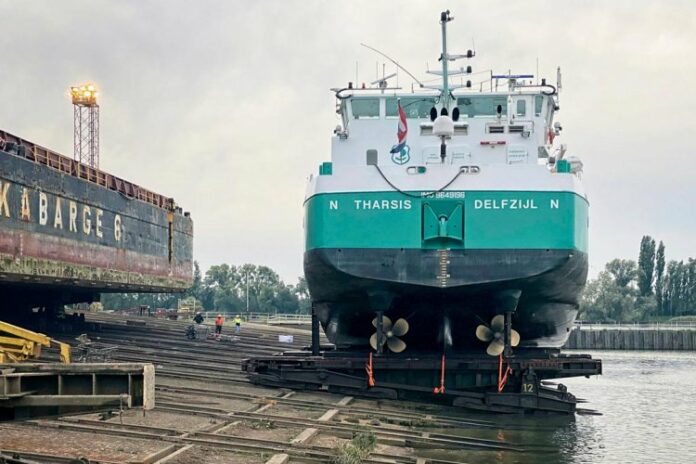
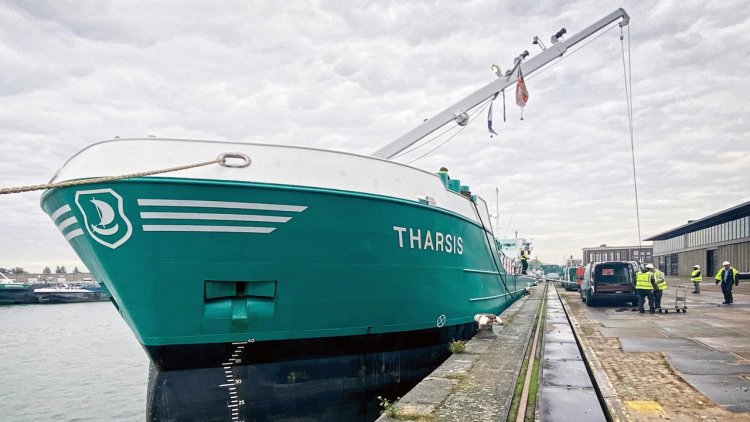
The high performance of FluidicAL technology and its ability to operate in various conditions have already been demonstrated at full scale. In late 2020, a pilot installation was made on the general cargo vessel M/V Tharsis, with excellent results and clear savings over months of operation.

Lundsteen Hansen says:

“With our FluidicAL solution in place, M/V Tharsis made 25 controlled runs in loaded and ballast conditions. As expected, there was a 60% reduction in specific drag over hull’s flat area, which meant considerably less fuel was consumed. Not only was there no impact on stability or manoeuvrability, the sailing was also noticeably smoother.”

Norwegian operator expands fleet with new Tier III TRAktor 3000-Z Tug

0

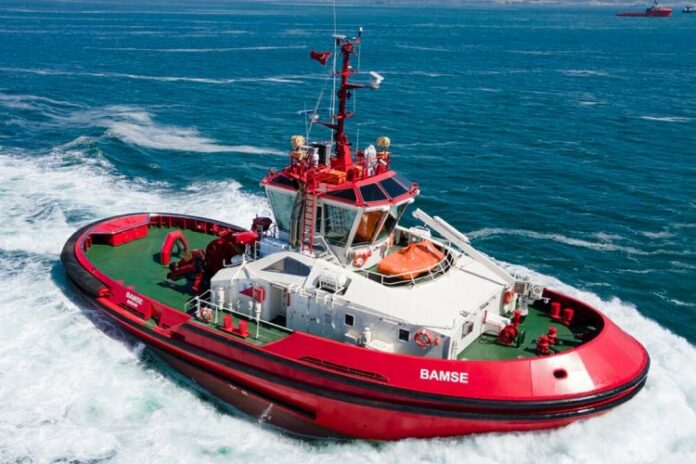
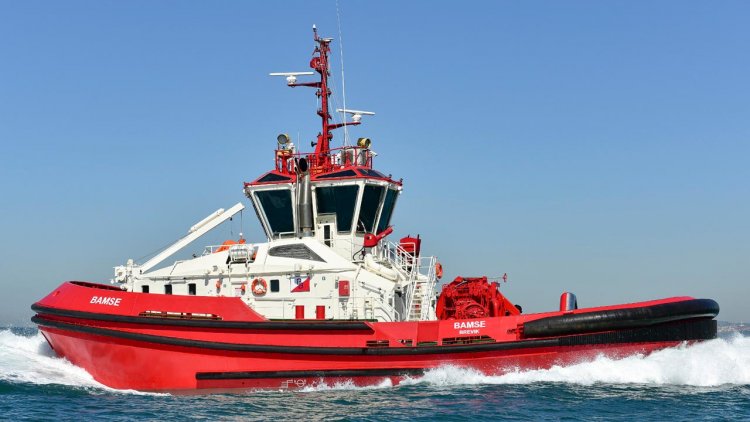
This vessel is the first of a two boat order and will operate out of Brevik, Norway. The design was developed working closely with both Bukser og Berging and Sanmar to arrive at a design achieving not only the Owner’s requirements but also suiting Sanmar’s tug building practice.

BAMSE will conduct active escort operations through tight narrow passages in and out of the terminal in the Oslo Fjord. With a top speed of 14 knots and capable of producing steering forces in excess of 80 tonnes, it will be able to connect to assisted ships at 10 knots in heavy weather typical for the area. To achieve this performance extensive CFD simulations were completed for the BAMSE during the design phase in order to optimize escort capability.

All operations will be conducted while keeping BAMSE’s emissions footprint low, with it being the first IMO Tier III Tug in Bukser og Berging’s fleet, and the first-Tier III tug to be built by Sanmar Shipyards.  Installed are Caterpillar 3516E high speed engines, rated at 2200 bkW and fully IMO Tier III compliant with SCR units. Z-drive units are Schottel’s SRP 490 CP with 2.8 metre propeller diameter.  BAMSE’s resulting bollard pull is 75 tonnes.

Key particulars of the TRAktor 3000-Z are:

  • Length, overall (excluding fenders): 30.45 m
  • Beam, moulded: 12.8 m
  • Depth, least moulded: 4.90 m
  • Maximum draft (navigational): 6.35 m
  • Gross Tonnage: 482 tonnes
  • Fuel oil capacity: 126 m3

The tug was designed and constructed with the following Class Notation:

ABS ✠ A1, Escort Vessel, Fire Fighting Vessel Class 1, ✠ AMS, ✠ ABCU, Unrestricted Navigation

This high-performance tug is fully equipped with deck machinery including an escort winch from Karmøy, tugger winch, stern tow pins and deck crane. The mooring equipment is designed for 50 tonnes SWL and can be used in a towing by the hip arrangement.

As BAMSE will also be conducting push-pull berthing and unberthing operations of vessels with low freeboard where the tug is working alongside, the fendering system was carefully selected and designed.  Ship-handling fenders at the stern consist of an upper row of cylindrical fenders and a lower course of W-fender. Sheer fendering consists of “D” profiles including a lower row below the upper chine for low freeboard vessels.

The accommodations have been outfitted to a high standard for a crew of seven. The deckhouse contains an entrance lobby with water closet and change room, the galley, mess, laundry room, and two officer cabins each with ensuite WC. The lower deck contains a third officer cabin with ensuite WC and two double cabins with shared WC facilities. There is also an HVAC room on the lower deck. The wheelhouse provides maximum all-round visibility with exceptional visibility to the bow and side fendering, as well as operations on the aft deck. The single split control station with sliding control heads allows the Master to face either forward or aft depending on the type of operation. Typical of Sanmar builds, the engine room features an acoustically isolated switchboard room.

Records taken during sea trial show all crew cabins and the mess/lounge have noise level lower than 60 dB(A), providing very comfortable working and living environment for its crew. In the wheelhouse the noise level is lower than 55 dB(A).

Hyundai Motor launches project to commercialize fuel cell propulsion system for ships

0

Hyundai Motor Company has signed a Memorandum of Understanding (MOU) with Hyundai Global Service, a South Korean manufacturer specializing in ship electric propulsion systems and a subsidiary of Hyundai Heavy Industries Group, and Korean Register (KR), South Korea’s one and only internationally recognized classification society, to develop and commercialize hydrogen fuel cell systems to propel marine vessels.

The MOU marks a significant milestone for Hyundai Motor as it is the company’s first strategic partnership involving the application of its fuel cell system technology in the shipbuilding industry, spearheading a new generation of seafaring vessels.

Saehoon Kim, Executive Vice President and Head of Fuel Cell Center at Hyundai Motor Group, said:

“This MOU signals Hyundai Motor’s entry into the fuel cell-powered marine vessel market, made possible through our cooperation with Hyundai Global Service and Korean Register. We hope our decades-long experience and capabilities in hydrogen fuel cell technologies, combined with the expertise of Hyundai Global Service and Korean Register in the maritime industry, will usher in a new era of greener and cleaner shipping.”

The collaboration is also expected to serve as a platform to identify and evaluate business opportunities for fuel cell-powered ships, positioning Hyundai Motor as a leader in the global eco-friendly vessel industry and development of hydrogen fuel-cell propulsion systems.

Hyundai Motor will supply the fuel cell systems and provide technical support, while Hyundai Global Service will manufacture and commercialize the fuel cell-based propulsion systems. Korean Register will be responsible for establishing standards for type approval, which all fuel cell-propelled vessels of varying sizes must meet to receive an approval for commercial use.

The cooperative project aims to make a splash in the green vessel market beginning with a small-sized model in the second half of 2022. In the mid- to long-term period, the three partners will focus on developing and introducing propulsion systems for mid- to large-sized vessels. 

Helm Operations launches new Work Rest Product to help companies ensure STCW compliance

0

Helm Operations is looking to make waves in the crew management and compliance space with the launch of Helm CONNECT Work Rest, a new set of tools to help companies combat crew fatigue and ensure rest time compliance across their fleets by allowing them to efficiently manage onboard work schedules from a single screen.

Focused on freeing busy crews from unnecessary paperwork and overly complex Excel sheets, Helm promises the new tool will let companies plan, forecast, and manage their work rest easily, guaranteeing their crew rest times are compliant with STCW rules or their own corporate standards—all in just three clicks.

Properly tracking crew work and rest hours is an imperative issue in the global maritime industry, where an estimated 75 percent of liability loss is caused by human error, primarily linked to fatigue. In response to these challenges, regulators have implemented ever more stringent work-rest tracking requirements, including ILO 180, the IMO’s STCW 2010 Manila Amendments, MLC 2013, and the US’s Subchapter M among a flurry of other national regulations. These rules require captains and operators to carefully manage crew shifts in an effort to manage fatigue and minimize accidents.

This is a challenging task given the dynamic nature of work onboard vessels and in ports, says Helm’s Steve Robertson, who helped lead the development of Helm CONNECT Work Rest alongside Product Manager, Shawn Verhagen. Mr. Robertson adds:

“Vessel and port operations are highly complex, and crew often pick up additional work or participate in drills that delay or temporarily reduce their rest time. This makes tracking rest time and forecasting who is allowed to work a difficult task with significant repercussions, including increased risk of injuries, casualties, and liability, as well as increased oversight from regulators.”
In addition, he says, the industry’s tools are often not up to the task. Mr. Robertson says:

“During our research, we found that many companies still depend on paper logs or complex Excel sheets to manage work rest. Even in 2021, much of the industry is still using tools from 1984. The tedious and error-prone nature of recording work rest information on paper or in Excel means companies run the risk of not properly tracking rolling 24-hour periods of time, pencil whipping, or worse, not tracking their hours at all. All of these can lead to non-compliance, putting both crew safety and the company’s reputation at risk. ”

When it came to building Helm CONNECT Work Rest, Product Manager Shawn Verhagen had a clear vision. Mr. Verhagen says:

“Our goal in building Helm CONNECT Work Rest. was to take all those risks away and make configuring rest time rules, scheduling crew, and tracking, and forecasting work and rest time as simple as possible. The beauty of modern software that is we can take these surprisingly complex and difficult tasks, and turn them into a simple, visual workflow that ensures compliance in just three clicks. It’s a process that every mariner can do quickly, easily, and safely.”

Built based on direct feedback from captains, crews, and regulators, Helm CONNECT Work Rest makes it easy for anyone—even the most software-averse captain—to easily track and prove compliance with regulations. 

Mr. Verhagen says:

“In the case of the STCW rules, for example, we can apply them to a work schedule with a single click, making it easy for captains to see exactly what shifts their crews can and cannot work in order to stay compliant with international regulations.”

The new product further combines that ease of use with deeper functionality to ensure compliance, including easy configuration of rest time rules and crew schedules, a complete change log for auditability, use of 24-hour rolling periods, and even easy printing and reporting in USCG and other regulator formats.
These features are already being welcomed by the industry, which has often struggled to make work-rest tracking both easy and functional for its operations. Bill Sullivan, Manager of Regulatory Compliance and Vessel Repair at Donjon Marine, echoes Robertson and Verhagen and reflects on how Work Rest has changed their operations:

”At Donjon, we used to prove STCW compliance by completing a daily task using a paper-based work rest template. Although it appeased the auditors, it seemed tedious and prone to ‘pencil whipping’. Helm CONNECT Work Rest has made my job easier by allowing me to create rules for compliance that will notify me when employees are not getting enough rest, ensuring we stay compliant and maintain a healthy workforce.”

The Work Rest module being rolled out today is just one of several new products being launched by Helm Operations, as it continues to expand internationally and into larger and more complex fleet operations. 

Helm Operations, CEO Nolan Barclay, says:

“What we’re seeing both in the US and in the shipping market globally. is that the reliance on paper and legacy software-based approaches is causing the maritime industry to lag behind many other industries, with significant consequences for shipping companies and operators. Our vision for Helm CONNECT has always been to move the maritime software market from simply serving as systems of record to systems that actively optimize and simplify workflows for crews and operations managers. When we combine simplicity for the crew with a depth of functionality to help operators streamline and optimize their operations, as we have with Helm CONNECT Work Rest, then we can see the real transformation that’s possible in our industry.”

MSC Group and Fincantieri partner for construction of new cruise terminal at PortMiami

0

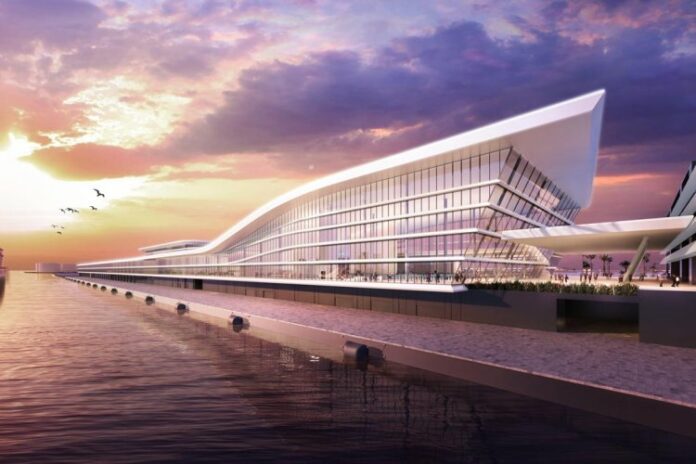
Today the Cruise Division of MSC Group and Fincantieri announced the signing of a contract for the construction by Fincantieri Infrastructure Florida of a new mega cruise terminal at PortMiami, the cruise industry’s hub in North America and the Caribbean.

The new terminal reflects an investment of approximately EUR 350 million and will be made up of a multi-level central body to serve as many as three latest generation ships at the same time, with up to 36,000 travellers transiting every day. Designed by the award-winning global architecture firm Arquitectonica, it is due to be completed by December 2023.

The new terminal will be able to accommodate the Company’s largest and most environmentally high-performing cruise ships. These include MSC Cruises’ newest flagship MSC Seashore, which is currently nearing completion at the Fincantieri shipyard in Monfalcone and due to be deployed out of Miami when she enters service later this year, as well as the line’s future LNG-powered World Class ships.

In line with PortMiami’s plans to enable shore power connectivity, the Company’s ships deployed there will be ready to plug in to the local power grid at berth.

Pierfrancesco Vago, Executive Chairman of the Cruise Division of MSC Group, said:

“For the past 35 years MSC Group has been an important partner for the U.S. economy through our growing role as one of the world’s leading container shipping businesses as well as terminal operators for cargo and passengers alike. In this, Miami has always been a key hub and the new MSC Terminal at PortMiami consolidates our overall presence in this important maritime centre.

Thanks to the Italian flair that Fincantieri will undoubtedly contribute to this project just like they do to many of our ships, this new state-of-the-art terminal will become a Miami landmark of style as well as comfort for passengers passing through what’s considered the cruise capital of the world. Moreover, it will serve as a platform to support and sustain the expansion of our Cruise Division across the region and in the Caribbean for years to come. It will also allow us to deploy there some of our most modern and environmentally high-performing vessels, representing together with our other investments in the U.S. our commitment to the local market, our trade partners and guests.”

Giuseppe Bono, Fincantieri CEO, commented:

“Miami is undoubtedly the centre of world cruise tourism, as well as being the ideal hub for the entire Caribbean area, and is therefore the perfect showcase to host a work that will be representative of the best of made in Italy.”

In addition to state-of-the-art facilities for passenger services, the new terminal building will include office areas, a multi-level parking for at least 2,400 vehicles and a new road connection.

As per the terms of the project, the Company will construct two new docks measuring 750 metres in total. The Miami-Dade County will also build a third berth.

The project also foresees the construction of the related seashore infrastructure, including water supply stations and four passenger embarkation decks.

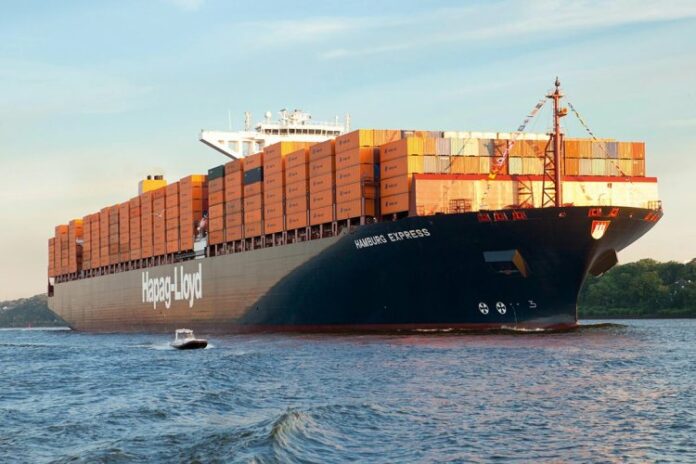
Hapag-Lloyd acquires Africa carrier NileDutch

0

Hapag-Lloyd has successfully closed the acquisition of the Dutch container shipping company Nile Dutch Investments B.V. (NileDutch). After signing a sales and purchase agreement in March, Hapag-Lloyd has now formally acquired all shares of the company after all responsible antitrust authorities had approved the transaction.

Rolf Habben Jansen, CEO of Hapag-Lloyd, explains:

“We are very excited about closing the deal and look forward to working with our new colleagues to unlock the enormous potential that Africa has to offer. With the people from NileDutch joining our company, Hapag-Lloyd is noticeably increasing the number of employees on the ground in Africa. We are happy and excited to welcome NileDutch’s roughly 320 employees to the Hapag-Lloyd family.”

Depending on market conditions, Hapag-Lloyd and NileDutch are aiming to integrate major parts of their businesses already in the later part of 2021 to be able to offer the full benefits of the combined network to their customers as soon as possible.

With 40 years of experience in the market, NileDutch is one of the leading shipping companies along the West African coast. Headquartered in Rotterdam, NileDutch is present in 85 locations across the world and has 16 offices in the Netherlands, Belgium, France, Singapore, China, Angola, Congo and Cameroon. The company also brings with it 7 liner services, around 35,000 TEU of transport capacity, and a container fleet with a capacity of around 80,000 TEU.

The integration will be moving at a swift pace and full commercial integration is expected to be completed by the end of 2021.

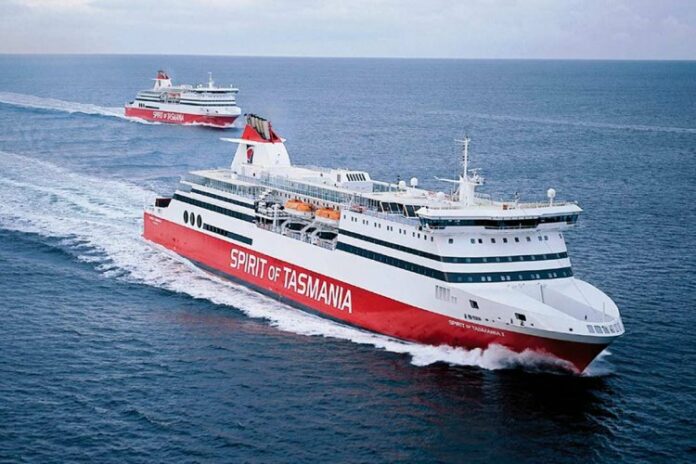
Foreship-conceived Spirit of Tasmania ferries given go-ahead for construction

0

Tasmania-based TT-Line Company Pty Ltd has signed a contract with Finnish shipyard Rauma Marine Constructions (RMC) for the delivery of two new car and passenger ferries conceived by leading naval architecture and marine engineering firm Foreship Ltd. The agreement has been finalised following approval from the Tasmanian Government, with construction set to begin in spring 2022.

Having developed the concept design for the two ferries, Foreship will continue to support TT-Line during the building process, with service provision to include naval architecture, hydrodynamics, cargo and passenger service concept development, and systems engineering. Foreship will also assist in reviewing design documentation, drawings and plans.

Olli Somerkallio, Chief Operating Officer, Foreship, says:

“We are delighted to be lending our expertise to the construction of two new Spirit of Tasmania ferries for TT-Line Company. This is a unique opportunity to work with an iconic Australian ferry brand while reinforcing our relationship with RMC, an important Finnish shipbuilder.”

Due delivery in late 2023 and late 2024, the new Spirit of Tasmania ferries will measure 212 metres in length with a gross tonnage of 48,000 and capacity for 2,000 passengers and crew, making them significantly larger than their predecessors. In addition, the steel monohull vessels will feature over 2,500 lane metres of freight capacity and a separate car deck, as well as 284 cabins. Like the existing ferries, they will transport passengers between Victoria’s capital city of Melbourne and the northern Tasmanian city of Devonport, a voyage that typically takes between nine and eleven hours.

Bernard Dwyer, CEO, TT-Line Company, says:

“The Bass Strait route between Victoria and Tasmania is popular with local and foreign tourists alike, and the new vessels’ increased capacity will allow us to meet​ growing​ demand when passenger traffic trends recover from the pandemic. We appreciate Foreship’s expert assistance in conceiving the design and look forward to the next phase of our collaboration.”

Showcasing Foreship’s credentials in the passenger ship and ferry segment as well as its expanding portfolio of consulting services, the Spirit of Tasmania project sees the company working with shipbuilder RMC for the third time. Most recently, the two parties collaborated on the Kvarken Link-commissioned ferry Aurora Botnia, for which Foreship also provided the concept design. On delivery to operator Wasaline in July, Aurora Botnia will be among the most eco-friendly vessels of its kind at sea.