-3.2 C
New York
Home Blog Page 581

bp and partner EnBW submit transformational bid for ScotWind lease

0

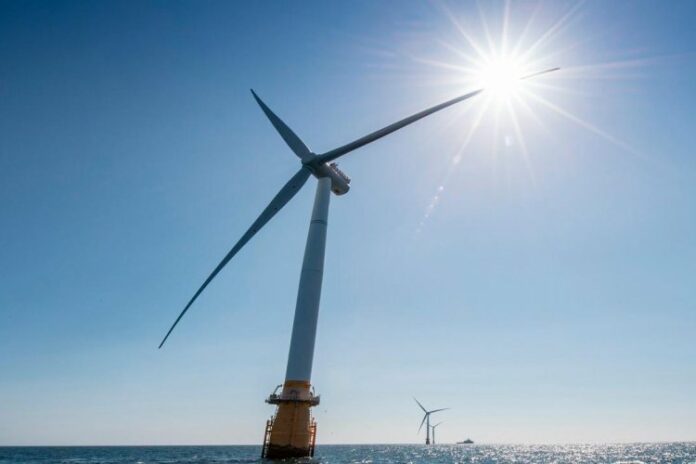
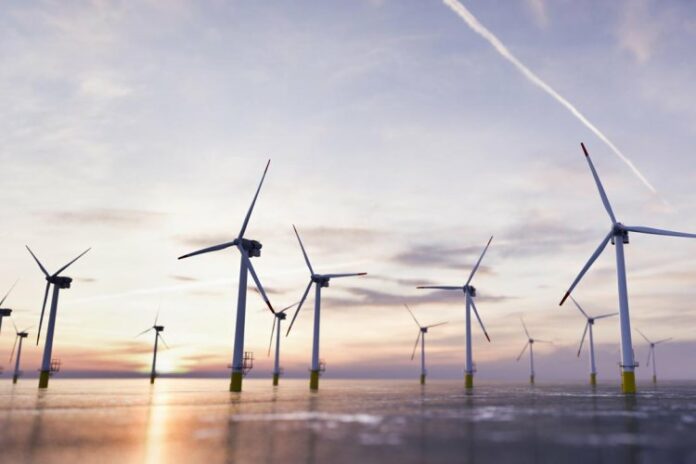
The consortium has applied for a lease area off the east coast of Scotland that could support offshore wind projects with 2.9 gigawatts (GW) generating capacity. But the bid seeks to go far beyond developing wind power and aims to accelerate Scotland’s entire energy transition – from producing clean power to using it in new industries.

A successful bid would bring multi-billion pound investments into Scottish offshore wind projects and supporting infrastructure, including ports, harbours and shipyards. bp also would use its unique integrated business model to invest in net zero industries, including green hydrogen production and significantly accelerating the expansion of Scotland’s EV charging network. 

bp would also make Aberdeen its global offshore wind centre of excellence, supporting its growing portfolio of offshore wind interests across the world.

This further supports Scotland becoming a global leader in offshore wind, developing leading sector capabilities that are exportable worldwide. 

bp, EnBW and Forth Ports have already signed a Heads of Terms agreement with a financial commitment that will supplement Forth Ports’ £40million investment in their planned Renewables Hub at the Port of Leith.
 
Dev Sanyal, bp’s executive vice president for gas and low carbon, said:

“We want to harness the clean power from Scotland’s offshore wind and use our capabilities as an integrated energy company to accelerate the country’s EV charging network, build its hydrogen offering and strengthen its supporting infrastructure, including ports and harbours.”

It represents a significant contribution to the development of Scotland’s offshore renewables infrastructure. This will create new opportunities and long term, high quality jobs, supporting Scotland’s economic recovery and energy transition plans and the achievement of the country’s net zero carbon emissions targets.
bp and EnBW would also support and invest in a new skills capability accelerator developed by energy consultancy Xodus which will provide on-the-job project experience and formal learning. The five-year, multi-million financial commitment includes creating entry-level energy transition roles, and the reskilling of hundreds of oil and gas workers, graduates and technicians with renewable sector capabilities.

Together, these investments would support thousands of jobs in the Scottish energy sector and supply chain, and develop new energy transition jobs, skills and capabilities.

Dev Sanyal, bp’s executive vice president for gas and low carbon, said:

“We want to harness the clean power from Scotland’s offshore wind and use our capabilities as an integrated energy company to accelerate the country’s EV charging network, build its hydrogen offering and strengthen its supporting infrastructure, including ports and harbours. 

“This will all take the right skills and abilities. The bid would build on Scotland’s deep experience in offshore oil and gas, equipping its workforce and supply chain with renewable capabilities, including creating apprenticeships, and supporting thousands of jobs.”

Dr. Georg Stamatelopoulos, chief operating officer of generation and trading at EnBW said:

“EnBW will bring its engineering know-how and track record as one of the leading offshore wind developers into the Scottish market. 

“We are very keen to successfully further develop this project. Last year, we completed the largest German offshore wind project and are very confident in dealing with the complexity of this industry. With this background, we are looking forward to supporting a clean energy future for Scotland.”
In readiness for a successful award, and to engage the local supply chain, bp and EnBW have launched a bespoke online portal for the Scottish engineering and supply sector to take part in the developments.  

Earlier this year, bp and EnBW entered the UK’s offshore wind power sector, forming a 50-50 joint venture to jointly develop and operate two leases in the Irish Sea that offer a combined potential generating capacity of 3GW. bp also has a partnership with Equinor to develop offshore wind projects in the US, including projects with a planned potential 4.4GW generating capacity. Onshore in the US, bp operates nine wind assets across the country and has a gross generating capacity of 1.7GW. 
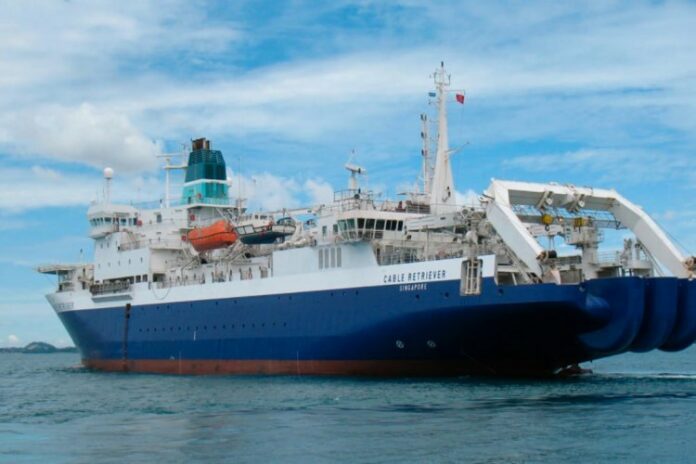
SEAIOCMA extends cable maintenance contract with Global Marine

0

Global Marine has been awarded a contract extension of SEAIOCMA (South East Asia and Indian Ocean Cable Maintenance Agreement) for another five years, running until 31st December 2025.

Global Marine has been providing maintenance services continuously to SEAIOCMA since its inception in 1986. During that time, Global Marine has completed more than 600 repairs, and the fibre network included within the zone has expanded from 34,000 kilometres of cable maintained to today, where it encompasses more than 120,000 kilometres.

The SEAIOCMA zone agreement, a co-operative club managed by 45 cable owners, provides the repair of submarine cables that carry international telecommunications traffic. SEAIOCMA spans the area between Djibouti in the west, Perth in the south, Guam in the east and the northern tip of Taiwan.

A depot constructed in 2019 by Global Marine located in Subic Bay, Philippines, provides a strategic base for Global Marine’s cable maintenance vessel, Cable Retriever, which serves the zone year-round. The depot is ideally situated to facilitate rapid response times for vessel mobilisation within 24 hours of call-out, with spare cable and other essential kit on hand to complete system repairs.

The extension of the SEAIOCMA agreement, renewed on 1st January 2021, demonstrates the continued customer recognition of Global Marine’s reliability in support of long-term contracts, as well as its ability to deliver leading subsea maintenance to customers globally.

Joshua Ang Joon Ping, Chairman of SEAIOCMA said:

“I am extremely pleased that it has been possible to agree terms and conditions with Global Marine, ensuring the SEAIOCMA region will continue to receive a high level of maintenance cover. This is particularly key given the ongoing global pandemic, and the increasing dependence placed on the subsea telecommunications network to enable digital connectivity.”

Equinor, RES and Green Giraffe team up for floating offshore wind growth in France

0

Océole will evaluate and work towards submitting bids in the upcoming floating offshore wind tenders held by the French government.

Establishing this partnership is in line with the three companies’ ambition of delivering high-performance floating offshore wind projects to support France’s targets of up to 6.8 GW offshore wind by 2028 on its path to become carbon neutral by 2050.

Equinor’s senior vice president for business development in Renewables, Jens Økland, says:

“France has set an ambition of becoming among the top markets for floating offshore wind in the next decade. Together with RES and Green Giraffe, we are ready to contribute long term to the country’ ambitious offshore wind plans and develop what could potentially be the first commercial floating offshore wind farm in France. As Océole, we have the industrial competence, technical and financial skills to develop projects where we can create value and capture the benefits of scale for this exciting technology.” 

Delphine Robineau, Offshore Wind Manager at RES says:

“I am delighted for RES to enter a partnership that enhances the complementary nature of all three companies. The experience gathered within Océole demonstrates our ability to develop the floating wind industry in France with projects that are adapted to French territories, while being respectful of the environment and the sea users”.

Navarino’s cyber security solution achieves DNV Type Approval

0

Angel is the first cyber security service designed to meet the unique and diverse requirements of the merchant marine sector that has received such an accreditation. Angel secures a vessel’s business, IoT and crew networks against cyber threats by providing oversight, security threat alerting and control of the vessel’s entire network.

The Cyber Secure class notation from DNV addresses the cyber security of a vessel’s main functions and shipowner’s operational needs. The notation comprises three different qualifiers – Cyber Secure Entry, Cyber Secure Essential and Cyber Secure Advanced, with Angel having been type approved with the 3rd level of DNV’s Cyber Secure class notation: Cyber Secure Advanced. With this type approval, Angel can ensure superior quality assurance from the world’s leading classification society.

With enhanced web filtering, antivirus protection, intrusion detection and prevention, application control, Honeypot, and ICS/Scada protection, Angel delivers multi-layered protection of the vessel. The system’s core component is Juniper’s Unified Threat Management platform which works through Infinity to separate business, IoT and crew traffic, providing separate, secure network traffic flows. This is all backed up by a team of 24/7 security specialists, based at Angel’s Security Operations Centre in Athens, who are dedicated to handling any security issues.

Navarino CEO, Dimitris Tsikopoulos, said:

‘We are very proud that Angel has achieved type approval in accordance with DNV’s Cyber Secure Advanced class notation. As the maritime sector’s digital evolution gathers pace at an ever-greater rate, choosing a cyber security solution that is designed precisely for maritime is important. Angel customers can rest assured that their vessels enjoy certified levels of protection from cyber threats through a valuable collaboration of two industry leading companies.’

Japan’s JFE Steel charters LNG-fuelled Capesize vessels

0

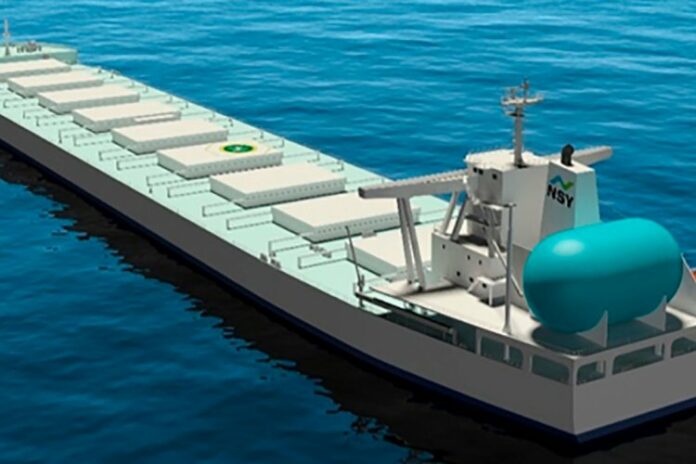
JFE Steel Corporation announced today that it has signed long-term deals with NYK Line, Kawasaki Kisen Kaisha and Mitsui O.S.K. Lines to charter three 210,000-ton LNG-fueled bulk carriers for transporting iron ore and coal from overseas locations to JFE Steel’s steelworks in Japan. JFE Steel will become the first company in Japan to deploy LNG-fueled ships in the 210,000-ton class.

The ships, which have been designed by Nihon Shipyard and will be built by Japan Marine United and Imabari Shipbuilding, are scheduled to be completed successively from the beginning of 2024.

Each ship will have an overall length of less than 300m, beam of up to 50m, freeboard of up to 25m and draft of up to 18.4m. Maximum gross tonnage will be 110,800 tons and maximum deadweight capacity will be 210,000 tons.

JFE Steel’s shift to LNG-powered transportation will support global efforts to create a more carbon-neutral world by reducing greenhouse gas emissions generated during international shipping. Using LNG instead of conventional heavy-oil fuels can reduce emissions of carbon dioxide by around 25-30%, sulfur oxides by roughly 100%, and nitrous oxides by around 85%.

JFE Steel also plans to consider using zero-emission ships powered by other eco-friendly fuels such as ammonia and carbon-recycling methane.

Naval Group will maintain French Navy’s nuclear attack submarines

0

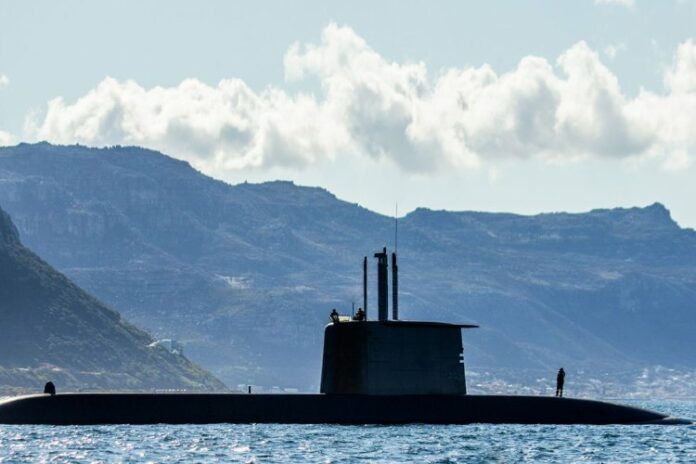
Naval Group and the Fleet Support Service have signed a contract for the operational maintenance of the French Navy’s nuclear attack submarines (SSN) which will be in force for over three years and is worth several hundred million euros.

This agreement includes the maintenance operations of Rubis and Suffren-class SSNs and all the related services: engineering, maintenance of tools and spares, management of the stock of spares, training platforms and maintenance of nuclear installations necessary for the operational maintenance (MCO) of submarines.

The contract came in force early July and brings together all the routine maintenance activities essential to the technical availability of nuclear attack submarines. 

This agreement will mobilise several Naval Group’s partners for the supply of strategic equipments (TechnicAtome, Thales, Safran), the local industrial fabric and over five hundred Naval Group employees based in several sites in France.

This contract is part of a transitional phase between the gradual withdrawal from active service of Rubis-class SSNs and the arrival of the new generation Suffren-classSSN. The aim is for Naval Group to carry out maintenance operations on these two types of SSN which have different technologies and requirements. The infrastructures of the Toulon naval base are currently undergoing a modernisation phase to adapt to this generational change in submarines. 

Vincent Martinot-Largarde, Executive Vice-President, Services, explains:

“Service and technical performance are at the core of this contract. Naval Group guarantees to the French Navy a high level of safety and security as well as a strong technical support capacity. Through this contract, the group is also bound to ensure the availability of critical systems of the vessels.”

Fugro awarded geotechnical contract for La Gan offshore wind farm in Vietnam

0

La Gan Wind Power Development Corporation (La Gan Wind), owned by Copenhagen Infrastructure Partners (CIP), Asiapetro and Novasia, has awarded an offshore geotechnical contract to a consortium led by Vietsovpetro, PTSC G&S and Fugro.

The award is part of CIP’s development plan for the La Gan offshore wind project in Vietnam which, with a potential capacity of 3.5 GW, will be one of the first large-scale offshore wind farms in Vietnam.

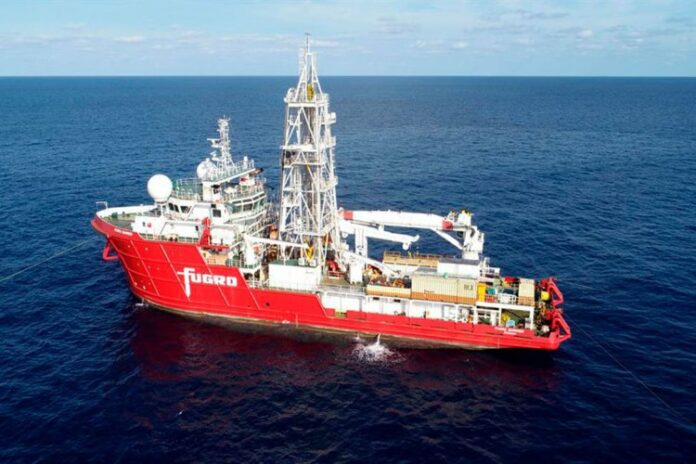
As part of this new contract, Fugro will provide offshore geotechnical services utilising their regional geotechnical vessel, and deliver advanced onshore soils laboratory testing and engineering studies. The initial scope of work will focus on geotechnical boreholes to expand understanding of the La Gan site’s geological features and to build up the geological ground models.

Maya Malik, CEO of the La Gan Wind Power Development Corporation, said:

“As a responsible and experienced developer, the La Gan Wind Power Development Corporation is pleased to partner with reputable companies such as Vietsovpetro, PTSC G&S and Fugro, who will ensure that the geotechnical surveys are conducted to the highest technical, safety and environmental standards. We are also proud to implement a structure that supports the local supply chain and facilitates knowledge transfer between international and local suppliers.”

Jerry Paisley, Fugro’s Director for Marine Site Characterisation in Asia-Pacific, said:

“It is an honour for Fugro to be associated with this landmark La Gan offshore wind farm project and to provide geotechnical solutions supporting Vietnam’s energy transition. CIP and Fugro have worked closely on similar offshore wind projects in the region, especially in Taiwan, and this award to Fugro shows that our Triple A approach of Geo-data acquisition, analysis and advice is clearly recognised by CIP.”

The La Gan wind farm will be constructed in phases, with the first phase scheduled for completion by 2026.

Canadian Coast Guard investing in new Aids to Navigation System for Sydney Harbour

0

The Honourable Bernadette Jordan, Minister of Fisheries, Oceans, and the Canadian Coast Guard has announced that the Canadian Coast Guard will be moving forward with the development of a new system of fixed and floating aids to navigation for the Port of Sydney, in Nova Scotia. The estimated investment for the new system design is approximately $4.5 million.

The Canadian Coast Guard currently maintains the navigational aids marking the safe passage into Sydney Harbour. The current navigational aids system does not support the Port and users to maximize full potential for deeper draught vessels.   

In consultation with the Port of Sydney Development Corporation, the Coast Guard is working with key users and stakeholders on requirements and design of a new system of navigational aids for the Port. The new navigational aids system will  provide an increased level of service and allow for the safe use of the deep water channel that was created in a dredging project in 2012.

The conceptual design is nearing completion, and the Canadian Coast Guard will begin pre-project work this year, with the intention of beginning installation work in 2022.  

The Honourable Bernadette Jordan, Minister of Fisheries, Oceans and the Canadian Coast Guard, said:

“The federal government is investing in the Port of Sydney so we can make it safer for mariners arriving in our community. Dependable aids to navigation are critical to managing vessel traffic. Thanks to my colleagues Mike Kelloway and Jaime Battiste for their advocacy on this project. I’m so pleased to see this investment that supports the economic heart of the community.”

Jaime Battiste, Member of Parliament for Sydney-Victoria, said:

“Securing these navigational aids will realize the potential of the dredged and deepened Sydney Harbour, opening our port to large vessels and increases in traffic as our economies reopen and tourism returns, unlocking the economic potential around Sydney Harbour.” 

Mike Kelloway, Member of Parliament for Cape Breton-Canso, said:

“Navigational aids for Sydney Harbour are a key piece of infrastructure for Cape Breton-Canso. This is not only a matter of investing in marine safety and safe passage – the investment ensures that we can begin to welcome larger vessels into our dredged harbour. I’m proud to be part of a federal government that continues to see the value in our local communities and marine industry.”

Air Liquide becomes main partner of Energy Observer

0

This new stage in their collaboration, featuring a technological support component, is fully in line with the sustainable development objectives of the Air Liquide Group, including its commitments to renewable hydrogen in particular.

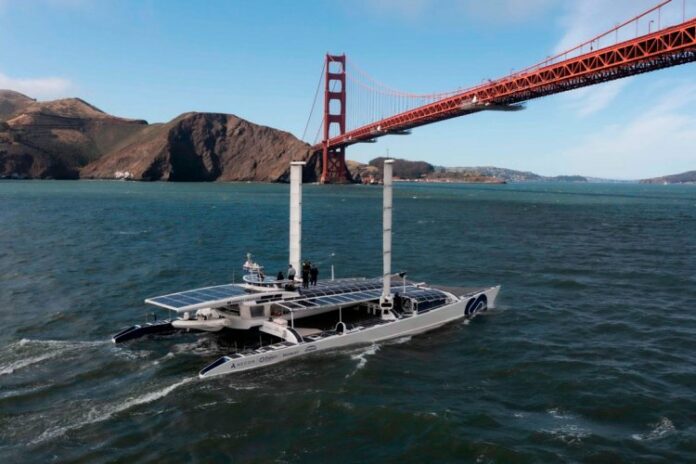
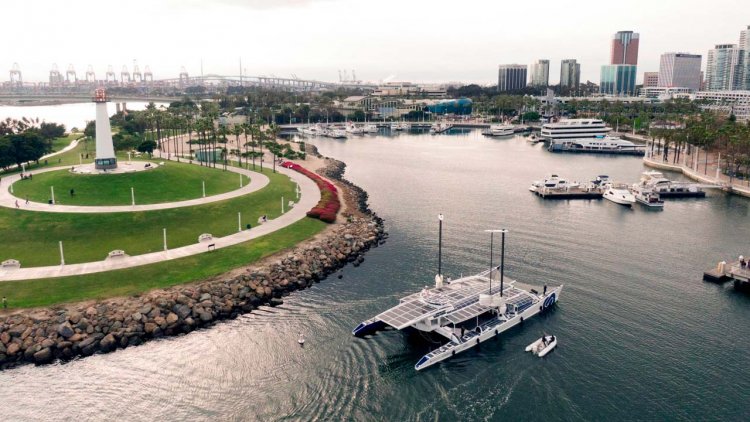
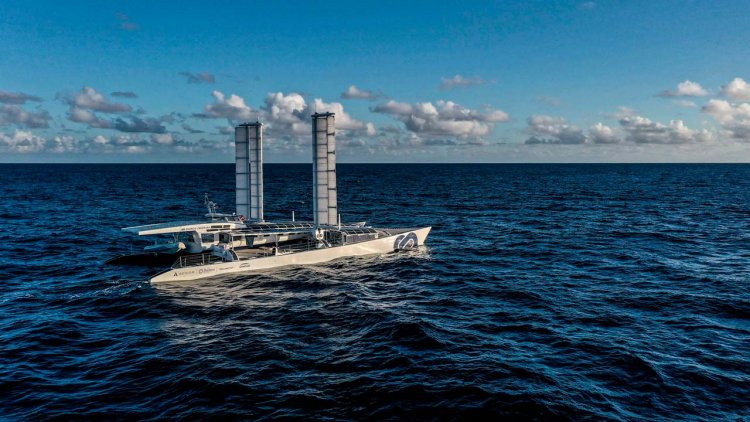
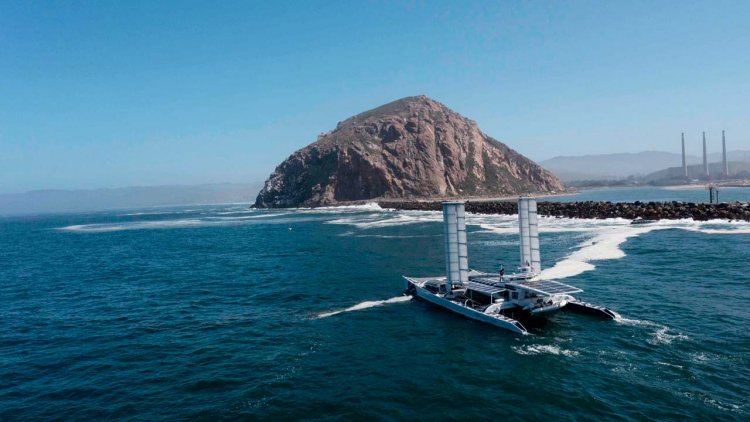
As the first ship autonomous in energy, and a French ambassador for the Sustainable Development Goals, Energy Observer explores concrete solutions and develops technologies to accelerate ecological transition. Since its launch in April 2017 in Saint-Malo, and even before its departure for a zero-emission world tour, Air Liquide has been supporting this scientific and technological project by becoming an official supporter. 

Hydrogen is the cornerstone of the Energy Observer energy chain. Indeed, the key characteristic of Energy Observer is its energy mix, including three sources of renewable energies as well as a complete hydrogen production chain on board the ship using sea water electrolysis. The green hydrogen produced can store a large amount of energy, and does not release any CO2 or fine-particle emissions. Its use, combined with short-term battery storage, has enabled the ship to sail fully autonomously for 4 years over 75,000 km in extreme conditions, through the Mediterranean, then the Arctic and the Atlantic, and now the Pacific.

Energy Observer is now in a new phase of its development in which, via its subsidiary EODev (Energy Observer Developments), it provides the various maritime and port communities, but also on land applications with innovative, sustainable, reliable and accessible energy solutions, such as GEH₂ – the hydrogen power generator used during the event the “Paris de l’hydrogène” organized by Energy Observer. This zero-emission hydrogen power generator has made it possible to light up the Eiffel Tower for the very first time using certified renewable hydrogen, supplied by Air Liquide. A shared ambition and obvious synergies have naturally led Air Liquide to strengthen its commitment to the project for the next 4 years, as main partner. 

This new stage will take the form of support to the Energy Observer Foundation to enable L’Odyssée to continue its mission to raise awareness and educate, but also through skills sponsorship. For example, Air Liquide employees, who have developed unique expertise across the entire hydrogen value chain, may be called upon to collaborate on Research & Development projects conducted in the form of a partnership. This approach is in line with the Group’s sustainable development objectives, and specifically with its commitments to accelerate the development of renewable hydrogen. 

Matthieu Giard, Vice President, member of the Executive Committee, supervising Hydrogen activities, said :

“Through the collaboration of our teams with Energy Observer’s, and the testing of hydrogen technologies in extreme environments, we will be able to accelerate the development of hydrogen-based solutions and their large-scale applications, in particular in the maritime sector. It is by acting now, as we prepare for the future and develop new models of sustainable mobility, that we will be able to have a positive impact on tomorrow’s society.”

Petrofac proves value of digital modifications execution in industry first

0

Part of Petrofac’s strategy to drive best-in-class delivery for its clients, the digital process enables offshore crew to capture detailed visual and measurement data through a process called Self-Capture Point Cloud.

Photogrammetric data is collected using intuitive camera equipment, transferred directly to the asset’s Digital Twin and converted into a point cloud, which can be used to design asset modifications to a high level of dimensional accuracy. Using this technique, Petrofac was able to undertake a spool piece replacement in the North Sea, avoiding the need to mobilise a survey team – a first for the UK energy industry.

Steve Johnson, Vice President of Digital for Petrofac’s Engineering and Production Services business, commented:

“As our industry continues to balance its focus on the maximisation of economic recovery and accelerating towards a lower-carbon future, this type of digital execution provides a means to optimise use of existing infrastructure by extending field life, whilst reducing offshore travel.

“Data is captured at the point of inspection and core teams are empowered to execute modifications without a time-consuming survey process, ultimately unlocking significant value for our clients through increased uptime and cost efficiencies.”

Signaling the future way of working, the solution has proven to present sustainable value and cost savings, by eliminating the requirement for offshore surveys.

Johnson concluded:

“With all our customers’ assets requiring planned production shutdowns incorporating pipework anomalies and new subsea tiebacks requiring piping tie-ins, this technology will accelerate what is often a critical path activity and allow production to be started earlier than ever before.”