-7.4 C
New York
Home Blog Page 582

Opinion: Carbon recycled methane can be recognized as zero emission ship fuel

0

The “Ship Carbon Recycling Working Group (WG)” of Japan’s Carbon Capture & Reuse (CCR) Study Group has confirmed that carbon recycled methane produced by methanation technology can be recognized as zero emission ship fuel. A technical paper describing the details of the calculation procedure and evaluation conducted by the WG has been published in the latest issue of the journal of Japan Institute of Marine Engineering.

Carbon recycling, which is the process of capturing and reusing emitted CO2, is becoming increasingly important as one of the pathways to realize a carbon-neutral society.

To explore the feasibility of the concept of utilizing methanation technology for zero-emission ship fuels, the WG was formed within Japan’s CCR Study Group, and started its activity in July 2020. Since it is a basic premise for the WG’s activity that carbon recycled methane can be recognized as zero-emission fuel, the WG firstly worked on the evaluation of its potential.

While International Maritime Organization (IMO) has yet to develop the rules for calculating emissions from the onboard fuel combustion of carbon recycled methane (Tank to Propeller), the importance to be cognizant of CO2 emissions in the fuel supply process (Well to Tank) has been noted.

The WG has assumed and evaluated the following four processes as the supply chain for carbon-recycled methane fuel: CO2 separation and capture, CO2 transportation, methanation fuel synthesis, and methanation fuel liquefaction. As a result, the CO2 emission per unit calorific value of carbon-recycled methane fuel by methanation was calculated as approximately 27-gCO2/MJ (regarded as Well to Propeller).

This figure is comparable to other alternative fuel candidates generally recognized as zero-emission fuels, confirming that carbon-recycled methane can be recognized as zero emission ship fuel. In addition, further reduction to approximately 20-gCO2/MJ is expected by improving the efficiency of the separation and capture technology, and using electricity produced from renewable energy.

A technical paper describing the details of the calculation procedures and evaluation involved in this study was published in the journal of Institute of Japan Marine Engineering, Vol. 56, No. 4.

In order to verify the feasibility of carbon recycled methane as a ship fuel, the WG will continue to work on issues such as CO2 transportation by large-scale liquified CO2 carrier vessels, supply of hydrogen from renewable energy, prevention of methane slip, supply infrastructure of liquefied methanation fuel, and economic viability.

ABS releases industry-leading guidance on autonomous and remote-control technologies

0

A new ABS Guide for Autonomous and Remote-Control Functions sets out a goal-based framework for the implementation of these technologies on vessels and offshore units. and introduces two new notations.

The Guide introduces the ABS Remote-Control and Autonomous notations. Development of the guidance was informed by experiences on remote-control and autonomous operations tug projects in Europe, Asia and the Americas.

Patrick Ryan, ABS Senior Vice President, Global Engineering and Technology, said:

“ABS is proud to partner with innovative companies developing some of the most advanced remote-control and autonomous systems in order to deliver world-leading, safety-related guidance on implementation of these technologies. The practical capability of these technologies has increased rapidly in recent years and ABS has been at the forefront of these advances. Given our collaborations and experience, we are well placed to support their introduction to the global fleet, and the Guide reflects the deep insights we have developed.”  

The Guide’s goal-based framework also covers interactions with relevant stakeholders such as port authorities and other vessels. The Guide uses a risk-based approach to determine the requirements for the assessment and implementation of autonomous and remote-control functions.

Saipem launches solution for offshore production of green hydrogen

0

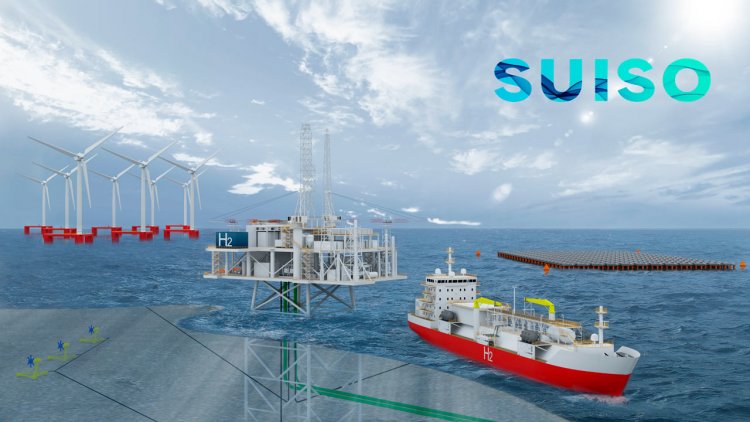
Saipem launches SUISO, a technological solution for the production of green hydrogen thus confirming its commitment to support its clients in the energy transition. The trademark has been registered with the European Union Intellectual Property Office (EUIPO).

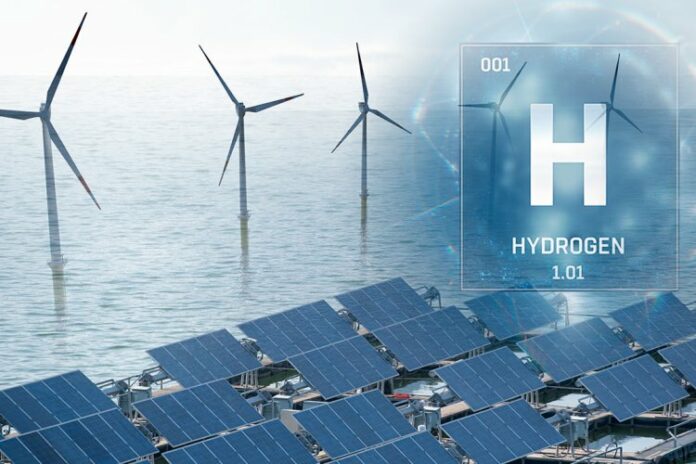
SUISO combines various renewable energy sources such as floating wind, floating solar and marine energy in a single system. The aim is to power, together or individually, electrolyzes installed on existing offshore platforms for the production of green hydrogen. The technology responds to the growing demand for green hydrogen production and, at the same time, it allows the conversion of oil & gas offshore facilities which have now reached the end of their life cycle. The oxygen resulting from this process can be used in various areas such as aquaculture or seaweed production.

Thanks to these features, SUISO will find its first application in the AGNES project, the offshore energy hub that Saipem, in partnership with QINT’X, intends to build off the Adriatic coast of Ravenna. 

Francesco Caio, CEO of Saipem, commented:

“The SUISO brand is an example of Saipem’s ability to find innovative and sustainable solutions to lead its clients in the energy transition. The solution is adaptable to the changing characteristics of the marine sites and to the different production needs. The know-how gained in the design and execution of infrastructures and technologically advanced plants allows Saipem to cover the green hydrogen production value chain and to be a strategic partner in the path towards a net zero economy”.

ESL Shipping starts Virtual Arrival trial

0

ESL Shipping, steel producer SSAB and Port of Oxelösund have started Virtual Arrival trial in the Luleå-Oxelösund traffic. 

Operations Director Kirsi Ylärinne says:

“The aim is to extend the Virtual Arrival to other common trade lines after the summer. It is delightful to see that other customers have shown strong interest in the concept too.”

The basic idea of Virtual Arrival is to reduce a vessel’s speed to meet revised arrival time if it is known that the berth will not be free on arrival. Regardless of the actual arrival time, the vessel still retains its place in the line-up based on the arrival time in normal service speed. In addition to decreased environmental footprint, Virtual Arrival gives a port better tools for more reliable scheduling and line-up of vessels.

Equinor ready to further develop floating offshore wind in Scotland

0

The offshore energy company says the ScotWind Leasing round is a good strategic fit with its ambitions to continue to develop its North Sea offshore wind cluster and further deepen its presence across the UK.

With around half of the sites being floating offshore wind opportunities, the offshore energy company believes the Scottish Government is offering a great opportunity to develop large floating offshore wind projects at scale.

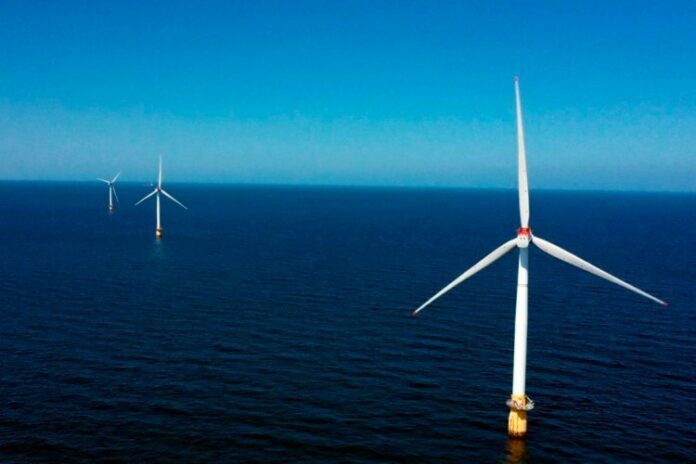
Equinor has more than a decade of operating experience from floating offshore wind and is the world’s leading floating offshore wind developer with floating wind turbines already deployed and producing electricity at Hywind, located off the northeast coast of Scotland.

Since Hywind Scotland started operations in 2019, the flagship project consistently provided the highest capacity factor among all UK offshore wind farms, proving the true potential of applying floating wind technology to get access to the best wind sources.

Equinor’s senior vice president for business development in Renewables, Jens Økland, says:

“Equinor has the experience and capabilities necessary to develop the next full-scale floating offshore wind farm in Scotland following Hywind Scotland. By leveraging our offshore execution capabilities and our leading position in floating offshore wind, we are ready to create more long-term value and drive the industrialisation of floating offshore wind further. We see floating wind as an enabler for the Scottish Government to achieve its offshore wind targets and help reach its ambitious net zero target of 2045.”

The Scottish Government has committed to reduce emissions to net zero by 2045, one of the most ambitious targets globally. To support this ambition, they have set a target to deliver up to 11GW of offshore wind capacity by 2030.

Equinor’s offshore wind strategy is to create value through early access at scale and deepening in regional clusters. The North Sea has among the world’s best wind resources and is Equinor’s largest and most mature offshore wind cluster, making it the backbone of Equinor’s offshore wind portfolio.

In Scotland, Equinor has a broad range of activities that are contributing towards a sustainable energy transition.

As operator of Hywind Scotland, the world’s first floating offshore wind farm located near Peterhead, the offshore energy company knows the potential that lies in developing offshore wind off the Scottish coast.

Also at Peterhead, Equinor together with its partner, SSE Thermal, plans to jointly develop a new low-carbon power station, which could become one of the UK’s first power stations equipped with carbon capture technology. The Peterhead CCS Power Station would propel the UK’s ambitions for carbon capture in power generation, meeting 15% of the UK Government’s 10 million tonne target for carbon captured by 2030.

Økland says:

“A net zero world needs offshore wind to grow fast and at scale. We are an offshore energy company playing to our strengths, leveraging our execution capabilities and our leading position in floating offshore wind. Applying these capabilities in developing large-scale offshore wind projects and low carbon technologies puts us in a strong position to create long term value for shareholders and support the UK in reaching its net zero targets.”

Atlantic Towing selects Vard Electro’s battery technology to reduce GHG emissions

0

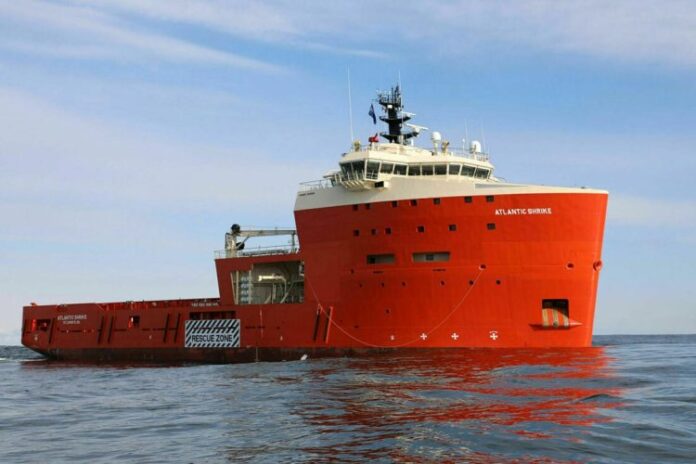
Atlantic Towing is the first company to implement this multiple mode application of battery technologies on a single vessel in the Canadian Offshore Oil and Gas Industry.

Through cooperation across borders Vard Electro is utilizing its vast technological experience to meet the project requirements. As the market continues to reach for novel technology to contribute in reducing emissions, Vard Electro is continuously developing new products to increase energy efficiency. For this project we have combined our previous engineering experience with local expertise to find the best solution for Atlantic Towing.

Atlantic Towing has received funding for the project through Petroleum Research Newfoundland & Labrador (PRNL) as a component of the offshore research, development and demonstration program of Natural Resources Canada’s (NRCan) Emissions Reduction Fund (ERF). The funding will support pioneering upgrades to the Platform Supply Vessel, Atlantic Shrike and allows the integration of battery systems into the vessel’s existing diesel-electric propulsion plant.

The vessel is based in Atlantic Towing’s homeport of St. John’s, Canada and is one of four modern diesel-electric builds.

By utilizing its long experience as a system integrator, Vard Electro will deliver a containerized energy storage system for hybrid battery power. Supporting Atlantic Towing’s goal of reducing their carbon footprint the SeaQ Energy Storage System (ESS) will enable decreased fuel consumption and carbon emissions. The conversion will also reduce the vessel’s maintenance requirement without compromising operational performance.

Peter Pilskog, Vice President Sales & Business Development, Vard Electro, says:

“We share the ambitions of Atlantic Towing and are looking forward to implement the products and integrated solutions that will lead to a greener industry. The innovative design and extended battery size offer a range of benefits and will be a perfect fit for the operational profile of this vesse.”

Pierre Poulain, Managing Director, Vard Electro Canada, says:

“The team in Canada is very excited about this project. We are thrilled to be installing our innovative and cost-effective SeaQ solutions that has been adapted to the local industry requirements.”

The main system components are all fitted into the self-containing deck house to ensure a fast vessel installation while keeping a high focus on the quality. Control and monitoring of the hybrid system is handled by the energy management system (EMS) that communicates with the existing control systems onboard. The SeaQ ESS includes modes for peak shaving, spinning reserve and Zero emission transit. By using the batteries to absorb and dispense energy through load fluctuations and running the engines at optimal load, significant efficiency improvements in fuel consumption and emission reduction can be achieved.

SeaQ ESS is based on unique hybrid technology. The main purpose of the system is to reduce emissions, fuel consumption and increase safety. The SeaQ ESS store excess energy available in the vessel and use it later to reduce fuel consumption and optimize the performance of the vessel. It facilitates for operations with fewer engines online, and the engines online can operate at a more optimal load. Safety is increased due to the batteries’ ability to supply immediate energy in critical situations.

To simplify installation, integration and make energy storage systems more flexible, we have standardized design while innovatively tailoring the interface to the vessel’s systems.

The system can be used as a spinning reserve in DP operations, to enhance dynamic response, to perform peak shaving of loads, for strategic loading where the operating point of the gensets is optimized for battery only operations with zero-emission.

Cavotec secures order with Port of Stockholm for an automated mooring system

0

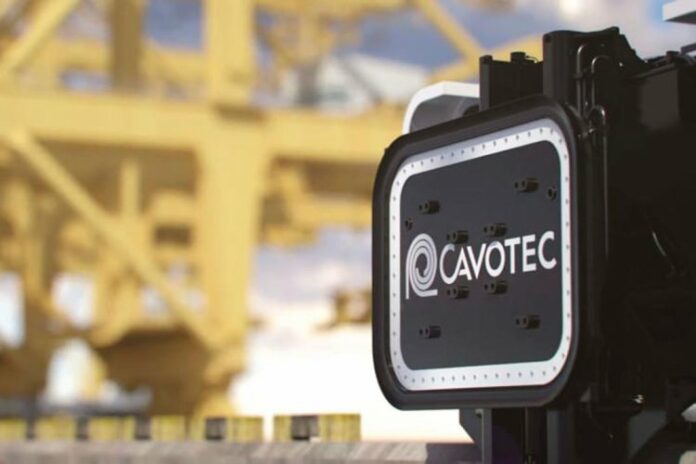
Cavotec has extended its leading position in automated mooring with two major orders for its MoorMaster™ NxG system, one in Sweden – the first order for MoorMaster in a market with considerable growth potential – and the other in neighbouring Finland, where the technology is already well established.

The two multi-unit systems incorporate the latest generation MoorMaster, the NxG, and will be installed at either end of a major passenger and vehicle ferry service, at the Port of Kapellskär in Sweden, owned by Port of Stockholm, and the Port of Naantali in Finland.

The systems will moor and release Finnlines’ existing Ro/Pax ferries as well as two 235 meter-long Superstar Ro/Pax ferries currently under construction. The vessels will call at each port twice daily.

The MoorMaster systems will enable rapid turnaround times for the two vessels, making it possible for them to cruise slower at sea, thereby reducing CO2 emissions by up to 5,000 tonnes per year. Furthermore, by replacing hazardous conventional mooring lines with remote controlled vacuum pads, the systems will also create a step-change in safety for shoreside and ship personnel.

Mikael Norin, Cavotec CEO, says:

“This order is another sign of how what used to be a niche technology is becoming mainstream as ports around the world are looking for ways of making their operations safer, more efficient, and more sustainable.”

This breakthrough project will position MoorMaster for wide market adoption in Sweden, similar to in neighboring Norway and Finland. The Port of Naantali installation will be the fourth MoorMaster installation in Finland.

Cavotec will manufacture, install, and commission the systems, which are scheduled to enter service in 2023.

The latest generation of MoorMaster, the NxG, was launched in October 2020. The product has been re-designed from the ground-up for easy integration in existing, operational terminals.

MoorMaster eliminates the need for conventional mooring lines by replacing them with automated vacuum pads that moor and release vessels in seconds. Its patent-protected Active Control™ technology minimises vessel motion, thereby drastically improving port productivity. First introduced two decades ago, MoorMaster is the only proven and widely used vacuum mooring technology. It is used at is used at bulk, container handling, lock, roll-on/roll-off, and ship-to-ship applications worldwide.

Viking’s eighth ocean ship floated out at Italian shipyard

0

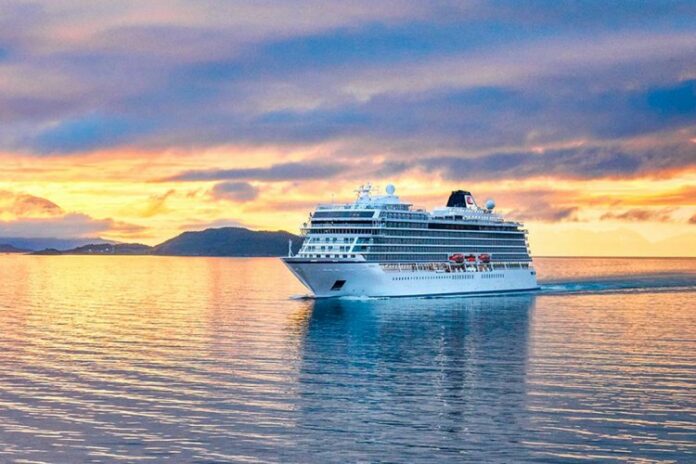
Viking® has announced its newest ocean ship – the 930-guest Viking Mars® – was “floated out,” marking a major construction milestone and the first time the ship has touched water. The ship will be similar to its sister ships at about 47,800 gross tons with 465 cabins.

Viking also announced that Viking Mars, which is scheduled to debut in early 2022, will officially be named by her ceremonial godmother, Lady Fiona Carnarvon, the eighth Countess of Carnarvon.

Karine Hagen, Executive Vice President of Viking, said:

“The last year and a half has been a period of uncertainty for all of us, and it is in those times that you know your true friends. Lady Carnarvon has done so much to help Viking, including opening her home almost weekly for our guests to experience life ‘At Home at Highclere’ on Viking.TV.”  

“I am both honored and privileged to be chosen as godmother to the Viking Mars, the latest addition to Viking’s beautiful cruise ships. I’ve no doubt she will delight the many guests who travel with her across the seas and oceans.”

The traditional float out ceremony took place at Fincantieri’s Ancona shipyard and is significant because it denotes a ship moving into its final stage of construction. 

AAM launches 50’ research vessel for NOAA

0

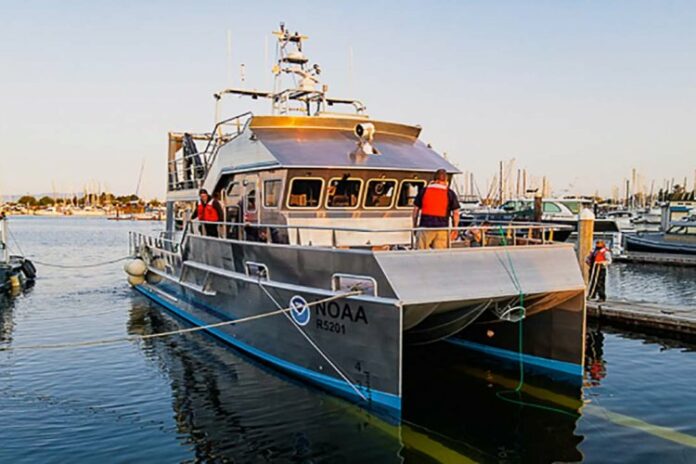
All American Marine (AAM) has launched a 50’ Research Vessel for the National Oceanic and Atmospheric Administration (NOAA), designated for the Olympic Coast National Marine Sanctuary in Washington State. 

The twin-engine Teknicraft Design vessel was constructed by AAM to USCG Subchapter T standards. The vessel will carry up to 18 personnel on board on a near coastal route. Olympic Coast National Marine Sanctuary OCNMS) includes 3,188 square miles of marine waters off the rugged Olympic Peninsula coastline. The sanctuary extends 25 to 50 miles seaward, covering much of the continental shelf and several major submarine canyons.

The semi-displacement catamaran hull for this vessel was developed by Nic de Waal of Teknicraft Design in Auckland, New Zealand. The design integrates a Teknicraft hull shape and is complemented by Teknicraft’s signature integration of a wave piercer that is positioned between the catamaran sponsons to break up wave action and ensure reduced drag while conducting research missions in and around the Olympic Peninsula region. The catamaran is also highly stable and has outstanding seakeeping ability. 

For the operator, one of the most valuable features of this vessel is the excellent fuel economy. Powered by twin Cummins QSC8.3 engines with twin propellers, this custom vessel will serve as a valuable asset for NOAA’s specific mission. The vessel will host a variety of research missions and visiting scientists concentrating on seafloor mapping, habitat characterization, data collection, and the monitoring of the health of ocean species and marine wildlife.

Ron Wille, All American Marine’s President and COO, stated:

“All American Marine worked diligently with Teknicraft to design a flexible platform that could quickly and easily be reconfigured depending on the current mission. This feature was critical for NOAA’s research purposes. All American has constructed a number of vessels for NOAA, and we are always excited to work with this essential agency. The Office of Marine Sanctuaries serves as the trustee for a network of marine protected areas encompassing more than 600,000 square miles of marine and Great Lakes waters from Washington state to the Florida Keys, and from Lake Huron to American Samoa.”

Onboard the vessel there is approximately 250 square feet of working space on the aft deck, with a complete complement of working gear and an extensive grid of deck sockets. The deck sockets are spaced every two feet and allow equipment and gear to be secured, moved, or removed from the working deck. There is a flybridge with a bimini top covering on the upper deck, allowing vessel operations from a higher elevation while conducting research missions. The top deck also features an Interocean Conduction Wire Winch, Hauling Winch, and a Morgan300.4 crane. 

The main deck features an adjustable A-Frame for launching scientific equipment. Additional features of the research vessel include both a wet laboratory for examining specimens and a dry laboratory for processing data.  Onboard the vessel’s main deck is a fully equipped galley and comfortable dinette with settee/bunk, kitchenette, and wet head. NOAA plans to exercise all options to be included in the vessel, including an upgrade on the working deck equipment, a removable Universal Sonar Mount where additional scientific equipment can be placed, and an HVAC upgrade.

Kevin Grant, deputy superintendent of Olympic Coast National Marine Sanctuary, stated:

“A larger, more stable vessel will not only expand the potential for OCNMS operations but also make it a more viable asset for our partners. This new vessel will help the sanctuary provide science-based solutions that address evolving environmental pressures on our ocean and coasts.”

Tracerco secures contract to provide oil inflow measurement using tracer technology

0

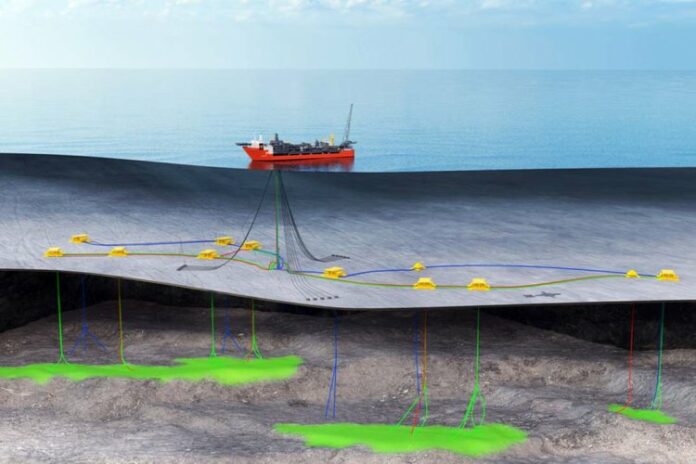
Industrial technology service provider Tracerco, part of Johnson Matthey Plc, has been awarded a contract to provide tracer technology for inflow measurement to help maximise oil recovery from the Johan Castberg Field, offshore Norway.

Operated by Equinor and its partners, the Johan Castberg field development comprises three oil discoveries; Skrugard, Havis and Drivis and is expected to come on stream in 2023, producing for 30 years. Tracerco’s oil and water inflow measurement solution will provide a continuous picture of well performance as part of the field development.

The contract was awarded to Tracerco to monitor seven pre-drilled producers using Tracerco’s proven inflow tracer technology installed as part of the lower completion design to monitor clean-up efficiency, locate water breakthrough, and quantify zonal oil contribution at a fraction of the cost of a PLT or wired system.

Hailu Kebede Abay, Technical Sales Manager for Tracerco said:

“With over 30 years proven experience in delivering successful tracer projects, we continuously enhance our pioneering tracer technology to provide customers with a true understanding of reservoir fluid flow, without wires or intervention. This latest contract award demonstrates that operator’s value continuous monitoring of their wells to maximise oil production. We enable our customers to make critical field development decisions faster, with confidence and extract every barrel of oil possible.”