-3.2 C
New York
Home Blog Page 580

Wärtsilä engines running on hydrogen blends selected for Keppel O&M’s Floating Living Lab

0

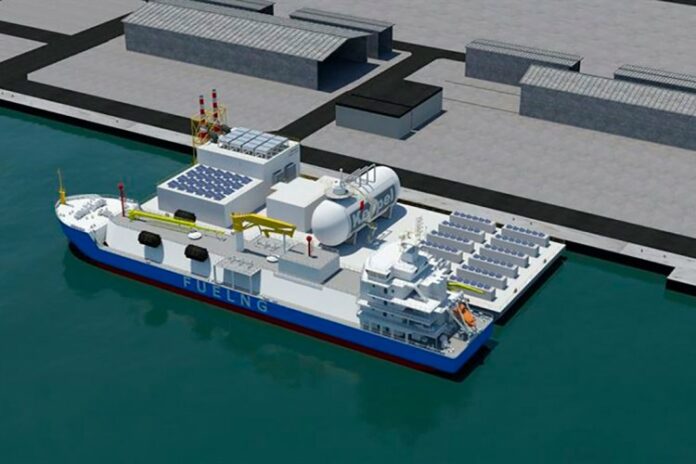
The technology group Wärtsilä will provide engine generating sets, which will run on a hydrogen and natural gas blend, for Keppel Offshore & Marine’s (Keppel O&M) ‘Floating Living Lab’ (FLL), the first-of-its-kind offshore floating testbed in Singapore. The order with Wärtsilä was placed in December 2020 by Keppel FELS, a subsidiary of Keppel O&M.

The FLL project comprises a floating barge with LNG bunkering facilities for harbour crafts and small vessels. It will also house an embedded power generation system to power Keppel O&M’s operations, with excess electricity to be exported to the national grid or stored in the FLL’s Energy Storage Systems.

The power generation system will operate on two Wärtsilä 34SG engines running on natural gas/LNG and having a combined output of 11.6 MW. The Wärtsilä engines are also capable of operating on gas with up to 3 percent hydrogen, and with modifications can utilise up to 25 percent hydrogen. The engines are scheduled for delivery in the third quarter of 2021, and the power generation system is expected to be fully operational by the first quarter of 2022.

Mr Tan Leong Peng, Managing Director (New Builds), Keppel O&M, said:

“As the maritime industry moves towards cleaner energy solutions, Keppel O&M is leveraging its expertise to optimise energy consumption and reduce carbon emissions for marine vessels by exploring different energy mixes such as blending hydrogen into LNG, and using its Floating Living Lab to testbed these solutions. This is in line with Keppel’s Vision 2030, which includes seizing opportunities in new energy such as hydrogen. We are looking for future-proof solutions and engines with overall efficiency and capability for burning hydrogen was an important consideration in the award of this contract.”

Nicolas Leong, Energy Business Director, North & South East Asia, Wärtsilä, commented:

“The Wärtsilä generating sets will use the boil-off gas from the LNG process for power generation, and will be running in parallel with the grid, energy storage, and solar energy. With the focus being on developing competences for greener fuels, our solutions for incorporating future fuels, such as hydrogen, is gaining solid interest for innovative projects such as this one.”

DBS, MPA complete live bunker delivery financing pilot with digital bunker delivery note

0

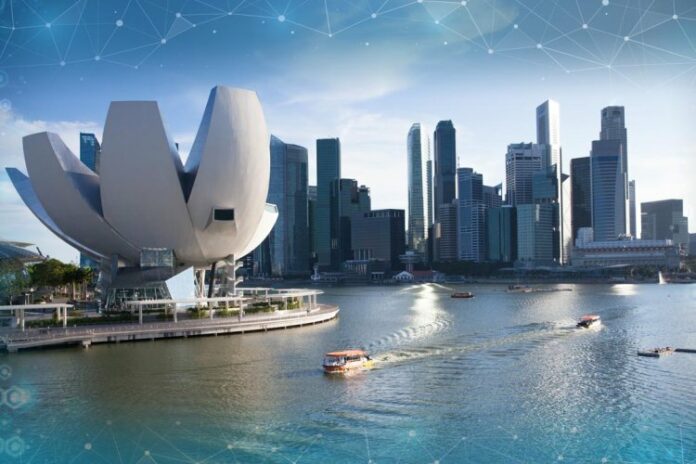
To up the ante on the digitalisation of Singapore’s bunkering sector, DBS, in partnership with Trafigura Group’s marine fuels supply and procurement joint venture TFG Marine, leading maritime players Ocean Network Express (ONE) and Ascenz, and supported by the Maritime and Port Authority of Singapore (MPA), have successfully completed Singapore’s first live bunker delivery financing pilot transaction. The transaction was done by way of an electronic bunker delivery note (BDN).

Singapore is the world’s leading bunkering hub in terms of volume, with close to 50 million tonnes of marine fuel sold in 2020. However, banks currently rely on physical copies of the BDN and other supporting documents to avail bunker financing to clients. This is a cumbersome process that typically takes a few days to a week as clients have to manually deliver the physical BDN back to shore for compilation with other paper documents, before a trade finance application can be submitted. The newly digitalised process demonstrated that in future clients will be able to obtain financing for their underlying trade in under two hours, enabling them to obtain working capital faster and better manage their cashflows.

Another pain-point the digital BDN mitigates against is the risk of fraud in the bunker industry. In the traditional bunker trade world, the physical BDN has a higher risk of being manipulated as it can be used to request for financing for underlying deliveries which may not be genuine or which could have already been financed by another bank. With the digitalisation of the BDN, this risk is mitigated as counterparties are now able to ascertain the trade data at source. This is done by leveraging the Mass Flow Meter (MFM) system for bunkering electronically. This helps to provide greater transparency and certainty to participants in the bunker trade supply chain ecosystem.

Sriram Muthukrishnan, Group Head of Trade Product Management, DBS, said:

“Trust and transparency are the keys to Singapore’s continued leadership in trade and trade finance. The digitalisation of bunker delivery notes is one of many pivotal steps necessary to transition Singapore’s bunkering sector into the digital era and to ensure our port and shipping industry is future-ready. The objective is to co-create an end-to-end digital workflow that enhances efficiency and transparency for bunker trades, while building trust with banks and shipowners which are fundamental to the long-term growth and development of Singapore’s bunker ecosystem.”

Kenneth Lim, Assistant Chief Executive (Industry) of MPA, said:

“MPA has been accelerating the maritime industry’s digital transformation efforts, and these include digitalisation of the bunkering sector, a vital part of our hub port service offering. The adoption of digital documentations will help stakeholders across the value chain move towards more efficient and transparent operations that are aided by data-driven decision making.”

Kenneth Dam, Global Head of Bunkering, TFG Marine said:

“This pilot project has allowed TFG Marine to demonstrate how the use of Mass Flow Meters, that we have installed on our barges in the port of Singapore and elsewhere, not only increases transparency for customers in terms of the quantity of fuel received, but can also be adapted to provide real time information as a digital bunker delivery note to counterparties including customers, the port authority, financing banks and port agents. Singapore is already one of the busiest bunker hubs in the world and will benefit further by utilising digitalisation to increase transparency.”

Julien Glory, Chief Executive Officer, Ascenz, said:

“Our electronic bunkering delivery note provides Singapore’s maritime ecosystem with a more efficient, accurate and transparent data collection technology. By improving the end-to-end traceability, this major innovation supports trust between participants in the bunker trade, including banks, buyers and suppliers. With the digital revolution speeding up in the maritime sector, Ascenz is well positioned to help the maritime players sail that ocean of opportunities. We build smart technology to support their efficiency and sustainability.”

Takashi Kase, Senior Vice President (Fuel & Global Vessel Operations), ONE, said:

“The eBDN is a significant milestone for the Singapore Marine Fuel industry and ONE is proud to be an integral part of this journey to drive digitalisation and enable enhanced efficiency. Singapore Maritime ecosystem’s readiness to leapfrog and lead the global industry innovations, creating a transparent and well-managed digitisation flow, will further strengthen the dependability and reliability of Singapore as a Marine Fuel Hub.”

The live pilot transaction comes on the back of a joint agreement signed between DBS and MPA in 2020, to accelerate the digitalisation and innovation of financial services and payments across Singapore’s maritime industry.

The collaborative areas which MPA and DBS have identified include streamlining and enabling payment transactions between the users of maritime services to expedite end-to-end payment life cycles, as well as digitalising supporting documents for financing. MPA and DBS will also facilitate innovation and creation of potential new financial solutions with the startups ecosystem for the maritime sector.

For the next phase of development, there are plans to integrate the use of digital BDNs with SGTraDex once the digital utility is operational in 2022. Developed by public and private sector partners led by the Alliance for Action (AfA) on Supply Chain Digitalisation, SGTraDex is a common data infrastructure launched in July 2021 to facilitate trusted and secure data sharing across supply chains. In addition, added transactional data points such as the receiving of vessel and barge location and the timing of delivery can help to enhance visibility to the underlying physical trade, further improving risk mitigation in the bunker industry and elevating Singapore’s position as a world-class digital and bunkering hub.

GTT to design fuel tanks for five Seaspan’s LNG-powered containerships

0

GTT has received, at the end of June, an order from its partner, the Korean shipyard Samsung Heavy Industries (SHI) for the fuel tank design of five very large LNG-fuelled container vessels, able to carry 15,000 containers each, on behalf of the Asian ship-owner Seaspan Corporation (“Seaspan”), the world’s largest independent owner and operator of container ships, a wholly owned subsidiary of Atlas Corp and the Israeli charterer ZIM.

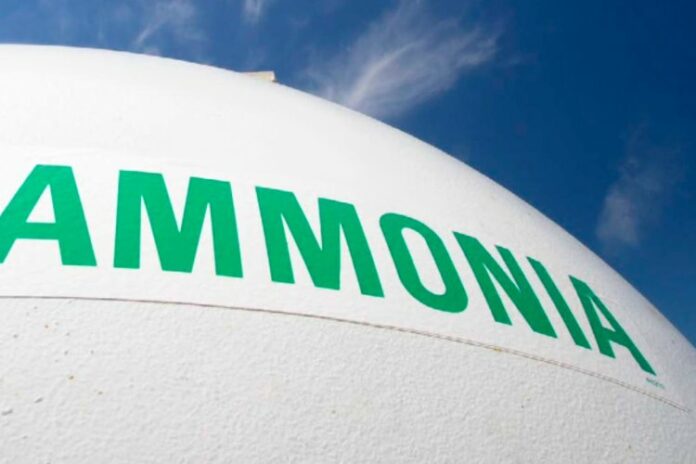
The fuel tank of each vessel will offer a capacity of 12,000 m3 and will be fitted with the Mark III membrane containment system. These tanks will include unique features to facilitate a potential conversion of these vessels to ammonia. 

The Mark III membrane technology tank has been adapted for compatibility with ammonia, offering both Seaspan and ZIM, greater operational flexibility in case of changes in environmental regulations.

In addition to the engineering services and on-site technical assistance, GTT will assist Seaspan through every step of their first LNG-fuelled project: commissioning of the LNG tank, first LNG bunkering operations, as well as further specific LNG operations and maintenance of the vessels. Moreover, GTT will provide LNG training for the crews, supported by its proprietary G-Sim® training simulator, which replicates the future LNG operations of the vessels. Seaspan will also benefit for the availability of the HEARS® emergency response service with 24/7 technical assistance. 

The vessels will also be fitted with GTT digital platform for monitoring and optimising their operational performance and their environmental footprint.

Vessels deliveries are scheduled to occur between the third quarter of 2023 and the first quarter of 2024.

Philippe Berterottière, Chairman and CEO of GTT, declared:

“This first collaboration on LNG fuel business with our long-time partner Samsung Heavy Industries, for the ship-owner Seaspan and the charterer ZIM, is a major milestone for GTT. We are particularly proud that leading shipbuilding and shipping companies recognise and choose GTT’s innovative solutions. The ammonia compatibility of the ordered vessels offers flexibility and demonstrates GTT’s continued commitment to protect ship-owners investments in a context where they have to constantly adapt to evolving environmental regulations.”

Henry (Ho-hyun) Jeong, Executive Vice President & Chief Technical Officer of SHI, said:

“After the construction of the first FLNG and the first large capacity ethane tanker, SHI, with the support of GTT, is once again positioning itself as a pioneer in the development of innovative solutions. This order signifies another step towards naval solutions to reduce greenhouse gas emissions.”

Torsten Pedersen, Chief Operating Officer of Seaspan, said:

“Seaspan prides itself on being a creative solution provider, and we work very closely with our customers to support their strategies and objectives. In this case, we are excited and proud to support ZIM’s ambitions to operate highly efficient vessels with a very low environmental impact. By working with ZIM, GTT, SHI and DNV on “Ammonia Ready” features, we are taking a long-term view toward futureproofing these vessels.”

David Arbel, Executive Vice President & Chief Operating Officer of ZIM, stated:

“ZIM as charterer is striving for zero environmental impact in our operations, with special focus on alternative non-polluting fuel use. “Green” ammonia is a potential marine fuel as the shipping industry moves to a zero-carbon future. ZIM feels very proud to be a part of this technical challenge shifting from fossil fuels to renewables.”

Stena RoRo orders its tenth E-Flexer RoPax ferry

0

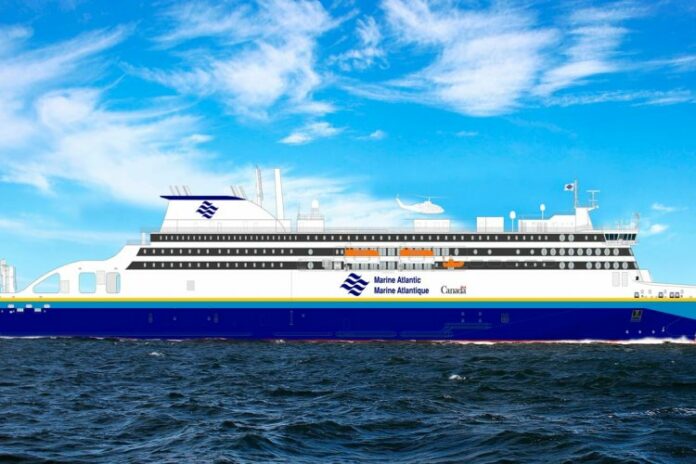
Stena RoRo is pleased to have executed a new charter agreement with Marine Atlantic, a Canadian federal Crown corporation. As a result, Stena has ordered its tenth E-Flexer vessel from the CMI Jinling (Weihai) shipyard. The ship, when delivered, will run in eastern Canada between Newfoundland and Nova Scotia. 

Per Westling, managing director for Stena RoRo, says:

“Marine Atlantic is a former customer of ours. We delivered one ferry in 2000 and two more in 2010 to Marine Atlantic, all of which are still in service. We were successful in executing this new charter contract after a very competitive and extensive procurement process. We are extremely pleased to be able to continue to deliver high quality ships to this important customer”.

“Our focus is on adapting ship design to our customers’ specific wishes and in this case, our E-Flexer platform is very well suited, as it meets the customer’s requirements for an optimal hull form combined with efficient dual-fuel engines and a battery-hybrid solution to minimize emissions”.

To date, Stena RoRo has ordered ten large RoPax vessels of the E-Flexer type, five of which have now been delivered. The company has an option for additional vessels from the CMI Jinling (Weihai) Shipyard.

Gary O’Brien Chair, Board of Directors, Marine Atlantic, comments:

“Marine Atlantic is an essential service that is vital to the national supply chain. The new vessel to be delivered to Marine Atlantic will play an important role in helping us to continue to meet the needs of our customers. The design of the vessel combines key priorities such as maneuverability, safety, accessibility, while minimizing environmental impacts, to provide our customers with a modern, efficient and reliable service.”

Murray Hupman President and CEO, Marine Atlantic, comments:

“We are excited to begin the countdown towards accepting the delivery of a new charter vessel for our service. We look forward to working with our partner in this project, Stena RoRo AB.  Stena RoRo is a leading innovator in the roll on/roll off cargo and passenger ferry market globally.”

Van Oord and Boskalis win Harwich Haven dredging deal

0

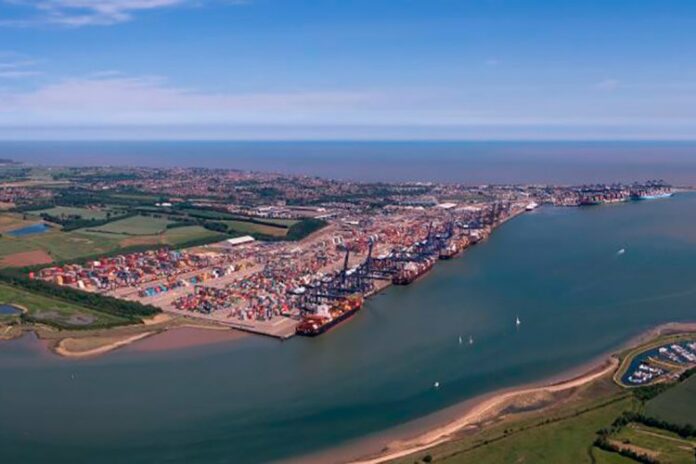
Van Oord has secured the contract for the Harwich Haven approach channel and inner harbour deepening by the Harwich Haven Authority. The contract carries a value of approximately EUR 140 million, split 50/50 between Van Oord and Boskalis.

The project entails the deepening of the approach channel and inner harbour from minus 14.5 to minus 16 meters to allow unimpeded access of the latest generation container vessels to Harwich Haven and the Port of Felixstowe.

For this purpose a total of 15 million cubic meters of silt, sand and clay will be dredged by a jumbo trailing suction hopper dredger and a large backhoe dredger. The dredged material will be deposited in a designated area offshore. Specialist equipment will be deployed to remove large boulders from the seabed.

The dredging activities will commence immediately with a project duration of maximum two years. The consortium of Van Oord and Boskalis will reduce its CO2 emissions significantly on this project by using a sustainable biofuel.

Neptune Energy awards Cygnus subsea inspection contract

0

Neptune Energy today announced the award of a subsea inspection contract for its operated Cygnus gas field in the UK southern North Sea to leading Geo-data specialist, Fugro. Fugro will use advanced inspection technologies, enabling data processing to be carried out onshore, reducing time and costs.

As part of the contract, Fugro will employ its specialised survey technology to inspect the subsea infrastructure, including pipelines and structures, and to undertake survey activities in advance of future drilling campaigns on the Cygnus field. 

Traditionally, data processing would be carried out by a team offshore; however, this will be carried out from Fugro’s Remote Operations Centre in Aberdeen, reducing costs and time associated with offshore travel.

Neptune’s Managing Director for the UK, Alexandra Thomas, said:

“It’s crucially important to ensure the integrity and maintenance of subsea infrastructure and we are pleased to be awarding this contract to Fugro to help us achieve the highest standards of inspection.

“By deploying Fugro’s innovative digital technologies, we can support safe, efficient and reliable operations remotely.”

Daniel Jones, Fugro’s Director IRM Services for Europe and Africa, said:

“Fugro is delighted to again be working with Neptune Energy in support of their subsea integrity management.

“By using our ROC in Aberdeen, we can complete these scopes from onshore while maintaining our high standards of data collection.”


Woodside joins Japanese players to study shipping ammonia fuel from Australia to Japan

0

Woodside Energy Ltd., Japan Oil, Gas and Metals National Corporation, Marubeni Corporation, Hokuriku Electric Power Company and The Kansai Electric Power Co., Inc have signed a joint research agreement under which they will conduct a feasibility study into the development of a clean fuel ammonia supply chain from Australia to Japan. 

Ammonia does not emit CO2 during combustion and is considered a promising nextgeneration zero-emission fuel for energy intensive thermal power plants and marine engines.

Given existing proven technologies for the production, storage and transportation of ammonia, it is expected to have early take-up as a zero-emission fuel.

Japan’s Green Growth Strategy established on 26th December 2020 and further refined on 21st June 2021, has also positioned fuel ammonia as one of the key opportunities for Japan to achieve carbon neutrality by 2050.

In relation to Australia, the “Japan-Australia Partnership on Decarbonization through Technology” including fuel ammonia was announced at the Japan-Australia Summit Meeting on 13th June 2021 and the Joint Statement at the Australia-Japan Ministerial Economic Dialogue on 15th July 2021 mentioned that Japan and Australia will work together to promote clean fuel ammonia.

Under the joint agreement, the Parties will conduct a feasibility study of the entire supply chain, including the production of clean fuel ammonia in Australia from natural gas with CO2 abatement methods such as CCS・CCU and bio-sequestration; marine transportation to Japan; utilization of ammonia as a fuel for power generation and marine use; and financing.

The Parties will work to establish a clean fuel ammonia supply chain between Australia and Japan through collaboration using their respective technologies and knowledge, and will promote efforts to decarbonise both Australia and Japan.

Rotterdam: Corridor partnerships help strengthen inland container chain

0

The Port of Rotterdam Authority supports these market initiatives, which contribute to the optimisation of the inland container shipping chain.

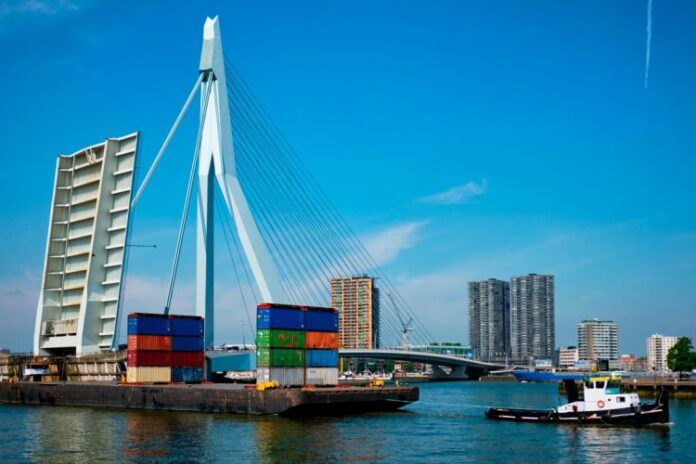
These corridor initiatives are the outcome of an inland container shipping consultation organised in 2017 at the initiative of the Port Authority. This sector-wide consultation was set up in response to increasing waiting times for inland container vessels at terminals in the port of Rotterdam. Together with other innovations like the Nextlogic planning tool, the new partnerships can help resolve this complex issue.

The corridors in question concern different shipping connections between the port of Rotterdam and regions in the hinterland. One finds numerous inland terminals along these routes, which are used by a great many inland vessels. Various barge operators and inland terminals have decided to work together to bundle the flow of containers destined for specific deep-sea terminals. As a result, large volumes of containers can be moved between the different deep-sea and inland terminals using inland vessels that sail according to a fixed schedule. In addition, the barge operators and the deep-sea terminals have agreed to load and unload containers during specific time slots, and to put through a minimum number of containers (moves) per inland vessel. These agreements have made the handling of inland container shipping flows in the port of Rotterdam both more reliable and more efficient.
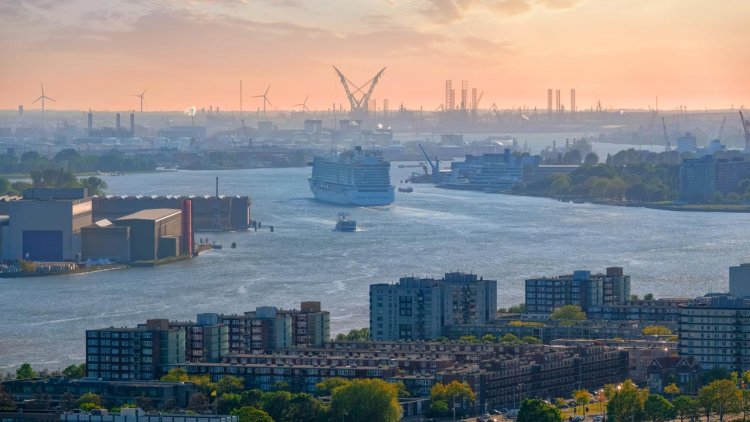
Collaboration at the corridor level benefits all chain parties involved. Barge operators are able to improve capacity utilisation within their fleet. In addition, they are assured of a weekly, scheduled call at different deep-sea terminals – without unforeseen waiting times. This allows them to raise their profile as a reliable transport partner for shippers and freight forwarders. At the other end, deep-sea terminals can make more effective use of their crane and quay capacities, since the bundled flows result in larger call volumes per inland vessel. Both parties – barge operators and terminal operators – enjoy improved predictability in a share of their inland shipping plannings.

The first corridor partnerships to come out of the sector-level consultation , the West Brabant Corridor (WBC) and the Ruhr Express, were set up in 2018 with the support of the Port of Rotterdam Authority. Both initiatives have been developed further over the years, and the results are promising: e.g. a reduction in the volume of containers transported by truck and a growing number of scheduled services to individual deep-sea terminals. They were soon followed by other collaboration and bundling initiatives along various corridors in the Netherlands and Germany. Besides the North West Central Corridor and the Limburg Express, sector parties have also teamed up to organise scheduled services to specific deep-sea terminals in Rotterdam along the CAN Corridor and the Maascorridor.
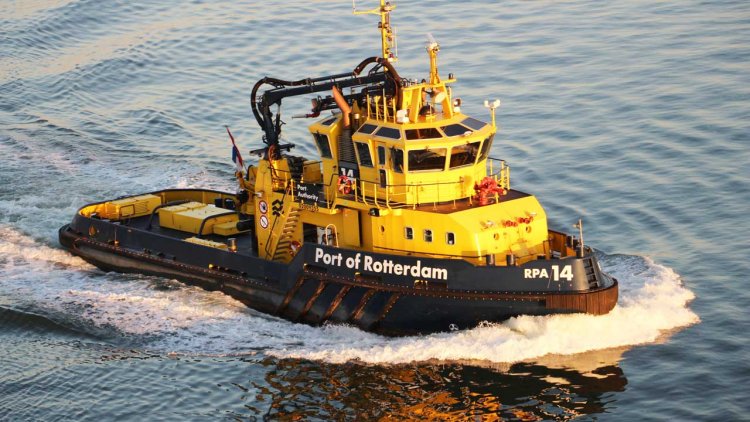
CAN Corridor
European Gateway Services (EGS), Haeger & Schmidt Logistics and Contargo Waterway Logistics (CWL) have agreed to work together on the Rotterdam – North Rhine-Westphalia corridor under the banner of Container Allianz Niederrhein (CAN). Twice a week, the partners organise a scheduled service between inland terminals in Emmerich and Duisburg and the Rotterdam deep-sea terminals APM Terminals Maasvlakte II and Hutchison Ports ECT Euromax.

Cok Vinke of Contargo Waterway Logistics says:

‘The CAN Corridor links two important economic regions together. One of the reasons why this corridor is so successful is that handling at the port of Rotterdam is guaranteed. Our clients are becoming more and more appreciative of this service, since it increases the predictability of their logistics chain.’

Maascorridor
Along the Maascorridor, BCTN has started to bundle the container flows put through its inland terminals at Roermond, Venray and Den Bosch in Nijmegen and Alblasserdam. The different inland terminals enjoy a scheduled service to each of the deep-sea terminals in Rotterdam. Containers handled by the BCTN terminals along Belgium’s Albertkanaal (Geel, Beringen and Meerhout) are also shipped to Alblasserdam for bundling, after which they are transported by inland vessels to and from various deep-sea terminals in Rotterdam. 

BCTN’s CEO Joop Mijland notes:

‘The corridor approach yields extra certainty for all parties involved. When you ship via BCTN, you choose reliability based on fixed windows and a durable network of inland terminals. On top of this, we are working to convert our fleet of inland vessels t o hybrid, electric and hydrogen propulsion.’

Limburg Express
The Limburg Express involves four scheduled services per week connecting the inland terminals Hutchison Ports Venlo and Barge Terminal Born with Rotterdam World Gateway (RWG), Hutchison Ports ECT Delta and ECT Euromax. This corridor is still under development, with the partners aiming to bundle even more containers than presently the case and to set up a new scheduled service to APM Terminals Maasvlakte II. Moreover, as the participating barge operator, the Danser Group has announced its plans to use larger vessels on this route.
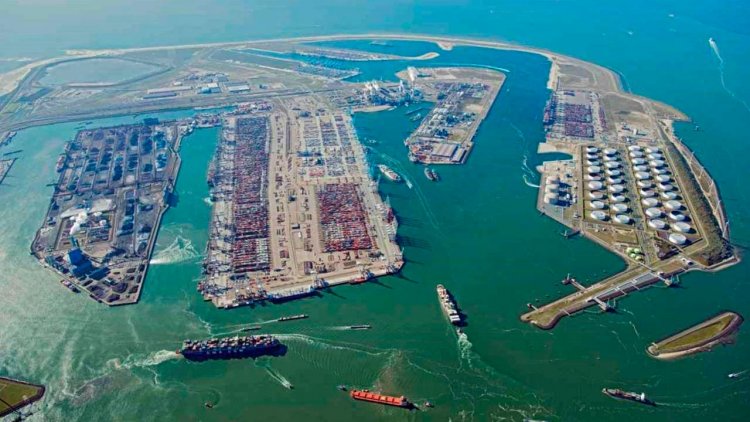
Sebastiaan van Dorsser of European Gateway Services (EGS) says:

‘The Limburg Express offers guaranteed handling windows in Rotterdam. This allows us to cater to the growing demand for reliable and environmentally friendly transport solutions.’Over the past few years, most corridor initiatives have continued to expand as new parties came on board. By now, almost every important shipping route between the port of Rotterdam and its hinterland has some form of corridor partnership. And collaboration along these corridors is expected to only intensify in the years ahead. 

Emile Hoogsteden, Vice President Commercial at the Port of Rotterdam Authority, says:

‘Due in part to the Covid pandemic, disruptions in the global container market and peaks in the container volume, the handling of inland container calls in the port of Rotterdam is exposed to certain vulnerabilities. This situation calls for collaboration and mutual trust, with barge operators and inland terminals working together on the joint development of corridor initiatives and entering into agreements with the operators of Rotterdam’s deep-sea terminals. Joining forces allows parties to coordinate their activities more effectively – adding to inland container shipping’s appeal as a transport option for shippers and freight forwarders. Considering the tremendous importance of inland container shipping to our port, we are more than happy as the Port of Rotterdam Authority to promote these initiatives.’

The Port of Rotterdam Authority works together with the Dutch Ministry of Infrastructure and Water Management, Topsector Logistiek and the provincial administrations of Zuid-Holland, Gelderland, Noord-Brabant and Limburg within the long-term infrastructure and transport (MIRT) programme ‘Freight Transport Corridors’. Encouraging and scaling up collaboration along the different corridors is also in line with parties’ ambition to accelerate the modal shift from road transport to inland shipping.

Royal Caribbean opens first Alaska cruise season since 2019

0

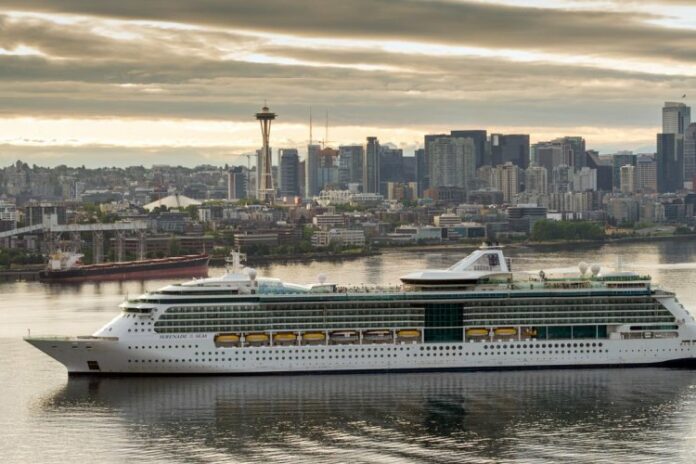
Serenade of the Seas has kicked off the highly anticipated comeback of the summer season when it departed on the first of a series of 7-night cruises from Seattle.

The sailing marks a celebratory moment for the cruise industry, local workforce, regional suppliers and Alaska’s beloved communities that were significantly impacted by the absence of all cruise tourism, which normally represents more than 60% of the state’s visitors and generates upwards of $3 billion for its economy each year. Ninety-seven percent of the entire onboard community on Serenade is fully vaccinated.

The ship will be joined by Ovation of the Seas in Seattle starting Aug. 13, rounding out Royal Caribbean’s great Alaska comeback in 2021.

Michael Bayley, president and CEO, Royal Caribbean International, said:

“Cruising in Alaska is finally back, and we are excited to be the first to return. Alaska is one of the most popular destinations among our guests, especially families with young kids – children who are ineligible for the vaccine today. We are grateful for the support of our partners, Sens. Lisa Murkowski and Dan Sullivan, and other government and health authorities. This is a return that is significantly felt by many, including those whose communities rely on cruise tourism.”

Serenade is the cruise industry’s first ship to return to Alaska and the second in Royal Caribbean’s world-class fleet to welcome back guests in the U.S. after Freedom of the Seas set sail from Miami for a celebratory Fourth of July weekend. Thirteen Royal Caribbean ships will be sailing around the world by the end of August, including Ovation of the Seas, which is set to sail on 7-night adventures to Skagway, Sitka and Juneau, Alaska and through the famed Inside Passage. The cruise line recently extended Ovation’s Alaska season into October with four additional sailings. With more to be announced, the largest cruise line’s current lineup of returning ships is available here.

Royal Caribbean requires that all crew members and guests who meet the age of eligibility for the vaccine are fully vaccinated against COVID-19. As of Aug. 1, the vaccine age requirement for travelers will be lowered from age 16 to 12. Children younger than the eligible age must undergo testing and follow other health and safety protocols.

BC Ferries’ fourth Island Class ferry transits Panama Canal

0

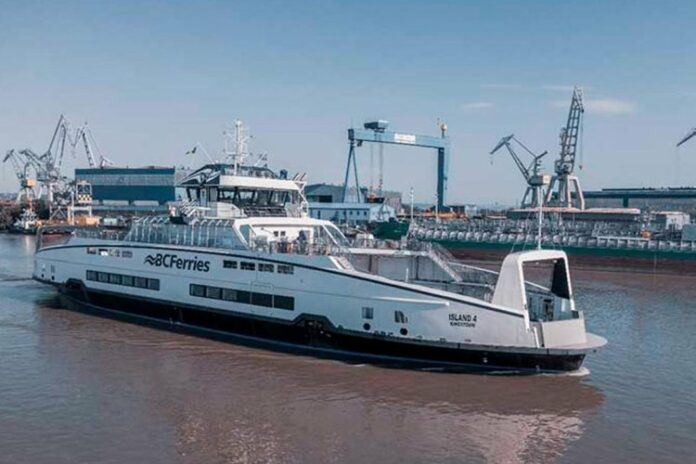
BC Ferries’ newest hybrid electric ship is now preparing for its trip home to British Columbia, after transiting the Panama Canal over the weekend. Island 4, as it is temporarily named, departed Damen Shipyard Galati in Romania in early June under its own power.

BC Ferries expects the ship to arrive in B.C. by mid-August.

The Island Class are battery equipped ships designed for full electric operation. The ships are fitted with hybrid technology that bridges the gap until shore charging infrastructure becomes available. From the exterior details to the engines, the design of the new vessels reduces underwater radiated noise, lowers emissions and improves customer service.

BC Ferries will take ownership of the new Island Class ferry upon final inspection at Point Hope Maritime in Victoria, B.C.

BC Ferries looks forward to welcoming the vessel into service next year. Island 3 and Island 4 will be officially named later this year. Together these ships will provide two-ship service on the Campbell River – Quadra Island Route starting in 2022.