0.1 C
New York
Home Blog Page 577

MAN Rollo delivers first MAN Stage V generator sets for Concordia Damen Parsifal project

0

MAN Rollo has successfully completed the Factory Acceptance Test of three new Stage V generator sets to be delivered. After achieving this important milestone, the three sets – two LNG and one diesel set – will soon be delivered to client Concordia Damen.

The MAN engines are therefore the first certified and delivered MAN engines for the 40 LNG-powered inland shipping tankers that Concordia Damen is building for JP. Morgan Asset Management, for end-user Shell.

Peter Nieuwveld, a Project Manager at MAN Rollo, is delighted with the successful certification. He says:

“We were confident we’d pass the test, but of course it’s fantastic that it really works out after that. In the presence of our client, Lloyd’s Register subjected the three sets to a whole series of tests; for example, an alarm test, different static load points, a dynamic test and a crash stop. This means MAN Rollo can now provide a fully certified MAN Stage V solution as one of the first in the maritime industry.”

The MAN Rollo engineering team has adapted and dynamically tested the generator sets for this Stage V application in close collaboration with engineers from MAN and engine management specialist Heinzmann. By March, the team had already successfully completed a series of dynamic tests, after which the sets on the test stand were further fine-tuned. Every generator set now meets Stage V requirements in every load step.

These first three MAN sets will this week be installed in the first Parsifal tanker, which is now located in Werkendam. The next three sets are then completed, after which they are also transported to Werkendam for tanker number two. Three Stage V engines will be delivered every month for more than three years. In total, MAN Rollo will supply 80 MAN E3262LE262 LNG sets of 495 ekW and 40 MAN D2676LE328 diesel sets of 277 ekW. The LNG sets serve for propulsion and onboard power, the diesel sets serve as a backup.

Six studies explore biofuels, ammonia, hydrogen, wind-assisted propulsion and air lubrication

0

A consortium led by ABS, along with CE Delft and Arcsilea is to perform six studies on alternative fuels and decarbonization technologies for the European Maritime Safety Agency (EMSA).

It’s a four-year project to study key aspects of the decarbonization of shipping, including biofuels, ammonia, hydrogen, wind-assisted propulsion, air lubrication and other promising technologies. The initiative is part of EMSA’s mission to provide technical assistance to the EU Commission and member states in the promotion of sustainable shipping and support the shift to low- and zero-carbon operations.

Georgios Plevrakis, ABS Director, Global Sustainability, said:

“This will be a monumental study that will provide an unprecedented degree of guidance and clarity with regards to the maritime application of alternative fuels and energy-saving devices. ABS understands that no one company has the solution to shipping’s decarbonization challenge and only by working together will the industry meet our sustainability ambitions. That is why we are engaged in projects all over the world with leading industry players to develop practical solutions and support their safe adoption by the industry. We are proud to work with CE Delft and Arcsilea in this important series of studies.”

Anouk van Grinsven, CE Delft Director, Sustainable Transport Fuels, said:

“It is important for regulators and shipping companies alike to understand the sustainability, availability and economics of the emerging fuel options. CE Delft is proud to contribute to these comprehensive studies.”

Edwin Pang, Arcsilea Founder, said:

“The alternative fuel and propulsion landscape is changing rapidly, and Arcsilea is pleased to be able to contribute to ensuring that the regulatory framework keeps pace with developments.”

The studies will analyze the industry’s use of each fuel or power technology, including availability, life-cycle emission characteristics and economic aspects. Project partners will also review the current regulatory framework, identify any gaps and include safety assessments for the application of each fuel and power source to cargo as well as passenger vessels.

DCT Gdańsk wins concession for new Gdańsk container terminal

0

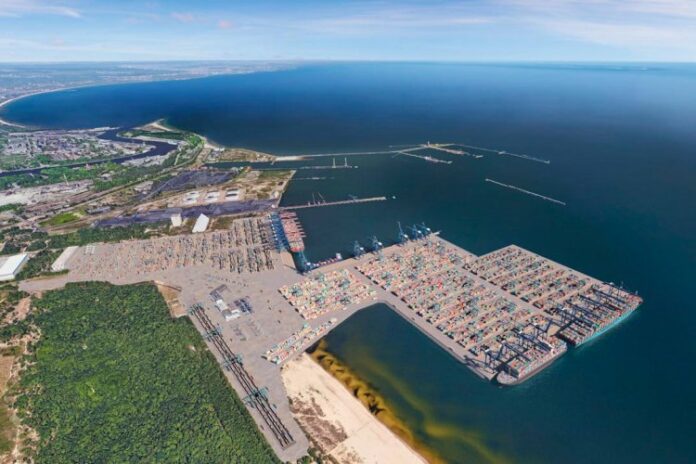
On September 18, 2020, the Port of Gdańsk Authority launched a tender procedure to select the lessees for a new port area that will be created within the boundaries of the Port in the Gdańsk Bay. On July 23, 2021, the tender committee officially announced the lease had been awarded to DCT Gdańsk S.A.

DCT Gdańsk is the largest container terminal on the Baltic Sea. Since the start of its operations in 2007, two deep-water quays (T1 and T2 – launched in 2007 and 2016 respectively) have been built with a total capacity of 3 million Twenty-Foot Equivalent Units (TEUs).

With the construction of the new terminal, known as “Baltic Hub 3”, a third deep-water quay located at the new port area will be created, increasing the handling capacity of DCT Gdańsk by 1.5 million TEUs, to 4.5 million TEUs. The investment is worth Euro 450 million, and the third deep-water quay will be 717-metre-long with a depth of 18.0m and 36 hectares of yard will be built.

The Baltic Hub 3 project also involves the purchase of 7 quay cranes that are able to handle the world’s largest vessels, and 20 semi-automated Rail Mounted Gantry cranes for the container yard, which will be remotely operated by operators located in ergonomically-designed workspaces. This will allow for a safer, efficient, modern and more comfortable working environment 365 days of the year.

The construction is planned to start in 2Q2022 and Baltic Hub 3 is scheduled to be operational by mid-2024.

When completed, DCT Gdańsk will be among the largest container terminals in Europe in terms of handling capacity and be able to continue serving and supporting the fast-growing Polish economy, the Central and Eastern European (CEE) and the Baltic countries.

Marek Gróbarczyk, Deputy Minister of Infrastructure, says:

“Thanks to the expansion of the DCT terminal, the Port of Gdansk will maintain its leading position among the ports in the Baltic Sea. Investments such as Baltic Hub 3 strengthen the position of the Polish economy. The third deep-water quay will be 717-metre-long with a depth of 18.0m and 36 hectares of yard will be built, able to handle an additional 1.5 million TEU per year. The investment is worth approximately 2 billion PLN.”

Łukasz Greinke, President of the Port of Gdańsk, says:

“The offer, followed by the choice of such a conscious investor as DCT from the PSA group, i.e., one of the world’s largest container terminal operators, proves the enormous potential of the Port of Gdańsk and the Polish economy. This is the result of nearly two years of intense teamwork, which in the first place worked on amendments to the Act on Sea Ports and Harbors, so that it would be possible to lease land that will only be created as a result of loading, then on changing the Company’s statute, and finally on developing a very complicated, transparent procedure. It worked, and thanks to such investments, the Port of Gdańsk will get to the top league of European ports.” 

Charles Baker says:

“With the construction of Baltic Hub Terminal 3, Poland can continue to compete with western European ports such as Hamburg and Rotterdam. Adding a third quay will allow the terminal to serve not only the Polish market, but also the entire Baltic region and Poland’s land-locked neighbours. Historically, when we talked about major ports in North Range, it was always Hamburg – Le Havre Range. DCT Gdańsk, growing rapidly, has extended that range to Gdańsk, Poland, and the Baltic.”

As Maersk’s East Europe Managing Director Zsolt Katona pointed out, Gdańsk is an important part of Maersk’s network with clear value proposition to the growing market of CEE and Russia.

Zsolt Katona concludes:

“In January 2010, Maersk and DCT started the revolutionary direct service connecting the Far East and Gdańsk. Since then, we have witnessed the strong growth of the terminal, and today DCT has become Maersk’s partner in creating E2E solutions to the customers. With BH3, we are very happy to see DCT continuing to invest in future capabilities and actively addressing the supplier chain bottlenecks.”

New hydrogen-powered coastal research vessel under development in California

0

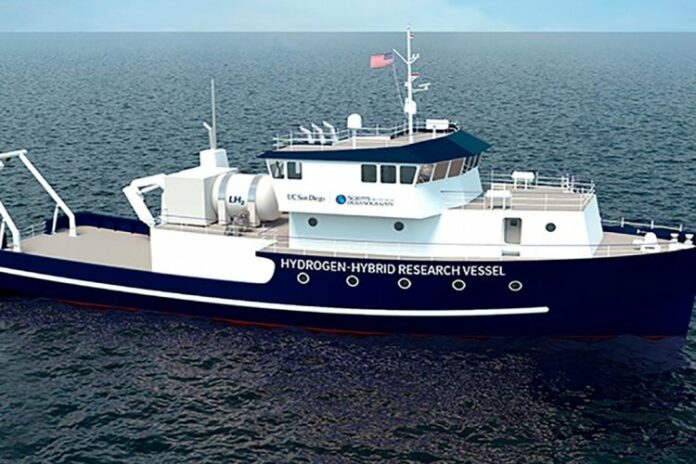
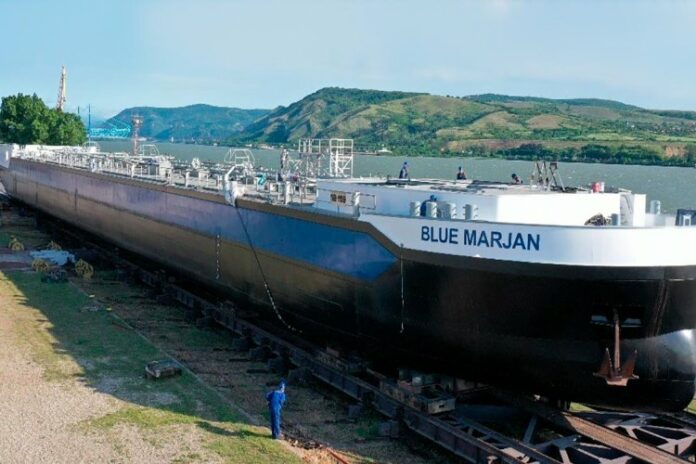
The new vessel, which will be operated by Scripps Institution of Oceanography at UC San Diego, will serve as a platform for essential education and research dedicated to understanding the California coast and climate change impacts to the coastal ecosystem.

This new vessel will be dedicated to California research missions, and will enable scientists to observe and measure biological, chemical, geological and physical processes associated with a variety of environmental issues.

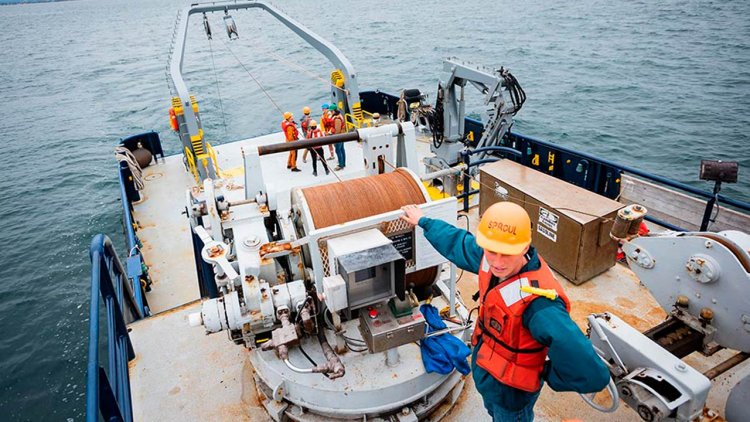
The proposed 125-foot vessel will take three years to design, build, and commission, and replace Research Vessel Robert Gordon Sproul, which has served thousands of University of California students in its nearly 40 years of service but is nearing completion of its service life. This new vessel will continue the university’s educational mission to train the next generation of scientists, leaders, and policymakers.

UC San Diego Chancellor Pradeep K. Khosla, said:

“This new state-of-the-art research vessel will expand our capability to understand and protect our coastline and train UC San Diego undergraduate and graduate students through unparalleled hands-on learning.”

The hybrid-hydrogen design of this new vessel represents an innovation in the maritime industry. Development of this and subsequent zero-emission vessels is essential to the University of California’s Carbon Neutrality Initiative, the goal to be carbon neutral by 2025. Currently, emissions from diesel engines on ships contribute to greenhouse gases and pollution. This new vessel will feature an innovative hybrid propulsion system that integrates hydrogen fuel cells alongside a conventional diesel-electric power plant, enabling zero-emission operations. The design is scaled so the ship will be able to operate 75 percent of its missions entirely using a non-fossil fuel—hydrogen—with only pure water and electricity as reaction products. For longer missions, extra power will be provided by clean-running modern diesel generators. The vessel represents a major step in advancing California’s pledge to reduce global climate risk while transitioning to a carbon-neutral economy.

Bruce Appelgate, associate director and head of ship operations at Scripps Oceanography, said:

“Our vision is to build an uncompromising, fully capable oceanographic research vessel that can be powered independently from fossil fuels, and be free from the criteria pollutants and greenhouse gas emissions that diesel-powered ships emit. In doing so, we hope to both serve our scientists and students while being a world leader for transformational change to clean, nonpolluting shipboard power systems.”

The vessel will be equipped with instruments and sensing systems, including acoustic Doppler current profilers, seafloor mapping systems, midwater fishery imaging systems, biological and geological sampling systems, and support for airborne drone operations. These capabilities, along with state-of-the-art laboratories, will enable broadly multidisciplinary research, advancing our understanding of the physical and biological processes active in California’s coastal oceans.

It is envisioned that the vessel will carry up to 45 students and teachers to sea on day trips, improving the university’s capacity for experiential learning at sea. UC graduate students, postdoctoral scholars, and early-career faculty will also be able to apply for research time at sea through the UC Ship Funds Program, which provides support for expeditions on Scripps vessels through a competitive peer-reviewed proposal process. The feasibility study to conceptualize the hydrogen fuel-cell propulsion technology for the vessel was initially completed in 2020, by Sandia National Laboratories, Glosten, and Scripps. The study was funded by the U.S. Department of Transportation’s Maritime Administration.

In addition to the state funds for this vessel, the budget includes essential environmental research to UC San Diego including $15 million towards the ALERTWildfire program to help reach the goal of 1,000 wildfire camera installations in California by 2022; $10 million towards the Department of Water Resources atmospheric rivers research program to expand forecast-informed reservoir operations and support advanced observations, forecasts, and decision support of atmospheric river precipitation events, the storms that account for 50 percent of California’s total annual precipitation and 90 percent of its flooding; and $1.5 million for the State Parks Oceanography program to support sea-level rise forecasts, advance cliff erosion monitoring and predictions, and sustain real-time wave condition data and coastal ocean observations maintained by the Coastal Data Information Program at Scripps.

Scripps Oceanography will also petition that the new coastal vessel serve as a shared-use facility within the U.S. Academic Research Fleet under the auspices of the University-National Oceanographic Laboratory System (UNOLS). When completed, it will join the fleet of vessels managed by Scripps including the Navy-owned research vessels Sally Ride and Roger Revelle, which conduct global oceanographic research, and the R/V Bob and Betty Beyster, a nearshore scientific workboat. All research vessels are stationed and maintained at the university’s Nimitz Marine Facility in Point Loma.

Mitsubishi Shipbuilding launches the first MRRV for Philippines DOT

0

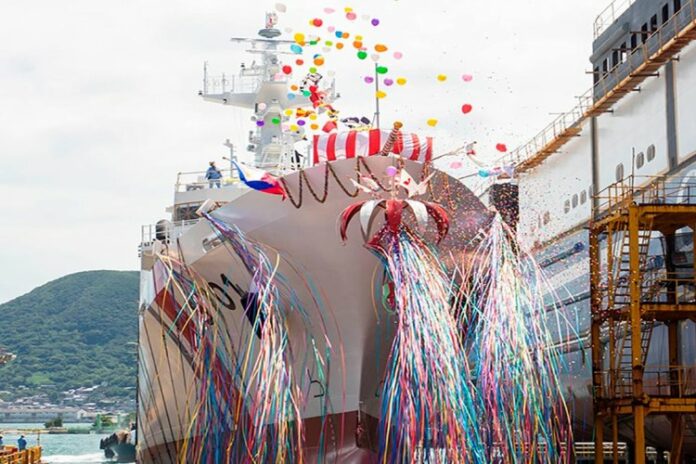
Mitsubishi Shipbuilding Co., Ltd., a part of Mitsubishi Heavy Industries (MHI) Group, held a launch ceremony today (July 26th) for the first of two large multi-role response vessels (MRRVs) being built to order for the Department of Transportation in the Republic of the Philippines.

The ceremony took place at the Enoura Plant at MHI’s Shimonoseki Shipyard & Machinery Works in Yamaguchi Prefecture. The christening and handover of this first vessel is scheduled for May 2022 after cruised to Manilla in early March, following outfitting work and trial runs. The launch ceremony for the second vessel is scheduled for November 18, 2021, with christening and handover planned for September 2022 after cruised to Manilla in May 2022.

MRRVs play an important role in severe-weather rescue missions and patrolling in offshore and coastal zones. This vessel has an overall length of approximately 96.6 meters, with a maximum speed of 24 knots and a cruising range of up to 4,000 nautical miles. It is equipped with secure communication systems for Exclusive Economic Zone (EEZ) surveillance, a helideck and hangar for helicopter operations, an underwater remotely operated vehicle for subsurface search and survey, high-speed rubber boats and other essential equipment for maritime domain awareness and maritime law enforcement operations. The ship will make a significant contribution to enhancing the speed of response to maritime accidents or crimes on the Philippines EEZ and high seas.

This project is being financed by the Japanese government under a yen loan agreement corresponding to Phase II of the Maritime Safety Capability Improvement Project concluded between the Republic of the Philippines and Japan in October 2016. The project terms call for application of Japanese technology, notably expertise in shipbuilding.

Going forward, Mitsubishi Shipbuilding will continue to build vessels for both domestic and overseas use that deliver exceptional fuel efficiency and environmental performance, contribute to the safety and security of society, and support international contributions, working with its customers for the advancement of society.

TotalEnergies signs Renewable Power Purchase Agreement with Air Liquide

0

TotalEnergies, through Lampiris, its energy supply affiliate in Belgium, signed a Corporate Power Purchase Agreement with Air Liquide. Air Liquide will use this renewable energy to power some of its industrial and medical gas production sites in Belgium.

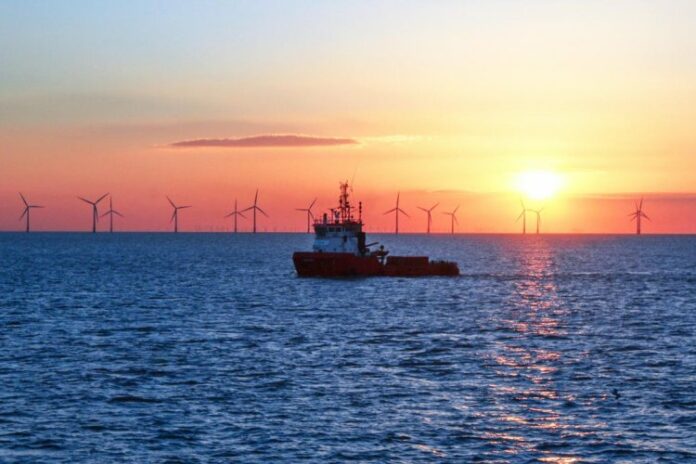
TotalEnergies will supply Air Liquide with this electricity from an offshore wind farm located in the Belgian North Sea. With a strong expertise across the integrated electricity chain, TotalEnergies proves its ability to provide competitive and available renewable electricity to support Air Liquide in its sustainable development objectives. 

This agreement also illustrates TotalEnergies’ commitment to contribute to Belgium’s energy transition, while promoting low carbon solutions for its customers. The wind-generated electricity will save about 270,000 tons of CO2 emissions over the life of the contract. 

Julien Pouget, Senior Vice President Renewables at TotalEnergies, said:

“A growing number of companies are shifting to renewable energy, and we want to support them on their path towards carbon neutrality. There is a dynamic market for corporate PPAs in Europe, and we want TotalEnergies to take a strong leadership position.” 

This contract with Air Liquide follows other Corporate PPAs signed earlier this year by TotalEnergies with Orange, Microsoft and Merck.

MSC takes delivery from Fincantieri of MSC Seashore

0

New MSC Cruises flagship to feature some of the latest and most advanced environmental technologies currently available at sea, confirming the Company’s longstanding commitment to sustainability

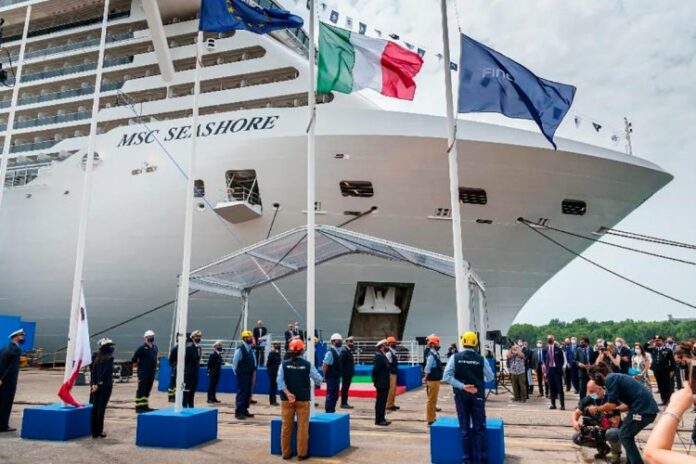
At the presence of Minister of Sustainable Infrastructures and Mobility prof. Enrico Giovannini, the Cruise Division of MSC Group today officially took delivery of its new flagship MSC Seashore – thelargest cruise ship to be built in Italy. Sister ship MSC Seascape is currently under construction at the Monfalcone shipyard and is due to come into service in winter 2022.

An intimate ceremony was held to mark the occasion as tradition dictates at the Fincantieri shipyard in Monfalcone and was attended in person by MSC Cruises Executive Chairman Pierfrancesco Vago, other members of the Aponte and Aponte-Vago families, Giampiero Massolo and Giuseppe Bono, Chairman and CEO of Fincantieri, as well as representatives from MSC’s new builds team along with executives and workers from the shipyard. During the ceremony, which pays tribute to centuries-old maritime traditions, Roberto Olivari, Fincantieri’s shipyard director, presented to Giuseppe Galano, Master of MSC Seashore, an ampoule containing the water that first touched the hull when the ship was floated out earlier this year.

Pierfrancesco Vago, executive chairman of the Cruise Division of MSC Group, commented:

“The construction of MSC Seashore is an investment that generates an impact on the Italian economy of almost 5 billion euros and the employment of up to 4,300 workers over the last two years. Furthermore, the coming into service of our new flagship will activate an important economic and employment driver, generating a further significant economic impact every year.”

“The delivery of this new flagship, particularly in this period, represents a decisive sign of reasoned optimism, which confirms our Group’s confidence both in the future of the cruise sector, and in the capacity of Italian manufacturing and industry. Overall, our investment plan in Italy with Fincantieri – in addition to the three ships already built, including MSC Seashore – currently envisages the construction of another five ships, able of generating an additional economic benefit for the country of over 13 billion euros”.

Giuseppe Bono, CEO of Fincantieri, stated:

“MSC Seashore is the fourth cruise ship that we have delivered in Italy during this still extremely demanding year, demonstrating the effectiveness of our production and management system. All these milestones, and others to come, have been successfully achieved and this is never taken for granted. This is why I consider this ship not only the best symbol of recovery for the whole cruise sector, but also of the capability of the Group to leverage its competences and soundness to fully preserve our workload”.

DMC awarded contract to provide rudders and steering gear for Navantia

0

Spanish shipbuilder Navantia has contracted Damen Marine Components (DMC) for a series of rudders and steering gear systems.

These next-generation vessels are of the F110 frigate class. DMC’s scope involves supplying Navantia with Twin Van der Velden ATLANTIC Rudders specifically developed for minimum noise and vibration throughout the system; from the rudder blades to associated equipment such as the bearings, cylinders and hydraulic power units.

The ATLANTIC Rudder is also well-known for its low and drag and low vibrations. Its slim profile ensures minimal resistance – especially on high speed vessels.

Wim Knoester, Director Sales & Marketing DMC, says:

“We are very pleased to be selected by Navantia as the supplier for the manoeuvring system on this Programme. With this order, DMC strengthens its position in this market segment”.

The order also includes skegs and extended trunks as well as Twin EBST 425-35 steering gear system including rudder angle indicators.

DMC will deliver the equipment between 2023 and 2028. Navantia is scheduled to deliver the vessels between 2026 and 2031.

They are being constructed as a replacement for the Spanish Navy’s Santa Maria-class frigates. The vessels will feature anti-submarine capabilities and will undertake fleet protection, maritime security in joint and combined missions.

Franco-Scottish research to drive floating wind and hydrogen in Europe

0

The European Marine Energy Centre (EMEC) and partners have delivered a report outlining a series of recommendations for the Scottish Government to facilitate research collaborations between Scottish and French organisations working in floating wind and hydrogen.

Published by The Scottish Government today, the report produced by EMEC in partnership with French engineering firm INNOSEA and London-based The Renewables Consulting Group (RCG), part of ERM, explores the technical innovation status of both floating wind and hydrogen supply chains in Scotland and in France.

This study was motivated by the recognition of shared priorities in Scotland and in France. Floating wind and hydrogen technologies are integral to evolving energy decarbonisation strategies in both countries due to shared geographical characteristics and energy system contexts, suggesting that there are opportunities both for growth, and specifically for Franco-Scottish collaboration in these sectors.

The report identifies shared technical and innovation challenges in the supply chain, including the need to develop port infrastructure and offshore working practices, as well as further research and development in materials and components for both floating wind and hydrogen systems. Opportunities and research needs associated with the integration of floating offshore wind and hydrogen systems in the future are also laid out in the report, noting that it is currently unclear whether hydrogen production facilities would best be located on or offshore if powered by floating wind. 

Research conducted for the report was bolstered by direct engagement with supply chain stakeholders in both Scotland and France, including technology providers, infrastructure operators, project developers, policy makers, academics and enterprise agencies.

As a result of constructive engagement with French organisations in the Brittany and Occitanie regions, the report recommends that the Scottish Government seek to facilitate knowledge exchange and relationship building activities between Scotland and organisations in those regions. Establishing a research and development platform involving organisations in Scotland, Brittany and Occitanie is a further recommendation to support collaborative innovation activity to help resolve the shared technical challenges identified.

Michael Matheson, Cabinet Secretary for Net Zero, Energy and Transport said:

“Scotland has some of the best wind resource in the world, and floating offshore wind will play an important role in supporting our just transition to becoming a net zero economy by 2045 – not just for its contribution to clean electricity generation, but as a key driver of the developing hydrogen economy in Scotland.

“We will continue to maximise opportunities in new innovations and emerging technologies, including in the integration of these two important sectors, which is why I am pleased to see the outcome of this collaborative project and its recommendations. Strong international partnerships will be critical to developing Scotland’s hydrogen economy and delivering our net zero objectives.”

Dr James Walker, Hydrogen Development Manager at EMEC, said:

“In delivering this project, we had many fruitful discussions with organisations from across the full floating wind and hydrogen value chains in Scotland and in France. All of those discussions underscored the significant upcoming opportunities for organisations in both countries to work together, and the many exciting research questions which we can busy ourselves in answering.”

Hakim Mouslim, Chief Executive Officer at INNOSEA, said:

“The findings of this project represent a turning point in unlocking opportunity ahead in the floating wind and hydrogen value chains of our two countries, in particular regarding innovation activities and de-risking supply chain for the integration of these technologies.

“This in turn, lays the initial foundations of a roadmap for collaborative innovation of floating wind power for green hydrogen production, that is both scalable and competitive – potentially a game-changer in our race to net-zero.”

Dan Kyle Spearman, Associate Director and Floating Wind Lead at RCG, said:

“Hydrogen from floating wind will be a key vector for deep decarbonisation of industries globally. In our report, we’ve outlined recommendations on how Franco-Scottish partnerships can be leveraged to accelerate the commercialisation of these technologies.”

Shell invests in the Whale development in the Gulf of Mexico

0

Shell Offshore Inc., a subsidiary of Royal Dutch Shell plc, today announces the final investment decision (FID) for Whale, a deep-water development in the U.S. Gulf of Mexico that features a 99% replicated hull and an 80% replication of the topsides from the Vito project.

Wael Sawan, Shell Upstream Director, said:

“Whale is the latest demonstration of our focus on simplification, replication and capital projects with shorter cycle times to drive greater value from our advantaged positions. We are building on more than 40 years of deep-water expertise to deliver competitive projects that yield high-margin barrels so that we are able to meet the energy demands of today while generating the cash required to help fund the development of the energy of the future.”

Whale will be the second Shell-operated deep-water development in the Gulf of Mexico to employ a simplified, cost-efficient host design. With this development approach, Shell anticipates an internal rate of return estimated to be greater than 25%. The Whale development will feature energy-efficient gas turbines and compression systems. This development will be the latest addition to Shell’s Gulf of Mexico portfolio where its production is among the lowest greenhouse gas (GHG) intensity in the world for producing oil.

The Whale development, owned by Shell Offshore Inc. (60% operator) and Chevron U.S.A. Inc. (40%), is expected to reach peak production of approximately 100,000 barrels of oil equivalent per day (boe/d) and currently has an estimated, recoverable resource volume of 490 million boe. Whale will be Shell’s 12th deep-water host in the Gulf of Mexico and is currently scheduled to begin production in 2024.