0.1 C
New York
Home Blog Page 576

ExxonMobil announces oil discovery at Whiptail, offshore Guyana

0

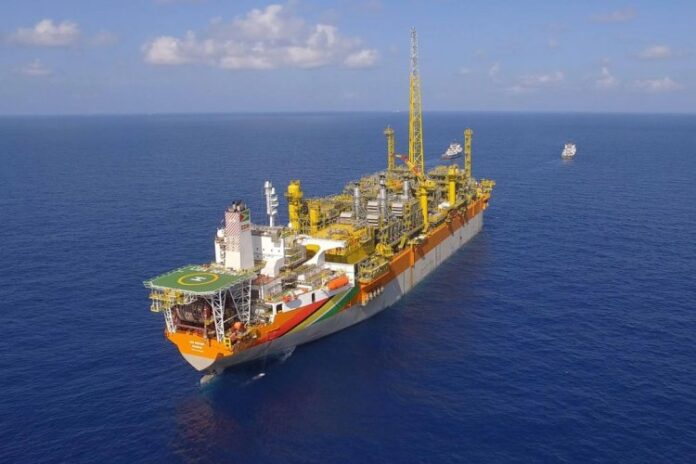
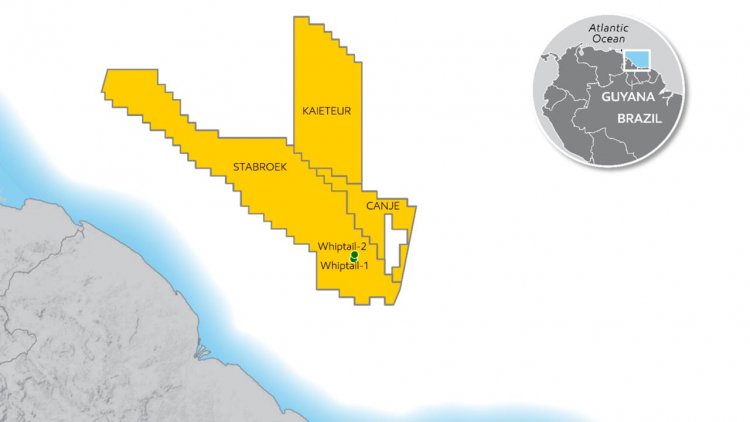
The Whiptail-1 well encountered 246 feet (75 meters) of net pay in high quality oil bearing sandstone reservoirs. Drilling is also ongoing at the Whiptail-2 well, which has encountered 167 feet (51 meters) of net pay in high quality oil bearing sandstone reservoirs. Drilling continues at both wells to test deeper targets, and results will be evaluated for future development.

The Whiptail discovery is located approximately 4 miles southeast of the Uaru-1 discovery that was announced in January 2020 and approximately 3 miles west of the Yellowtail field. Whiptail-1 is being drilled in 5,889 feet (1,795 meters) of water by the Stena DrillMAX. Whiptail-2, which is located 3 miles northeast of Whiptail-1, is currently being drilled in 6,217 feet (1,895 meters) of water by the Noble Don Taylor.  

Mike Cousins, senior vice president of exploration and new ventures at ExxonMobil, said:

“This discovery increases our confidence in the resource size and quality in the southeast area of the Stabroek Block and could form the basis for a future development as we continue to evaluate the best sequence of development opportunities within the block.” 

ExxonMobil envisions at least six projects online by 2027 and sees potential for up to 10 projects to develop its current recoverable resource base. 

The Liza Destiny floating production storage and offloading (FPSO) vessel is currently producing about 120,000 barrels of oil per day. 

The startup of Liza Phase 2 remains on target for early 2022, and the Liza Unity FPSO expects to sail from Singapore to Guyana in late August 2021. The Unity has a production capacity of approximately 220,000 barrels of oil per day. 
The hull for the Prosperity FPSO vessel is complete, and topsides construction activities are ongoing in Singapore with a startup target of 2024. The first Payara development well was spudded in June 2021, and the offshore SURF installation will begin in 3Q 2021.

Yellowtail has been identified as the fourth development project in the Stabroek Block offshore Guyana with anticipated startup in 2025. Following necessary government approvals and a final investment decision, this project will develop the Yellowtail and Redtail fields, which are located about 19 miles (30 kilometers) southeast of the Liza developments, and potentially adjacent resources.

These new projects continue to contribute to the advancement of the Guyanese economy. More than 2,600 Guyanese are now supporting project activities on and offshore, which reflects an increase of more than 20 percent since the end of 2019. ExxonMobil and its key contractors have spent approximately US$388 million with more than 800 local companies since 2015. 

The Stabroek Block is 6.6 million acres (26,800 square kilometers). ExxonMobil affiliate Esso Exploration and Production Guyana Limited is operator and holds 45 percent interest in the Stabroek Block. Hess Guyana Exploration Ltd. holds 30 percent interest and CNOOC Petroleum Guyana Limited, a wholly-owned subsidiary of CNOOC Limited, holds 25 percent interest.

Inmarsat Maritime Ventures signs FleetBroadband sale agreement with SRH Connect

0

Inmarsat Maritime Ventures, a subsidiary of Inmarsat, the world leader in global, mobile satellite communications, has signed an agreement with SRH Connect (SRH) for SRH to acquire Inmarsat’s FleetBroadband customer base in Greece and Cyprus.

The SRH acquisition involves customer contracts purchased by Inmarsat Maritime Ventures from Speedcast at the beginning of this year. SRH already provides customer support for Inmarsat’s Fleet Network Manager portfolio after signing a customer support agreement in March 2021. As part of the sale agreement, SRH will become a formal Inmarsat distribution partner for FleetBroadband and a Value-Added Reseller for Fleet Xpress.

Ronald Spithout, President, Inmarsat Maritime, said:

“Following the rapid and successful migration of the services of all of these customers as part of the agreement with Speedcast and the implementation of a customer support agreement with SRH, we are now delighted to have put in place a formal agreement for the sale of this FleetBroadband customer base to SRH Connect. It remains our preference to entrust the FleetBroadband base generally in the Greek and Cypriot market with partners rather than handling direct, allowing them the opportunity to upsell to Fleet Xpress.”

John Laderos, Executive Chairman of SRH, said:

“With this agreement SRH is going back to its roots, connecting the maritime world again. At the same time, this is also the basis for the execution of our vision for the future of shipping. A future where connectivity will be the basis for our suite of digital solutions. Solutions that integrate the entire ship with the business environment on shore.” 

Theodoros Nikolopoulos, Chief Executive of SRH, said:

“We are delighted to acquire this valuable fleet and look forward to providing a high-level of account management to this set of unique customers in Greece and Cyprus with the opportunity to upsell to Fleet Xpress.” 

Three of Babcock LGE’s LPG Fuel Gas Supply Systems now in operation

0

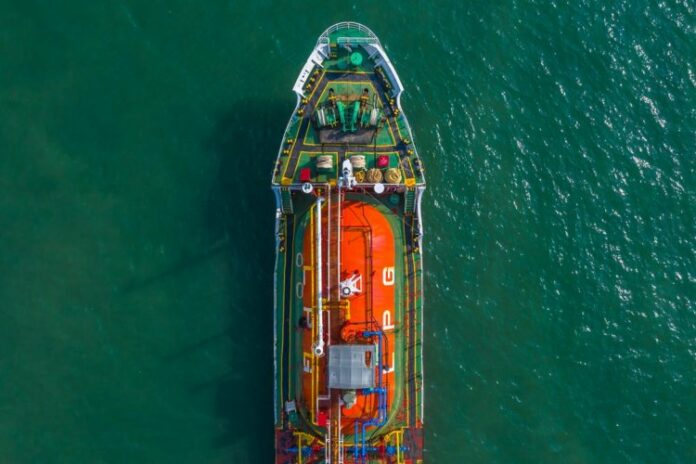
The three ecoFGSS™ systems are installed on LPG carriers ranging from 38,000m3 to 90,000m3, and offer significant flexibility to shipowners.

These systems include designs using:

  • Deck mounted Low Pressure (LP) pumps (for LPG at ambient temperature)
  • In-Deck tank LP pumps (for LPG at ambient temperature)
  • In-Cargo tank LP pumps (for fully refrigerated LPG)

All designs are fully integrated with the LPG carrier’s cargo handling system, which is also provided by LGE. Each system has been successfully trialled across the range of main engine operating loads, and they are all now fully operational in service.

LGE’s ecoFGSS™ system can be tailored depending on operating requirements, with LGE offering a range of LPG Fuel Gas Supply Systems for retrofits, as well as new builds. 

Managing Director of Babcock LGE, Neale Campbell, said:

“This significant milestone confirms LGE’s market leading position in the LPG Fuel Gas Supply System market. It also leads the way for the delivery of a further 14 Fuel Gas Supply Systems currently on order to be delivered through to 2023, at various shipyards and for multiple shipowners.”

The launch of ecoFGSS™ earlier this year further cemented LGE’s market position, with 21 orders to date.

Utilising LPG as a fuel has become the de facto solution for Very Large Gas Carriers (VLGCs) and Midsize Gas Carriers (MGCs), and is a crucial step change in LPG carrier designs to facilitate the market shift towards lower emissions.

LPG is also recognised as a potential bridging fuel towards zero carbon fuels, including ammonia. The experience gained in the development of LPG FGSS places LGE at the forefront of development of new ammonia-ready designs.

Firth of Forth proposed as Scotland’s Green Port

0

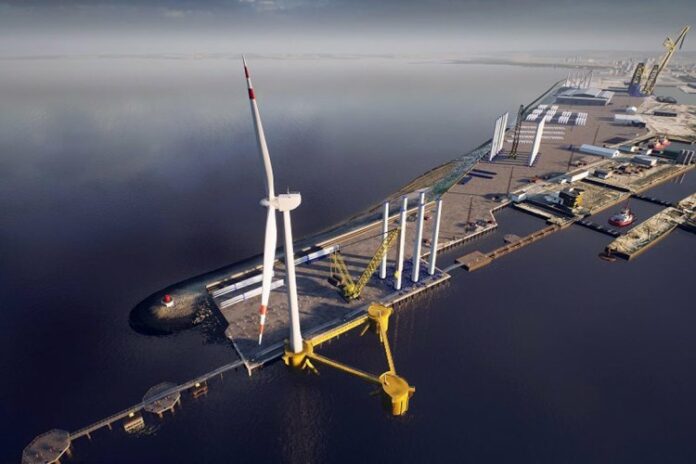
Forth Ports, Scotland’s largest ports operator and owner of seven Scottish ports on the east coast, has intimated to the Scottish Government that it will submit a proposal for a Green Port encompassing key ports, industrial complexes and logistics centres along the north and south shores of the Firth of Forth and at Edinburgh Airport.

The Scottish Government has invited expressions of interest for the creation of a Green Port, which is a large, zoned area with a defined boundary within which operators and businesses can benefit from a package of financial and customs incentives which can attract inward investment.

Subject to sight of the Scottish Government’s full Green Ports prospectus, Forth Ports, which has been a port operator for over 50 years, proposes that the Firth of Forth Green Port will encompass strategic locations along the Forth Estuary, including Grangemouth (home to Scotland’s Freight Hub and principal petrochemical cluster) and the Port of Leith, where Forth Ports announced in May that it plans to create a £40 million renewable energy hub.

Fife and the City of Edinburgh are also expected to feature in Forth Ports’ Green Ports bid. Forth Ports are currently evaluating sites in Fife along the North Shore of the Firth of Forth from Longannet to Rosyth. Edinburgh Airport is also expected to feature for its international connectivity. Each of these locations are uniquely placed to deliver on all of the objectives of the proposed Green Ports policy.

Forth Ports, supported by Edinburgh City Council, Falkirk Council and Fife Council, believes that the Firth of Forth Green Port will play a major role in Scotland’s recovery from Covid-19 and accelerate the country’s transition to meeting net zero targets, by providing investment incentives, with a long-term positive impact on Scotland’s economic growth.

Charles Hammond OBE, Group Chief Executive of Forth Ports, said:

“Our interest in creating a Firth of Forth Green Port is underpinned by our belief in the government policy behind it to create economic zones for investment and regeneration and we are committed to supporting the development of this Green Port policy.

 “The Firth of Forth, spanning from Central Scotland to the country’s east coast, is the critical engine for Scotland’s economic recovery. The creation of the Firth of Forth Green Port will encourage greater inclusive growth, fair work practices and help deliver Scotland’s net zero economy.

 “We are starting to see investment and regeneration benefits since the Thames Freeport* announcement earlier this year and we believe it is as important that Scotland’s main industrial and business area sees similar benefits in a similar timescale. This would support the transition to net zero and at the same time, create good quality green industrial employment”

*Thames Freeport was announced by the Westminster Government as one of the UK’s new Freeports in March 2021. Thames Freeport is an economic zone connecting Ford’s world-class Dagenham engine plant to the global ports at London Gateway and The Port ofTilbury, with an emphasis on introducing electric and autonomous vehicle technology along the A13 corridor into London and highlighting the role of the River Thames in a prosperous, global Britain. See the Thames Freeport website for more information.

Yang Ming takes delivery of one more 11,000 TEU ship to upgrade Trans-Pacific Service

0

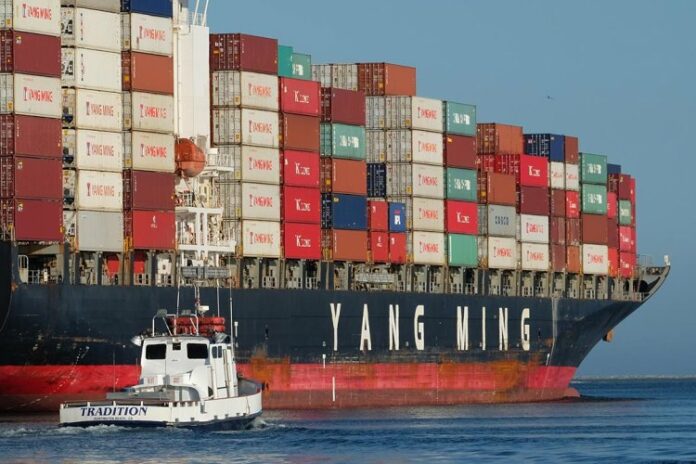
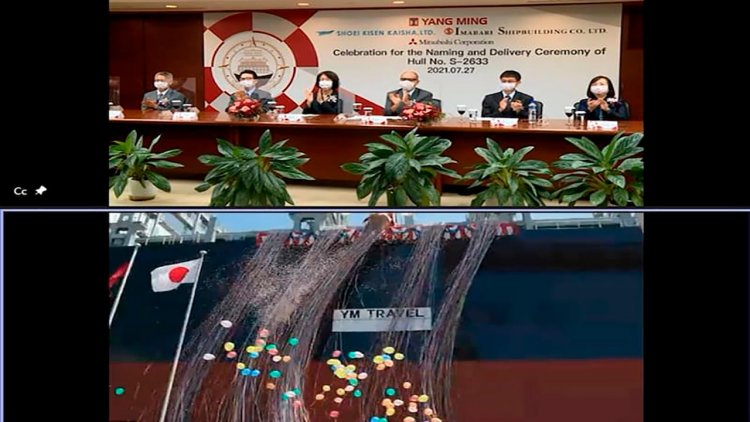
Yang Ming Marine Transport Corp.will add one new 11,000 TEU container vessel, ‘YM Travel’ on 27th July, 2021. The vessel chartered from Shoei Kisen Kaisha, Ltd. and built by Imabari Shipbuilding Co., Ltd. was named at a ceremony held at Imabari Hiroshima Shipyard. Yang Ming’s attendees joined the ceremony remotely at their Taipei office. Mrs. Chen, Shi-Kuan, Chairman of SinoPac Holdings, had the honor to officially name the ship during the ceremony and wish the ship and its crew the best of luck on their future voyages.

To further strengthen Yang Ming’s mid- to long-term operational efficiency, the company ordered a total of fourteen 11,000 TEU newbuildings through long-term charter agreements with ship owners. YM Travel is the sixth delivered in the series. This type of vessels has a nominal capacity of 11,860 TEU and is equipped with 1,000 plugs for reefer containers. With a length of 333.9 meters, a width of 48.4 meters, a draft of 16 meters, these vessels are designed to cruise at a speed up to 23 knots. The containerships incorporate various environmental features including scrubbers, Water Ballast Treatment Plant and Alternative Marine Power system.

This type of vessels adopts the twin-island design to increase loading capacity and navigational visibility to ensure more efficiency and safety. The ship hull form optimization will further increase energy saving and reduce overall emissions. In addition, the ships are designed with shorter length and beam, which makes them easier to maneuver during berthing or departure. The new dimensions enable these ships to call at major ports worldwide and pass through new Panama Canal with no restriction, and facilitate greater flexibility in vessel deployment.

Yang Ming started taking delivery of these new vessels from 2020. These newbulidings will lower the average age of its global fleet, reduce unit cost and achieve energy efficiency. In addition, these ships will accelerate fleet optimization to proactively cope with the challenges and stricter environmental regulations faced by the fast-changing shipping industry. The container shipping market has seen a surge in demand. During the period, the deployment of these new vessels will enable Yang Ming to maximize capacity utilization, greatly enhance its service quality, and deliver more excellent service to global customers.

YM Travel will join THE Alliance’s trans-Pacific service PS6 on July 30th, the port rotation of PS6 is Qingdao – Ningbo – Pusan – Los Angeles – Oakland – Kobe – Qingdao.

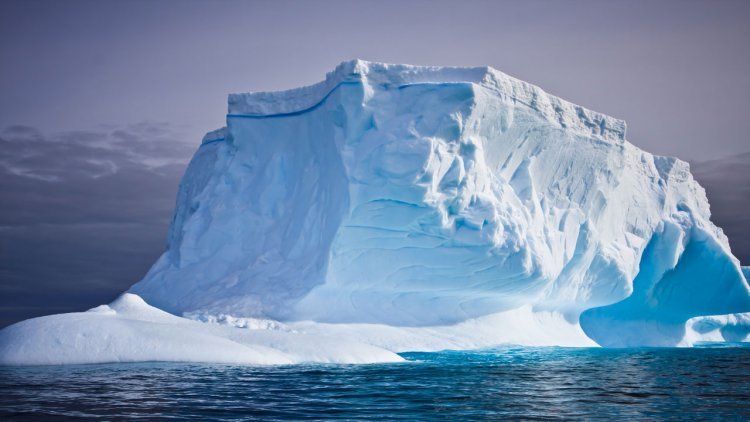
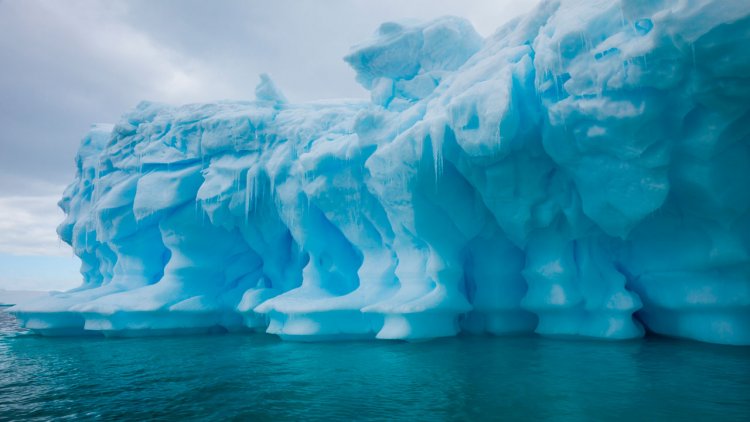
High concentrations of ‘forever’ chemicals being released from ice melt into the Arctic Ocean

0

Known as ‘forever’ chemicals due to the fact they do not break down in the environment, poly- and perfluoroalkyl substances (PFAS) are used in a wide range of products and processes from fire proofing to stain resistant surfaces.

The Lancaster University study has found them in the surface seawater close to melting Arctic ice floes at concentrations of up to two times higher than levels observed in the North Sea, even though the region of the Barents Sea under investigation was thousands of kilometers from populated parts of Europe.

The research has shown these chemicals have traveled not by sea, but through the atmosphere, where they accumulate in Arctic sea ice. Because Arctic ice is melting more quickly than before, these harmful chemicals are efficiently released into surrounding seawater resulting in some very high concentrations.

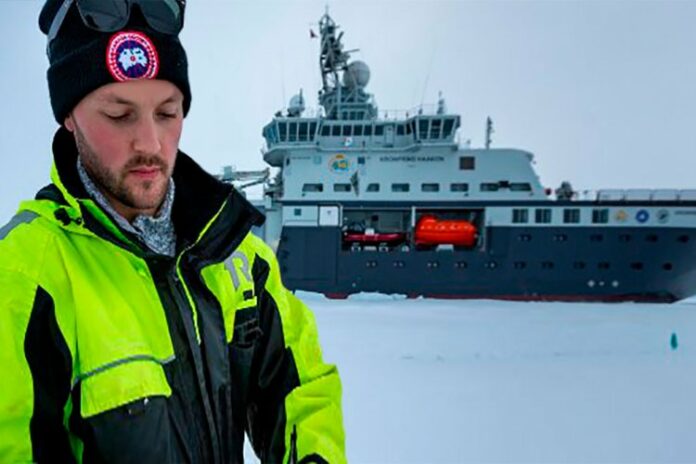
Lancaster’s Dr. Jack Garnett and Professor Crispin Halsall along with colleagues from HZG, Germany, have been investigating the long range transport and deposition of PFAS to the Arctic as part of EISPAC—a project jointly funded by UK’s NERC and Germany’s BMBF as part of the Changing Arctic Ocean program.

PFAS comprise of a very large number of chemicals that have myriad uses, including processing aids in the manufacture of fluoropolymers like Teflon, stain and water repellents in food packaging, textiles and clothing, as well as use in firefighting foams.

One particular group of these chemicals—the perfluoroalkyl acids (PFAAs) – are extremely stable and do not degrade in the environment but can bioaccumulate and are known to be toxic to humans and wildlife.

PFAAs can enter the food chain due to their mobility in the environment and protein-binding characteristics. The longer carbon chain compounds of perfluorooctanoic acid (PFOA) and perfluorooctane sulfonic acid (PFOS) are generally associated with liver damage in mammals, with developmental exposure to PFOA adversely affecting fetal growth in humans and other mammals alike.

Dr. Jack Garnett discovered an unusual phenomenon whereby PFAAs present in the atmosphere are deposited with snowfall onto the surface of ice floes where they can eventually accumulate within the sea ice. Jack made this observation while taking ice and water samples as part of a scientific expedition under the Norwegian Nansen Legacy project.

Undertaking both salinity and stable isotope analysis of snow, ice and seawater, he was able to determine what contribution of the water locked in snow and ice came from the atmosphere and what contribution arose from seawater. This way it was possible to assess the role that atmospheric transport from far away regions had on the presence of these chemicals in the ice.

The PFAA present in the atmospheric component was much higher than the seawater component, confirming that long range transport and deposition from the atmosphere is the main source of these chemicals to the remote Arctic rather than ‘recycling’ of older stocks of these pollutants present in ocean waters.

Furthermore, the team’s studies conducted in a sea ice facility at the University of East Anglia, found that the presence of brine (highly saline water) in young ice serves to enrich contaminants like PFAS in different layers within the sea ice. PFAS like other organic pollutants, generally reside in the brine rather than the solid ice matrix itself. As the ice ages the brine becomes more concentrated resulting in an enrichment of these pollutants into focused areas within the ice pack.

Prolonged periods of thaw, particularly when the ice floes are still covered in snow, results in the re-mobilization of the ice brine and also the interaction of snow meltwater with the brine. This can result in marked release of PFAAs into the underlying seawater.

Brine channels on the underside of ice serve as unique habitats for organisms at the base of the marine foodweb, and, as a consequence, they will be exposed to high levels of PFAAs released with brine drainage and meltwater from the thawing ice pack.

Prof Halsall a co-author of the recent Arctic Monitoring Assessment Program (AMAP) report on “POPs and Chemicals of Emerging Arctic Concern: The Influence of Climate Change,” says that we have an unfortunate situation where the Arctic Ocean is now dominated by one-year ice at the expense of multi-year ice due to global warming. Meaning that the majority of the ice in the Arctic has formed the previous winter, rather than over many years.

This one-year ice contains a lot of mobile brine that interacts with the overlying snowpack and can serve to concentrate pollutants like PFAS which are usually found at very low levels.

Unfortunately, with earlier and more erratic thaw events, this can lead to the rapid release of the stored chemicals resulting in high concentrations in the waters surrounding the ice floes.

It is only through this type of investigative science that we can understand the dynamics of pollutant behavior and identify key hazards, particularly those related to climate change.

In turn this can drive international legislation so that chemicals that exhibit this type of behavior are banned.

Britain could save £50bn by decarbonising smarter and faster, study shows

0

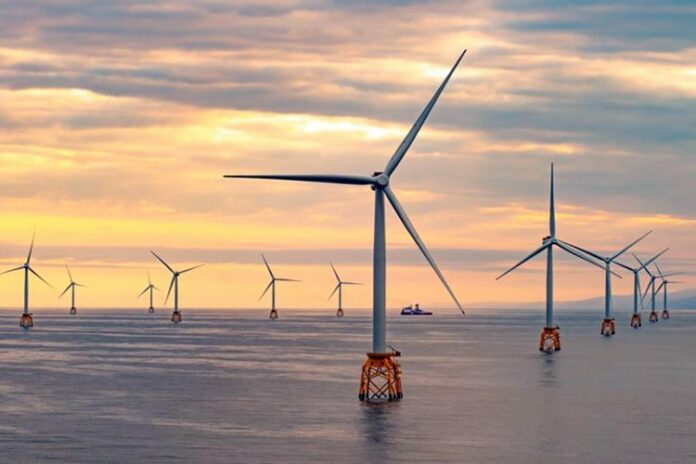
Analysis by energy modelling experts LCP, commissioned by SSE in its role as a Principal Partner to COP26, found a renewables-led system, anchored in the UK’s huge offshore wind potential, would deliver significant system cost savings against the current expected pathway.

LCP’s analysis found a further £28bn of benefits would be delivered in the decade post the 2050 net zero target, bringing the total savings out to 2060 to £76bn. The analysis also identifies that a renewable focused pathway be cheaper would quicker to cut carbon, saving 7.5 million tonnes of CO2 by 2035 and almost 20 million tonnes by 2050.

The Net zero power without breaking the bank report models the impact of different pathways in order to identify ways to reduce the costs of decarbonising electricity in Great Britain.

It identifies five key steps to achieving a net zero power system cost effectively. They are:

  • Focusing on a renewables-led energy system centered on offshore wind.
  • Supporting gas carbon capture and storage (CCS) and hydrogen power generation to complement renewables and help deploy infrastructure to support new clean industrial clusters.
  • Deploying long duration storage and green hydrogen production to balance a renewable-led system, with early deployment of strategic storage assets required.
  • Electricity market reform to ensure that all low-carbon generation is supported – leading to life extensions, refurbishments or repowering of existing assets which could save consumers £20bn alone by avoiding unnecessary new construction.
  • Coordinating the offshore power grid to reduce network costs significantly, and reduce impacts on local communities and the environment.
  • As world leaders prepare for COP26 in November, the cost of decarbonising electricity will be high on the agenda, particularly as countries wrestle with the economic impact of coronavirus. This report sets out how the UK can continue to show international leadership by driving forward its net zero transition, while supporting jobs and keeping costs down for billpayers.

Alistair Phillips-Davies, CEO of SSE, said:

“Decarbonisation is non-negotiable but doing so quickly and affordably is critical. A high-renewables system centered around the UK’s offshore wind resource and back up by technologies like carbon capture and storage, hydrogen and long duration storage can achieve a faster and cheaper route to net zero than one including any more new nuclear projects.

We don’t have time – or money – to waste and with an abundance of clean, green renewable energy on our doorstep and new technologies emerging as cost-effective front runners, the UK should focus its efforts on lower cost routes to reach net zero and support a green recovery across the UK.”

Tom Poprter, Strategy Director at LCP, said:

“Our analysis shows that by harnessing renewable energy and new technologies, the UK can deliver net zero quicker and cheaper than previously expected.

To achieve this route to a cleaner and greener future, policy and regulation will need to give a clear signal on the UK’s decarbonisation trajectory. This will attract the investment needed to build the Net Zero infrastructure required to make sure the UK fully addresses the climate crises.”

bp joins the Mærsk Mc-Kinney Møller Center for Zero Carbon Shipping

0

As a strategic partner to the Center, bp will second experts to work on relevant research and development projects in the Center’s portfolio and contribute to the development of methodologies and optimized pathways for safe and sustainable fuel solutions for shipping. Additionally, bp will join the Center Advisory Board providing guidance for transition strategies and further development of the Center’s activities. 

William Lin, bp’s executive vice president of regions, cities and solutions said:

“At bp, we want to play a role in advocating for policies to help decarbonize carbon intensive sectors like shipping. The shipping industry’s transition to net zero is complex and requires technology advancements and policies that will give companies across the value chain the confidence to act. This is a privileged opportunity to collaborate and advocate with key industry players to progress solutions at the pace and scale needed. When we work together, we can fast track development, de-risk investments and provide signals to the market that will speed up the decarbonization of the shipping industry.” 

In welcoming bp, the Center CEO Bo Cerup-Simonsen says:

“We are extremely proud and delighted to welcome bp to the Center as a strategic partner. We share the same high ambitions and sense of urgency when it comes to creating real climate action and I look very much forward to the collaboration. bp brings extensive expertise in production, storage, handling, transportation and usage of fuels and great experience in driving safety and efficiency in shipping. I see enormous potential in leveraging and applying this knowhow to accelerate the development of future net-zero solutions for the maritime industry.” 

Sven Boss-Walker, bp’s senior vice president of shipping, said:

“For more than 100 years bp has helped shape the shipping industry, from the development of large tankers to the invention of the inert gas system and the latest state-of-the-art LNG carriers. Now is the time to work together with companies that share our net zero ambition and have complementary capabilities to shape the future of shipping.” 

Kale introduces Maritime Single Window services for paperless trade

0

Kale Logistics Solutions (Kale) has introduced its Maritime Single Window (MSW) services under its Port Community System – CODEX.  Designed on the principles of United Nations and IMO recommendation for trade facilitations, it promotes paperless trade through digitization.

Though most Sea Ports have been relatively slow in embracing automation and digitization as compared to other modes of transportation, however, the pace is now starting to accelerate. Ports are facing a shortage of human resources, non-availability of the right information of and from Port Users, poor data quality, siloes of operations and difficulty in handling exceptions. Technological innovation plays a key role in developing solutions to provide a solution to these challenges. Port Community System (PCS) is a good example.

As per a study conducted by Kale, a port handling around 1 million TEUs can save up to 4,000 trees annually with paperless operations. CO2 emission from trucks around the port premises can be reduced by 70% by managing truck wait times at the port gate through advance slot management.

Maritime Single Window (MSW) is a single point of data entry for documentary requirements and procedures in maritime transport. MSW enables seamless exchange of information such as vessel, berth and maritime information between Shipping Lines, Line agents, container owners, Port Authorities, Terminal Operators and Customs including other regulatory agencies. With multiple stakeholders engaged in the marine supply chain, the MSW platform shall be a real tech-enabler and enable paperless operations and bring down maritime dwell time significantly.

MOL to develop new energy-saving sail to boost ship propulsion

0

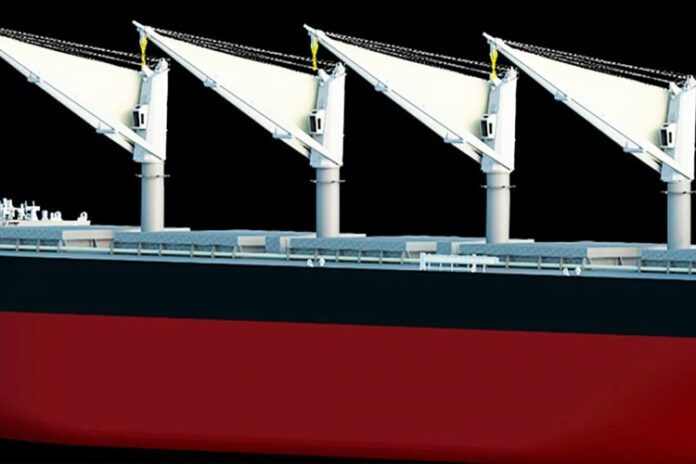
Mitsui O.S.K. Lines has announced that MOL, MOL Drybulk, Oshima Shipbuilding and Iknow Machinery have reached an agreement on joint research and development of the “Iknow Delta Sail Crane”, a sail that can be mounted on ships’ cargo handling cranes and similar equipment to boost propulsion force.

The joint R&D project aims at reducing greenhouse gas (GHG) emissions from vessels while underway, by unfurling the sail placed on ship such as triangular parts of existing cargo handling cranes to use offshore winds to provide additional propulsion force.

Many MOL Drybulk-operated vessels are equipped with cargo handing cranes, and the company plans to study the installation of the Delta Sail on a broad range of ship types, such as bulkers, wood chip carriers, and multi-purpose vessels.

Through five initiatives, MOL group is working to achieve the Medium-to long-term targets in the ‘MOL Group Environmental Vision 2.1’, including “achieve net zero GHG emissions by 2050.”

Through this joint R&D project, MOL group strives to reduce GHGs in clean energy supply chains with industrial leaders by one of the initiatives “Enhancement of Energy-Saving Technologies” in addition to our existing environment-friendly technologies using offshore winds such as Wind Challenger/Wind Hunter Project.

This has the potential to achieve 5% to 8% reduction in GHG emissions by reducing bunker oil consumption through the use installation of a telescoping hard sail that converts wind energy to propulsive force.

MOL has already placed an order with Oshima Shipbuilding for construction of the first vessel to be equipped with the Wind Challenger—a coal carrier, slated to start operation in 2022 supplying Tohoku Electric Power Co.,Inc.

The ultimate zero emission driving project, which combines wind propulsion sailing technology and wind energy converted to generate a stable supply of hydrogen.