-0.5 C
New York
Home Blog Page 578

Berge Bulk begins solar power pilot

0

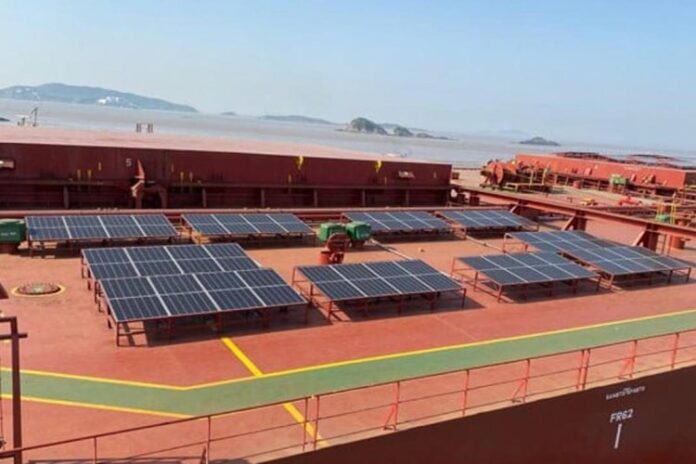
Shipping line Berge Bulk has launched a pilot test on its vessel, Berge K2, to trial the maritime application of solar technology:

“We recently launched a pilot test on our vessel, Berge K2, to trial the maritime application of solar technology.

This test installation produces ~100 kilowatts of electrical power, which is fed into the main electrical grid on the ship to supplement the ship’s diesel alternators.

Through the test, we are observing and assessing how the panels withstand the stresses while at sea and during in-port cargo operations.

Following this pilot, we will then evolve the trial to a 1,000 kilowatts installation.”

Low-oxygen waters off Washington, Oregon coasts risk becoming large “dead zones”

0

Oxygen-depleted bottom waters occur seasonally along the continental shelf of Washington and Oregon when strong winds blowing along the coast in spring and summer trigger upwellings that bring deep, cold, nutrient-rich water to the surface. These waters fuel blooms of plankton. The plankton in turn feeds small animals like krill which themselves serve as food for many fish. When these blooms die off, they sink to the bottom, where their decomposition consumes oxygen, leaving less for organisms, such as crabs and bottom-dwelling fish.

Measurements collected by commercial fishermen using dissolved oxygen sensors provided by NOAA’s Coastal Hypoxia Research Program, as well as data from local moorings, also show a large area of hypoxic water.

Oregon State University Professor Francis Chan, director of the NOAA cooperative institute CIMERS, said:

“Low dissolved oxygen levels have become the norm in the Pacific Northeast, but this event started much earlier than we’ve seen in our records. This is the earliest start to the upwelling season in 35 years.” 

Returning to port from the NOAA-sponsored West Coast Ocean Acidification Cruise, Richard Feely, an oceanographer with NOAA’s Pacific Marine Environmental Laboratory, said that dissolved oxygen and ocean acidity measurements are consistent with an event that has the potential to create “dead zones” later this summer. Dead zones occur when dissolved oxygen levels drop so low that crabs and other bottom-dwelling fish perish. 

The last time scientists observed winds this strong was in 2006 when a large dead zone wiped out crabs and other bottom-dwelling marine life along the continental shelf, Chan said.

Concerns about this summer first arose in March, when a NOAA wind measurement station observed an early shift in winds that initiate upwelling. Winds strengthened in April when the first measurements of hypoxic conditions were recorded. In late May, a NOAA Fisheries survey off Washington and Oregon found large phytoplankton blooms and hypoxic conditions on the continental shelf in the area of Grays Harbor, Washington. At about the same time, beachgoers reported large numbers of dead crabs washing ashore in the area of Ocean Shores, Washington. In early June and again in July, samples along the Newport Line, a long-term monitoring transect off Newport, Oregon, also showed hypoxic waters. 

The West Coast Ocean Acidification Cruise left port June 13 for its 45-day mission sampling along several transects from British Columbia to California. Supported by the NOAA Ocean Acidification Program, this recurring scientific cruise surveys ocean conditions for a host of environmental parameters to better understand the factors that influence ocean acidification and hypoxia, which are related. Scientists obtain measurements from a suite of sensors and floats and collect plankton and other sea life in net trawls. 

During the cruise, NOAA ship Ronald H. Brown navigates a series of straight lines running from the edge of the continental shelf to the coast, allowing scientists to take regular measurements along the way. Feely said the scientists observed the hypoxic layer on all of the Washington and Oregon transect lines. While there are no measurements between those transect lines, he said the hypoxic layer likely covers the continental shelf region from the Olympic Peninsula in Washington to Heceta Bank on the central Oregon coast. Measurements did not indicate a hypoxic layer in Canadian transects or northern California.

One discovery on this cruise has Feely and fellow scientists anxious to get back into the laboratory. In U.S. waters, a plankton net retrieved vertically from depths of 100 meters surfaced with a large amount of a greenish-black substance in the finely woven fabric of the net. Feely suspects the net was towed through a thick layer of decaying plankton in the water column, the kind of thing responsible for creating hypoxic conditions. 

He said:

“We added a little alcohol to the sample, and we began to realize that it was a large mass of phytoplankton, either still living or dead, sinking into the deeper water and possibly providing the fuel for the oxygen uptake as it decays.”

Samples will be taken back to Seattle for examination under a microscope. 

As the West Coast Ocean Acidification Cruise moves south along the California coast, scientists will take ongoing measurements biweekly along the Newport, Oregon transect and by fishermen deploying dissolved oxygen sensors on commercial crab pots.  

Meanwhile, indications are that the hypoxic waters in Oregon and Washington will persist and perhaps intensify. An important coastal model called J-SCOPE, developed by the Cooperative Institute for Climate, Ocean, and Ecosystem Studies, or CICOES, NOAA’s cooperative institute with the University of Washington, predicts a large hypoxic zone will remain through fall.  

Unitrove to deliver liquid hydrogen bunkering facility for zero-emission shipping

0

Unitrove, a clean energy solutions provider, is launching a campaign to decarbonise the global maritime sector by delivering the world’s first liquid hydrogen bunkering facility for fuelling zero-emission vessels.

This is according to an announcement in which the group will additionally showcase its groundbreaking liquid hydrogen technology at the upcoming UN COP26 conference in Glasgow, Scotland.

Unitrove successfully delivered the UK’s first liquefied natural gas bunkering facility at Teesport in May 2015.

Liquid hydrogen is often stored at the cryogenic temperatures of −253 °C (−423 °F) and has been used for decades as the propulsion fuel of choice for launching rockets and satellites into space.

The group said that it is only now being seriously explored for commercial heavy-duty mobility applications.

Steven Lua, CEO of Unitrove, said:

“We already see very early signs of light-duty vessels being battery-driven or powered by compressed gaseous hydrogen, but liquid hydrogen will allow us to serve the heavier portion of the shipping fleet where we hope to have a much larger impact. We are also exploring options including ammonia, liquid organic hydrogen carriers, and solid hydrogen in the form of sodium borohydride.

“However, we understand that priority is currently being given to the development of international standards and regulations for pure hydrogen, and this could play a significant factor in the long run. We believe that hydrogen will be recognised as a global commodity that will be traded in the same way that natural gas is today. The bunker fuel market is worth an estimated $120bn, so there is a huge opportunity not only in environmental and social terms, but also financially.”

Maersk enhances services from Kenya to Europe to create customer value

0

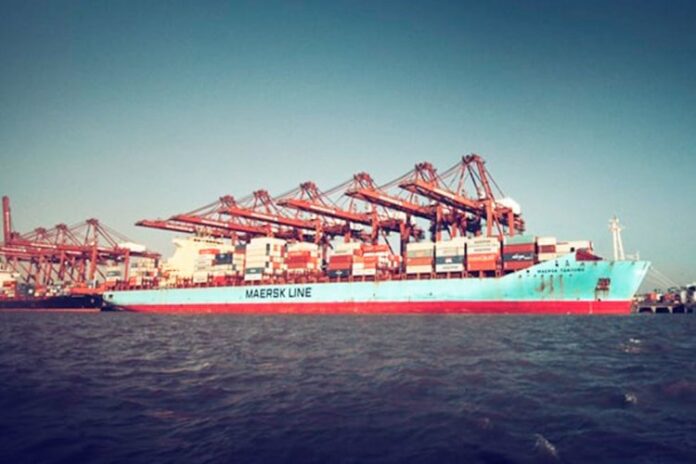
Maersk has decided to strengthen its Mombasa to North Europe service, specifically Felixstowe and Rotterdam, by providing a single transhipment product via the Port of Salalah in Oman.

The changes in network are primarily aimed at providing higher predictability and offering more flexibility to customers’ supply chains. Redesigning the network from Salalah the ME7 service will bring more resilience to customers’ supply chains, further protecting them from operational challenges that arise out of contingencies.

Carl Lorenz, Maersk Eastern Africa Managing Director, said:

“This ocean product enhancement will ensure further peace of mind to Kenyan exporters injecting more resilience, predictability, and reliability into our customers’ supply chains, particularly essential for perishable cargo from Kenya. It’s great to see this important market being prioritised where global reliability in Ocean Freight is more of a challenge than ever.”

The ME7 service will connect Kenya’s exports via Salalah to Europe ensuring the cargo will flow smoothly without getting affected by unforeseen delays in case of congestion. The ME7 service will also provide regular rotations between the hubs of Colombo and Salalah, thus letting customers have a more flexible option of moving their cargo.

Shell, Equinor, RWE and Gasunie to push ahead with plans for offshore hydrogen park

0

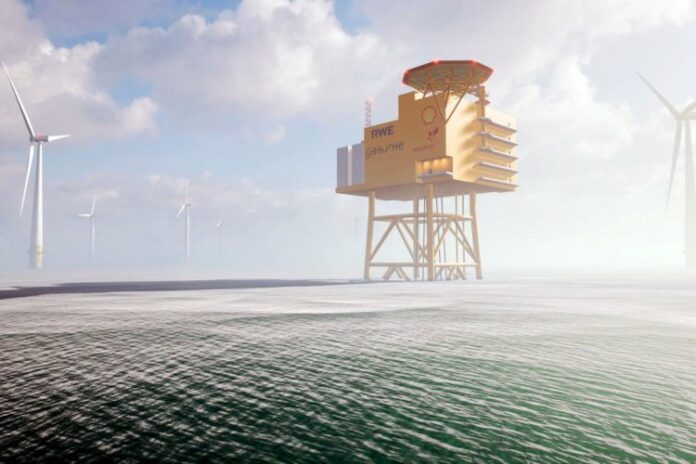
Project partners RWE, Shell, Gasunie and Equinor signed a declaration of intent to further intensify their collaboration on the AquaSector project – the vision of the first large-scale German offshore hydrogen park. 

The project aims to demonstrate that in Germany offshore based hydrogen production enables an efficient, cost-effective and sustainable way to produce green hydrogen.

The AquaSector project intends to install approx. 300 megawatt (MW) electrolyser capacity to produce up to 20,000 tons per year of green hydrogen offshore. The green hydrogen is planned to be transported via a pipeline, called AquaDuctus, to Heligoland starting in the year of 2028.

The partners see the AquaSector project also as a ‘proof of concept‘ for the realisation of the AquaVentus vision of producing up to 10 gigawatts of green hydrogen offshore by 2035 and transporting it via an extended pipeline to mainland Germany.

Compared to the transport of electricity generated offshore, the hydrogen production at sea and the transport via pipeline could offer clear economic advantages. The pipeline could replace five High Voltage Direct Current (HVDC) transmission systems, which would otherwise have to be built. It is by far the most cost-effective option for transporting large volumes of energy over long distances.

As part of the AquaVentus project family and together with the entire initiative the partners want to contribute towards the decarbonisation of energy supply in Germany and Europe. AquaSector is therefore a key milestone in the implementation of the German and European hydrogen strategies.

The project can support the development of the market that will bring a rapidly increasing demand for green hydrogen. The first step in the AquaSector project for the partners is to carry out a detailed feasibility study. The study will provide important initial indications of the conditions under which the large-scale offshore hydrogen park can be successfully realised as well as the technical and commercial challenges which need to be overcome in regards to offshore hydrogen production.

Major £10M project aims to unlock potential of ocean renewable energy fuels

0

The University of Strathclyde will lead the multi-disciplinary Ocean-REFuel: Ocean Renewable Energy Fuels project, which will explore ways of converting ocean energy into fuels for use in heating, energy storage and difficult to decarbonise transport applications.

The news comes as the UK prepares to host COP26, the UN Climate Change Conference, in Glasgow and the consortium includes world-leading research teams from the Universities of Nottingham, Cardiff, Newcastle and Imperial College London. The project is funded by the Engineering and Physical Sciences Research Council, industry, and the partner universities, who have also pledged a total of nine linked PhD studentships.

The UK government has the ambition for offshore wind to produce more than enough electricity to power every home in the country by 2030, based on current electricity usage, but there remains extremely large ocean energy potential which can never be fully utilised by the electricity network.

Renewable electricity has been a remarkable success over the past 20 years, but the same cannot be said for other energy uses, in particular heat, heavy transport vehicles and aviation. New technologies and systems need to be developed to avert the worst consequences of climate change and the Ocean-REFuel project will directly address challenges associated with energy storage, renewable heat and the decarbonisation of transport such as road, marine and aviation.

Professor Sir Jim McDonald, Principal and Vice-Chancellor of the University of Strathclyde and President of the Royal Academy of Engineering, said: “We are delighted to be awarded the Ocean-REFuel project and to bring together this formidable cross-UK team to lead the way for future hydrogen production from an almost boundless sustainable offshore resource.
The University of Strathclyde is one of the country’s leading energy research institutions and addresses the challenges of the energy transition. I believe this exciting opportunity will enable the UK to undertake vital research into Ocean Renewable Energy and establish it as a pioneer in the field. 

Renewable Energy technologies such as wind are impacted by intermittency and production issues and this project will explore storage solutions, such as hydrogen and ammonia, that can help manage the issue of intermittent supply. Like electricity, hydrogen is an energy carrier and can be produced from a variety of sources including seawater and used as a source of energy or fuel.

It could also allow the stored energy to be fed back into the grid, and potentially channel renewable energy to difficult-to-decarbonise sectors such as renewable heat and transport, which account for more than 60% of UK energy demand.

A report in 2020 from the Offshore Renewable Energy Catapult claimed that even if only offshore wind-to-hydrogen is considered, the exports to Europe alone could reach an annual value of up to £48bn.

Minister for Energy, Clean Growth and Climate Change, Anne-Marie Trevelyan said:

“The waters around the UK offer abundant prospects for clean energy. Ensuring that we can tap the full potential of our natural resources will be vital in meeting our bold climate change commitments.

“As shown through our world-leading offshore wind sector, we are not only capitalising on the clean energy potential around our coastline but also the opportunities for investment, jobs creation and regional growth. Projects like Ocean-REFuel are helping us fulfil that potential as we build back greener.”

The five-year collaboration, which involves 28 industrial partners, including BP, Scottish Power, National Grid, ENI along with the UK Health & Safety Executive, will also produce a Blueprint for the first integrated Ocean Renewable Fuel production facility.
Professor Feargal Brennan, Head of Naval Architecture, Ocean and Marine Engineering at the University of Strathclyde and the Ocean-REFuel project lead, said:

“The Ocean-REFuel project has come at precisely the right time to build on the successes of offshore wind and has the potential to create a step-change in how we consider our whole energy system.

“The team will aim to use their vast experience to provide international thought-leadership on how to best develop this enormous energy potential in a safe, environmentally sensitive and responsible manner to provide maximum benefit to local communities whilst contributing in a major way to net-zero.

“The challenges are immense, and we are acutely aware of the importance of getting this right, given the backdrop of the climate emergency and the global consequences unless step changes can be achieved.”

The Ocean-REFuel project builds on EPSRC investment of more than £35 million into offshore wind power over the past decade and Dr Lucy Martin, Deputy Director for Cross-Council Programmes at EPSRC, said:

“The UK is the world’s largest producer of offshore wind energy but there is vast potential yet to be tapped into, as outlined in the Prime Minister’s plan to quadruple the amount we produce by 2030 including the opportunity to use offshore wind to help meet our green hydrogen production needs.

“By addressing key research challenges to the wider use of offshore wind energy and integrating it into green hydrogen production, the Ocean-REFuel project will help us to engineer the radical energy transition needed to deliver on our Net Zero commitment and also enhance the sustainability and resilience of the UK energy system.”

UK Government Minister for Scotland David Duguid said:

“As Glasgow prepares to host COP26 later this year, the eyes of the world will be on the UK to show leadership, creativity and innovation in the global effort to tackle climate change. This fantastic project, led by the University of Strathclyde, will investigate the potential our natural resources hold to generate clean energy and help achieve our net zero ambitions.”

Jan De Nul successfully installed Formosa 2 export cables

0

This milestone marks the next step in the development of the Formosa 2 Offshore Wind Farm.

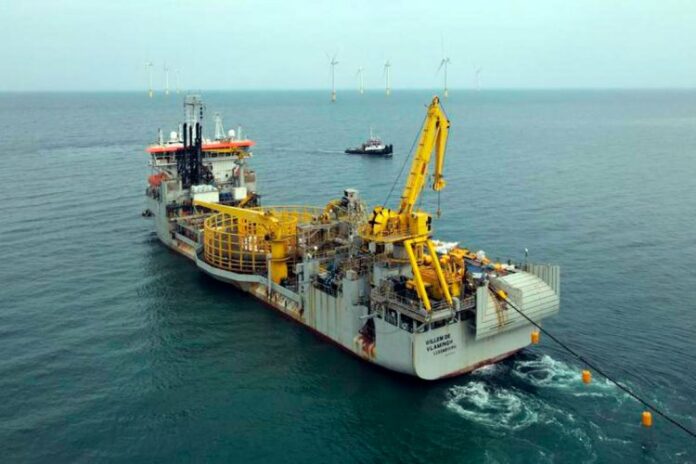
Thanks to her shallow draft design, the Willem de Vlamingh was able to position itself close to the beach thereby limiting the shore pull distance to around 1,250 metres. At the beach landing, the cables have been pulled through four HDD ducts into the transition joint bays.

The Willem de Vlamingh also acted as Trenching Support Vessel which, together with TSHD Niña and a Starfish outfitted with an in-house designed jet-skid tool, in the meantime also successfully completed the export cable burial works.

For the installation of the export cables, Jan De Nul Group relied on its local supply chain network for the performance of the beach pull assistance works, dive support, the installation of the HDD ducts, as well as the supply and operation of support vessels. This local network was set up with the support of Jan De Nul’s long-standing partner Hung Hua Corporation.

For the Formosa 2 project, Jan De Nul Group is responsible for the foundation design, fabrication and installation, as well as for the design, supply and installation of the subsea cables.

Formosa 2 OWF highlights the presence and pioneering activities of Jan De Nul in the Taiwanese offshore wind market, together with the involvement in Changhua OWF, Greater Changhua OWF and the Formosa 1 Phase 2 OWF.

Seattle-based icebreaker will make Northwest Passage transit in new Arctic mission

0

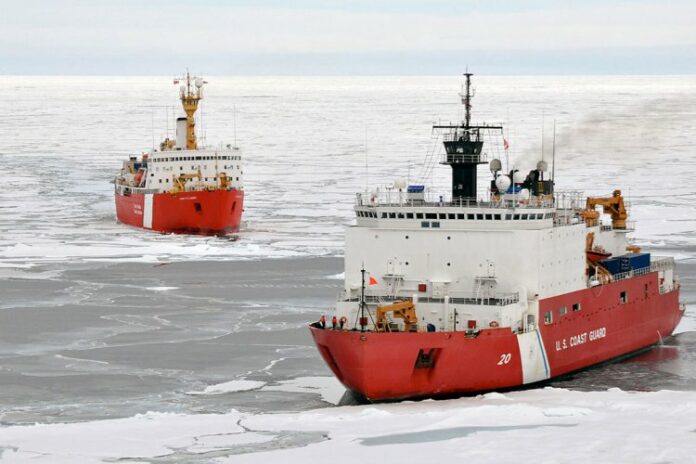
As sea ice retreats in a changing climate, the passage has become an increasingly accessible route, and researchers who will board the Coast Guard Cutter Healy are scheduled to conduct work that will include seafloor mapping and analyzing the ocean fate of meltwater from Greenland’s glaciers.

The Northwest Passage part of the voyage is expected to last about 10 days, and take place in September on a Canadian Arctic maritime route that connects the North Pacific to the North Atlantic. It will be a highlight of a mission that began with a July 10 departure from Seattle and also includes an Atlantic transit, and traverse of the Panama Canal as part of a circumnavigation of North America.

The 85-member crew is expected back to Seattle sometime before Thanksgiving.

The last time the Healy did the Northwest Passage was in 2005. The Healy is a medium icebreaker that is able to break ice up to 10-feet thick. The Healy and the Seattle-based Polar Star are the Coast Guard’s only two functioning seagoing icebreakers. Both are aging, and have suffered maintenance and other mishaps.

In August of last year, while off Alaska, a fire onboard the Healy damaged a propulsion motor that used power generated by diesel engines to spin a shaft and propeller. The fire was put out within a half-hour, and the vessel had to cancel a summer Arctic cruise and limp south.

Repairs in a California shipyard involved cutting out a big chunk of the side of the vessel so the old motor could be removed, and then installing a spare that had been stored in Baltimore. As the vessel made its way back to Seattle, the motor was not in perfect alignment. But final adjustments were made in June, and it has performed well during the initials days of the voyage as the Healy cruised north to the port of Dutch Harbor.

The crew has a wide range of experience, and includes some teenagers who just completed Coast Guard boot camp as well as recent officer graduates from the Coast Guard Academy in New London, Connecticut.

The Healy’s cruise comes a time when the Coast Guard wants to ramp up its presence in the Arctic amid long-term warming trends—due to climate change from human activity—that is reducing ice and increasing vessel traffic.

In Seattle, the U.S. Coast Guard is proposing a renovation and expansion of its waterfront base that during the next decade will be home to three new icebreakers, and probably other vessels.

One option for the base’s makeover would result in more than tripling the Coast Guard’s acreage along the waterfront, according to a document published earlier this year in the Federal Register.

There are geopolitical dimensions to the opening of Arctic sea routes as Russia, with its much larger icebreaker fleet, has looked to a northeast passage as it opens a route to move cargo from the Atlantic to Asia.

Most of the traffic through the Northwest passage has been from cruise ships, research vessels and adventuresome recreational boaters. With the easing of the COVID-19 pandemic in North America, more of these passages are expected in 2021.

Wärtsilä to provide thrusters for two Chinese wind farm turbine installation vessels

0

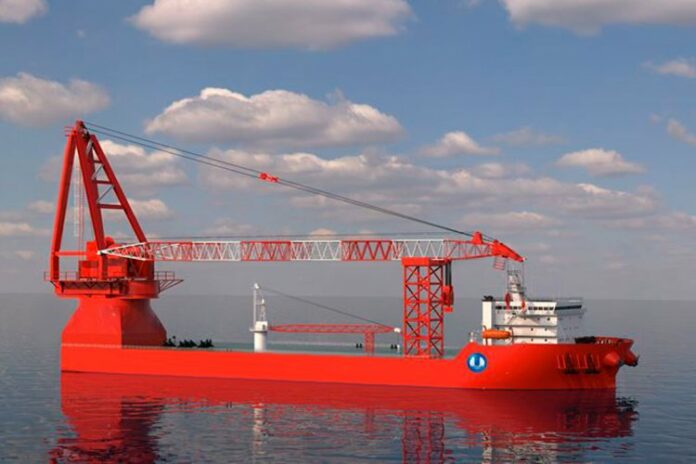
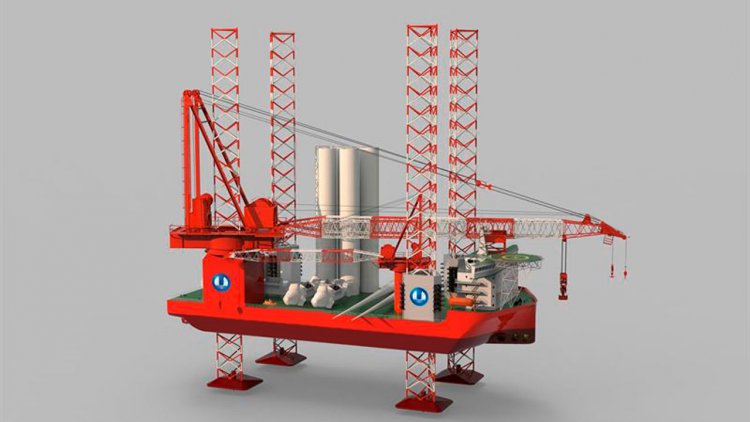
The technology group Wärtsilä will supply the steerable and tunnel thrusters for two new wind farm turbine installation vessels being built for the China Three Gorges Corporation (CTGC), a China state-owned power company. 

The orders were placed by CSSC Huangpu Wenchong Shipbuilding Co, the yard building a 2000-ton wind turbine installation vessel (WTIV), and by China Merchants Heavy Industry (Jiangsu) Co, the yard building a 3000-ton heavy lift vessel. The orders with Wärtsilä were placed in May 2021.TheWärtsilä thruster solutions provide the level of performance required to ensure optimal positioning for offshore installation vessels regardless of the sea and weather conditions. Furthermore, the weight of onboard equipment is an important consideration for jack-up vessels, and the compact Wärtsilä thruster package saves weight without compromising performance.

Mr. Wang Peng, Project Manager, China Three Gorges Corporation, says:

“Wind power is becoming increasingly important for China, and we are building these two ships on a fast-track schedule to support this programme. We appreciate Wärtsilä’s ability to deliver the thrusters in line with our timetable. Their local engineering and project management assistance is of great value to us.”

Lauri Tiainen, Product Director Thrusters & Propulsion, Wärtsilä Marine Power, says:

“We are proud to have been awarded the contracts for these new vessels. As with all Wärtsilä products and solutions, our thrusters are designed to ensure optimal efficiency, high hydrodynamic performance, less maintenance, and better accessibility for servicing. They reach and exceed the performance levels required in today’s competitive operating environment.”

Each of the vessels will have an optimised thruster configuration consisting of WST-32FP main propulsion units and relevant WTT transverse thruster sizes. The future-proof design of the thrusters features high redundancy for less energy consumption, and proven reliability. They also comply with applicable environmental regulations with the use of Environmentally Acceptable Lubricants (EAL).

China is expected to boost its offshore wind power generation capacity to 50 gigawatts by the end of 2029. The aim is to reach ten percent of the country’s total wind power generation capacity, which currently is at three percent.

Van Oord takes on Baltic project

0

Van Oord will transport and install the foundations and ensure the supply, transport and installation of inter-array cables. 

With a production capacity of 476 MW, the Baltic Eagle wind farm will deliver renewable energy to 475,000 households while saving nearly 1 million tonnes of carbon dioxide annually. It is scheduled to be fully operational by the end of 2024.

Iris Stempfle, Iberdola Country Manager in Germany, said:

‘Iberdrola is one of the leading developers contributing to the energy transition by investing in offshore wind projects around the globe – in Germany, our Baltic Hub will have an installed capacity of 826 MW by the end of 2024. Tapping into the expertise of Van Oord yet again makes us confident that Baltic Eagle offshore windfarm will be delivered as planned.’

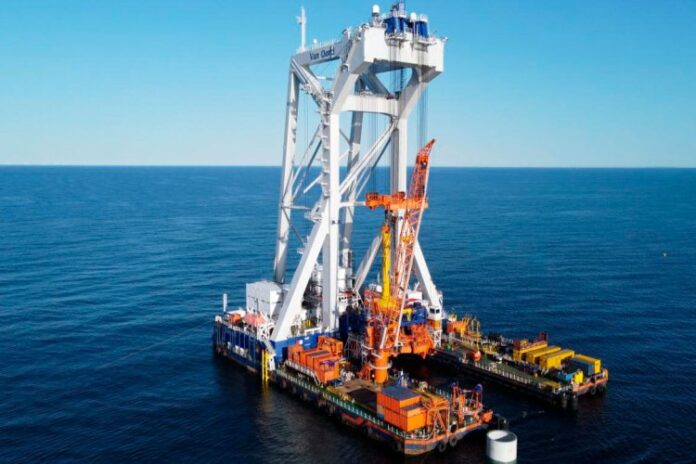
Van Oord plans to deploy its 8,000-tonne heavy-lift installation vessel Svanen to install the 50 foundations. So far, the Svanen has installed more than 700 foundations throughout Europe and the vast majority of monopiles in the Baltic Sea, including those for Baltic 2, Arkona and Kriegers Flak. The offshore works for the Baltic Eagle project will commence in 2023. Van Oord’s cable laying vessel Nexus and trencher Dig-It will be deployed to lay the inter-array cables. Van Oord will customise the Dig-It to ensure that it can handle the challenging soft soil conditions in the Baltic Sea.

Arnoud Kuis, Managing Director Van Oord Offshore Wind, said:

‘We are very pleased to be working with Iberdrola again, this time on the Baltic Eagle project in the German Baltic Sea. Combining the installation of foundations and the supply and laying of cables will ensure efficient project execution.’

The Baltic Sea holds incredible potential for offshore wind in Europe. Germany and several other countries, including Poland, Sweden and Estonia, are exploring new opportunities for offshore wind there. Iberdrola’s Baltic Hub, located in the German Baltic Sea, will deliver 826 MW by late 2024. Iberdrola Renovables Deutschland GmbH is planning to increase their installed capacity in Germany to more than 1.1 GW by the end of 2026.