0.4 C
New York
Home Blog Page 563

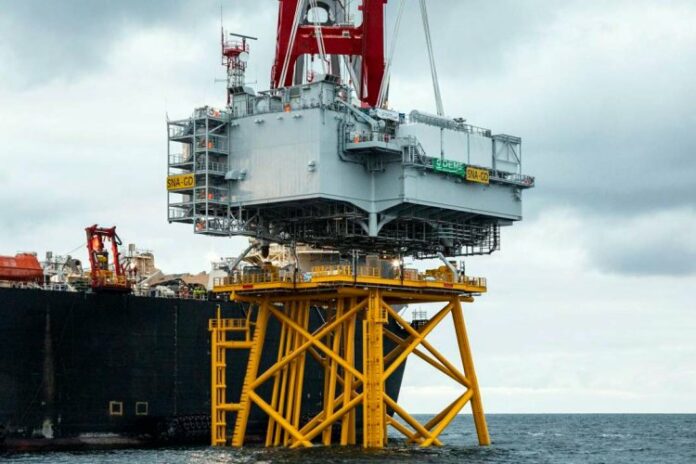
DEME installs first offshore substation in France at Saint-Nazaire offshore wind farm

0

Weighing 2,100 tons, the OSS was successfully installed at the Saint-Nazaire offshore wind farm on August 18.

The electrical substation was constructed by a consortium including Atlantique Offshore Energy, the business unit of Chantiers de l’Atlantique dedicated to Renewable Marine Energies, GE Grid Solutions and DEME Group’s French subsidiary SDI.  The 480 MW Saint-Nazaire offshore wind project is being developed by EDF Renouvelables and EIH S.à r.l, an indirect subsidiary of Enbridge Inc., and CPP Investments. Saint-Nazaire, scheduled to be operational in 2022, is the first commercial offshore wind farm installed in French waters. The contract for the substation was awarded in 2019. 

Installed with the ‘Pioneering Spirit’, the 480 MW substation is (H) 15 m x 27 m x 39 m, while the jacket is 26 m x 26 m x 48 m (H) and weighs 1,250 tons.

The ACS division of GE Grid Solutions, located in Saint-Priest, France, designed and integrated the high and medium voltage systems. Those include five 220 kV gas insulated switchgears from Aix Les Bains, France, two 220/33kV transformers manufactured in Monchengladbach, Germany, two SCADA systems developed in Montpellier, France and one 33kV gas insulated switchgears and a telecommunication syste

DEME Offshore carried out the transport and installation of the OSS, including the offshore pre-piling works. Chantiers de l’Atlantique is responsible for the topside and jacket foundation design, manufacturing and commissioning. GE Grid Solutions is responsible for the high voltage electrical equipment and protection control systems design, manufacturing and commissioning.

Bart De Poorter, General Manager DEME Offshore Renewables, commented:

“The construction and installation of the OSS is the result of strong cooperation between the consortium members, with each partner bringing its expertise and highest level of execution to the project, enabling us to meet the stringent quality, safety and environmental standards. As a result of this cooperation, we were able to design, fabricate and install the OSS in only 26 months, which is an incredible achievement and testament to the collaboration with our partners. At DEME, we are certainly very proud that our expertise has played such a significant role in reaching this key milestone in the renewables industry, with Saint-Nazaire due to be the first commercial offshore wind farm in France.”

Frédéric Grizaud, Director of the BU Atlantique Offshore Energy at Chantiers de l’Atlantique, added:

“With the installation as  scheduled of  a new electrical substation designed and built by Atlantique Offshore Energy,  we demonstrated once again our expertise, along with our partners, to manage a complex project to the satisfaction  of our customer. We look forward to reaching the same level of performance for the future projects managed by the consortium”.

The same consortium responsible for Saint-Nazaire has also been selected by Eoliennes Offshore des Hautes Falaises et Eoliennes Offshore du Calvados to design, manufacture and install the electrical substations for the Fécamp and Calvados (Courseulles-sur-Mer) wind farms in Normandy, France.
Rivers are largest global source of mercury in oceans

0

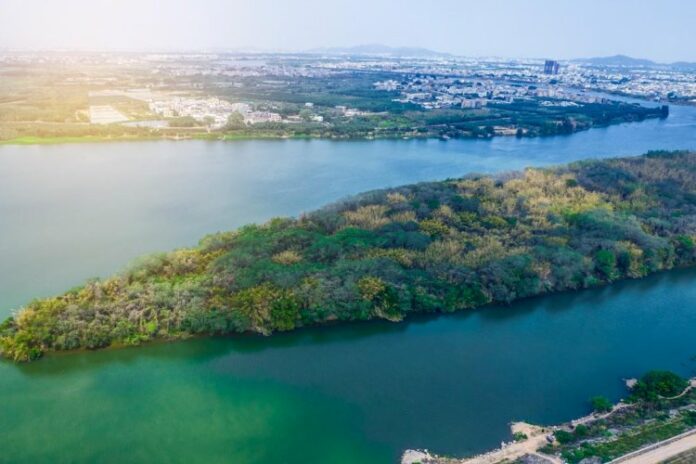
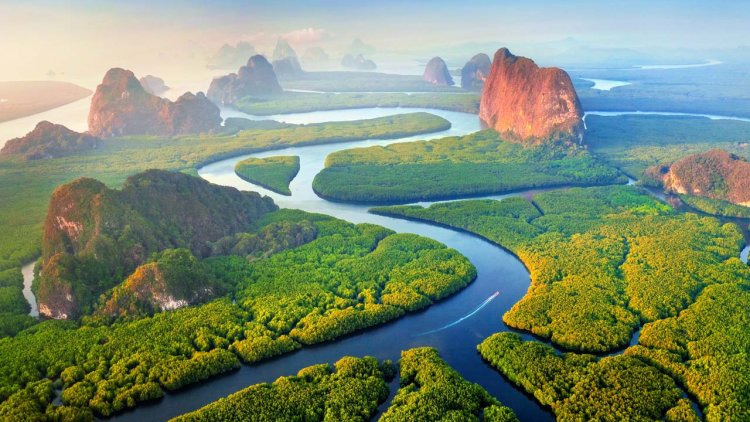
The presence of mercury in the world’s oceans has ramifications for human health and wildlife, especially in coastal areas where the majority of fishing takes place. But while models evaluating sources of mercury in the oceans have focused on mercury deposited directly from the atmosphere, a new study led by Peter Raymond, professor of ecosystem ecology at the Yale School of the Environment and published in Nature Geoscience shows that rivers are actually the main source of the toxic heavy metal along the world’s coasts.

Previously, it was believed that most mercury in the open ocean was deposited there from the atmosphere, and then made its way into coastal areas. But now it appears that most mercury flows into the coastal ocean areas from rivers, and from there it moves out into the open ocean. 

Maodian Liu, a postdoctoral fellow in Raymond’s lab, says:

“Currently, policymakers mainly focus on controlling atmospheric emission and deposition of mercury, while the contribution of river mercury to coastal oceans is not well understood.”

He says that the new findings underscore the importance of limiting the mercury that makes its way into rivers.

The researchers also investigated changes in the yearly cycle of riverine mercury outflow, finding that globally, levels were highest in August and September. And they analyzed which rivers were the largest contributors of mercury; ten rivers are responsible for half of the riverine mercury. The Amazon River is at the top of the list, followed by the Ganges in India and Bangladesh, and the Yangtze in China.

While other recent studies have also estimated the amounts of riverine mercury, Raymond says that those studies didn’t have the same level of specificity with regards to which rivers had the highest amounts of mercury and when during the year those levels were highest.

The burning of coal is predominantly responsible for atmospheric mercury, which eventually ends up both in the ocean and on landmasses. The mercury that rivers transport into the ocean can come from atmospheric mercury that has ended up in soils; it can also come from other anthropogenic sources like gold mining, and to a lesser extent naturally occurring geologic sources. In addition, as climate change induces more severe storms and floods, mercury that has lain dormant in soils for long periods of time may increasingly be transported into the coastal oceans, the researchers say.

Raymond says future work could focus on understanding the processes that affect mercury in those “hotspots” where the concentrations coming into the ocean are highest, as well as examining the connections to fisheries in those areas. Fish consumption is the most important dietary source of human exposure to mercury, Liu notes. Ultimately, this improved understanding of how and where mercury gets into the oceans will help inform regulations to reduce the amount of mercury in the fish on all of our plates.

Construction begins on Isle of Man Steam Packet Company’s new flagship ferry

0

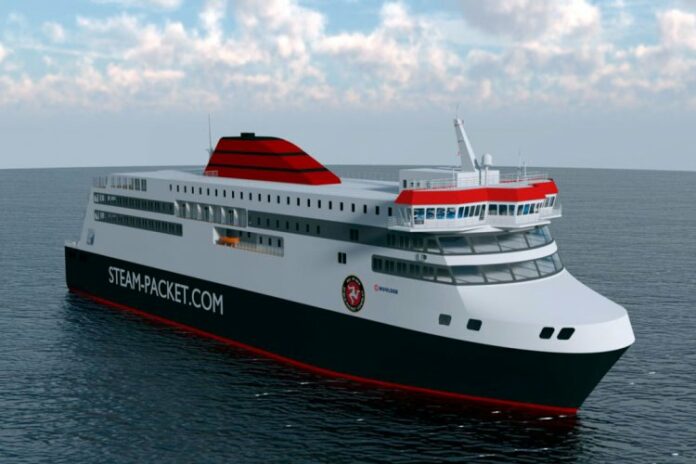
Construction has today commenced on Manxman, the Isle of Man Steam Packet Company’s new flagship ferry, at Hyundai Mipo Dockyard in South Korea.

The 133m-long vessel, which is due to replace the Ben-my-Chree when she comes into service in 2023, will be able to carry 949 passengers and have 495m2 additional space for freight and vehicles.

Officials from the Steam Packet Company, Hyundai Mipo Dockyard, Sea Quest Marine Project Management (specialist shipbuilding consultants), Houlder Naval Architects and Lloyds Register (Class Surveyor) were all in attendance at the milestone event – known as the steel cutting ceremony – on site in Ulsan today, where a formal pushing of the button took place to mark the first piece of steel being cut.

This signifies that the detail design of the vessel – comprising a total of around 300 detailed plans – has been finalised and agreed by the Steam Packet Company Project Team and construction can commence. 

Plasma files are produced from the approved construction drawings to allow the shipyard’s plate cutting machines to automatically and accurately cut each piece of the vessel. There will be up to two months of plate cutting, panel production, plate bending and pipe production before block construction, and then keel laying, can commence.  

Isle of Man Steam Packet Company Managing Director Brian Thomson said:

‘The steel cutting ceremony is a milestone occasion and cause for celebration which signifies that after years of planning, the construction of Manxman is under way. The Project Team has been working incredibly hard to ensure the project stays on track and it’s fantastic to see everything progressing as scheduled.

‘This is a very exciting time for the Company and we’re looking forward to keeping the Island community up-to-date with the progress of Manxman ahead of her coming into service, scheduled for spring 2023.’

Deltamarin signs design contracts for three RoPax ships

0

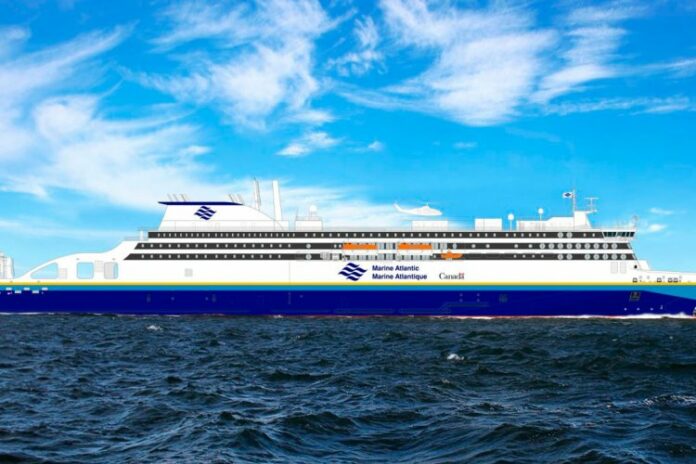
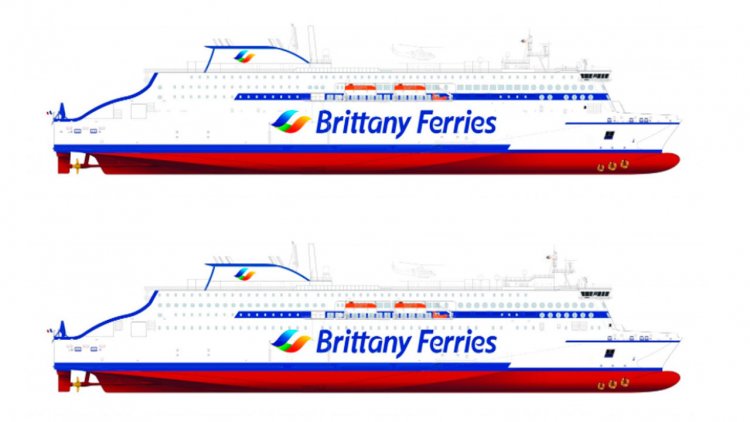
Deltamarin has signed design contracts with China Merchants Jinling shipyard (Weihai) for the complete basic and detail design packages of three RoPax vessels. These are the 10th, 11th and 12th Stena E-Flexer vessels for two different end clients.

Stena’s E-Flexer class has been developed with a basic concept, but is flexible and adapted to customer needs, both commercially and technically. The concept combines cargo and passenger capabilities, and the vessels are substantially larger than today’s standard ferries. The Stena E-Flexer class is at the forefront in terms of sustainability, and sets a new standard for emissions, costs and energy efficiency, as well as performance.

Vessel no. 10 will be chartered by a Canadian federal Crown corporation, Marine Atlantic, from Stena RoRo. The vessel will have a capacity of 1,100 persons and approximately 2,600 lane meters. It has LNG dual fuel engines and a battery hybrid solution to minimise emissions. The ship will enter service in eastern Canada between Newfoundland and Nova Scotia in 2024.

The vessels nos. 11 and 12 will be chartered by Brittany Ferries from Stena RoRo. Both ships will have a capacity of 1,400 persons. Cargo capacities have been tailored for the planned services and differ in terms of total lane meters and lane meters intended for cars. Both ships will be equipped for LNG operation, meaning that they can run on LNG, biogas or other new fuels such as ammonia. In addition, the ships will have a large battery hybrid solution of 10 MWh for propulsion and manoeuvring in port and an 8 MW electric shore connection for charging the batteries.

The vessels will be delivered in 2024 and 2025 and will operate on two of Brittany Ferries’ primary routes between Portsmouth in the UK and Ouistreham (Caen) and St Malo in France.

Ukraine bought British James Clark Ross icebreaker

0

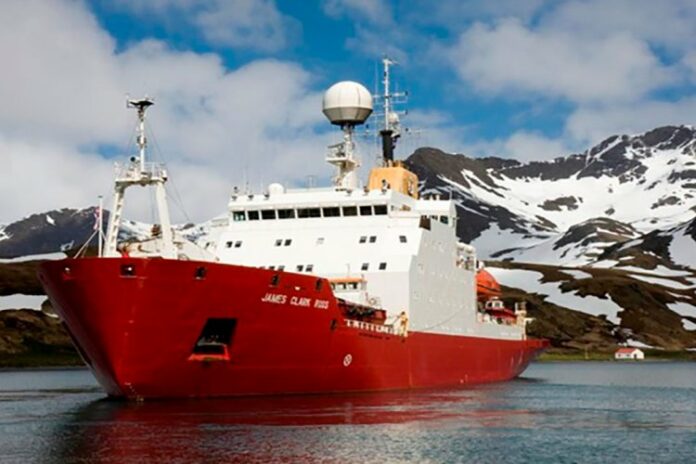
On Thursday, August 19, an act of purchase by Ukraine from the UK of the James Clark Ross icebreaker was signed. The ship is now based in Denmark. After the renewal of all necessary documents, the icebreaker will arrive in Odesa under the Ukrainian flag. This is expected to happen in early autumn. This was reported by the press service of the National Antarctic Science Center on its Facebook page.

Dr. Evgen Dykyi, Director of the National Antarctic Scientific Center of Ukraine (NASC), said:

“For Ukraine, the acquisition of James Clark Ross opens up a whole world of new opportunities. For the last 20 years, Ukraine did not have its own icebreaker for Antarctic research, which significantly limited our work. Also, with this vessel, Ukraine has ambitions to conduct large-scale studies of the Southern Ocean and, if possible, eventually begin research in the Arctic. And for us, this icebreaker has value as a symbol, because it was he who brought the first Ukrainian Antarctic expedition to the former British station Faraday – now our Academician Vernadsky – in 1996.”

Over the past decades, the icebreaker has been the world’s research platform for biological, oceanographic and geophysical research. It was launched into the water in 1990.

The NASC said:

“Therefore, having become a new acquisition for Ukraine, the icebreaker opens up a whole window of new opportunities for the NASC, in particular in oceanographic research and the study of climate change in the polar regions. It is important that the acquisition of the vessel took place on the eve of the UN Climate Change Conference (COP26), which is scheduled for November this year.”

As a reminder, in early July, the Cabinet allocated funds for the purchase of an icebreaker for the Ukrainian Antarctic expeditions. The media reported that $ 5 million was spent on the purchase of the ship.

Hydrogen-powered ferry being trialled in the California Bay Area

0

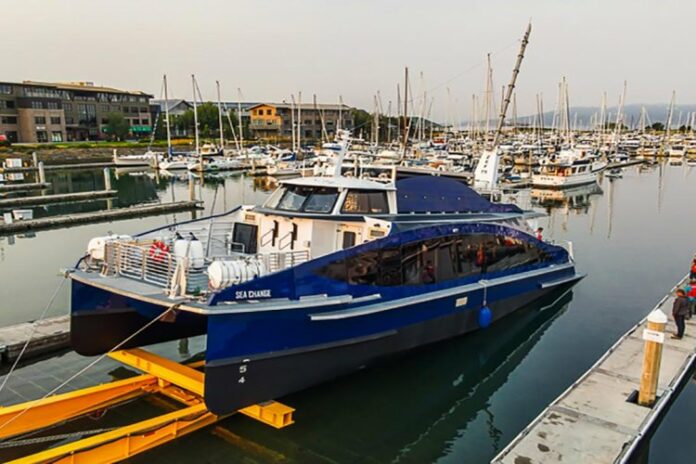
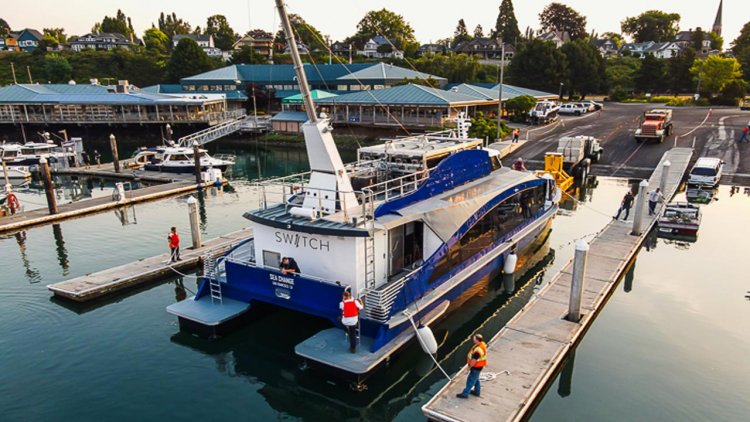
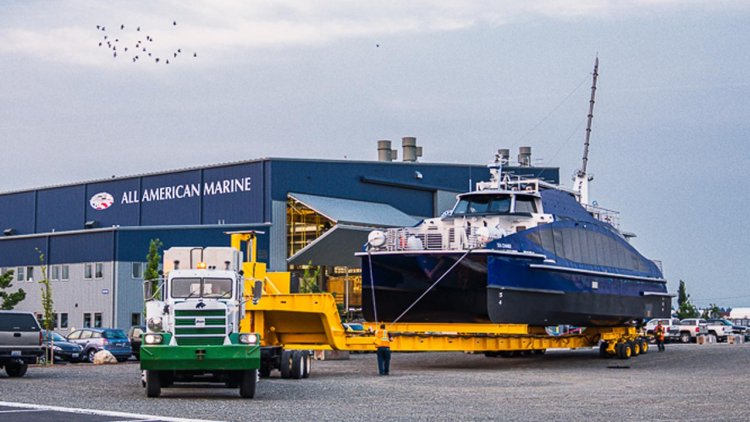
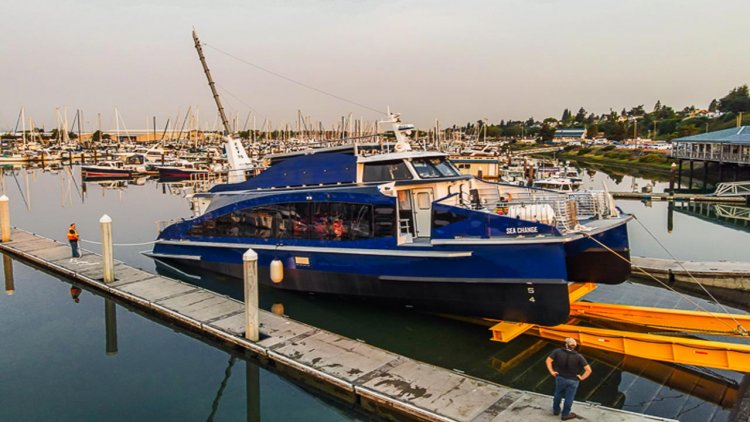
All American Marine, Inc. (AAM) and the vessel owner SWITCH Maritime (SWITCH) have announced the launch and operational trials of Sea Change, a 70-foot, 75-passenger zero-emissions, hydrogen fuel cell-powered, electric-drive ferry that will operate in the California Bay Area. This will be the first hydrogen fuel cell vessel in the US, representing a monumental step in the US maritime industry’s transition to a sustainable future. 

The ferry was developed and constructed to demonstrate a pathway to commercialization for zero-emission hydrogen fuel cell marine technologies. While still working on permitting hydrogen fuel systems for maritime vessels with the US Coast Guard, the completed ferry will exhibit the viability of this zero-carbon ship propulsion technology for the commercial and regulatory communities.

The project is funded by private capital from SWITCH, an impact investment platform building the first fleet of exclusively zero-carbon maritime vessels to accelerate the decarbonization and energy transition of the US maritime sector.  

Pace Ralli, Co-Founder and CEO of SWITCH, said:

“By working closely with the US Coast Guard, with innovative technology partners, and with best-in-class shipyards such as All American Marine, we can make the transition to decarbonized shipping a reality today. We don’t have to wait.” 

SWITCH’s mission-driven platform seeks to work with existing ferry owners and operators around the country to help facilitate their adoption of zero-carbon vessels to replace aging diesel-powered vessels, leveraging significant experience from the technologies used in the build of this first ferry.

AAM is a leading builder of hybrid-electric vessels in the United States and was chosen to complete this project because of their experience building unique, high-quality vessels. AAM’s new state-of-the-art shipyard has an expanded capacity and production capabilities for additional, larger and more complex vessels. The construction and completion of Sea Change further exemplify AAM’s position as a leading technological innovator in the North American marketplace, and a leading manufacturer of vessels with custom propulsion and design characteristics to create the best performing vessel in its given class.

Ron Wille, AAM President & COO, said:

“Hydrogen-fuel cell technology will prove to be a robust alternative to conventional powertrain technologies. AAM is continuing our tradition of building vessels on the leading edge of technology using advanced propulsion methods, which is why we are so proud to have completed construction on such a revolutionary vessel.”

The vessel is equipped with a hydrogen fuel cell power package provided by Zero Emissions Industries (formerly Golden Gate Zero Emission Marine), comprised of 360 kW of Cummins fuel cells and Hexagon hydrogen storage tanks with a capacity of 246 kg.  This system is integrated with 100 kWh of a lithium-ion battery provided by XALT and a 2x 300 kW electric propulsion system provided by BAE Systems. The hydrogen fuel cell powertrain system affords the same operational flexibility as diesel with zero emissions and less maintenance. The vessel design originates from Incat Crowther, and the construction supervision and management are led by Hornblower Group.

This project has received important municipal support including a $3 million grant from the California Air Resources Board (CARB), administered by the Bay Area Air Quality Management District (BAAQMD), that comes from California Climate Investments, a California statewide initiative that puts billions of Cap-and-Trade dollars to work to reduce greenhouse gas emissions, strengthen the economy, and improve public health and the environment – particularly in disadvantaged communities.  

Additionally, the project received the first ever loan guarantee under BAAQMD’s Climate Tech Finance program, which seeks to reduce greenhouse gases by accelerating emerging climate technologies. In partnership with the California Infrastructure Economic Development Bank and the Northern California Financial Development Corporation (NorCal FDC), the Climate Tech Finance team led a technology qualification and greenhouse gas analysis that deemed SWITCH eligible for a loan guarantee. This loan guarantee supported SWITCH in securing a $5 million construction and term loan with KeyBank, which enables SWITCH to bring this important project to completion.

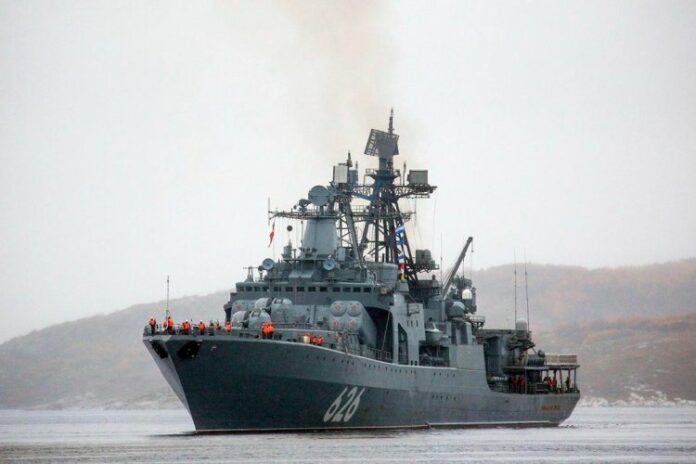
Spain did not let Russian warships to enter its port

0

The visit was to be the first for the Russian fleet since 2016 when Mariano Rajoy’s government vetoed these stops under pressure from NATO and the United States.

This is reported by El Confidencial.

Russia sent a request for the ships’ entry back in early summer. On August 2 the Naval Command of Ceuta sent a letter to the port administration stating that “the General Staff of the Spanish Navy authorized a stop of two Russian warships in this port from August 18 to 20”.

However, the approval of the general staff is not enough. As stipulated by the 2014 Spanish law “On Navigation in Inland Sea Waters and Port Entries,” foreign warships must obtain permission from the Ministry of Defense, which is processed through diplomatic channels.

The Spanish Foreign Ministry demanded information about the route and the destination of the Russian ships, but Moscow considered the routes secret and refused to provide it. Spain, in turn, did not respond to Russia’s request and thus did not allow the ships to enter Ceuta.

Between 2011 and 2016, more than 50 Russian ships docked in Ceuta to refuel and replenish food supplies.

Earlier, the media reported that Spanish authorities were considering issuing permits to Russian ships in order to revitalize Ceuta’s economy. On the other hand, Madrid will host a NATO summit in 2022, and allowing Russian naval ships to enter the Spanish port would cause discontent among the allies. 

Source: eurnews.net

ABB secures $120 million order to power Jansz-Io Compression project

0

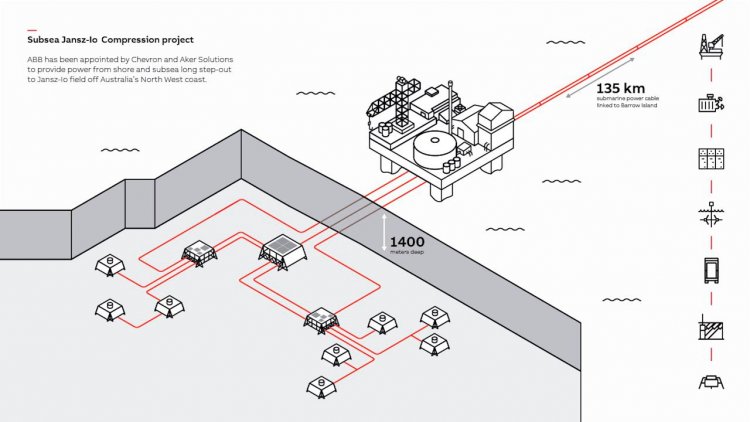
ABB has won an order worth approximately $120 million to supply the overall Electrical Power System (EPS) for the prestigious multi-billion-dollar Jansz-Io Compression (J-IC) project. The order, comprising contracts with Chevron Australia Pty Ltd and with Aker Solutions, is booked in Q3 2021.

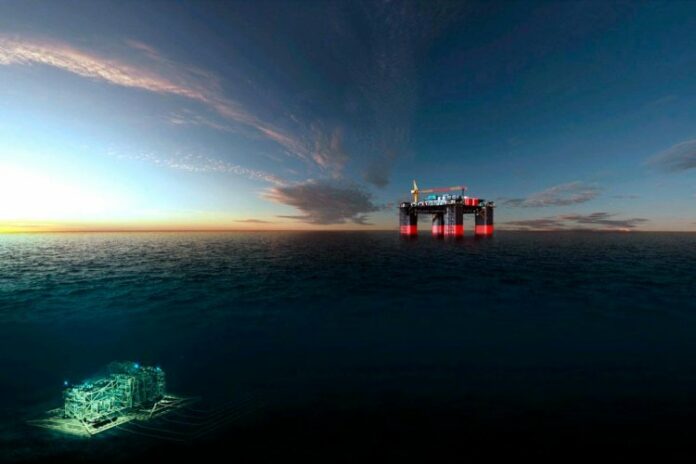
The Jansz-Io field is located around 200 kilometers offshore the north-western coast of Australia, at water depths of approximately 1,400 meters. The field is a part of the Chevron-operated Gorgon natural gas project, one of the world’s largest natural gas developments. The J-IC project, which moves gas from the deep seas to shore, marks only the third time that world-leading subsea compression technology is being deployed globally and the first time outside of Norway1 where ABB is also responsible for providing the EPS. The project will involve the construction and installation of a 27,000-tonne (Topside and Hull) normally unattended floating Field Control Station (FCS), approximately 6,500 tonnes of subsea compression infrastructure and a 135km submarine power cable linked to Barrow Island.

Peter Terwiesch, President, Process Automation at ABB, said:

“The Jansz-Io Compression project is a major enabler in maintaining an important source of natural gas to customers in Asia Pacific. It will support energy transition across the region where many countries primarily rely on coal for energy generation. Burning natural gas produces around half as much carbon dioxide per unit of energy compared with coal. We’re proud to be leading the way in the global energy industry by pioneering innovative subsea power technologies that bring us closer to a carbon neutral future. This project reflects our close collaboration and trusted subsea history with Chevron and Aker Solutions.”

Maria Peralta, Subsea Executive Vice-President at Aker Solutions, added:

“This is a very important project for us as it supports our commitment to enable lower-carbon oil and gas production and develop renewable solutions to meet future energy needs. We are pleased to once again be joining forces with ABB to take subsea solutions to the next level and accelerate the transition to sustainable energy production.”

ABB will provide the majority of the electrical equipment, both topside and subsea, for J-IC. The project will combine two core ABB technologies – power from shore and Variable Speed Drive (VSD) long step-out subsea power – for the first time. The electrical system will be able to transmit 100 megavolt-amperes over a distance of approximately 140 kilometers and at depths of 1,400 meters.

The contract was awarded following concept development and a front-end engineering and design (FEED) study. Work will start immediately and the subsea compression system is expected to be in operation in 2025.

Wave tank testing was successfully completed in Nantes, France

0

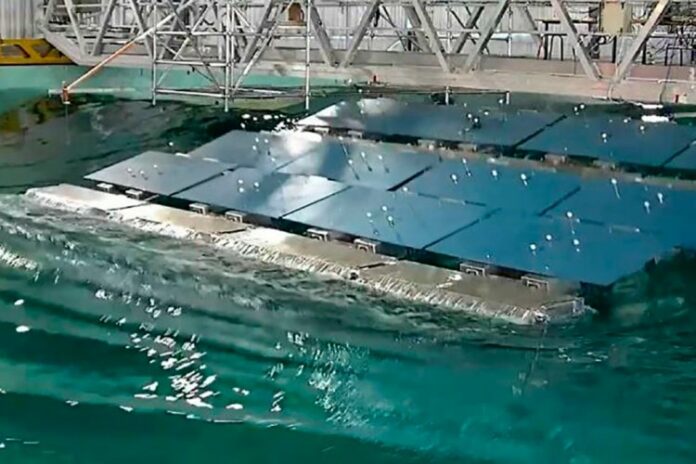
The goal of the ‘hydro-lock’ feature is to keep water inside the floater to give additional mass and, consequently, additional stability while avoiding extra costs from other materials for ballasting, such as metal and concrete.

The wave tank testing was conducted by high-level experts from Ecole Centrale de Nantes (ECN), also served for the assessment of a number of parameters including:

  • system acceleration;
  • mooring lines tension;
  • loads on the connectors and
  • different angles, against both regular and irregular waves.

Polina Vasilenko, founder and CEO at HelioRec, said:

“I was pleasantly surprised by excellent quality of work from ECN’s specialists who constructed the prototype and conducted the wave tank testing. Everyone was very supportive and emotionally involved in the process and tried their best during the testing. Our team is looking forward for future collaboration with ECN.”

All collected data will be carefully analyzed and existing numerical model will be confirmed by experts from InnoSea. 

The next step in the technology development is to install pilot project in the Netherlands as part of the PortXL accelerator, where HelioRec was accepted among 1000 applicants.

The interest from a number of Dutch companies already was expressed for the pilot installation in the Rotterdam area, and HelioRec’s technical team is preparing a feasibility studies.

Akvaplan-niva leading new project on Polar Front ecology

0

The project has contributions from two petroleum companies, and logistical support from UiT The Arctic University of Norway and an EU project (BioGlider). The project period is November 2021 – December 2024.

The Barents Sea Polar Front, which often matches the southern extent of the seasonal ice zone, is known to be of particular importance for primary production, spawning, and feeding by various components of the pelagic ecosystem. Using traditional shipboard sampling and the Akvaplan-niva fleet of autonomous sampling platforms the newly funded project will investigate this ecosystem during three seasons, including the poorly known Polar Night. Data will be visualized in real-time and archived under Open Data policies. In addition, tools will be developed whereby industry and modellers can access data in appropriate formats for management, environmental risk assessment, and ecosystem dynamics studies. Industry and management end-user groups are integrated into the project to assure that scientific results have solid impact.

UiT – The Arctic University of Norway, the Norwegian Polar Institute, the Scottish Association for Marine Science, Memorial University (Canada), and the Institute of Oceanology – Polish Academy of Science are project partners, along with Equinor and ConocoPhillips.

Paul Renaud, project leader from Akvaplan-niva, says:

‘We have a highly competent and motivated team of researchers conducting critical research in an area with high ecological value. In addition, we will receive input from industry and environmental management sectors to assure that state-of-the-art technology, data visualization and data management are integrated into operations and policy making.’