-0.2 C
New York
Home Blog Page 562

CSA and GEO Marine ink strategic alliance

0

CSA Ocean Sciences Inc. (CSA), an international provider of marine environmental and geomatics services, today announced that it is teaming with GEO Marine Survey Systems (GEO Marine), a global provider of quality geophysical products, software, and personnel focused on innovative high resolution seismic sparker systems, 24-bit recording, and ultrahigh resolution (UHR) streamers for 2D and 3D operations.

This strategic alliance will provide the US offshore renewables, marine engineering, government, and oil and gas markets with access to UHR seismic equipment and surveyors. The equipment will be housed at CSA’s Rhode Island facility, which offers direct vessel access to the heart of the US renewable market. Commenting on the new partnership, Gordon Stevens, Vice President and General Manager for CSA said:

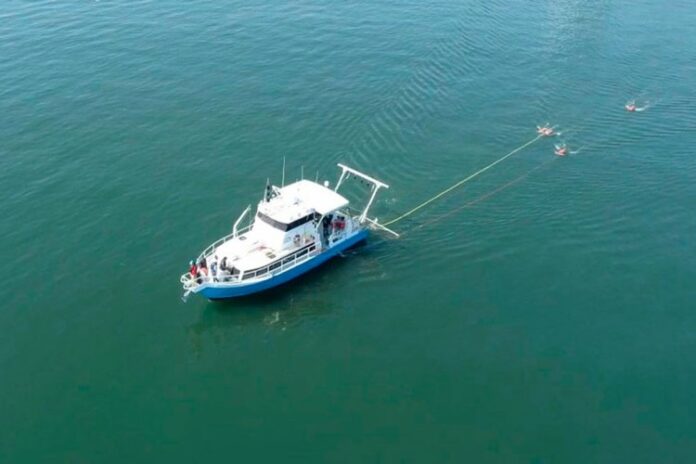
“Having recently completed a successful 90-day campaign for a major offshore renewable energy company, during which this seismic equipment performed flawlessly aboard our newly outfitted R/V Dolphin, it made perfect sense to extend our partnership with GEO Marine to continue offering this bundle of cutting-edge technology to the Northeastern offshore industries.”

The equipment can be rented with an operator direct from GEO Marine and installed onto a vessel of opportunity or chartered with the R/V Dolphin where fit-for-purpose mounting and operational apparatus have been fabricated and are permanently installed for efficient mobilization and operation. More about the vessel’s capabilities, which is HSSE approved by major offshore wind developers, can be found here.

Olivier Monrigal, Operations Manager for GEO Marine added:

“Working with CSA and having the equipment in the US to support all projects not only helps mobilization costs for future projects, but also gives more companies exposure to our superior products.”
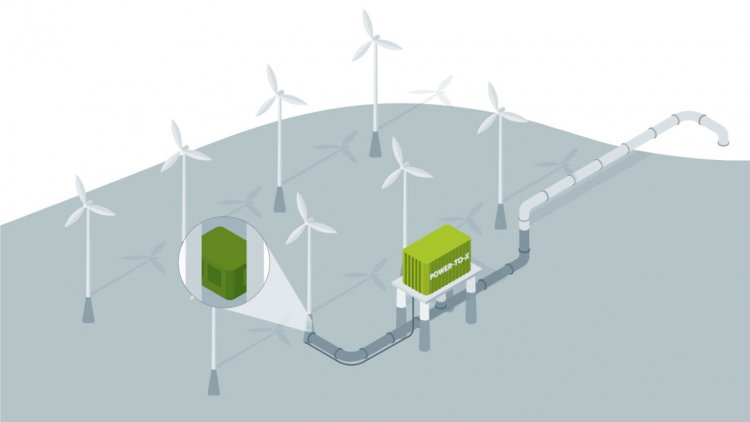
Wind turbines with integrated electrolyzer demonstrate sustainable hydrogen production at sea

0

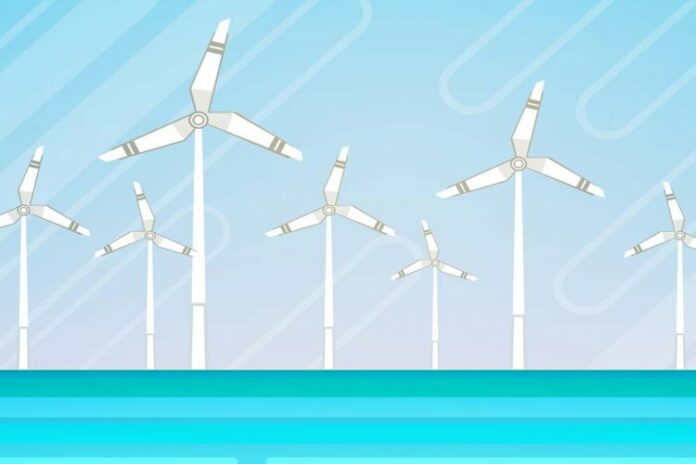
Self-sufficient units comprising a wind turbine and an integrated electrolyzer produce green hydrogen on an industrial scale and save the costs of connection to the grid. In this way, they can make a significant contribution to the reduction of greenhouse gas emissions. In a second phase, the green hydrogen can be converted into further synthetic fuels and energy carriers. This vision is now intended to become a reality in the scope of the H2Mare flagship project funded by the German Federal Ministry of Education and Research (BMBF).

The H2Mare flagship project aims to establish a whole new type of turbine at sea in the future – a solution which integrates an electrolyzer into an offshore wind turbine optimally for direct conversion of the electricity. In addition, the project will also investigate further offshore power-to-X processes.

This will involve consideration of the entire value creation chain: from wind energy generation and hydrogen production to the conversion of hydrogen into methane, liquid hydrocarbons, methanol, or ammonia right up to use in industry or the energy sector. As such, various industrial downstream uses and storage options are possible. The goal is a significant cost advantage in the production of large volumes of hydrogen.

Within four years, H2Mare – comprising four joint projects with a total of 35 partners – aims to lay the foundations for technology leadership and support the achievement of climate targets by reducing greenhouse gas emissions more rapidly.

Christian Bruch, Chief Executive Officer of Siemens Energy AG, said:

“Together with our partners, we want to establish the production of green hydrogen offshore with H2Mare. We are bringing in our offshore wind and electrification capabilities as well as our expertise in electrolysis. H2Mare unites the strengths of research and industry – for sustainable decarbonization of the economy and to the benefit of the environment. We need the support of politics to drive forward innovative solutions for a green hydrogen economy.”

Siemens Energy is responsible for the coordination of H2Mare and is supported by institutes of the Fraunhofer Gesellschaft.

The four H2Mare projects are being promoted independently of each other:

  • OffgridWind: Pursues the implementation of a turbine concept that realizes electrolysis directly in the offshore wind turbine, thereby aiming for a high degree of efficiency.
  • H2Wind: Consists in the development of a PEM (proton exchange membrane) electrolysis system optimally adapted to the offshore environment and tuned to the wind turbine. In addition to the durability of the turbines and the challenge of processing seawater, the maximum yield of wind energy is one of the project’s goals.
  • PtX-Wind: In contrast to pure offshore hydrogen production, the focus here is on conversion to more easily transportable, synthetic energy carriers and fuels, such as methane, methanol, and ammonia. The power-to-X products are produced via high-temperature electrolysis and CO2 extraction from the air or sea. Direct saltwater electrolysis is also being tested.
  • TransferWind: TransferWind addresses the transfer of knowledge to the public as well as the exchange of expertise across projects. At the same time, it also considers safety and environmental issues as well as infrastructure requirements.

One important aspect of the investigations is the integration of individual processes into complete systems: for example, the efficiency of the overall process can be increased by the heat integration of high-temperature electrolysis in PtX processes. This also includes the concepts for storing and transporting the hydrogen and other power-to-X products back to land by ship and pipeline. The project explores, evaluates, and further develops the interactions between the different processes and the turbine as well as their impact on the surrounding environment at the site over the wind turbine’s entire life cycle.

One challenge at a material level is the use of existing technology in an offshore environment for the first time and the research and development of new materials and components for offshore use. The development of digital twins for the different system components and the technical and economic analyses based on them also forms part of all four H2Mare projects.

H2Mare is one of three flagship projects being conducted by the German Federal Ministry of Education and Research, which is supporting Germany’s entry into the hydrogen economy with its largest initiative regarding the energy transition to date. The three hydrogen flagship projects H2Giga, H2Mare, and TransHyDE are the result of an ideas competition and represent a central contribution on the part of the BMBF to the implementation of the National Hydrogen Strategy.

They are intended to remove existing hurdles impeding Germany’s entry into a hydrogen economy over the next four years. The goals of the projects are the serial production of large-scale water electrolyzers (H2Giga), the production of hydrogen and downstream products at sea (H2Mare), and the development of technologies for the transport of hydrogen (TransHyDE).

More than 240 partners from science and industry are working together on the three hydrogen flagship projects, which were launched on the basis of non-binding funding promises in the spring. In total, the funding will amount up to €740 million.

Fraunhofer IWES participates as project partner in OffgridWind, H2Wind and as associated partner in TransferWind. Scientists model various scenarios of hydrogen generating wind parks and conduct specific tests concerning waste heat utilization and sea water treatment. 

Port of Long Beach completes container terminal project at Middle Harbor

0

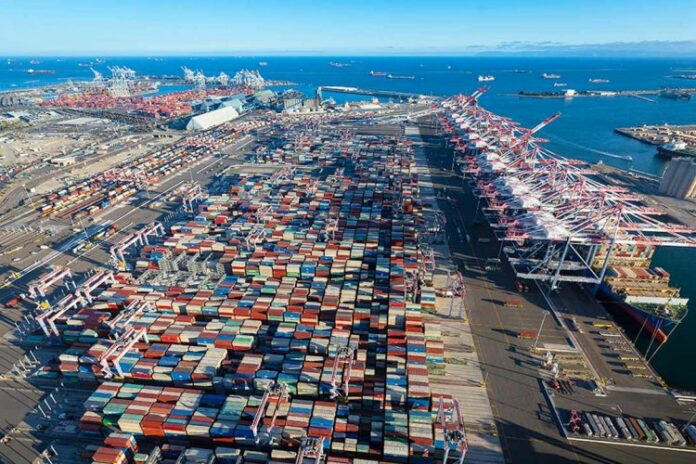
The Port of Long Beach has ushered in the next era of environmentally sustainable operations with the completion of the Long Beach Container Terminal at Middle Harbor, one of the most technologically advanced cargo facilities in the world.

Equipped with nearly all electric and zero-emissions equipment, LBCT at Middle Harbor is designed to strengthen competitiveness, improve cargo flow and dramatically enhance air quality amid an era of significant growth at the nation’s second-busiest seaport.

Long Beach Mayor Robert Garcia said:

“We are proud to have one of the greenest ports in America in the Port of Long Beach. The completion of this new terminal is a testament to our city’s continued commitment to sustainability and green technology.”

Mario Cordero, Executive Director of the Port of Long Beach, said:

“As the world’s first all-electric, zero-emission mega terminal, LBCT sets the industry standard for moving cargo sustainably while keeping the Port competitive and supporting vital jobs. It is truly a technological marvel that will allow us to increase our throughput, improve air quality and maintain our status as a leading gateway for trans-Pacific trade.”

Long Beach Harbor Commission President Steven Neal said:

“This new terminal charts a new course for greener cargo operations and strengthens our ongoing commitment to the Green Port Policy and San Pedro Bay Ports Clean Air Action Plan enacted about 15 years ago. We thank our partners at Long Beach Container Terminal for collaborating with us over the past decade to develop the most advanced, greenest terminal in the world.”

Long Beach Container Terminal CEO Anthony Otto said:

“The final phase of LBCT at Middle Harbor adds container capacity to the Port of Long Beach and ensures the speedy, secure and sustainable delivery of millions of cargo containers for decades to come. We would like to thank our partners at the ILWU and the Port of Long Beach for making this project a reality.”

Construction of the $1.493 billion project started in May 2011. The first part of the terminal opened five years later with the completion of Phase 1, allowing the terminal to begin operations across an initial 151 acres. Phase 2 wrapped up in October 2017, expanding the facility to 191 acres.

The third and final phase concluded in July, growing the terminal to 300 acres with a completed container yard, an administration building and an on-dock rail yard designed to handle 1.1 million TEUs annually to minimize truck traffic on local roads and freeways. Additionally, 14 of the most modern ship-to-shore gantry cranes line a new, 4,200-foot-long concrete wharf capable of welcoming three massive ships at once, making the Port of Long Beach “big ship” ready into the future. Another 3 acres will be added in 2025 with the opening of the North Gate Expansion, completing the terminal with 303 acres.

All ships calling at the terminal plug into shore power connections while berthed, allowing them to shut down diesel engines and connect to the landside electrical grid. All major structures are built with features to save power and water, meeting strict gold-level Leadership in Energy and Environmental Design (LEED) standards.

With an annual capacity of 3.3 million TEUs, LBCT by itself would rank as America’s sixth-busiest seaport, capable of moving twice the cargo with less than half of the air pollution of the two terminals it replaces.

Increased trade moving through the terminal is generating 14,000 permanent new jobs in Southern California. Additionally, unionized labor at LBCT operates the all-electric ship-to-shore cranes, staffs the control center for operations and maintains the technology.

Gasum wins framework agreement with the Finnish Government for maritime LNG supply

0

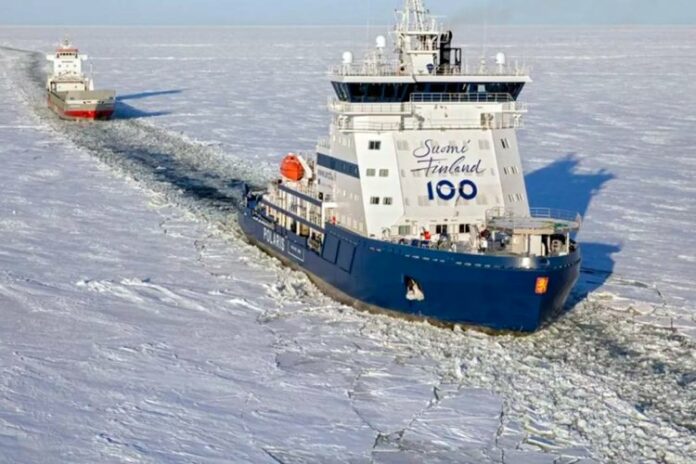
The energy company Gasum has won the framework agreement in a competitive tendering process organized by the Finnish government central purchasing body, Hansel Ltd. Gasum will supply liquefied natural gas (LNG), to the Finnish Transport Infrastructure Agency and the Finnish Border Guard for 2021-2022 as set forth in the framework agreement.

The framework agreement has two years additional option. LNG as a marine fuel meets the current as well as future emission limits. 

Pasi Tainio, Category Manager, Hansel, says:

“Our well-functioning cooperation with Gasum will continue. Our competitive tendering process has helped achieve a framework arrangement that works well in this developing market, with suppliers as well as client needs taken into consideration. The framework arrangement enables government organizations to source LNG with a high level of supply security and with consideration for responsibility aspects. LNG is better shipping fuel than oil for climate and this framework arrangement enables clients to also procure bio version of LNG.”

Jacob Granqvist, Vice President Maritime, from Gasum, says:

“We have been supplying LNG to the Finnish Transport Infrastructure Agency and the Finnish Border Guard during the previous agreement period. Maritime transport plays a leading role in changing course towards a cleaner tomorrow. LNG complies with all the emission requirements and is highly energy-efficient.”

Neptune Energy commences production on Duva development

0

Operator Neptune Energy and its partners Idemitsu Petroleum Norge, PGNiG Upstream Norway and Sval Energi today announced the safe and successful start-up of production from the Duva development in the Norwegian sector of the North Sea.

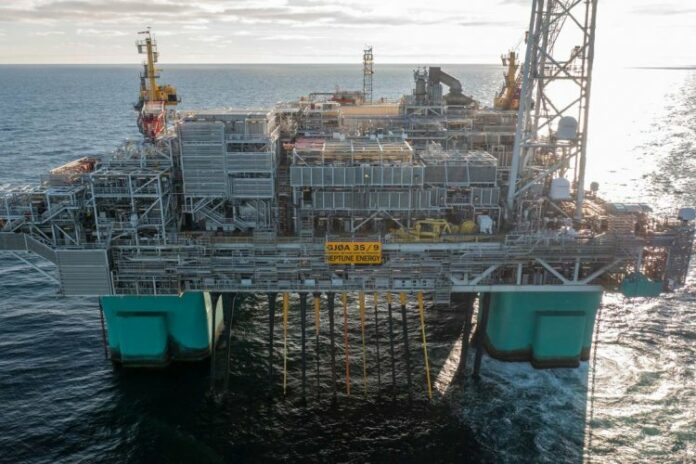
Duva was developed as a subsea installation with three oil producers and one gas producer, tied back to the Neptune Energy-operated Gjøa semi-submersible platform.

To maximise efficiency, Duva was executed in parallel with the Gjøa P1 development which began production in February this year.

Neptune Energy’s Managing Director in Norway, Odin Estensen, said:

“Duva is an excellent example of a successful fast-track development, with production beginning less than five years after its discovery. Tied back to existing infrastructure, it has been delivered efficiently and under budget through strong collaboration with our partners and key suppliers, and is expected to have one of the lowest CO2 emissions per produced barrel of oil equivalent (boe) on the Norwegian Continental Shelf.

“The start-up of Duva further strengthens Neptune’s position in the northern part of the North Sea, a strategically important growth area for the global business.”

Duva is located 14 km northeast of the Neptune Energy-operated Gjøa field at a water depth of 340 metres. Estimated total reserves are 71 million boe, of which 56 % is gas. It will add approximately 30 kboepd (gross) to the Gjøa facility at plateau.

Electrified with hydropower from shore, CO2 emissions per produced barrel of oil equivalent (boe) on the Gjøa platform are *less than half the average on the Norwegian Continental Shelf.

Neptune Energy’s Projects and Engineering Director in Norway, Erik Oppedal, added:

“The Duva field is expected to produce for approximately 10 years and thus contribute to extending the life of the Gjøa platform.This will help lower production costs per barrel, adding significant value for licence partners and future tie-backs.”

Vineyard Wind selects Jan De Nul Group for inter-array cable supply and installation

0

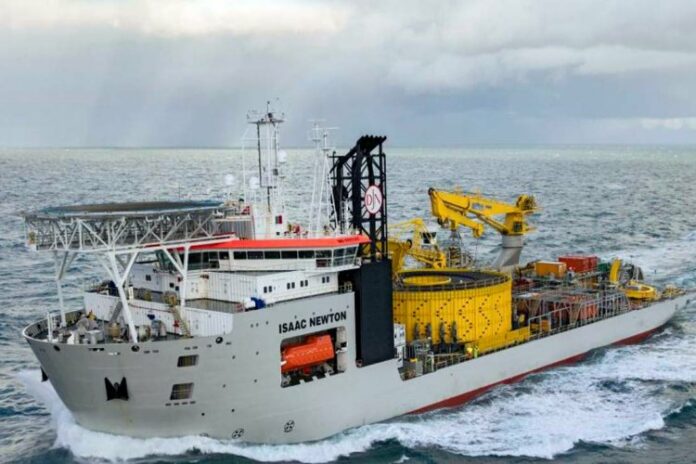
Vineyard Wind, a joint venture between Avangrid Renewables, a subsidiary of AVANGRID, Inc., and Copenhagen Infrastructure Partners (CIP), have announced that Jan De Nul Group, together with its subcontractor JDR Cable Systems part of the TFKable Group, had been selected to supply and install the roughly 130 miles of inter-array cables for the Vineyard Wind 1 project. The 66kV inter-array cables connecting 62 GE Haliade-X turbines will transfer electricity to an offshore substation for transmission to the grid.

Part of the contract calls for installation support and subsea training to individuals with an electrical background, creating approximately 40 new full-time jobs in Massachusetts to ensure skilled labor is available locally to support the project and its ongoing maintenance, as well as the US wind industry.

Vineyard Wind CEO Lars Pedersen said:

“Our partnership with Jan De Nul Group and JDR is great news for the project because it ensures that we’re working with a leading global installation company and supplier while also creating jobs here in the US. Combined with the recent signing of the Project Labor Agreement, we hope this latest step sends a clear message on the tremendous opportunity this industry holds for both job creation and investment.”

Wouter Vermeersch, Manager Offshore Cables at Jan De Nul Group, said:

“We are excited to be at the forefront of the emerging offshore renewables market in the US. In 2020, we successfully completed the foundation and turbine installation on the Coastal Virginia Offshore Wind Project and we are looking forward to capitalizing on the knowledge gained and the experience of working on the East Coast with this new challenge. Together with Vineyard Wind and our subcontractor JDR Cable Systems, we will support the local supply chain within the Massachusetts region to deliver the required offshore support vessels and skilled personnel up to the high standards required for safe and efficient offshore wind farm construction.”

Wojtek Skoczylas, CSO of Renewables at JDR, said:

“We are extremely proud to have won our first significant offshore wind contract in the US and look forward to providing our engineering excellence to the region while creating new jobs in Massachusetts. We strongly believe in ensuring the sector has a strong pipeline of talent and we have a long history of supporting with STEM initiatives as well as partnering with universities in the UK and in the US. We know the region is going to accelerate in offshore wind, so it’s brilliant to be a part of that journey.”

Vineyard Wind 1 is an 800 MW project located 15 miles off the coast of Martha’s Vineyard and will be the first commercial-scale offshore wind project in the United States.  The project will generate electricity for more than 400,000 homes and businesses in the Commonwealth of Massachusetts and will create 3,600 Full-Time Equivalent (FTE) job-years over the life of the project, including the more than 500 union construction jobs covered by the recently announced Project Labor Agreement.

Increased snowfall will offset sea level rise from melting Antarctic ice sheet

0

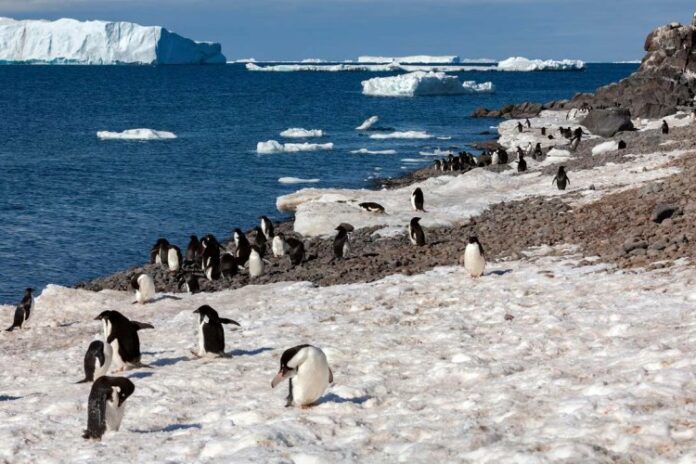
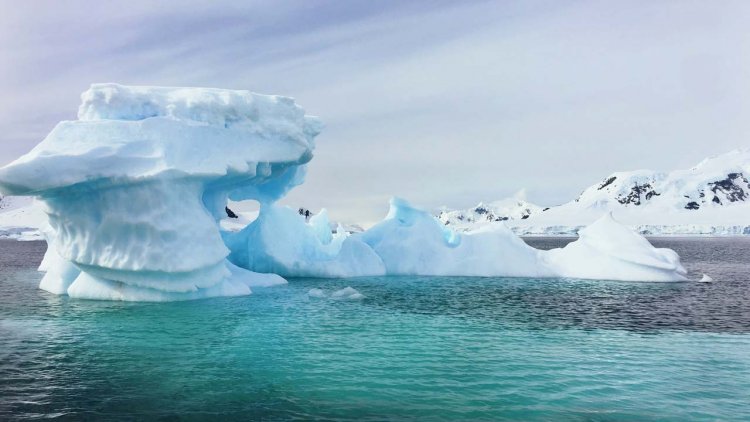
A new study predicts that any sea level rise in the world’s most southern continent will be countered by an increase in snowfall, associated with a warmer Polar atmosphere. 

The paper, published in Geophysical Research Letters, is based on the new generation of climate models which are used in the newly published Intergovernmental Panel on Climate Change (IPCC) Sixth Assessment Report, reviewing scientific, technical, and socio-economic information regarding climate change.

The project brought together over 60 researchers from 44 institutions to produce, for the first time, process-based community projections of the sea level rise from the ice sheets. This particular paper focusses on one aspect of the overall project which is how the new generation of climate model projections used in the current IPCC assessments differ from the early generation in their impact on the ice sheets.

Professor Tony Payne, Head of Bristol’s School of Geographical Sciences said the team were trying to establish whether the projected sea level rise from the new generation of climate models was different from the previous generation. 

He said:

“The new models generally predict more warming than the previous generation but we wanted to understand what this means for the ice sheets. The increased warming of the new models results in more melt from the Greenland ice sheet and higher sea level rise by a factor of around 1.5 at 2100.

“There is little change, however, in projected sea level rise from the Antarctic ice sheet. This is because increased mass loss triggered by warmer oceans is countered by mass gain by increased snowfall which is associated with the warmer Polar atmosphere.”

The recent findings suggest that society should plan for higher sea levels, and match with virtually all previous estimates of sea level rise, in that scientists expect sea levels to continue to rise well beyond 2100, most likely at an accelerating rate.

Prof Payne added:

“Predicting the mass budget of the ice sheets from estimates of global warming is difficult and a great many of the processes involved require further attention.

“Discovering that warmer climates do not affect Antarctic mass budget, in particular, warrants further examination because this is based on large changes in snowfall and marine melt balancing.”

“One of the main things to take away from this, interestingly, is that the response of two ice sheets and what impact global heating has on them is different and depends heavily on their local conditions.”

Second of two trimarans for Fred. Olsen Express completes sea trials in Philippines

0

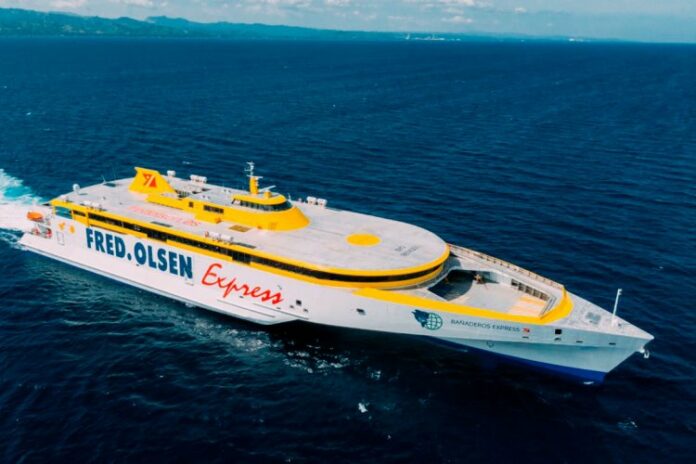
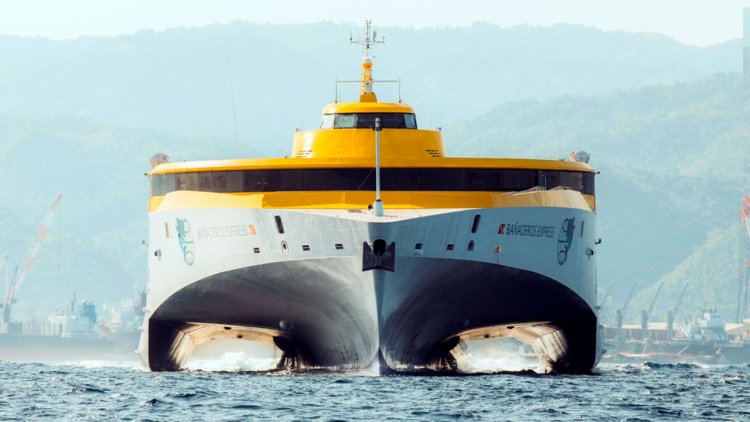
After launching in April, Bañaderos Express (Austal Hull 395) has successfully completed sea trials off the coast of Balamban, Cebu, prior to the planned delivery of the vessel in September 2021.

Bañaderos Express has easily achieved contract speed of 37.5 knots during multiple trials, confirming the vessel’s outstanding capability to achieve high-speed performance while delivering optimum comfort for passengers and crew.

Austal Limited Chief Executive Officer Paddy Gregg said the results of the Bañaderos Express sea trials were another great demonstration of the Austal trimaran’s unique capabilities and exceptional seakeeping characteristics.

Mr Gregg said:

“Austal’s proven trimaran hull design and integrated smart-ship technology, including MARINELINK-Smart and Motion Control System help deliver high speed performance and improved seakeeping, with greater passenger comfort.” 

“The new Bañaderos Express is the sister ship to the Bajamar Express, constructed in Australia and delivered in 2020. Fred. Olsen Express recently celebrated the first year anniversary of Bajamar Express’ operations which included an impressive 2,000 trips, transporting 307,000 passengers, 129,000 vehicles and 222,000 line metres of cargo vehicles, delivered on schedule on 97% of journeys.

“The 9/10 customer satisfaction rating achieved for Bajamar Express bodes very well for the new Bañaderos Express and further highlights the effectiveness of the trimaran hull form, Austal’s design and construction capabilities, and of course Fred. Olsen Express’ impeccable service standards.”

Fred. Olsen S.A. Chief Executive Officer Andrés Marín said that the completion of Bañaderos Express’ sea trials was significant, as it signals the vessel’s delivery and start of operations in the Canary Islands is imminent.

Mr. Marín said:

“We are absolutely confident that Bañaderos Express’ will make a big difference to the connectivity between Gran Canaria and Tenerife Islands; providing residents and tourists with an all-trimaran service, proven to be the most comfortable way to travel by sea. The much anticipated arrival of Bañaderos Express will, in fact, position the Canary Islands at the forefront of maritime connectivity, with the largest fleet of trimaran ferries worldwide.”

“Her sister ship, Bajamar Express, has already proven to be a very popular and successful addition to the Fred. Olsen Express fleet, with outstanding performance over the past 12 months of operation.

“Named as a “Significant Ship of 2020” by the Royal Institute of Naval Architects in the UK, Bajamar Express has also been recognized by thousands of our customers who have highlighted the comfort of the trimaran, the exceptional customer experience provided by our Fred. Olsen Express crew and the ship’s great reliability and punctuality.

“We now look forward to the Bañaderos Express’ delivery ceremony at Austal Philippines, and her maiden voyage to the Canary Islands, which will be shared in real time through our website and social media profiles. The voyage by Bajamar Express from Australia had more than 15,000 viewers, and this time we are aware the expectation is even higher.”

Capable of transporting 1,100 passengers and 276 cars at a cruising speed of over 37 knots, the new ferries for Fred. Olsen Express feature class-leading interior amenities and facilities, including multiple bars, kiosks, a retail shop and children’s play area and will operate on Fred. Olsen Express’ Santa Cruz, Tenerife, and Agaete, Gran Canaria, routes in the Canary Islands in the fourth quarter of CY2021.

Sanmar delivers the third tug to SAAM Towage

0

Sanmar has delivered the third tug to SAAM Towage from its successful RAmparts 2400SX design of compact tugboats. Named SAAM PALENQUE by its new owners, she will work in Panama where SAAM Towage is the largest supplier of towage services, with operations at all ports on both the Atlantic and Pacific coasts.

Based on the exclusive-to-Sanmar RAmparts 2400SX design from Canadian naval architects Robert Allan Ltd, SAAM PALENQUE previously worked at Izmir in Turkey as part of Sanmar’s own fleet.

SAAM PALENQUE is a sister vessel to ALBATROS, a RAmparts 2400SX design tug delivered to SAAM Towage earlier this year following the expansion of its services into Peru. SAAM Towage also operates the Sanmar-built RAmparts 2400SX tug SAAM VALPARAISO in Panama, which was delivered in 2020.

Measuring 24.4m x 11.25m x 5.6m and powered by two Caterpillar 3516C main engines, each achieving 2,100kW at 1,600 revs/min, the technologically advanced SAAM PALENQUE can achieve an impressive 72 tonnes of bollard pull and has a top speed of 12.5 knots.

The FiFi 1 classified tug’s fire-fighting pump is driven through clutched flexible coupling in front of the port side main engine and has a capacity of 2,700 m3/hour. Tank capacities include 72,400ltrs of fuel oil and 10,800ltrs of freshwater.

The accommodations meet MLC standards and are for up to six crew, with the captain and chief engineer’s cabins above deck along with a mess/lounge and galley and WC with shower. Below deck, there are two double cabins, a WC with shower, and laundry. All accommodation space is heated, vented and air-conditioned.

Special care has been taken to resilient mount all engines and essential equipment including hydraulic pipes to minimise noise and maximise crew comfort.

Acclaimed for their manoeuvring ability, sea-keeping and stability performance, the multi-tasking RAmparts 2400SX design tugs from Sanmar are designed for maximum efficiency in the performance of ship-handling duties for seagoing ships.

SAAM Towage Technical Director, Pablo Caceres, said:

“At SAAM Towage, we are very proud and satisfied with the introduction of this high quality, effectively designed and well-equipped tugboat that perfectly suits the expectations of our relevant clients in our Panama operations. We will dedicate SAAM PALENQUE to our operations at the AES LNG Terminal (Costa Norte), the TELFER Tanks Fuel Oil Terminal and the PPC Cristobal Container Terminal where we expect to continue providing SAAM Towage’s high standards in service. The SAAM PALENQUE will certainly fulfil our goals.”

Ruchan Civgin, Commercial Director of Sanmar, said:

“At Sanmar we like to build long-term relationships with our clients and I am delighted that SAAM Towage has once again turned to us to provide the state-of-the-art and cost-effective tugboats it needs. Our RAmparts 2400SX design tugs are an extremely popular choice, combining the benefits of the manoeuvrability of a compact design with the power and strength associated with a larger tug. We have had a lot of interest in them from operators around the world.”

SCHOTTEL partners with Seaspan and McRae Electric to enhance service offering

0

SCHOTTEL Inc (USA) and SCHOTTEL Canada Inc have entered into a cooperative agreement with two Canadian West Coast marine industry leaders to support the increasing local fleet of SCHOTTEL-propelled vessels. In the agreement, Seaspan Vancouver Drydock, based in North Vancouver, will act as a service and support center while McRae Electric, based in Burnaby, will be electric and controls service provider.

Since the establishment of SCHOTTEL Canada Inc in 2016, the number of vessels equipped with SCHOTTEL propulsion systems in the Pacific Northwest area have increased enormously. Among the vessel types are ferries, tugboats, fishing vessels, Coast Guard or Navy vessels. In order to provide the customers with local and even faster and professional support, SCHOTTEL will cooperate with the two well-established companies in the future. Through SCHOTTEL’s service center, customers will obtain the services they require from any or a combination of these two companies. Customers will benefit from their high level of expertise and short service response times.

Sylvain Robitaille, Regional Manager, SCHOTTEL Canada Inc.:

“Partnering with these two leading companies represents to me our commitment to the Canadian market and how important the after-sales support is to our customers. From shipyards and mechanical services with Vancouver Drydock, to electrical, automation and controls troubleshooting with McRae Electric, we cover it all!’”

Ad Bertens, Director Business Development, Vancouver Drydock:

“As a company that is known for quality and outstanding customer service, Vancouver Drydock is very pleased to partner with SCHOTTEL Canada and McRae Electric. This agreement will allow us to better serve our customers and enhance our ability to provide critical repair services for the vessels in the Pacific Northwest.”

Nick Folino, President, McRae Electric Ltd.:

“We are very excited to partner with SCHOTTEL Canada beside another great partner at Seaspan Vancouver Drydock to provide service support to the West Coast shipowners. This will further aid our team in growing our skill sets while enhancing the services we offer to the marine industry. Congrats to both SCHOTTEL and Seaspan Vancouver Drydock on this partnership!”