-7.5 C
New York
Home Blog Page 551

ABS AIP for VARD’s next generation offshore patrol vessel

0

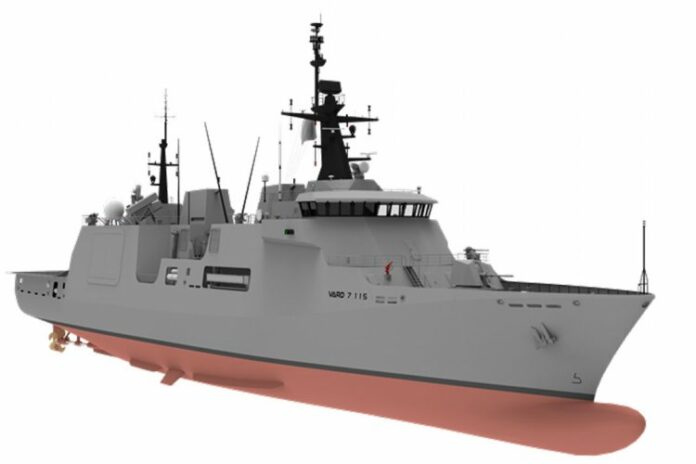
The VARD 7 115 NGOPV caters to a range of mission requirements, including air, surface, and sub-surface surveillance and engagement capabilities. The vessel arrangement offers a multi-mission bay and a set-down area for containerized mission payloads, with a configuration that can be tailored to meet a variety of mission objectives.

The vessel, which is to be unveiled at the Defence and Security Equipment International Show in London, was evaluated in accordance with the ABS Rules for Building and Classing Light Warships, Patrol and High-Speed Naval Vessels. The design carries ABS notations: ✠A1, DV NAVAL CRAFT, Ⓔ, ✠AMS, ✠ ABCU, NIBS, R2.

David Walker, ABS Vice President, Global Government Business Development, said:

“ABS is pleased to support VARD with this AIP based on our deep experience with classification, certification, and technical advisory services on advanced naval programs around the world.”

Wade Carson, CEO, Vard Marine Inc., said:

“With our proven track record in the offshore patrol segment, and ABS’ record with naval programs, working together to deliver this project continues our collaborative approach to developing solutions for the now and the future. We already have experience supporting yards worldwide in constructing our offshore patrol vessel designs, so it is with great enthusiasm that we now have an updated and enhanced design to support our naval customers and their evolving requirements with a highly capable yet cost-effective solution.”

Shipping industry gets enriched weather data with OrbitMI and DTN partnership

0

The partnership gives shipping customers a single site for vessel and fleet management with actionable visualizations for confident decisions.

DTN weather data will be delivered via Orbit, the company’s SaaS product. Orbit aggregates and integrates data from vessels and existing shore-based systems, amplifies it using machine learning and activates it through dashboards, alerts and actionable insights delivered in real-time via desktop, tablet and smartphone. In the integration with DTN, Orbit ingests data from DTN marine weather, integrates it with other feeds from the customer’s technology stack to reveal hidden insights about weather, routes, speed, consumption, TCE, vessel schedules and more.

For example, Orbit currently alerts operators when vessels deviate from contracted speeds, bunker consumption as well as changes to ETA, which could signal that a vessel may arrive too late to its scheduled port. 

With the DTN integration, Orbit can deliver augmented alerts which include weather and route-related information such as:

“Your vessel is not currently sailing the optimal route.  Adverse weather developing is expected to delay the ETA by 14 hours and consume an additional 14.1 MT, when compared against the weather optimized route.” 

These alerts could include recommendations to reroute vessels to avoid these conditions.

DTN Vice President of Weather Operations Renny Vandewege, explained:

“Nearly every maritime decision has a dependency on the weather, from safety and routing to fuel usage and vessel efficiency. Integrating our enriched weather data into the Orbit workflow means that all teams, from the office to the ocean, have a “single source of truth. It removes the need to switch between single-purpose systems and apps and provides richer, more comprehensive insights.”

DTN weather intelligence is backed by a proprietary marine forecasting engine which includes more than 500 weather parameters. It is a flexible configuration with full spectral wave data from any location worldwide. The high-resolution data is fully supported by Master Mariners and meteorologists.

Ali Riaz, CEO of OrbitMI, noted:

“The real-time weather analytics from DTN will allow OrbitMI to offer its customers even deeper insights that empower them to make confident decisions about crew and cargo safety, vessel management and reducing CO2 emissions. This partnership continues to help our customers seamlessly move through the digital transformation of the maritime industry.”

PONANT’s polar explorer reaches North Pole, setting new standards for cruise

0

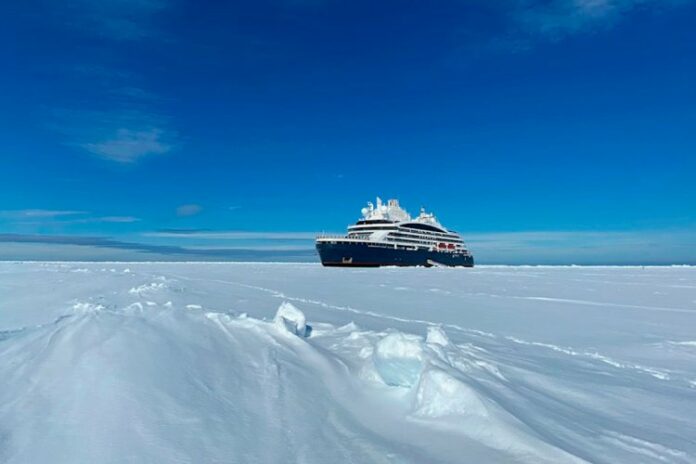
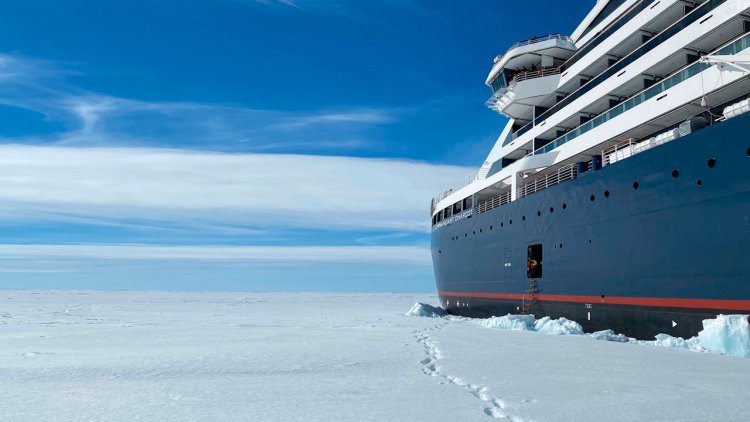
The hybrid-electric exploration cruise vessel Le Commandant Charcot became the first vessel of its kind to reach the geographic North Pole on September 6, 2021, as it was completing the sea trials in preparation for welcoming guests for the maiden voyage later this year.

Equipped with Azipod® propulsion technology, the luxury cruise ship produces minimal noise and vibrations to provide a comfortable passenger experience. Moreover, the ship’s energy storage system, supplied and integrated by ABB, is the largest ever delivered to a vessel of its kind at almost five megawatt hours, allowing the engines to be switched off for silent, emissions-free cruising.

Le Commandant Charcot will also be available to the scientific community contributing to the global efforts in the study and preservation of the Poles and oceans. The vessel is equipped with measurement instruments, and features science labs as well as a moon pool for taking samples, with all of the equipment designed to meet the requirements of academic research. With that, Le Commandant Charcot offers a platform for observation, research and analysis to scientists around the world, enabling them to study remote areas by regularly collecting data in these zones.

Mathieu Petiteau, Director, Newbuilding and R&D, PONANT, said:

“ABB designed both the Azipod® propulsion units and the energy storage system to meet the precise operational requirements of Le Commandant Charcot. As well as ensuring a high level of passenger comfort, the vessel is capable of cruising in zero-emissions mode while exploring remote locations. Thanks to the Azipod® system’s maneuverability, the ship will also be able to navigate smoothly and safely through icy waters.”

Dick Björkqvist, Global Segment Manager, Cruise, ABB Marine & Ports, said:

“Azipod® propulsion has become the preferred solution for exploration cruise vessels operating in highly sensitive and demanding marine environments. We are proud to have been chosen by PONANT and look forward to seeing Le Commandant Charcot in action for the years to come.”
With the electric drive motor situated in a submerged pod outside the ship hull, the Azipod® system can rotate 360 degrees, significantly increasing maneuverability and operating efficiency of a vessel and cutting fuel consumption by up to 20 percent compared to conventional shaftline systems. Since its launch 30 years ago, Azipod® propulsion has saved a total of over 1,000,000 tons of fuel in the passenger cruise segment alone. Options for Azipod® propulsion range from 1 to 22 megawatts, and its technology plays a key role in ABB’s strong position for environmentally friendly electric propulsion.

Le Commandant Charcot is the first cruise ship with the ability to sail in ‘double-acting mode’, meaning it can navigate stern-first in ice conditions to improve safety and complete cruises in a timely and efficient manner. In addition, the Azipod® system allows the vessel to be brought to a complete stop in 50 percent less time than a ship with a traditional shaftline set-up.

The vessel’s emphasis on safety is further reflected in its connectivity to the ABB Ability™ Collaborative Operations infrastructure. With round-the-clock access to a worldwide network of ABB experts, Le Commandant Charcot will benefit from remote equipment monitoring and diagnostics for enhanced passenger and ship safety – services that are particularly important for vessels operating in the farthest reaches of the globe.

ABB’s scope of supply for this pioneering vessel also includes power generation and distribution technology, propulsion-control and remote-control systems and a Power and Energy Management System (PEMS™). Through the PEMS™, Le Commandant Charcot will optimize the use of its hybrid power sup-ply – comprising the main power source, liquefied natural gas, and the energy storage system – to ensure optimal engine load with reduced fuel consumption and emissions. The ship also features ABB’s Power2 two-stage turbocharging solution, further increasing fuel savings by up to five percent.

Juha Koskela, Division President, ABB Marine & Ports, says:

“With yet another high-spec passenger vessel delivered to its owner featuring ABB integrated power and propulsion technology, we are rapidly expanding our portfolio in this segment. Le Commandant Charcot perfectly demonstrates the benefits of our electric, digital and connected solutions for this kind of ship, offering a blueprint for other expedition vessels to follow.”

Dynamic cable design validated for floating offshore wind use

0

The project consortium aims to develop conceptual and basic engineering for a hybrid concrete-plastic floating windfarm, looking at innovative solutions for anchoring and mooring systems, and dynamic cabling, including performance testing. Its objective is to improve cost-efficiency and increase robustness and flexibility in floating wind subsea design for deeper waters from 100 to 600 meters.  

Consortium partners Innosea, an AqualisBraemar LOC Group ASA (ABL Group) company, Hellenic Cables, ITA and University of Exeter have successfully completed the dynamic cable scope of work. 

As part of the dynamic cable scope, Hellenic Cables with ITA completed the design and engineering of an innovative braided armor for the protection of the dynamic cables cross-section. This consisted of the application of an outer jacket made of carbon fibre reinforced composite, in addition to the development of a solution for sensor integration and interconnection of fiberoptic sensors for structural condition monitoring.

Mattias Lynch, engineering director at Innosea, a leading engineering, design and R&D consultancy specialising in marine renewables, says:

“FLOTANT seeks to open the possibility to develop floating wind in even deeper waters than is possible today, unlocking potential for far greater wind power resources at lower cost. The innovative braided armour cross-section design of the dynamic cabling in such extreme water depths in pivotal to the project’s success.” 

The project is coordinated by Dr. Ayoze Castro, head of Innovation unit of Oceanic Platform of the Canary Islands (PLOCAN). It includes 17 partners from eight countries, including Innosea, which was appointed to the consortium to provide a range of services across six of the consortium’s work packages – including for the dynamic cable and export system optimization.

Innosea was also responsible for the configuration analysis of the dynamic cable, while testing and validation of mooring and dynamic cables was conducted at the Dynamic Marine Component (DMaC) of the University of Exeter, UK.

The next phase of the project for Innosea will be to finalize the floater global performance analyses to confirm its suitability versus project defined sites.

Anastasia Moraita, design engineer at Hellenic Cables, says:

“Our participation in the project has given us the opportunity to take part in the development of reliable, sustainable and cost-efficient dynamic cables for even deeper water applications for offshore floating wind. The study and design of innovative dynamic low weight cables that could be used in severe conditions was a great challenge. Due to the excellent collaboration with all partners, we expect that positive results and conclusions will be reached in the final part of the project.”

Prof. Lars Johanning of The University of Exeter stated:

“Floating offshore wind (FOW) power will be a vital component of the EU strategy as we move toward a net zero economy. It will also have a profound effect on the local economies in European countries, creating new jobs in the supply chain and providing a key component for our post-pandemic recovery. The development of reliable highly dynamic power cables will be an essential part of the emerging FOW industry and we are encouraged through the innovation development that have been achieved within FLOTANT.”

Kongsberg Maritime to deliver PM propulsion for two new offshore wind vessels

0

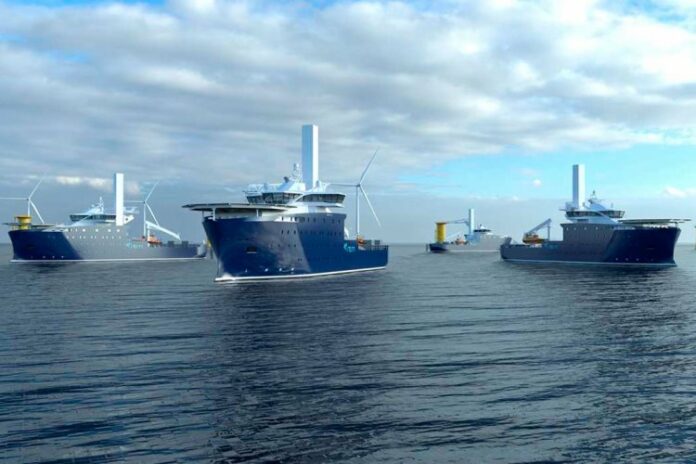
The Construction Service Operations Vessels (CSOV) are to be built for Rem Offshore, and will make the shipping company the first in the world to install a PM package of this size from KONGSBERG.

The scope of delivery includes PM azimuth thrusters, together with PM tunnel thrusters and a retractable azimuth thruster. PM thrusters contribute to improved manoeuvrability, reduced noise – both in the vessel and in the sea – and higher propulsion efficiency, reducing both energy consumption and environmental emissions. The thrusters will be controlled by KONGSBERG’s K-Master bridge solution, a complete working environment which combines dynamic positioning (DP) and manoeuvring functionality in an integrated, joystick-driven system which can be managed by a single operator.

The package leverages some of KONGSBERG’s most innovative technologies, including solutions to limit vessel movement when close to wind turbines during service assignments and facilitate walk-to-work functionality. The thrusters’ advanced propeller design has been developed at KONGSBERG’s facility in Ulsteinvik, part of a cluster of maritime companies located in the Sunnmøre area in western Norway, and also home to Rem Offshore.

Åge Remøy, Chairman of the Board, Rem Offshore, says:

“In the maritime cluster at Sunnmøre, we have a tradition of working together to develop and be first to use new technology that gives us a competitive advantage. With this project, we are doing it again. Together with VARD and Kongsberg Maritime, we are building a sustainable platform for offshore wind service.”

PM thrusters differ from conventional thrusters in that the propeller blades are not driven directly with a motor and shaft. Instead, an electromagnetic field generates rotation around the outer edge of the propeller blades. This rotational force (torque) is produced by a compact and efficient PM motor integrated around the outer diameter of the propeller.

The system permits direct drive to the propeller, with no gears required, yielding a fast response time with the least possible energy use. This rapid power delivery helps KONGSBERG’s control systems to reduce vessel movements in the sea. PM thrusters are also quiet compared with traditional thrusters, do not require an external cooling system, and take up less space – a consideration of great benefit to ship designers.

Ottar Ristesund, SVP Sales, Kongsberg Maritime, says:

“This type of technology is key to the green shift for shipping. A ship is a complex system of technologies, and our job is to offer integrated equipment that makes the ship a good long-term investment for shipping companies, regardless of the type of fuel to be used. PM technology offers flexibility for the future for vessel owners.”

The vessels will be designed and built by VARD Group, with the first scheduled to be delivered in the first half of 2023. The yard has an option to build two more vessels of the same design.

Windship secures AiP for innovative triple-wing design from DNV

0

Windship Technology has announces their patented triple-wing rig has received a coveted ‘Approval in Principle’ (AiP) status from shipping classification society DNV. 

This significant milestone in the company’s history is the result of years of design iteration work combined with the use of cutting-edge CFD to refine the wings before extensive wind tunnel testing and analysis by independent third parties. Each wing has trailing edge flaps that allow for optimisation of the motive force produced for a variety of incident wind angles and, crucially, allow the rigs to produce the highest power density of any current wind-powered solution. With three rigs set, they can produce all the power required to sail an 80,000 DWT ship on the main long transoceanic routes.  

Speaking about the classification, Simon Rogers, Technical Director at Windship Technology stated:

“This is the classification that changes everything. Now it is abundantly clear that the shipping industry has a workable solution to its significant emissions issues. Fleet owners and charterers have a zero emissions option with Windship Technology’s whole-ship design that is set to revolutionise the industry and the need for these wing solutions has never been more than now. With the Energy Efficiency Existing Ship Index coming into force on 1st January 2023, the clock is ticking on the shipping industry. Windship Technology is the stand-out solution and we welcome the Approval in Principle from DNV whom we have worked with efficiently and expediently in achieving this classification.”

The design starts with the rigs, constructed from composite materials to reduce weight at height, and goes further with an incorporated diesel electric drive featuring a full carbon capture system that dramatically reduces fossil fuel consumption whilst eliminating NOx, SOx and particulate matter and zero CO2. 

The wings deployed on vessels are located on a steel cruciform base which provides the intersection with the ship and also house the lifting and lowering mechanism – especially important for port access and bridge height clearance. The rigs can be lowered either fore and aft or over the ship’s side as required for loading and unloading operations. Whilst underway, the rigs are automatically controlled, rotating to gain the greatest motive advantage from the available wind power.

As the Approval in Principle for Windship Technology’s tri-rig was announced, Hasso Hoffmeister, Senior Principal Engineer, DNV Maritime said:

“As shipping’s carbon trajectories head towards zero and the EEXI and CII are set to tighten requirements – the maritime industry needs new options to reduce emissions. At DNV we want to support our customers by making sure that when they are looking to make efficiency gains, they have well proven and well tested options. This is why we are so pleased to be working with Windship Technology, to help them build confidence in their Wind Rig system through the application of expertly verified models and data, based on our long-standing and globally accepted rules

Graham Harvey, Chief Executive of Windship Technology welcomed the news:

“This is a terrific milestone for the whole team at Windship Technology and we are now in a position to capitalise on the multiple discussions that we have been having with owners and charterers who are all looking for long-term solutions. It’s wonderful that a truly innovative, British company is leading the way in finding a true zero emission solution and we would like to thank the team at DNV for their assistance in helping us bring this much-needed solution a step closer to reality.”   

Konecranes wins 14-crane order from thyssenkrupp Marine Systems for Kiel shipyard

0

Konecranes has won an order from the thyssenkrupp Marine Systems shipyard to supply 14 process cranes for a shipbuilding hall now being built in Kiel, Germany. The order was booked in July 2021.

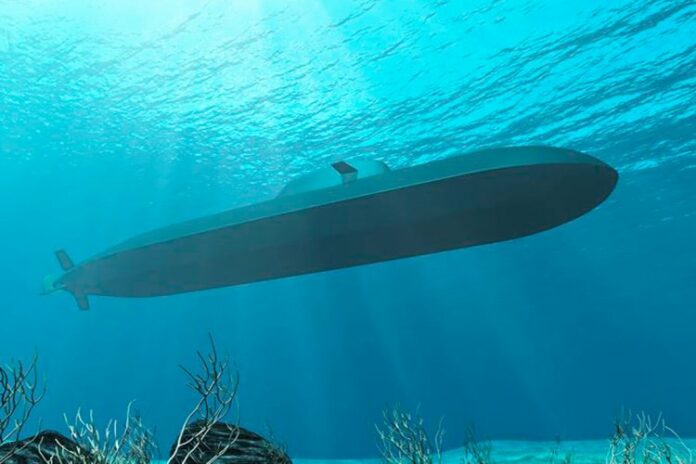
The double-girder crane systems, which will be built by Konecranes’ Demag Cranes & Components unit, will be installed in the new production halls in Kiel, which is being developed into an international center of excellence for submarine production. The cranes will have been manufactured, delivered and commissioned by the time work begins in 2023.

The cranes will come with numerous features to increase performance, service life and, in particular, precision. These include optimized rope lead-off on the hoists (to extend the service life of the hoist ropes), extended monitoring of the hoist brake (to improve safety), electronic overload protection with a load spectrum recorder (to determine the remaining service life of the hoists) and 24/7 online support.

Thomas Bönker, Senior Vice President for Process Cranes at Konecranes, said:

“This is a demanding project, with the high travel and positioning accuracy of the cranes required, for example, when two submarine segments weighing over 100 t each have to be precisely positioned by two cranes and four travelling hoist units to assemble the hull. We are pleased to support thyssenkrupp Marine Systems with our process crane technology for this exciting and forward-looking project.”

Wärtsilä to support HZS and ABS to develop a future-proof LNGC design

0

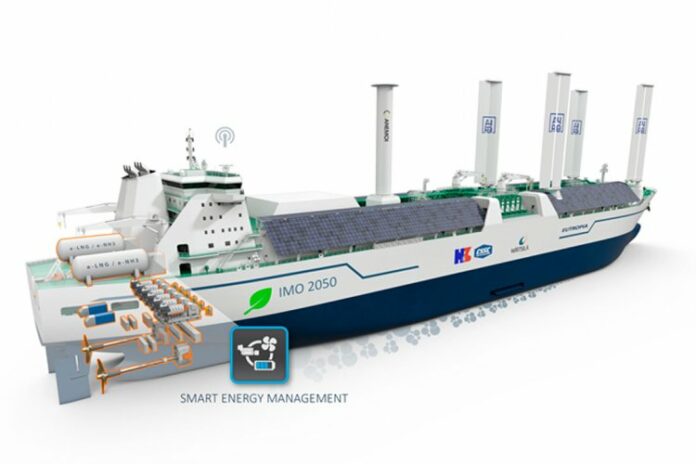
The pioneering design approach for the Multi-Fuel Electric vessel is intended to deliver immediate CO2 savings, and to be ready for the adoption of future decarbonisation technologies to support the marine industry’s ambitions towards zero-emission shipping.

Wärtsilä’s Integrated Systems and Solutions experts are working alongside specialists from ABS Global Simulation Center and Global Sustainability Center in Singapore, Houston and Athens and HZS’ R&D and LNGC design team in Shanghai to evaluate the vessel’s performance against the IMO’s Carbon Intensity Indicator (CII) up to at least 2050. This involves the use of advanced multi-physics modelling and simulation, and the application of various decarbonisation technologies and solutions to the vessel’s design and operational modes.

The LNGC will be highly flexible and the entire vessel design will be optimised around a compact, electrified, integrated, and efficient propulsion power solution that will lead to a significant reduction in CO2 emissions immediately. The design will also be ready to efficiently integrate new technologies in the future in order to stay ahead of the requirements of CII.

Patrick Ryan, ABS Senior Vice President, Global Engineering and Technology, said:

“The evolving demands of the CII mean vessels will need to be ready to continuously adapt to improve their rating and remain viable for the duration of their operational life. Advanced multi-physics modelling and simulation techniques enable the development of a vessel with a strong CII profile at launch that is also equipped to take advantage of future decarbonization technologies as they mature. ABS is a leader in the application of multi-physics modelling and simulation at sea, and we are excited about the potential of this technology to drive shipping’s decarbonization ambitions and meet IMO 2050 objectives.”

Mr. Song Wei, R&D Deputy Director of Hudong-Zhonghua Shipbuilding, said:

“We are very glad to closely work together with Wärtsilä and ABS to develop the new generation of LNG carriers offering a low-carbon footprint and low OPEX cost. This state-of-the-art hybrid solution will be developed to power the future LNG carrier, enabling dual-fuel engines to run always at their best efficiency and providing flexible power supply modes to adapt to various load demands.”

Stefan Nysjö, Vice President, Power Supply, Wärtsilä Marine Power, says:

“Ship owners are currently faced with unprecedented challenges and uncertainties as they attempt to plan for their fleets to meet the IMO’s CII trajectory of -70% by 2050. What is certain is that this planning must start now in order to safeguard a future-proof newbuild vessel design. By optimising the vessel design around a compact, electrified and hybridised propulsion system, remarkably high efficiency will be maintained across a broad range of vessel speeds and power nodes – making it highly suitable to accommodate all needed vessel speed and voyage optimisations in the future.”

Nysjö continues:

“The modular and hybrid smart propulsion system also provides the correct foundation for the introduction of new and potentially highly intermittent low carbon energy sources and propulsion energy saving devices, both in the newbuild phase and also later as potential retrofit solutions.  We are honoured that ABS and Hudong-Zhonghua have invited us to contribute to the development of this new LNGC design that will leverage on ABS’ long experience in LNGC development and simulation expertise as well as Hudong-Zhonghua´s rich design and construction experience of large LNGCs.”

Norwegian company launches the world’s first ocean offshore fish farm

0

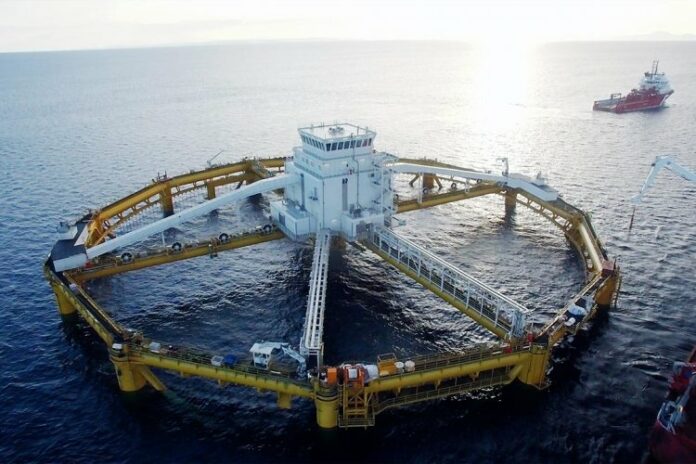
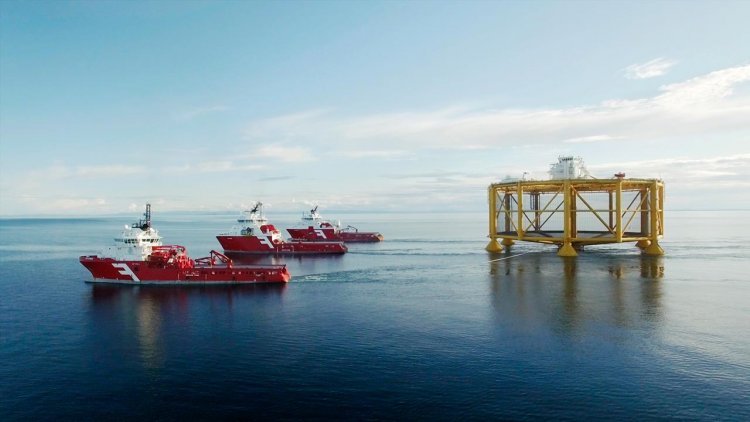
Ocean Farm 1 – the world’s first offshore fish farm – has now arrived at Frohavet. It may represent the first step towards a new era in aquaculture. 

Based on world-class Norwegian aquaculture and offshore technology, Ocean Farm 1 aspires to address central issues related to sustainable growth in the aquaculture industry.

Within 2030, the world needs to produce 70% more food, and we need to do so using less resources and with a minimal environmental footprint. While oceans cover more than two thirds of the world’s surface, only 2% of the food energy for human consumption comes from the sea. Producing animal protein from aquaculture takes less resources and is friendlier to the climate compared to livestock. Since traditional fisheries are almost fully exploited, increased aquaculture production needs to play a major part in efforts to feed future generations.

The Norwegian Ministry of Fisheries and Coastal affairs recently decided to award development licenses for aquaculture purposes. The objective is to spur new technology concepts that can ensure sufficient growth whilst also ensuring environmental sustainability. The Ocean Farm project is an answer to this the challenge, and SalMar was the first seafood producer in Norway to be awarded this type of development license.

Behind the project is an interdisciplinary partnership between world-leading players in Norway within aquaculture, offshore and research. The result is a structure built on the technology and principles used at submersible offshore installations, while safeguarding the biological needs of the salmon. When developing technical solutions, every fish farming process has been considered, and new approaches are established for the various operating procedures. The structure complies with the aquaculture industry’s own fabrication standards, as well as relevant offshore oil and gas standards. Ocean Farm 1 is built by the China Shipbuilding Industry Corporation (CSIS) in Qingdao, China.

The conclusion of the construction project is a significant milestone for SalMar, but the real work starts now. Ocean Farm 1 is a full-scale pilot facility for testing, learning, research and development. It will be equipped for R&D activities, with particular focus on biological conditions and fish welfare. 

The company behind Ocean Farm 1 is Ocean Farming AS, a subsidiary of the SalMar Group. Ocean Farming was established specifically to develop an offshore fish farming capability. 

Key dimensions Ocean Farm 1:

  • Height: 68 m
  • Diameter: 110 m
  • Volume: 250,000 m3

TECO 2030 granted up to NOK 4 million in tax relief for carbon capture development

0

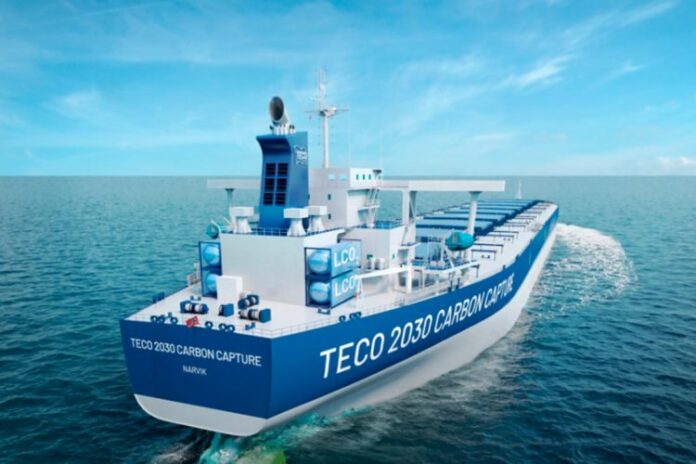
The support has been granted through the Research Council of Norway’s Skattefunn scheme, which is a tax deduction scheme designed to stimulate research and development (R&D) activities in Norwegian companies. It provides indirect support in the form of tax deductions on costs related to implemented research and development activities.

Tore Enger, CEO of TECO 2030 ASA, says:

“We are currently in the process of developing technological solutions that will enable ships running on fossil fuels to reduce their emissions and become more climate-friendly by capturing the CO2 that they would otherwise emit with their exhaust gases.”

“We are very pleased and thankful for the support we have now received from the Research Council of Norway to this end. The recognition of carbon capture as an emissions reduction technology for the maritime industry represents a milestone in our efforts.”

The project that has been granted tax relief involves the development and testing of onboard solutions that can capture more than 90% of the CO2 in the ship exhaust. The tax relief granted to TECO 2030 under the Skattefunn scheme will cover 19% of the costs accrued in this project, up to about NOK 4 million over the project period of two years, 2021 and 2022.

TECO 2030 is developing carbon capture solutions for ships together with the American technology company Chart Industries, Inc. The solutions will separate the CO2 from the ship’s exhaust gases and store it in liquid form until it can be offloaded when the ship has reached port.

When offloaded, the CO2 can then either be permanently stored in geological formations underground or be put to beneficial use in CO2-consuming industries, such as the agricultural, industrial, energy, or food and beverage sectors.

Carbon capture technology has the potential to reduce greenhouse gas emissions from the shipping industry by more than 30% by 2050, according to DNV’s Maritime Forecast to 2050, which was published last week.

TECO 2030 is currently in the process of separating its carbon capture business unit into a separate entity fully owned by TECO 2030 ASA. The new entity will be known as TECO 2030 Carbon Capture AS and will be based in Narvik in northern Norway.