-7.5 C
New York
Home Blog Page 550

NOAA awards $7.3 million for marine debris removal, prevention, and research

0

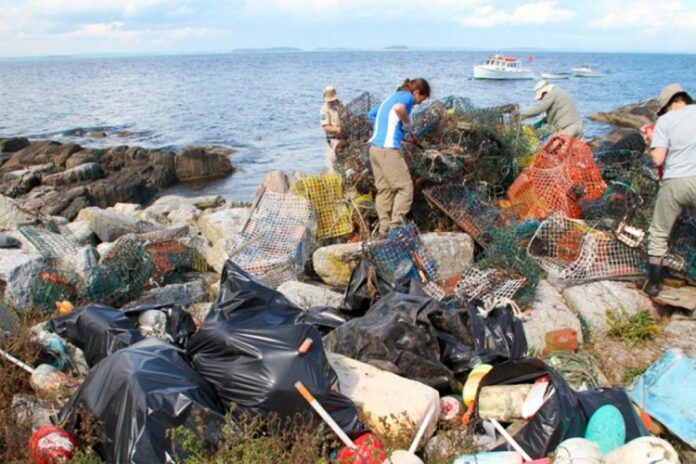
NOAA has announced $7.3 million in fiscal year 2021 grants supporting 25 projects to address the harmful effects of marine debris on wildlife, navigation safety, ecosystem health, and the economy. 

With the addition of non-federal matching contributions, the total investment in these marine debris projects is approximately $14.7 million. The grants, selected after a rigorous and competitive review process, are spread across 14 states and territories, as well as 8 international regions. 

Nicole LeBoeuf, director of NOAA’s National Ocean Service, said:

“Marine debris harms our coastal communities every day. These grants fund critical clean-up, while also working to prevent the problem at the source and better understand the movement of marine debris. These types of projects will help us remove the most harmful types of marine debris and mitigate the most harmful effects.”

Among the projects selected are the removal of up to 17 abandoned and derelict vessels from the Hudson River Estuary, representing all known abandoned and derelict vessels in the estuary; the removal of more than 100 metric tons of debris, including derelict fishing gear, from Hawaiʻi, Kauaʻi, and Maui Islands; an assessment of how marine debris moves from the upstream areas of the Guánica Watershed to the nearshore coastal waters of southwest Puerto Rico; reduction of the amount of marine debris entering the Tijuana River from the Los Laureles Canyon tributary in Mexico; and the launch of the North American Net Collection Initiative to collect and transform end-of-life fishing nets into high-value consumer goods.

Approximately $1.8 million will support 10 removal projects in Alaska, California, Hawaiʻi, Massachusetts, Michigan, Mississippi, New Jersey, Puerto Rico, South Carolina, and Washington. The grantees will implement locally developed and cost-effective activities to remove marine debris, including derelict fishing gear and other medium- and large-scale debris. Projects will benefit coastal habitats, waterways, wildlife, and surrounding communities. 

Approximately $1.4 million will support 5 marine debris research projects in California, Delaware, Maryland, New York, and Puerto Rico. The grantees will investigate and identify the critical input pathways for marine debris introduction into the coastal zone.

Approximately $4.1 million will support 10 marine debris prevention and removal projects in the Great Lakes, Gulf of Alaska, Gulf of Maine, Gulf of Mexico, Mexico, Mexican Caribbean, North America Pacific Ocean, Salish Sea, and Tijuana River estuary. The grantees will address common marine debris issues in Mexico and the U.S.-Mexico and U.S.-Canada border areas that impact the U.S. marine environment, including preventing or reducing the occurrence of marine debris, or removing marine debris from the environment.

Marine debris is not only a threat to wildlife in our ocean, Great Lakes, and waterways, but can adversely affect navigation safety and the economy. To address this growing challenge, the NOAA Marine Debris Program is dedicated to identifying, determining sources of, assessing, preventing, reducing and removing marine debris and addressing the adverse impacts of marine debris in our nation’s marine environment and Great Lakes. The Marine Debris Act authorized the NOAA Marine Debris Program in 2006 as the lead federal program for addressing the problem. This program was reauthorized in 2018 through the Save Our Seas Act, and recently amended by the Save Our Seas 2.0 Act of 2020.
Port of Baltimore welcomes four additional gigantic cranes to service container ships

0

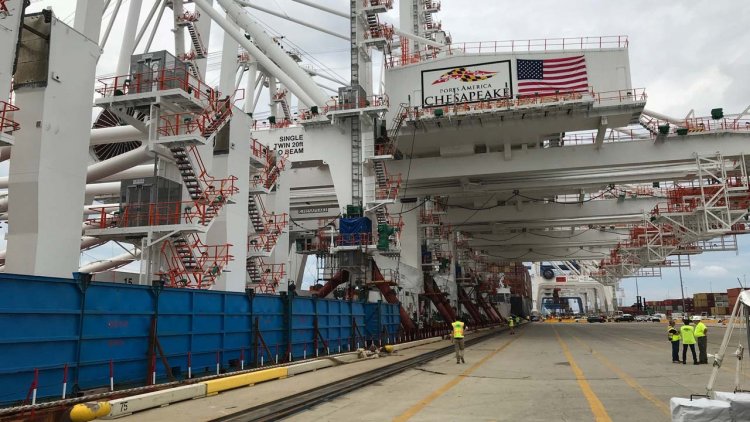
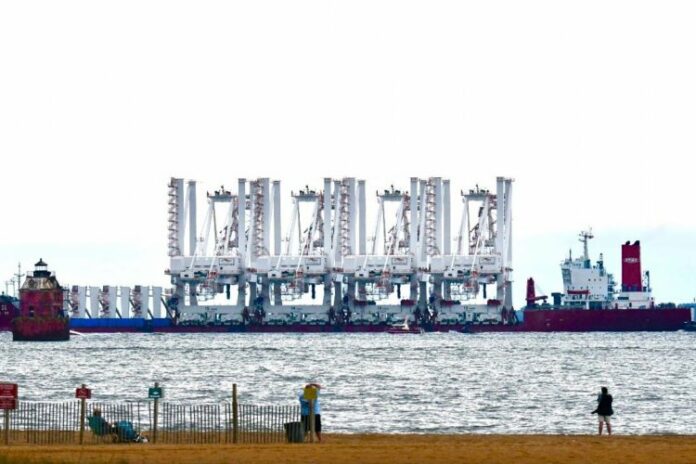
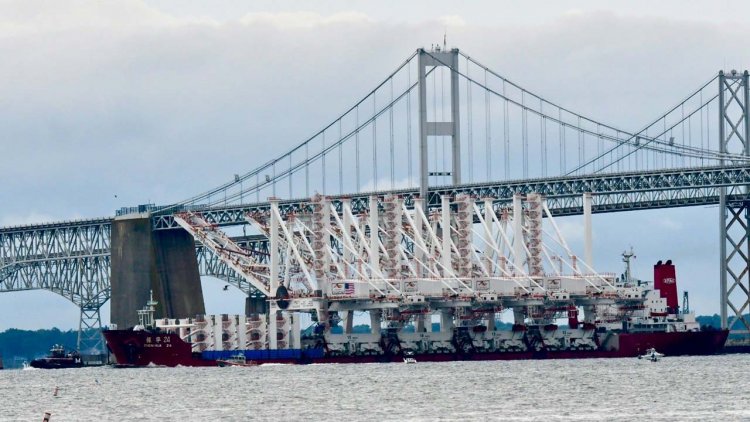
Following a two-month journey that included dramatic passage under the Chesapeake Bay Bridge and the Francis Scott Key Bridge, four new, massive NeoPanamax container cranes have arrived at the Helen Delich Bentley Port of Baltimore’s Seagirt Marine Terminal. The cranes were delivered aboard the Zhen Hua 24 from China.

MDOT Secretary Greg Slater said:

“Baltimore is already one of the few ports on the East Coast capable of accommodating the world’s largest container ships. These new cranes will allow the Port to serve two ultra-large container ships simultaneously, boosting our capacity and giving us the opportunity to increase revenue and grow the jobs that help fuel Maryland’s economy.”

The new cranes are fully electric, and thus emit no diesel emissions. Each measures 450 feet tall and weighs about 1,740 tons – 25 feet taller and 190 tons heavier than the Port’s first set of Neo-Panamax cranes that arrived in 2012. The new cranes can each extend to reach 23 containers across on a ship and lift 187,500 pounds of cargo. Ports America Chesapeake will test and prepare the cranes over the next few months, and they are expected to be fully operational in early 2022.

The cranes are part of a significant expansion by Ports America Chesapeake at Seagirt to provide greater capacity and efficiency to handle anticipated increases in container volumes. The $166 million investment in terminal and yard upgrades includes a second, 50-foot-deep berth to accommodate mega-ships; new container handling equipment such as 15 hybrid-electric gantry cranes; and a new truck gate complex.

Ports America Chesapeake also is making software and technology upgrades at Seagirt, and in February relocated a container repair depot off-dock to provide more fluid container delivery and pick-up.

There is a need for utilization of more gateways such as Baltimore to handle cargo in the United States. Import/export demand for container cargo has substantially increased over the past year and with that, port congestion is an all-time high. Due to the high number of local distribution, fulfillment and sorting centers in the area, Baltimore is a prime gateway for goods heading to the e-commerce market and for cargo sent to the Midwest via rail. The Port of Baltimore has served 23 “ad hoc” ships over the past year – vessels diverted to Baltimore that were not on a regularly scheduled service call – totaling more than 35,000 Twenty-foot Equivalent Unit (TEU) containers. 

Bayard Hogans, vice president of Ports America Chesapeake, said:

“As part of our over $166 million investment in terminal initiatives, the four new ship-to-shore cranes will create more capacity, increase productivity and improve efficiency at the Seagirt Marine Terminal.”

Containers coming through the Port of Baltimore have increased significantly since MDOT MPA and Ports America Chesapeake entered into a public-private partnership agreement in 2010. In 2009, the year prior to the agreement, Seagirt handled 257,367 containers. In 2020, after the first 10 years of the agreement, Seagirt handled 628,132 containers, an increase of 144%.

MDOT MPA and Ports America Chesapeake also recently secured two new container services, Maersk TP20 and Mediterranean Shipping Co. (MSC) Indus 2. The Maersk TP20 service consists of a string of approximately 13 ships, each with a capacity of 2,500 to 4,500 TEU containers, traveling through Southeast Asia/Vietnam and China, then through the Panama Canal to Baltimore and Norfolk. The MSC Indus 2 is an Indian Subcontinent and Mediterranean service consisting of an eight-ship fleet with capacity in the range of 8,500 TEUs. The Indus 2 starts in India and transits the Suez Canal to Italy and Portugal, and onto Norfolk, Baltimore, Miami and Freeport, Bahamas.

Complementing the new Seagirt berth are plans to expand Baltimore’s Howard Street Tunnel, which will allow for double-stacked container rail cars to travel to and from the Port, clearing a longtime hurdle and giving the East Coast seamless double-stack capacity from Maine to Florida. The project involves clearance improvements in the tunnel and at 22 other locations between Baltimore and Philadelphia. With the tunnel expansion project, Baltimore will be able to send double stacked containers by rail into the Ohio Valley and onto Chicago. In June, the project received final federal environment approval under the National Environmental Policy Act.

ABS launches industry-first simulation decarbonization service

0

In an industry first, ABS has launched an advanced service using sophisticated modeling and simulation technologies to assess the impact of a wide range of vessel decarbonization technologies at the design stage as well as simplifying EEXI and CII compliance.

The SIM-based Energy Efficiency Evaluation Service will allow both newbuild vessels and existing vessels to compare different design and operational options and evaluate the performance impact of adding new technologies.

This is just the beginning for the service, with an update due next year adding CII compliance planning, allowing time to prepare for any required retrofitting and modifications to the fleet.

Christopher J. Wiernicki, ABS Chairman, President and Chief Executive Officer, said:

“Just as simulation is being used in automotive design to decarbonize vehicles, shipping must embrace new ways of seeing things to bring forward innovation for greener vessels. At ABS we can now use advanced simulation and modeling to assess new concepts in design, engineering and operations while a vessel is in its design stages, allowing ship owners and shipyards to make more informed decisions. We believe simulation is a technology with the potential to make a significant contribution to the decarbonization of our industry, and ABS is leading the way by beginning to realize those gains today.” 

For newbuilds at design stage, SIM-based Energy Efficiency Evaluation Service supports propulsion system design optimization, providing system level assessment of the fuel consumption of a vessel, supporting life-cycle cost analysis as well as detailed design comparison and equipment parameter optimization. For existing vessels, the service assists with evaluating the retrofitting options and operational changes to reduce fuel consumption and maintain compliance with regulations.

The launch of the service follows the announcement of a joint development project between ABS, Hudong–Zhonghua Shipbuilding and Wärtsilä using advanced multi-physics modeling and simulation to support development of a flexible, future-ready and modular concept for a multi-fuel electric Liquefied Natural Gas Carrier (LNGC) vessel.

Incat Crowther launches zero-emissions hydrogen fuel cell ferry

0

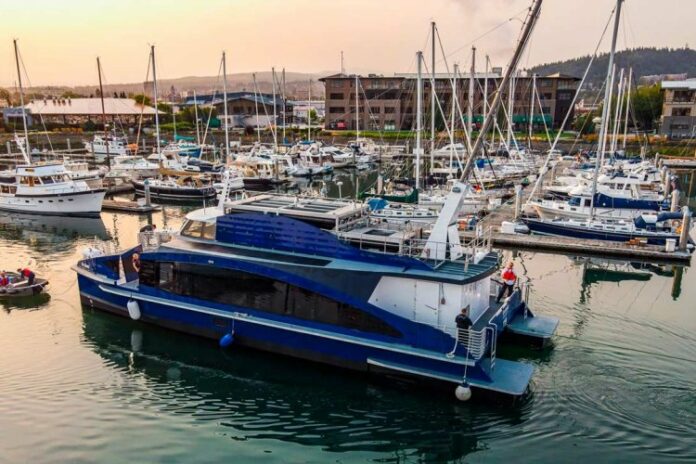
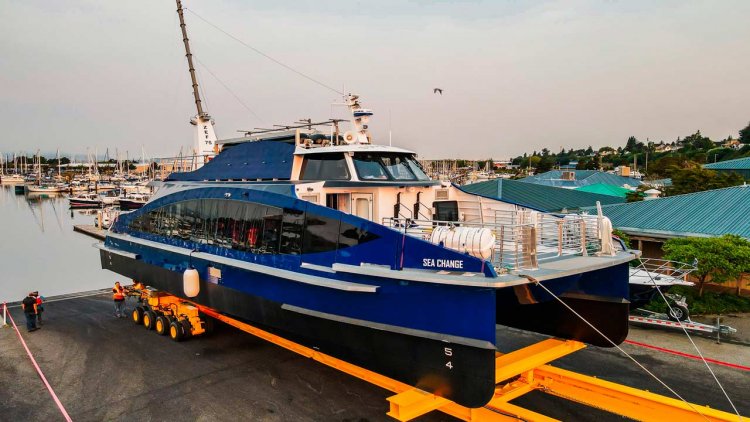
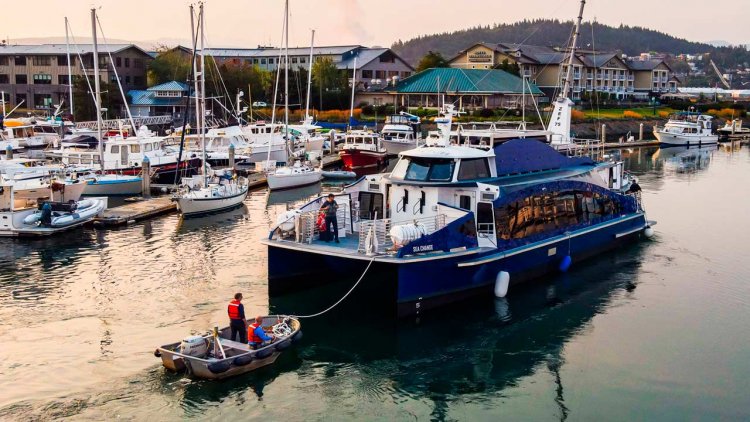
Delivered by All American Marine, the project has been spearheaded by the vessel owner SWITCH Maritime and was brought to fruition by a consortium of contributors, including Incat Crowther, Zero Emissions Industries, BAE Systems and Hornblower Group, who Incat Crowther worked closely with on the recent NYC Ferry newbuild program.

The project is supported by a grant from the California Air Resources Board, administered by the Bay Area Air Quality Management District, that comes from the California Climate Investments initiative, a California statewide program that puts billions of Cap-and-Trade dollars to work to reduce greenhouse gas emissions, strengthen the economy, and improve public health and the environment – particularly in disadvantaged communities. Upon delivery, the vessel will operate in the Bay Area of California and exhibit the viability of the hydrogen fuel cell marine technology and demonstrate a pathway to commercialization.

The vessel is equipped with a hydrogen fuel cell power package provided by Zero Emissions Industries (formerly Golden Gate Zero Emission Marine), comprised of 360 kW of Cummins fuel cells and Hexagon hydrogen storage tanks with a capacity of 246 kg. This system is integrated with 100 kWh of a lithium-ion battery provided by XALT and a 2x 300 kW electric propulsion system provided by BAE Systems.

Incat Crowther developed an arrangement for the vessel that accommodated the new propulsion technology, integrating it into the vessel’s structure and systems. The vessel’s hull form was optimised to reduce resistance, whilst further efficiencies were gained in the structural design for Sea Change, with Incat Crowther delivering its customary mix of robustness and low weight.

Incat Crowther also took a leading role in navigating the regulatory framework for the new technology, working closely with numerous branches of the United States Coast Guard and key stakeholders.

The vessel is accessible by disabled persons and includes ramps to the bow and side loading gates. The bow utilises a standard bow radius for use in many US cities. The elevated wheelhouse affords excellent visibility over bow loading operations.

Katoen Natie invested 10 million euros towards expansion in Estonia

0

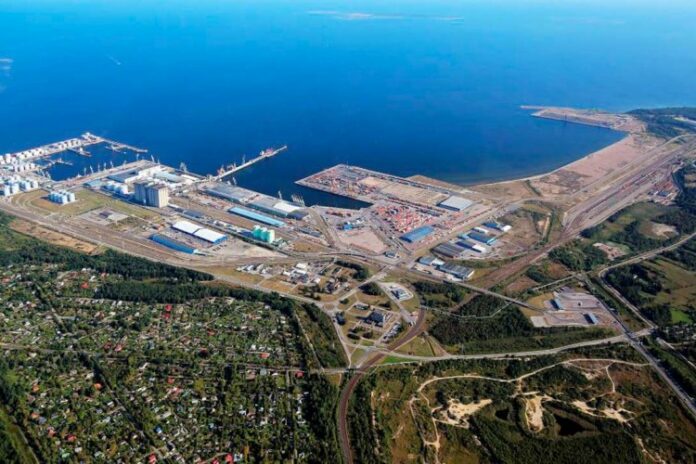
Katoen Natie, a global provider of engineering and logistics services, expanded its logistics centre in the industrial park of Muuga Harbor, investing 10 million euros towards the construction of a new warehouse building to service the increased business volumes.

According to Katoen Natie chairman, Mr. Fernand Huts, the 10,000-square-meter extension of the terminal in the free trade zone of Muuga Harbor will increase the volume of goods handled, expand the range of logistics services, and the customer portfolio. 

Fernand Huts said:

“We see Muuga Port in the immediate vicinity of Tallinn as a reliable connection point between Europe and Russia, Ukraine, Kazakhstan and other countries to provide logistics services to our international customers in various industries, such as petrochemicals, raw materials, and general cargo.”

With the new building, Katoen Natiel now has 63,300 square meters of warehouse space in Muuga Harbor. The total sum of investments made by the logistics company in Estonia now exceeds 50 million euros. As a result, the company owns modern warehouses, 70 wagons and other special-purpose equipment to  handle, store and provide full range of logistical services for petrochemicals, commodities and consumer goods.

According to Margus Vihman, Member of the Management Board and Commercial Manager of the Port of Tallinn, the expansion of international companies such as Katoen Natie proves that Estonia and Tallinn Port industrial parks are the best place for companies focused on trade in the region. 

Vihman said:

“Muuga port will also be the only port with direct access to Rail Baltic, which allows goods to be transhipped from sea and road transport to European and Russian-wide rail vehicles and vice versa.”

Muuga Harbor is the largest and deepest cargo port in Estonia, with direct sea, land, and rail transport connections. In addition, Muuga Harbor is the only Estonian port connecting container lines and the most modern container terminal in the Baltics.

Fully-electric road ferries on the way to Canada

0

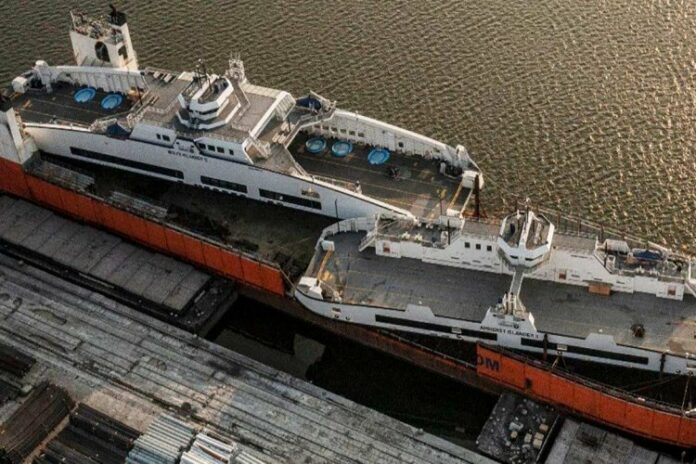
The first, fully-electric road ferries to sail in North America are now on their way from Damen Shipyards Galati to Lake Ontario, Canada, to begin operations. Ordered by the Ministry of Transportation, Ontario, Canada, the Amherst Islander II and Wolfe Islander IV, 68 and 98 metres in length respectively, represent a new generation of zero-emission large ferries. The vessels departed the yard on 26 August to be loaded on the semi-submersible transport vessel Super Servant 4 and will arrive in Lake Ontario in mid-September.

Both of the open-deck vessels are equipped to be fully-electric, but also have twin diesel generators installed to allow hybrid and full diesel propulsion for maximum redundancy. Due to the harsh winters the ferries also feature 1B Ice class hulls and 1A Ice class azimuth thrusters, allowing them to be fully operational down to -25 degrees centigrade.

The delivery of the vessels marks the completion of the first of the two stages of the project. The second stage, which is well underway, involves an ambitious programme in which Damen is working with the Ontario government to install the facilities that will enable the vessels to use shore power supplied via integrated shore charging and mooring systems. This will enable them to recharge their batteries while loading and unloading between the short crossings to and from the islands.

This involves not only the installation of the necessary transmission infrastructure at each of the four ferry docks, but also the complete rebuild of the docks to accommodate the new vessels plus the onshore electrical equipment. The systems will also utilise load displacement and peak-shaving technology to achieve maximum efficiency and minimal costs.

The vessels themselves will use an innovative, fully automatic charging system developed by Wabtec Stemmann with features that include motion compensation to ensure a stable connection between the ship and the shore even in rough seas. Delivering 6MW of power, charging takes just ten minutes.

With the shoreside works due for completion in 2022, following extensive training for crews over the remainder of 2021, the ferries will commence operations in hybrid mode using the diesel generators to supply electricity to the motors.

Leo Postma, Damen Area Director Sales Americas, says:

“This integrated project is the first of its kind and one that we hope will demonstrate that fully-electric ferries of this size are a viable proposition. Damen now offers turnkey packages for organisations looking for integrated all-electric ferry systems, working with local contractors and suppliers to install the shoreside infrastructure that best suits local requirements and conditions. It has been a pleasure working with the Government of Ontario to bring this project to fruition and we very much look forward to seeing it fully operational. This is the future!”

Damen is providing full support with staff in Ontario for the 16-month warranty period and is also establishing a Service Hub in British Columbia to provide long term support to the Canadian market. Damen is currently midway through a programme to build and deliver six Damen Road Ferries 8117 E3 for BC Ferries. While presently fitted with hybrid propulsion systems, they are designed to be adapted for full electric propulsion in the future.

Ontario’s new ferries bring extra capacity and will make crossings faster as well as greener for the one million passengers and 500,000 vehicles which travel annually between Wolfe Island and Kingston, and the 270,000 passengers and 130,000 vehicles which travel to and from Amherst Island each year.

EDP will construct a green hydrogen pilot plant in Pecém Industrial and Port Complex

0

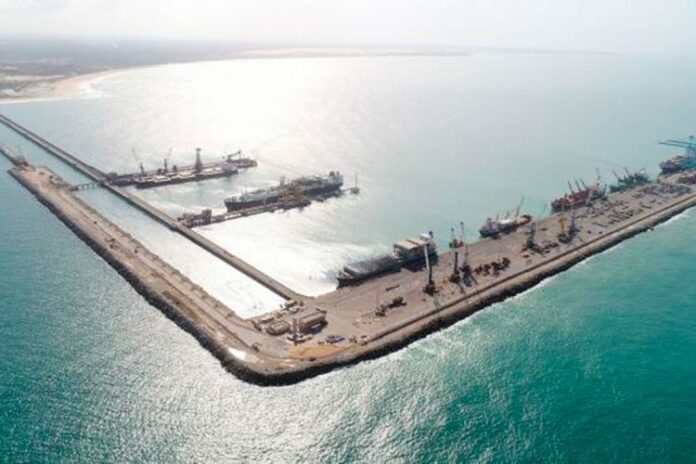
On 1st September the Governor of Ceará together with executives from EDP have jointly announced that EDP will invest a total of R$41.9 million in a pilot project for the production of a green hydrogen plant in Pecém Industrial and Port Complex, with a production capacity of 250 Nm3/h of the gas. Its operation should start as early as December 2022. EDP will have a solar plant of 3 MW providing renewable energy to an electrolyzer from Hytron-NEA.

EDP already is operational in Industrial Area of Pecém Complex  with a 720 MW power plant and this investment in Research & Development can bring insights into energy transition of its own plants and help EDP become a player in green hydrogen through scaling up production.

Pecém Industrial and Port Complex together with its shareholders State Government of Ceará and The Port of Rotterdam is extremely happy with this development as it marks the first stepping stone of the green Green Hydrogen HUB Pecém – Ceará.

Mr. Danilo Serpa, CEO of Pecém Complex, said:

“EDP is already our partner, as it has been operating in Pecém Complex since 2012. In the last five years alone, the company has handled 8.6 million tons of cargo with us. This is, therefore, a pioneering investment in Brazil and in the world, since few places on the planet currently have H2 plants. It is something revolutionary with a strong sustainable impact. Therefore, we thank EDP for believing in the state of Ceará, for believing in Pecém.”

The project “Green Hydrogen HUB Pecém – Ceará” was launched in February of this year by the Government of Ceará, Pecém Industrial and Port Complex (CIPP S/A), Federation of State Industries (Fiec) and Federal University of Ceará (UFC). This project has attracted companies interested in operating in the Green Hydrogen value chain, which ranges from renewable energy generation, to production, storage, distribution and consumption of green hydrogen, including for export.

Belgium research vessel given to Ukraine to support monitoring of the marine environment

0

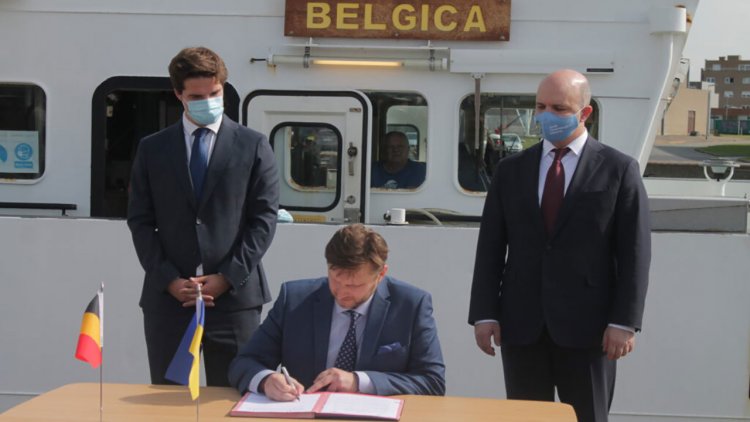
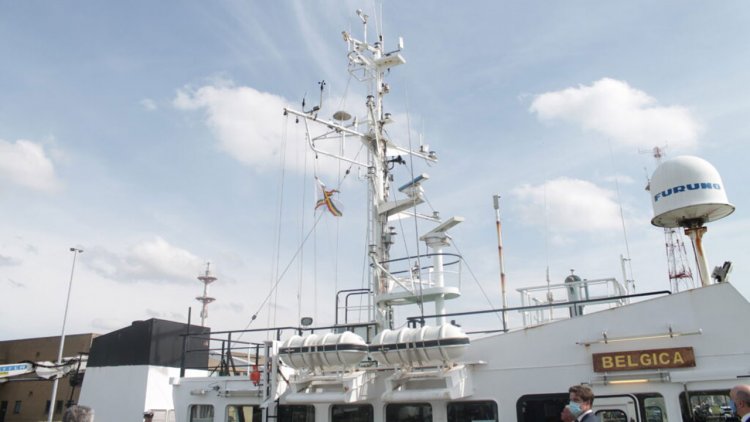
Today, an agreement was signed for the transfer of the legendary research vessel “Belgica” to Ukraine by the Belgian government, following a Memorandum of Understanding signed between the Belgian Federal Science Policy Office, the Royal Belgia Institute of Natural Sciences, and the Ministry of Environmental Protection and Natural Resources of Ukraine in July 2021.

The vessel has been a flagship of Belgium’s environmental monitoring in the North-East Atlantic until a new research vessel, also named “Belgica”, was built. It was then decided to provide the fully operational ship to the Ukrainian Scientific Center of the Ecology of the Sea (UkrSES), to reinforce monitoring of the marine environment in the Black Sea region, considering that Ukraine does not at present have any operational vessel suitable for sea monitoring. As a follow-up, joint Belgium-Ukrainian surveys are planned both in the Black Sea and North-East Atlantic regions.

During the event, State Secretary for Economic Recovery and Strategic Investments, in charge of Scientific Policy Thomas Dermine said:

“After nearly one million kilometres covered and more than 1,000 scientific campaigns to increase knowledge of the seas, Belgium bids farewell to the research vessel Belgica today. As a sailing laboratory, the ship was the flagship of Belgian marine science for 37 years. With a heavy heart, we say farewell, but I am very pleased that the ship will have a second life thanks to our cooperation with the Ukrainian Scientific Center of the Ecology of the Sea.”

The Ukrainian Minister of Environmental Protection and Natural Resources, Roman Abramovsky, stated:

“We are very grateful to the Belgian party for such an important gift to Ukraine – the research vessel “Belgica”. Using it we are planning already this year to renew scientific monitoring surveys in the Black Sea and later in the Azov Sea as well. Hope to do it jointly with our Belgian colleagues. This will promote not only the implementation of the EU Marine Strategy Framework Directive as a part of the EU-Ukraine Association Agreement but finally rehabilitation of the Black and Azov Seas”.

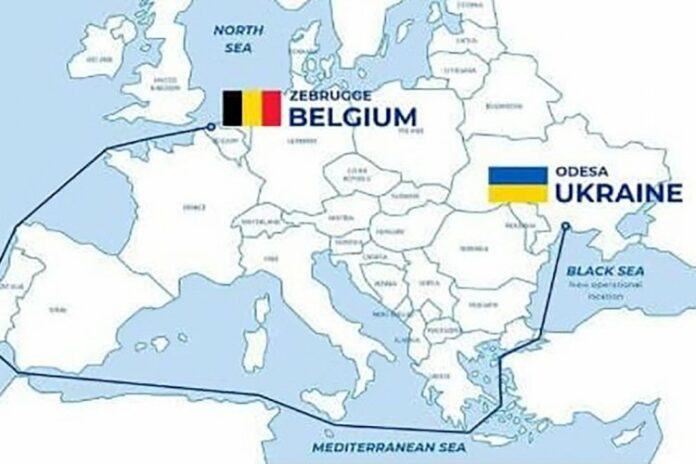
In the next few days, the vessel will start its cruise from Zeebrugge, Belgium to its new homeport in Odesa, Ukraine. During the ship’s 8,600-km-long journey, scientists will assess floating marine macrolitter, collect samples of seawater and bottom sediments for analysis of the wide range of pollutants, and perform a unique screening of the presence of more than tens of thousands of emerging contaminants, microplastics, environmental DNA for assessing biodiversity and microbial DNA revealing the presence of antibiotic resistance genes. This ambitious scientific programme titled “Cruise of Three European Seas” (North-East Atlantic, Mediterranean and the Black Seas), as well as the transfer of the vessel, is organized and financed by the EU/UNDP project “European Union for Improving Environmental Monitoring of the Black Sea” (EU4EMBLAS) and supported scientifically by the EC Joint Research Centre and UkrSES.

Lawrence Meredith, Director, European Commission, said:

“The European Union has been working hand-in-hand with Ukraine and other coastal countries to transform the Black Sea into a welcoming home for science, forward-looking policies, and investments that benefit people and marine ecosystems alike. With EU4EMBLAS and many other programmes to support and accelerate the green transition, the EU continues to be ready to support improved environmental protection and economic and social resilience in the Black Sea basin.”

Georges Van Montfort, Deputy Director, UNDP Representation Office in Brussels, mentioned:

“UNDP is committed to supporting scientific collaboration and transfer of knowledge and experience among European and national institutions. We are honoured to assist with the transfer of the research vessel “Belgica” – a generous gift from the Belgian Government to Ukraine, which will help build further capacities for environmental monitoring. We are grateful to the Government of Belgium and the European Union for our long-standing and excellent cooperation to advance the Black Sea environmental protection.”

It is expected that the vessel will arrive in Ukraine in the middle of October 2021, where it will be renamed, and start its activities in the Black Sea region.

BunkerMetric and Veson Nautical collaborate to drive bunker optimization

0

BunkerMetric, a Scandinavian software company bringing the power of advanced digital technologies to the marine bunkering segment, has joined the Veson Partner Network as an official Platform Partner. This strategic partnership will see BunkerMetric’s bunker procurement optimization tool, BunkerPlanner, natively integrated with the maritime world’s leading commercial software platform, the Veson IMOS Platform (VIP), to empower mutual clients with the data-driven insights and connectivity they need to optimize their bunkering decisions.

The turnkey integration will help streamline and improve the complex, often fragmented workflows involved with bunker procurement planning, enabling more optimal bunker decisions that save time, money, and resources.

For those joint clients that choose to take advantage of the turnkey integration, relevant voyage itinerary and activity reporting data from VIP can be imported directly into BunkerPlanner, which can then perform analyses within the context of a voyage’s commercial, regulatory, and operational obligations to help improve voyage yields through bunker optimization. BunkerPlanner does this by combining data such as charterparty agreements, vessel specifics, positions, routes, ETA, tank capacity, bunker prices, port details, and sailing distances to make recommendations for the optimal fuel quantity, ideal ports, dates, and type of fuel to lift at each location.

Direct and secure integration between BunkerPlanner and VIP saves teams time spent coordinating voyage decisions between Chartering, Operations, and Bunker Procurement, helping teams work together more efficiently and prevent costly errors and misunderstandings.

Further, the integration helps provide greater transparency into the environmental impact of bunkering decisions so that organizations can stay up to date with reporting requirements that evolving regulations require. An embedded Carbon Intensity Indicator (CII) calculator within BunkerPlanner helps operators understand consumption effects to not only increase voyage profitability, but also cut down on emissions and improve the fleet’s performance.

Kris Kosmala, Chief Commercial Officer, BunkerMetric, said:

“We are very pleased to collaborate with Veson as a Platform Partner. BunkerPlanner and VIP can together streamline workflows and uncover impactful new efficiencies and cost savings for mutual clients.

Our use cases indicate that by optimizing the fuel procurement process, the potential operational savings for an organization can reach tens of thousands of dollars per voyage.”

With the ability to integrate commercial voyage plans in VIP with optimal bunkering plans generated by BunkerPlanner, clients can gain greater control over the proactive management of the largest cost component of every voyage: bunkers.

Graham Piasecki, Director of Commercial Strategy, Veson Nautical, said:

“In an increasingly competitive market landscape, organizations need advanced planning optimization tools that integrate bunker-related information from within the company commercially operating the vessel as well as with external data sources. By working together with BunkerMetric on bunker optimization, we can put powerful tools into the hands of our clients that provide new transparency and insights into such a significantly strategic component of every voyage.”

ICS launches new guidance for seafarers to navigate ongoing pandemic challenges

0

The International Chamber of Shipping has published new and updated guidance to protect seafarers and shipowners against the challenges of the coronavirus pandemic. 

Despite noted improvements in rates of vaccination for seafarers, only 25% are fully vaccinated, and most are not in line to receive a vaccine through their national programmes until at least 2022. Meanwhile, severe travel restrictions across the world have led to seafarers being stranded on board, some for more than 18 months.  This deterrent to existing workers and potential new recruits has stretched global supply chains to breaking point, with shortages of key goods reported, and shipping costs approaching all-time highs.

Now, ICS has worked with a coalition of industry partners to produce new and updated guidance, which aims to empower seafarers and shipowners with the knowledge to protect and support themselves through the next stage of the pandemic.

The guides were produced in association with International Maritime Health Association, INTERTANKO, International Transport Worker Federation (ITF), European Community Shipowners’ Associations (ESCA), Intercargo, InterManager, International Association of Ports and Harbors, International Christian Maritime Association, International Marine Contractors Association, International Maritime Employers’ Council Ltd., Asian Shipowners’ Association (ASA), and the International Maritime Employers’ Council (IMEC).

Guy Platten, Secretary General of the International Chamber of Shipping, commented:

“Throughout the pandemic, the shipping industry has time and again come together to support its own.

“The sector has been more united and effective in its response to the pandemic than most sectors. But we must ensure that we maintain this spirit of collaboration and all pull together to anticipate and meet the needs of the world’s hidden key workers – seafarers.

“As the Delta variant threatens the global south, a part of the world that supplies nearly half of the seafarer workforce, with greater urgency, it is critical that seafarers and shipowners have the resources needed to navigate the next stage of the pandemic.”

The new seafarer guides address acute issues faced by seafarers during the pandemic.

Seafarers are required by the nature of their job to travel across the world to locations which have different levels of COVID-19 infections. Coronavirus (COVID-19) Vaccination for Seafarers and Shipping Companies: A Practical Guide answers pressing frequently asked questions in an approachable and informed way.

A reality of the pandemic is that shore leave has been heavily impacted and crews have been forced to remain on board their ships for extended periods without relief. Coronavirus (COVID-19): Seafarer Shore-Leave Principles sets out principles for providing shore leave while navigating draconian travel restrictions across the globe.

Recruiting for non-existent jobs at sea is on the rise, as dubious manning agents take advantage of the current environment.  Losing seafarers to poor manning experiences is something that must therefore be stamped out. Manning Agency Guidelines was produced to help shipping companies choose reputable manning agencies and to ensure that seafarers are recruited in line with the requirements of the ILO.

Tragically, seafarers have suffered more from mental health struggles during the crew change crisis. The pandemic has also increased job stress that can impact seafarers’ mental health, including family pressures and limited shore leave. Handling a Mental Health Crisis or Emergency and Spotting Suicidal Behaviour in Seafarers lays tools out for companies to create a caring on-board culture to address mental health matters.

Platten concluded:

“Seafarers have made enormous personal sacrifice over the last 18 months. While admirable, it has put enormous pressure both on them as individuals and on the global supply chain. ICS and our partners hope that our new guidance will provide protection and assurance to seafarers around the world, and help improve their experience on board and on shore.”