-13.9 C
New York
Home Blog Page 541

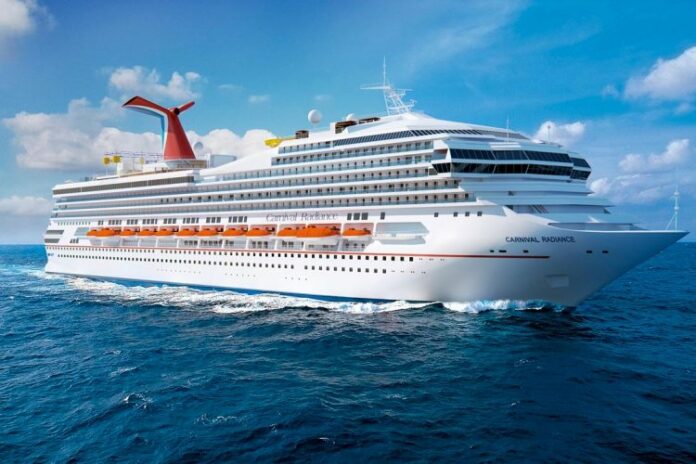
Carnival Victory renamed Carnival Radiance

0

The third in the line’s Sunshine-class series, Carnival Radiance is scheduled to  depart  Cadiz, Spain, on Oct. 18 starting a seven-week journey to her eventual homeport in Long Beach, Calif., with stops in Miami and a transit of the Panama Canal along the way.

On Dec. 13, Carnival Radiance makes her Southern California debut, kicking off a year-round schedule of three- and four-day cruises to Baja Mexico from the Long Beach Cruise Terminal. On this route, three-day cruises depart Fridays and visit Ensenada, Mexico, while four-day cruises sail on Mondays calling at Ensenada and Catalina Island.

Christine Duffy, president of Carnival Cruise Line, said:

“The transformation of Carnival Victory has been in the works for quite some time but we’re delighted that she can now be officially be called Carnival Radiance — the newest member of our fleet. Carnival Radiance features all of our most popular spaces and provides a truly unique and exciting vacation option for the Southern California short cruise market.”

A traditional naming ceremony will be held once Carnival Radiance arrives in Long Beach.  Additional details will be announced in the near future.

Carnival Radiance joins Carnival Miracle which will reposition to Long Beach Sept. 27 to operate short cruises to Mexico, as well as Carnival Panorama sailing week-long voyages to the Mexican Riviera.

APM Terminals partners with Siemens for energy optimisation at terminals

0

The companies will now work on further energy optimisation and emission reduction programmes across its terminals portfolio globally, as a significant step on its ambitious decarbonisation journey.

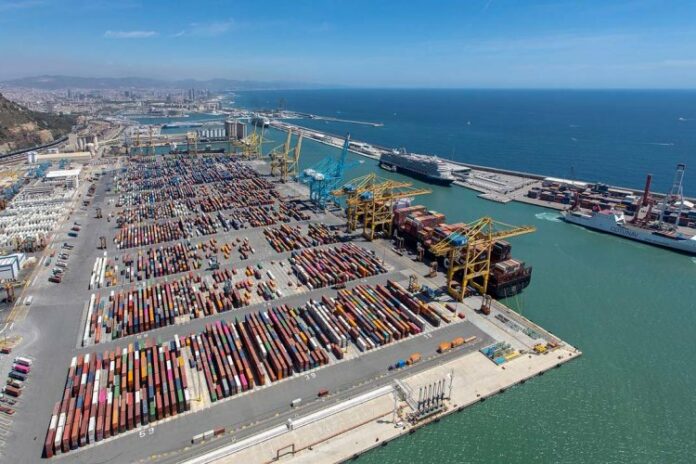
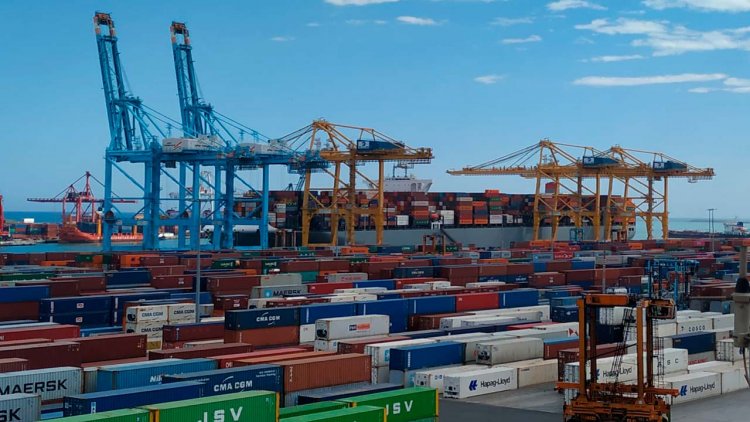
Operated by APM Terminals, Gateway Terminals India (GTI) is one of the busiest container terminals in the country, handling 2 million TEUs (twenty-foot equivalent units) per year and 10% of India’s container trade. One of the baseline requirements for such large scale operations is high energy consumption. The terminal utilises a combination of diesel and electric powered equipment and in 2020 alone, it consumed 5.8 million litres of diesel and 25 Giga Watt hours of electricity, resulting in an emission of 66,847 tonnes of CO2 in Scope 1 (fuel-based) and 84,429 tonnes of CO2 in Scope 2 (emissions from the generation of purchased electricity).

To address this and find scalable and efficient solutions for reducing these emissions, APM Terminals Mumbai (GTI) engaged Siemens for a pilot project aimed at establishing the baseline of GTI’s energy consumption patterns through continuous measurement of all energy consumers, as well as defining, verifying and later implementing possible energy optimization measures. Known as Facility Improvement Measures (FIM), they would also entail verification of actual energy consumption, as well as emission reduction achieved.

Girish Aggarwal, Chief Operating Officer at APM Terminals Mumbai (GTI), says:

“As a major logistics player in India, we are conscious of our carbon footprint, but also of our responsibility for finding all possible ways of reducing them. The partnership with Siemens allows us to successfully address this issue not only at GTI, but also convert it into a scalable solution for implementation in other terminals.”

In addition, the pilot will utilise Siemens’ digital platform solution, including integration into APM Terminals’ IT and digital architecture and compliance with terminal operator’s IT, Cyber Security and data requirements. Siemens’ technologies include microgrid solution, energy efficiency analytics and integration of renewables.
Robert H K Demann, Head, Smart Infrastructure, Siemens Limited, said:

“Siemens is delighted to partner with Gateway Terminal India on this project. Our aim is to empower our customers in their digital transformation and achieving their sustainability goals. Siemens’ technologies will contribute to GTI achieving their targets of decarbonization, reduced greenhouse gas emissions and energy efficiency.”

The pilot identified four main Facility Improvement Measures or focus areas for decarbonisation. Transformer optimisation will help reduce energy loss by intelligently switching the transformers. Rubber tyred gantry (RTG) hybridisation (replacement of conventional diesel engines with batteries) will help save fuel. Optimising reefer facilities will reduce energy peek and demand, improve reliability and increase flexibility. Finally, implementing local solar photovoltaic (PV) infrastructure will provide the terminal with more clean energy, reduce grid supply and peaks, and bring additional flexibility to energy sourcing.

Based on the initial learnings, APM Terminals and Siemens estimate that proposed measures should help emission reduction of ~40% on Scope 1 emissions (fuel) and 16%-20% on Scope 2 emissions (from purchased electricity) at GTI.

As the next step, APM Terminals will roll out terminal-specific improvement measures across a wider portfolio of terminals globally, with the aim of achieving similar emission reduction in other locations.

With energy consumption optimisation and green energy sourcing being the pillars, alongside electrification, of APM Terminals’ decarbonisation roadmap, the Mumbai pilot will soon become a scalable solution globally, significantly strengthening the company’s decarbonisation efforts.

Port of Gothenburg plans extensive deepening of its fairway

0

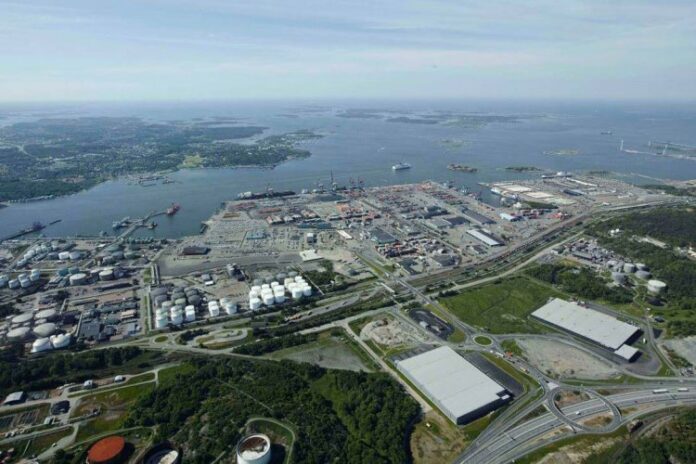
Around 13.5 million cubic metres of spoils will need to be excavated and transported to a designated water area off the island of Vinga. An area which for many years has been used as a repository thanks to its depth and accumulative seabed.

The environmental permit application submitted by the Swedish Maritime Agency and the Gothenburg Port Authority to the Land and Environment Court in December last year includes a description of the envisaged dredging process. It also describes where the spoils will be deposited and how the spoils that are contaminated – around 285,000 cubic metres – will be stored optimally to safeguard the marine environment. The extensive inquiries and investigations that have been conducted include measurements of ocean currents at the seabed.

Kristina Bernstén, Sub-Project Manager Environment for Skandia Gateway at the Gothenburg Port Authority, said:

“We are protecting the marine environment by selecting a location with deep holes and where the seabed is characterised by accumulation, which means the spoils remain in place and will not be affected by the currents. In purely technical terms we begin by depositing the contaminated spoils and then covering them with about 10 metres of older, preindustrial mud and clay. The contaminated spoils will thus be capped and sealed.”

Detailed mapping of the area west of Vinga intended as a dredge spoil repository shows there will be no permanent long-term negative impact. This is indicated by previous deposition of spoils in the immediate area, including the Safer Fairway Project, run between 2002 and 2004 and with the same spoil volumes as in the Skandia Gateway project.

The Port of Gothenburg is the only port in Sweden that can receive the world’s largest vessels. However, at present they are unable to visit fully loaded. To resolve this problem and ensure favourable conditions for Swedish trade, extensive deepening of the fairway is required. The task of dredging the fairway and docks and the work required at the quayside are scheduled for completion by 2026. Skandia Gateway is a collaborative venture between the Swedish Transport Administration, the Swedish Maritime Administration, and the Gothenburg Port Authority.

Synergy Group to take over Maersk Tankers’ technical management business

0

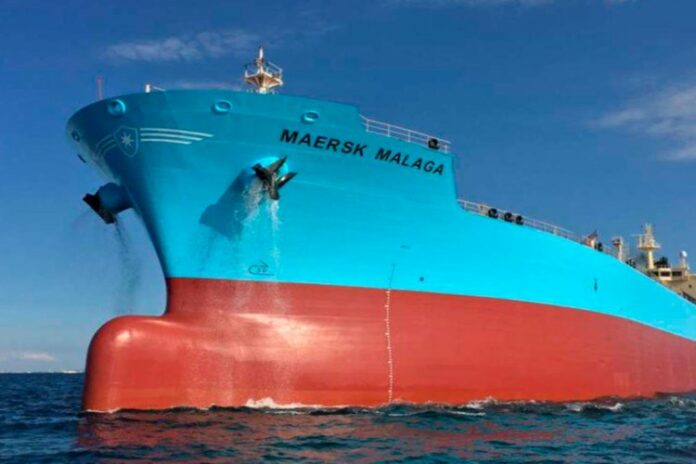
Synergy Marine Pte. Ltd., a subsidiary of Synergy Group, has signed an agreement to take over Maersk Tankers’ technical management business. This will strengthen Synergy Group’s position within technical management, and Maersk Tankers will become a service company focused on commercial management.

Christian M. Ingerslev, CEO of Maersk Tankers, says:

“Maersk Tankers has been transformed from a traditional tanker company into a service company over the past few years. The agreement with Synergy Group marks the next big step on our strategic course, offering both the technical and commercial businesses optimum conditions in which to thrive. Maersk Tankers will become a service company focused on the commercial management market, delivering financially and environmentally viable solutions for shipowners.”

The technical management business, which has been part of Maersk Tankers since 1928, maintains vessels to ensure their safe, efficient and cost-competitive operation. It employs close to 3,300 people, of which 140 work onshore. Synergy Group, a leading ship manager founded in 2006 and with 14,000 seafarers and more than 1,000 shore-based employees, has been carefully chosen as the new owner to grow and develop the technical management business.

Captain Rajesh Unni, founder and CEO of Synergy Group, says:

“At Synergy, we have always strived to provide high-quality services to our ship-owning partners. Being considered the right owner of Maersk Tankers’ technical management business is testament to our beliefs and philosophy of working towards creating a platform for high-quality and technically adept services. The crew’s well-being is paramount, and we are committed to providing sustainably responsible services.”

Under the agreement, Synergy Group will take over the entire technical management business of Maersk Tankers. This includes customer and supplier contracts, as well as the technical management of 82 vessels, including the vessels in Maersk Product Tankers. More vessels mean access to more data, which Synergy Group will use to optimise vessel performance and reduce the environmental impact of shipping.

The vast majority of the employees in Maersk Tankers’ technical management business will become part of the Synergy Group, which will strengthen the company’s presence in Denmark, Singapore and India.

Following the takeover, the two companies will work together on the management of the vessels in Maersk Product Tankers.

The takeover of the technical management business is expected to be completed during November 2021.

JAX LNG and TOTE complete first renewable LNG bunkering in the USA

0

JAX LNG, a small-scale LNG facility located along the St. Johns River in Jacksonville, recently completed the first fueling of a marine vessel in the United States with a blend of liquefied natural gas (LNG) and renewable liquefied natural gas (RLNG).

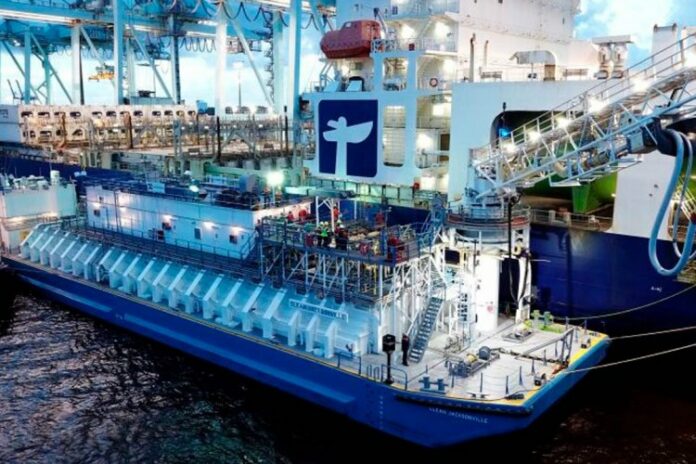
JAX LNG loaded the RLNG/LNG blend into the Clean Jacksonville bunker barge to fuel the Isla Bella. The Isla Bella is the world’s first LNG-powered container ship and was put into service by TOTE Maritime Puerto Rico in 2015. Element Markets supplied the renewable natural gas (RNG) used to produce the RLNG via renewable thermal certificates (RTCs). Using RLNG to fuel marine vessels is a readily available pathway to net-zero emissions by 2050. RLNG’s emissions profile as a maritime fuel is superior even to that of LNG, which already reduces greenhouse gas emissions by more than 25% over ultra-low sulfur diesel.

Decarbonization of the transport sector has greatly accelerated through the use of regulatory incentives such as the alternative fuel tax credit, which encourages companies to adjust operations and make investments in assets that reduce carbon intensity.

Produced from the decomposition of organic waste, RNG is compatible with existing natural gas infrastructure, providing a practical and replicable source of energy that mitigates and repurposes carbon emissions. For this bunkering event, RTCs were matched to the physical LNG loaded into the Clean Jacksonville to create the RLNG/LNG blended product.

JAX LNG is the long-term supplier to the two LNG-fueled container vessels—the Isla Bella and the Perla del Caribe—that TOTE Maritime Puerto Rico utilizes to reliably transport goods between Jacksonville and Puerto Rico.

Mike Noone, President of TOTE Maritime Puerto Rico, said:

“RNG is a clean, drop-in fuel source that can be readily deployed for use today, since it needs no new equipment to capture or transport it.”

Angela Schwarz, Co-President and CEO of Element Markets, said:

“RNG offers highly flexible pathways to reducing transportation emissions. We are glad to be part of these forward-thinking initiatives to decarbonize large-scale logistics operations.”

Marlink launches application partner programme

0

Marlink has launched its new Application Partner Programme, designed to support rapid digitalisation in the maritime industry by providing direct digital enablement benefits to ship operators and application providers.

With over 600 ships currently connected and serviced under the new programme, vessel operators are already enjoying operational cost savings while leading application service providers are enlarging their scope and benefit from greater flexibility in provision of digital services.

Marlink’s Application Partner Programme creates partnerships with carefully-selected application partners in various key areas of ship operations and management to develop applications and solutions that are compatible with Marlink’s smart hybrid network portfolio in order to innovate and provide tangible value to maritime customers and end-users all over the world.

By providing access to technical platforms and resources (e.g., API toolkits and service monitoring dashboards), Marlink integrates application providers’ software and solutions into a standardised ICT framework. This reduces the time and effort required to deploy applications or integrate new solutions. It enables maritime customers to update and host content and software remotely and eliminates unnecessary manual workflows while reducing cyber security risks. The programme also allows improved quality and accuracy of solutions from partners using Marlink’s smart hybrid network.

The programme is being further developed to connect IT and IoT/OT environments for vendors and ship operators alike, providing a straightforward method of delivering critical services without requiring integration with proprietary or locked-down systems, as well as fuelling analytics solutions thanks to the ability to collect and process increased volumes of data from a diversity of assets on board.

Nicolas Furgé, President, Digital, Marlink, said:

“The Application Partner Programme creates an ecosystem of opportunities that will bring benefits to shipowners and vendors alike, since owners will enjoy faster access to the data and applications they need for more sustainable, efficient and secure voyages. For vendors the program means a direct channel to the vessel with enhanced delivery of the products and services which their customers have selected.”

Samskip acquires Sea Connect UAB in strategic Baltic Sea investment

0

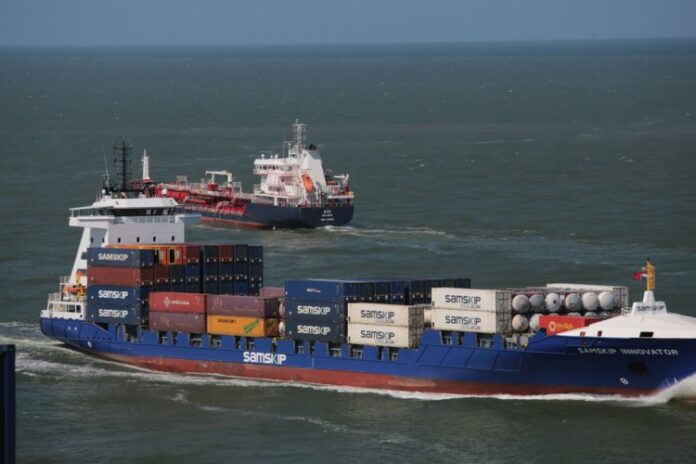
The Klaipeda-based shipping company, which will be renamed Samskip Sea Connect, offers shortsea services connecting Russia, Lithuania, Denmark, Germany and the Netherlands.

Sea Connect operates three 1A Ice Class container vessels calling twice a week at St. Petersburg and Rotterdam, weekly at Hamburg and at Aarhus sub inducement.    

Kari-Pekka Laaksonen, Chief Executive Officer, Samskip, said:

“This acquisition strengthens our position in Russia, in the Netherlands and across a range of key Baltic ports in between. It enhances services for Samskip’s shortsea customers focusing on growth opportunities in Russia and adds opportunities for importers and exporters within the region to secure cost-efficient and sustainable multimodal connections farther afield.”

Laaksonen added:

“Sea Connect has emerged as an exceptionally lean, robust operation offering reliability in quay-to-quay and door-to-door services.” 

Its acquisition consolidates Samskip’s commitments to the Baltic region, following its acquisition of Norlines in 2017 and the founding of a separate Finnish entity earlier this year.

Both Sea Connect Managing Director, Viacheslav Puzemskij and SCS-Russia Managing Director, Anton Larkin remain to play full roles within the new organization, working with Johan van der Pijl, Samskip Regional Director Baltics and Russia.

Viacheslav Puzemskij said:

“This is a win-win for our customers which brings together Sea Connect’s route-specific focus with the opportunities created by Samskip’s extensive multimodal network and values. Integrating our company with Samskip aligns with the strategic goal we set ourselves in forming Sea Connect to evolve as a trusted partner and grow to serve the full range of customer needs in the Baltic and Russian markets. We assure our present and future clients that a customer-orientated culture will remain in the company, as our most important value.” 

Laaksonen anticipates particular growth in unitized volumes connecting Russia and the Baltic states through Rotterdam by rail, barges, vessels all over the Europe, and also greater deployment of Samskip’s expert refrigerated cargo services in St Petersburg. 

He added:

“Russian exporters and importers are likely to be attracted by new possibilities to penetrate markets to the west and south using Samskip’s network of shortsea, rail, inland barge and road services.”

Q88 launches new data platform for shipowners

0

Q88PRO is a platform that provides shipowners a faster, simpler, and more complete view of their fleet and the global tanker supply. Data is one of the most valuable assets a business owns, and rapid access to the most out up-to-date information is the key to better decision making. 

Q88PRO helps to upload and access the fleet data and positions and easily compare them to the competitive environment. This system integrates data sources, like global fixtures, and has insightful statistics so you can make better decisions. Moreover, it uses advanced analytics to track supply trends over time by analyzing data based on geographic criteria combined with vessel-specific data to deliver relevant, timely market insights.

Fritz Heidenreich said:

“From the beginning, our focus was to create tools to make commercially operating vessels more efficient and profitable. I am very excited about this announcement as it continues that call to action that we are so focused on here at Q88.”

Shipowners can capitalize on the open position predictive modeling, last cargo’s view, TCE calculator and more, to anticipate conditions and better plan voyages. Q88’s Advanced API allows integration with any existing software that results in seamless collaboration with co-workers regardless of location.

Don Black, chief commercial officer of Q88, said:

“Q88PRO is another step forward in our journey to create tools that help turn data into meaningful information. Shipowners and commercial operators have stated their interest in obtaining timely information that will make them more competitive and we are confident that Q88PRO achieves this”.

MSC invests in new efficiency solution to reduce emissions from fleet

0

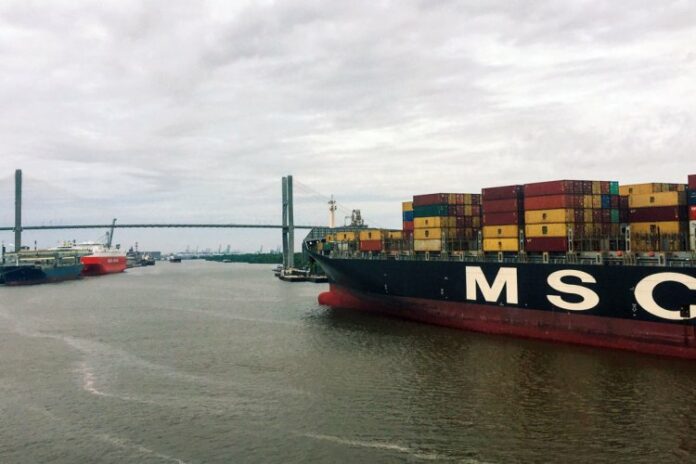
The technology behind this air lubrication system allows the company to achieve significant savings in fuel consumption and CO2 emissions by helping the ship move more smoothly through the water.

The Silverstream System creates a “blanket” of air bubbles across the surface of the vessel’s hull, reducing resistance created by the hull as it glides through the sea. In addition to energy and emissions savings, this air lubrication system also helps minimise noise, vibration and fouling.

Giuseppe Gargiulo, Head of Newbuildings at MSC’s ship management company in Sorrento, Italy, said:

“As part of our significant efforts to further improve our environmental performance, we are continuously on the look-out for new innovative solutions that could help us achieve efficiency gains. Air lubrication technology is one of the proven technologies that can help ships to achieve fuel savings and reduce energy losses. With the right hull design, the substantial reduction in carbon emissions that the Silverstream System can offer perfectly matches our ambition to fit our fleet with the latest technologies available helping us move closer to a zero-carbon future.”

According to Silverstream, a significant reduction of 1.6 million tonnes in carbon emissions could be achieved over the vessels’ lifecycle as a direct result of installing the system onboard. In addition, MSC could see an estimated fuel saving cost of over EUR 257 million over the same period of time.

Bureau Veritas issues novel design approval for ‘Panda 93P’ VLGC

0

The ‘Panda 93P’ VLGC design has been developed by Jiangnan Shipyard, a leading Chinese gas carrier builder in the CSSC Group (China State Shipbuilding Corporation). 

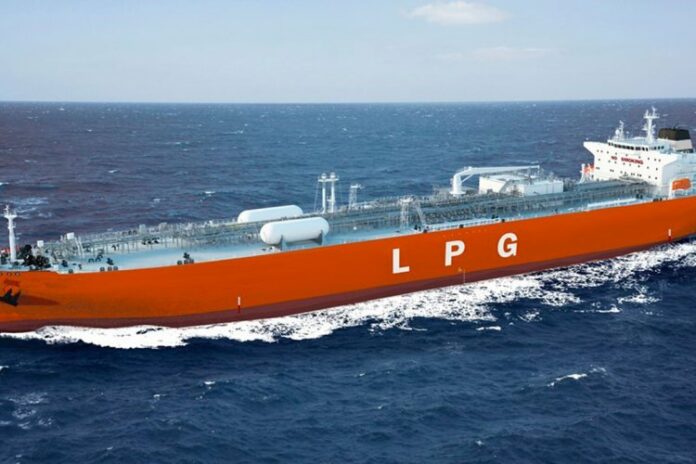
Sinogas, the Singapore-based gas shipowner has placed a firm order for two of the 93,000 cubic-metre (cbm) VLGCs, with options for three more vessels. On delivery, these ships will be the largest VLGCs in the world and they will be powered by liquefied petroleum gas. The delivery of these gas carriers, principally dedicated to the carriage of LPG, is scheduled for the first half of 2023 and will mark a further technological leap for Jiangnan in its development of new gas carrier concepts in long-term collaboration with Bureau Veritas.

Jiangnan Shipyard has now completed a significant number of projects in cooperation with BV during the last two decades – and most notably for gas carriers. The Sinogas order is a significant milestone for both shipyard and class society on the journey to a decarbonized industry. Once in operation, the new design will reduce CO2 emissions by approximately 32% less in comparison with the previous generation of 84,000 cbm VLGCs powered by low-sulfur fuel oil. This dramatic reduction reflects the highly optimized design and economies of scale, as well as the use of LPG as fuel.

The design is an evolution of Jiangnan’s “Panda” Series of VLGCs with optimized hull-form to allow increased cargo capacity without significant increases in fuel consumption. The design incorporates two deck-mounted LPG fuel tanks, enabling LPG-fuelled operations when carrying non-LPG cargo.

A scheduled review of IMO policy measures could result in more stringent emissions targets, says Jiangnan Shipyard’s Hu Keyi, Chief of Corporate Technology. He believes gas as fuel will be a reliable pathway to bridge the emission gap:

“Furthermore, Jiangnan aims to be on the cutting-edge of technological development in this field by pushing for “initiative green” solutions, as opposed to “passive green” based on existing technology.” 

Hu further explained that the “Panda 93P” builds on Jiangnan’s tradition of “Innovation with Confidence” in the design of gas carriers at the Jiangnan Institute of Technology (JIT), supported by engineering and design expertise from classification societies, like Bureau Veritas.

Hu said:

“Through a revolutionary structural configuration, Jiangnan has been able to enhance cargo capacity within traditional “Houston Ship Channel” dimensions without significantly increasing fuel consumption.”

This achievement has been realized by the Jiangnan team’s use of computational fluid dynamics (CFD) for hull line optimization. Jiangnan also adopted smart shipbuilding techniques with the use of digital technology, 3D digital mock-ups, 3D model submission and production planning, erection simulation and lifecycle management.