-14.5 C
New York
Home Blog Page 540

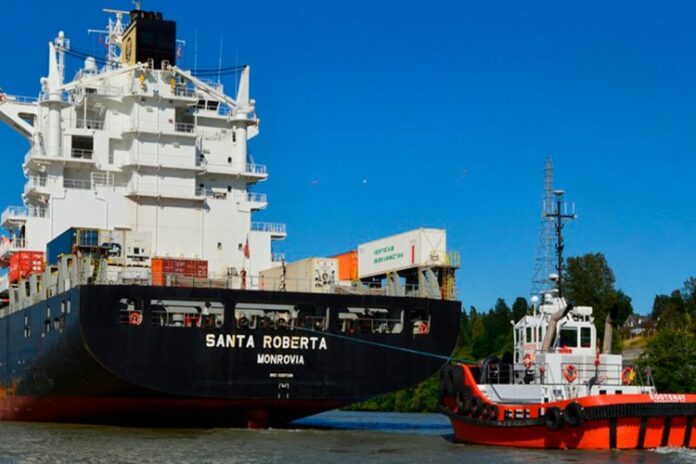
Ocean Group acquires Samson Tugboats in the Vancouver area

0

In March 2020, Ocean Group announced that it had been awarded several major contracts in British Columbia, including one for harbour towing services in the Port of Vancouver, with three state-of-the-art tugs.

After more than a year of operations, the company now has four tugs on site to serve its clients. With the acquisition of Samson Tugboats and its two tugs, Ocean Group will now have six harbour tugs in the region, additionally being able to count on the business relationships previously established by the management of Samson Tugboats.

Jacques Tanguay, President and Chief Executive Officer of Ocean Group, said:

“We share Canadian values of respect and integrity with Samson Tugboats and we intend to focus on the continuity of our activities, in a sustainable development perspective. The two harbour tugs will become part of Ocean Group’s fleet and will meet the needs of our clientele in the Vancouver area. This acquisition is in line with our desire to have high quality standards for our clients.”

Inmarsat makes Fleet LTE offshore agreement with Solstad Offshore

0

Inmarsat has secured a contract for its new Fleet LTE service, covering the connectivity needs of several Solstad Offshore North Sea vessels. 

Offshore vessel operators commonly buy LTE and VSAT connectivity separately, using LTE when within range of shore, rigs or wind farm networks then relying on crew to switch manually to VSAT beyond 4G coverage limits. Costs can be hard to control where services are billed separately, while manual switchovers can mean suboptimal signals or service interruptions. 

Developed for flexibility, performance and affordability, Inmarsat Fleet LTE delivers hybrid connectivity via 4G cellular connectivity provided by Tampnet plus satellite coverage on Inmarsat’s Fleet Xpress Ka-band and FleetBroadband L-band services, switching between networks on a fully automated basis.

Christian Nesheim, ICT Director, Solstad Offshore ASA, says:

“The Fleet LTE combination of bandwidth, reasonable pricing and guaranteed connectivity makes sense in today’s offshore market, which is simultaneously cost driven and hungry to exploit the opportunities created by digitalisation and real time data analytics.” 

Algorithms within the Fleet LTE router switch seamlessly between LTE and VSAT so that service integrity, high speed data transfer and low latency are always optimised. The ‘three-in-one’ service provides a one stop shop for 4G, Ka-band and L-band without the complication of dual billing or the risk of disconnection. 

Following successful trials on board three Solstad vessels over the first three months of 2021, Fleet LTE will be commissioned on the remaining relevant vessels. With a fleet of around 100 vessels, Solstad Offshore is one of the largest offshore support vessel owners in the world.

Eric Griffin, VP of Offshore and Fishing, Inmarsat Maritime, says:

“Inmarsat has supported Solstad Offshore’s requirement for connectivity over many years, which makes its commitment to our new Fleet LTE service package especially welcome. We look forward to working with Solstad as it takes advantage of affordable high speed bandwidth and low latency to support its unfolding digital strategy for offshore operations within the North Sea.”

BW Offshore selects VIKING solutions for large FPSO project

0

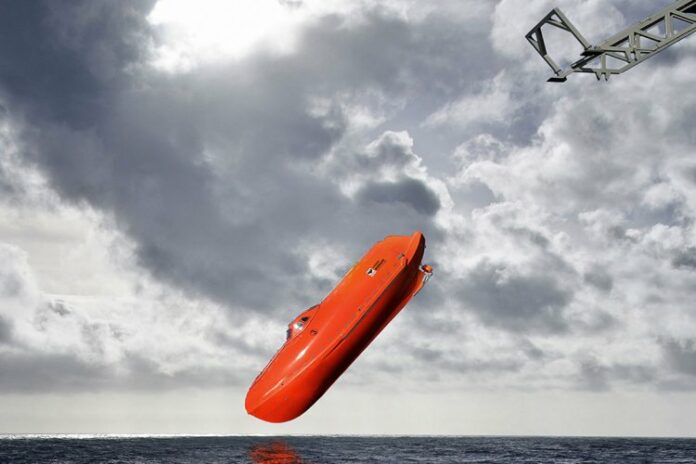
FPSO owner and operator BW Offshore has selected VIKING Norsafe Free-fall Lifeboats, Daughter Craft and Davits for a large FPSO project which will operate off northern Australia.

Primary means of evacuation will be three VIKING Norsafe GES-50 Mk. III Free-fall Lifeboats – each able to carry 70 people – with secondary launch and recovery achieved by corresponding HD-50 Davits.
 
Also part of the package is a VIKING Norsafe Munin-1000 Daughter Craft with capacity for 21 persons and a PLR-12005 Davit for launch and recovery. With a SOLAS crew of three persons, the Munin-1000 boat can recover 18 survivors from the water and is fitted with twin 300hp engines and waterjets – giving the power and maneuverability to fulfil its Search and Rescue role.
 
The latest order continues the long-established relationship between VIKING and BW Offshore, spanning multiple projects, and seals a deal that involved nearly two years of discussion of safety requirements. Fully compliant with SOLAS and DNVGL-ST-E406, the free-fall system is verified by ALARP process (as low as reasonably practicable) for operation in Australian waters.  
 
Joe Dawes, Senior Sales Manager, VIKING Life-Saving Equipment, said:

“BW Offshore is a long-standing client which demands best in class safety solutions. The FPSO will be a state-of-the-art facility and there has been great effort by both parties to identify the equipment specification.”

VIKING has delivered well over a hundred units of the VIKING Norsafe GES-50 lifeboat. The free-fall lifeboat has been installed at 22 locations in Australian waters in recent years, effectively shutting out the competition. While original design attributes play a big part in its ongoing success, Dawes explained that continual product development remains pivotal. This specific free-fall boat installation will feature a shortened launch ramp which saves space and weight.

Dawes said:

“The GES-50 is the most widely delivered craft in the market, built to the DNVGL-ST-E406 Performance Standard, which defines site- and host-specific installation of free-fall lifeboats and their launching appliances. Proven technology and willingness to adapt to customer needs are the basis for that record.”

VIKING’s capabilities in information exchange during the tender process had also helped in securing the order, Dawes said:

“I think the investments VIKING makes in product presentation help us operate on an equal footing with our corporate clients and meet their expectations on specifications, management and support of the safety equipment they will rely on in critical  situations.”

VIKING will supply pre-tested boats and fully assembled davits for plug and play installation to reduce site activities subsequent to delivery. After the FPSO goes onstream, the VIKING team in Perth, Australia will provide complete back-up and maintenance support for the boats and davits.

Opinion: Decarbonisation of fleets is crucial, and digitalisation is the way to achieve it

0

– The decarbonisation target that the IMO has set is ambitious for many reasons. How, do you think, will the sector realistically achieve these goals by 2050?

– I think there is only one honest answer that anyone can give about this, which is that we simply do not know. What’s helpful at the moment, though, is to explore the methods currently available to shipping companies which will allow them to meet these targets. 

Broadly speaking, there are three approaches to consider here. One of them is alternative fuels, which, of course, are immensely expensive at the moment. The feasibility of the supply chain is still uncertain, and a series of other challenges still exists as we work to determine which fuel is most viable.

There is also the LNG route to consider. In theory, this is a worthwhile option. However, with the recent IPCC report pointing to concerns over methane emissions resulting from LNG’s production and use, there are questions as to whether this approach could even be considered a facilitator of decarbonisation. Furthermore, some major shipping corporations such as Maersk and IKEA have said that LNG may not be the route to decarbonisation. In fact, it was recently described as “borderline greenwashing” in a recent Lloyd’s List podcast. These are the two approaches that are most often discussed – alternative fuels and LNG.
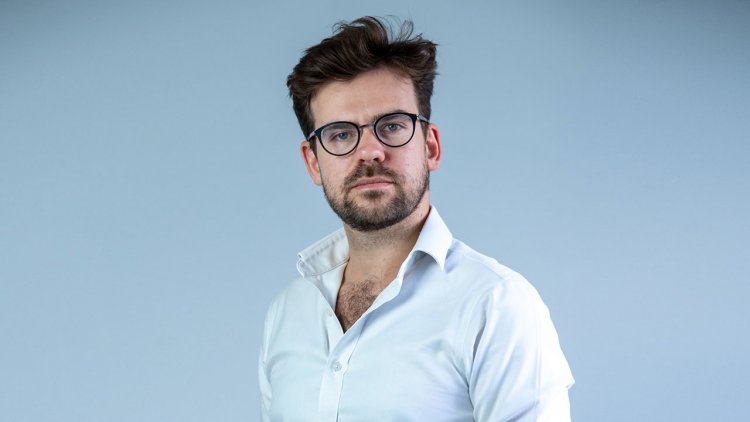
DeepSea’s Commercial Director, Angus Whiston

Another key approach – and one that is complementary to those I’ve mentioned – is improving vessel energy efficiency. This is an immediate focus of the IMO and critical to securing emissions reductions from available technological and operational solutions. While shipping companies consider all potential long term approaches to decarbonisation, they should invest in energy efficiency right now. This approach is not only an incredibly low risk option, but it is also one that will never become outdated or outpaced by potential new approaches to decarbonisation. Energy efficiency already is – and will continue to be – an essential initiative to complement existing and new decarbonisation strategies. Indeed, the long term returns on investment of energy efficiency technologies are guaranteed, and they can be quite substantial (even a 10-15 per cent saving on OPEX).

– To achieve such a goal, we need to clearly understand where we are now. For example, we need to have reliable information about the amount of emissions ships are emitting at the moment. In your opinion, how accurate is this measured in the maritime industry at the moment?

– From our perspective, shipping companies can’t improve something that they can’t accurately measure. That’s why measuring is such an important issue. A majority of the shipping industry is still measuring or reporting fuel consumption through noon reports – with all of the errors that come with this method of reporting: from manual errors, to overall reporting errors – both unintentional or otherwise. How do you solve this problem?

We believe that improving methods of measurement is the first step in improving accuracy in the use of noon reports. We’ve launched a product called Cassandra Light, which uses AI to build performance models for each individual vessel. We can use this information to validate reported fuel consumption. Improving the accuracy of measurement is our main objective whenever taking on a new company as a client – and AI is the key to achieving that.

Another interesting question is what to do with that accurate information once obtained. DeepSea’s approach is to build models, so that we can understand the behaviour of vessels under a variety of conditions. It is only when you understand the vessels, that you can optimise them. At DeepSea, we believe that a lack of information is the biggest polluter.
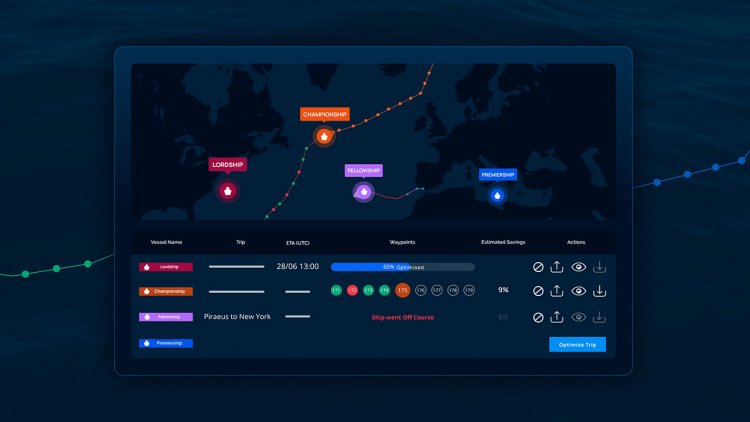
– Today, digital technologies are one of the most progressive methods of decarbonisation. But on the other hand, the use of AI technologies has been directly associated with new risks. For example, there has been some concern around how this technology is a potential cybersecurity threat. How justified are such concerns?

– There are two key elements to this. The biggest problem we’ve faced with our work within the artificial intelligence space has been a lack of data maturity. The digitalisation of a company can be a slow process without adequate investment in its transformation. Engineers, who are often our first point of contact when approaching potential clients, quite rightly question everything they come across. They are taught to work out, in very high pressure situations, what’s going right, and how to maintain success. Conversely, they are also taught to ascertain what’s going wrong, and how to fix it. With artificial intelligence still quite a new concept and technology, it’s no surprise that these professionals are somewhat skeptical.

An AI approach is not a plug-and-play solution. It takes time to gain the data and insight required to implement new, more efficient systems and processes. What we try to do is build trust by interpreting our findings and presenting them to clients in a way that communicates outcomes of our AI products in the clearest possible way. For example, we’d generate a vessel performance curve with the insight gained through AI. 

AI may seem mysterious, but we focus on proving that it isn’t. By being completely transparent, and providing additional educational support to our customers’ teams, we aim to prove the value of our services and increase trust in the technology. 

When it comes to cybersecurity there is nothing about our approach – or AI in general – that puts our customers at any additional risk. When handling the data that our clients have given us access to, there are a number of processes we follow, and strict measures we’ve put in place, to ensure its security. DeepSea Technologies is ISO compliant, which involves the anonymisation of all data where possible, to ensure there is no connection between the insights we gather, and the clients that have paid for them. Vessel data we collect is also handled through a read-only interface, ensuring that nothing sensitive can be copied and distributed elsewhere.
Overall, if you take the right approach it’s a very low risk in terms of cybersecurity. In modern times, data is an essential part of vessel operations – needed not only for performance optimisation and risk analysis, but also regulatory reasons, too. It’s no longer avoidable. If you take the right approach, AI carries a very low cybersecurity risk. My advice to business owners is to take this new digital era seriously. Big data and artificial intelligence aren’t going anywhere, and are quickly becoming essential to the success of companies across the globe.

– Another difficult issue related to the launch of new technologies is financial costs. If we compare the cost of digitalisation with other methods of decarbonisation, which method comes out on top?

– Optimisation through digitalization is something that everybody should be doing right now. The alternatives are not alternatives – they are additions, complementary to efforts already in action. Importantly this approach to decarbonisation – energy efficiency/digitalisation/optimisation approach – is low hanging fruit. It’s very low cost, comparatively, and requires almost no CapEx investment. The results of this approach can be dramatic, and many expensive retrofits pail in comparison. 

Committing to a digitalised future is also very low-risk. These changes need to, and will, happen – and will be beneficial across the board. For example, if you compare digitalisation to the LNG approach, there are many more questions in terms of longevity. “How long are these assets going to be valuable for?”, “How will the supply chain work?”, etc. Digitalisation is the closest to a sure thing that we’ve got in the current decarbonisation landscape – it’s a no brainer to me. 

– What other barriers and challenges do you see for adoption of this type of technology?

– DeepSea is pleased to be in a position where technology, for the first time, is no longer really a barrier. We’ve just closed our latest funding round with Nabtesco as the lead investor. This involved a rigorous due diligence process, whereby our technology was tried and tested, and our claims validated. We’re happy to report that findings were conclusive, and our partners were very impressed. Having passed those tests, I can proudly declare that in terms of this technology and DeepSea’s objectives, technology, at least, is no longer a barrier.

That’s not to say that there are no barriers at all. At DeepSea, I’d say that our greatest barrier is securing buy-in from shipping companies – our clients. For many years, these companies have been fed false narratives about what this technology can do, which has tarnished its reputation. Despite now having provable returns, companies can still be reluctant to commit to these kinds of projects. What’s encouraging, though, is that once we’ve worked with and proven ourselves to a client, and they have experienced the value our services can offer, this apprehension is no longer a factor.  

A key message I’d like to communicate to members of the industry, of any size or kind, is that vessel optimisation is not a transaction – it’s a service, enhanced by the relationship you have with your supplier. Here at DeepSea, we aim to support these companies in order to guide them, individually, but also the industry as a whole towards a greener and more transparent future. 
– The use of weather forecasts could be classified as a rather unconventional method of decarbonisation. Please describe in more detail (using specific examples) how it works.

– This question is interesting, because I would say that the use of weather forecasting is pretty much the oldest method of optimisation in shipping. There was a time when you’d have someone on the front of the boat or oracle, notifying crew of an approaching storm. The captain would then move around the storm – it’s as old as shipping itself. This logic can be applied just as effectively today – if you avoid the storm you save a huge amount of fuel and manpower. 

In today’s landscape, where the IMO’s emissions reduction targets are set at one per cent a year for the next couple of years, this is an indication of just how difficult it is to bring about these changes within the shipping industry. I think we can be much smarter, and focus on the effect that smaller changes can have on our greater goals.

Utilising technology of today, tailoring the route and the speed to the specific performance profile of vessel is new. The weather forecast is obviously a key part of that.

For example, a vessel that is quite highly fouled will be more affected by currents, both positively and negatively. As a result, taking these small differences in every vessel into account is critical to achieving those savings.

Through the application of artificial intelligence, we build an understanding of each individual vessel, which is then used to generate our performance models. By implementing changes that these performance models highlight as necessary, massive savings can be unlocked – up to 8% in fuel savings according to our recent case studies. These savings result from a variety of measures – one of which being performance routing.
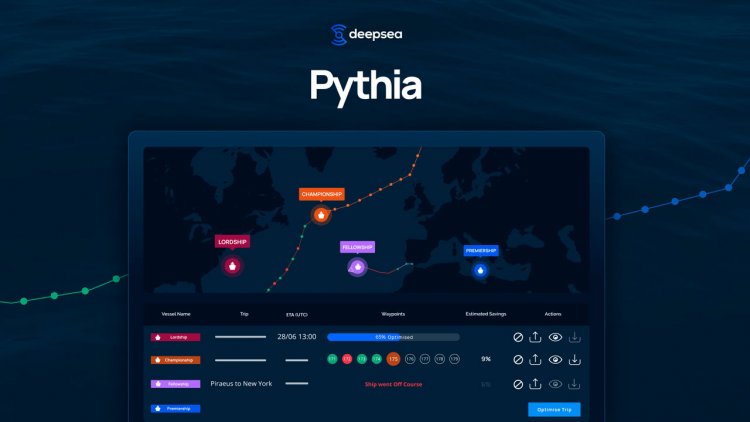
– Your products, Cassandra and Pythia, have been installed on a number of ships. Based on the insights that you’ve been able to extract over time, what are the most common issues that reduce the efficiency of ships?

– The key point here is to take an individual approach that focuses on understanding each vessel. Once we understand the vessel,  the solutions come. They are not necessarily complicated solutions, they can be very simple, but they are specific to every vessel. 

A good example is a ducted propeller system. It feels like fitting it would be great, but in fact, the performance of a vessel with a ducted propeller can be worse at certain speed rates under certain conditions. As a result, you have to understand the vessel to understand the impact of the retrofit. That is the key to the actual optimization that we are looking for.

by Iryna Umanets

Seabourn names second new ultra-luxury expedition ship “Seabourn Pursuit”

0

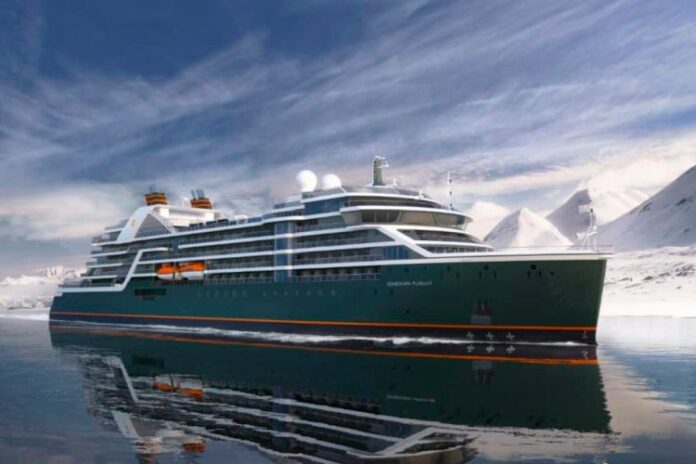
Seabourn has announced that it will name its second new ultra-luxury purpose-built expedition ship Seabourn Pursuit, which is reflective of the passion exhibited by expedition travelers to seek out and explore natural wonders and destinations through immersive recreational activities around the world.

Construction for Seabourn Pursuit began in fall 2020 during a ceremony in San Giorgo di Nogare, Italy, and the build process is well underway. The ship is scheduled for delivery in February 2023, with its sister ship, Seabourn Venture, slated for delivery in March 2022.

Josh Leibowitz, president of Seabourn, said:

“The name Seabourn Pursuit is truly fitting for a ship envisioned and designed to take expedition travelers into those places where they can see vast landscapes, diverse wildlife and remote regions of the world that may have been on their bucket list for years. Seabourn Pursuit will navigate the most unexplored parts of the world in the highest level of comfort, safety and environmental protection available for the luxury traveler.”

After delivery, Seabourn Pursuit heads north for its first season of exploration, with an inaugural “Fire and Ice” voyage. 

Both Seabourn Pursuit and sister ship Seabourn Venture are designed and built for diverse environments to PC6 Polar Class standards and include modern hardware and technology that will extend the ships’ global deployment and capabilities. Each will carry two custom-built submarines, 24 Zodiacs, kayaks, and a 26-person expert expedition team whose role is to engage guests throughout each voyage.

Sweden’s largest port solar cell system inaugurated at Stockholm Norvik Port

0

This is part of the continued investment in renewable energy entirely in line with Ports of Stockholm’s long-term environmental goals.

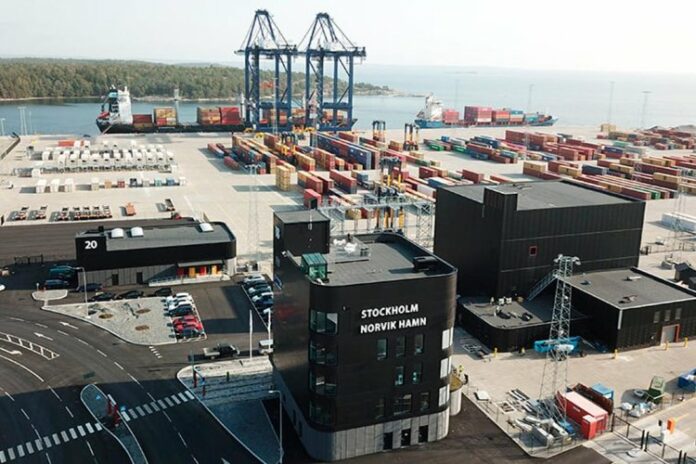
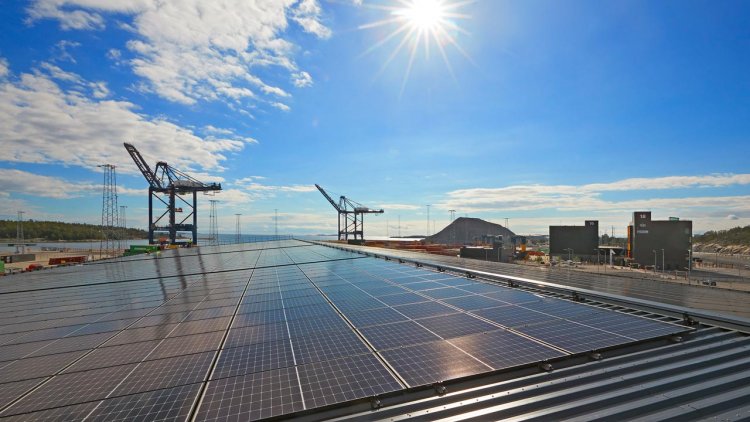
Ports of Stockholm’s new solar cell system at Stockholm Norvik Port was inaugurated on 22nd September. The solar cell system facility is the company’s fifth and measures a huge 3600 m2. It can supply electricity with a maximum power output of 605 kW and an annual production of 560 MWh, the equivalent of the electricity requirements of 25 average-sized detached houses.

Fredrik Lindstål, Chair of the Board of Ports of Stockholm, says:

“Ports of Stockholm is continuing to invest in renewable energy in accordance with our long-term environment and climate action plan. Stockholm Norvik Port has now been equipped with a roof-installed solar cell system larger than that of any other Swedish port.”

The solar cell system is located on the roof of the largest building at the port. The electricity will be used at the port and to run port activities.

Idola Solkraft has constructed the solar cell system, which is Ports of Stockholm’s fifth solar cell system facility. The first was taken into operation at Frihamnen Port in 2013. The total maximum power output of the combined system facilities is 995 MWh.

Stockholm Norvik Port was completed in 2020 and has been designed to have the least possible environmental impact. All of the buildings are constructed according to the environmental standard Miljöbyggnad Silver and are enabled for rooftop solar cell system installation. The entire port is powered by certified green electricity and all quay-berths are enabled for vessel shore power connection.

Tallink Grupp secures another short-term charter deal for vessel Silja Europa

0

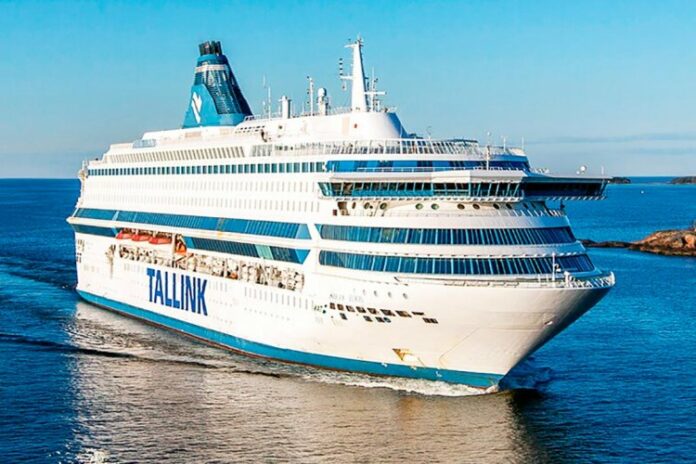
The vessel will provide accommodation during the 26th United Nations Climate Change Conference of the Parties (COP26), organised by the United Kingdom in partnership with Italy and taking place in Glasgow, Scotland on 31 October – 12 November 2021.

During the charter the vessel will be berthed in Scotland between 21 October-14 November and will provide accommodation and catering services to approximately 1500 charterer’s personnel and guests. The vessel has been chartered via specialist company Landry & Kling Global Cruise Services with full technical and service crew from Tallink Grupp for the duration of the charter.

Commenting on the charter agreement, Tallink Grupp’s CEO Paavo Nõgene said: 

„Our team helped the G7 Cornwall summit organising team achieve a great outcome in June this year, two of our vessels and technical crew are performing well in the Mediterranean at present and I am sure we will rise to the challenge also at COP26 in Scotland.

„The charter agreements offer a boost to our business during these continuing challenging times when passenger numbers are still not increasing fast enough and we will continue to work to identify other short-term and long-term opportunities for our vessels.“

The majority of Silja Europa departures during the charter period have been cancelled and Tallink Silja will contact all customers with existing bookings for the dates in question to offer alternative travel options and solutions. Silja Europa will be replaced on the route during the charter period on 29-31 October and 11-13 November by the group’s vessel Victoria I. Silja Europa will return to Tallinn-Helsinki route and its normal schedule on 18 November 2021.

LR grows fleet optimisation offering with GreenSteam acquisition

0

LR has acquired GreenSteam, a marine data intelligence company specialising in improving vessel efficiency through machine learning.  

The acquisition will be integrated and managed by i4 Insight, a subsidiary of Lloyd’s Register. i4 Insight, part of LR’s Maritime Performance Services business, is a digital platform that allows shipowners, operators and charterers to easily access insights on vessel performance and fuel consumption across their fleets. LR is expanding its portfolio of risk, technical advisory, commercial efficiency, vessel performance and voyage optimisation services to unlock and drive growth for clients, part of its strategy to become the go-to partner and advisor to the maritime industry and broader ocean economy, following the June 2021 divestment of its Business Assurance and Inspection Services division.   

The acquisition will see GreenSteam’s vast array of machine learning services, from fouling analysis and trim planning, to their dynamic trim and speed optimisers, fully integrated with the i4 Insight platform. This move expands on LR’s vision of solving complex problems with integrated software solutions further driving reductions in greenhouse gas emissions and operating costs. 

Nick Brown, LR CEO, said:

“We want to help clients drive growth and solve complex problems through human expertise, integrated software solutions and the right insights from data. When certainty is scarce, a trusted advisor is vital, which is why Lloyd’s Register is expanding its portfolio of fleet management and fleet optimisation services. Our i4 Insight platform, now enhanced with the acquisition of GreenSteam, will enable our customers to optimise their operational efficiency and vessel performance, making their businesses more sustainable in an increasingly competitive world.” 

Shaun Gray, Executive Chairman of GreenSteam, said:

“Our experience with i4 Insight as one of its inaugural Alliance Partners is positive proof that this acquisition is the right thing for our company. Lloyd’s Register is an ambitious organisation with a long history in shipping and outstanding relationships with its customers. This, combined with i4 Insight’s innovative spirit to give the shipping industry the tools to make truly informed decisions about fuel consumption, is a win-win. Together we will support shipowners in optimising vessel operations while also delivering on emissions targets.” 

Joel Meltzner, Fleet Optimisation Director and CEO of i4 Insight, said:

“GreenSteam is a leader in vessel-based machine learning for hull and improved vessel performance and as a current i4 Insight alliance partner, it has already enhanced the digital capabilities of the platform. GreenSteam was one of the first companies to apply machine learning to vessel performance data and its system can analyse data from thousands of vessels, continually learning, adapting, and updating what it knows about each vessel. The acquisition of GreenSteam supports our aim to provide our customers with a single source of information to solve key operational challenges and make significant operational cost savings.” 

NASA satellites show how clouds respond to Arctic sea ice change

0

Depending on the time of the year and the changing environment in which they form and exist, clouds can both act to warm and cool the surface below them.

For decades, scientists have assumed that losses in Arctic sea ice cover allow for the formation of more clouds near the ocean’s surface. Now, new NASA research shows that by releasing heat and moisture through a large hole in sea ice known as a polynya, the exposed ocean fuels the formation of more clouds that trap heat in the atmosphere and hinder the refreezing of new sea ice.

The findings come from a study over a section of northern Baffin Bay between Greenland and Canada known as the North Water Polynya. The research is among the first to probe the interactions between the polynya and clouds with active sensors on satellites, which allowed scientists to analyze clouds vertically at lower and higher levels in the atmosphere.

The approach allowed scientists to more accurately spot how cloud formation changed near the ocean’s surface over the polynya and the surrounding sea ice, explained Emily Monroe, an atmospheric scientist at NASA’s Langley Research Center in Hampton, Virginia, who led the study.

Monroe said:

“Instead of relying on model output and meteorological reanalysis to test our hypothesis, we are able to pull near-instantaneous satellite scan data from the area near the polynya. Since each scan is collected over a time scale on the order of about 10 seconds, it is more likely the polynya and nearby ice are experiencing the same large-scale weather conditions, so we can more accurately tease apart what effect the change from ice surface to water surface is having on the overlying clouds.”

Sea ice acts like a lid on a pot of boiling water, explained Linette Boisvert, a sea ice scientist at NASA’s Goddard Space Flight Center in Greenbelt, Maryland, who was part of the study. When the lid is removed, heat and steam escape into the air.

Boisvert said:

“We’re getting more heat and moisture from the ocean going into the atmosphere because the sea ice acts like a cap or a barrier between the relatively warm ocean surface and the cold and dry atmosphere above. This warming and moistening of the atmosphere slows down the vertical growth of the sea ice, meaning that it will not be as thick, so it’s more vulnerable to melt in the summer months.”

Like other polynyas in the Arctic and Antarctic, the North Water Polynya forms when specific wind patterns blow in a persistent direction and tear holes in the ice. These wind patterns only exist in the winter months, and the holes open and close repeatedly, alternately exposing and insulating the ocean.

The new insights come during a time when Arctic sea ice appears to have hit its annual minimum extent after waning during the warmer months in 2021. They underscore how sea ice influences a region that plays an integral role in regulating the pace of global warming, sea level rise, and other effects of human-caused climate change.

Sea ice does not raise global sea levels directly. Like ice cubes in a drink, melting sea ice does not directly increase the volume of water in the ocean. Still, a shrinking Arctic sea ice extent can expose relatively warm sea water to the region’s coastal ice sheets and glaciers, causing more melting that contributes freshwater to the ocean and does cause sea level rise.

The new research shows low clouds over the polynya emitted more energy or heat than clouds in adjacent areas covered by sea ice. Those low clouds contained more liquid water, too—nearly four times higher than clouds over nearby sea ice. The increased cloud cover and heat under the clouds persisted for about a week after each occasion the polynya refroze during the time span of the study.

Boisvert said:

“Just because the sea ice reforms and the polynya closes up, that doesn’t mean that conditions go back to normal right away. Even though the moisture sources are essentially gone, this effect of extra clouds and increased cloud radiative effect to the surface remains for a time after [the polynya freezes].”

The findings also suggest the response of the clouds to the polynya lengthened the time the hole remained open, said Patrick Taylor, a climate scientist at NASA Langley, who also was part of the study.

Taylor said:

“They can create a thicker blanket and increase the amount of heat emitted down to the surface. The emitted heat helps keep the surface of the North Water Polynya a little warmer and helps prolong the event itself.”

Large-scale meteorological processes often make studies of Arctic warming difficult. However, repeated openings in the sea ice in the same region create a natural laboratory to study the feedback between clouds and the alternation between sea ice and polynyas.

Taylor said:

“We can compare both sea ice and open water areas, and the clouds over those two surface types in close enough proximity, so that we don’t have to worry about large changes in atmospheric conditions that have confounded previous studies. If there’s not a cloud response to a polynya event where sea ice goes away over the course of a few days, you wouldn’t expect a response anywhere else. The opening of a polynya is a very strong, distinct forcing.”

The team is planning to take their research to the next level and test whether a similar cloud effect can be observed in other areas where sea ice and open ocean meet.

TFG orders two Konecranes Gottwald Mobile Harbor Cranes

0

Terminal Flavio Gioia S.p.A. (TFG) has ordered two eco-efficient Konecranes Gottwald Mobile Harbor Cranes for its terminal in Naples, bolstering its material handling capacity to keep up with demand.

The first order was placed in March 2021, and the option for a second was exercised in August, reflecting the need to quickly ramp up business. The first crane is already in operation and the second will start in early 2022.

TFG is the main terminal of Gruppo Bucci, specialists in international logistics based in Naples. The company provides manufacturers in Italy with import and export services including the management and handling of container shipments, and multimodal connections to and from local destinations.

Roberto Bucci, Chairman and Founder of Gruppo Bucci, says:

“The cranes we’ve ordered in 2021 are central to our long-term growth plan to expand and improve our logistics offering. We’ve had a strong partnership with Konecranes for nearly 20 years, and they’ve always shown us a humble, reliable and professional commitment that we value.”

Gino Gherri, Regional Sales Manager for Konecranes Port Solutions, says:

“TFG extended their order from one to two cranes very quickly, showing they trust our technology to realize their logistical ambitions. This trust comes from our long and successful history working together, and we look forward to taking that into 2022 and beyond.”