-14.5 C
New York
Home Blog Page 539

IMO and Singapore launch NextGEN portal for maritime decarbonisation

0

The NextGEN (where “GEN” stands for “Green and Efficient Navigation”) portal, an online collaborative global ecosystem of maritime transport decarbonisation initiatives, has been launched by the International Maritime Organization (IMO) and the Maritime and Port Authority of Singapore (MPA). 

NextGEN aims to encourage information-sharing, create critical networks and opportunities for collaboration, and facilitate capacity-building. By showcasing the universe of maritime decarbonisation projects on a single platform, the NextGEN portal will serve as a focal point and reference tool for both public and private stakeholders. 

The NextGEN portal was launched on 27 September during the IMO-United Nations Environment Programme (UNEP)-Norway Zero-and Low-Emission Innovation Forum. The three-day online global platform is aimed at championing innovation to accelerate the maritime sector’s transition to a zero or low-emission future. 

In 2018, the IMO adopted the Initial IMO Greenhouse (GHG) Strategy, which seeks to reduce GHG emissions from international shipping by at least 50% by 2050 compared to 2008. Recognising that the industry faces challenges reaching the ambitious decarbonisation targets with the current levels of technological development in low and zero-carbon fuels, NextGEN was conceptualised as an initiative to support the maritime sector’s push towards the “next generation” of low and zero-carbon fuels and technologies to meet the goals of the Initial Strategy.

To date, the NextGEN portal encompasses over 140 projects spanning over 500 partners, 13 fuel types, and a diversity of regions including Africa, Asia, the Caribbean, Latin America, the Middle East and the Pacific Islands. In particular, NextGEN spotlights global collaborative projects led by IMO and the Maritime Technology Cooperation Centres, which support maritime decarbonisation in Small Island Developing States and Least Developed Countries through technical assistance, technology transfer and capacity-building.

In addition, NextGEN is bringing stakeholders together to identify the gaps and opportunities for decarbonisation in the international shipping community. For example, Singapore and IMO had co-organised the NextGEN Inaugural Meeting during the Singapore Maritime Week 2021, which was attended by over seventy representatives from governments, industry, International Organisations and academia. 

Ms Quah Ley Hoon, Chief Executive, MPA, said:

“No one can tackle decarbonisation alone. It needs to be a global collective effort whereby we need to work together, across borders and sectors, to build capacity, share best practices and ensure a level playing field for all. By bringing ideas and stakeholders together, NextGEN builds on the key principle of inclusivity.”

Mr Kitack Lim, Secretary-General, IMO, said:

“The single biggest challenge we face is the battle against global warming and climate change. We need more collaborative action to speed up research into emission-cutting technology in the maritime sector and into zero- and low-carbon marine fuels. Above all, we need to make sure we leave no one behind.”

Maersk to divest its container manufacturer to CIMC

0

China International Marine Containers Ltd., a global leader in logistics and energy equipment, will acquire the A.P. Moller – Maersk owned Maersk Container Industry, a leading manufacturer of refrigerated containers. This finalizes Maersk’s strategic review of Maersk Container Industry announced at its Capital Markets Day in May 2021.

The container logistics company A.P. Moller – Maersk (Maersk) signed an agreement on Monday 27 September 2021 to sell its reefer manufacturer, Maersk Container Industry (MCI), to China International Marine Containers Ltd. (CIMC), headquartered in Shenzhen, China and listed on the Shenzhen Stock Exchange and Hong Kong Stock Exchange.

MCI will become part of a market leading company in the container equipment industry. CIMC will take over MCI’s entire organisation and assets which include the reefer factory in Qingdao, China, as well as its R&D and test engineering facilities in Tinglev, Denmark.

Henriette Hallberg Thygesen, CEO of Fleet & Strategic Brands in A.P. Moller – Maersk, said:

“We believe that we in CIMC have found a good long-term owner of MCI. The divestment of MCI is part of A.P. Moller – Maersk’s business transformation, where focus is on being an integrated container transport and logistics company creating customer value across the entire supply chain.”

Founded by Maersk in 1991, MCI has been a part of the company for more than 30 years. Over the years it has transformed into a business focusing entirely on manufacturing refrigerated containers and in 2020, the company delivered its most profitable result since its foundation.

Star Cool will remain a key part of the way Maersk supports its customers’ cold chain needs as Maersk will continue its cooperation with MCI in the future.

The value of the transaction is USD 987.3 million on a cash and debt free basis (Enterprise Value). The agreement for CIMC to acquire MCI was signed on September 27, 2021 and is subject to regulatory approvals. The transaction is expected to close in or before 2022. Until closing, CIMC and MCI remain two separate companies and continue to run their businesses as usual.

Submitting PDO for Frosk in the Alvheim area

0

Aker BP (operator) and licence partners Vår Energi AS and Lundin Energy Norway AS have submitted a plan for development and operation (PDO) for the Frosk field to the Ministry of Petroleum and Energy (MPE). The development will contribute to production and reduce unit costs in the Alvheim area by utilizing existing infrastructure.

Aker BP CEO, Karl Johnny Hersvik, says:

“The Frosk development underpins the prolonged Alvheim success story that both we and our partners can be proud of. The Alvheim area is among the most cost-efficient developments on the Norwegian continental shelf, and the resource base has multiplied since start-up. This is the result of targeted exploration and reservoir development, technological innovation and, not least, close collaboration with the joint venture partners and suppliers.”

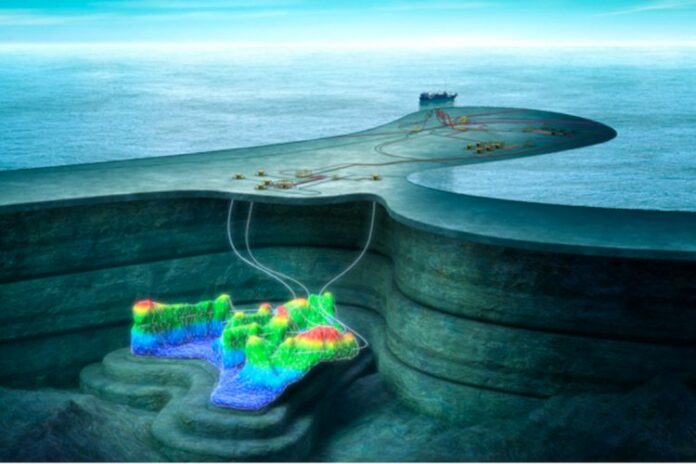
The Frosk field, located approximately 25 km southwest of the Alvheim FPSO in the North Sea, will be tied back to the FPSO via the existing Bøyla and Alvheim subsea infrastructure. Total investments are projected at around NOK 2 billion (appr. USD 230 million). Production is scheduled to start in the first quarter of 2023. Recoverable reserves in Frosk are estimated at around 10 million barrels of oil equivalents (mmboe).

The Frosk discovery, located in an injectite sandstone reservoir, was made in 2018. Frosk Test Producer commenced in 2019 with the purpose of collecting data to reduce uncertainty.

Test production has provided valuable reservoir data that has been used to optimize the number of wells, drainage strategy and surface facility requirements for the Frosk Field.

The concept is a subsea development connected to the Bøyla subsea infrastructure. Two new production wells are to be drilled to effectively drain the remaining areas of the Frosk field.The project has been matured over the two years since test production commenced, and the proposed solution enables a fast-track development with first oil planned 18 months after PDO submission.

A significant contributor in achieving this is engaging Aker BP’s alliances and strategic partnerships. On the Frosk project, the Semi Alliance (Aker BP, Odfjell Drilling, Halliburton) for drilling and completions of new wells and the Subsea Alliance (Aker BP, Subsea 7, Aker Solutions) for execution of the subsea facilities scope will contribute.

The Frosk development will create significant value, both for the partners and for the Norwegian society at large by contributing to increased activity and employment in the supplier industry. Beyond the engagement with alliance partners, ripple effects on regional employment will be associated with subcontractor procurement, fabrication activities and utilization of service bases on the west coast of Norway.   

The Frosk development will result in reduced opex- and CO2 per barrel from the Alvheim FPSO from start-up in 2023, one year before the Kobra East and Gekko (KEG) development is planned to come on stream. PDO for KEG was submitted to the MPE in June.

The Alvheim field consists of the Kneler, Boa, Kameleon and East Kameleon structures. The Viper-Kobra and Gekko structures also reside within the same license. Further, the Alvheim area includes satellite fields Bøyla, Vilje, Volund and Skogul. All these fields are produced via the Alvheim FPSO, which came on stream on 8 June 2008.

The continuous field developments in the area have been recognized by the industry. In 2018, the Alvheim partners were awarded the IOR prize by the Norwegian Petroleum Directorate for adopting new technology, sharing data and being able to view the wider area in a holistic manner. This has contributed to multiplying the resource base in the area. When the Alvheim development was originally sanctioned, recoverable resources from the field were estimated at close to 200 million barrels. Since then, more than 500 million barrels have been produced from the area.

Alvheim VP Operations & Asset Development, Thomas Hoff-Hansen, says:

“The Frosk development will utilize existing infrastructure and add important volumes to the Alvheim FPSO. Production will increase and contribute to our ambition to produce one billion barrels through the FPSO while the incremental emissions from the Frosk project will be low. The Frosk project fits very well to Aker BP’s “low cost, low carbon” strategy.”

Bureau Veritas delivers AiP to DriX – an innovative unmanned surface vessel

0

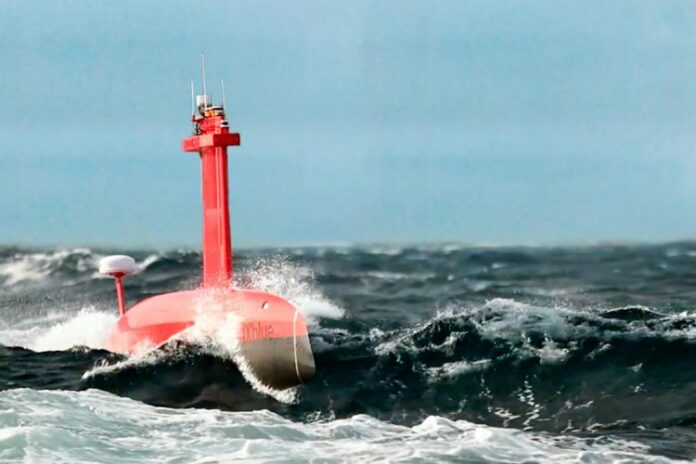
Bureau Veritas (BV) has delivered an Approval in Principle (AiP) to iXblue, a global high-tech company and a pioneer in the field of maritime autonomy, for its innovative Unmanned Surface Vessel (USV) named DriX. This AiP addresses the safety requirementsof the marine drone, which operates under the novel concept of remotely supervised autonomy.

With a length of 8 metres, DriX is an Unmanned Surface Vehicle (USV) equipped with advanced perception means, including a radar, a lidar and cameras, as well as artificial intelligence, which enable it to adapt to its environment, avoid obstacles and carry out missions autonomously. Designed to support hydrographic and geophysical surveys, water column analysis and subsea positioning operations, DriX has been used by major hydrographic institutes and energy companies worldwide.

Developed by French company iXblue, DriX has been certified by BV for its system architecture, its operational envelope, its construction (Malta Cross certificate for the hull), as well as its autonomy functions. The NI641 “Guidelines for Autonomous shipping” have provided a framework for a thorough analysis of the DriX architecture and its critical functions in a way that is adapted to autonomous marine systems.

In order to support the Approval in Principle, Bureau Veritas Solutions Marine & Offshore (BV Solutions M&O), the technical advisory component of Bureau Veritas Group, conducted a Hazard Identification (HAZID) study, as required by BV NI641. This HAZID study identified and assessed the hazards of Maritime Autonomous Surface Ships (MASS) when unmanned, taking into account the level of automation, direct and remote control, autonomy, area of operation and vessel type and design. BV Solutions M&O also conducted a Failure Mode Effects and Criticality Analysis (FMECA) on critical components previously identified during the HAZID study in order to identify, evaluate and mitigate the effects of essential equipment failure and to improve the reliability of automation systems associated with essential services.

This first certification of an Unmanned Surface Vessel (USV) by BV will help strengthen global acceptance of this technology by supporting operators in their risk analysis and mission planning for USVs deployment. This comes as the USV sector is expanding rapidly, and the acceptance of these novel marine drones depend on the capacity to demonstrate that they are safe to deploy and operate. BV and iXblue have been working in close collaboration to raise the standards and acceptance of USVs.

Stéphane Vannuffelen, Marine Autonomy Technical Director at iXblue, said:

“We are convinced that the acceptance of autonomous solutions in the marine ecosystem requires a collaborative approach between manufacturers, class societies and authorities, and this work done with BV goes in that direction. This certification is a major achievement not only for DriX, but for the whole maritime industry, supporting its 4.0 transition.”

Laurent Leblanc, Senior Vice President of Technical & Operations at Bureau Veritas Marine & Offshore, commented:

“Smart vessel operations can enable the maritime industry to increase productivity, predictability, and efficiency while reducing operational risk on the water. At BV, we are committed to support innovation with our robust set of standards to enable these new technologies to reach the market and ensure that they are safely implemented.”

Stena Line expands with new and larger vessels calling at Stockholm Norvik Port

0

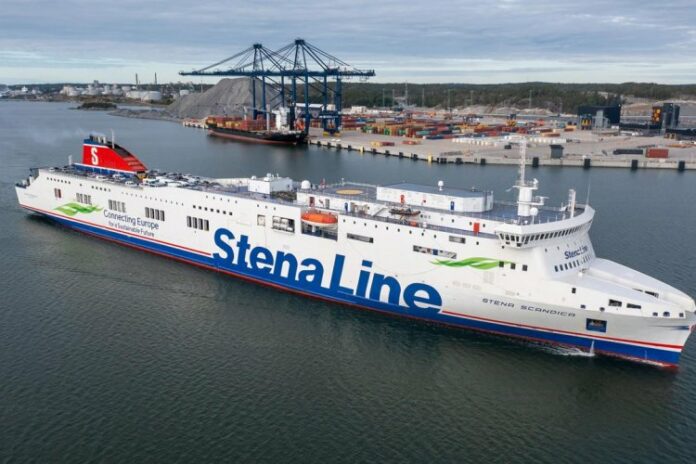
The maiden call of Stena Line’s new Stena Scandica vessel to Stockholm Norvik Port was on 27th July. Stena Line is expanding and introducing two extended vessels on the Ventspils – Stockholm Norvik Port route in 2021.

The first vessel, Stena Scandica, represents an important milestone in the Stena Line expansion in the Baltic Sea and increases freight capacity on the route by 30 percent. Expansion will continue in 2022, with two newly built vessels on the route, increasing freight capacity by a further 25 percent.

Fredrik Lindstål, Chair of the Board of Ports of Stockholm, states:

“We warmly welcome Stena Scandica to Stockholm Norvik Port. We are very happy about our long-term multi-year collaboration and that Stena Line has chosen to expand in a major way and invest in the Baltic Sea and our new port.”

Stockholm Norvik Port is located in what is by far Sweden’s largest consumer area. The port has been built with a capacity for expansion and to ensure the supply of goods to the Stockholm region. With its strategic location and huge potential to store, load and unload cargo arriving and departing by efficient intermodal transport connections to the rest of Sweden, customers are provided with entirely new prerequisites.

Johan Edelman, Trade Director at Stena Line managing routes to and from Latvia, says:

“Stena Scandica is the first important milestone in Stena Line’s current expansion in the Baltic Sea. With this new vessel the capacity on the Nynäshamn–Ventspils route is increased by 30 percent. We look forward to continuing to further expand already next year, with two entirely newly built vessels.”

Torqeedo and Fassmer Shipyard announce the CIT-E Ferry

0

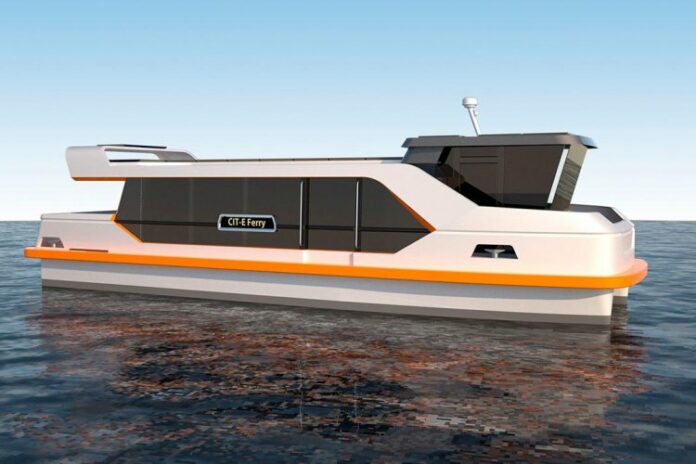
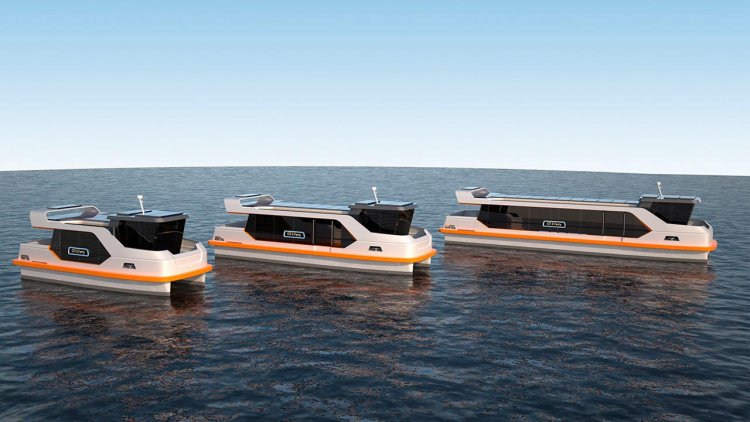
Fassmer Shipyard, a leader in serial production of composite boat construction, and Torqeedo, the market leader in integrated electric drive systems for boats, have announced a fully electric ferry concept for public transport – The Fassmer CIT-E Ferry powered by a Torqeedo integrated drive system.

Matthias Schubert, Torqeedo’s director for commercial sales, says:

“When Fassmer and Torqeedo started to discuss the CIT-E Ferry concept, we wanted to address several topics facing urban centres. By 2050, the global population will reach 10 billion, with 75% of people residing in cities. Facing this rapid population shift and the resulting gridlock of land-based transportation, urban planners are looking to their waterways to ease congestion on city streets. Many cities are creating intermodal public transport networks integrating climate-friendly water taxis, ferries and other passenger vessels.”

The CIT-E Ferry can be operated in inner-city waterways very cost-effectively: commuter vessels typically operate at efficient speeds and are in use for 8-14 hours, leaving plenty of time for overnight charging. That reduces infrastructure and battery bank costs and makes the entire investment even more economically and ecologically beneficial.

Torqeedo’s Deep Blue drive system is the heart of Fassmer’s CIT-E Ferry. Twin steerable thrusters deliver continuous power of 100 kW (peak power of 130 kW) and rotate up to 360 degrees, making the CIT-E Ferry easy to manoeuvre even in the narrowest urban waterways.

Deep Blue lithium-ion batteries with a battery bank capacity of between 80 kWh and 1 MWh power the integrated drive system. These high-capacity batteries meet IEC 62619 and IEC 62620 requirements, making them suitable for use in the CIT-E Ferry according to ES-TRIN (European Standard laying down Technical Requirements for Inland Navigation vessels) requirements. A DNV-GL type-approved battery variant is also available.

Fassmer’s CIT-E Ferry is fully ES-TRIN 2021 compliant with up to a 100-passenger capacity. The modular concept allows the customer to adapt the vessel’s overall length from 12 to 24 meters, depending on the route serviced. The lightweight GRP construction outperforms any steel or aluminium hull design and is optimised for the use of Torqeedo’s integrated Deep Blue drive system. The efficient and low wash catamaran hull, designed by Judel/Vrolijk & Co., delivers speeds of up to 25 km/h. Depending on the overall battery capacity, 14 hours of daily operation time without recharging can be reached.

In addition, the customisable interior design allows the operator to take all individual customer and route needs into account with a flexible number of seats vs standing room, space for wheelchairs, bicycles and prams, an LED light system, air conditioning, skylights and an entertainment system. For longer routes or tour boats, lavatories, kiosks and snack machines can be integrated in the design.

Fassmer’s sales manager for boats and davits, Wolfgang Moewes, states:

“Decades-old marine diesel engines power most commercial fleets in European cities. The CO2 emissions are not in line with the international goals to reduce global warming, and human health is also at risk. Our cities’ air quality suffers from emissions, particularly due to ferries which dock frequently. Our CIT-E Ferry design with electric drive offers the urban mobility of the future without any air or noise pollution.”

Seaspan announces newbuild order for ten 7,000 TEU containerships

0

Seaspan Corporation (“Seaspan”), a wholly owned subsidiary of Atlas Corp. (“Atlas”), has entered into an agreement with a major shipyard for ten 7,000 TEU modern newbuild containerships (the “Vessels”). 

The Vessels, which are scrubber-fitted, are anticipated to begin deliveries in the second quarter and through to the fourth quarter of 2024.

Upon completion, the Vessels will enter long-term charters with a leading global liner customer. Seaspan expects the Vessels to generate $1.4 billion of gross contracted cash flows over their minimum terms.

Bing Chen, Chairman, President and CEO of Seaspan, commented:

“This transaction further highlights Seaspan’s unmatched platform and competitive solutions that meet our customers’ needs. With our previously announced order of fifteen 7,000 TEU dual fuel vessels, this newbuild order is further evidence of the deep customer demand for this vessel size, which is uniquely suited to replace the global fleet’s aging cohort of 4,000 to 9,000 TEU vessels.”

The Vessels are anticipated to be financed from additional borrowings as well as cash on hand. With the addition of these vessels Seaspan will continue to expand its fleet within core strategic size segments. Since December 2020 and including this announcement, Seaspan has announced 70 newbuild orders.

Vessel Class Newbuilds Total TEU

  • 7,000 TEU LNG 15 105,000
  • 7,000 TEU 10 70,000
  • 12,000 TEU 6 72,000
  • 12,200 TEU 5 61,000
  • 15,000 TEU 16 240,000
  • 15,000 TEU LNG 10 150,000
  • 15,500 TEU 6 93,000
  • 24,000 TEU 2 48,000
    Total 70 839,000

US Navy creates new Atlantic destroyer task group to hunt Russian submarines

0

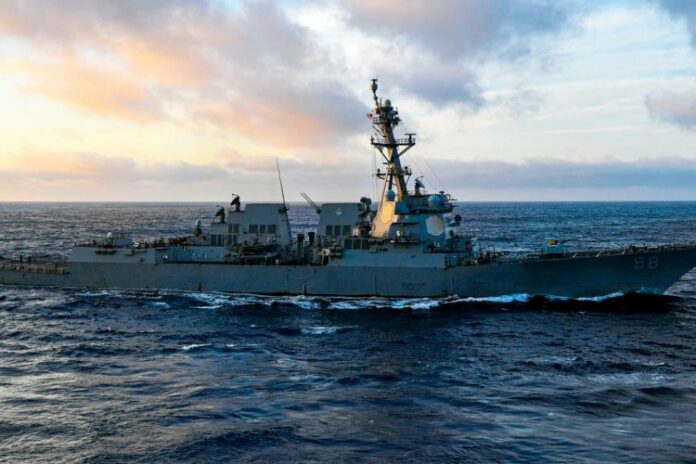
Task Group Greyhound – which officially declared initial operational capability on Sept. 1 – is a force-generation model for destroyers that is embedded within the Navy’s Optimized Fleet Response Plan.

The plan is to take destroyers that have recently completed deployments and are awaiting maintenance availabilities and make them ready for training and operations in the Atlantic.

Rear Adm. Brendan McLane, the commander of Naval Surface Force Atlantic, said: 

“The ships will be ready to accomplish the full range of missions – including tracking Russian undersea activity in the Atlantic and maritime homeland defense for our nation.”

The task force shares a name with the 2020 surface warfare movie “Greyhound,” in which a collection of allied destroyers defend a North Atlantic convoy from German U-boats.

  • USS Donald Cook (DDG-75) – which recently completed several years forward-deployed in Rota, Spain and is now based in Mayport – and Thomas Hudner are the first destroyers to become part of the task group. 
  • USS The Sullivans (DDG-68), which is currently deployed with the United Kingdom’s Queen Elizabeth Carrier Strike Group, will join the task group in January when it returns. 
  • USS Cole (DDG-67) and USS Gravely (DDG-107) will become part of Greyhound next year when Donald Cook begins its maintenance period.

The creation of the new task group comes as the Navy has refocused assets and efforts on the Atlantic region due to Russia’s undersea capability. The service formally reestablished U.S. 2nd Fleet, which covers the North Atlantic and East Coast, in 2018 amid concerns over Russian submarines operating in the waters.

Photo: Russian Navy

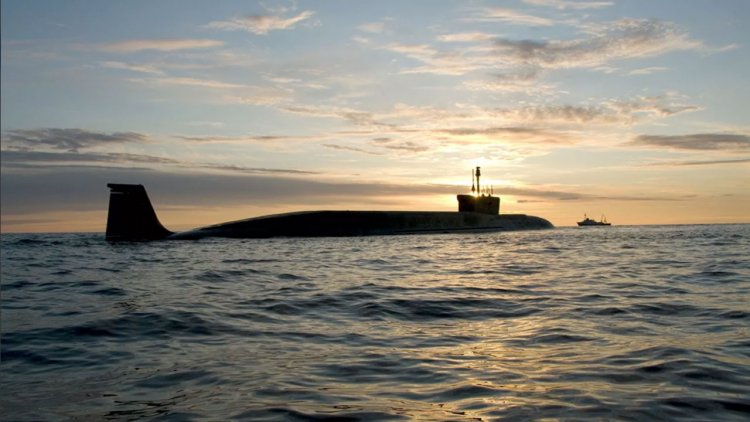
The Russian Navy has developed next-generation attack submarines armed with long-range land-attack missiles with ranges of 1,000 miles or more. Moscow is also developing a new class of submarines that will field a school-bus-sized torpedo armed with a nuclear warhead.

The ships will be based out of Mayport and Norfolk, Va., and the task group is set for full operational capability by June 2022, according to McLane, who noted the ships will still have a post-deployment stand-down so sailors can see family after being out at sea.

McLane said:

“The strategic threat to the homeland has entered a new era and our key competitors have deployed and continue to advance a range of capabilities to hold the homeland at risk.” 

McLane said work under Greyhound will include in-port training, live, virtual and constructive (LVC) training and time at sea.

For example, the Navy could take advantage of a submarine moving in and out of its homeport by pairing P-8 maritime patrol aircraft with helicopter detachments on destroyers for drills, Davies said.

Related: Russian jets and ships target British warship

Source: USNI

EDS wins significant contract for French offshore wind farm

0

EDS will be responsible for managing all aspects of high voltage safety throughout construction of the wind farm, including overseeing electrical safety for all contractors visiting the site.

Leveraging its considerable experience of energising wind farms safely and efficiently, EDS will help ensure a smooth transition from commissioning through to the operations and maintenance phase at Saint-Brieuc. Seamless interface integration will mitigate potential loss of key information as the project progresses, helping to further ensure the safety of all contractors.

In addition to EDS’s own team, local personnel will be brought in to assist with the control function on the project, generating jobs for the local economy and developing local content.

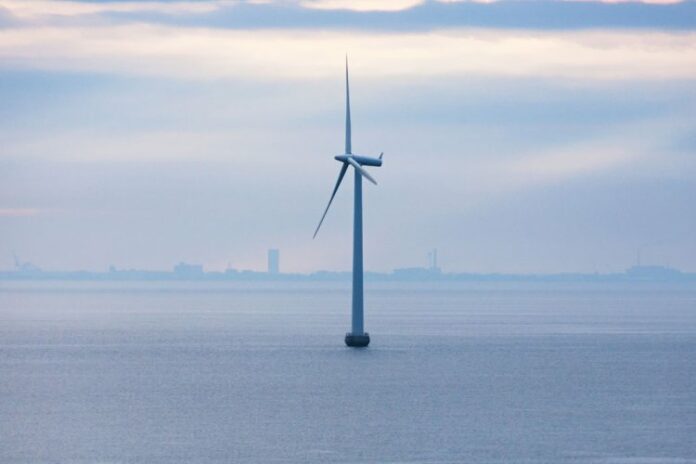
Saint-Brieuc is the first large-scale wind farm to be built off the coast of Brittany in north-west France. It will have an installed capacity of 496MW, making it capable of generating enough clean energy for 835,000 people.

Commissioning work at Saint-Brieuc begins in Q4 2021 and will ramp up throughout 2022, ahead of the wind farm becoming fully operational in 2023.

Wayne Mulhall, Managing Director at EDS HV, says:

“We are delighted to be using our extensive experience of managing high voltage systems to assist Ailes Marines – Iberdrola during this critical phase of the development of Saint-Brieuc Offshore Wind Farm, having previously worked with them on the development of East Anglia ONE Offshore Wind Farm in the North Sea.

Safety management at offshore wind farms is critical and our expertise in this area will ensure all contractors on site receive the high-voltage safety training necessary for the project to run safely and efficiently.”

Greece signs a MoU with Naval Group and MBDA

0

On September 28th, Nikólaos Panayotópoulos, the Greek Minister of Defence, Pierre Eric Pommellet, CEO of Naval Group, and Eric Béranger, CEO of MBDA, signed a Memorandum of Understanding to open negotiations to provide the Hellenic Navy (HN) with three Defence and Intervention frigates (FDI HN) and their equipment as well as an optional additional frigate.

The FDI HN frigates will be built in the Naval Group shipyard in Lorient, where the second in the series for the French Navy has just entered production.

The FDI HN will be an asset of power and sovereignty for Greece.

With the FDI HN, the Hellenic Navy will have a state-of-the-art, high-performance surface fleet.

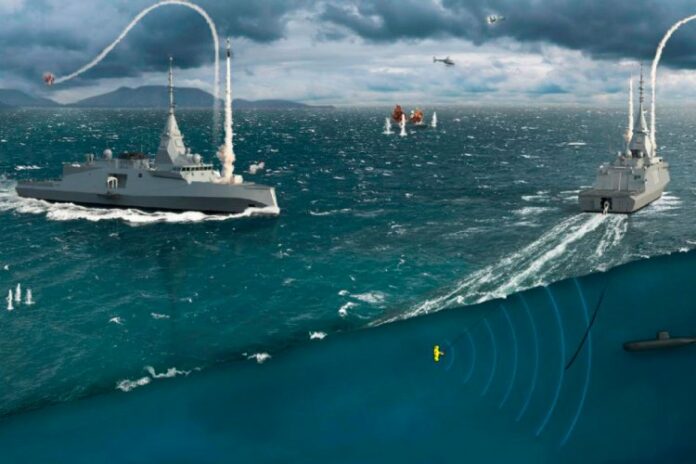
As a first-rank frigate, the FDI HN is a compendium of the best technologies of Naval Group, Thales and MBDA, which will notably supply the ASTER 30 B1 and Exocet MM40 Block 3C missiles. It will be fully interoperable with European and NATO fleets.

Greece will become the second customer of this multi-mission frigate, bringing the number of units produced from five for the French Navy to eight in total, plus one as an option.