-15.1 C
New York
Home Blog Page 538

First-of-its-kind Liquid Bulk module under PSA Marine’s platform

0

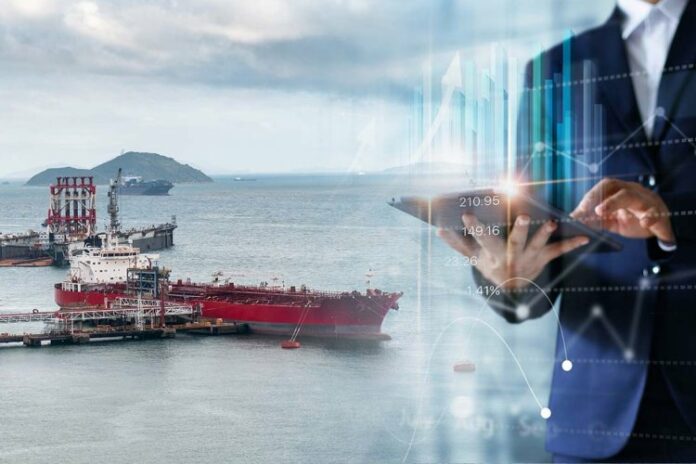
PSA Marine has unveiled the first-of-its-kind Liquid Bulk module (“LqB”) under PSA Marine’s ONEHANDSHAKE™ platform, which will revolutionise the way industry players within the liquid bulk logistics chain interact, and empower them to effortlessly transact with one another.

Annually at the Port of Singapore, an estimated 48,000 liquid bulk tanker movements are observed and key stakeholders rely heavily on labour-intensive monitoring of transactions. The process can now be made much more efficient as LqB will provide users with a customised dashboard to allow real time tracking capabilities for greater visibility, predictability and productivity.

Mr Jimmy Koh, Head of Digital Transformation and Chief Pilot of PSA Marine, said:

“Singapore is one of the world’s largest refineries and oil storage hubs, and we are glad that PSA Marine’s Liquid Bulk module will increase workflow efficiency and improve connectivity for the liquid bulk logistics chain community. We are also delighted to garner support from major industry players in our digitalisation journey, including ExxonMobil and Vopak, as their valuable feedback was incorporated into Liquid Bulk module.”

ExxonMobil Asia Pacific, Singapore Refinery Process Division Manager, Neo Ee-Ee, said:

“ExxonMobil is proud to have collaborated with PSA Marine on successfully piloting the Liquid Bulk module at our marine terminals, and doing our part to help improve maritime logistics efficiency in Singapore. This is also part of our continued drive to use digital solutions to enhance productivity in our manufacturing operations, and grow the digital skills of our workforce.”

Mr Edwin Ebrahimi, Innovation Engagement Leader of Vopak Terminals Singapore Pte Ltd, the world’s leading independent tank storage company, said:

“By partnering PSA Marine in this pilot trial, Vopak continues to advance in the use of new technologies and innovation. We fully support the development of digital platforms such as ONEHANDSHAKE™ in order to further improve vessel turnaround time at our jetties and in turn, optimise the port calls of our customers. We would like to encourage terminals and agents to be on board to ensure maximum value for the port community.”

With the introduction of LqB, PSA Marine continues to work closely alongside the Maritime and Port Authority of Singapore (“MPA”) in its efforts to strengthen connectivity and inter-linkages within the sea transport sector, under MPA’s Sea Transport Industry Transformation Map.

PSA Marine’s ONEHANDSHAKE™ digital platform is designed to share information on port activities with a network of maritime stakeholders. The company is committed to using digital technology and working alongside stakeholders to offer sustainable and innovative solutions.
Wintershall Dea investigates conversion of North Sea natural gas pipelines

0

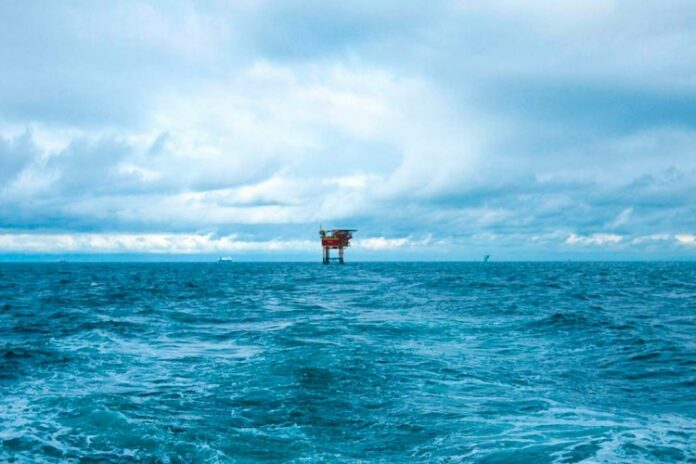
Wintershall Dea is working with the OTH Regensburg University of Applied Sciences to explore how existing natural gas pipelines in the southern North Sea can be used for future CO2 transport. Initial calculations paint a positive picture. Results obtained so far suggest that the offshore pipelines could be safely and efficiently repurposed for transport of liquid CO2. As the study progresses, technical feasibility will be tested, and certification will take place.

There are over 4,800 kilometers of pipelines in the southern North Sea, of which 1,200 kilometers are operated by Wintershall Noordzee, a 50:50 joint venture between Wintershall Dea AG and Gazprom EP International B.V. Parts of this network could be used for CO2 transport. Wintershall Noordzee also operates numerous depleted reservoirs. These are potentially suitable for storing CO2, which can play an important role in climate protection. The Dutch Continental Shelf offers enormous potential: experts estimate that around 800 million tons of CO2 could be stored there. That’s enough to store the entire annual emissions of all Dutch industry thirty times over, or by comparison, eight years of German industrial emissions, based on 2018 figures.

Klaus Langemann, Senior Vice President of Carbon Management and Hydrogen at Wintershall Dea, says:

“We are optimistic about the further investigations. Our calculations already show that existing offshore pipelines could be well suited for transporting liquid CO2.” 

Together with industry and research partners, Wintershall Dea has developed innovative calculation models that enable completely new insights in this technological field. The next step will be to demonstrate the reliability of the evaluation process and prove the feasibility experimentally.

Companies with unavoidable process emissions – for example those from the steel, cement, or chemical industries – will soon be dependent on underground offshore storage sites for the capture and safe storage of their CO2 emissions (CCS – Carbon Capture and Storage). Moreover, the CO2 produced during the production of “blue hydrogen” from natural gas can also be safely stored in this way.

Klaus Langemann says:

“Wintershall Dea is investing in CCS because we are convinced that it is a safe and affordable technology for decarbonisation. We have the technological know-how and the depleted offshore reservoirs required for CCS, as well as access to the pipeline network for transport.” 

If existing natural gas pipelines can be used for this purpose, this not only improves the economics of CCS projects, but also contributes to the sustainability of many industrial sectors and their products.

For Wintershall Dea, the study with OTH Regensburg is part of the company’s far-reaching measures to drive forward the energy transition. In November 2020, Wintershall Dea set itself climate targets. These include the reduction of Scope 1 and 2 greenhouse gas emissions in all own-operated and non-own-operated exploration and production activities (on an equity share basis) by 2030. Beyond 2030, the company intends to meaningfully reduce their net carbon intensity, including Scope 3 emissions. Here, CCS and hydrogen will be key technologies.

Qatar Petroleum signs 15-year SPA to supply 3.5 MTPA of LNG to CNOOC

0

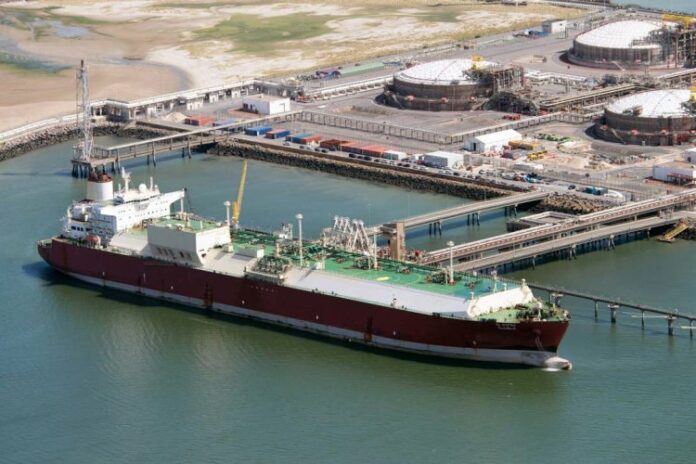
Qatar Petroleum entered into a long-term sale and purchase agreement (SPA) with CNOOC Gas and Power Trading & Marketing Limited, a subsidiary of China National Offshore Oil Corporation (CNOOC), for the supply of 3.5 million tons per annum (MTPA) of LNG over a 15-year period starting January 2022.

The SPA was signed during a virtual ceremony by His Excellency Mr. Saad Sherida Al-Kaabi, the Minister of State for Energy Affairs, the President and CEO of Qatar Petroleum, and Mr. Wang Dongjin, the Chairman of CNOOC.

Commenting on this occasion, His Excellency Minister Al-Kaabi said:

“We are pleased to further build upon our strong relationship with CNOOC with the signing of this new long-term LNG supply agreement. We are especially proud to continue to meet the People’s Republic of China’s growing need for cleaner energy that LNG provides, and are thankful to CNOOC for partnering with us as their trusted LNG supplier.”

His Excellency concluded his remarks by thanking Sheikh Khalid bin Khalifa Al Thani, the CEO of Qatargas, and the teams from both sides for the successful conclusion of this new long-term LNG supply agreement with CNOOC.

Qatar’s relationship with CNOOC extends back to September 2009 when the first LNG cargo was delivered to CNOOC in China.

As of August 2021, Qatar has delivered a total of 715 LNG cargoes to China, of which 270 cargoes (more than 24 million tons of LNG) were delivered to CNOOC.​

SCHOTTEL to deliver thrust for largest dredger in U.S.A.

0

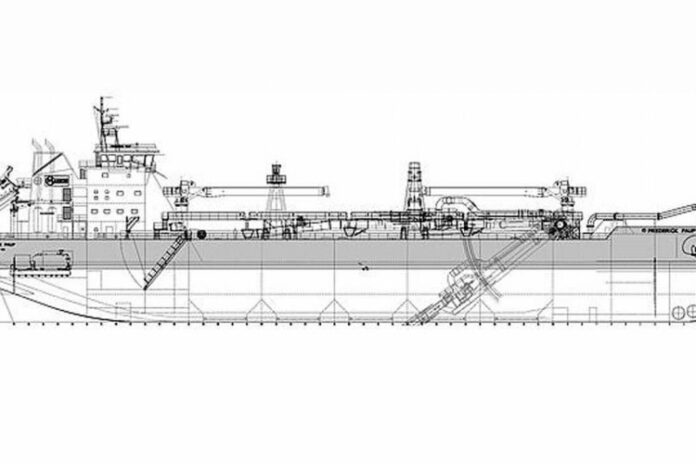
The dredger will be owned and operated by Manson Construction Co., and is currently under construction at the Keppel AmFELS Shipyard in Brownsville, Texas. It will be 128 m in length, have a 25 m breadth and about 9 m draught and will have a hopper volume of 11,500 m3. The vessel will represent Manson’s single biggest investment in its 116-year history.

Jordan Brown, Project Manager at Manson Construction Co., says:

“The Frederick Paup will set a new benchmark in the US hopper dredge market. The innovations include many aspects of improved ship design as well as specific demands regarding automation, machinery, and equipment. SCHOTTEL was able to meet these requirements as the thrusters will optimally support our vision of top performance in terms of mounting, thrust and manoeuverability.”

Hockema Group, Inc. created a well-elaborated hull design concept that allows for the propulsion system to be integrated in an exceptional manner. The aft appendages are optimally tailored to the rudder propellers in order to supply the thrusters with the lowest-possible turbulence flow. 

The three SCHOTTEL RudderPropellers type 510 L FP are powered by diesel-electric drives and feature propeller diameters of 2.8 m and a power intake of 2,240 kW each. A particularly long propeller arm length allows for an arrangement at the stern in portside, centre and starboard position with convenient access for future maintenance.

The 360-degree-steerable SRPs will enable the Frederick Paup to always benefit from maximum manoeuvrability, outstanding course stability during free sailing, and powerful thrust in the chosen direction. Besides the nozzles featuring enhanced corrosion protection with ProAnode, the RudderPropellers will be equipped with the DNV-GL type-approved SCHOTTEL LeaCon sealing system. Considered a non-oil-to-water interface, the system complies with the VGP regulations of the US Environmental Protection Agency (EPA).

Frederick Paup, named after Manson’s Chairman of the Board, will be built to the requirements of the American Bureau of Shipping (ABS) classification society. The vessel is scheduled to enter operation in 2023 and will support the U.S. Army Corps of Engineers in maintaining marine transportation highways primarily along the Gulf Coast and Atlantic Coast, as well as throughout the country.

AD Ports Group and NYUAD advance coral relocation research efforts

0

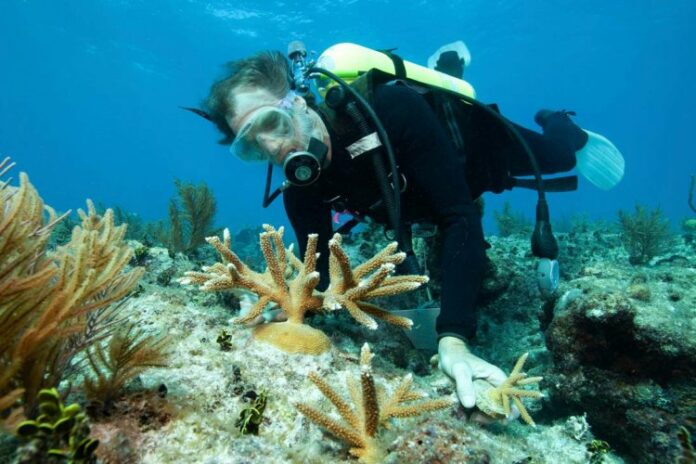
Building upon the highly successful Khalifa Port Coral Relocation project announced at the start of 2021, AD Ports Group, has made public its partnership with NYU Abu Dhabi (NYUAD) for the creation of a research study on coral relocation.

Spearheaded by Professor John A. Burt, Program Head of Environmental Studies and Associate Professor of Biology at NYUAD, and sponsored by AD Ports Group’s Innovation Team, the research study will examine global best-practices for coral relocation, while also providing region-specific expertise and insights that will enhance future coral reef relocation efforts across the Arabian Gulf.

Scheduled for completion by December 2023, the project will also assist AD Ports Group in developing its expertise in leading such initiatives by equipping its staff with the most pioneering and innovative methods and techniques in the field.

David Gatward, Acting Chief, Engineering & Technical Services, AD Ports Group, said:

“In forging ahead in developing the emirate’s maritime assets, AD Ports Group is redoubling its efforts to ensure all growth is conducted sustainably, and in line with the highest international environmental standards. Our research agreement with New York University Abu Dhabi demonstrates our dedication and duty to safeguarding our unique marine biodiversity for future generations.

“In addition to exploring best global practices associated with coral relocation and its long-term impact on local aquatic life in the Middle East, New York University Abu Dhabi will work closely with AD Ports Group to help us develop our in-house expertise that will enable us to lead potential reef relocation projects in the near-future.”

Eiman Al Khalaqi, Vice President of Innovation, AD Ports Group, said:

“As an organisation driven by innovation that is dedicated to the enhancement of our operations, and also preservation of the environment and adoption of sustainable practices, we are proud to be supporting this vital coral relocation research study.

“In addition to sponsoring this study, AD Ports Group’s Innovation Team is also actively participating, serving as advisors and leveraging our networking capability to introduce best global practices to the endeavour, as well as inviting entrepreneurial talent to share their expertise and achieve project success.”

NYUAD Provost Arlie Petters, said:

“We are pleased to announce the continuation of NYUAD’s close collaboration with AD Ports Group on this joint research study, which will not only advance knowledge of regional coral reefs and their importance within marine ecosystems but will also support and encourage future initiatives dedicated to their conservation and restoration.

“Leveraging AD Ports Group’s decades-long expertise in facilitating maritime activities across the Gulf region and beyond, NYUAD along with the Marine Biology Lab will examine global best-practices as it relates to coral relocation and put them to the test, while also developing innovative techniques and processes to advance the field.”

AD Ports Group’s staff will also have the opportunity to participate in several training workshops and field training exercises to gain invaluable first-hand experience of coral relocation practices.

Unveiled in February 2021, the Khalifa Port Coral Relocation project, facilitated in close collaboration with the Environment Agency – Abu Dhabi (EAD), saw the transfer of hundreds of corals from the northern revetment to the eastern breakwater of Khalifa Port.

Kongsberg to supply simulation solutions to AASTS

0

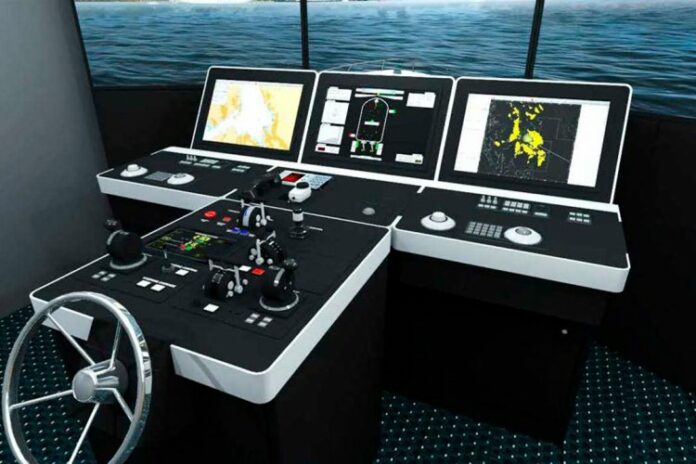
The state-of-the-art simulators enable highly realistic training scenarios for different vessel types in various operations and weather conditions, and will be used in training and assessment of the Academy’s students as well as crew from government and private organizations.

His Excellency Dr. Ismail Abdel Ghaffar Ismail Farag, President of the Arab Academy for Science, Technology and Maritime Transport, comments:

“When we signed the agreement to establish the Sharjah branch of the AASTS, which is a prominent educational institution affiliated with the League of Arab States, we pledged to His Highness Sheikh Dr. Sultan bin Muhammad Al Qasimi, Supreme Council Member and Ruler of Sharjah, to make this unit one of the best maritime academies worldwide. We also promised to make it a maritime house of expertise that can be utilized to advance research, development and training in the UAE in general. In return, we received unlimited support from His Highness to establish a unique architectural and educational icon that surpasses some of the most prestigious universities and maritime academies around the world with its facilities and equipment.”

AASTS will deploy KDI’s market-leading simulation technology in its Maritime Simulation Center to create multiple virtual navigation environments, from ocean passage-making to berthing and port operations. They will also use KDI simulators to train students in the navigation skills and techniques needed to operate vessels efficiently and competently, including training in traditional celestial navigation.

Dr. Capt. Ahmed Youssef, Associate Dean, College of Maritime Transport and Technology, AASTS, explains:

“We chose KONGSBERG because of its extensive portfolio of more than 50 years in building maritime simulators for educational and training purposes, as well as their commitment to ensuring the safety of sea operations. Kongsberg Digital’s simulation systems create realistic scenarios with real people in different locations across the world, and can also be integrated with other simulation centers. This means that our virtual training will be on a par with field exercises, if not more realistic, especially with the addition of weather conditions and sailing environments that are difficult to access and conduct training in.”

Andreas Jagtøyen, Executive Vice President Digital Ocean, Kongsberg Digital, concludes:

“We are honored to get the opportunity to assist AASTS in their goal to deliver outstanding training to mariners in the region. This contract is a clear demonstration of the versatility of our simulators. AASTS plans to provide advanced training, not only to their own students, but also to industrial professionals, navigators and captains from government and private organizations, encompassing a diverse range of vessels from container ships to offshore service vessels and yachts. We look forward to supporting AASTS in their business of training students and seafarers to cope with the ever-increasing complexity of the maritime industry, and to help them boost efficiency, sustainability and safety at sea.”

ABL paves way for North Sea offshore renewables

0

ABL undertook a comprehensive navigational risk assessment (NRA) that involved the collaboration of all coastal states and the study also concluded with risk mitigation measures.

The North Sea study, which was conducted for the German Ministry of the Interior, Building and Community, in particular focusses on areas with existing or prospective offshore windfarm and maritime renewable development across the whole of the North Sea.

ABL’s scope of work included a detailed marine traffic study and the identification of qualitative characteristics within the main shipping routes in the North Sea, projecting traffic growth over the next 20 years. It also included a risk assessment to identify areas in the North Sea with the highest concentration of collision, allision and grounding risk, including modelling of traffic corridors.

The study, that involved the collaboration of all coastal states in gathering information about their maritime spatial plan, concludes with risk mitigation measures in the form of alternative routeing, where the planned offshore installations disrupt the current traffic pattern.

Diego Cerquenich, Master Mariner at ABL, said:

“Navigational risk analysis can play a significant role in the early identification of optimal windows for offshore construction, installation and maintenance operations for the energy sector. This study is a good step in mapping out where marine traffic poses a risk to the busy ongoing and prospective construction plans for European offshore wind.”

The study aims to strengthen the partnership between North Sea coastal states and reinforce a collective approach to identifying and resolving future challenges facing offshore wind developments.

It also contributes to the revision of the German Federal Maritime and Hydrographic Agency (BSH)’s maritime spatial plan. The maritime spatial plan provides analyses that contribute to approval procedures for infrastructure development in the German exclusive economic zone of both the North Sea and the Baltic Sea.

Christoph Ruck, General Manager of ABL in Germany, said:

“The German offshore wind market is projected to play a leading role in the supply of carbon-neutral energy in Europe with a possible 40GW by 2040. It is therefore, critical that the local market remains competitive and that challenges to operation or development are mitigated early on, to ensure optimised operability of wind assets and reinforce their bankability.”

Gasum bunkered LNG to PONANT’s new polar explorer in France

0

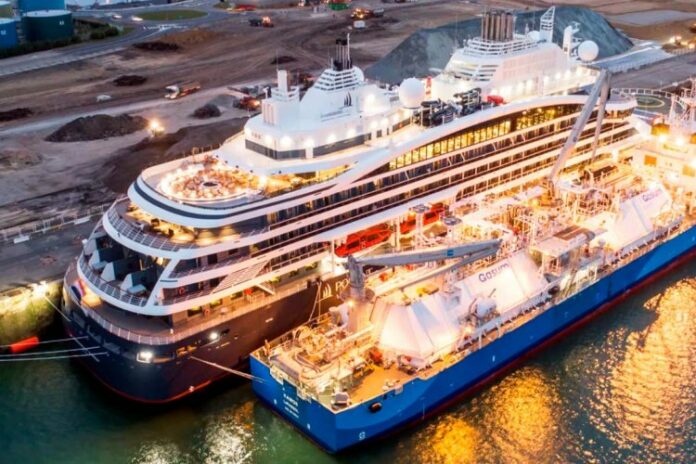
On 24th September, in the port of Le Havre, France, Gasum bunkered Liquefied Natural Gas (LNG) to Le Commandant Charcot, PONANT’s latest LNG fueled newbuilt polar explorer. 

The energy company Gasum has delivered LNG as maritime fuel to the French luxury cruise operator La Compagnie du PONANT (PONANT) in Le Havre, France. The LNG was delivered to PONANT ’s newly built polar explorer Le Commandant Charcot in its inaugural call to a French port on the 24th of September 2021. This bunker operation was Gasum’s first LNG delivery in France and marked a further milestone in the extension of the company’s delivery network. It was also the first LNG bunkering ever performed in Le Havre, which is the second largest commercial port and the largest container port in France.

Le Commandant Charcot, named after the renowned French polar scientist and explorer Jean-Baptiste Charcot, is the first hybrid-electric polar exploration ship powered by LNG. This unique  polar exploration vessel is the latest addition to PONANT’s fleet and is set to sail the Arctic and Antarctic regions.

Hervé Gastinel, CEO of PONANT, said:

“We have been working on this natural gas powered polar exploration ship project for 6 years and this is already the second Liquefied Natural Gas bunkering operation we have carried out with Gasum since the delivery of the ship on 29th July 2021. These LNG bunkering operations represent the culmination of several years of analysis, engineering and testing to perform these operations safely and with maximum efficiency.

The ship reached the Geographic North Pole for the first time on 6th September 2021, using natural gas throughout its journey.  We are fully satisfied and particularly proud of the technical innovations developed on this ship that have enabled us to achieve this exceptional performance.

Le Commandant Charcot is the first passenger ship equipped with high pressure membrane LNG tanks offering up to 2 months of autonomy on natural gas, greater flexibility in its bunkering and operation, and guaranteeing enhanced safety.

Le Commandant Charcot paves the way for new and more environmentally friendly natural gas propulsion methods and helps to meet the CO2 reduction targets set out in the Paris Agreement.” 

Reducing emissions is crucial as Le Commandant Charcot will be operating in  fragile environments, such as the waters of the North Pole and Antarctica. LNG is currently the most environmentally friendly maritime fuel available. Switching to LNG removes completely SoX and particle emissions and reduces NoX emissions up to 85%. LNG also emits at least 20 % less CO2 when compared to traditional maritime fuels. 

Maritime traffic contributes up to 3 % of the world’s total greenhouse gas emissions, which contributes directly to global warming. Gasum is leading the way towards a cleaner future for maritime transport by operating as a premium supplier of LNG and an expert in bunkering services.

Jacob Granqvist, Vice President of Gasum’s Maritime, says:

“This delivery marks an important step in our cooperation with PONANT and I am proud to support PONANT in reducing their emissions. At the same time we expand our delivery network to a port as significant as Le Havre. Our services for maritime operators all over Europe are becoming even more relevant, in the light of the requirements of the EU’s recent Fit for 55 -climate package proposal.”

LNG is rapidly becoming more common as a maritime fuel, as switching to it is one of the concrete actions that can be taken towards significantly reducing maritime traffic’s climate impact. As a fuel it is interchangeable with 100 % renewable liquefied biogas (LBG) which means that it can be mixed with and even replaced by LBG. As a fuel LBG is even cleaner than LNG as it can reduce CO2 emissions over its lifetime cycle up to 90 %.

McDermott joins AquaVentus Consortium to advance renewable hydrogen production

0

AquaVentus unites international industry leaders with a shared vision for advancing hydrogen’s role as a low-carbon, affordable energy solution-combining their unique expertise to make that future a reality.

Samik Mukherjee, Executive Vice President and Chief Operating Officer, said:

“McDermott brings a long history of thinking differently about energy delivery—and unrivaled expertise in offshore infrastructure—to this dynamic group of visionaries. This is a critical piece of the puzzle as we work together to make offshore production of green hydrogen a reality.”

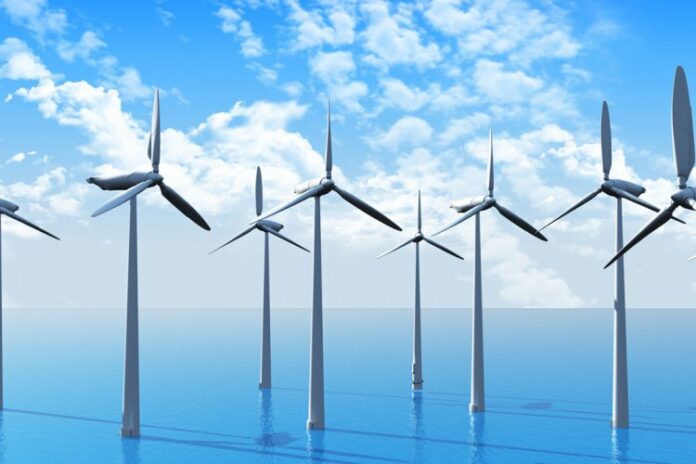
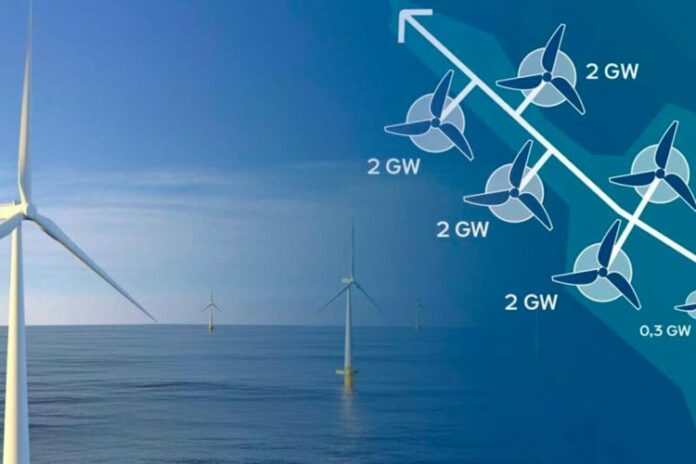
AquaVentus aims to develop 10 gigawatts of generation capacity for green hydrogen from offshore wind turbines in the North Sea by 2035. The expectation is that the wind power generated will be used to produce up to one million tons of production capacity of green hydrogen, which will be used to decarbonize Heligoland and transported to land via pipeline.

McDermott’s involvement will bring the consortium comprehensive engineering, procurement, construction and installation (EPCI) experience in the onshore, offshore, subsea and storage markets, from concept to completion.

Tareq Kawash, Senior Vice President, Europe, Middle East, Africa, said:

“The German North Sea Offshore Wind sector will be instrumental to meeting the renewable energy demand for the Northern European industry and other markets. AquaVentus’ network of members, collaborating across the supply chain, is the type of collaboration needed to make green hydrogen a commercially viable energy resource of the future.”

Jan De Nul uses biofuel for its maintenance dredging works in North Germany

0

This fuel contains no petroleum, but processed vegetable waste oil as a raw material, entirely in line with the principles of a sustainable circular economy.

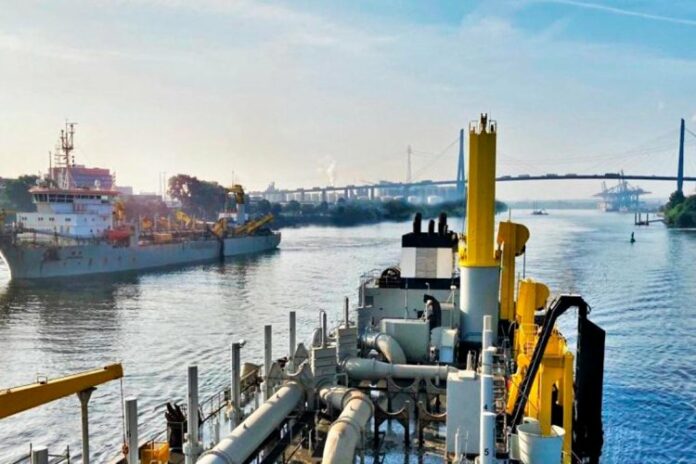
Jan De Nul Nassbaggerei und Wasserbau GmbH has been awarded an important contract for maintenance dredging works in the Port of Hamburg within the scope of a European award procedure. Two suction hopper dredgers, ‘Kaishuu’ and ‘Alexander von Humboldt’, will execute these dredging works between June and December 2021, thus ensuring accessibility to numerous important terminals in the Port of Hamburg.

Thanks to the use of biofuel during these works, emissions of particulate matter and sulphur compounds are also significantly reduced, as combustion is much more efficient than with conventional diesel fuel. 

Michel Deruyck, Head of the Energy Department, explains:

“We have already used this sustainable biofuel for several of our vessels in the Benelux and the UK. Decarbonisation is at the top of Jan De Nul’s agenda and is supported throughout the company, both commercially, operationally and technically. We always strive to go beyond what is imposed on us. We’re going for zero.”

Dredging works are indispensable to ensure the accessibility of the Port of Hamburg and its terminals. This is the only way to ensure that goods can be transported far into the hinterland by sea-going vessels, which are particularly environmentally friendly compared to other modes of transport. Many hundreds of kilometres that do not have to be travelled by truck or train are a significant contribution to climate protection.

Worldwide, maintenance dredging works are among the most important tasks of large seaports. The fact that this important task can now be executed in a more sustainable manner is a milestone as the measures taken will save around 45,000 tonnes of CO2 this year.

There is currently no contractual obligation to use climate-neutral fuels because they are not yet available in North German seaports. The vessels therefore regularly travel to Eemshaven in the Netherlands to pick up the fuel.