-12.6 C
New York
Home Blog Page 534

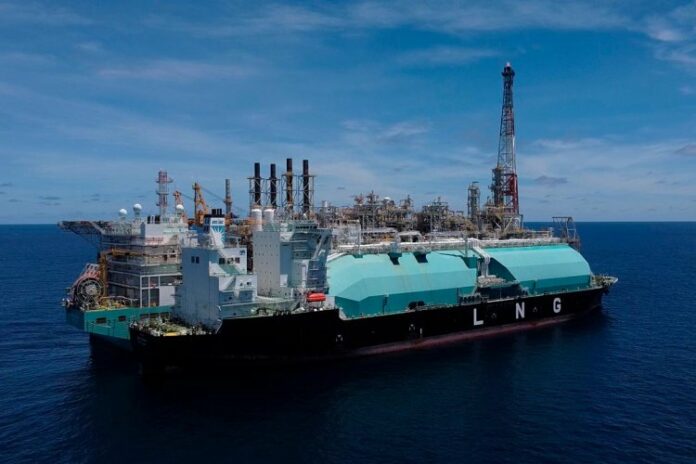
Petronas floating LNG Satu delivers milestone 50th LNG cargo

0

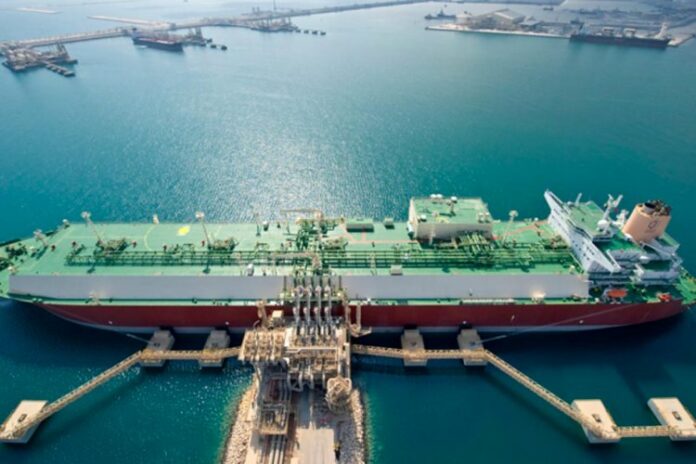
PETRONAS has marked another milestone in floating liquefied natural gas (FLNG) technologies following the delivery of its 50th LNG cargo from its first FLNG facility, the PETRONAS Floating LNG SATU (PFLNG SATU). 

The 50th cargo is a significant achievement for PETRONAS, a pioneer in the industry, and  demonstrates the viability of offshore gas production with FLNG solutions. The first FLNG cargo was produced from the Kanowit gas field, offshore Sarawak in 2017.

PFLNG SATU was also the world’s first FLNG facility to successfully produce LNG from two remote gas fields when it was relocated from the Kanowit gas field to its current location at the Kebabangan gas field, offshore Sabah, in 2019. 

PETRONAS Vice President of LNG Assets, Abang Yusuf Abang Puteh said: “We are proud to celebrate this milestone cargo from PFLNG SATU which attests to the world-class reliability of our first FLNG facility and more importantly, the commitment of our workforce to provide an uninterrupted supply of LNG to our customers.

 Abang Yusuf added:

“This achievement showcases our leadership in the LNG industry, where we continue to benefit from our first-mover advantage to monetise remote and stranded gas fields with FLNG solutions.  Despite operating in a challenging environment heightened by the COVID-19 pandemic, PFLNG SATU has produced and exported nearly 3.18 million tonnes of LNG from the Kebabangan and Kanowit gas fields since 2017, whilst maintaining high Health, Safety, Security and Environment (HSSE) standards.”

The PFLNG SATU is designed to operate at water depths of up to 200 meters with a production capacity of 1.2 million tonnes of LNG per annum. Currently, PETRONAS is the only global energy company in the world that owns and operates two FLNG facilities.

Permission granted for Ports of Stockholm to establish shore power

0

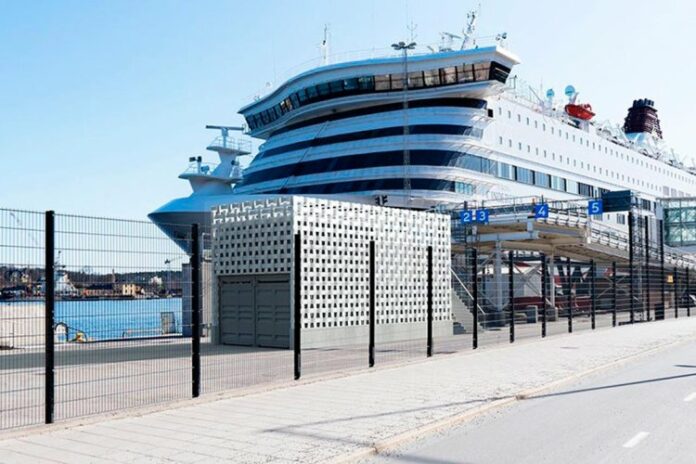
This environmental initiative is a collaboration with other Baltic Sea ports that will result in significantly lower emissions of carbon dioxide and air pollutants from cruise ships in Stockholm and the Baltic Sea.

The building permits are for two high voltage onshore power connections in Stockholm to provide cruise ships with electricity. For Stockholm this means less impact on the environment, as the cruise ships will no longer need to run their engines in port to produce electricity, and instead can use the power produced by the local electricity grid.

Thomas Andersson, CEO Ports of Stockholm, explains:

“We are very happy that the building permit process is completed and we can present two high voltage onshore power connections that will contribute to reduced vessel emissions. New lighting and thoughtfully designed architecture will also create a more pleasant atmosphere at the sites.”

The onshore power connections will be inside buildings illuminated to create a more attractive environment. All construction materials must comply with the environmental gold standard, Miljöbyggnad Guld, to achieve the highest sustainability production level.

City Commissioner responsible for Ports of Stockholm, Joakim Larsson, states:

“Cruise passengers are very important to Stockholm financially, and generate over 1,000 jobs in the region. Onshore power connections in Stockholm are part of an important joint environmental investment, together with other Baltic Sea ports, to create an international class sustainable cruise destination.”

The high voltage onshore power connections will be ready for use in 2023 and 2024, respectively. The environmental investments for cruise ships in Stockholm are highly prioritised and have been awarded grant funding from both the EU and the Swedish Climate Leap Program.

Research reveals how much plastic debris is currently floating in the Mediterranean Sea

0

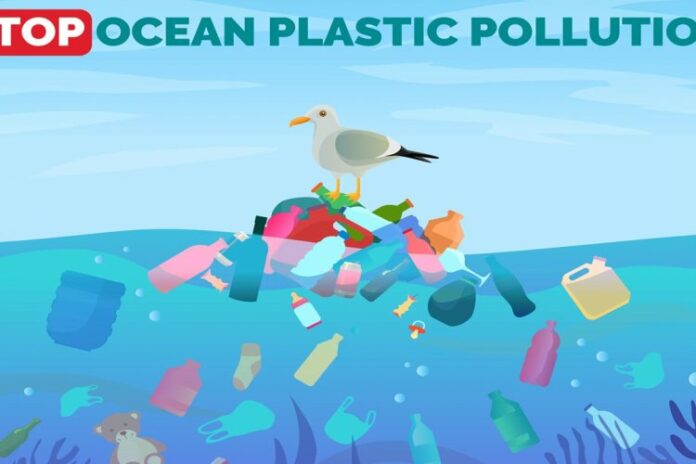
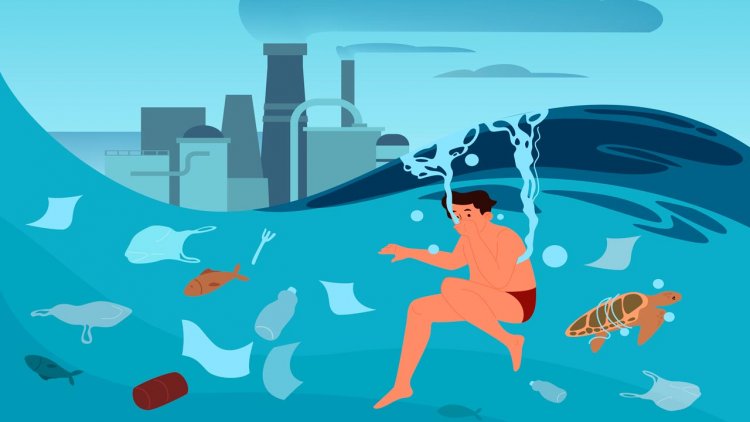
Global plastic production has been increasing each year since the 1950s, with 368m tons of plastic produced in 2019. A high proportion of plastic waste ends up in seas and oceans—estimates suggest that more than 250,000 tons of plastic debris are currently floating around in oceans all over the world.

A new study published in Frontiers in Marine Science shows that a shocking amount of micro- and macroplastic debris is currently floating in the Mediterranean Sea.

The Mediterranean Sea is considered a hot spot for plastic pollution. This is likely due to its densely populated coastlines, fishing, shipping, tourism, and a limited outflow of surface water to the Atlantic. At the same time, the Mediterranean is rich in biodiversity, making it an area of concern for the conservation of marine ecosystems.

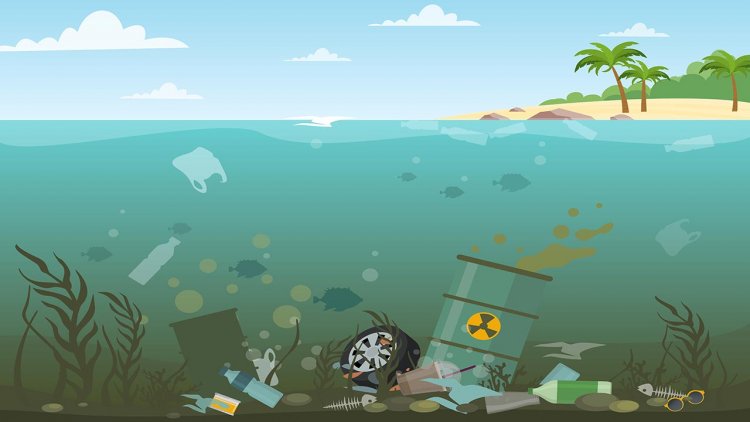
Plastic pollution affects all levels of marine biodiversity, with micro- and macroplastic particles found at the sea surface, beaches, the seafloor, and within the bodies of big and small marine animals. It has also been reported that humans ingest plastic through seafood consumption.
A new model developed by researchers from the Hellenic Centre for Marine Research, Greece, tracked the pathways and ultimate fate of plastic debris in the Mediterranean Sea. The model performed a simulation over the period from 2010 to 2017, tracking plastics from land-based sources such as rivers and coastal cities, while taking into account important dispersion processes such as sinking, vertical/horizontal mixing, wind, and currents. It also identified potential accumulation patterns of micro- and macroplastics in the surface layer, water column, seafloor, and on beaches.

This revealed that the total annual plastics load going into the Mediterranean is approximately 17,600 tons, of which 3,760 tons are currently floating in the Mediterranean. Of the total, 84% ends up on beaches and the remaining 16% ends up in the water column or the sea floor.

Dr. Kostas Tsiaras said:

“Simulations of plastic distribution in marine environments are currently characterized by a large degree of uncertainty. Experimental data on several processes that affect the fate of plastics, such as sinking, ingestion by marine organisms and fragmentation into smaller pieces are still quite limited. Our model showed a reasonable skill in reproducing the observed distributions of plastics in the marine environment and thus can be used to assess the current status of plastic pollution in the Mediterranean and evaluate the impact of future cleaning actions and management plans.”

The model also described biofouling as a potential mechanism for the removal of microplastics from the sea water surface. Biofouling happens when micro-organisms such as algae accumulate on floating and submerged objects, including plastic debris.
Sources of microplastics (such as wastewater treatment plants) were mainly found near metropolitan cities and heavily populated areas along French, Spanish, and Italian coasts. Larger sized microplastics were found in areas with high untreated wastewater, such as the coasts off Greece and Turkey.

Macroplastics were abundant in areas with important riverine input such as Algerian, Albanian, and Turkish coasts, and close to metropolitan cities and highly populated coasts (Spain, France, Italy).

Tsiaras said:

“The model outputs can be used to identify ecologically (bird and cetacean habitats) or commercially (aquaculture and fisheries) important areas that are potentially threatened by plastic pollution. This is important for the design of ecosystem-based management plans and policies for the mitigation of plastic pollution, which is often a trans-boundary environmental problem, as floating plastics may travel long distances from their sources.”

The social, political, and cultural variety of inhabited countries along the coastline of the Mediterranean makes the implementation of a common marine ecosystem management policy difficult. But models such as the one from the study can help mitigate this problem.

Jan De Nul contracts Castor Marine to connect entire fleet

0

Castor Marine has been selected by Jan De Nul Group to provide global VSAT internet and Iridium L-Band services to the entire fleet of almost 80 dredgers, offshore construction vessels, crane vessels and (environmental) support vessels.

Since all vessels are operational around the globe, Castor Marine was challenged to migrate vessels remotely to its network using the existing equipment onboard within a tight deadline. Castor Marine successfully migrated 98% of the fleet within 3 months after contract signing, with up to 6 migrations a day. The project is a fine example of the company’s engineering capabilities to manage complex migrations.

Castor Marine delivers a tailored VSAT solution for Jan De Nul’s fleet, with quality of services specified on the customer’s VLAN level. The Jan De Nul fleet benefits from the flexibility Castor Marine can provide in its global VSAT network allowing Jan De Nul Group to easily scale up, based on the ad hoc, dedicated high bandwidth demands per vessel.

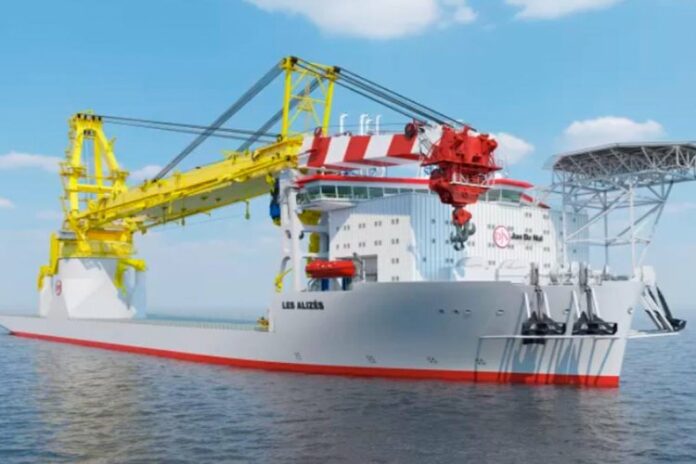
Included in the internet package are high-quality onboard voice services based on local Belgian telephone numbers for the vessels, which allows cost efficient phone calls at local rates. Along with the VSAT, Iridium and VoIP services, Castor Marine delivered 15 new Sailor 900 VSAT antennas and Sailor 4300 Iridium Certus antennas replacing existing hardware onboard. For the newbuild NextGen Offshore Jack-up Installation Vessel Voltaire and the Offshore Heavy Lift Vessel Les Alizés, Castor Marine supplied a complete new set of antenna systems based on the recently launched Sailor 1000 XTR VSAT antennas, including below deck equipment.

Nils Crabeel, Communication Manager at Jan De Nul Group, said:

“Flexibility is very important to Jan De Nul to cater for temporary project upgrades and downgrades. Castor Marine monitors these developments and communication lines are very short. We attach great importance to mutual trust. So far, everything is going as desired with our new KU & L-Band supplier.”

NYK delivers new LNG carrier to TotalEnergies

0

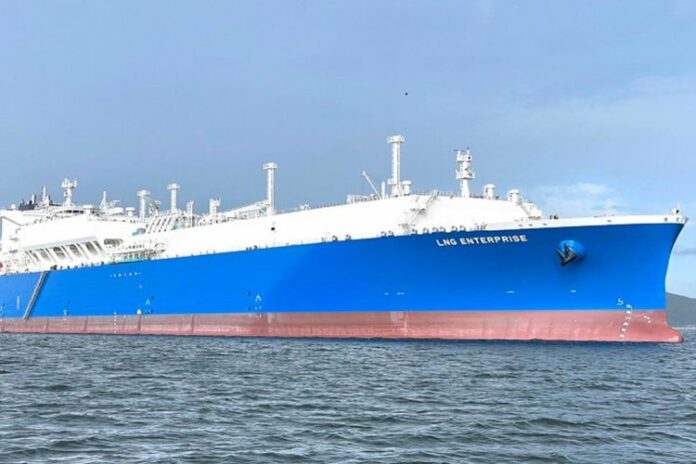
The liquefied natural gas (LNG) carrier LNG Enterprise, owned by France LNG Shipping (a French ship-owning company jointly owned by NYK and Geogas LNG) and under a long-term charter contract with TotalEnergies Gas & Power Ltd, was delivered on September 30, 2021.

The vessel was built at Samsung Heavy Industries Co., Ltd. in Korea.

The LNG carrier will be equipped with a WinGD X-DF diesel engine that can operate on fuel oil or boil off gas stored in its cargo tank. The LNG carrier has a cargo tank capacity of 174,000 cubic meters and a membrane-type tank that will make use of advanced insulating materials to reduce the boil-off rate (percentage of gas volume that vaporizes during navigation).

Vessel Particulars

  • Length overall: about 293 meters
  • Breadth: about 45.8 meters
  • Gross tonnage: 115,408 tons
  • Main engine: X-DF diesel engine
  • Cargo tank capacity: about 174,000 cubic meters
  • Shipbuilder: Samsung Heavy Industries Co., Ltd.
  • Flag: France

Qatar Petroleum commences LNG ship orders for the North Field expansion projects

0

Qatar Petroleum has ordered four new LNG carriers from Hudong-Zhonghua Shipbuilding Group Co. Ltd. (Hudong), a wholly owned subsidiary of China State Shipbuilding Corporation Limited (CSSC).

These four carriers are the first batch of orders in Qatar Petroleum’s massive LNG shipbuilding program, which will cater for future LNG fleet requirements for the North Field expansion projects as well as for existing vessel replacement requirements. This order is also the first ever placed by Qatar Petroleum or any of its affiliates with a Chinese shipyard for LNG ships, and the first with Hudong in connection with the agreement to reserve ship construction capacity that was executed in April 2020.

His Excellency Mr. Saad Sherida Al-Kaabi, the Minister of State for Energy Affairs, the President and CEO of Qatar Petroleum, commented on this occasion and said:

“We continue to push forward with our LNG expansion projects, and today’s announcement is yet another step in our journey. I am especially pleased with the signing of this order as it marks our first ever new LNG carrier to be built in the People’s Republic of China.”

His Excellency Minister Al-Kaabi added:

“We are proud to contribute to the success story of the LNG ship construction industry in China. We are also confident in Hudong’s capabilities to execute this order, worth in excess of 2.8 billion Qatari Riyals, to the highest safety and technical standards and to deliver top quality LNG carriers that will facilitate continued safe and reliable delivery of LNG to the world.”

“I would like to take this opportunity to thank Hudong’s team for all the hard work to bring this order to fruition during these challenging times. I would also like to thank the leadership of our esteemed partner, CSSC, for their valuable support to this effort in line with our mutual desire to further strengthen the excellent relations between China and Qatar. I am very grateful to the Qatar Petroleum and Qatargas teams, whose dedicated efforts were instrumental in reaching this milestone.”

The North Field expansion projects will increase Qatar’s LNG production capacity from 77 million tons per annum to 126 million tons per annum. Qatar Petroleum’s LNG carrier fleet program is the largest of its kind in the history of the LNG industry and will play a pivotal role in meeting the shipping requirements of Qatar Petroleum’s local and international LNG projects, as well as replacing some of Qatar’s existing LNG fleet.​

IMO’s new video highlights need for domestic ferry regulations

0

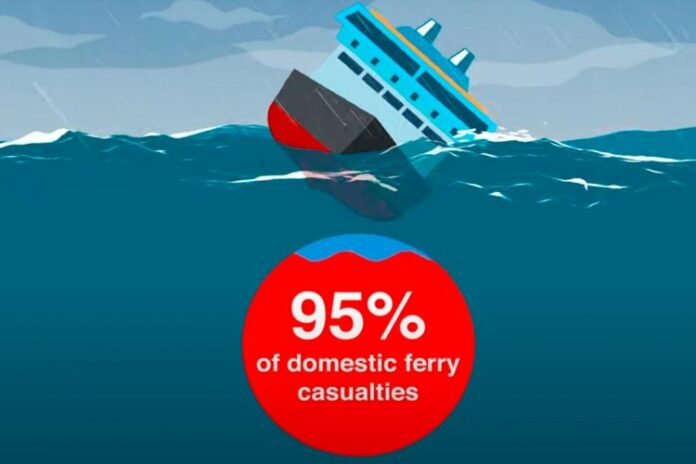
Domestic ferry operations play a crucial role in the movement of people and goods in many regions around the world.  But about 95% of ferry casualties world-wide occur during domestic operations.   

In a new short animated video, International Maritime Organization (IMO) provides key messages on the importance of safety standards on domestic passenger ferries and the development of model regulations.  

The video was launched during IMO’s Maritime Safety Committee (MSC 104) which is in the process of finalizing Model Regulations on Domestic Ferry Safety. These provide framework provisions which can be adapted by interested countries for direct incorporation into national law.    

Regulations for passenger ship safety in IMO’s International Convention for the Safety of Life at Sea (SOLAS) do not generally apply to passenger ships on domestic voyages, but many countries base their regulations on the IMO standards. 

To protect the human lives that rely on this transport, creating a safe and reliable ferry system is crucial to many nations’ sustainable future.   

This video has been possible through collaboration between IMO and the Royal Thai Government.

CSA completes oyster reef survey using multiple ASVs

0

CSA Ocean Sciences Inc. (CSA), an international marine environmental consulting and survey company, recently completed an expansive bathymetric survey of oyster reefs in the waters off Pascagoula, Mississippi for Cypress Environmental, an environmental services agency to the energy and municipal water industries, aided by two Autonomous Surface Vessels (ASVs). 

This simultaneous multi-vessel deployment resulted in the successful completion of over 400 miles of survey lines and rendered critical geomatic data pertaining to the overall health of oyster reefs in the region, which are monitored by the Mississippi Department of Environmental Quality (MDEQ) as part of ongoing remediation efforts following the Deepwater Horizon incident of 2010.

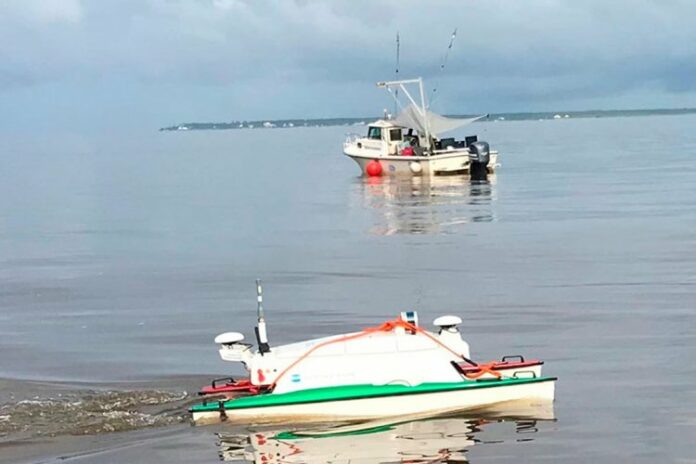
The survey took place in June 2021, when two SR-Surveyor M1.8 (SeaRobotics) ASVs equipped with single beam and interferometric sonar systems were launched as “data collection force multipliers” in Pascagoula Bay and the West Pascagoula River from a nearby 20’ survey vessel. The data collected will ultimately be submitted to MDEQ for further analysis as part of their ongoing environmental monitoring program.

Oysters play a critical role in the healthy function of the estuarine ecosystems in the Gulf of Mexico (GOM). The Deepwater Horizon oil spill and response efforts severely impacted nearshore oysters, subtidal oysters, and oyster recruitment in the surrounding waters, and so access to quality geophysical habitat data is a key component to advancing MDEQ’s framework for oyster restoration.

Surveying the waters off Pascagoula comes with inherent local challenges. Strong currents can often jeopardize the capture of robust and reliable bathymetric data and the shallow water tends to hinder access for conventional survey vessels, but the synchronized efforts of the tightly integrated ASVs proved instrumental to ensuring comprehensive coverage.

Kevin Peterson, CSA’s CEO, said:

“Thanks to their minimal draft, ample propulsion, and precise line keeping abilities, the two rapidly deployable ASVs not only allowed us to negate some of the typical challenges of operating in less calm and hard-to-reach waters, but it enabled our field team to complete the mission in a timeframe at least 50% faster than would have been possible if solely reliant on a traditional crewed survey platform.”

Saipem and WSense jointly develop communication networks for subsea drones

0

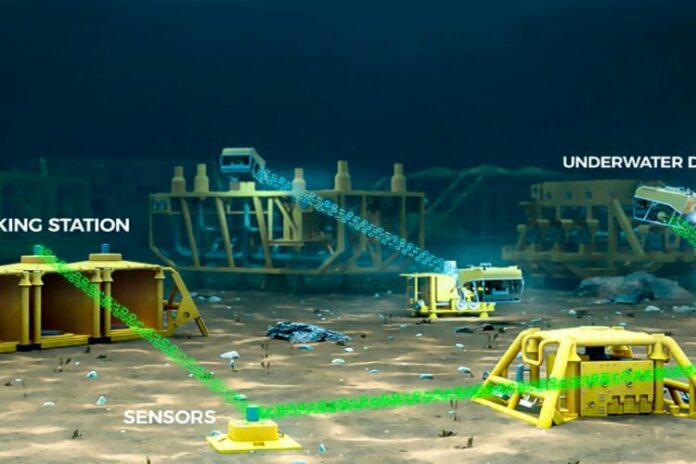
These so-called multi-purpose intelligent nodes will be designed and qualified by Saipem and WSense to be interfaced to underwater drones engineered and operated by Sonsub, Saipem’s centre of excellence for submarine technology innovation.

These nodes will represent a game changer for the wireless interconnection of underwater equipment and sensors as well as the integration of diversified systems and technologies, with applications spanning over different industries, including offshore energy, infrastructures and defence.

Thanks to stations installed underwater, Saipem’s resident subsea drones and ROVwill be able to perform autonomously a series of complex operations requiring the exchange of data for positioning and supervising subsea infrastructures, thus creating an enhanced Underwater Internet of Things (IoT). Everything shall be implemented with an environmental friendly approach, contributing to decarbonisation.

For Saipem, the agreement represents the strengthening of its Hydrone underwater drone programme and a further expansion of our offer, while for WSense it is the occasion to demonstrate the safety and reliability of its expertise in wireless communication networks. 

Framo strengthens sustainable aquaculture focus

0

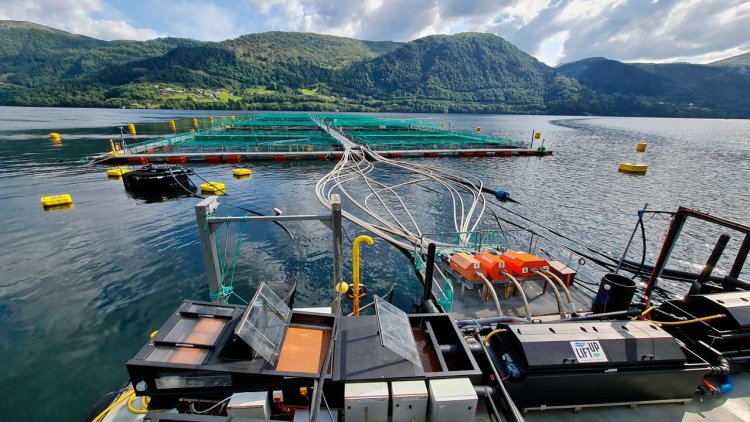
LiftUP, with its competence within sludge collection from open cages and unique patented dead fish system, fits like a glove with Framo’ s AquaStream systems. 

This acquisition by Alfa Laval develops an attractive aquaculture product portfolio and creates a sustainable growth platform for the future. LiftUP will, at the same time, gain access to Framo’s competence in pumps and Alfa Laval’s expertise in separation technology, explains Martijn Bergink, managing director of Framo.

Located outside Bergen on the west coast of Norway, LiftUP manufactures, sells, and installs pumps and cleaning equipment for removal of dead fish, waste, and sludge from open cages. LiftUP is a leading supplier of this type of equipment. The company has gained a solid position within the aquaculture industry, an industry which is increasingly focusing on sustainable salmon production.

Liam Heffernan, manager of LiftUP, said:

“LiftUP has experienced tremendous growth and we are incredibly happy to have Framo as our new home. With their competence we will be able to develop and further improve our sludge collection system.”

Framo has already developed a system that replaces water to improve oxygen levels and temperature inside closed and semi-closed facilities. The AquaStream system for open cage facilities significantly improving the environment in cages with lice skirts installed. This system contributes to increased growth as well as reducing or eliminating problems connected with sea lice, diseases and algae. AquaStream will be made even more sustainable together with the solutions from LiftUP.

Oddbjørn Jacobsen, director of Framo Innovation, revealed:”Framo aims to be the leading supplier of systems meeting current and future aquaculture industry challenges. Through close collaboration with fish farmers, the products and systems we have developed for both open and closed facilities have been very well received by the industry. With LiftUP on our team we now have access to leading technology that is perfectly suitable for our focus within sustainable aquaculture.”