-12.3 C
New York
Home Blog Page 524

Aker Solutions wins FEED for Wisting FPSO

0

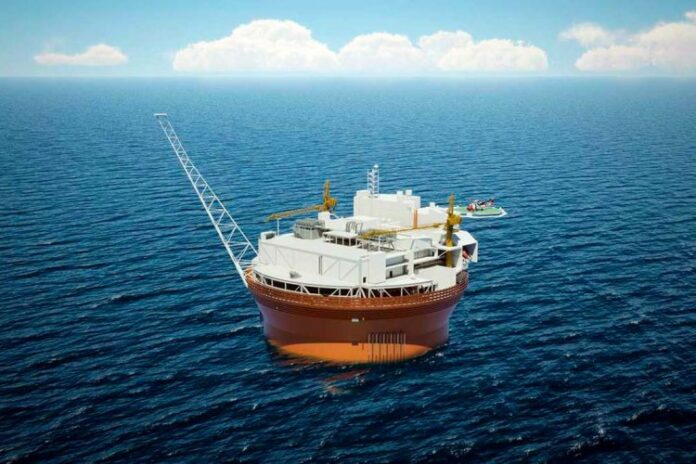
Aker Solutions has received a Letter of Intent (LOI) for a front-end engineering and design (FEED) contract from Equinor, for the FPSO for the Wisting field development in the Norwegian Barents Sea.

The scope of the FEED is to provide front-end design- and engineering for a circular floating production, storage and offloading (FPSO) solution, to further progress the project development towards a planned final investment decision. If the field development moves forward to execution phase, Aker Solutions estimates the EPCI option to potentially represent a significant1 contract, subject to final investment decision and regulatory approvals.

Sturla Magnus, executive vice president and head of Aker Solutions’ topside and facilities business, said:

“Wisting is one of the largest upcoming industrial projects in Norway. We are looking forward to continuing our longstanding relationship with Equinor for this significant field development, and to mature the project towards a planned investment decision.”

The FEED award follows the successful completion of the study phase, and the work starts immediately with planned completion in the third quarter of 2022. The FEED work will be led by Aker Solutions’ offices in Fornebu, Norway.

The Wisting FPSO is based on a Sevan design. The topside will have a weight of about 20,000 metric-tons, consisting of a large process module and a large utility module.

Magnus said:

“This major project will have significant positive effects on employment for our engineering resources and at our yards in Norway and create substantial ripple effects for the society and local communities near the yards.”

Proman and Stena develop methanol as the pathway to sustainable shipping

0

The global shipping industry is responsible for ~2.9% of global greenhouse gas emissions, which equals almost 1 billion metric tons of CO2 each year. Unchecked, emissions could increase by as much as 130% from 2008 levels by 2050.

Transitioning to low-carbon fuels will be essential to secure the long-term future of the industry and meet International Maritime Organisation (IMO) emissions reduction targets for 2030 and 2050, but still-developing technologies and the long lifetime of existing vessels makes this an even bigger challenge. Currently there are more than 70,000 vessels travelling our oceans, with an average lifespan of approximately 25-30 years. Finding a low emissions fuel for these vessels is no easy task, but now is the time to accelerate the transition. Methanol offers not only immediate, and urgently required, benefits but the only clear pathway to a sustainable future.

Proman, one of the world’s largest producers of methanol, has together with Stena, a privately owned shipping company operating approximately 140 vessels, decided to take on this challenge. Proman and Stena are committed to jointly developing a Retrofit & Supply solution, enabling both Stena’s vessels as well as third party vessels to experience the immediate environmental benefits and greenhouse gas emission reductions delivered by methanol.

By switching to this clean-burning fuel, methanol-powered vessels can lead the transition to a lower carbon future and significantly reduce the greenhouse gas emissions generated by conventional oil-based fuels, bringing an immediate improvement in air quality around ports and shipping lanes. Sulphur oxides (SOx) and particulate matter emissions are practically eliminated, carbon dioxide (CO2) emissions reduced, and nitrogen oxide (NOx) is cut by ~60%. Furthermore, methanol’s biodegradable and water-soluble qualities significantly reduce the risk to marine environments.
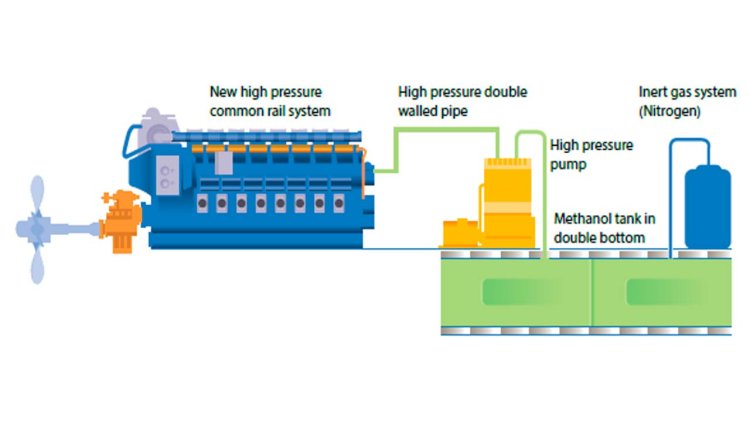
Proman and Stena have uniquely complementary skills enabling them to jointly offer a turn-key solution for the shipping industry to benefit from a methanol-based pathway to a sustainable low-carbon future. In 2015 Stena was the first ship owner in the world to convert a large vessel to methanol power together with a current partner. Since then, the vessel has been operated safely and conveniently, thereby demonstrating the potential of using methanol as a marine fuel. Methanol produced from natural gas brings an immediate CO2 reduction which will be further reduced to over 90% as renewable and sustainable methanol becomes more widely available as marine fuel.

Per Westling, CEO, Stena RoRo, said:

“We believe that methanol is a clear frontrunner in shipping’s search for fuels beyond the fossil default and we are proud to be playing our part to help build the market for alternative fuels within shipping. We converted Stena Germanica to methanol power already in 2015 with another current partner, and that gives us valuable experience both from a conversion and operational perspective.”

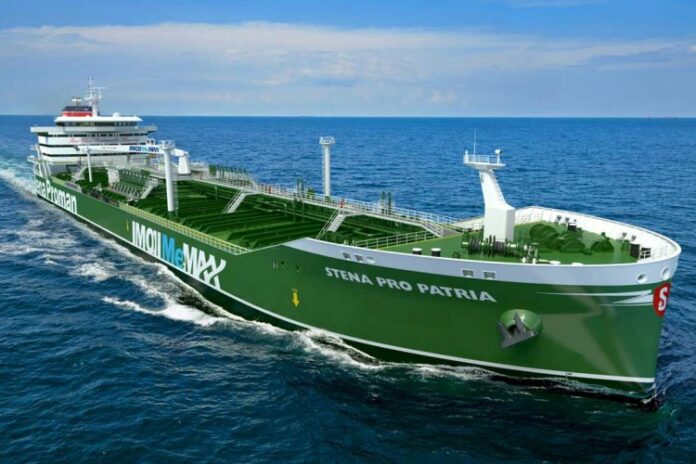
The plans for a Retrofit & Supply solution build on the previously announced joint venture between Stena Bulk and Proman for three methanol-ready tankers. The first of these vessels, the 49,900 DWT Stena Pro Patria will be delivered in early 2022, with a further three Proman-owned but mutually operated dual-fuel vessels due in 2023.

Carl-Johan Hagman, CEO, Stena Rederi, said:

“This announcement builds on the exciting and fruitful partnership that Stena Bulk has already forged with Proman and gives Stena another avenue to explore the use of methanol on more ship types.”

David Cassidy, Chief Executive of Proman, said:

“Methanol is the only available alternative marine fuel that offers immediate emissions reductions, dramatically improving air quality and delivering a clear shipping decarbonisation pathway for 2050 and beyond. Unlike other alternative marine fuels, methanol utilises existing technology and is safe and widely available. Proman’s partnership with Stena has grown from strength to strength. Our combined vision is to dramatically accelerate the energy transition in shipping and not only talk about changing our environment but to actually make it happen. We will leverage both companies’ ambition and expertise to make methanol more widely available to vessel owners around the world and help them to join us on the transition to a cleaner shipping industry.”  

Mitsubishi Shipbuilding successfully separates and captures CO2

0

Mitsubishi Shipbuilding Co., Ltd., a part of Mitsubishi Heavy Industries (MHI) Group, has successfully separated and captured carbon dioxide (CO2) from the exhaust gas emitted from the engines of a ship equipped with a small-scale CO2 capture demonstration plant, as part of the “Carbon Capture on the Ocean” (CC-Ocean) project for verification testing of a marine-based CO2 capture system, conducted in cooperation with Kawasaki Kisen Kaisha, Ltd. (“K” Line) and Nippon Kaiji Kyokai (ClassNK). 

The captured CO2 had a purity of more than 99.9%, achieving performance in line with plan.

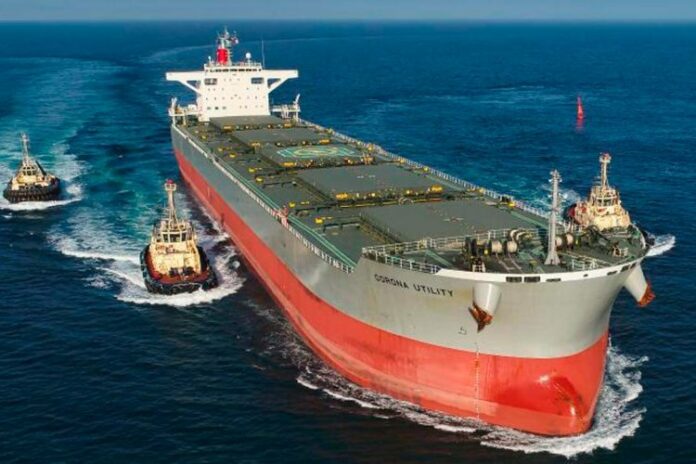
This project is conducted aboard the CORONA UTILITY, a coal carrier for Tohoku Electric Power Co., Inc. operated by “K” Line. The data provided will be used as a benchmark for practical application of marine-based CO2 capture systems. 

The small-scale CO2 capture demonstration plant installed on the ship is a system for onshore plants that was adapted for marine use. The success in achieving CO2 capture performance in a marine environment as planned enhances the potential for practical application of marine-based systems.

In early August, after the small-scale CO2 capture demonstration plant was installed on the ship, engineers from Mitsubishi Shipbuilding remained on the vessel to operate and maintain the system. They also instructed the ship crew on the operation of the plant, as well as conducted measurements and analysis of the exhaust gas and captured CO2, and evaluated the system performance. 

From mid-September through the end of fiscal 2021, the ship crew will continue to operate the system and take measurements in the world’s first trial of CO2 capture by ordinary crew during commercial operation of a marine vessel. Mitsubishi Shipbuilding will confirm the safety and operability of the system based on knowledge gained from these verification tests, and work to develop an actual commercial system.

In early August 2021, after installation of a small-scale CO2 capture plant, experts from Mitsubishi Shipbuilding were onboard the vessel to operate, maintain the plant, and instruct the ship’s crew how to operate, as well as measured, analyzed the captured CO2 and evaluated the system performance. 

From mid-September, the ship’s crew has been conducting the operation, measurement and maintaining the plant, and will continue to evaluate the safety and operability of the CO2 capture plant in order to sort out the issues to be considered and conduct research and development for future commercialization.

Port of Corpus Christi and NREL sign MoU for decarbonization projects

0

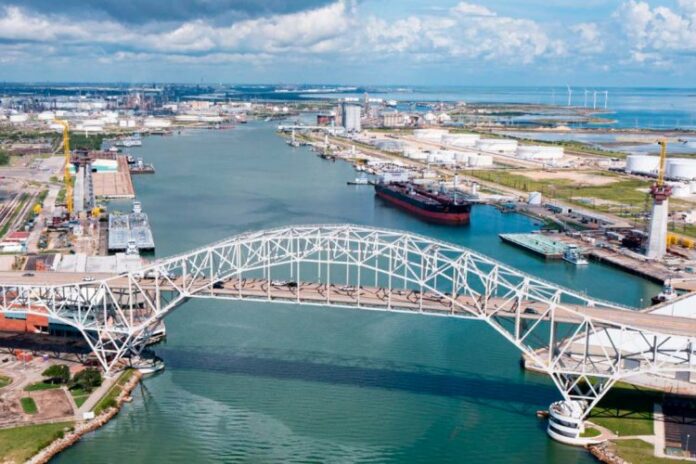
The agreement between the two parties is intended to advance collaboration between the Port of Corpus Christi, NREL and Port tenants by identifying scalable energy transition and decarbonization projects that require techno-economic-analysis, modeling, testing and validation efforts unique to NREL’s capabilities. The agreement also calls for identifying and pursuing available local, state, federal and U.S. Department of Energy funding opportunities.

Sean Strawbridge, Chief Executive Officer for the Port of Corpus Christi, said:

“As the leading energy export seaport in the United States, the Port of Corpus Christi is committed to the global energy transition and atmospheric decarbonization objectives by diversifying the energy products that move through our gateway. Partnering with the National Renewable Energy Laboratory to cultivate opportunities for applied research and analytics is a logical and pragmatic approach to developing scalable alternative energy sources for export.”

Mark Chung, NREL Team Lead for Hydrogen Infrastructure Analysis and the technical lead on the MOU, said:

“We look forward to working with the Port of Corpus Christi as they work toward achieving their decarbonization goals and bringing leadership to global energy transition as a significant energy hub. NREL brings a deep expertise in energy modeling and analysis to this collaboration that will help the Port, as well as their tenants and partners, as they seek to optimize and de-risk the implementation of emerging energy technologies and strategies.”

The MOU defines a number of shared objectives, including: scalable production, storage, use and export of renewable and/or low carbon intensity energy; integration and de-risking of innovative renewable technologies and production systems that leverage the abundance of solar, wind and other renewable potential in and around the Port of Corpus Christi; and evaluation of Diversity, Equity & Inclusion (DEI) impacts of energy transition projects on surrounding communities.

HAL’s Rotterdam departs on maiden voyage from Amsterdam to Florida

0

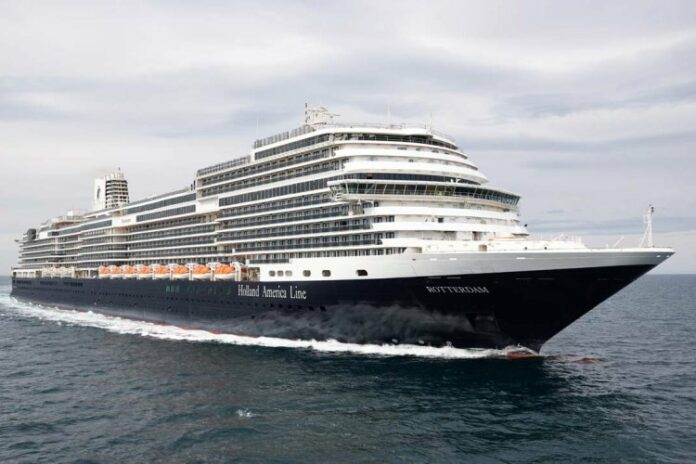
Holland America Line’s Rotterdam has departed on its 14-day maiden voyage from Amsterdam, the Netherlands, to Fort Lauderdale, Florida. 

The 2,668-guest Rotterdam was delivered in July 2021 and is the third in the Pinnacle Class series for Holland America Line. Last week the ship arrived at its namesake city of Rotterdam, the Netherlands, where it was announced that Her Royal Highness Princess Margriet of the Netherlands will be the ships godmother when it is officially named in the spring.

Gus Antorcha, president of Holland America Line, said:

“Rotterdam’s maiden voyage has been highly anticipated for months by our guests and team members eager to welcome them aboard. Rotterdam is a beautiful ship and the fourth in our fleet to begin cruising this year.  We are excited to bring her to Florida and the Caribbean soon on her first sailing.”

Following the transatlantic crossing, Rotterdam will spend from November through April on its inaugural Caribbean Season, with all sailings roundtrip from Fort Lauderdale. The cruises range from six to 11 days and span the entire region on southern, eastern, western and tropical itineraries. Guests looking for a longer getaway can embark on a Collectors’ Voyage — combined back-to-back itineraries that offer an in-depth exploration covering more than one area.

Rotterdam is the seventh ship to bear the name for Holland America Line.

Opinion: Russia will win if Norway abruptly shuts down its oil industry

0

Moe is a political scientist and professor in NTNU’s Department of Sociology and Political Science. He is studying which factors are slowing the transition to greener technologies. 

He says:

“We need to invest heavily in renewable energy and ensure that it becomes competitive in international markets.”

He agrees with experts who predict that Russia will be the winner if Norway abruptly shuts down its oil industry. Norway would lose geopolitically, and Europe would become even more dependent on its neighbour to the east. Moe believes neither Norway nor the climate would benefit from that turn of events.

At the same time, Moe notes that that oil supporters are by no means completely correct in all their views. The more money that is invested in oil, the less is left to invest in new technology. The Norwegian petroleum industry – not offshore wind – was awarded the largest national package of measures during the coronavirus pandemic.

Moe says:

“We need to phase in renewable energy as soon as possible – and for Norway that means investing in offshore wind and carbon capture and storage. Those options aren’t economically profitable yet, and the transition will be difficult. To succeed, we need to look at the climate, energy, the economy and politics as a whole.”

Moe points out that technology which a few years ago was far ahead of its time has quickly become competitive in price. The Norwegian (and mostly state-owned) energy company Equinor recognizes that it can also become dominant in new green technology. However, even when the technology exists, its use depends on complicated political processes that don’t fall into place on their own.

Moe adds:

“We need a transition from a fossil energy system to a renewable energy system – from one structure to another. How do we get there? The future will be about compromises at the expense of principles.”

There’s no question that we have to increase electricity production, and that electricity has to be renewable. Achieving this will require having a policy of structural change.

He says:

“In this area, the election campaign in Norway (in September) was oversimplified in a lot of ways. Too much of the discussion has been about who does and doesn’t want an end date for Norwegian oil production. In many ways that’s a tangential and symbolic issue that takes attention away from what can actually make a difference.”

Moe believes the inflamed debate over wind power and siting wind turbines has marred the Norwegian climate debate. Everyone agrees that we need renewable energy, but no one wants wind turbines in their backyard. Wind power has become an identity policy, where opponents condemn each other instead of working together to find effective political solutions.

He also points out that the wind power debate has been problematic for several political parties – especially the Socialist Left Party and the Green Party, because they have both supporters and opponents of land-based wind power in their ranks.

Moe believes we can’t wait for offshore wind, because developing it will take time and probably become so expensive that the electricity will end up being sold to the continent. That’s good for the climate, because the electricity will replace fossil-fuel energy in Europe – but Norway also has to produce renewable energy domestically.

Source: Norwegian SciTech News

First renderings reveal how Scottish hydrogen-powered ferry could look

0

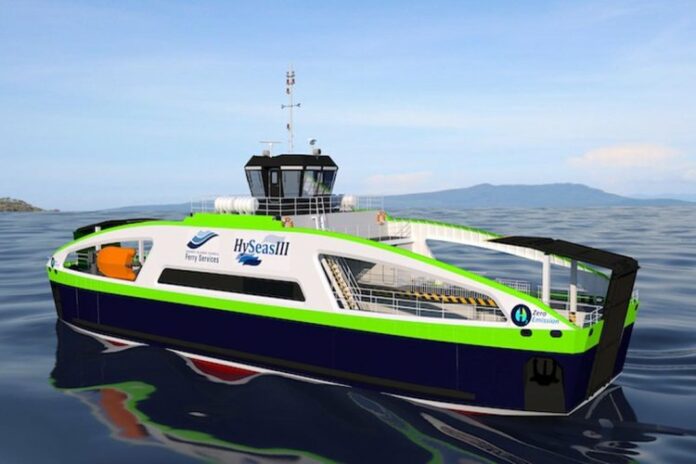
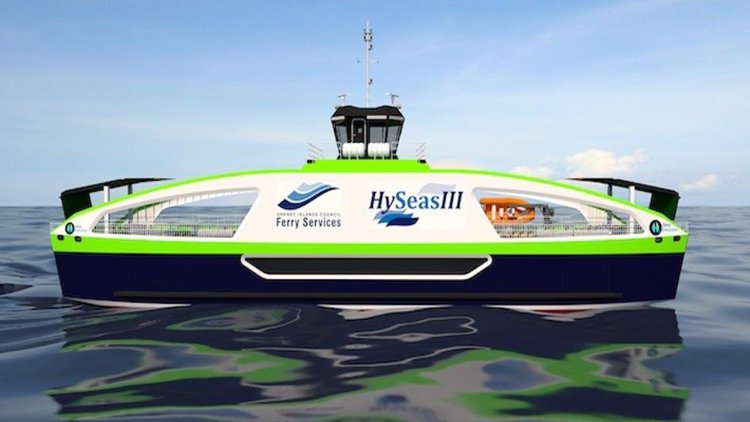
A project to design and build a hydrogen-powered ferry has released the first images of what the craft is likely to look like.

The consortium aims to build Europe’s first sea-going ferry powered by hydrogen fuel cells. Hydrogen ferry designs to date have focussed on sheltered water routes.

The double-ended passenger and car ferry will have capacity for 120 passengers and 16 cars, or two lorries. It has been designed to operate between Kirkwall and Shapinsay in Orkney, where hydrogen is generated through wind power, although it will be capable of operating at other ports where hydrogen is available in future. 

The EU-funded programme involves partners CMAL, St Andrew’s University, Orkney Islands Council and several European organisations. The consortium will next seek feasibility ‘approval in principle’ of the designs by AqualisBraemar LOC Group from the DNV Classification Society. 

String testing is also underway in Bergen, Norway to demonstrate the complete fuel cell-battery-multidrive propulsion. The full-size string test mirrors the load requirements of the new ferry, and will confirm power and fuel capacity requirements. The results will provide valuable information, which will be fed back to the team to be incorporated into the design. 

The partners aim for the design to be complete in March 2022. 

Intellian and Inmarsat launch industry’s newest FleetBroadband terminals

0

The FB250 is a multi-functional terminal, either acting as a stand-alone primary communications terminal or combining with Intellian’s market-leading GX60NX and GX100NX to create the perfect Fleet Xpress (FX) solution. The Fleet One terminal provides an easy-to-install, reliable voice and data solution, ideal for smaller fishing and leisure vessels.

Intellian’s FB250 User Terminal is a compact solution for vessel operations, safety and crew welfare, and is the most innovative and feature-rich FleetBroadband 250 terminal on the market. Enabling simultaneous voice and data connectivity up to 284kbps, the FB250’s class-leading features and future-proofed technology deliver a far more cost-effective long-term investment than competing systems using terminal designs that, in many cases, are now many years old. The FB250’s features include a built-in firewall, analog and digital voice lines, soft PABX and a WAN port, which will support existing and future terrestrial networks such as 3G/LTE/5G and more.

Ideally suited to take advantage of and deliver optimal results from Inmarsat’s springboard for innovation, the ELERA L-band network, the FB250 represents a robust choice for a range of data critical maritime applications, including IoT, smart shipping, ocean monitoring and green energy initiatives.

The new FB250 has been engineered to perfectly complement Intellian’s highly successful GXNX series of Ka-band antennas, creating the most innovative FX product offering on the market.

Meanwhile, Intellian’s Fleet One terminal represents a lightweight, dependable and affordable solution for simultaneous voice and data connectivity of up to 150kbps on smaller vessels. 

Fugro wins 2-year contract for remote positioning services off Indian west coast

0

Fugro will help OCS deliver on ONGC’s Protective Coating of Process Platform Project 1 (PCPP1), an infrastructure project to maintain and refurbish 32 offshore platforms in 7 clusters. The project is expected to be completed by May 2023.

For the first time in India, Fugro will provide survey Geo-data and positioning via remote support solutions controlled from one of its state-of-the-art remote operations centres (ROC). Fugro’s integrated digital solutions will allow OCS to identify debris, seabed features, and subsea pipelines and structures near Process Platform areas to protect the marine environment from future damage. Remote support will also enable OCS to monitor their operations in real-time and thus empower early decision-making as the project progresses.

Sangram Dhote, Director at OCS, said:

“This collaborative approach will set a new standard to managing the safety of operations in the Mumbai High Field.”

Swaminathan Subramanian, Marine Asset Integrity Manager for Fugro in India, said:

“We are very excited to be awarded this contract and are looking forward to collaborating with OCS on a successful project delivery that benefits from Fugro’s remote operations expertise and the highest safety standards.”

Joint development agreement signed between I-Tech and IFF

0

I-Tech, developer of the barnacle-repelling active antifouling ingredient, Selektope®, has entered into a collaboration agreement with IFF, a leader in bioscience and microbial control solutions, with the purpose of identifying potential benefits of combining their technologies.

The two entities seek to explore technical opportunities by combining their respective technologies, which together can offer high performance, sustainable and regulatory compliant solutions against the wide spectrum of marine fouling species. Selektope® offers a novel approach to repel hard fouling organisms efficiently from a submerged surface, while IFF’s SEA-NINE™ platform offers efficient protection against soft fouling and long-lasting performance during the service life thanks to their new encapsulation technology. Both technologies belong to a rare set of active agents that are approved by regulatory bodies in leading nations for ship repair and new ship building.
 
Through the collaboration, both parties will work together to develop active ingredient compositions that would comprise a range of combinations of Selektope®, SEA-NINE™ 211N and SEA-NINE™ULTRA, together with other commonly used ingredients for marine antifoulant applications. Joint investments will include R&D activities where such will be tested in marine environments and analysed to identify potential benefits of using a combination of the technologies in antifouling systems.
 
Dr Markus Hoffmann, Technical Director of I-Tech AB says:

“The market demand for premium sustainable antifouling paints, that are both well-suited to specific ship trading patterns and varying activity levels, in addition to protecting against both soft and hard fouling, is increasing. This collaboration is exploring innovative solutions to meet the future demands of fouling protection. Our combined products are complementary, and the knowledge created in this project will enable our customers to offer new solutions for fouling prevention.”

David Laganella, R&D Director of IFF Microbial Control says:

“We believe that the benefits of our combined technologies, technical expertise and R&D capabilities can go beyond performance improvements and incremental changes in formulation compositions. The results to come could open new ways for the industry to approach copper free formulations, for safer, more cost effective and more sustainable solutions for both humans and the environment.”