-12.3 C
New York
Home Blog Page 523

CGG, TGS and BGP sign agreement with Staatsolie

0

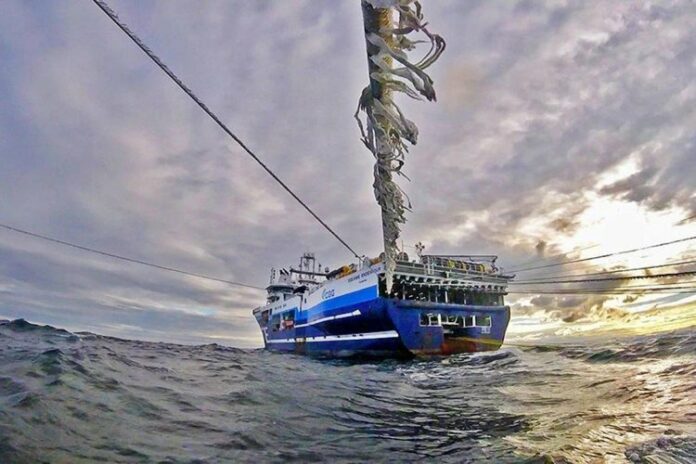
The agreement allows the consortium to acquire, promote and license multi-client seismic programs, including new 3D acquisition and legacy data reprocessing, in the shallow water acreage offshore Suriname. 

Suriname’s shallow offshore acreage includes three blocks recently awarded, and current open acreage slated to be offered in a competitive bid round for 2023. The new seismic data from the consortium’s multi-client programs will be instrumental in accurately delineating the prospectivity and potential of this underexplored area and is on trend with the recent material discoveries announced on the prolific block 58. 

Plans are in place to start acquiring the new 3D seismic data in the shallow offshore area from Q4 2021 with first products being made available during H1 2022. 

Sophie Zurquiyah, CEO, CGG, said:

“CGG brings its multi-client expertise and high-end imaging technology to this major new program that marks our return to the Guyana-Suriname basin after our successful campaign in the Stabroek block. The resulting exceptional data will bring new insight and potentially extend the trend of recent significant discoveries to the shallow waters of Suriname.”

Luo Junchao, President of BGP Offshore, commented:

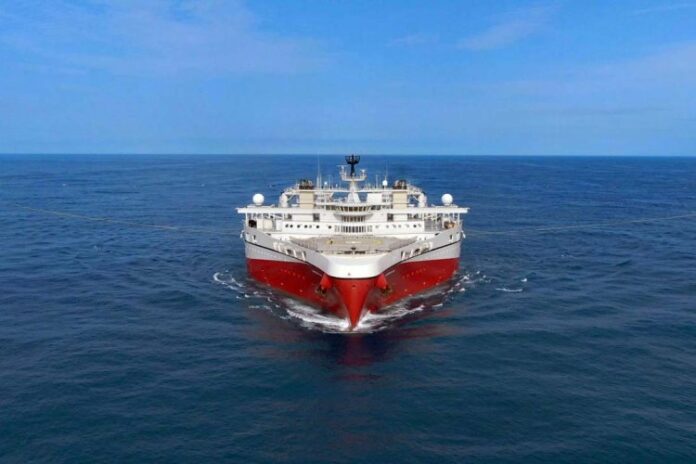
“We are excited to be part of this innovative and pioneering consortium with TGS and CGG providing the industry with a world class ‘drill ready’ dataset.  BGP Offshore will deploy its state-of-the-art 3D vessel BGP Prospector on phase 1 of this project.”

Damen delivers two Multi Cats to Brabo in Antwerp

0

The group’s cleaning division, Brabo Cleaning Company, has secured a contract with Port of Antwerp to maintain a pollution-free environment in the harbour.

The naming ceremony took place at Brabo’s headquarters in Antwerp on 21st October. 

The customisation of the Multi Cats was carried out by Damen Shipyards Hardinxveld, supported by Brabo Cleaning Company’s supplier, Van de Velden Pipe Inspections & Solutions. This included outfitting the vessels with a vacuum installation, oil booms, high pressure units in the pump room, hot water units, discharge pump and a grabber in the vessels’ crane to collect larger elements.

In the case of the Multi Cat 1506, the yard also raised the wheelhouse in order to create the space for the pump room. All of the cleaning equipment is installed modularly and can, therefore, be easily adjusted or removed in the future should the vessels take on different functions.

Given the role the Multi Cats will fulfill in keeping the Port of Antwerp clean, it is crucial that their own performance be clean and efficient. Applying its in-house developed selective catalytic reduction (SCR) technology, combined with a particle filter, Damen has significantly reduced the vessels’ NOX emissions. Performance is in line with Euro Stage V regulations for vessels operating in inland- and coastal waters. The performance is also compliant with IMO Tier III for seagoing vessels.

Seaspan claims Canada’s first renewable gas bunker trial

0

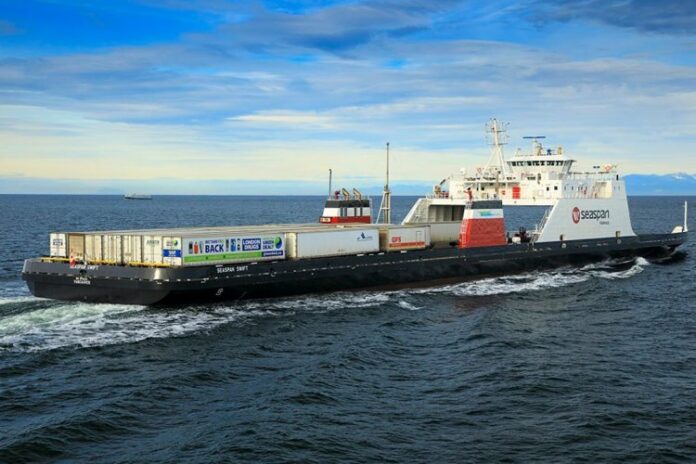
This week, Seaspan Ferries Corporation (Seaspan) became the first Canadian marine company to pilot the use of Renewable Natural Gas (RNG) to reduce greenhouse gas emissions produced by its roll-on, roll-off liquefied natural gas (LNG) powered marine fleet. Seaspan expects that data from the pilot will confirm that, by using RNG, greenhouse gas emissions can be reduced by upwards of 85 per cent versus traditional diesel fuel.

As part of Seaspan’s continued efforts to reduce vessel emissions and explore alternative fuels, the company has worked closely with FortisBC Energy Inc. (FortisBC) to secure a source of certified carbon neutral RNG.

Harly Penner, director of fleet engineering and vessel development at Seaspan, said:

“Renewable Natural Gas, when used in our fleet in conjunction with traditional natural gas, will allow us to move towards our emissions reduction goals and make a real impact on our carbon footprint. It also allows us to leverage the growing production of RNG in our region. We look forward to continuing to work on growing our sustainability efforts in the near future.”

FortisBC’s RNG program re-opened to new subscribers on October 15 this year as the company has been successful in dramatically increasing supply over the last year. By the end of 2021, FortisBC expects it will have tripled its RNG supply from 2020 and is poised to potentially triple it again by the end of 2022 if expected projects proceed on pace.

Mike Leclair, vice-president, major projects and LNG at FortisBC, said:

“We know that our future is a renewable one – so when Seaspan approached us about being a part of an RNG pilot for marine LNG vessels, we were tremendously excited. Using Renewable Natural Gas for marine LNG has the potential to be an emissions game changer for the sector and is yet another example of how renewable gas development is transforming our natural gas infrastructure into a delivery system for carbon neutral energy, supporting B.C’s climate action goals.”

When bacteria breaks down organic waste from sources such as landfill sites, agricultural waste and wastewater from treatment facilities, it produces a biogas mostly made of methane. FortisBC captures and purifies this biogas to create RNG, a certified carbon neutral energy source, preventing the release of methane into the environment. As RNG mixes seamlessly into the existing natural gas infrastructure, it displaces equivalent volumes of conventional natural gas and lowers greenhouse gas emissions overall. Like conventional natural gas, RNG can be used as a transportation fuel in the form of compressed natural gas or LNG. Renewable Natural Gas has been approved by BC’s Ministry of Energy, Mines and Low Carbon Innovation for inclusion within the province’s Low Carbon Fuel Standard for transportation.

Increasing the use of renewable gases, like RNG, is an important part of meeting the targets of the Province’s CleanBC plan and is a cornerstone of FortisBC’s 30BY30 target to reduce its customers’ greenhouse gas emissions by 30 per cent by 2030. FortisBC believes applying carbon-neutral energy to proven technology like LNG powered marine engines provides a viable way for forward thinking marine shipping companies like Seaspan to reduce greenhouse gas emissions and strengthens B.C.’s potential credentials as a desirable LNG marine fuelling hub.

SHI selects GTT to design the fuel tanks for six new container vessels

0

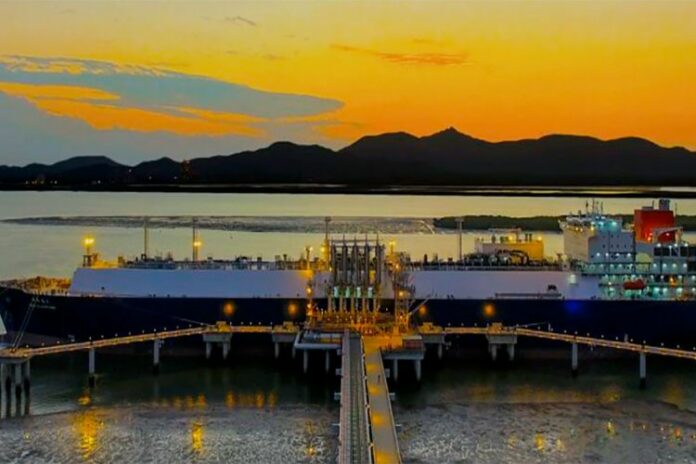
Used as a marine fuel, LNG is today the best industrial tool to preserve air quality, a major public health issue. It reduces sulfur oxide emissions by 99%, fine particles by 91% and nitrous oxide emissions by 92%. It also reduces ship emissions by up to 20% of CO2 compared to a conventional ship.

Each LNG fuel tank will be fitted with the Mark III membrane containment technology developed by GTT, demonstrating that GTT technology is as attractive for mid-size size container vessels as for very large ones. The vessels deliveries are scheduled to occur between the third quarter of 2023 and the fourth quarter of 2024.

In addition to the engineering services and technical assistance at the shipyard, GTT will assist the operator through every step of its first LNG-fueled projects: commissioning of the LNG tank, first LNG bunkering operations, as well as further specific LNG operations and maintenance of the vessels. Moreover, GTT will provide LNG training for the crews, supported by its proprietary G-Sim® training simulator, which replicates the future LNG operations of the vessels. GTT will also offer its HEARS® emergency response service with 24/7 technical assistance. 

In addition, GTT will fit these six vessels with its “GTT Digital” platform, a “smart shipping” solution to monitor and optimize the operational performance of the vessels and further reduce their energy consumption and environmental footprint.

Philippe Berterottière, Chairman and CEO of GTT, declared:

“This new order confirms the performance and safety of GTT solutions adapted to the use of LNG as a marine fuel, both for mid-size and large container vessels, thus contributing to the decarbonization of ships. The GTT teams are proud to contribute, alongside its partners, to the energy transition of maritime transport.”

Qatargas completes environmental project to protect Qatar’s marine biodiversity

0

Qatargas, in collaboration with the Ministry of Municipality and Environment (MME) and Qatar University (QU), has stewarded a unique and ambitious Coral Management Programme (CMP) focused on sustaining and preserving Qatar’s marine biodiversity. 

The programme, aligned with the Environmental Developmental Pillar of Qatar National Vision 2030, comprises Artificial Reef Deployment and Coral Relocation as well as the first of its kind land-based Coral Nursery. The programme also includes a long-term, comprehensive monitoring plan for the relocated corals, with eventual handover of all relocation zones to the MME for incorporation into the State of Qatar’s protected natural reserve. 

Qatargas has a proud legacy of marine biodiversity protection.  Since 2007 the Company has relocated over 7,500 live corals from nearshore pipelines to offshore protected areas, including the deployment of over 400 artificial reef modules at several marine locations around Qatar. 

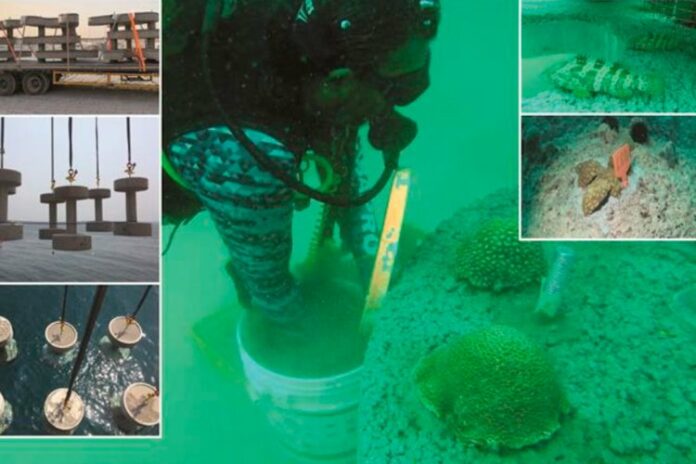
Qatargas’ current CMP has been implemented as mitigation for the North Field Production Sustainability (NFPS) Project. As part of the programme, over 150 sets of hybrid Artificial Reefs were deployed near Al-Ghariya in northern Qatar. These reef modules were locally fabricated using an environmentally friendly concrete mix, and deployed following a comprehensive Marine Environmental Assessment (MEA) of the Al-Ghariya site. The deployment was followed by meticulous relocation of 1,250 live corals from the NFPS project site to Al-Ghariya. 

Additionally, the CMP includes the establishment of a unique land-based Coral Nursery at the Aquatic Fisheries Research Center (AFRC) in Ras Matbakh in northern Qatar. Over 400 live corals were taken to the Nursery for coral husbandry and the extracted corals were rehabilitated and fragmented.  The fragmented corals were then out-planted to carefully selected recipient sites north of Sheraoh Island. To get a first-hand understanding of the nursery programme, officials from MME, Qatargas and QU recently paid a visit to the AFRC lab and interacted with the scientists and researchers. 

The Coral Nursery has the potential to become a National Coral Bank, thereby contributing to future marine biodiversity and coral protection projects, both in Qatar and the region. Moreover, it will optimize the Technological Readiness Level (TRL) of the procedures and facilities for propagation of local coral species in a land-based nursery. This unique programme is expected to pave the way forward for sustainable marine ecosystem preservation methods.

PGS enters collaboration with Magseis Fairfield

0

The strategic collaboration has a global scope with an initial focus on the North Sea, and a duration of one year with options to extend by two plus two years.

The hybrid market is defined as the contemporaneous use of towed streamer and ocean bottom node acquisition technologies.

Rune Olav Pedersen, CEO in PGS, says:

“We believe the strategic collaboration with Magseis Fairfield, the industry leading node company, will create a unique opportunity to take advantage of the untapped potential in the growing hybrid seismic acquisition market. We have experience from joint streamer and node projects. However, combining resources with Magseis Fairfield positions us much better to provide our clients with the best possible solutions.”

Carel Hooijkaas, CEO in Magseis Fairfield, says:

“We are pleased to enter into a strategic collaboration with PGS. The combination of their high-end streamer and source technology and our proprietary innovative node technology will position us well to capture growth opportunities adding to our current node acquisition business. We see increased customer interest in hybrid surveys.”

Jan De Nul successfully reburies export cable at Eneco’s wind farm

0

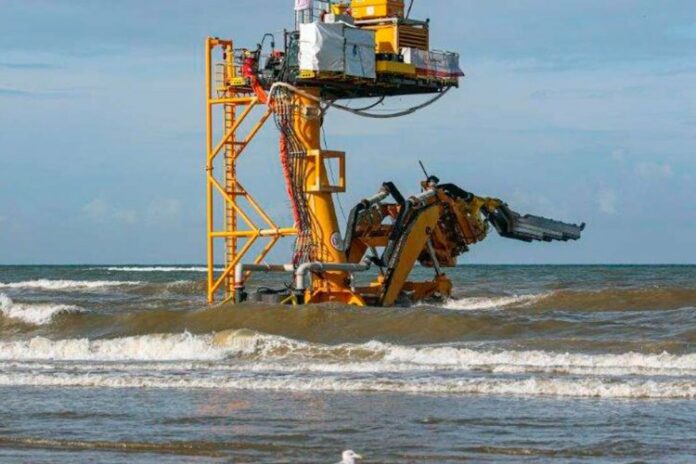
To this purpose, Jan De Nul modified its in-house designed and fabricated intertidal trencher Sunfish and successfully reburied the nearshore section of the cable to a minimum depth of 2.5 metres below the seabed.

Due to morphological changes the export cable burial was over the last few years decreasing in depth within the nearshore section. To guarantee the cable will at all times remain sufficiently buried and thus protected, a reburial campaign was requested by Eneco.

Since the section of decreased burial depth was located in the nearshore zone, it was not accessible with typical offshore trenching vehicles nor could it be easily accessed from the beach. Jan De Nul offered Eneco the solution by mobilizing its intertidal trencher Sunfish. The Sunfish successfully lowered the nearshore part of the cable working up to 1 kilometre offshore and a water depth of 8.5 metres.

Tom Baguet, Project Manager at Jan De Nul Group:

“Deepening the live export cable in a challenging intertidal zone with our unique in-house designed trenching vehicle Sunfish proves our expertise in various operational fields.”

Specifically for this project, the Sunfish was modified to a suitable post-lay jet-trenching vehicle with 2 water pumps delivering each 1250 m³/hr jet water and 3.5 m long jet swords.

The Sunfish was initially designed as a ploughing machine suitable for working in tidal areas. In this configuration, the Sunfish successfully buried export cables on the Race Bank project in the UK in 2016. Jan De Nul engineers converted the machine later into an excavator with a chain cutter, a configuration which was used for the burial of the Rentel export cable in Belgium in 2017. Today, the Sunfish successfully completed the Eneco Luchterduinen export cable reburial in jetting configuration by using water under high pressure.

To accurately locate the cable, the Sunfish was further equipped with 2 sets of innovative cable tracker sensors of SMD’s innovative tracking system ‘Artemis’ using the live tone of the cable. As a result, Eneco did not have to switch off the wind farm during the entire campaign.

Lee Carden, SMD Head of Sales for Artemis:

“SMD very much appreciated this opportunity to continue to trial our Artemis cable tracking technology on live projects. Following a robust series of offshore trials, this project enabled live cable reburial operations to be completed without turning off windfarm power.”

APM Terminals and ZPMC enter into strategic alliance

0

A memorandum of understanding between the companies will change equipment purchasing from a purely transactional process to a more strategic collaboration with strong focus on automation.

With automation being one of the key components of APM Terminals’ strategy of “Safer, Better, Bigger”, it is critical for the company to have access to adequate, state-of-the-art automated equipment for its diverse terminal portfolio. However, the common industry practice of transactional customer-supplier relationships has proven less effective in complex automation deployments that require a more integrated approach between APM Terminals and the supplier. 

Therefore, APM Terminals is implementing a strategic alliancing framework, initiated with the signing of an Alliance Memorandum of Understanding with port equipment manufacturer ZPMC (Shanghai Zhenhua Heavy Industries Company Limited). The focus of this memorandum is the joint development and deployment of a wide range of automated solutions, including automated container handling equipment.

Signed on October 11th by APM Terminals CEO Morten Engelstoft and ZPMC Chairman and President Liu Chengyun in a virtual ceremony, the Memorandum of Understanding also includes an order for 18 Ship-to Shore (STS) Cranes and 9 Yard cranes across 6 terminals and the reservation of production slots for additional 25 STS cranes and 62 Yard cranes in the future.

APM Terminals CEO Morten Engelstoft comments:

“With this alliance, we are leveraging our 23 year-long relationship more effectively, in which APM Terminals demonstrates strong commitment towards ZPMC and in return receives prioritization of factory capacity, access to the best resources, active involvement in product development according to our needs and a commitment to maintain the relationship on long-term basis.”

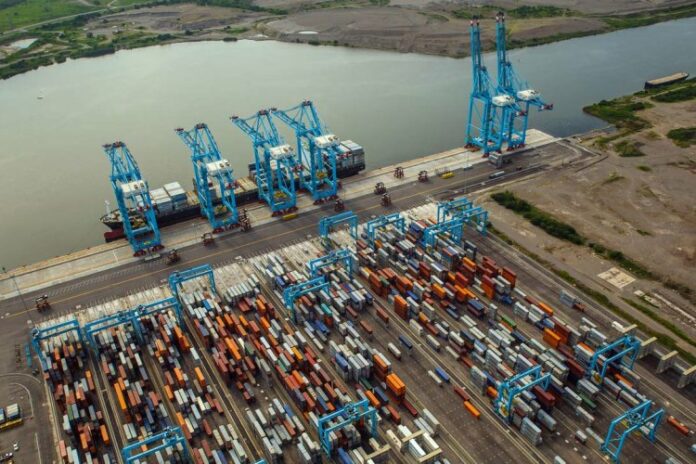
ZPMC’s automated equipment is already in operation in several of APM Terminals’ facilities, namely in Vado Ligure (Italy), Lazaro Cardenas (Mexico) and its latest automated terminal in Tangier, Morocco. Most recently, the company is also running a pilot with ZPMC’s Automated Straddle Carriers in its Aarhus (Denmark).

Mr Chengyun added:

ZPMC Chairman and President, Mr Liu Chengyun highlighted the progress his company has already made in several domestic automation projects in China. “I hope these good experiences will now translate into even better results for APM Terminals, as we now embark on this strengthened collaboration based on innovation and co-development.”

As well as the automation focus of the Memorandum of Understanding, both parties expect the new framework to also spark closer collaboration in areas like safety, supply chain and decarbonisation.

HMM to launch new Far East Asia – Latin America Service

0

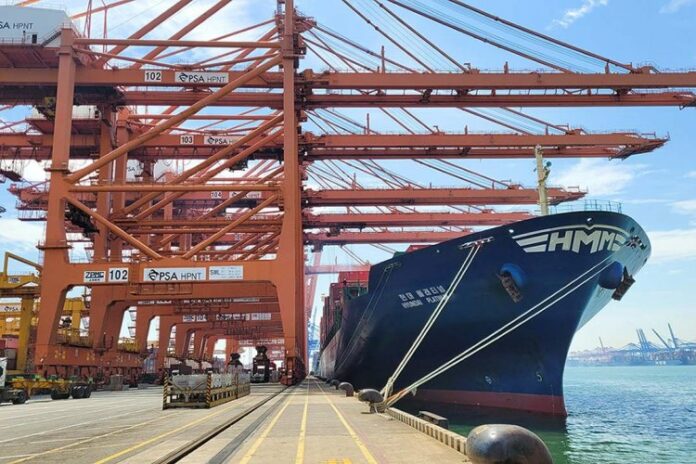
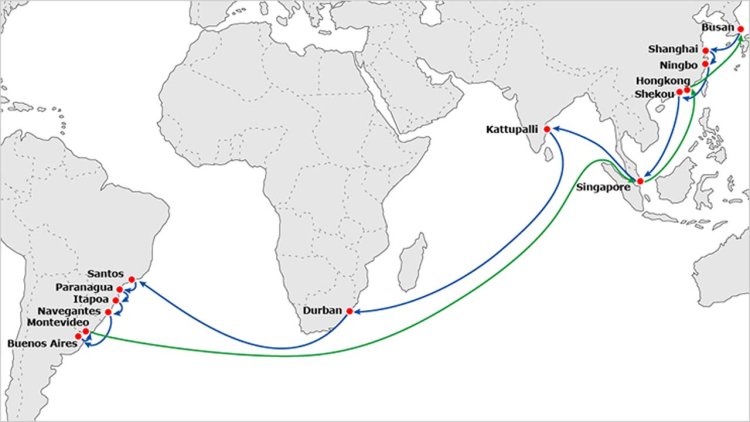
The new service is known as the Far East-India-Latin America Service (FIL) and will be operated solely by HMM.

The first sailing of the FIL service will commence from Busan on 7 December and the round trip will take 84 days.

The port rotation is as follows:

Busan, Shanghai, Ningbo, Shekou, Singapore, Kattupalli, Durban, Santos, Paranagua, Itapoa, Navegantes, Buenos Aires, Montevideo, Singapore, Hong Kong, and Busan.

An HMM official said:

“With the introduction of the FIL service, we are expected to provide our customers with a more efficient and reliable service. We will continue to expand our presence in the Latin America trade that has a high potential for future growth and development.”

CSA’s expedition with USCG and NOAA leads to the discovery of USRC Bear

0

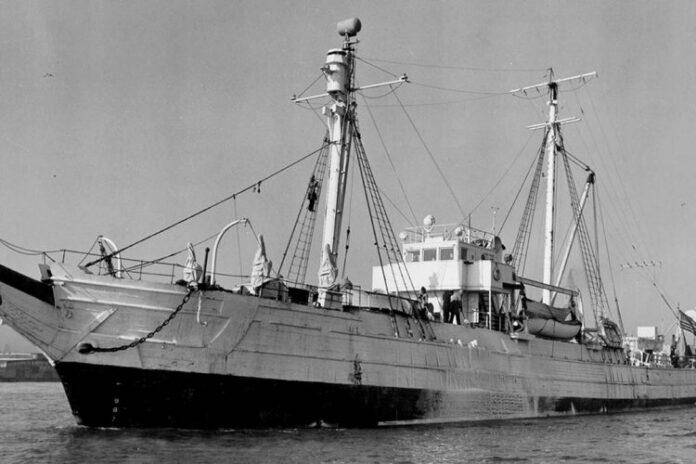
CSA Ocean Sciences Inc. (CSA) has revealed details of a historic geophysical marine survey conducted in September 2019 off Nova Scotia, which resulted in the recently confirmed identification of the sunken US Revenue Cutter Bear.

The two-week reconnaissance mission was carried out in partnership with the National Oceanic and Atmospheric Administration (NOAA) and the United States Coast Guard (USCG), with the primary objective of locating and cataloging acoustic targets that might pinpoint the final resting place of the fabled 190-foot vessel.

The data collected from the 2019 campaign identified two key targets, one of which the expedition team believed was almost certainly the USRC Bear based on the historical records of her sinking in 1963, in waters approximately 260 miles due east of Boston and 90 miles south of Cape Sable, Nova Scotia. Expert marine archeologists subsequently pored over the remote sensing data and, earlier this year, the USCG and NOAA researchers returned to the site of the 2019 discovery to deploy a remotely operated vehicle (ROV) equipped with high-resolution underwater video cameras to gather conclusive evidence. The USGC’s announcement last week confirming that the 2019 sighting is the USRC Bear ends the agency’s two-decade long search for the iconic patrol boat.

CSA not only provided the Lead Survey Technician, John Bright, but also much of the sophisticated instrumentation used to gather critical seafloor data, including a Klein 3900, an extremely high-resolution dual-frequency sonar system with 445 kHz for extended range and 900 kHz for enhanced clarity of identified targets. The sonar was towed behind the vessel via an armored coaxial towcable spooled onto a 10-horsepower self-contained hydraulic winch powered by 460 volts.

The survey covered more than 62 square nautical miles of the seabed, running a total of 558 linear miles at 4-5 knots. The research party, which in addition to Mr. Bright, included Mission Coordinator Brad Barr (NOAA), Operations Coordinator Joseph Hoyt (NOAA), and POA Beth Crumley (USCG), operated on 12-hour rotations, logging data (ensuring line files were recorded correctly), target logging, maintaining a manual event log, communicating with the bridge on speed and turns to ensure proper towfish altitude, and managing the tether/winch as required. CSA expertise greatly assisted the team with survey mobilization, online operations, and sonar data processing.

Kevin Peterson commented:

“The recent confirmation that the 2019 discovery is indeed the remains of the USRC Bear is a source of much pride for the team at CSA. This is an exciting time for the marine archaeology community, not just because we can now study the conditions of this elusive wreck site, but because we now operate in a technological age that promises to accelerate the rate of similar such discoveries in the future. Furthermore, this highly collaborative project amply showcases what’s possible with focused cooperation across synergistic public agencies and commercial entities like CSA.”

The USRC Bear, built as a sealer in 1874, was purchased by the United States in 1884 and served nearly 80 years in the US Revenue Cutter Service, the US Coast Guard, and the US Navy. The ship saw action in both World Wars, as well as famously patrolled the Arctic for 41 years performing search and rescue operations.