-11.6 C
New York
Home Blog Page 525

Wärtsilä and Solvang to install retrofit CCS system on Clipper Eos

0

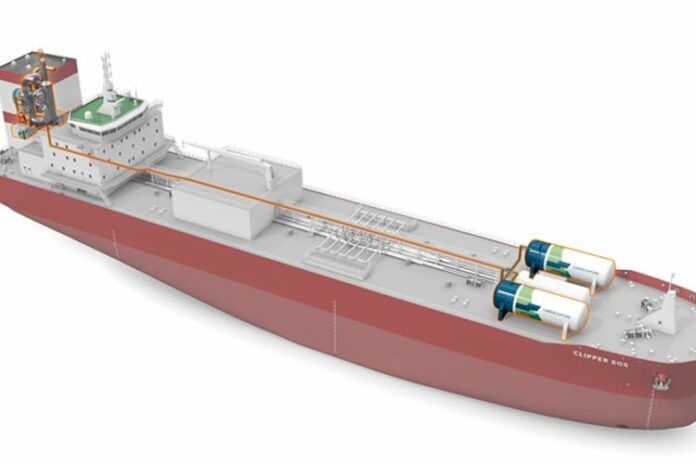
Wärtsilä Exhaust Treatment and Solvang ASA, a Norwegian shipping company, have agreed on a full-scale pilot retrofit installation of a carbon capture and storage (CCS) system on one of Solvang’s ethylene carriers, the 21,000-cbm Clipper Eos. 

Wärtsilä Exhaust Treatment designs the retrofitted unit while it also completes a land-based 1MW test system at its Moss headquarters in Norway. The land-based unit will be completed in autumn 2021, and the companies expect to retrofit the pilot CCS system on the Clipper Eos by 2023.

The agreement reinforces Wärtsilä’s continued research and development into carbon capture at the point of exhaust to support the shipping industry’s decarbonisation pathway.

The project will enable both Wärtsilä and Solvang to strengthen their position at the cutting edge of sustainable technology development in shipping. To remain in line with the IMO’s decarbonisation targets, Wärtsilä is initially aiming for a 70% reduction in CO2 emissions at the point of exhaust with its pilot unit. 

Commenting on the announcement, Sigurd Jenssen, Director at Wärtsilä Exhaust Treatment, said:

“Joining forces with Solvang to build and retrofit a commercially viable CCS technology demonstrates to the industry that we are only two or three years away from bringing to market another vital tool in shipping’s decarbonisation toolkit. We are excited to see how this collaboration with Solvang evolves in the coming months. Our land-based test unit is nearing completion, and we will then move to making it a reality on the Clipper Eos, ensuring that both Wärtsilä and Solvang remain at the forefront of maritime sustainability technology advancement.”

Edvin Endresen, CEO at Solvang ASA added:

“Carbon capture and storage is an exciting development that we are proud to support, and strongly believe that this technology could be an important key to decarbonize the world’s deep-sea fleet. As a forward-thinking company that is equally passionate about ensuring the industry’s transition to decarbonisation, Wärtsilä is the perfect partner as we look to scale up sustainable technologies across our fleet and reduce shipping’s environmental impact on the world.”

The vessel, “Clipper Eos” has been time chartered by Marubeni Corp., Tokyo since her delivery from the shipyard in 2019. Marubeni, having more than 40 years’ experience trading and handling ethylene, advise that they are committed to cooperating with Solvang and Wärtsilä to enable the parties to perform relevant testing and installation of equipment on the vessel in a mutual effort to drastically reduce the CO2 footprint of the vessel.

In addition to signing a Letter of Intent with Solvang and scaling its Moss CCS test unit, Wärtsilä recently announced it is partnering with the LINCCS consortium to scale and create carbon capture technologies and infrastructure. The consortium recently received 111m Norwegian Kroner in funding to CCS research and development.
OneOcean brings voyage optimisation solutions to Marlink Partner Programme

0

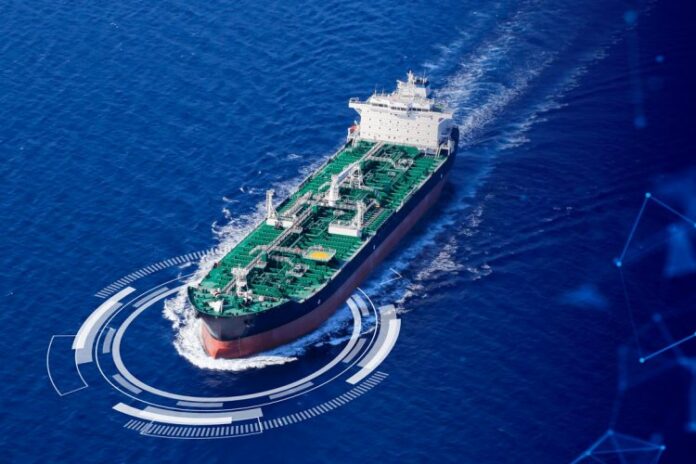
Marlink has partnered with OneOcean Group to add a range of advanced voyage solutions to its Application Partner Programme.

The Marlink Application Partner Programme enables selected solution providers to optimise provision of services via its application management platform and enjoy streamlined and secure delivery of data and resources without the need for USB sticks or CD-ROMs.

This collaboration, which teams OneOcean’s leading solutions with the ease of provision afforded by Marlink’s application management platform, will give shoreside teams and seafarers swift, up-to-the-minute access to some of the best software on the market to enhance voyage planning and increase safety. All information required to remain compliant and minimise environmental impact is centralised and dynamically updated. Information on the local marine environment is supplied in real-time, helping crews to make critical decisions that minimise the impact of their operations.

Martin Taylor, CEO of OneOcean, said:

“OneOcean is focused on putting digital solutions in the hands of seafarers to facilitate faster and smarter ship management; the products in our portfolio work together to improve workflows, facilitate communication and ultimately deliver real benefits for our customers and the maritime industry. This partnership with Marlink on the Application Partner Programme aligns with our strategy and builds on the special relationship between the two companies to deliver solutions that reinforce safer, cleaner and more efficient working practices.”

Nicolas Furgé, President, Digital, Marlink, said:

“The Application Partner Programme is building consistently into a powerful platform that puts the tools of digitalisation into the hands of ship managers and mariners, with clear synergies for the vessel operations. Digitalisation will make the maritime industry smarter, safer and more efficient which it needs to be in order to tackle the challenges of reducing greenhouse gas emissions, increasing automation and improving safety.”

East Coast Cluster selected as one of the UK’s first two CCS projects

0

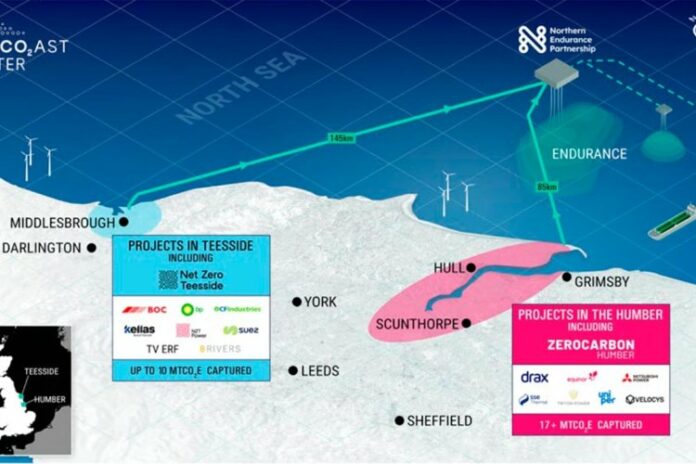
The East Coast Cluster (ECC) has been named as one of the UK’s first carbon capture, usage and storage clusters following a successful bid to the Department for Business, Energy & Industrial Strategy (BEIS).

The ECC was named as a “Track-1” cluster, putting it on course for deployment by the mid-2020s.

The successful bid, led on behalf of the ECC by the Northern Endurance Partnership, is a major step towards achieving the UK government’s world-leading ambition to establish the first ‘net zero’ carbon industrial cluster in the UK by 2040. It also represents a significant boost for the industrial heartlands of Teesside and the Humber.

Louise Kingham, senior vice president, Europe & head of country, UK, said:

“The East Coast Cluster can play a critical role in the UK Government’s levelling up ambition, supporting thousands of jobs and investing in local communities. Teesside and the Humber were once the industrial heart of the UK. Today’s announcement paves the way for them to become the green heart of the country’s energy transition, shepherding in the next generation of industry and ways of working.“

The East Coast Cluster will be vital for supporting low-carbon industry and power projects across the region, including those in Net Zero Teesside and Zero Carbon Humber, two of the country’s leading industrial decarbonisation proposals.

Once operational, the cluster has the potential to transport and securely store nearly 50% of all UK industrial cluster CO2 emissions – up to 27 million tonnes of CO2 emissions a year by 2030.

The project aims to create and support an average of 25,000 jobs per year between 2023 and 2050, with approximately 41,000 jobs at the project’s peak in 2026. These skilled jobs in exciting new industries, including industrial carbon capture, low-carbon hydrogen production, negative emissions power, and power with carbon capture, can play an important part of levelling up in the UK.

Andy Lane, MD of Northern Endurance Partnership, said:

“Today is a significant milestone on our country’s journey to net zero emissions by 2050. We are delighted that the East Coast Cluster has been selected and we will look forward to delivering our project, removing up to 50% of the UK’s industrial cluster CO2 emissions, creating tens of thousands of jobs and establishing the UK as a leader in the energy transition”.

Grete Tveit, Senior Vice President for Low Carbon Solutions at Equinor, which is a partner of Zero Carbon Humber, Net Zero Teesside and Northern Endurance Partnership said:

“We’re delighted that the East Coast Cluster has reached this milestone. As we mark and celebrate this major step, we look forward to continuing working closely with our partners, local communities, businesses, industry, and academia to deliver this ambitious and world-leading project that will play a major role in levelling up across the country”.

Cordi O’Hara, President of National Grid Ventures, said:

“We are incredibly proud to be part of a project that is going to have such a positive impact on the people of the Humber and Teesside. The East Coast Cluster will help to revitalise one of the UK’s most important industrial heartlands, creating tens of thousands of jobs for decades to come. It will also build a solid foundation to establish the Humber and Teesside, as well as the UK, as a globally-competitive climate-friendly hub for industry and innovation.”

Louise Kingham, senior vice president, Europe & head of country, UK at bp said:

“The East Coast Cluster can play a critical role in the UK Government’s levelling up ambition, supporting thousands of jobs and investing in local communities. Teesside and the Humber were once the industrial heart of the UK. Today’s announcement paves the way for them to become the green heart of the country’s energy transition, shepherding in the next generation of industry and ways of working.”    

Kongsberg launches new frontend to their maritime digital ecosystem

0

Kongsberg Digital is today launching their new frontend to their maritime digital ecosystem, the Kognifai Marketplace. 

Andreas Jagtøyen, Executive Vice President of Digital Ocean, Kongsberg Digital, said:

“Collaboration is key in digitalizing the maritime industry. That is why we created the first open maritime digital ecosystem, Kognifai, in 2017. Four years in, we have a fast-growing number of partners offering a variety of different digital solutions on top of our Vessel Insight data infrastructure. Now we want to make it even easier for customers to navigate this offering and find the best solution for their unique needs – by offering a true one-stop-shop for maritime digitalization.”

On the Kognifai Marketplace customers can choose from numerous powerful applications that turn their vessel data into value. This will enable the industry to accelerate performance and sustainability efforts and increase profitability through utilizing new technologies and innovation. The applications are covering a wide range of solutions from maintenance optimization and equipment monitoring, fuel management, route and voyage planning to market intelligence.

All applications on the Kognifai Marketplace are supported by Kongsberg Digital’s Vessel Insight secure data infrastructure. Vessel Insight is delivered as a subscription-based service, which means no need for large up-front investments and costly updates.

Andreas Jagtøyen said:

“Every ship owner has unique needs and requirements, which also change over time. The Kognifai Marketplace will make it easier to find and access the best solution at any time. Since all these applications are integrated with Vessel Insight, the users can try out and switch between solutions as they progress on their digital journey.”

SunStone’s Ocean Victory expedition cruise vessel delivered

0

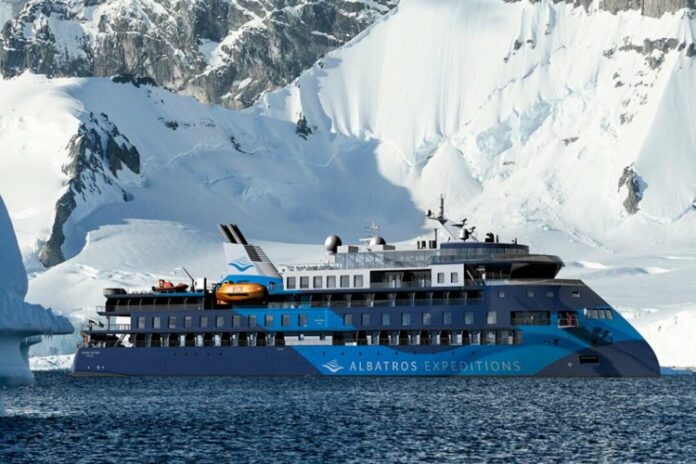
The ‘Ocean Victory’ is one of six cruise vessels being constructed for SunStone Ships. All have been based on the CX103 design by Ulstein Design & Solutions. The ‘Ocean Victory’ will be operated by Victory Cruise Lines for the summer season and Albatros Expeditions for the winter season.

After the sea trial of the ‘Ocean Victory’, Albatros Expeditions announced record-low emissions per passenger.

The President at Albatros Expeditions, Hans Lagerweij, said:

“Our first sailing is on the 26th of November, a fully sold-out one looking at a sun-eclipse between Antarctica and South Georgia. I expect our guests to be thrilled by the comfort and facilities, while at the same time still having the cosiness and compactness of the small expedition cruise vessels that started our industry. The ship is easy to find your way around, and it will be an excellent place to make new international friends. Finally, I am expecting our guests to be extremely happy about the performance and stability of the X-BOW on the Drake passage, a challenge we have to cross on the way to Antarctica!”

Lead Naval Architect Torill Muren, who has been first-hand in experiencing the movements across the Drake Passage, comments:

“We have developed a vessel where the hull has been optimised for low fuel consumption with CFD (computational fluid dynamics) analysis. In addition, we have implemented the ULSTEIN X-BOW hull line design, a solution firstly introduced to the offshore segment and only recently to the cruise industry. In addition to fuel savings, the X-BOW softens the movements in head seas, reducing slamming and vibrations, and increases the comfort and rest for passengers and crews.”

Piracy incidents at lowest level in decades, but IMB cautions against complacency

0

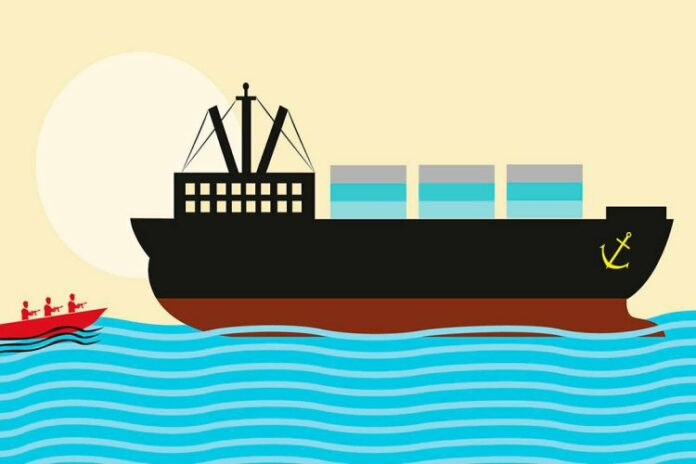
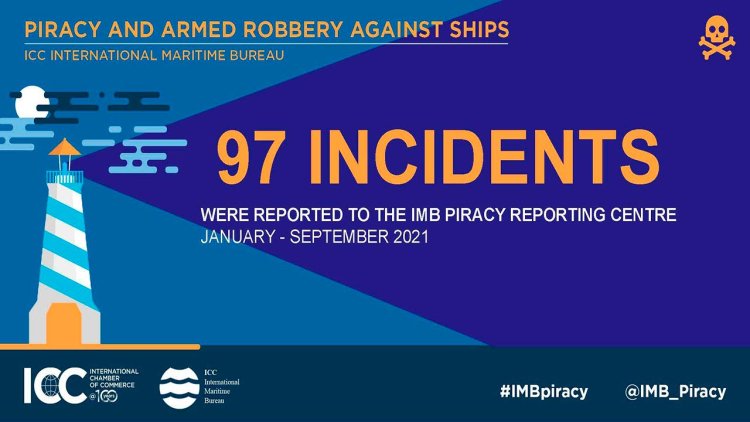
IMB’s latest global piracy report recorded 97 incidents of piracy and armed robbery for the first nine months of 2021 – the lowest level of reported incidents since 1994.

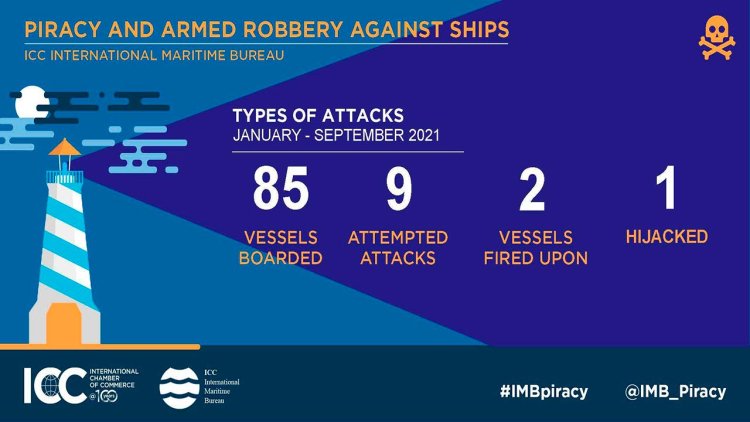
In 2021, IMB’s Piracy Reporting Centre (PRC) reported 85 vessels boarded, nine attempted attacks, two vessels fired upon and one vessel hijacked.

Reported incidents are down to their lowest level in decades, but violence against seafarers has continued with 51 crew kidnapped, eight taken hostage, five threatened, three injured, two assaulted and one killed, according to the latest IMB statistics.

While the reduction of reported incidents is a welcome, IMB PRC warns that seafarers must remain vigilant as violence against crew remains high in many areas of the world.

The Gulf of Guinea region recorded 28 incidents of piracy and armed robbery in the first nine months of 2021, in comparison to 46 for the same period in 2020. Most notably, Nigeria only reported four incidents in the first nine months of 2021, in comparison to 17 in 2020 and 41 in 2018. Crew kidnappings in the region have dropped with only one crew member kidnapped in Q3 2021, compared to 31 crew members taken in five separate incidents during Q3 2020. All Q3 incidents in 2021 were also against vessels at port anchorages whilst the average successful kidnapping location in Q3 2020 was approximately 100NM from land.

The overall reduction of piracy and armed robbery incidents in the region is a testament to enhanced maritime security and response coordination measures adopted by regional and national authorities, according to IMB. Despite these gains, IMB warns that the risk to crew remains high in the region and that such efforts must therefore be sustained.

The Singapore Straits reported 20 incidents of armed robbery – the highest number recorded since 1991. Reported incidents in the Singapore Straits are up from 15 in 2020 and just one incident in 2019. These attacks are low-level and opportunistic in nature, but IMB warns that the perpetrators pose a direct threat to seafarers and vessels underway. In four incidents, crew were either threatened, assaulted, or injured.

The Callao Anchorage in Peru is another area that has witnessed an increase of piracy activity with 15 reported incidents in 2021 – the highest number since 1991. As with the Singapore Straits, these incidents are low-level thefts with knives being reported in 60% of the incidents. Attackers in the region possess the capacity to carry out violent attacks with three crew taken hostage and a further one each assaulted or threatened during the first nine months of 2021.

The IMB PRC reported a noticeable reduction in the number of reported incidents in Indonesian waters with only six low-level incidents reported in the first nine months of 2021, compared to 23 incidents during the same period in 2020. This is the lowest total of reported piracy and armed robbery incidents in Indonesian waters since 1993. The report commends the policies and proactive response measures implemented by the Indonesian Marine Police informed IMB PRC reporting.

HullWiper co-founds new hull maintenance partnership Intertrac HullCare

0

HullWiper has joined forces with International Paint, a subsidiary of ship hull paint and performance coatings specialist AkzoNobel, and underwater drone ROV specialist Orobotix to provide ship owners and operators with comprehensive hull care support in a new partnership named Intertrac HullCare.

The partnership offers high-performance coating schemes from International Paint tailored for different vessel types and operating profiles, which are maintained using sustainable hull cleaning solutions through HullWiper’s global network of partners as well as regular underwater inspections using Orobotix drones.

The end-to-end hull maintenance service allows for regular inspections, analysis and reporting to track hull condition. This enables vessels to save on fuel consumption while enhancing vessel speed and efficiency, and to comply with port and shipping authority anti-biofouling regulations worldwide and to meet BIMCO reclamation standards.

Customers will have access to the latest ROV inspection information in quarterly reports, and annual condition reports which will include biofouling development assessments in line with the ISO 19030 standards. To date, Intertrac HullCare has completed more than 60 inspections on a wide range of ships in the Far East, Middle East and Europe.

Simon Doran, HullWiper MD, says:

“Combining technology and innovation to bring a greener standard of hull care is vitally important within our industry. Countering the harmful effects of biofouling needs a proactive management plan, and ship owners and operators now have access to a comprehensive package that will facilitate their goals toward sustainable shipping.”

Talos Energy and TechnipFMC enter alliance to provide CCS

0

The alliance combines Talos’s offshore operational strength and sub-surface expertise with TechnipFMC’s extended history in subsea engineering, system integration and automation and control.

Cultivated through a shared vision to responsibly deliver CCS solutions that will help to reduce the global carbon footprint, this innovative partnership will accelerate offshore CCS adoption with reliable, specialized CCS systems.

Under the alliance, the companies will collaborate to progress CCS opportunities through the full lifecycle of storage site characterization, front-end engineering and design (FEED), and first injection through life of field operations. This further advances the companies’ leadership in the emerging Gulf Coast CCS market, building on Talos’s recent successful award as the operator of the only major offshore carbon sequestration hub in the United States.

Bob Abendschein, Executive Vice President and Head of Operations at Talos, commented:

“We are excited to announce this strategic alliance with TechnipFMC and to work collaboratively as we continue to execute on our strategy to scale our CCS business. Combining the technical expertise of both companies solidifies our market leadership in delivering integrated CCS solutions to lower industrial carbon emissions and create a positive impact in the communities where we work and live.”

Jonathan Landes, President, Subsea at TechnipFMC, commented:

“We are pleased to partner with Talos to deliver offshore CCS solutions that will help reduce CO2 emissions during the energy transition. This alliance capitalizes on our collective expertise and TechnipFMC’s position as a system integrator and architect to deliver a reliable industrial-scale solution for CCS.”

Royal Van Wijhe Verf joins GoodShipping to decarbonise its ocean freight

0

Royal Van Wijhe Verf, a global supplier of coatings and colourants, joins forces with the world-first sustainable cargo initiative GoodShipping to decarbonise the company’s ocean freight of all incoming raw materials through the application of sustainable marine biofuel. 

Royal Van Wijhe Verf becomes the latest company to join GoodShipping in an effort to achieve a zero-carbon supply chain.

Under the partnership, GoodShipping will facilitate a switch to biofuel for the company’s cargo shipments, therefore providing Royal Van Wijhe Verf with a simple, easy and affordable means of cutting Scope 3 emissions. The use of sustainable marine biofuel allows Royal Van Wijhe Verf to achieve a 100% CO2 well-to-exhaust reduction within its supply chain. 

The move matches efforts that Royal Van Wijhe Verf has taken to make its product portfolio sustainable. In 2012, the organisation launched its first sustainable indoor wall paint and has remained at the forefront of the development of innovative biobased paint technology. As the first chemical company in the world with a B Corp certificate, Royal Van Wijhe Verf is a real sustainable frontrunner in the paint industry sector. 

The biofuels used for this partnership are provided by marine biofuels pioneer GoodFuels. All GoodFuels’ biofuels are sustainably sourced and completely derived from residues and waste oil products. The biofuels are also verified by an independent sustainability board of leading academics and NGOs in the transport sectors. 

Commenting on the partnership, Marlies van Wijhe, CEO, Royal van Wijhe Verf, said:

“We’re delighted to be working with GoodShipping to reduce the environmental impact of our transport operations. With this new partnership, we hope to create a snowball effect. Ultimately, it has to come from the shipping companies themselves, but we aspire to be sustainability pioneers like GoodShipping, and aim to inspire more companies to follow this path.”

Katarin van Orshaegen, Commercial Lead at GoodShipping, said:

“This is a natural partnership for GoodShipping and we’re proud to be working with an organisation that puts sustainability so close to everything it does. The commitment from Royal Van Wijhe Verf to reduce its carbon footprint from ocean transportation by shifting away from fossil fuels to sustainable, advanced biofuels makes them a true pioneer of zero-carbon transportation.” 

As the world’s first decarbonisation impact service, GoodShipping enables companies from all sectors and sizes to decarbonise their ocean freight transportation via a fuel switch from fossil fuels to sustainable alternatives – an innovative concept called carbon insetting. 

IEA-OES releases White Paper on Ocean Thermal Energy Conversion

0

IEA-OES has released a White Paper on Ocean Thermal Energy Conversion (OTEC) describing worldwide projects, different options to explore the thermal resource, the present status of the technology and barriers for its development, concluding with key recommendations to move beyond small demonstration plants to pre-commercial prototype units. 

The tropical oceans act as incredibly large solar energy collectors and the OTEC process allows the production of electricity continuously, 24 hours a day, 365 days a year.  Additional benefits can be gained through key by-products generated by an OTEC plant, including fresh desalinated water. There is a well-established track record of infield performance at small scale. While relatively high capital estimates have hampered OTEC’s commercial developments, another significant factor has been the lack of knowledge and understanding on the full potential of the technology and how much work has been done.

Yann-Hervé De Roeck, the IEA-OES Chairman, said:

“As a non-intermittent renewable energy that is widely available in the inter-tropical belt, OTEC has considerable development potential. Based on proven small-scale prototypes and well-considered investments, many communities should be able to adopt this sustainable energy source. This white paper provides guidance to all stakeholders to engage in this process.”

Purnima Jalihal, Head of the Energy and Fresh Water Department at NIOT said:

“This White Paper presents several aspects of OTEC from history to the road ahead. It should enable policy makers and funding agencies to view OTEC as a potential energy source and encourage technology development towards scaling up.”

OTEC has the potential to make a major contribution to the energy transition process and worldwide decarbonisation. There is an urgent need for a larger scale demonstration project running for two years to provide reliable operational data. A land-based 2.5 MW plant is achievable today particularly for small islands in tropical oceans. The main challenge to scaling up to 100 MW is confidence in large diameter cold water intake pipes. Therefore, the experience gained from building and operating a 10 MW floating OTEC plant, as an intermediate step, would allow engineers to identify suitable designs for larger-scale plants. Considering the significant technical developments over the last 15 years in the oil and gas deep-water floating production market, a 10 MW net floating OTEC is considered technically feasible to build using present-day technology.