-11.1 C
New York
Home Blog Page 521

OOS Group introduces the Semi-submersible Mussel Farm

0

Mussels are traditionally grown in sheltered waters such as the Oosterschelde and the Waddenzee. However, due to a lack of nutrition in these waters, the production of mussels has declined enormously. Farming mussels in nutrition-filled seas can be a solution to maintain production.

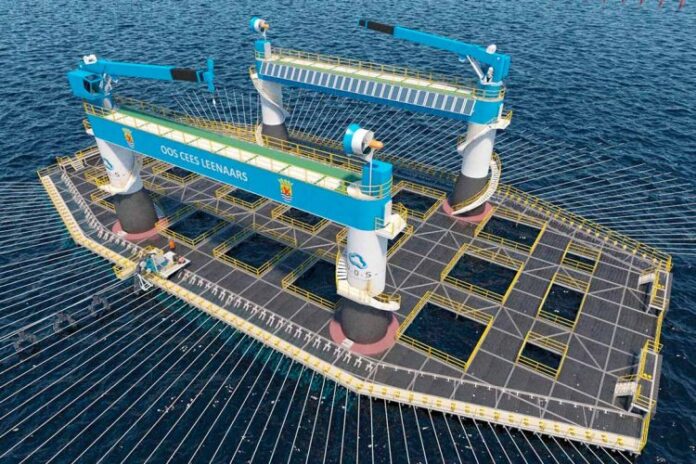
In collaboration with the shellfish sector and mussel farmers, OOS SMF has developed the Semi-submersible Mussel Farm, suitable for growing mussels based on hanging culture at open seas.

By applying submersible technology, the breeding and harvesting location at open seas will be protected against waves and storms. A suitable location in deeper waters can be used for the largescale cultivation of mussels. 

The design philosophy of the SMF is based on the floater/column design of the vessels OOS Serooskerke/Walcheren, enabling the SMF to be submersed in harsh environments at sea.

With this development, OOS SMF contributes to the maintenance and expansion of the shellfish sector, allowing multiple mussel farmers to use the SMF simultaneously with technical and logistical support from OOS. 

The first unit, the OOS Cees Leenaars will measure 76 mtr. by 32 mtr. and wind, solar and current power supply is implemented to allow charging of the supply vessels collecting and transporting the mussels onshore. With this technology, OOS aims for Zero Co2 emissions. 

In 2022, a pilot will start, and based on the outcome of this study the SMF will go into production. The expectation is that multiple “mussel farms” can be implemented along the coast of Zeeland.

Høglund to deliver Fuel Gas System and Automation for container ship retrofit

0

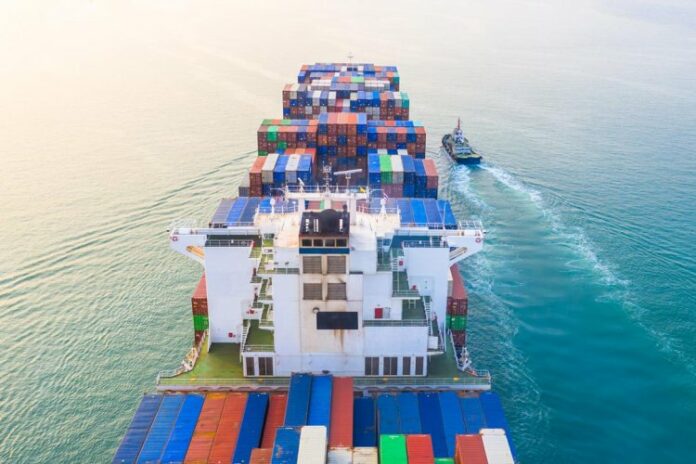
Høglund has announced that it has been awarded a contract to deliver Automation and Fuel Gas Supply System (FGSS) for the 2,400 TEU container ship Horizon Reliance.  

In partnership with COSCO Shipyard Group, Høglund will deliver a total integrated solution on the vessel, including the installation of FGSS, Power Management System (PMS), Ship Performance Monitor (SPM) and digital solutions for data collection, as well as the full automation of all the new systems on board the ship. Rather than recycling this 274 x 30 m ship built in 1979, owner Sunrise Reliance LLC’s choice to entirely retrofit and refurbish the ship signals the company’s commitment to environmentally conscious action.

Høglund will design, engineer, manufacture, supply and deliver a fully integrated automation solution to support the vessel’s transition from steam propulsion power to a dual-fuel vessel. This includes a high-pressure FGSS – with a design supply pressure of 320 bar – and Høglund’s signature PMS and SPM to effectively drive fuel savings and ensure safer and more reliable vessel operations for Horizon Reliance.

The PMS will ensure that the generators on board function more efficiently, while the SPM will enable and facilitate the analysis of the power usage for its optimisation. As part of the total automation of the new systems on board the vessel, Høglund will also incorporate digital solutions for data collection on the ship. By integrating these systems, Høglund enables better access and quality of operational data for owners and crew, and better control over the systems. Following the systems integration, maintenance and future upgrades will become simpler, reducing total lifecycle costs.

The new digital solutions will allow the owner to access detailed performance and operational data from all the systems on board the vessel and will facilitate informed decision making with regards to operations optimisation. The automation and digital work on the ship will effectively protect and future-proof the asset, improve its management and environmental performance, and prolong the life of the vessel.

Høglund will ensure that the Horizon Reliance is adapted to meet the new requirements of the industry and to successfully overcome the new challenges in the market. Hoglund’s expertise will allow Sunrise Reliance LLC to operate in a manner which assures a greener future for the Horizon Reliance, where the new systems on board will help the ship to meet the latest regulations on carbon emissions and significantly reduce its environmental impact, as well as raise the sustainability standards and overall green profile of the vessel.

This project is another example of the increasing recognition in the industry of automation’s role in maximising safety and reliability and improving the environmental performance and the lifespan of shipping assets.

Commenting on this contract, David Gunaseelan, VP Sales & Marketing at Høglund Marine Solutions, said:

“The commission on the Horizon Reliance is a very special project that we are looking forward to embark on with our partners at COSCO Shipyard Group.

“The work that we will conduct on the vessel will result in safer and more reliable ship operations and will boost the vessel’s sustainability credentials. It’s very rewarding to contribute to expanding the lifespan of a vessel that has cruised the ocean for such long time and realise we can make systems work no matter the age or condition of the vessel”.
 

Spliethoff Group selects ABB’s OCTOPUS to optimize safety for yacht transportation

0

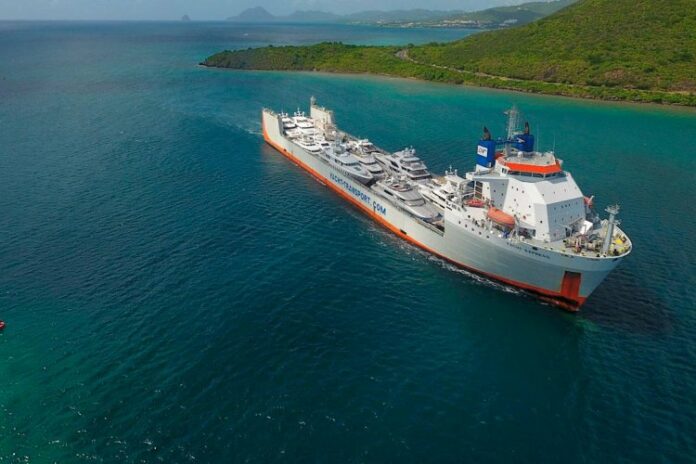
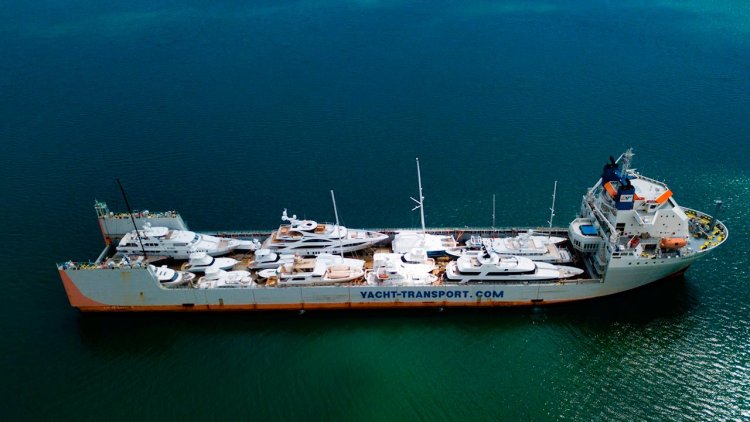
Operated by Spliethoff subsidiary Sevenstar Yacht Transport, the 209-meter length Yacht Express has deck space of 5,115 square meters and has been carrying vessels worldwide since its delivery as the first purpose-built yacht transporter in 2007. 

Yacht Express lowers itself in the water so that yachts float-on and float-off its semi-submersible dock bay under their own power. After securing the loads and de-ballasting, the vessel crosses the oceans at its seagoing draught, protecting its multimillion-dollar cargoes.

Now, the safety of operations on board the specialized Dutch owner’s vessel is being enhanced by the ABB Ability™ OCTOPUS – Marine Advisory System. With motion monitoring providing alerts of critical motions and motion forecasting to help with route selection, OCTOPUS guides onboard decision-making to optimize safe planning of the voyage ahead.

Richard Klabbers, Managing Director of DYT YACHT TRANSPORT, said:

“Although we have an excellent track record, we are of the opinion that, by adding OCTOPUS on board Yacht Express, we offer even better real-time support for the ship’s master and crew to limit unwanted vessel motions at sea, thereby further reducing the risk of damage to the vessel or her cargo. Route planning based on vessel motions and motion forecasting is also a significant safety gain.”

ABB Ability™ OCTOPUS – Marine Advisory System is the market-leading motion-based route optimization software in the semi-submersible heavy lift vessel sector, where more than 90 percent of these specialized ships are equipped with the solution on board. The system also allows shipowners ashore to log in to the ABB Ability™ Marine Fleet Portal to check voyage status and gain insights into vessel motions.

Antto Shemeikka, Head of Digital Services at ABB Marine & Ports, said:

“Spliethoff has repeatedly expressed its confidence in the role played by OCTOPUS software in safe project cargo logistics. As its 25th vessel to feature the system, Yacht Express represents a further milestone in our relationship, demonstrating the appreciation of a longstanding customer for its merits in this very specialized niche of the heavy lift market. This cooperation also highlights the strength of ABB’s integrated approach in action.”

In addition to ABB Ability™ OCTOPUS software, Yacht Express features propulsion technology from ABB on board, comprising transformers, ACS800 drives, a propulsion control system and a remote control system. The vessel also features twin 4500kW Azipod® propulsion units from ABB, increasing maneuverability and operating efficiency, while cutting fuel consumption.

Freeport of Riga is testing underwater drone technologies

0

More and more processes that previously could be done only by humans now can be performed with the help of new smart devices.

The Latvian-based company “DronePlan” is currently testing its underwater drone remote control software that could be used in the construction, maintenance and inspection of hydro-technical structures in the future. Last week, the underwater drone tests took place in the water area of the Freeport of Riga.

Chairman of the Freeport of Riga Board Viesturs Zeps emphasized:

“Many of the world’s ports are active players in the field of innovation ecosystem. In recent years, we have also encountered more and more new companies in the Port of Riga, which offer various newly created technologies for solving challenges related to the operation and management of the port. We are open to such cooperation. We have tested drones for environmental monitoring, technologies for remediation of historical pollution, more efficient traffic organization, reduction of CO2 emissions as well as other innovative solutions to improve the quality and efficiency of port services, which in turn can enhance the port’s competitiveness both regionally and globally.” 

Viktors Bikovs, Chairman of the “DronePlan” Board, commented:

“The use of drone technologies fosters better, faster and safer performance of certain underwater works – drones can operate perfectly in winter conditions, when divers find it difficult or impossible to work, as well as to maneuver at hard-to-reach underwater objects and structures. Drones can also provide support function in the work of industrial divers in other areas. At present, drones can be equipped with special devices that would allow them to operate autonomously 24 hours a day.”

““DronePlan”, which does not produce drones, specializes in developing the relevant software. Our goal is to develop software that ensures performance of certain pre-defined functions. Our long-term task is to create a digital solution that will be able not only to deliver information in the form of video images, data or three-dimensional modules, but also to analyze it.”

Viesturs Zeps said:

“The port can benefit from the projects of that kind by using more efficient and modern technological solutions, while equipment manufacturers, engineers and high value-added service providers can test, adapt and improve their ideas, products and services in a real-life environment. In addition, as experience shows, the developed solutions can also become a sought-after Latvian export product, thus promoting the overall national economy.”

The total length of berths in the port of Riga is more than 18 kilometers, and some parts of hydro-technical structures are located at a depth of more than 10 meters under water. In order to ensure the safety and proper technical condition of the port water area and berths, the said structures shall be inspected at least once a year. Until now, the inspection of berths in the port has always been carried out by industrial divers, but given that these services are rather expensive and often dependent on the weather, the Freeport Authority is considering and analyzing other solutions for implementation of these tasks.

Successful sea trials for Costa Cruises’ new LNG flagship

0

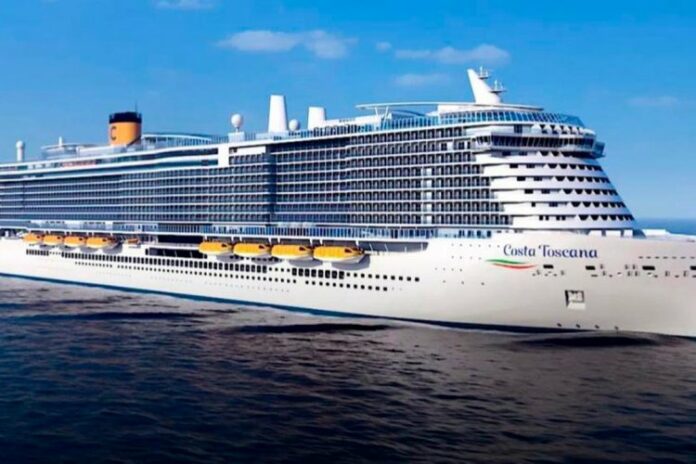
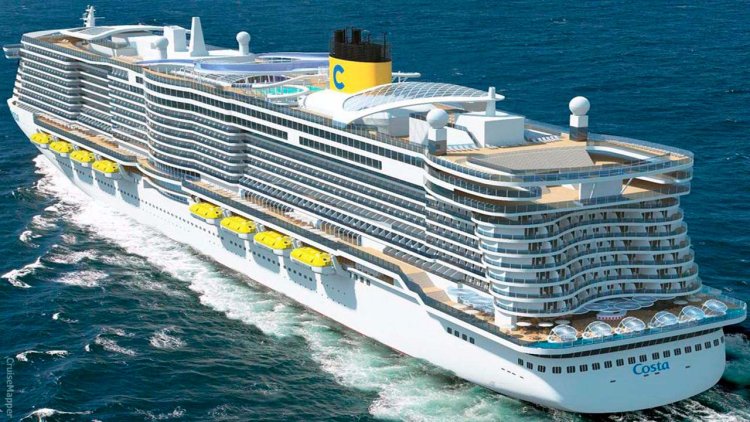
Work continues on the construction of Costa Toscana, Costa Cruises’ new flagship powered by liquefied natural gas (LNG).

Today, at the Meyer shipyard in Turku (Finland), the second part of the traditional “coin ceremony” took place, attended by the ship’s captain Pietro Sinisi, and by the shipyard and the company’s management. Following the maritime tradition, some commemorative coins were placed on the ship, as a good luck charm for crew members, guests and future itineraries.

In the two weeks prior to the coin ceremony, the Costa Toscana had left the Turku shipyard to carry out sea trials, during which the ship successfully passed a series of tests to verify the proper functioning of systems, equipment, and LNG engines. This is another key step towards delivery, scheduled for December 2021.

Costa Toscana, like her sister ship Costa Smeralda, is powered by liquefied natural gas, the marine industry’s most advanced fuel technology currently available for reducing emissions, both at sea and during port calls. The Costa Group – which includes Costa Cruises and AIDA Cruises – has been the first company in the cruise industry to believe in this technology and can currently count on four LNG-powered ships, two of which are already in service, AIDAnova and Costa Smeralda, and two soon to be delivered, Costa Toscana and AIDACosma.

Mario Zanetti, President of Costa Cruises, commented:

“These additional key steps in the completion of the Costa Toscana confirm our commitment to evolution towards an increasingly sustainable cruise model. At the same time Costa Toscana, thanks to her excellent and innovative services, will be able to attract new cruise guests, helping us to consolidate our presence in the Mediterranean and our gradual restart plan”.

Costa Toscana’s first cruise will homeport from Savona, Italy, on March 5, 2022, with a week-long itinerary that includes Marseille, Barcelona, Valencia, Palermo and Civitavecchia/Rome. Following her debut, the new flagship will remain deployed in the Western Mediterranean throughout the year. During the summer season, Costa Smeralda will call at Savona, Civitavecchia/Rome, Naples, Ibiza, Valencia and Marseille, while during the fall season Palma de Mallorca will replace Ibiza.

Neptune Energy begins final well campaign on Fenja

0

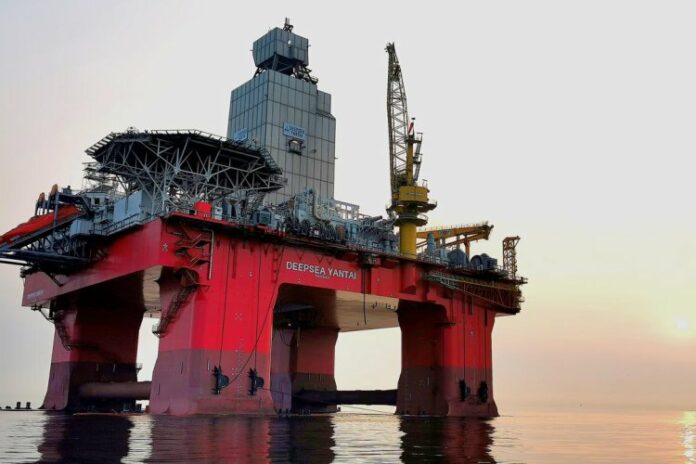
The wells are being drilled by the Deepsea Yantai, a semi-submersible rig, operated by Odfjell Drilling.

Operated by Neptune Energy, the Fenja development consists of two subsea templates tied back to the Njord A platform via a production pipeline, water and gas injection pipelines and an umbilical. The wells are planned as two oil producers, one water injector and a gas injector. The gas injector will be converted to a gas producer towards the end of field life.

Neptune Energy’s Director of Projects & Engineering in Norway, Erik Oppedal, said:

“This is the final phase of the Fenja development project which is located in a strategically-important growth area for the business, with a number of other interesting prospects nearby. Norway is an important part of Neptune’s geographically-diverse portfolio and this is an excellent example of the company’s commitment to investing in the region.”

The Deepsea Yantai is now set to drill into the reservoir sections, install the lower completions and execute well clean-up activities. The drilling work is estimated to take approximately 160 days.

Fenja is scheduled to come online in the first half of 2023 and will produce approximately 28,000 barrels of oil equivalent per day at plateau.

Earlier this year, Neptune announced the safe and successful installation and testing of the electrically trace-heated (ETH) pipe-in-pipe solution which will transport oil from the Fenja field to the Njord A platform. At 37 kilometres, it is the world’s longest ETH subsea production pipeline.

The Fenja oil and gas field is situated at a water depth of 325 metres around 36 kilometres southwest of the Equinor-operated Njord A platform which will receive the Fenja fluids. Neptune holds a 22.5% owner share in Njord A which is located 120 kilometres north of Kristiansund.


Wärtsilä commits to carbon neutrality by 2030

0

Wärtsilä’s goal is by 2030:

  • To become carbon neutral in its own operations, and 
  • To provide a product portfolio which will be ready for zero carbon fuels.

Wärtsilä’s carbon neutrality target covers direct greenhouse gas emissions from the company’s own operations, including the Research & Development and factory engine testing areas (scope 1*), as well as purchased energy (scope 2**).

Håkan Agnevall, President and CEO of Wärtsilä, comments:

“These new ambitious “Set for 30” climate targets demonstrate our commitment to our purpose of enabling sustainable societies. Our aim is to support our customers on their decarbonisation journey, thereby shaping a sustainable future for the marine and energy sectors. Our products, solutions and services will meet stringent environmental requirements, and the fuel flexibility of our engines powering these sectors is key for enabling the transformation. In parallel we also need to do our part as an organisation and minimise our own environmental footprint.”

Wärtsilä’s decarbonisation roadmap is based on a company-initiated analysis to identify the key measures for reaching the carbon neutrality target. The toolbox includes measures such as energy savings, green electricity purchases, switching fuels, the use of more efficient technologies, and the use of offsets for emissions hard to abate. A detailed implementation plan and timeline is currently being worked on.

For decades, Wärtsilä has systematically been focusing on energy savings and reducing its emissions. Becoming carbon neutral requires a holistic approach. Kari Hietanen, Executive Vice President, Corporate Relations and Legal Affairs at Wärtsilä, says:

“Setting a carbon neutrality target is a necessary milestone for any company. We, as an organisation, are ready for this challenge and understand that these targets represent the first phase of our decarbonisation journey.”

The second key climate target relates to Wärtsilä’s product portfolio and its readiness for zero carbon fuels by 2030. The energy and marine sectors still rely on the use of fossil fuels. Wärtsilä’s current portfolio already enables its customers to switch to carbon neutral fuels, such as biofuels or synthetic methane. The transition from fossil fuels to carbon neutral or carbon free fuels will happen gradually. Wärtsilä enables this transition by providing technologies that allow its customers to use more sustainable fuels once these become available.

In July 2021, Wärtsilä launched a major test programme towards carbon-free solutions with hydrogen and ammonia fuels. Wärtsilä’s fuel agnostic approach enables the company to support the energy and marine sectors in shaping sustainable and efficient future fuel strategies in several cost-optimal steps.

Håkan Agnevall says:

“Wärtsilä has invested a lot in R&D and has made a long-term effort in product development focusing on fuel flexibility, energy efficiency, and emissions reduction. This is a natural step in our aim to shape the decarbonisation of marine and energy.”

In the beginning of 2021, Wärtsilä updated its sustainability targets which, in addition to carbon neutrality, focus on two long-term themes: enhancing safety, diversity and wellbeing, as well as being an active and responsible member of society. The carbon neutrality targets are now updated with the commitments announced today.

* Scope 1 includes direct GHG emissions that occur from Wärtsilä’s own operations: e.g. engine tests, own vehicles and energy generation.
** Scope 2 includes indirect GHG emissions from electricity, heat or cooling generation purchased from utilities.

San Pedro Bay Ports announce new measure to clear cargo

0

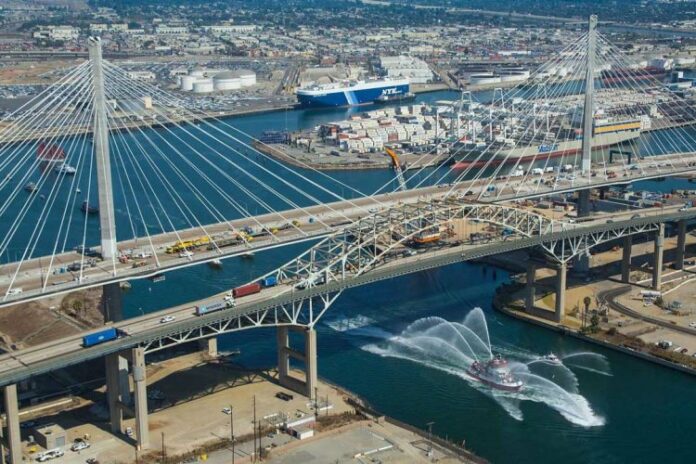
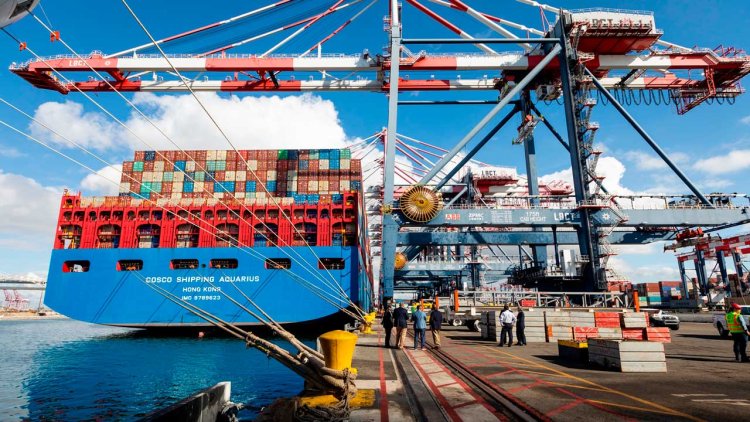
The ports of Long Beach and Los Angeles will begin assessing a surcharge to ocean carriers for import containers that dwell on marine terminals.

Under the new policy, the ports will charge ocean carriers for each container that falls into one of two categories. In the case of containers scheduled to move by truck, ocean carriers will be charged for every container dwelling nine days or more. For containers moving by rail, ocean carriers will be charged if the container has dwelled for three days or more.

Beginning Nov. 1, the ports will charge ocean carriers with cargo in those two categories $100 per container, increasing in $100 increments per container per day.

Port of Los Angeles Executive Director Gene Seroka said:

“We must expedite the movement of cargo through the ports to work down the number of ships at anchor. Approximately 40% of the containers on our terminals today fall into the two categories. If we can clear this idling cargo, we’ll have much more space on our terminals to accept empties, handle exports, and improve fluidity for the wide range of cargo owners who utilize our ports.”

Port of Long Beach Executive Director Mario Cordero said:

“With the escalating backlog of ships off the coast, we must take immediate action to prompt the rapid removal of containers from our marine terminals. The terminals are running out of space, and this will make room for the containers sitting on those ships at anchor.”

John D. Porcari, Port Envoy to the Biden-Harris Supply Chain Disruptions Task Force, said:

“As our economy continues to grow, increased demand and disruptions caused by the pandemic are putting our supply chains to the test. While we’ve seen new records set in terms of throughput this year at West Coast ports, we need more players throughout the supply chain to keep stepping up. The federal government will continue to bring together private companies and stakeholders from across the supply chain and serve as an honest broker helping to surface solutions like this to address supply chain disruptions.”

Before the pandemic-induced import surge began in mid-2020, on average, containers for local delivery sat on container terminals under four days, while containers destined for trains dwelled less than two days. Those numbers have increased significantly, making it difficult to clear cargo off the terminals and bring in ships at anchor.

Fees collected from dwelling cargo will be re-invested by the two ports for programs designed to enhance efficiency, accelerate cargo velocity, and address congestion impacts throughout the San Pedro Bay.

The policy was developed in coordination with the Biden-Harris Supply Chain Disruptions Task Force, U.S. Department of Transportation and multiple supply chain stakeholders.
 

RINA and MES to cooperate on innovative chemical tankers

0

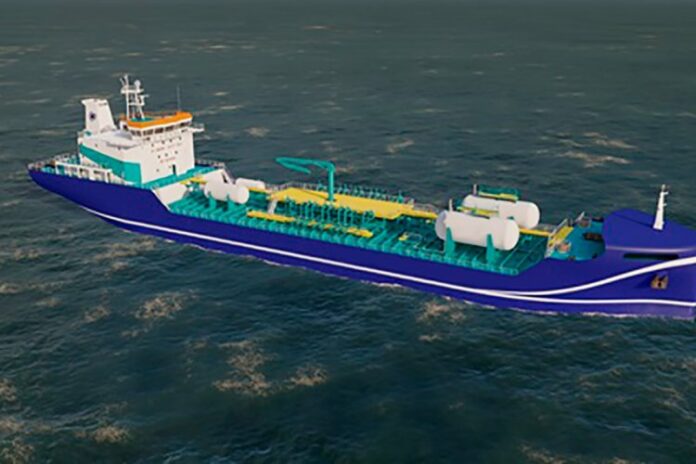
M.E.S. will provide its competence in designing high-tech gas and chemical tankers with new technologies; whilst RINA will share its expertise for the energy transition towards the compliance with IMO’s decarbonization goals.

Within the agreement, companies will cooperate on three innovative ship designs:

  • 13.000 Dwt CMBV (Chemical Tanker & Methanol Bunkering Vessel), a chemical tanker fueled by methanol also able to supply bunkering of methanol fuel to other vessels;
  • 13.000 Dwt LNG Dual-Fuel chemical tanker designed as “Ammonia-Ready”, capable of being retrofit as ammonia-fueled ship in the future;
  • 13.000 Dwt LNG Dual-Fuel chemical tanker designed as “LPG-Ready”, capable of being retrofit as LPG-fueled ship in the future.

Husky Terminal accelerates technological advancement with move to N4 SaaS

0

Husky Terminal is an operator of a marine freight terminal located in the Port of Tacoma, Washington, supporting nearly $3 billion in economic activity in the local region. The company specializes in offering quality terminal and stevedoring services including vessel berthing, shift scheduling, container movement and transportation services, allowing it to impart comprehensive and safe cargo movement capabilities to its clients.

Husky Terminal signed a subscription agreement to implement N4 SaaS – Navis’ cloud-based N4 TOS, which allowed the terminal to continue its ongoing modernization efforts without having to deploy and maintain new infrastructure and commit additional IT resources. As part of the subscription with N4 in the Navis Cloud, Husky will have access to Navis 360 Managed Services portfolio including monitoring and diagnostics, database maintenance, automated testing, EDI monitoring, application maintenance as well as Navis Training support services.

Husky Terminal recently completed work on a new gate complex and truck-staging area to speed up the entry process for trucks, while freeing up valuable real estate at the waterfront terminal for more redevelopment. The move to N4SaaS with Managed Services and Training creates a foundation that will be built upon to further optimize operations in the future, including Equipment Control and optimizing RTG operations.

Kim Kuesel, VP & General Manager, Americas, Navis, said:

“Husky Terminal joins a select group of terminals that have taken the leap into the future by moving its operations to the cloud. The benefits of the cloud are undeniable as terminals continue to navigate a wildly complex and often unpredictable supply chain in light of pandemic-related disruptions. With the wave of maritime cargo traffic surging in the Northwest not expected to dissipate anytime soon, the migration of Husky’s operations to N4 SaaS allows the flexibility to scale operations to meet fluctuating capacity needs in real time while maintaining access to all of the features and functionality of an on-premise TOS.”