-6.2 C
New York
Home Blog Page 520

NEDO selects methane slip reduction project for next generation ship development

0

Hitachi Zosen Corporation (Hitachi Zosen), Mitsui O.S.K. Lines, Ltd.(MOL) and Yanmar Power Technology Co., Ltd. (YPT) have proposed “Development of Methane Slip Reduction Technology from LNG Fueled Vessels by Improving Catalysts and Engines” with Hitachi Zosen as the managing company in the “Development of Next Generation Vessels Project” publicly solicited by the New Energy and Industrial Technology Development Organization (“NEDO”) under the Green Innovation Fund. The proposal was adopted.

In recent years, environmental awareness, including responses to climate change, has been increasing worldwide. Against this backdrop, the shipping industry is also working on various technological and business developments to realize a low-carbon society. 

One of these efforts is the introduction in various parts of the world of LNG-fueled ships, which have a low environmental impact. LNG fuel has the effect of reducing CO2 emissions, but engines using LNG can be prone to the problem of methane slip, where unburned fuel is expelled in the exhaust. Reducing methane slip is a pressing issue in engine design.

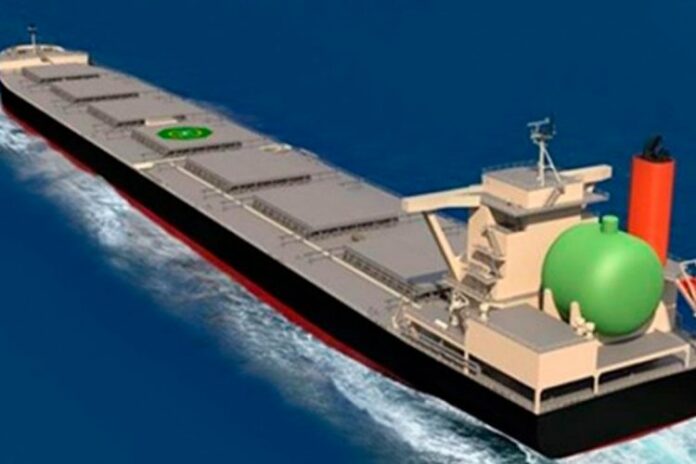
In this project, the partners aim to achieve a methane slip reduction rate of more than 70% for LNG-fueled vessels over a six-year period from FY2021 to FY2026. The reduction will be achieved by combining methane oxidation catalysts and engine improvements thereby further reducing the environmental impact of LNG-fueled vessels. YPT will also commission Namura Shipbuilding Co., Ltd. (Namura Shipbuilding), together with Hitachi Zosen and MOL to establish the technology to install the system developed in this research on actual ships.

The system will be installed in a coal carrier built at the Namura Shipbuilding and operated by MOL for demonstration of the methane slip reduction technology. The partners will work to establish the technology as soon as possible with a view to utilizing carbon-recycled methane in future applications, reducing greenhouse gas emissions to zero by 2050 towards realizing a carbon-neutral society.

Wärtsilä to supply propulsion package for new asphalt carrier vessel

0

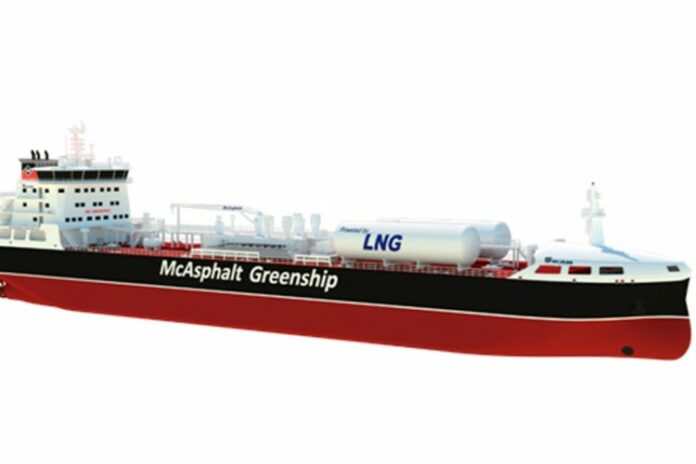
The technology group Wärtsilä will supply a comprehensive package of propulsion machinery for a new asphalt carrier vessel being built at the Wuhu Shipyard in China for Canadian operator McAsphalt Marine Transportation. This is the 22nd order placed by the Wuhu yard for Wärtsilä propulsion solutions, thus emphasising the strong relationship between the two companies. This latest order was placed in August 2021.

This is the third order for dual-fuel propulsion systems signed by the two parties this year. A strategic cooperation agreement was signed at the same time, marking a new stage of cooperation between Wuhu Shipyard and Wärtsilä. Both parties are committed to working on the research and development of green energy solutions in the shipbuilding field.

Mr. Zhang Zhao, Chairman of Wuhu Shipyard, says:

“We have had good experience with Wärtsilä’s products over the years, and we trust their efficiency and reliability. This is why we again selected Wärtsilä for this new vessel.”

Östen Lindell, Sales Director, Wärtsilä Marine Power, says:

“Our long and successful track record with the Wuhu yard speaks for itself. We appreciate the trust that the yard has in Wärtsilä’s extensive portfolio of propulsion solutions, and we are pleased and proud to have been again selected for this project.”

The 11,700 m3 asphalt carrier vessel will operate with two Wärtsilä 20DF dual-fuel engines, as well as Wärtsilä controllable pitch propellers (CPP), gearboxes, Energopac rudders and a Wärtsilä transverse thruster. The equipment is scheduled for delivery to the yard in December 2022.

The dual-fuel engines selected emphasise the vessel’s design focus on environmental sustainability, while the Energopac rudder solution is a proven fuel-saving technology for controllable and fixed pitch propeller applications. It features advanced hydrodynamic technology and outstanding vessel manoeuvrability, as well as improved onboard comfort levels compared to conventional propeller and rudder configurations.

Seafarers happiness increases to pre-pandemic levels

0

The latest Seafarers Happiness Index report from The Mission to Seafarers has been published for the third quarter of 2021. The report highlights happiness levels have increased overall to 6.59/10, from 5.99 in the previous reporting period, returning to the same levels seen pre-COVID in Q3 2019.

The survey, conducted with support from Wallem Group and the Standard Club, suggests that COVID-19 related strains on seafarers are beginning to ease, and support measures for seafarer welfare have now had a chance to take effect, yet challenges with shore leave and ship-shore connectivity remain.

Shore leave and extended contracts have been a huge challenge since the start of the pandemic. 5% of seafarers responding said that they have been away at sea for over a year and a further 13% of respondents have served at sea for over 9 months, with the remainder reporting less than 9 months – so far.

The challenges of balancing home life with the uncertainties that the crew change crisis have led to many who were tentatively considering a move ashore accelerating their career change plans. The report emphasises that many seafarers are not intending to return to sea once they eventually get home.

The issue of retention in an already stressed workforce is a major concern. There is likely to be a growing shortfall in seafarers in the coming years, with seemingly little or no coherent mechanism to manage the problems coming over the horizon. The seafaring experience and expertise that is potentially going to be lost should serve as a warning to all.

Ship-to-shore connectivity is a long-held contentious issue. The crews who either have no access or feel that it is poor quality, slow, patchy and expensive, are not happy. Many respondents see the issue of internet access as one of the most telling ways of assessing how a company feels about its crews.
The issue of the cost of online access came up repeatedly this quarter. One seafarer stated:

“Our internet on board costs US$25 for 100MB”. That is the scale of how challenging the fee structures are for seafarers. Others bemoaned the size of their internet allocation, with one stating that owners gave them 250MB for the whole month consumption; potentially not even enough for one video call to their family.

This feedback raises stark concerns over the affordability and rationing of internet access on board, which is such a priority for so many seafarers from a welfare perspective. Owners and managers are encouraged to look again at the steps that could be taken to improve this.

The Revd Canon Andrew Wright, Secretary General of The Mission to Seafarers, commented:

“The issues relating to COVID-19 continue to impact seafarers, and are likely to for some time to come. That said, the data suggests that crew sentiment has stabilised, which is, at face value, good to see. However, it is too soon to say whether this is a start of positive change, or if seafarers are simply more resilient to the situation they are experiencing because of the pandemic – in other words, whether the strains they have been placed under for the past 21 months are a ‘new normal’.

“Seafarers have been through so much over the past two years. They have been key to world trade at a time of unparalleled risk and disruption, they have kept the lights and heat on, they have kept shop shelves stocked and they have allowed the world to edge towards recovery. We owe them all a huge debt of gratitude and enormous respect and recognition.
 
“We urge every shipowner, operator and manager to study this report, listen to their crew and act on what is needed to address their needs, whether that is the longstanding issue of crew changes or, as we see in this latest survey, the costs and constraints on internet access, which can be a lifeline for homesick seafarers.”
John-Kaare Aune, CEO at Wallem Group, added:

“We are pleased to see that the happiness level of the crew has increased in this latest report, but at the same time it is worrying to see how many seafarers are considering ending their career at sea due to extended periods on board. In order to keep the world’s supply chain going we as an industry must continue to have a sharp focus on getting back to normal crew change cycles, and most importantly the various countries around the world must treat seafarers as the key workers that they are and ease travel and crew change restrictions in their jurisdictions.”  

Captain Yves Vandenborn, Director of Loss Prevention at the Standard Club, said:

“The Q3 results of the Seafarers Happiness Index show a small increase at 6.59/10 (up from 5.99 in Q2). There is an impression that small improvements are providing momentary relief, but fundamental issues such as leave and general poor treatment, exacerbated over the course of this pandemic, have resulted in many seafarers considering stopping their seafaring career and looking for greener pastures elsewhere.

“Despite the small upswing in data, sentiments and signs of trouble are already showing when it comes to a shortage of replacement crew, reflecting a drain of seafarers. This is also raised in a recent joint open letter by the International Chamber of Shipping, signalling how the shortage of workers will put the supply chain under great threat. Once again, we call upon all key stakeholders to put action to word and take care of our seafarers.”

First offshore wind project in the US to use HVDC transmission technology

0

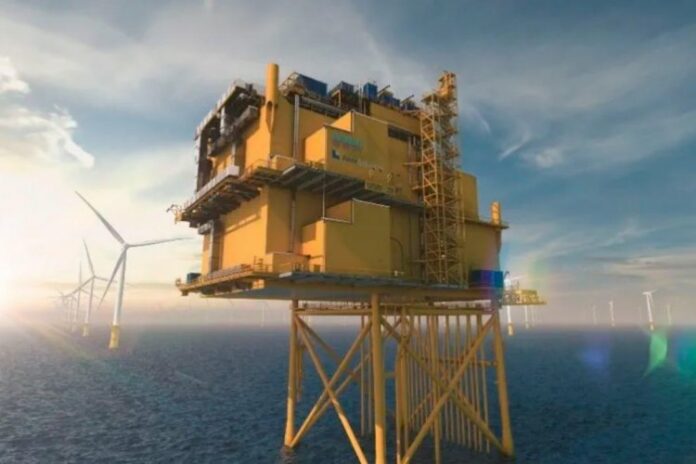
Ørsted and Eversource announced today that they will be the first offshore wind companies to utilize high-voltage direct current (HVDC) technology as part of a U.S. offshore wind farm, deploying the efficient transmission system for New York’s Sunrise Wind.

HVDC technology offers advantages over AC technology in electricity transmission over long distances. HVDC reduces the number of cables, improves transmission efficiency (e.g., reduces energy lost during transmission) and eliminates the need for additional electrical equipment between offshore and onshore converter terminals. While HVDC technology is currently used in the U.S., it has not been introduced to offshore wind energy until now. 

Sunrise Wind will have an approximately 100-mile submarine transmission cable from energy production offshore to grid connection in Holbrook, New York. Due to its utility-scale 924-megawatt capacity and distance to the grid, Sunrise Wind is well-suited to deploy this technology and take advantage of its benefits, ensuring as much clean energy as possible reaches New York residents. 

David Hardy, CEO of Ørsted Offshore North America, said:

“As the global leader in offshore wind energy, we’re helping to advance the U.S. industry to help achieve the Biden Administration’s goal of 30 gigawatts by 2030. This includes building the supply chain and manufacturing base, as well as bringing to the United States leading technology that will further improve efficient transmission and build workforce capabilities for this growing American industry.”

Ørsted and Eversource selected Siemens Energy, in consortium with Aker Solutions, to supply the Sunrise Wind HVDC system. 

The HVDC work is part of Ørsted and Eversource’s overall $400 million investment in New York State to build Sunrise Wind. Portions of the HVDC work, including the onshore converter stations, will be performed by local companies. This will help create jobs and provide additional offshore wind experience to the regions’ workforce that can support a growing industry for decades. In total, Sunrise Wind will provide up to 800 direct jobs during construction, as well as up to 100 permanent full-time jobs servicing the wind farm during operations. In addition, Sunrise Wind is estimated to create up to 2,000 indirect jobs.

Joe Nolan, President and Chief Executive Officer of Eversource Energy, said:

“Together, we’re putting the most advanced transmission technology available to work for our Sunrise Wind project. The use of this technology allows us to efficiently deliver clean, offshore wind energy to the communities we’ll serve. It also signals that the country is ready to integrate large offshore wind farms like Sunrise Wind into the grid system.”

Sunrise Wind, one of the largest U.S. offshore wind farms, is located more than 30 miles east of Montauk Point and will generate enough clean energy to power nearly 600,000 New York homes. It is expected to be operational in 2025.

OneWeb and Tampnet sign MoU to outline a series of technology trials

0

OneWeb and Tampnet sign Agreement to further develop Next Generation of Offshore Connectivity Capabilities

The arrangement will enable OneWeb to further develop its low latency, high speed connectivity capabilities and expand its customer base in the offshore sector. In addition to providing access to its unrivalled distribution network, Tampnet will also be a pivotal partner in collaborating with OneWeb on a series of trials to test and evaluate network capabilities in the offshore energy environment.

The trials will initially focus on delivering services to offshore windfarms, rigs and platforms in the North Sea from Q1/2022 and in the Gulf of Mexico, later in 2022. Once the service is fully online in 2023, Tampnet’s customers will benefit from OneWeb’s high speed, low-latency and flexible services that have the potential to continue transforming the efficiency of data use in offshore operations. 

While historically basing its infrastructure and services solely on subsea fibre, microwave and LTE, the high-speed and low-latency attributes of low Earth orbit (LEO) technology and OneWeb’s service offering complements Tampnet’s business offerings. With all of the global energy companies already on its client list, the partnership will enable Tampnet to expand its footprint with these customers, fulfil their expectations by providing services for new geographies, expand LTE coverage, and improve on the redundancy and availability of its infrastructure.

OneWeb is seeing demand grow for fast, flexible and affordable connectivity solutions from LEO satellites amongst offshore companies. This reflects the changing dynamics of the offshore markets, in oil and gas as well as renewables, as they strive to balance environmental mitigation with improving reliability and resilience. Overcoming all of these challenges are increasingly underpinned by the strategic use of realtime data.

OneWeb’s Head of Maritime Carole Plessy said:

“Connectivity services have a major role to play in de-risking offshore operations, and improving efficiencies that lead to cost savings and a more positive environmental impact. Working with Tampnet as a distribution and trial partner will enable us to accelerate bringing a new generation of much needed connectivity to the offshore market to help them achieve their goals and build resilience for the future.

ABB launches C-CAMs automation solution for merchant marine vessels

0

ABB’s newly launched C-CAMs automation solution applies to vessel systems, power management, cargo control and tank gauging, improving efficiency and safety by enabling faster troubleshooting and maintenance as well as enhanced situational awareness.

It is the first marine automation solution to feature a mobile application overview of system data, with the ABB Ability™ Edgenius Operations Data Manager providing access to the alarm and monitoring data regardless of the user’s location onboard.

Stian Torkildsen, Global Product Line Manager, Automation & Control Solutions, ABB Marine & Ports, said:

“C-CAMs integrates easily with relevant vessel systems and can be accessed and serviced remotely to facilitate maintenance and repair. In addition, modern connectivity options and interfaces allow crew to access automation-system data throughout the ship via mobile devices, so the solution benefits onboard personnel as well as the vessel owner.”

The solution is cyber secure by design and built on reliable and robust hardware that enables a long service life for all components. High uptime is further supported by system redundancy, while safety margins are higher than for comparable systems in the market.

Thanks to the I/O system design with spring terminals, C-CAMs is easy to retrofit, and installation costs are approximately 50 percent lower than for conventional marine automation systems.

Rune Braastad, Business Line Manager Marine Systems, ABB Marine & Ports, said:

“We are proud to build on ABB’s long history in power and automation technologies and expand our automation offering to the oceangoing vessels in the marine commercial fleet. The C-CAMs automation system offers major benefits for shipyards and shipowners, enabling faster engineering, installation and commissioning compared to traditional automation systems, ultimately resulting in a lower total cost of ownership.”

Naming ceremony held of France’s first LNG bunker vessel

0

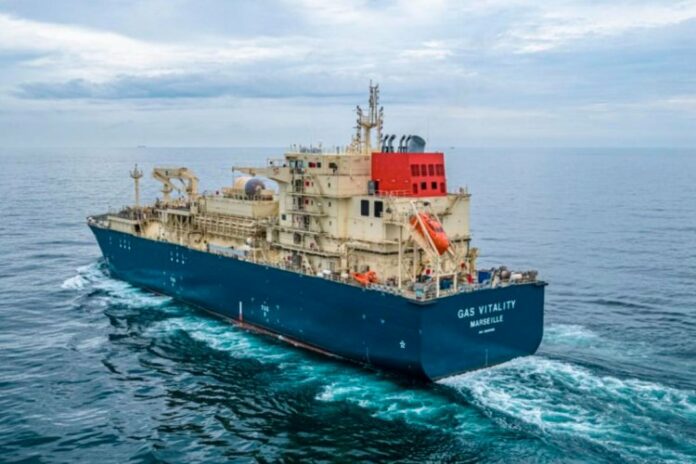
The first LNG bunker vessel to be based in France has been officially named “Gas Vitality”, at a ceremony at Hudong-Zhonghua Shipbuilding, China.

The 18,600-m³ newbuild bunker vessel is TotalEnergies Marine Fuels’ second collaboration with shipowner Mitsui O.S.K. Lines, Ltd (MOL) and shipbuilder, Hudong-Zhonghua Shipbuilding following the signing of a long-term charter contract in November 2019. All three parties first collaborated in 2018 to successfully design and build her sistership, the Gas Agility, which has been operating in the Port of Rotterdam since November 2020.

Classed by Bureau Veritas and operated by V.Ships France under the French flag, the Gas Vitality will enter operational service in December 2021 and be based in the Port of MarseilleFos, Southern France, to serve the Mediterranean region. She will notably perform LNG bunkering services to CMA CGM’s LNG-fueled containerships and MSC Cruises’ upcoming LNG-powered cruise ships that call at the French port.

Jérôme Leprince-Ringuet, Vice-President Marine Fuels at TotalEnergies, said:

“We are delighted to officially name our second chartered LNG bunker vessel. The ‘Gas Vitality’ is a testament of our commitment to provide our shipping customers with another major European hub to help meet their LNG bunkering needs. With the accelerated pace of transition to marine LNG we are witnessing among ship owners, it shows the shipping industry’s readiness to act today to curb their current greenhouse gas emissions, whilst paving the way for future, alternative fuel solutions such as bioLNG and other cryogenic fuels. We will continue to work closely with stakeholders across the value chain to expand the range of solutions that will help to decarbonize shipping.”

Kenta Matsuzaka, Senior Managing Executive Officer at MOL, said:

“I would like to express my sincere gratitude to all partners who have been involved in the planning, building and successful completion of the “Gas Vitality”. “Gas Vitality” is a significant milestone in our long-term partnership with TotalEnergies throughout the LNG supply chain and our commitment towards a decarbonized world. I am confident that our commitment to deliver LNG as a marine fuel, will accelerate the transition to LNG fuel as a competitive, environmentally efficient and immediately available solution for the maritime industry.” 

Key Features of the ‘Gas Vitality’

The Gas Vitality is a 135 meters long GTT Mark III membrane vessel. She incorporates a range of features that enables her to meet the highest technical and environmental standards, including :
• Increased loading and bunkering rate by 25%, to a maximum of 2000m3/hr, through upgraded cargo pumps and high duty compressors.
• New pressure reduction system to optimize bunkering operations of ‘Type C’ tank vessels under all conditions.
• Azimuth propellers and two bow thrusters, delivering an extremely high degree of maneuverability enabling tug-free operations in port and further reducing the environmental impact of her operations.
• Two manifolds for enhanced ship-to-ship bunkering flexibility across vessel types and sizes.
• Equipped to offer Electronic Bunker Delivery Notes (e-BDN) to her customers.
• Onboard re-liquefaction of the boil-off gas is further used for propulsion and for the vessel’s own power generation.

PGS and MPE collaborate on AI solutions for subsurface structure analysis

0

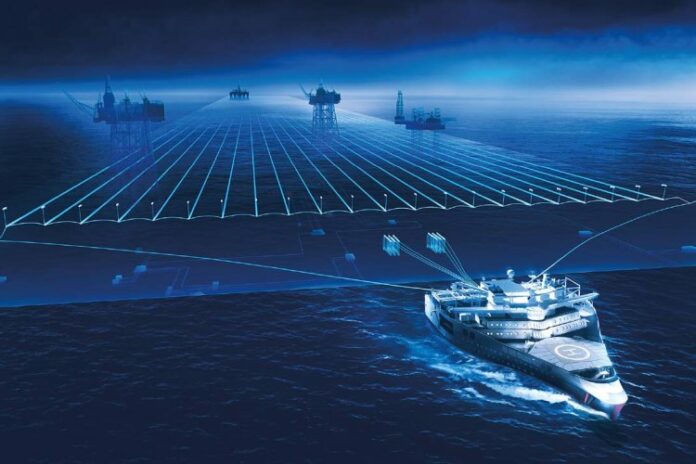
PGS has signed a Memorandum of Understanding (MoU) with Mit-PFN Energy Co. (“MPE”, a joint venture between Mitsui and Preferred Networks Inc.) to jointly develop and commercialize Artificial Intelligence (AI) driven solutions to image subsurface structures. 

Analysis of subsurface images is required across the energy sector including oil and gas, carbon capture and storage, as well as areas in the renewable energy sector, such as geothermal energy and offshore wind power.

Under this agreement, PGS will contribute seismic data from the Company’s global MultiClient data library along with technical expertise, whilst MPE will lead the AI algorithmic development to be constructed within a modern, scalable compute infrastructure. The collaboration aims to significantly reduce turnaround time needed to generate images of subsurface structures whilst improving accuracy. It is the intention to apply the developed technology into clean energy businesses, contributing to the global effort to reduce carbon emission.

Mr. Artem Lytkin, Vice President, New Energy Business Development of PGS, says:

“PGS New Energy aims to accelerate energy transition by helping energy companies to effectively deal with subsurface risks as they execute on their energy transition goals. PGS has a long tradition of serving the industry as a top-tier provider of high-quality geophysical measurements and interpretation services. We are pleased to announce our collaboration with Mitsui, a leading provider of digital solutions. Together we seek to develop and deploy artificial intelligence methods to further strengthen our data processing and interpretation workflows.”

Mr. Yasuchika Maruyama, General Manager, E&P Division, Energy Business Unit I of Mitsui says:

“Mitsui has identified the innovation and application of new digital technologies as a key area that will create new business opportunities and improve productivity across the group. This collaboration between MPE and PGS is aligned with our digital strategy and will help to transform and grow our business model. We now look forward to working with PGS, and combining our respective areas of expertise, to apply the power of digital technology to help create a more sustainable energy industry to the benefit of society. “

AAL acquires 66,000 deadweight MPP tonnage from the global fleet

0

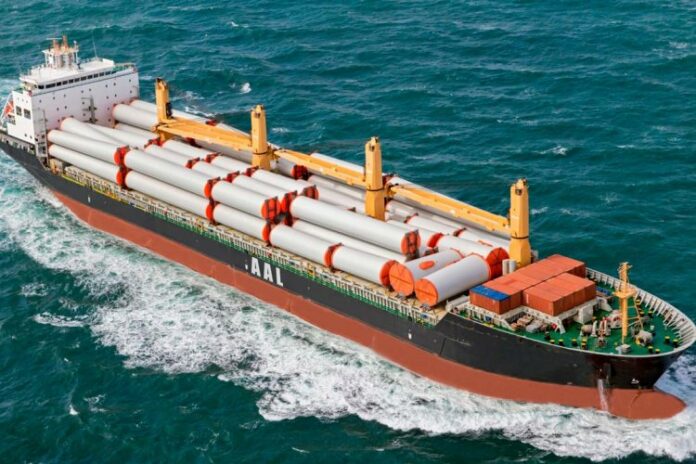
The vessels have been serving within the Carrier’s operating fleet worldwide on a commercial management basis. Along with four other acquisitions made by AAL over the past eight months – comprising two heavy lift G-Class MPVs (25,800dwt each) the ‘AAL Galveston’ and ‘AAL Genoa’ and two ‘mega size’ W-class MPVs (33,000dwt each) the ‘AAL Paris’ and ‘Grey Fox’ – these vessels have helped to grow AAL’s owned fleet to 569,600dwt and render the carrier control of 80 percent of its current 711,200dwt operating fleet.

AAL has also announced the progress of its ‘third-generation’ multipurpose (MPP) ship building programme. This will see AAL add a minimum of four mega-size heavy lift MPP vessels to its fleet – ‘premium heavy lift carriers’ featuring innovative design, heavy lifting gear, and optimised MPP cargo intake, and handling capability. They will each be 32,000dwt, with three heavy lift cranes (350t each and 700t maximum lift) and fully compliant with forthcoming IMO CO2 emissions regulations. The vessels will also feature other new technologies in line with AAL’s digitalisation and sustainability objectives.

Kyriacos Panayides, Managing Director of AAL, explained:

“We have been planning our third generation building programme for several years now, patiently waiting until such time that market forecasts and projected cargo demand within key customer verticals proved sustainable for this kind of investment. AAL drew upon 26 years of multipurpose heavy lift operational experience to design innovative vessels that would not only accommodate all today’s multipurpose cargo types, but also handle the growing size of project cargo components being planned for key industry verticals like wind. The newbuilds will be deployed in support of our customers’ large-scale global projects both on our regular monthly trade routes between the Americas, Europe, Middle East, and Asia and our bespoke tramp solutions worldwide.”

He concluded, “In 2021, the MPP shipping sector has experienced phenomenal growth, despite still operating in the throes of the global COVID-19 pandemic and severe port congestion. As a project heavy lift cargo specialist, AAL continues to prioritise breakbulk and project cargoes and servicing the needs of our traditional and long-term customers. This fleet development strategy not only builds our capacity on core trade routes between the Americas, Europe, Middle East, Asia, and Oceania in support of these customers, but also gives AAL greater decision-making control of our fleet going forward.”

Damen delivers 38-metre Beam Trawler to Rederij Long Ships

0

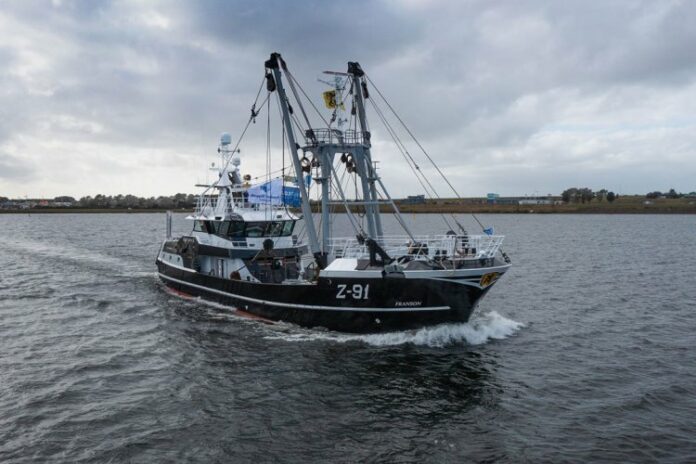
A special ceremony took place on the quayside of the appropriately named ‘Beam Trawler street’, in front of the Flemish Fish Auction in Zeebrugge. During the naming ceremony the new vessel was christened Z91 Franson by godparents Shirley Cattoor and Chris Cocquyt.

The Z91 Franson introduces a brand-new design, the BT3808, which features the maximum tonnage and length permitted by the Belgian Maritime Inspectorate. Designed with optimised propulsion, the new Beam Trawler provides a high level of comfort and is outfitted with proven technology.

The hull was launched into the water in Poland during the pandemic and was then transported to Stellendam in the Netherlands for further outfitting. Rederij Long Ships owner Eddie Cattoor was impressed that Damen Maaskant had managed to deliver the fishing vessel on time, given the challenges brought about by COVID-19.

Rederij Long Ships was founded in 1934 by Eddie’s grandfather. This latest addition to the company’s fleet will replace the vessel Z90 Francine. It will be used to fish year-round in the waters of the North Sea and the Skagerrak and, in the summer, the Bay of Biscay.

John van der Maas, Damen Project Manager, said:

“The new BT3808 is a well thought out evolution of our earlier, proven designs and therefore ready for the future.” 

Founded in 1948, Damen Maaskant Shipyards Stellendam has built more than 250 Beam Trawlers over the years. The previous one was the UK-46 Willeke built for Hakvoort Brothers, based in Urk, the Netherlands. At the time of delivery in 2018, this was the first new Beam Trawler to take to the North Sea in 12 years.