-1.5 C
New York
Home Blog Page 519

New offshore wind farm is planned in Spain

0

In front of the coasts of the municipalities of Níjar and Carboneras and using floating wind technology, the Mar de Ágata Offshore Wind Farm is developed by the joint venture of BlueFloat Energy and SENER.

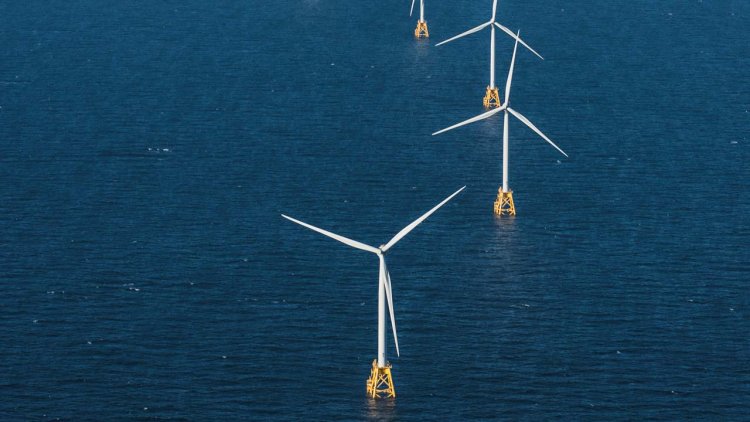
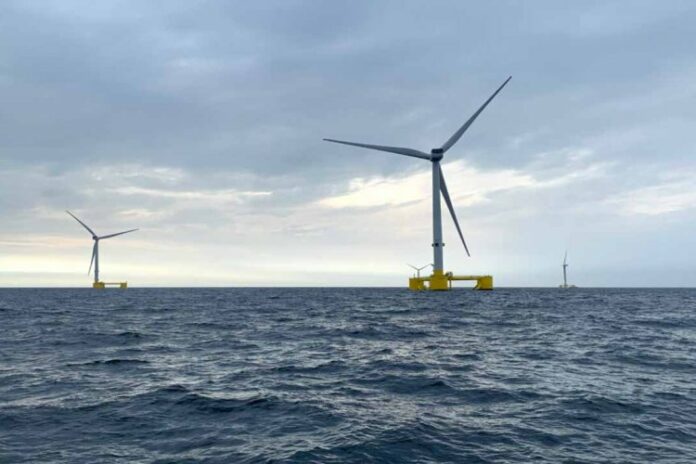
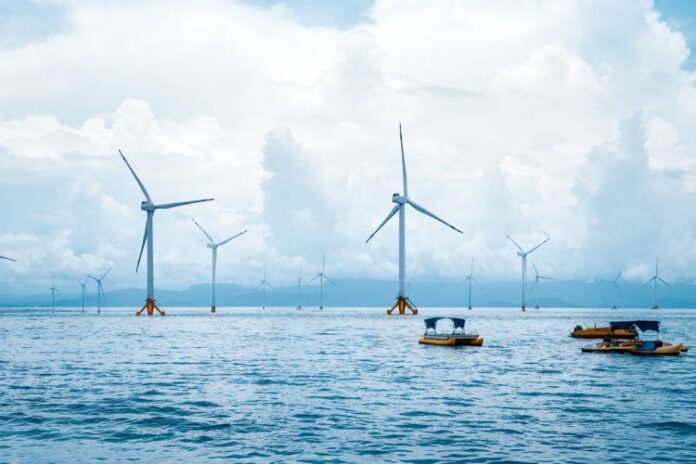
A joint venture between BlueFloat Energy and SENER is developing Mar de Ágata, one of the first floating offshore wind farms in Andalusia, which will be located in the Mediterranean Sea, off the eastern coast of Almería, between the municipalities of Níjar and Carboneras.

This wind farm will have an installed capacity of 300 MW (corresponding to 28% of the current electricity consumption in the province of Almería). During the useful life of the park, estimated at 30 years, Mar de Ágata will allow savings of 12 million tons of CO2.

The project will have a strong positive impact on the economic activity and job creation. Specifically, it would lead to the generation of 3,750 direct jobs and 3,750 indirect jobs during the construction and decommissioning phases, out of which at least 55% are expected to be created in Andalusia. During the operation and maintenance phase, the employment generated would be around 120 jobs per year, of which 60 would be direct. Therefore, it represents an opportunity for the reconversion of economic activity in the area, after the closure of the Carboneras thermal power plant, taking advantage of the existence of a just transition node in the 400 kV “Litoral” electrical substation, located in this municipality.

Thanks to Mar de Ágata, the installed wind capacity in the province of Almería would increase by 59%, and the total wind capacity in Andalusia would grow by 8.6%. In economic terms, the effect on the national GDP is estimated at 630 million euros, which would represent 0.28% of the Andalusian GDP.

The wind farm will be equipped with 20 floating offshore wind turbines, 15 MW each. The maximum estimated height of each wind turbine will be 261 meters above sea level, which will be located more than 15 kilometers away from the main viewpoints of Cabo de Gata (La Amatista and La Isleta del Moro).

The planned evacuation point, the SE Litoral, in the municipality of Carboneras, will be located less than 10 kilometers from the site of the wind farm, so the project does not contemplate the development of an offshore electrical substation.

The identification of the site for the project has been carried out based on a rigorous analysis of the technical and environmental conditions: wind resource, availability of electrical connections with capacity, environmentally protected areas and species, fishing, depths, geomorphology of the seabed, waves, maritime traffic, air navigation and easements of the Ministry of Defense.

In this way, the location of the fishing grounds and the areas where the main fishing fleets operate, in the ports of Almería, Carboneras and Garrucha, have been taken into account, minimizing the possible impact that the installation may have on the fishing activity. The areas of passage of maritime traffic have also been taken into consideration.

The developers of the project are working with the local administrations, stakeholder organizations, associations and the rest of the local entities to reach consensus around the project, in a way that benefits the whole territory and its population in the context of environmental sustainability.

The conservation of ecosystems, both marine and onshore, and the associated biodiversity, are also considered a priority, in the context of the just ecological transition. In this sense, Mar de Ágata, beyond the specific studies on environmental impact and those related to the marine space, will apply the best international practices to minimize the possible effects of the project on flora and fauna.
Maersk Drilling sells Mærsk Inspirer

0

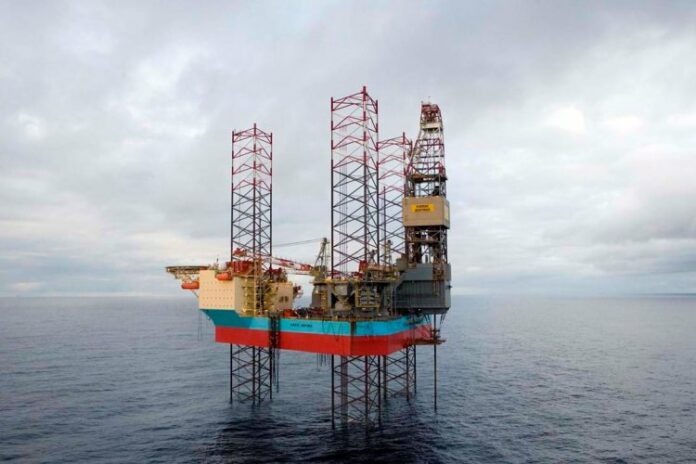
Maersk Drilling has announced the successful closing of the previously announced divestment of the combined drilling and production unit Mærsk Inspirer (now named Inspirer) to Havila Sirius for a price of USD 373m in an all-cash transaction.

This transaction divests a non-core asset and significantly deleverages Maersk Drilling’s balance sheet. Per the terms of Maersk Drilling’s term loan agreement, the sale triggers a simultaneous loan repayment of USD 80m.

As part of the transaction, Repsol has assumed responsibility for the day-to-day operation of the rig on the Yme field, leasing the rig from Havila Sirius on behalf of the Yme licensees. 60 employees have been transferred from Maersk Drilling to Repsol in a transfer of undertaking, and to ensure operational continuity Maersk Drilling will continue to provide certain systems and logistics services for up to 12 months. In addition, Maersk Drilling will provide drilling management services for a period against payment of a management fee, which is not included in the proceeds.

As per the agreement, ownership was transferred after the rig was ready to receive hydrocarbons, which was achieved on 10 October 2021. The transaction has been approved by authorities.

This transaction will not impact Maersk Drilling’s financial guidance for 2021. As a result of the transaction, Maersk Drilling’s contract backlog will be reduced. As of 30 June 2021, Maersk Drilling’s contract backlog was USD 1.6bn of which approximately USD 430m relates to the Inspirer.

Inspirer is an ultra-harsh environment CJ70-150MC jack-up rig which was delivered in 2004 and converted to a dual drilling and production facility in 2007. In end-2020, it moved offshore to prepare for operations at the Yme field offshore Norway.

Havila Sirius is a 100% owned subsidiary of Havila Holding, a family-owned investment company with long-term industrial ownership within offshore supply vessels, ship technology, ferry operations, tourism, and real estate.

Echandia secures order for the world’s first emission-free high-speed catamaran

0

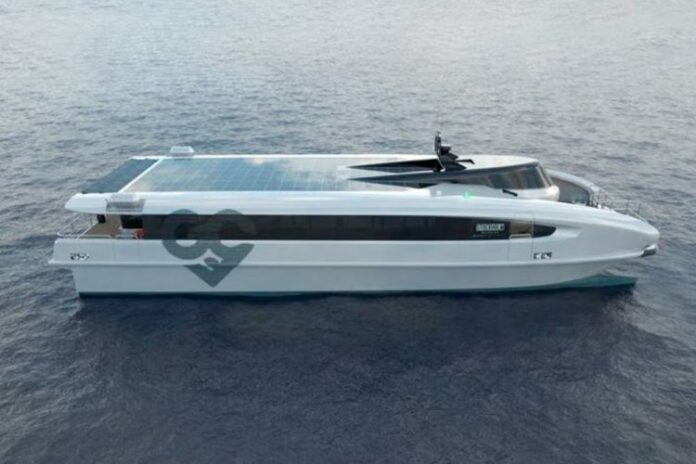
Stockholm-based Echandia has signed an agreement to supply the world’s first emission-free high-speed catamaran with an integrated battery and hydrogen-based fuel cell system. The client is Green City Ferries AB and the ferry is planned f or commercial traffic in Stockholm. The installation will take place in the autumn of 2022 and the agreement is worth approximately SEK 14 million for Echandia.

Echandia is a developer of advanced battery and fuel cell systems for maritime electrification. The agreement is for the Beluga24 model, which is designed by Teknicraft in New Zealand and the Italian Studio Sculli and is built in carbon fiber by Green City Ferries north of Stockholm. The high energy efficiency of Echandia’s integrated battery and fuel cell systems requires less hydrogen, which saves a lot of weight, and the battery part is significantly lighter than competing solutions.

If you look at public transport in Stockholm, the fleet of vessels accounts for circa 5 percent of energy consumption but about 50 percent of carbon dioxide emissions annually (according to Båtplan Stockholm 2025). Green City Ferries’ goal is to switch to emission-free and fast waterborne transport in the world’s cities. The start for this takes place in Stockholm with support from Klimatklivet and EU. Before initializing final production stages, Green City Ferries will secure additional external financing.

Magnus Eriksson, CEO, Echandia, comments:

“Sweden has been lagging behind internationally when it comes to electrifying shipping, but now the pace is increasing here as well. We are proud to be a part of this project that not only contributes to reducing emissions from Stockholm’s waterborne local transport but is also the first in the world with an emission-free high-speed catamaran. The ferry will be equipped with an integrated system with both batteries and hydrogen, which is significantly more energy efficient compared to solutions with separate systems.”

Fredrik Thornell, CEO, Green City Ferries, comments:

“We are very pleased to collaborate with Echandia in this groundbreaking project, which we see great interest in globally. We will build a completely emission-free high-speed catamaran intended to operate in Stockholm’s waters. Echandia is the perfect partner for that. Compared to other tenders, Echandia’s solution means significantly lower total weight with high safety.”

UKHO launches its ADMIRALTY Small Craft Charts service

0

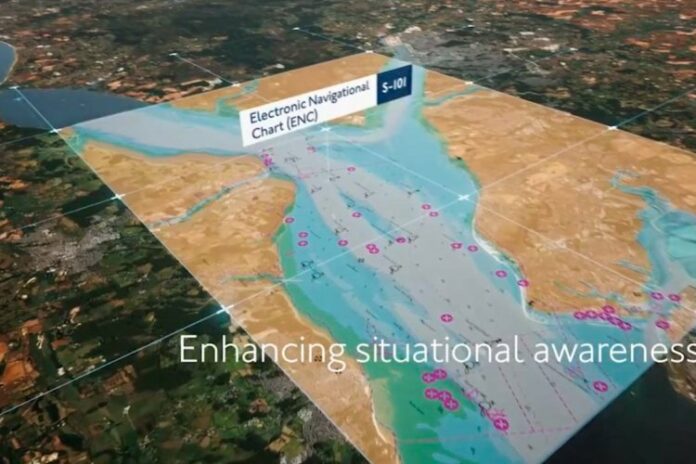
The UK Hydrographic Office (UKHO) has today announced the launch of its ADMIRALTY Small Craft Charts service – formerly known as ADMIRALTY Leisure Chart Folios – to bring important safety, quality and flexibility benefits to all marine users who depend on these charts.

The launch of this new service follows the announcement in May 2021 that UKHO will withdraw the regional folio structure for these charts. Instead users can purchase only those charts that are relevant to their needs without being required to purchase the full regional folio.

Through this updated product, UKHO is providing all users – spanning small craft fishing fleet, infrastructure maintenance workboats, leisure yachtsmen, motorboat cruisers, ocean racing skippers, small tourist cruise boats, as well as other small craft mariners – with greater coverage and seamless access to the data required to support with their navigational decision-making.

All users will have the latest updated versions of chart images, which may be as frequent as after every Notices to Mariners (NM) update, meaning users can purchase a new chart instead of manually applying NMs to an existing chart. Users will also be able to apply the standard NMs using NMWebsearch, which can be reached via a QR code on the chart.

In line with new editions of SOLAS-compliant ADMIRALTY Standard Nautical Charts (SNCs), all charts will help to ensure users have the same access to the latest navigational information for safe passage in UK waters. UKHO has made the charts available through a Print-on-Demand (POD) service, purchasable via ADMIRALTY Distributors.

Until at least October 2022, users of the pre-existing ADMIRALTY Leisure Chart Folios will continue to be supported with NMs, either through the continued publication of Leisure NMs or by using the link between the Folio charts and SNCs to apply standard NMs. However, Folio charts should be replaced by the equivalent new edition Small Craft Chart once a new edition of the source SNC has been published to ensure users have the latest navigational information.

Ørsted becomes first energy company with long-term science-based net-zero target

0

The Science Based Targets initiative (SBTi) has launched the Net-Zero Standard as the world’s only framework and leading standard for aligning corporate net-zero targets with climate science. 

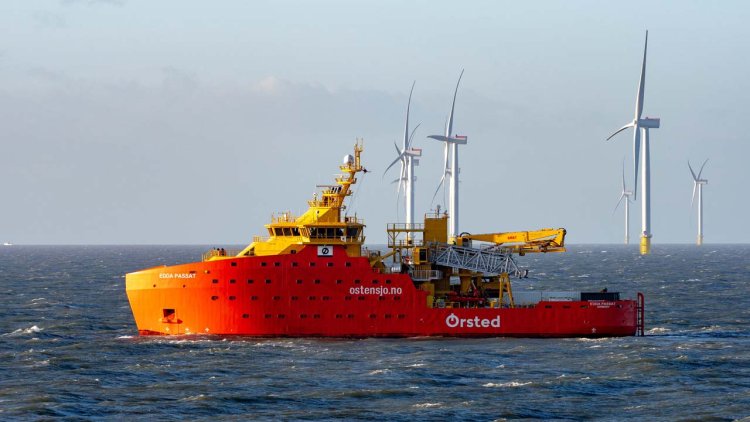
SBTi’s new Net-Zero Standard provides a common, robust, and science-based definition of net-zero and offers companies a way to set verified decarbonisation targets with long-term emissions reduction plans that are consistent with limiting the global temperature rise to 1.5 °C above pre-industrial levels. Ørsted is the first and only energy company to receive the new net-zero validation and one of only seven companies on the list.

Mads Nipper, CEO at Ørsted, says:

“We see growing ambitions from businesses to reach net-zero, and that’s absolutely necessary to reach a net-zero world. However, it’s critical that these goals meet the requirements of climate science. I encourage all business leaders who want to have a real impact on climate to commit to the necessary near-term and long-term reductions under the new SBTi-standard.”  

The Paris Agreement states that global emissions must reach net-zero by mid-century to stabilise temperature rise to 1.5 °C above pre-industrial levels. This has led to a boom of corporate net-zero goals in recent years, with over two-thirds of the global economy now aiming to reach net-zero emissions by mid-century. Despite this trend, pathways to meet net-zero emissions have been translated in varying and inconsistent ways, resulting in growing criticism of corporate climate targets.

Up until now, there has been no credible criteria to define what long term net-zero targets – consistent with the 1.5 °C scenario – look like. As a consequence, businesses have had significant discretion on how they define their pathways towards net-zero, allowing some to claim net-zero and basing their net-zero commitments to a large extent on offsets without the significant reduction in emissions required to accelerate decarbonisation.

SBTi’s new standard spells out that rapid action is needed to halve emissions before 2030, and that long-term deep emissions cuts of 90-95 % across the value chain are essential before 2050 for net-zero targets to align with science. In practice, this means that companies must place a cap of 5-10 % on the amount of residual emissions that they offset through carbon removal projects. With the new framework, businesses now have a way to substantiate their net-zero plans with underlying long-term reduction targets, ensuring that these pathways are consistent with the latest climate science.

Ørsted was previously one of the first energy companies to set a near-term science-based target for reducing emissions from power and heat generation and has the following targets:

  • Reducing scope 1 and 2 GHG emissions to 10 g CO2e/kWh by 2025, corresponding to a 98 % reduction from a 2006 base year.
  • In 2020, raising its ambition to address its entire carbon footprint, Ørsted committed to reaching net-zero emissions across its entire value chain by 2040.
  • To help realise near-term action towards this goal, Ørsted put in place a specific value chain decarbonisation target of reducing its absolute scope 3 GHG emissions by 50 % by 2032 from a 2018 base year.

By phasing out coal and accelerating the build out of green energy, Ørsted is fully on track to meet its scope 1 and 2 target. To meet its scope 3 target, Ørsted is gradually reducing its natural gas sourcing portfolio and has launched an industry-leading supply chain decarbonisation programme, closely engaging with suppliers to reduce emissions from the goods and services it sources.

Siem Offshore orders three new battery packages

0

For one of its OSCV’s an order has been placed with VARD Electro AS for a double battery system with DC-link allowing the vessel to operate for 1 hour in fully electric mode, in addition to provide estimated fuel savings in excess of 20%. Installation will take place inQ1-2022.

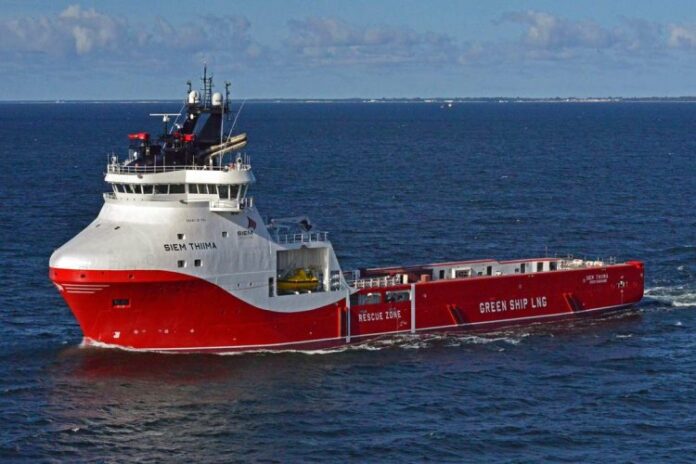
For the dual fuel LNG PSV Siem Thiima anorder has been placed with Kongsberg Maritime AS for a hybrid battery packageincluding shore power facilities. Installation will take place in Q1-2022.

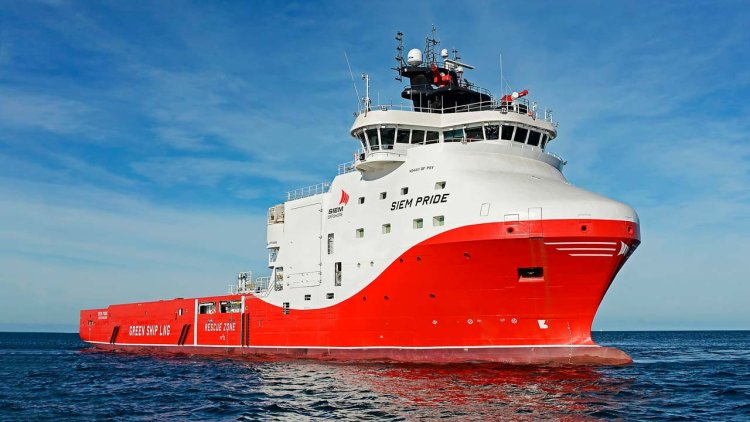
Similar, for the dual fuel LNG PSV Siem Pride, an order for hybrid battery package has been placed with Wartsila Norway AS. For the upgrade, Wärtsilä will supply the hybrid drive, the energy management system, the transformer, batteries, and the switchboard modification. The dynamic-positioning system will also be upgraded, while the ship design will be modified for the new arrangement. A deck house containing the equipment will also be installed. Finalisation of the project is projected for April 2022, at which time the vessel will be awarded DNV’s Battery Power notation.

Steven Gavshon, General Manager, Projects and Operations, Wärtsilä Marine Power, says:

“We have worked closely with Siem Offshore for more than ten years, and are excited at this possibility to further reduce the carbon footprint of their fleet. When operating on electric power, there will be obvious savings in fuel costs and emissions. Furthermore, when in use, the ship’s engines may operate more on LNG, which further enhances the ship’s environmental sustainability.”

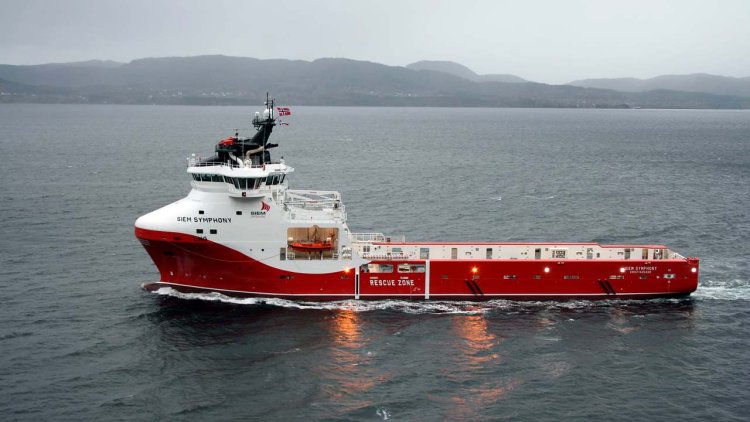
Hence, following the recently completed battery installation onboard Siem Symphony, all of its three PSV LNG-vessels will then shortly be able to deliver safe, efficient and even more environmentally friendly operations.

Jon August Houge, Operations Manager, Siem Offshore, says:

‘We are very pleased to see how well our customers and end clients are responding to these environmental upgrades, which will even further reduce their operating cost and carbon footprint.’

Partners announce the second floating offshore wind farm in Puglia

0

In the framework of the equal partnership that involves the two companies, Falck Renewables and BlueFloat Energy are set to file on behalf of the company Odra Energia the documentation required to start the authorization process for a floating offshore wind farm off the southern coast of the province of Lecce.

Similarly to the first project off the coast of Brindisi, Kailia Energia, announced last September 30, the project developers behind Odra Energia are about to begin a voluntary preliminary consultation process aimed at providing a better understanding of the scope of the environmental impact study which will be carried out.

A request for the maritime concession will also be filed with the Ministry of Infrastructure and the Port System Authority of the Southern Adriatic Sea.

The maximum installed capacity envisaged for the Odra Energia project is around 1.3 GW. The estimated annual production is about 4 TWh, equivalent to the consumption of more than one million Italian households and the avoidance of emissions into the atmosphere of more than two million tons of carbon dioxide.

Floating offshore wind plays a key role in the energy transition process. The wind farms that deploy this technology will play a key role in achieving the national decarbonization goals set for 2030, contributing significantly to the energy independence of the country, while protecting the environment.

Floating technology allows the positioning of wind turbines in deeper waters, such as those of the Mediterranean Sea, as well as the construction of wind farms without the use of piled foundations and further away from the shore compared to more traditional bottom-fixed offshore wind farms. Floating  wind farms are more efficient as they harness the wind further from the coast where it is more abundant whilst also minimizing the impact on the marine and onshore environments during all the phases of the project.

Yanmar conducts world’s first 70 MPa high-pressure ship refueling with hydrogen

0

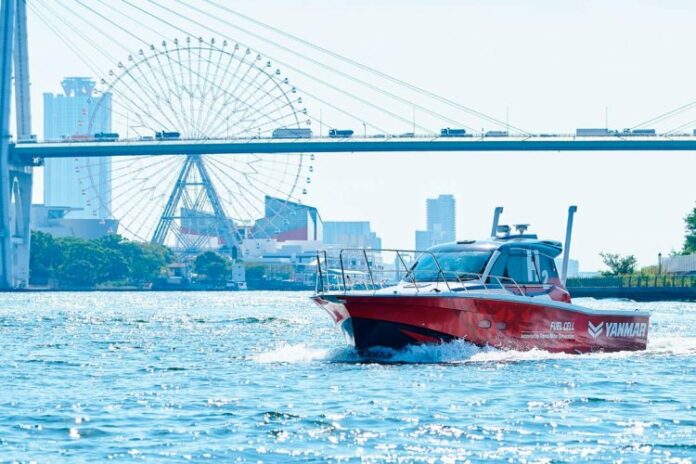
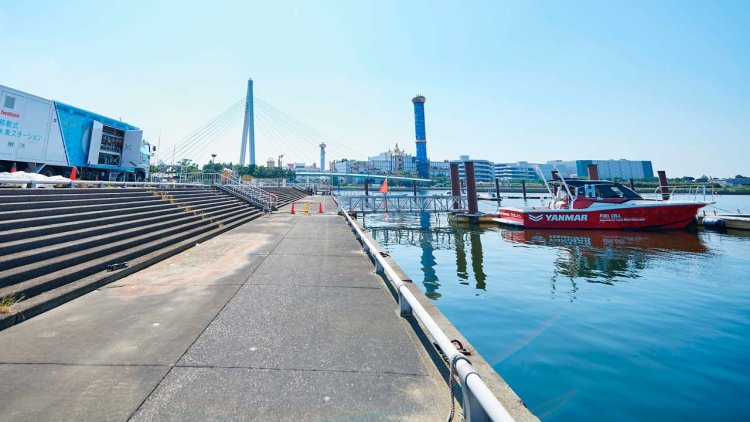
The Yanmar Holdings subsidiary last week (Oct 20) confirmed the refuelling which featured a demonstration test boat, equipped with a hydrogen fuel cell system.

Once refuelled, the boat then ran a route around the planned island for the Osaka-Kanasai World 2025 and famous tourist spots on the coast of Osaka, Japan.

Refuelling of the ship was carried out in collaboration with Toyota Tshuo Corporation and used a specially licensed high-pressure facility and newly developed refuelling hose.

The 70MPa refuelling resulted in a more than three times longer cruising time, compared to the previously used refuelling method for the ship.

WinGD invests in training as gas-fuelled fleet grows

0

Among the investments, the company has expanded its network of training locations and added new online tools, making it even easier for ship operators to give their crews the skills they need.

According to DNV’s Alternative Fuels Insight, the number of gas fuelled vessels in operation is expected to grow from 221 today to nearly 500 by 2023. While much energy goes into projecting the supply and bunkering infrastructure needed to support that growth, less focus is placed on the extra demand it will create for seafarer training.

WinGD General Manager Customer Training, Operations, Gregory Sudwoj, said:

“Marine engines in general are getting more complex and require more understanding from the crew to operate them in an optimal and safe way. Our investment in making engine training more accessible is just another way in which WinGD is adding value for ship owners and enabling crew to operate assets effectively and efficiently.”

WinGD’s engine operating courses have traditionally been delivered through its owned facilities in Winterthur, Busan and Shanghai. Over the past few years WinGD has enlisted a global network of training partners at locations including the Philippines, India, Greece and Poland. Further locations will follow.

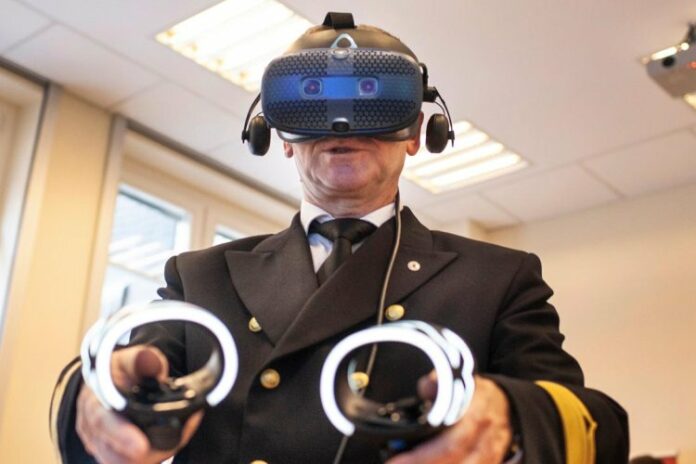
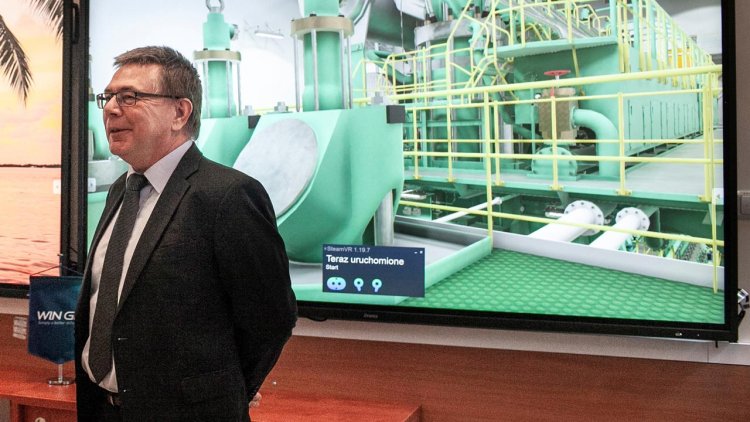
WinGD representatives were on hand earlier this month to celebrate the opening of the new low-speed engine training centre at the Maritime University of Szczecin (MUS) in Poland. The highly specialized training laboratory features a WinGD engine room simulator offering virtual reality training to equip crew with real-world experience. Proper operation and maintenance procedures of complex engine parts and subassemblies are explained with the help of interactive 3D animations.

Gregory Sudwoj said:

“The cost and hassle of travelling is a limitation for whoever delegates crew members for training, especially during the pandemic. Together with partners like MUS we can make access easier and wider, respecting crews’ time and removing unnecessary expense and complications for the shipowner. With the number of LNG fuelled vessels coming into operation, it is essential that we ensure that our customers’ crew are well equipped with the knowledge and confidence they need to optimize these vessels.”

As well as the standard five-day engine operator course, these training facilities can offer a range of additional courses – including those for auxiliary engine-room systems – via computer-based learning.

Online training is another important element of ensuring that seafarers have access to the training they need. Since global travel restrictions began to emerge in February 2020, WinGD has been delivering training digitally. What started as instructor-led presentations with video from the instructor’s simulator have been developed into a full cloud streaming service delivering a truly interactive training experience. 

Soon, every participant will be able to run their own computer simulation with the instructor able to monitor and provide feedback. The system has been tested in Asia and Europe and WinGD is now building up server infrastructure for a global roll out.

Aside from expanding access to training, WinGD has also worked with partners to build bespoke simulation training facilities for customers using its X-DF dual-fuel engines. And the company will soon unveil a simulator dedicated to LNG carriers, which feature a different machinery arrangement from other merchant vessels, deploying twin main engine propulsion concept.

GEV to develop 2.8 GW green hydrogen export project

0

GEV to develop a green hydrogen export project located on the Tiwi Islands, Northern Territory, with a phased capacity up to 2.8 GW (the Tiwi Hydrogen Project), producing up to 100,000 tonnes per annum of green hydrogen for export into the Asia-Pacific region.

Selection of the Tiwi Islands location provides a brownfield site that can reduce development time and cost, as well as access to one of the closest Australian ports (owned by AusGroup Limited’s NT Port and Marine) to the future demand markets in the Asia-Pacific region.

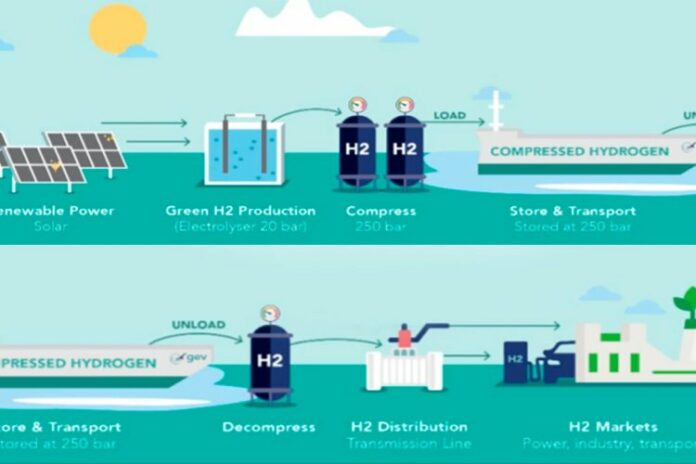
The integration of GEV’s innovative compressed hydrogen shipping solution enables a phased development and construction timeframe, thereby benefiting from the continued decline of the capital and operating costs for solar generation, electrolysers and shipping.

The Tiwi Hydrogen Project has the support of key stakeholders, including the Tiwi Land Council, the Munupi Landowners, NT Port and Marine and the Northern Territory Government.

Development milestones of the Tiwi Hydrogen Project will run in parallel to GEV’s ship engineering and class approval program, with a financial investment decision targeted for 2023 for the initial phase being 0.5 GW, allowing first hydrogen export to commence in 2026, subject to all commercial and regulatory approvals and customer offtake.

Martin Carolan, GEV Managing Director and CEO commented:

“The strategic rationale for GEV to develop a landmark upstream renewable energy and green hydrogen production project is to demonstrate the simplicity and efficiency of using compression for a pipe-to-pipe green hydrogen supply chain and to provide greater certainty in the commercialisation of our shipping solution. This project can transition GEV from a midstream service provider to an innovative hydrogen company.”

Northern Territory Government Minister for Renewables and Energy, Hon Eva Lawler commented:

“With our world-class solar resources and our proximity to key export markets, the Northern Territory is an ideal place to generate renewable hydrogen to meet the future demand within our region.”

  • LOCATION: the Tiwi Islands are located along the northern most part of Australia, providing GEV with a strategic location for regional shipping to the emerging hydrogen markets across the Asia-Pacific, including Singapore, Indonesia, South Korea and Japan.
  • HIGH SOLAR CAPACITY / INTENSITY: the proposed 1,800 hectare solar site has been assessed to have the potential for 2.8 GW of solar generation, in a region of high solar intensity.
  • TRADITIONAL LAND OWNERSHIP: there has been an unbroken history of occupation and ownership of the Tiwi Islands by Tiwi people. Therefore, there are no native title issues for GEV to address, with a clear and established process for GEV, the Tiwi Land Council and Munupi Landowners to negotiate a Section 19 Lease/Licence for the proposed solar site.
  • LOW ENVIRONMENTAL IMPACT: the proposed solar site is existing plantation land, previously cleared of native vegetation and currently used for commercial plantation. The proposed solar site represents only 6% of the existing plantation area and only 0.3% of Melville Island land area. In regard to water supply for the initial phase of the project, the electrolysers are anticipated to consume up to 550 m3/day of demineralised water for hydrogen production. Small-scale desalination facilities will be installed (seacontainer sized), with GEV also seeking to maximise the potential of local water catchment.
  • PORT INFRASTRUCTURE: there is availability and access to existing port infrastructure and industrial precinct at Port Melville (owned by AusGroup Limited’s NT Port and Marine), capable of berthing GEV’s fleet of compressed hydrogen 430t pilot scale ships. GEV to introduce its full scale 2,000t ships as required to match future supply and demand.
  • COMPRESSION: utilising compression as the method to load, store and transport hydrogen avoids the complex and capital intensive process to ‘pack and unpack’ pure hydrogen gas required by other carriers such as LH2, NH3 or LOHC. This is an important consideration for the customer end of the supply chain.
  • NT GOVERNMENT SUPPORT: GEV has the support of the Northern Territory Government, and GEV will seek federal infrastructure funding and support given the new, sustainable industry and economic opportunities for the indigenous communities on the Tiwi Islands and Territorian people in general.