-1.1 C
New York
Home Blog Page 515

Teck and Oldendorff announce agreement to reduce supply chain CO2 emissions

0

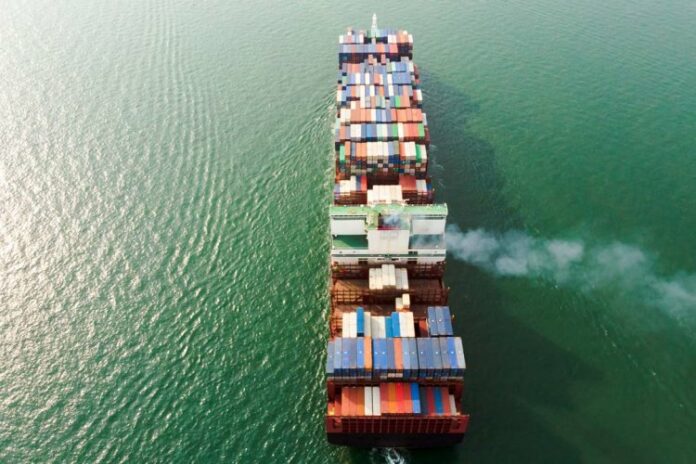
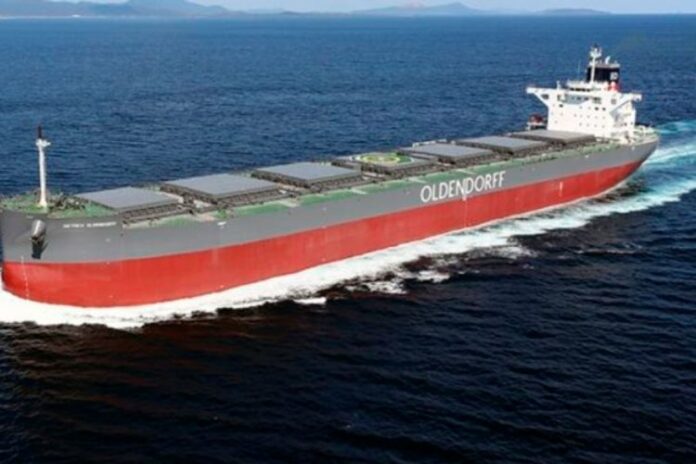
Teck Resources Limited and Oldendorff Carriers (“Oldendorff”) today announced an agreement to employ energy efficient bulk carriers for shipments of Teck steelmaking coal from the Port of Vancouver to international destinations, reducing CO2 emissions in the steelmaking coal supply chain. 

This industry-leading initiative is expected to achieve a CO2 emissions reduction of 30 – 40% for shipments handled by Oldendorff. The estimated savings can be of up to 45,000 tonnes of CO2 per year, equivalent to removing nearly 10,000 passenger vehicles from the road.

Oldendorff’s fleet of ‘Eco’ bulk carriers achieve significant fuel savings, owing to their energy-saving design, fuel-efficient engines, maximizing cargo size and utilizing advanced voyage optimization. Oldendorff’s fleet of approximately 700 bulk carriers from Handy size to Cape size gives Teck shipping flexibility and reduced carbon intensity on each voyage. The CO2 reductions represent Scope 1 emissions for Oldendorff and Scope 3 emissions for Teck.

Don Lindsay, President and CEO, Teck, said:

“Partnering with Oldendorff to reduce the emissions associated with transportation of our steelmaking coal is one of the ways Teck is reducing our carbon footprint and taking action on climate change. As part of our climate strategy, we are committed to working with transportation providers to reduce emissions downstream of our business.”

Peter Twiss, CEO of Oldendorff Carriers commented:

“Oldendorff Carriers is very pleased to collaborate with Teck on this effort to reduce CO2 emissions in the bulk supply chain. By working together with the Teck logistics team and challenging fundamental logistic concepts, we were able to develop an environmentally optimized delivery program. Using our fleet of ‘Eco’ bulk carriers in this re-envisioned delivery program, the CO2 emissions will be reduced significantly.“

As part of Teck’s Sustainability Strategy, Teck has goals to reduce carbon intensity across operations by 33% by 2030 and be a carbon-neutral operator by 2050. CIick here to learn more about Teck’s approach to taking action on climate change.
TotalEnergies, Iberdrola, Norsk Havvind join forces for offshore wind development

0

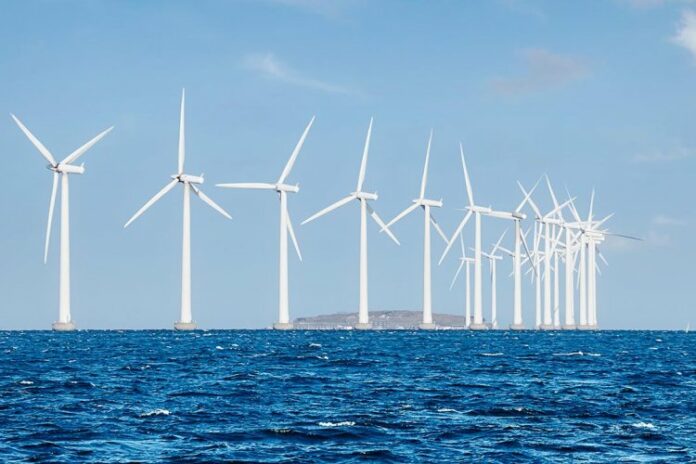
TotalEnergies, Iberdrola and Norsk Havvind have joined forces to respond to the Norwegian authorities’ call for tenders for the development of floating and bottom-fixed wind projects for a cumulated capacity of 4.5 GW at two offshore sites in southern Norway. 

The consortium will leverage in its offer the proven technical expertise of its members in both bottom fixed and floating offshore wind, as well as its in-depth knowledge of the challenges, territories and stakeholders in Norway. Besides, on successful award, the consortium will focus on strengthening the local industrial competencies and ensuring the successful development of the Norwegian offshore wind supply chain.

Olivier Terneaud, VP offshore wind at TotalEnergies, said:

“Investing in energy projects in Norway and the North Sea has been at the heart of TotalEnergies’ history for several decades, especially in developing the offshore industry. As a global multi-energy company, TotalEnergies is therefore delighted to join forces with Iberdrola and Norsk Havvind to develop Norway’s great offshore wind potential. The energy transition is gathering speed and Norway, with its world-class wind resources, is a great place to invest in new energy”.

David Rowland, Offshore Wind Business Development Director at Iberdrola, said:

“This agreement in Norway fits with Iberdrola’s strategy to consolidate its position as the world’s largest renewable energy company and builds on previous transactions and investments in offshore wind carried out by the company in recent years. We see very good long-term potential for offshore wind projects in the Norwegian market and are determined to strengthen skills and the supply chain in the North Sea offshore wind industry.”

Peder Sortland, CEO at Norsk Havvind, said:

“Together with our partners Iberdrola and TotalEnergies we will work hard to develop the Norwegian offshore wind industry, reduce emissions and create new jobs for the Norwegian supply chain.”

LNG bunkering vessel Optimus arrives to Estonia

0

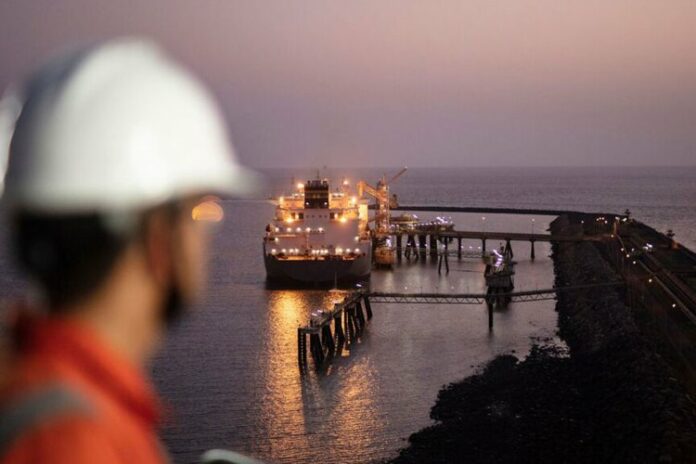
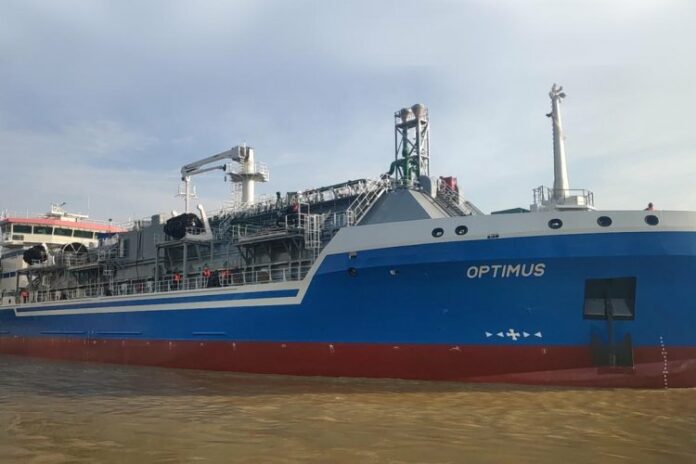
The service area of the LNG bunkering ship will comprise the part of the Baltic Sea centred around the Gulf of Finland. The ship, named Optimus, was christened with the Estonian Prime Minister Kaja Kallas, as the ship`s godmother.

Ain Hanschmidt, Chairman of the Supervisory Board at Elenger, said:

“This is the first such bunkering vessel in our region to start supplying LNG fuel to ships,” 

He added that the new vessel will contribute to preventing nearly 2 million tonnes of CO2 emissions during its lifecycle and will allow shipping companies to provide clients with a smoother and quieter travel experience.

Within a matter of a few years, Elenger Marine, has become the largest LNG bunker services supplier in the Baltic region, delivering LNG to Tallink’s shuttle Megastar (with Tallink’s new shuttle MyStar to join next year) as well as to a number of cargo vessels in the ports of Tallinn, Helsinki and Hanko.

The vessel can bunker tankers, cargo ships, passenger vessels and cruise ships in ports and in offshore waters.  It’s tanks and pumps allow for up to 6000 m3 of liquefied natural gas to be delivered to clients at a rate of up to 1000 m3 per hour. The LNG bunkering vessel, which is almost a hundred metres in length, was built by the Dutch company Damen.

Peter Anssems, Damen Sales Manager for East Europe, added:

“We are very pleased to be playing a significant role in making sustainable shipping more accessible to ship-owners and operators in the Gulf of Finland. We are confident that Optimus will give many years of productive service to Elenger.”

Capable of carrying 6000 m3 of liquefied natural gas, the vessel belongs to the investment company Infortar and will be commercially operated by Elenger Marine. The construction of the ship was co-financed by OP Bank, and aid was granted by EU CEF (Connecting Europe Facility).

Primary characteristics of the LNG bunkering vessel Optimus:

  • LNG tank hold capacity: 6000 m3
  • Deadweight: 3300 tonnes
  • Length:  99.8 m
  • Width: 18.6 m
  • Speed: 12.5 knots

Fincantieri and Navantia agree to boost collaboration in European defence

0

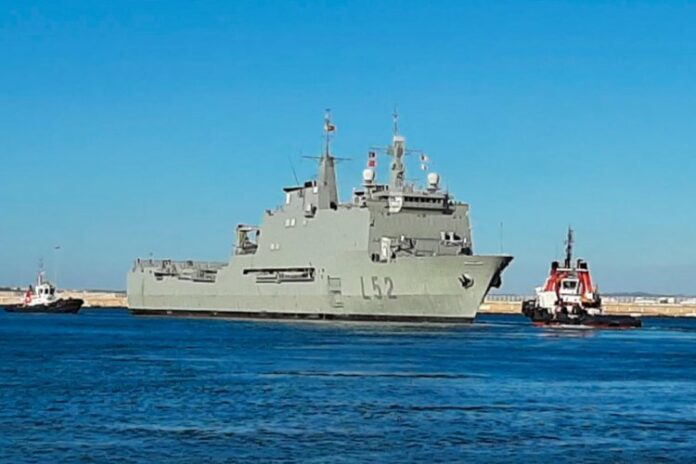
Both companies, which are first class reference European shipyards, will assess future opportunities for Italian and Spanish Navies, including the development of joint projects and the participation in the development of future destroyers and other naval platforms that will be part of the future European Defence Force.

Navantia and Fincantieri are already collaborating in the European Patrol Corvette (EPC) program, to date the most important naval initiative within the Permanent Structured Cooperation (PESCO) project, together with the French Naval Group.

Giuseppe Bono, CEO of Fincantieri, stated:

“We have long agreed that, in order to stand its ground with the global challenges of the future, we need a robust and long lasting cooperation in the defence and security field at a European level, just so our continent will be able to play an increasingly important role and this agreement goes in that direction. We are therefore very satisfied to give substance to a plan that can no longer be postponed and to build a collaboration path based on important programs of the two Navies”.

Navantia’s Chairman Ricardo Domínguez has emphasized “the real opportunity of collaboration that this MoU represents, as it is the first one signed between both companies at this level and with this ambitious scope”:

“We aim to strengthen European Defence and boost European Defence Industry position and we think that agreements as ours pave the way towards this objective”.

DEME and Penta-Ocean Construction establish new Joint Venture Company

0

The formation of a joint company marks the formalisation of the cooperation between DEME Offshore (49%) and Penta-Ocean Construction (51%) in Japan. Through JOM, both partners are committed to take a pioneer position in the fast-developing Japanese offshore wind market.

Japan Offshore Marine combines DEME Offshore’s marine engineering knowledge and decades of experience in the renewables sector, with the knowledge and highly specialised marine construction technology of Penta-Ocean.

As  a further vote of confidence in the Japanese market,the DP2 jack-up installation vessel ‘Sea Challenger’ will be relocated to Japan and will be brought under the Japanese flag.  

‘Sea Challenger’ is set to undergo a major upgrade, preparing it for the first round of offshore wind farm projects in Japan expected to start in 2025. JOM’s investments in new technology will ensure the company is ready for the future and to become an offshore wind industry leader in the Japanese market.

Takuzo Shimizu, CEO Penta-Ocean Construction, comments:

“We are delighted to have established a joint venture company in Japan with DEME Offshore, a leading company in the field of offshore wind construction in Europe. We are confident that through JOM we will be able to combine our extensive experience and expertise in offshore wind construction and marine civil engineering, to lead the growing offshore wind farm construction market in Japan. JOM’s new challenge begins with overcoming Japan’s challenging natural conditions such as harsh metocean conditions, earthquakes and complex soil conditions.”

Luc Vandenbulcke, CEO DEME Group, comments:

“We are thrilled to have established a local Japanese company together with our partner Penta-Ocean Construction. JOM will combine both partners strengths and will be well-equipped with its own state-of-the-art and future-proof installation vessel. Both partners bring their drilling and offshore expertise to JOM. Japanese projects will be marked by complex seabed conditions, which means that drilling expertise will be vital for becoming successful in Japan. We are very excited to be able to make a significant contribution to the long-term development of the offshore wind sector and to help Japan fulfil its ambitions.”

Starts joint R&D on integrated navigation support system using AI

0

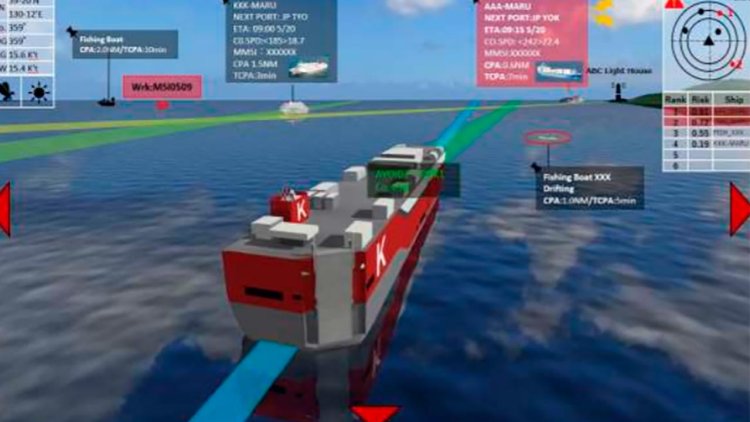
As a part of an initiative to expedite implementation of autonomous ships, Japan Radio Co., Ltd. (JRC) have entered into a joint R&D agreement with Kawasaki Kisen Kaisha, Ltd. (“K” LINE) and YDK Technologies Co., Ltd. (YDK) to develop an integrated navigation support system that utilizes artificial intelligence (AI) and other cutting-edge technologies for assisting maneuvering in making safety maneuvering decisions.

This joint R&D project aims to develop a system that will prevent serious maritime accidents such as ship collisions and groundings and that will lead to autonomous ship operations by combining JRC marine equipment’s knowledge and advanced radio technology developed over many years, “K” LINE’s maneuvering knowledge and experience in safe ship operation, and YDK’s steering and propulsion control technology.

This system is expected to meet Degree 1 of the International Maritime Organization (IMO) standard for development stages of autonomous ships and is an initiative to follow the global trend of the development of autonomous ships and further expedite the project.

An overview of this initiative and the joint R&D system is shown below. The aim is to develop a comprehensive system that will further improve the safety of ship operations by utilizing the knowledge and technologies of the joint R&D partners in each process from situation awareness by the seafarer to maneuvering control of the ship, combined with the most advanced technologies.

Starting from April 2023, demonstration at sea will be conducted on various ship types and routes, both domestic and international, with the aim of full-scale commercial implementation in the future. JRC, “K” LINE, and YDK will continue to develop the system to further improve the safety of ship operations by providing more advanced support and reducing the burden on seafarers and to assist in implementing autonomous ships.

HullWiper teams up with World Subsea Services

0

Strategically located in the Indian Ocean, Colombo Port is one of the country’s largest and busiest ports, particularly for container vessels.

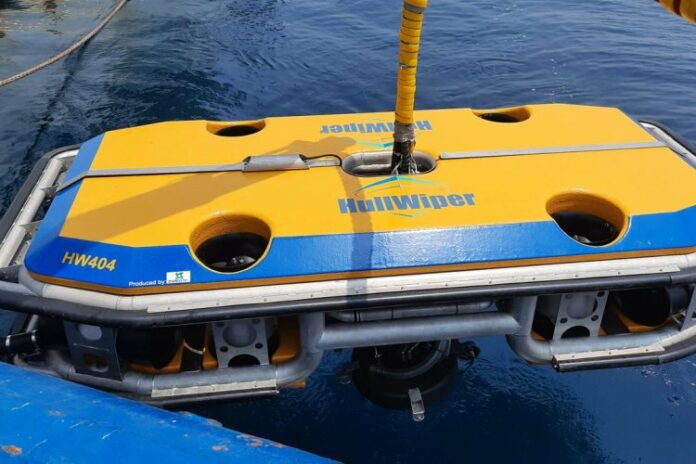
HullWiper’s Remotely Operated Vehicle (ROV) provides an eco-friendly, safe alternative to traditional methods of hull cleaning using divers with brushes or karts. With HullWiper’s advanced onboard filter unit technology, hull cleaning operations can be performed while the vessel is in port, day, or night, in most weather conditions and whilst cargo operations are underway. Vessels do not need to be off-hired or experience delays to their tight schedules.

Lalindu Jayawickrama, World Subsea Services CEO, says:

“The shipping industry has moved into an era of performing eco-conscious operations, and with this comes the responsibility of ship owners and operators to use green solutions. We are preparing now for the inevitable possibility that the option to clean hulls using traditional methods may become extremely limited by offering a service that will not disrupt business continuity for vessels.”

World Subsea Services joins HullWiper’s expanding family of partners around the world operating under their lease agreement introduced in 2017. The global network of hubs provides cost-effective, safe underwater hull cleaning solutions that protects both vessel’s expensive anti-fouling coatings and the marine ecosystem. HullWiper’s ROV is 100% environmentally friendly and uses adjustable seawater jets as the cleaning medium instead of brushes or abrasives, to minimise the risk of damage to coatings. Removing fouling from vessels’ hulls results in optimal performance, energy efficiency and reduced CO2 emissions, and avoids the expense of recoating in case of damage. No divers are used, so there is no risk to human life.

Simon Doran, HullWiper MD, says:

“With our industry focusing more and more on efficient, sustainable operations, HullWiper’s cleaning solution is an effective tool to improve a vessel’s fuel economy and carbon footprint. Colombo’s strategic location in the Indian Ocean makes it a key hub, with vessels sailing to and from Europe, East Africa, the Persian Gulf, East Asia and elsewhere in South Asia. Having access to advanced hull cleaning technology services at this key port will be beneficial both for ship owners’ and operators’ bottom lines, and the marine environment.”

Since its launch in late 2013, HullWiper has expanded from its first base in Dubai to key locations across the Middle East, as well as ports in Australia, Denmark, Egypt, Gibraltar, Mauritius, Namibia, Norway, Panama, South Korea, Singapore, and Sweden. HullWiper has performed more than 1,400 hull cleans for vessels worldwide.

Damen delivers custom electric Fire-Fighting vessels to Flotte Hamburg

0

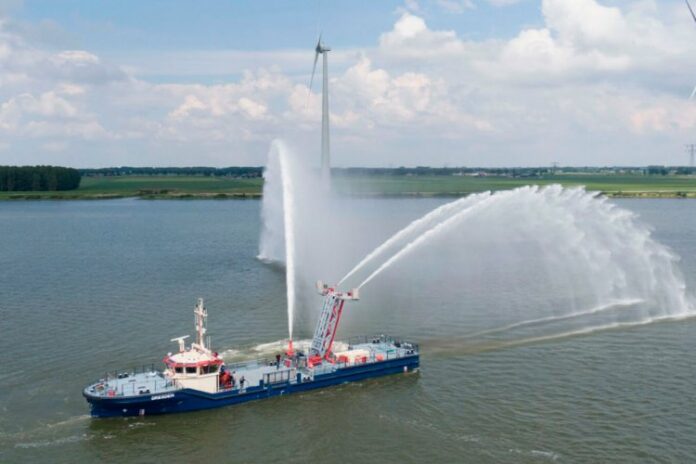
In a ceremony held in the Port of Hamburg, Damen handed over twin Fire-Fighting vessels to Flotte Hamburg, a subsidiary of the Hamburg Port Authority (HPA) tasked with implementing low-emission shipping in the city. 

With 315 kWh of battery capacity, the state-of-the-art, plug-in hybrid vessels are capable of extended, fully-electric, emissions-free operations in and around the Port of Hamburg. Prag will be operated by Hamburg’s fire service while Dresden will support the HPA, the fire service and other third parties.

Their compact size also enables them to undertake other activities including water supply, rescue and recovery, technical assistance and environmental protection. And with their ability to lower their wheelhouses and a draught of just 1.5 metres they can also undertake bridge inspections and maintenance within the city, as well as serve locations that larger vessels would be unable to reach.

Additional versatility comes from the ability to position mission containers on deck for additional fire-fighting equipment and day accommodation for up to 16 firefighters. The installed Fi-Fi systems include remote operation capability, foam pump and control systems, a pre-wetting system, a water spray system around the vessels and internal fire-fighting capability using a Stat-X aerosol fire suppression system. The climate-controlled wheelhouse and dayroom accommodate up to six crew.

The hulls for the vessels were fabricated at Damen Shipyards Kozle in Poland and then transported to Damen Shipyards Hardinxveld in the Netherlands for completion.

The handover and christening ceremony was hosted by the Mayor of Hamburg, Dr. Peter Tschentscher, and HPA managing director Jens Meier. The Prag was christened by Hana Třeštíková, City Councillor for Culture of the City of Prague, and the Dresden was christened by Annekatrin Klepsch, Dresden’s Deputy Mayor for Culture & Tourism. The vessels are now undergoing final commissioning and training of the crews and fire-fighters.

Jeroen van Woerkum, sales manager at Damen Shipyards Hardinxveld, said:

“It was good to be working once again with HPA, having built them a floating pump station in 2016. Designed by Robert Allan, these were already highly complex vessels, and the hybrid propulsion introduced yet another level of complexity. However the cooperation with Flotte Hamburg was very close and when COVID struck, all the parties worked together to overcome the issues that arose.”

Eminox and KBB partner to deliver emissions control solution

0

Emissions control specialist Eminox and turbocharger maker Kompressorenbau Bannewitz (KBB) have announced a major collaboration to meet increasing emissions compliance requirements for marine diesel engines.

By working together, the two companies will provide marine engine manufacturers and vessel operators with a fully integrated emissions control solution, from turbo to tailpipe, to deliver clean marine diesel engines.

Aimed at medium speed engines over 1MW power, the new market-leading solution brings together KBB’s expertise in marine turbocharging and air handling with Eminox’s proven EMx exhaust aftertreatment system (EATS) technology.

The end-to-end solution includes the design, manufacture, installation, certification and, the breadth of knowledge and expertise from KBB and Eminox will ensure customers are supported with service, maintenance and aftersales.

This integrated project management and full in-house solution removes the need for engine manufacturers to assemble components from multiple suppliers or undertake their own costly testing and type/class approval certification. The KBB Eminox solution is optimised for specific engines which increases performance efficiency and the effectiveness of emissions reduction.

As part of the maritime industry’s commitment to achieving a zero carbon future, diesel engines are subject to IMO Tier I and Tier II regulations. Additionally, every vessel entering specific emission control areas (ECAs), including the Baltic Sea, North Sea and North American ECAs must meet much stricter IMO Tier III targets, with tighter nitrogen oxide (NOx) emissions requirements. For vessels to be compliant when operating on European Inland Waterways Stage V regulations apply.

Future legislation, including an update to the marine Stage V regulations and IMO IV are expected to set dramatically lower NOx emissions targets and introduce controls on particulates from the early 2030s.

David Phillips, Engineering Director, Eminox, said:

“Diesel engines are the backbone of the marine industry, making it vital to optimise their performance to lower emissions as we move to a zero carbon future. Working with KBB, we’re committed to helping achieve this. We’ve developed a complete, integrated solution for the maritime industry that builds on the proven strengths of diesel while reducing harmful emissions, preserving investment in existing engines. Given the need to plan for the long-term, now is the time for marine operators and engine manufacturers to accelerate their emissions reduction journey by working with partners that can provide an in-house solution for all their needs.”

Built to meet the demands of marine environments, the Eminox/KBB solution is designed for over 20 years of service, lowering operational costs, and positively supporting the resale value of engines and vessels. It is future-proofed and upgradeable as and when legislation changes.

McDermott collaborates with Shell to decarbonize construction

0

McDermott has signed a memorandum of understanding (MOU) with Shell Eastern Petroleum Pte Ltd (Shell), a subsidiary of Royal Dutch Shell plc, to collaborate on decarbonizing construction.

The agreement enables McDermott and Shell to explore opportunities for reducing, and eliminating, emissions from construction through pathways such as low carbon fuels, renewable power, digital solutions and decarbonizing marine construction vessels.

Samik Mukherjee, McDermott’s Executive Vice President and Chief Operating Officer, said:

“Companies such as McDermott and Shell—who have targets to progress towards net-zero emissions by 2050, in step with society—are well positioned to approach the challenges of lowering emissions together. A pathway to reduce greenhouse gas emissions from construction operations will make significant strides toward net zero Engineering, Procurement and Construction projects in the future.”

McDermott’s fabrication yards located in Indonesia, China, the Middle East and Mexico, as well as the marine construction vessels, will be key to identifying opportunities to lower emissions and gain operational efficiencies.

Mahesh Swaminathan, McDermott’s Senior Vice President, Asia Pacific, said:

“McDermott’s integrated project delivery enables us to look holistically across our operations for opportunities to reduce emissions. We are looking forward to working with Shell to explore what’s possible and see how our combined expertise delivers more sustainable operations.”