1.3 C
New York
Home Blog Page 51

Fugro partners with DTACT and Ubotica to launch a data fusion and intelligence platform

0

Fugro has announced a partnership with DTACT, a high-tech software company, and Ubotica, a leader in AI-powered satellite intelligence, to develop a unique data fusion and intelligence platform. This solution is designed to provide government organisations with the information needed to strengthen national security and safeguard critical underwater infrastructure.

Underwater pipelines, communication cables, and other subsea assets are essential to modern society, supporting global economies and daily life. Threats to this vital infrastructure can severely disrupt energy supply and connectivity. To counter these growing risks, a unified platform combining multiple data sources will enable authorities to detect, identify, monitor and act on suspicious maritime activities, ensuring timely insights and intervention.

“Fugro is committed to supporting safe and sustainable maritime operations,” said Ivar de Josselin de Jong, Director of Strategy and Government Relations for Fugro’s Maritime Security and Surveillance business. “This partnership with DTACT and Ubotica allows us to integrate additional intelligence into our Geo-data, enabling information-driven operations for national security efforts.”

Fugro will provide comprehensive Geo-data collected using its range of advanced autonomous solutions, including uncrewed surface vessels, underwater vehicles, and aerial drones, all managed through specialised remote operations. Ubotica will provide near real-time satellite vessel tracking data using its AI-driven acquisition technologies. DTACT will then use its data fusion capabilities to combine Fugro’s Geo-data and Ubotica’s satellite intelligence with countless other data streams, delivering a comprehensive intelligence picture for informed risk assessment and decision support.

“Our partnership with Fugro and Ubotica brings together crucial capabilities,” said Sander Swinkels, CEO and co-founder of DTACT. “The synergy created by combining Fugro’s global Geo-data and maritime expertise with Ubotica’s satellite intelligence allows our data fusion platform to create a complete and unified picture vital for protecting subsea assets.”

Fintan Buckley, CEO of Ubotica added: “Real-time intelligence is transformative for maritime situational awareness. The combined space-to-seabed surveillance and response capability that we are developing through this partnership is a game-changer. This integrated approach, bringing together our insights with Fugro and DTACT, creates enhanced maritime awareness and a near real-time response capability that will secure critical underwater infrastructure well into the future.”
New consortium to explore floating nuclear power for Mediterranean energy needs

0

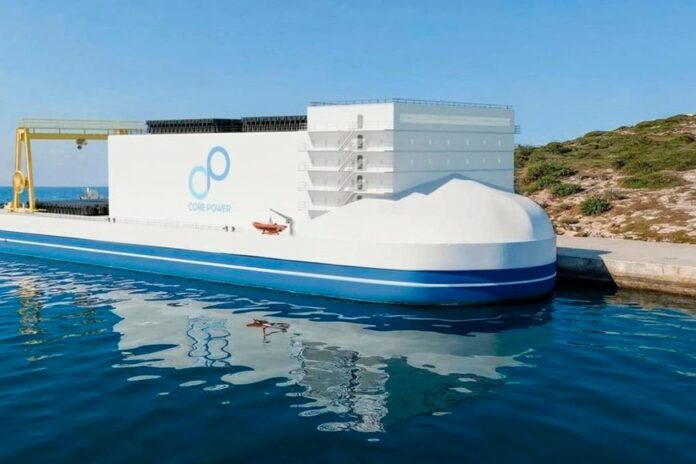
The joint effort will assess how floating nuclear platforms—powered by small modular reactors (SMRs)—can address growing energy demands in remote and coastal areas. This includes supplying grid-scale electricity to islands, supporting zero-emission port operations, and powering desalination plants to provide potable water in drought-affected regions.

“FNPPs can revolutionise the way we deliver reliable and affordable nuclear energy,” said Mikal Bøe, CEO of CORE POWER. “By constructing and mass-assembling a fleet of FNPPs in shipyards, we can deliver clean nuclear energy on time, and on budget, solving many of the largest energy challenges we face. CORE POWER is delighted to partner with other industry leaders, ABS and Athlos, on this project.”

The project comes as the maritime and energy sectors face mounting pressure to reduce carbon emissions and enhance energy resilience. Nuclear energy—particularly in the form of SMRs deployed on floating platforms—is increasingly being recognised as a scalable, zero-emission alternative to fossil fuels.

The project will develop novel FNPP Concepts of Operations (CONOPS) and generate visual models of proposed deployment sites. A central focus will be the feasibility of operating these platforms in the Aegean Sea, where demand for clean energy and water is rising in tandem with regulatory and environmental concerns.

“Floating nuclear power facilities show promise in supporting power grids, microgrids, industrial and port operations, and even data centers,” said ABS Chairman and CEO Christopher J. Wiernicki. “As global efforts to reduce emissions and improve energy efficiencies accelerate, FNPPs present a viable and powerful alternative.”

Dionysios Chionis, co-founder of Athlos Energy, added: “As Greece reconsiders its energy future, the role of nuclear power is increasingly back on the agenda. This study marks an important first step in assessing the feasibility of deploying floating nuclear reactors in the Aegean Sea.”

ABB signs 15-year fleet service agreement with Royal Caribbean Group

0

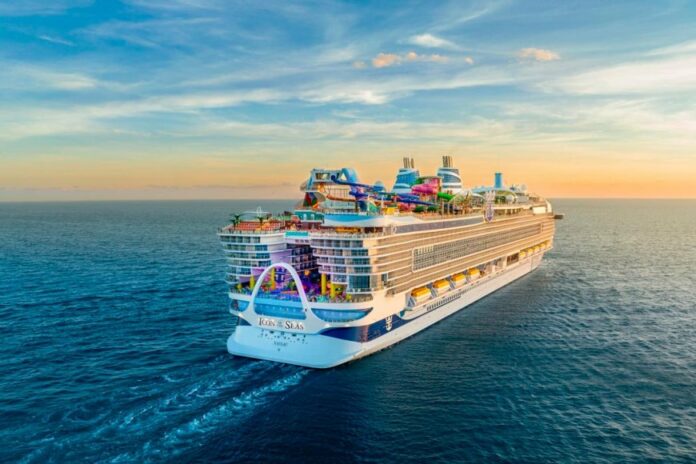
ABB has signed a 15-year service agreement with Royal Caribbean Group.

Covering 33 existing ships, the comprehensive agreement includes preventive maintenance and digital solutions to support and optimize propulsion operations, improve vessel safety, maximize fleet availability, and ensure fast turnaround times for planned Azipod® propulsion servicing. Financial terms were not disclosed.

“Our collaboration with Royal Caribbean Group spans nearly three decades, beginning with the installation of Azipod® propulsion on one of the world’s largest cruise ships at the time,” said Juha Koskela, President of ABB’s Marine & Ports division. “Since then, we’ve partnered on numerous pioneering projects. This service agreement marks an important milestone in our journey together and highlights the critical role of ABB’s solutions in modernizing and maintaining the performance of one of the world’s most innovative cruise fleets.”

“This agreement exemplifies how a shared commitment to innovation can unlock new opportunities to improve progress toward ship performance goals,” said Palle Laursen, Royal Caribbean Group EVP and Head of Marine.

From its creation over three decades ago to its leading position in shipping today, Azipod® propulsion has revolutionized marine transport by delivering unparalleled gains for performance, efficiency, sustainability and reliability. The gearless, steerable propulsion system, with the electric drive motor in a pod outside the ship’s hull, can rotate 360 degrees to increase vessel maneuverability and efficiency, while cutting fuel consumption by up to 20 percent compared to conventional shaftline systems. Since the first installation on a cruise ship over 25 years ago, Azipod® technology has saved more than one million tons of fuel in the cruise segment alone.

Mitsubishi launches 11th Mogami-class frigate for Japanese navy

0

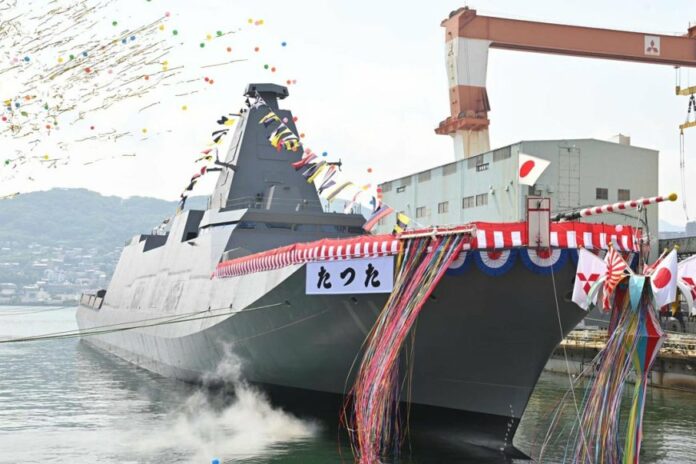
Mitsubishi Heavy Industries has launched the 11th Mogami-class frigate for the Japan Maritime Self-Defense Force (JMSDF).

The new vessel has been named Tatsuta, after the Tatsutagawa River, a tributary of the Yamatogawa River flowing near the city of Ikoma in Nara Prefecture.

It is the third ship in Japanese naval history to bear the name Tatsuta, following an Imperial Japanese Navy gunboat and a light cruiser that served between the 1920s and the 1940s.

Japan’s Ministry of Defense has ordered a total of 12 Mogami-class frigates. The launch of Tatsuta marks the penultimate ship in the series, with the final vessel expected to be launched by the end of 2025.

The keel for Tatsuta was laid on July 3, 2024. After 12 months of construction, the frigate will now undergo final outfitting and sea trials ahead of its planned commissioning into the JMSDF in 2026.

The Mogami-class frigates are modern, multi-role surface combatants developed for the JMSDF. Measuring approximately 130 meters in length and 16.3 meters in beam, the ships displace 3,900 tons standard and up to 5,500 tons fully loaded.

Powered by a CODAG propulsion system that combines a Rolls-Royce MT30 gas turbine and two MAN diesel engines, the frigates can reach speeds of over 30 knots and have an operational endurance of more than 30 days. Each ship is crewed by around 90 personnel.

Armament includes a 127 mm Mk 45 Mod 4 naval gun, 16 Mk 41 vertical launch system (VLS) cells for Type 23 and Type 07 VL-ASROC missiles, and eight Type 17 (SSM-2) anti-ship missiles.

For anti-submarine warfare, the frigates carry six 324 mm torpedo tubes for Type 12 torpedoes. Close-in defense is provided by a SeaRAM system and two remote weapon stations. Each frigate can operate one SH-60K or SH-60L helicopter.

Sensors and combat systems include the OPY-2 active electronically scanned array radar, OYQ-1 combat management system, OAX-3 electro-optical system, and sonar suites OQQ-11 and OQQ-25. The ships also feature mine countermeasure capabilities and the NOLQ-3E electronic warfare suite.

Source: Militarnyi

Babcock’s LGE business wins inaugural contract for Ammonia Fuel Supply System

0

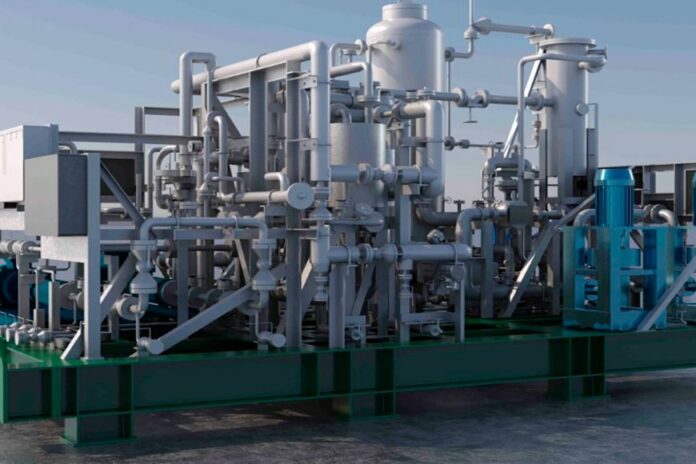
Babcock’s LGE business has been awarded a contract to deliver an innovative marine Ammonia Fuel Supply System, ecoFGSS-FLEX®. The system allows the safe, efficient and sustainable use of ammonia as a propulsion fuel.

By enabling the use of ammonia as a marine fuel in place of traditional fossil fuels, this pioneering technology supports a cleaner, more sustainable future.

The new technology, developed in-house by an expert engineering team, will be used on board four Medium Gas Carriers for Trafigura, being built at Hyundai Mipo Dockyard (HMD). The technology integrates seamlessly with wider, existing ship systems and is designed to meet the highest safety and environmental standards.

Neale Campbell, Managing Director of Babcock’s LGE business, said: “Our focus remains on delivering future-ready, sustainable solutions that help our customers navigate the transition to cleaner energy. Ammonia has the potential to be a game-changer in the marine industry’s drive towards decarbonisation and sustainability. We’re proud to be leading this transformation, and this contract reflects both the strength of our approach and the confidence in our innovative technology to meet evolving industry demands.”

Andrea Olivi, Global Head of Shipping at Trafigura, added: “We’re proud to be working with Babcock’s LGE business to help make ammonia a practical, safe and cleaner fuel for the shipping industry.

“Their experience and technology are key to making this possible. As one of the world’s largest vessel charterers, we’re always looking for ways to cut emissions – and using dual-fuel ships gives us the flexibility to adopt low-emission options like ammonia as they become more widely available.”

Wind turbine installation vessel Norse Energi successfully launched at the CIMC Raffles shipyard

0

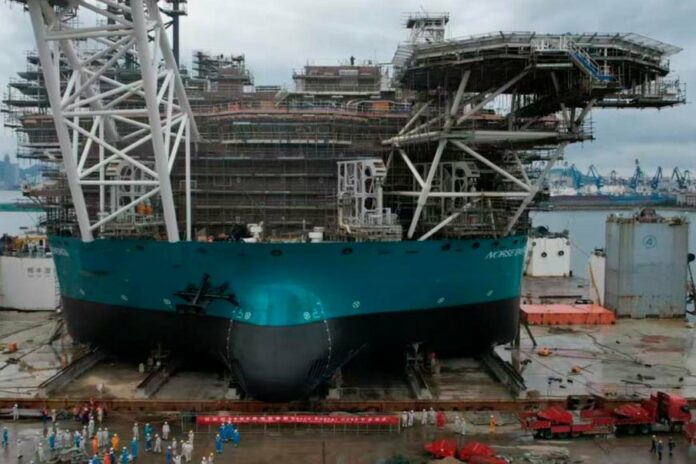
This marks a major step forward as the vessel enters its final construction phase.

Designed by GustoMSC, Norse Energi – like its sister vessel Norse Wind – is engineered to install turbines with rotor diameters over 300 meters and XXL monopiles up to 3,000 tons, even in water depths of 70 meters. These vessels will be among the most advanced WTIVs in the industry.

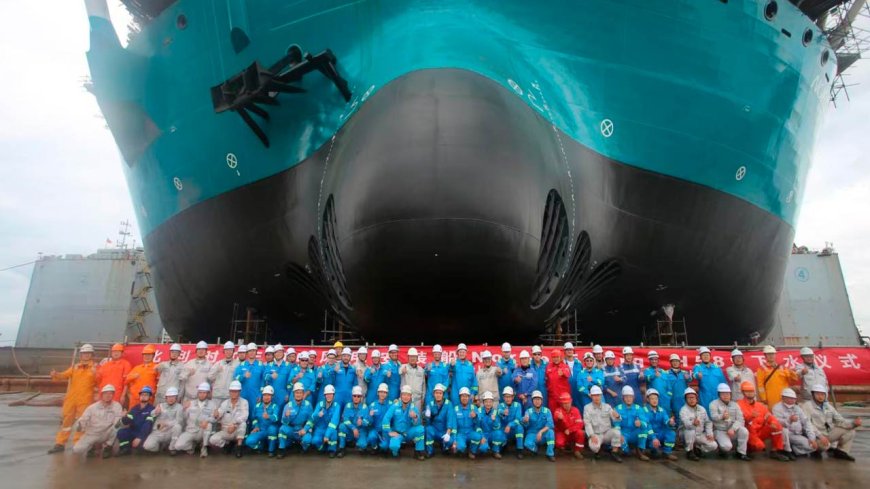
The launch ceremony honored the strong partnership between CIMC Raffles and DEME, built on trust, respect, and excellence. From the first steel cutting in January to the launch, safety has remained a top priority.

The vessels Norse Wind and Norse Energi are expected to be delivered in the fourth quarter of 2025 and early 2026 respectively, and they will be coated in the iconic DEME green color.

Russia delivers frigate with Ukrainian gas turbine engines to India

0

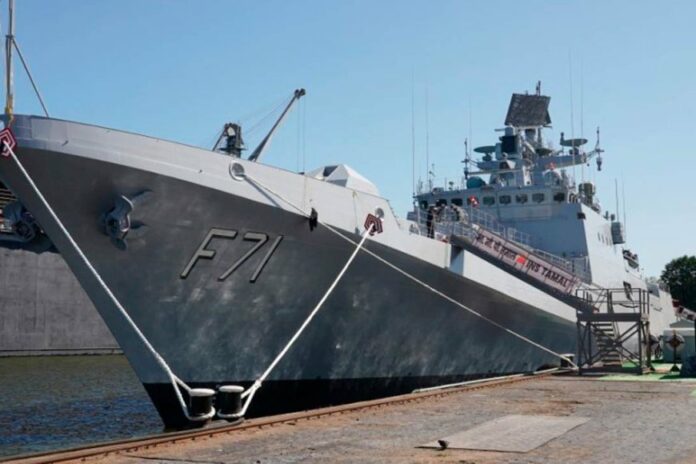
The announcement was made on the official website of the United Shipbuilding Corporation (USC) Yantar.

The ceremony took place at the shipbuilding yard in Kaliningrad, where these frigates are being constructed specifically to fulfill the requirements of the Indian Navy.

As noted by the USC, the frigate Tamala successfully completed acceptance and delivery trials with the participation of the Indian commission.

A key feature during the construction and delivery of the frigate was the use of Ukrainian M7N series gas turbine engines as the primary power plant, manufactured by the Zorya-Mashproekt Scientific and Production Complex for Gas Turbine Engineering, located in the city of Mykolaiv. These engines were supplied to the Indian side by the State Concern Ukroboronprom.

The frigate was initially laid down for the Russian Navy under the name “Admiral Istomin” on November 15, 2013. However, after 2014, the supply of Ukrainian engines was halted, which led the Russian Navy to announce in July 2017, during the International Maritime Defense Show in Saint Petersburg, its intention to complete the frigate “Admiral Istomin” for the Black Sea Fleet using an alternative engine option.

Nevertheless, in 2018, Russia and India signed an intergovernmental contract to complete two unfinished frigates of this project — “Admiral Butakov” and “Admiral Istomin” — with their subsequent transfer to the Indian Navy. In 2019, construction was officially restarted, now in the interests of the Indian Navy.

The ship was first launched in November 2017 to free up the slipway, and it was relaunched in 2024 as part of its completion for India.

The ship is expected to join the Western Fleet of India in September 2025 and will patrol the Indian Ocean. It is the eighth frigate of Project 11356 and the second in the Tushil series. In total, the Indian Navy will be strengthened with ten such ships — two more are being completed in India and are expected to be commissioned by the end of 2026.

These frigates are equipped with a powerful armament suite, including eight launchers for BrahMos supersonic missiles capable of striking both surface and land targets at distances of up to 300 km.

For medium-range air defense, the ship is equipped with vertical launchers of the Shtil-1 system, allowing the use of up to 24 surface-to-air missiles. The artillery armament includes a versatile 100-mm A-190E gun, complemented by six barrels of the AK-630 automatic air defense system, providing protection against missiles and drones at close range.

RBU-6000 rocket launchers and 533-mm torpedo tubes ensure anti-submarine capabilities.

Source: Militarnyi

First Polish SIGINT ship under contract to Saab launched in Gdansk

0

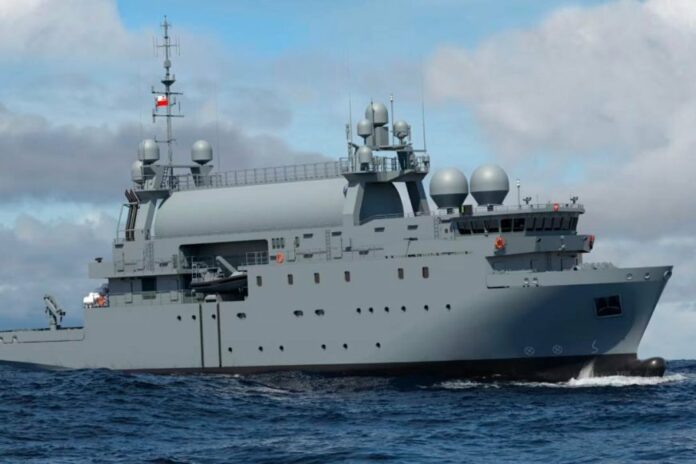
On 1 July 2025, the launch of Poland’s first SIGINT (signal intelligence) ship from Saab, ORP Jerzy Różycki, took place in Gdańsk, Poland. 

The launching ceremony was attended by representatives from the Polish Ministry of National Defence, the Polish Armaments Agency, the Polish Headquarters of Marine Technology, the Polish Navy, and the Chief of Reconnaissance and Intelligence Analysis Directorate (J2).

The launching of the SIGINT vessel is a significant milestone in its construction process, following the first steel cut in April 2023 and keel laying that November. Before entering service, the ship will be equipped with the necessary reconnaissance systems and will undergo sea trials.

The first ship in the ‘DELFIN’ programme series is named ORP Jerzy Różycki, honouring the mathematician, Cipher Bureau employee, and cryptologist who, during the interwar period, worked with Marian Rejewski and Henryk Zygalski to break the code of the German Enigma encryption machine.

“Today marks a significant milestone with the launch of ORP Jerzy Różycki as a testament to the power of cooperation and shared vision. This project exemplifies how nations around the Baltic Sea, with similar needs and experiences, can come together to develop solutions that benefit us all. It demonstrates the type of advanced technology and capabilities that will be imperative for Europe to stand strong against emerging threats and ensure the safety of our people and societies,” said Micael Johansson, President and CEO of Saab.

Ship-based electronic intelligence systems will enable the acquisition of intelligence data across the entire spectrum of maritime electronic intelligence (SIGINT).

The vessels within the ‘DELFIN’ programme are built by Saab as the prime contractor. Remontowa Shipbuilding S.A. is subcontracted to construct the ships, with Polish company MMC supporting Saab with design work. Saab is fully responsible for supplying and integrating the advanced mission systems. Other entities within the Polish defence industry are also involved in the implementation of the project. 

New TRAnsverse Tug arrives in Newcastle, NSW

0

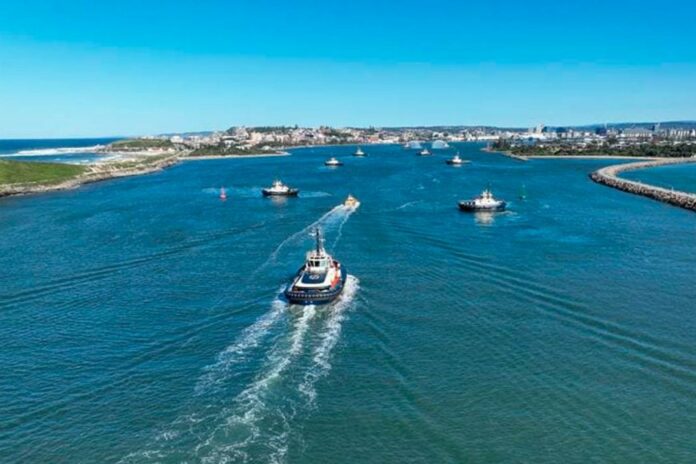
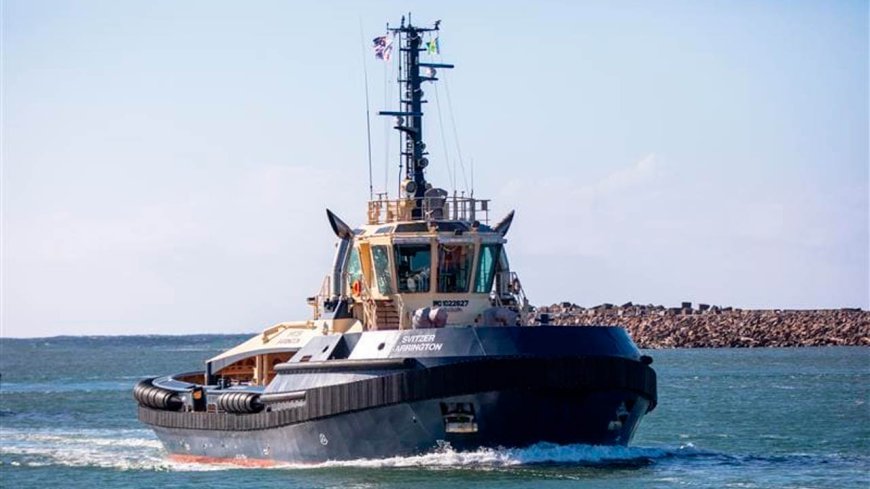
The Port of Newcastle‘s maritime capabilities are set for a significant enhancement with the arrival of the state-of-the-art TRAnsverse tug Svitzer Barrington, which will join Svitzer Australia‘s fleet at the port.

The 32-metre TRAnsverse tug represents a generational advancement in towage standards, innovation and performance Svitzer Australia’s Chief Operating Officer David Phillips said.

“This tug class is purpose-built for versatility and power, maintaining high steering and braking forces through a range of movements without losing the dynamism or responsiveness required by marine pilots,” Mr Phillips said.

“The arrival of Svitzer Barrington, soon to be joined by her sister tug, Svitzer Nobbys, represents our ongoing investment into Australian ports, helping them operate to the highest levels of safety, efficiency and in a way that helps our maritime sector grow in a more sustainable world.”

Behind the TRAnsverse tug’s impressive look and performance are unique design features, including a patented half-circle towing staple – able to support advanced towing manoeuvres – and a double-ended hull and propulsion layout that maximises the benefits of the staple design. In dynamic modes the TRAnsverse tug expands the operating envelope by around 50% compared to similar or larger ASD tugs. The TRAnsverse tug performs a wider range of jobs, faster, more efficiently and to a generally higher level of safety. The tug has also been shown to provide a fuel efficiency gain of 15%.

Svitzer Barrington has been deployed to the Port of Newcastle as it is one of the busiest ports in Australia and services a range of large vessel types in complex tidal and weather conditions. The Newcastle operations will serve as a proving ground for the TRAnsverse tug technology, validating its performance for broader global deployment across various towage applications.

“Towage provides a critical service within the Port of Newcastle, ensuring the safety and reliability of shipping and port operations. The new TRAnsverse tug class represents a significant uplift in capability, further enhancing the Port of Newcastle’s resilience and growth into the future. We look forward to seeing Svitzer Barrington’s performance on the water and the additional flexibility she provides to our operations,” Port of Newcastle CEO, Craig Carmody, said.

The port sees more than 4,500 vessel visits a year – including large capesize vessels shipping export coal, bulk grain and agri vessels, container ships, breakbulk freight, cruise vessels and more.

As vessels become larger, weather conditions more extreme and ports more congested, the demand for tugs to assist vessels safely in and out of ports and terminals continues to increase. The logical extension is that tugs have gradually needed to become more powerful, as well as more fuel intensive. However, the TRAnsverse tug’s design and technical features have shifted that assumption, as demonstrated in a recent white paper demonstrating the superiority of its performance.

Svitzer Barrington will be joined by her sister tug Svitzer Nobbys in August.

Seaber’s optimization solution expanded to Neste’s European shipping operations

0

Since 2021, Neste has successfully used Seaber to optimize its products shipping out of Finland, improving vessel scheduling, reducing port wait times, and enhancing fleet utilization. Following such improvements, Neste is now rolling out Seaber across all its European shipping operations, with a long-term vision of enabling global fleet transparency and efficiency through digitalization.

As part of the expansion, Seaber and Neste are boosting their strategic collaboration. Beyond providing technology, Seaber contributes its domain expertise and advanced algorithms to actively identify opportunities for optimization and cost savings. Each of Neste’s shipping units is participating in joint studies to support the shared goal of maximizing fleet utilization.

Key outcomes driving Neste’s expansion:

  • Higher fleet utilization: Through improved fleet utilization, Seaber enabled up to a 4% reduction in bunker and port-related costs and a 4% cut in emissions. 
  • Cost optimization: By comparing different scenarios, Seaber is helping Neste’s teams identify new ways to reduce costs across fleet scheduling and port operations. 
  • Enhanced transparency: Aiming for a global virtual position list through the work of scheduling and chartering teams, Neste is achieving a clear, transparent, and centralized view of its shipping operations.
  • Scalability and flexibility: Seaber’s validated data model for planning and optimization adapts to the unique needs of each shipping division regardless of operational differences.

“We identified Seaber as the best solution for planning and pre-fixture optimization in bulk shipping,” said Sander Wilgenhof, Head of Chartering at Neste. “As a director, I highly value the transparency, visibility, and decision support Seaber delivers across our fleet. By scaling the solution to all our shipping operations, we’re able to streamline planning globally, improve capacity utilization, and reduce both costs and emissions.”

“Neste is the ideal partner for us due to their commitment to finding new opportunities to optimize and streamline planning,” said Sebastian Sjöberg, CEO and Co-founder of Seaber. “Seeing them roll out Seaber across Europe shows how much of a difference AI-assisted optimization can make for planning, regardless of cargo types.”