The well was drilled about 23 kilometres north of discovery well 7220/8-1 on the Johan Castberg field in the Barents Sea and 210 kilometres northwest of Hammerfest.
Preliminary calculations indicate the size of the discovery is between 0.3 and 0.5 billion standard cubic metres (Sm3) of recoverable gas. This corresponds to 1.9 – 3.1 million barrels of oil equivalent. The licensees will assess the discovery with a view toward a possible tie-in to the Johan Castberg field.
This is the 15th exploration well in production licence 532, which was awarded in the 20th licensing round in 2009.
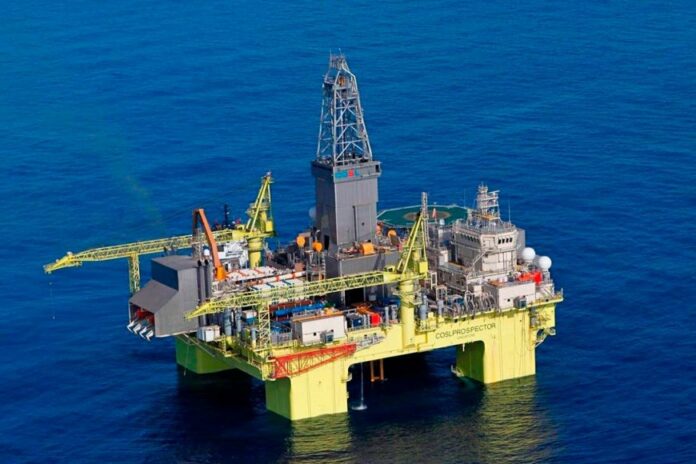
Well 7220/5-4 was drilled by the COSLProspector drilling rig.
The objective of the well was to prove petroleum in reservoir rocks from the Middle Jurassic. The primary exploration target was the Stø Formation, and the secondary exploration target was the Nordmela Formation.
The well encountered a 14-metre gas column in the Stø Formation, in sandstone totalling 70 metres and with good reservoir quality. The gas/water contact was encountered 1849 metres below sea level. In the lower part of the Nordmela Formation, the well also encountered gas in a 3-metre thick isolated sandstone layer with moderate to good reservoir quality.
Above the primary exploration target, the well encountered a 14-metre thick sandstone layer from the Cretaceous, where a 1-2-metre thick zone in the lower part of the reservoir was filled with oil. The reservoir quality is poor to moderate.
The well was not formation-tested, but extensive volumes of data and samples were collected.
The well was drilled to a vertical depth of 2144 metres below sea level, and was terminated in the Fruholmen Formation from the Late Triassic.
Water depth at the site is 415 metres. The well will now be permanently plugged and abandoned.
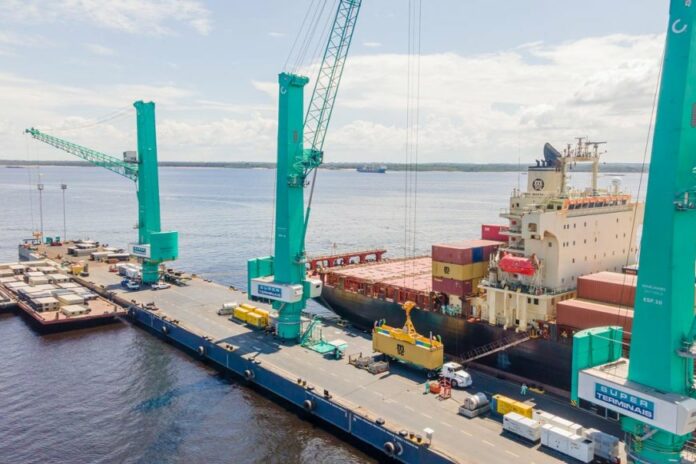
Port of Manaus operator Super Terminais Comercio e Industria Ltda (Super Terminais) has placed a repeat order for three Konecranes Gottwald ESP.10 pedestal-mounted cranes. The deal was booked in Q2 2025, with handover scheduled for Q3 2026.
Super Terminais is repeating its landmark 2021 purchase of the first three Konecranes Gottwald ESP.10 mobile harbor cranes ever produced.
With a maximum reach of 64 meters and a strong lifting capacity curve, the pedestal-mounted cranes can handle containers and general cargo on vessels as large as super-post-Panamax class. These capabilities are needed as the terminal adapts to increasing volumes and the steady arrival of large ships. The cranes can be connected to an onshore electricity supply to minimize emissions.
“The Amazon region is now receiving megaships carrying very heavy loads and the Manaus Free Trade zone economy is growing fast. This is why we’ve again chosen these powerful, reliable and eco-efficient machines from Konecranes – doubling our handling capacity while keeping emissions under control and also meeting the demands of our customers,” says Marcello Di Gregorio, Director of Super Terminais.
Gateway to the upper Amazon basin, the Port of Manaus plays a vital role in northern Brazil’s trade flows. Super Terminais has operated at the port for more than 25 years. The company’s decision to invest in additional Konecranes equipment reflects long-term confidence in a partnership that supports regional growth and the sustainability of the operations inside Super Terminais.
“Repeat business is the strongest validation of trust. These cranes are engineered to perform in tough conditions, such as high humidity, extreme heat and on a floating pier. We’re proud to support Super Terminais with a solution tailored to their demanding operational needs in the Amazon region,” says Alfredo Cañibano Ramos, Regional Sales Manager at Konecranes.
This contract is part of Ecolifting, Konecranes’ vision to increase its handprint – meaning the beneficial environmental impact that can be achieved with our product and service portfolio – while reducing customers’ carbon footprints. From eco-optimizing diesel drives, to hybridization and fully-electrified fleets, we will continue to do more with less.
A strong focus on customers and commitment to business growth and continuous improvement make Konecranes a material handling industry leader. This is underpinned by investments in digitalization and technology, plus our work to make material flows more efficient with solutions that decarbonize the economy and advance circularity and safety.
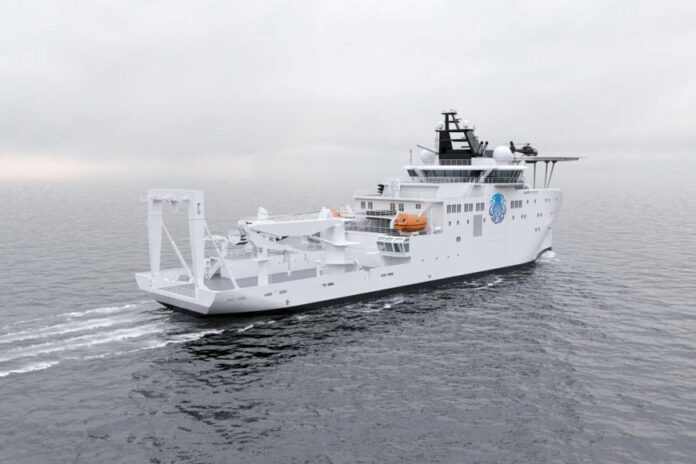
Vard has signed a new contract with the US based research organization Inkfish for the design and construction of one of the most modern research vessels ever developed. The value of the contract exceeds 200 Mill euros.
The custom-built research vessel, project name RV6000, is specially designed for scientific exploration. It will join Inkfish’s growing fleet, alongside RV Hydra and RV Dagon, to support marine research globally. Working closely with host countries, data collected contributes to open-sourced repositories.
The vessel is specifically designed for seafloor mapping, submersible support and ROV operations. It will feature a length of 100 meters and a beam of 20.7 meters, with a maximum speed of 15 knots and an operational autonomy of up to 30 days.
RV6000 has an ROV with operational capacity to reach 6000 m depth and is able to support two manned submersibles. It is equipped with a stern-mounted A-Frame system and a large hangar for maintenance and storage. On the starboard side, an offshore crane equipped with AHC is configured for operations down to 2,500 meters. The vessel is fitted with a hydroacoustic survey system capable of high-resolution seafloor mapping at 0.5 x 1 degrees resolution and water column analysis across all depths.
The technical arrangements include hybrid power generation and propulsion. The hull is developed for advanced seafloor mapping performance as well as superior seakeeping abilities, utilizing advanced anti-roll technologies for reduced motions and accelerations and excellent station keeping performances. The vessel also features state-of-the-art laboratories, offices and workshops, with high-quality accommodation and recreational facilities designed for enhanced comfort. These amenities support up to 70 crew members and scientists and meet the stringent DNV COMF (Comfort Class) notation, with exceptionally low levels of noise and vibration.
“The agreement with InkFish confirms the role of VARD and the Fincantieri Group as key technology partners in the design and construction of highly specialized and advanced naval units,” said Pierroberto Folgiero, Chief Executive Officer of Fincantieri. “This collaboration is based on a shared vision rooted in scientific progress and technological innovation, leveraging our engineering know-how to develop a vessel that will set a new benchmark in support of global research. The project reflects our commitment to driving the technological advancement of the naval sector and to addressing, with vision and expertise, the challenges of an ever-evolving global market, transforming them into opportunities for growth and innovation.”
Through its integrated value chain, VARD will manage the entire construction process of the vessel, from design and hull construction to outfitting, integration, and commissioning. The hull will be built at one of VARD’s shipyards in Romania, while final outfitting, commissioning, and delivery will take place at one of the Group’s shipyards in Norway. Delivery is scheduled for Q2 2028.
Inkfish is a global philanthropic organization that integrates vessels, engineering, medical innovation, and operational expertise to develop new technologies and further marine research initiatives.
The KURYER analyst announced this on their X account.
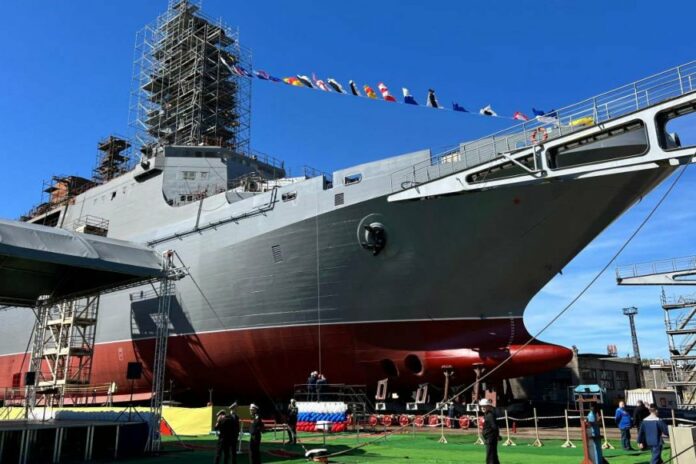
The new ship has been named Sergei Kabanov and is being built at the Yantar Shipyard.
According to Russian media, the launch is tentatively scheduled for 2031, with commissioning into active service expected by the end of 2032.
Project 11711 Ivan Gren
Project 11711, developed by the Nevsky Design Bureau, features a modernized ship architecture with an extended flight deck for helicopters in the stern.
These large landing ships are the largest ships built for the Russian Navy in modern times in terms of displacement.
The ships of this type are designed to transport marines and military equipment. They can carry multi-purpose or transport, and combat helicopters on their decks.
Currently, the Yantar Shipyard is also building another large landing ship of this design, the Vasily Trushin.
The landing ships of this design have a displacement of 5,000 tons (standard) and 6,600 tons (full) and are capable of transporting up to 300 military personnel along with equipment, up to 13 tanks, or up to 36 IFVs and APCs.
The Russian shipyard Admiralteiskie verfi, part of the United Shipbuilding Corporation, launched the ice-class patrol ship Nikolai Zubov, project 23550.
The contract for the construction of two patrol ships of this project was signed on April 25, 2016. The construction of the lead ship, Ivan Papanin, commenced in September 2016, and the keel-laying ceremony was held on April 19, 2017.
The lead ship was launched on October 25, 2019, but it was not until June 28, 2024, that the Ivan Papanin departed St. Petersburg for sea trials at the shipyard.
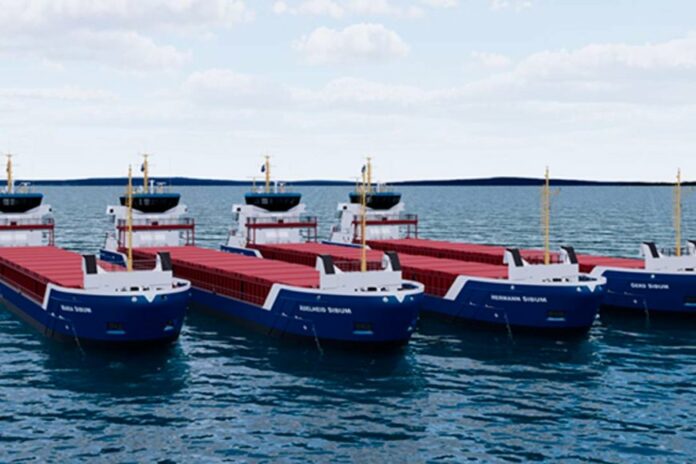
Reederei Bernd Sibum has received funding from the German Government for investment in sustainable ship technology.
The funding, known as NaMKü (Nachhaltige Modernisierung von Küstenschiffen/sustainable modernisation of coastal ships), is awarded by the Federal Ministry of Digital Affairs and Transport (BMDV) with the aim of improving the efficiency and environmental footprint of short sea shipping. It requires co-investment on behalf of the vessel owner.
Reederei Sibum placed the order for the four vessels in June last year. The CF 3850 is a next generation design offering a considerable boost in efficiency, with a 30% reduction in fuel consumption.
The vessels, currently under construction at Damen Yichang Shipyard in China, were being built with the capability to sail 100% on biofuel, as well as with batteries for peak shaving and port operations. They were also being prepared hybrid ready.
Now, thanks to the NaMKü award, the vessels are being upgraded to sail on hybrid propulsion, with a PTO/PTI system. This upgrade provides the option of fully electric propulsion. This is not only an environmentally friendly technology, but also a huge safety aspect, as it provides the ships with redundancy for the diesel propulsion engine.
Damen’s modular construction approach allows for its vessels to be built ready for rapid upgrade at any stage of construction, or later as a retrofit project, with the minimum of downtime.
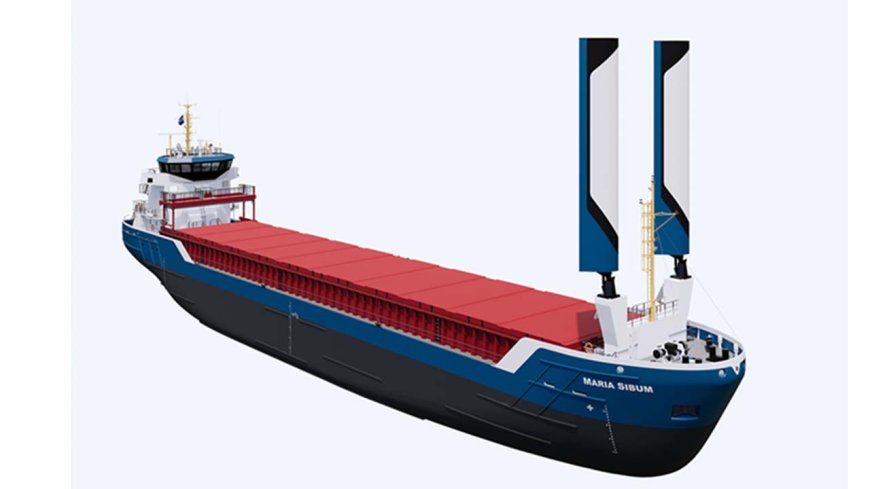
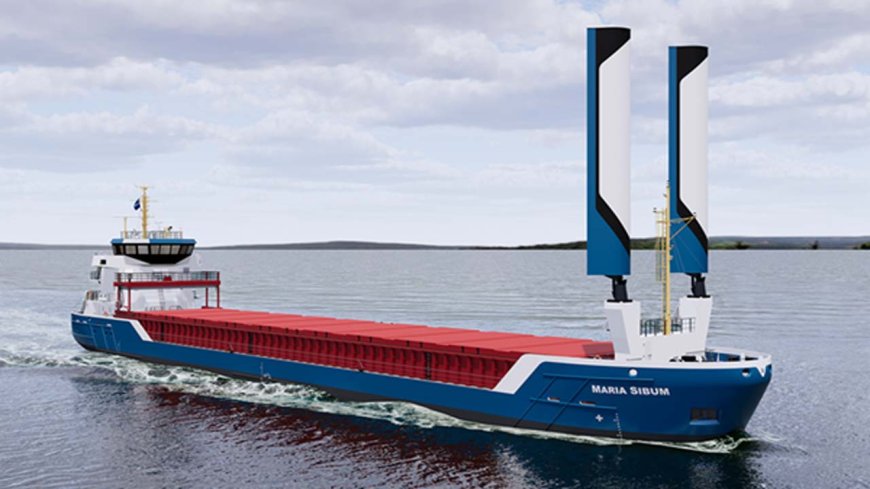
Another upgrade that the vessels will now receive is the installation of Econowind VentoFoils. This wind assisted ship propulsion solution is operated fully automatically to the prevailing wind conditions using intelligent technology. This system is expected to lower the vessels’ fuel consumption in the region of 12.5% over the year, facilitating a significant reduction in emissions.
The vessels will use their batteries while manoeuvring and for a short-term port stay. If the time in port is longer, they can switch from battery operation to shore power. The upgrade with extended shore power capacity will provide all electric systems on board with sufficient electric capacity.
Other features enabled by the NaMKü funding include installation of a heat recovery system, using heat from auxiliary engines that would otherwise be wasted, thereby eliminating gasoil consumption of the oil fired boiler while the vessel is in port.
With all these modifications, the vessels will be able to operate completely emissions free in harbour.
Reederei Sibum Managing Director Bernd Sibum says, “I’m very grateful to the German Government for the support we have received with this NaMKü award, which has made it possible for us to invest in these green technologies. I’m also grateful to Damen for thinking along with us and preparing the vessels in such a way that they could be quickly adapted. I’m confident that these vessels will offer the market the green tools it will require in the years ahead. It is a clear fact that they will have everything that is feasible according to the current state-of-the-art that is also suitable for practical ship operation. I am particularly happy about the fact that I was able to reach company Mare Trust AG from Oldenburg in Germany as a co-investor for this project.”
Commercial Director of Damen Cargo Vessels Remko Bouma adds, “We have designed the latest generation of CF 3850 with the aim of achieving the increased efficiency and reduced environmental impact required of vessel operators today. Reederei Sibum, with the support of the German Government, are thinking beyond the present and preparing their fleet for the future. They are to be praised for their pioneering approach to maritime sustainability. The bold steps they, and other forward thinking vessel operators, are taking are worthy of wider industry recognition. In the coming years, these vessels are going to need increased access to relevant infrastructure, for example, the shore power connectivity required to operate zero emissions in port. Such infrastructure will play a vital role in realising the full potential of the investments that are being made in maritime innovations and pave the way to zero emission operations.”
Møre Sjø and Samskip have both contracted eCap Marine for their emission-free power generation needs
The Samskip SeaShuttles are set to be the first shortsea container vessels in the world to use green hydrogen as fuel, and eCap Marine has been awarded the order to supply hydrogen-powered fuel cells for both vessels. The 3.2 MW PEM fuel cells will be installed with marine-approved power electronics, controller and safety systems, along with all interfaces for integration into a containerised system on the aft deck of the SeaShuttles. The vessels are scheduled for delivery in 2027.
The Norwegian shipping company Møre Sjø signed an order for the construction of two emission-free, hydrogen-powered bulk carriers at Gelibolu Shipyard in Türkiye. The newbuilds, which will measure 85 meters in length and have a deadweight of 4,000 tons, will primarily operate in Norwegian coastal waters and are scheduled for delivery in 2027. With this order, Møre Sjø reaffirms its commitment to hydrogen as an alternative, environmentally friendly fuel for emission-free operation in the sensitive environment of Norwegian fjords.
eCap Marine was selected to provide onboard hydrogen solutions, equipping the vessels with 1.7 MW PEM hydrogen fuel cells to transport their dry bulk goods emission-free. The compressed hydrogen tank system, with a capacity of more than 2 tons per vessel, will be permanently installed on the aft section, with fuel cells and other electrical components located in suitable spaces under deck. eCap Marine’s scope of supply also includes an onboard hydrogen bunkering station, marine-approved power electronics, the controller and safety system, and all interfaces to the ship’s power management system.
“These projects are a significant milestone for eCap Marine – and the maritime energy transition,” says Lars Ravens, Managing Director at eCap Marine. “Our team has worked with engineering enthusiasm to develop scalable hydrogen technology. Our integrated hydrogen systems are now at the core of two groundbreaking vessels. We thank both Møre Sjø and Samskip for entrusting us with these emission-free marine propulsion lighthouse projects.”
Currently, there are numerous developments in the market regarding alternative and renewable energy sources and systems. However, there are as yet only very few maritime suppliers, both technical solution manufacturers and shipyards, who are willing or able to take full responsibility for delivering energy from hydrogen. The reason e-Cap takes on full responsibility is that its team believes hydrogen will be the energy source of the future for shipping, and it is their task to make that happen.
Trafigura is set to roll out ZeroNorth’s platform across its controlled fleet of more than 350 vessels, including its voyage optimisation systems, emissions analytics and vessel reporting tools. Additionally, Trafigura will take an equity stake in ZeroNorth, further deepening the ties between the two companies.
ZeroNorth’s technology uses advanced artificial intelligence and real-time data, including live weather conditions, vessel specifications, ship performance data and fuel availability to optimise operational performance continuously. The implementation of ZeroNorth’s solutions is expected to deliver reductions in both fuel consumption and carbon emissions across Trafigura’s chartered fleet.
As part of the agreement, Trafigura will also join ZeroNorth’s group of strategic partners, contribute practical industry insights to product development and play an active role in shaping the company’s long-term direction.
Andrea Olivi, Global Head of Shipping at Trafigura, commented: “This partnership marks an important step in Trafigura’s commitment to improving efficiency and sustainability across its maritime operations. The ZeroNorth platform will help us optimise fleet performance through enhanced monitoring of fuel and emissions while improving data collection and quality. It will also strengthen our relationships with vessel owners through more effective communication and information sharing.”
Søren C. Meyer, CEO at ZeroNorth said: “We’re proud to partner with Trafigura – one of the largest players in global commodity trading and shipping. This partnership reflects a shared commitment to advancing the use of technology and high-quality data, sending a clear signal to the industry about the vital roles these play in the energy transition. Trafigura’s insight, scale, and ambition will be invaluable to our strategic direction and will help accelerate the impact of our platform across the industry.”
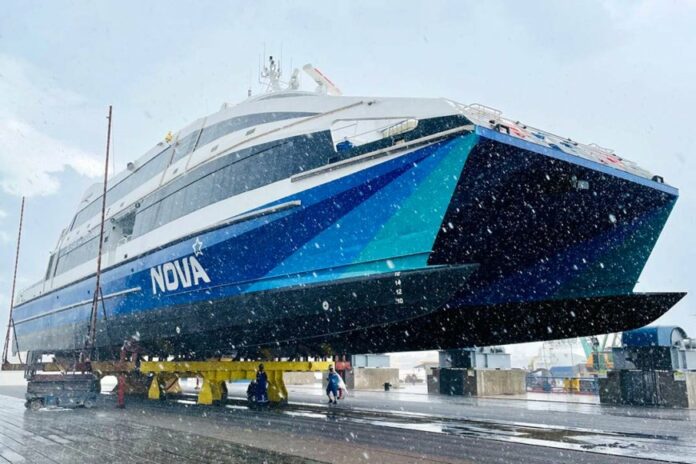
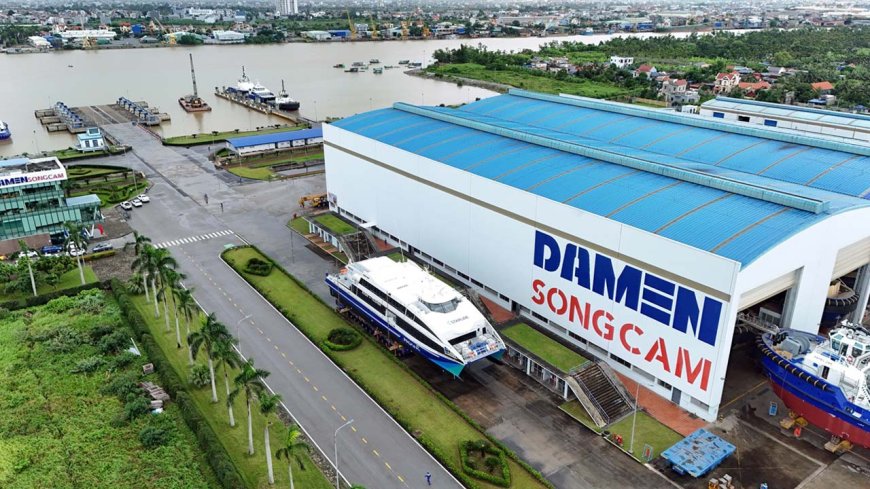
Damen Shipyards Group has signed a contract with South Korea’s Starline Co. Ltd. for the delivery of a new Damen Fast Ferry 4212.
Starline has purchased the vessel to operate the route between Busan on the mainland and the Japanese island of Tsushima. Currently, the company operates a Damen Fast Ferry 4010 and wanted a slightly larger vessel, suited to the sometimes harsh, open sea conditions experienced on the route.
Due to its practice of building standard vessels in series for stock, Damen already had the Fast Ferry 4212 available. Additionally, Damen had already outfitted the vessel to ensure that it would be ready for delivery in time for the summer season. Damen is continuing to construct and outfit vessels, such as the Fast Ferry 4212 design, for stock to provide its clients around the world with rapid access to their next vessel.
Preparing the ferry in this way reduces the already quick delivery time from six months to just a few weeks. The success of the Fast Ferry 4212 – Damen has sold eighteen such vessels to date – has provided Damen with a clear view of market requirements enabling them to bring the vessel almost to completion in advance of a purchase. In the coming weeks, the shipbuilder will finalise the vessel, making minor customisations to meet Starline’s requirements.
The Fast Ferry 4212 is an aluminium catamaran vessel designed to offer optimal passenger comfort with high fuel efficiency and low maintenance requirements. The 42.2 metre vessel is able to transport up to 439 passengers at speeds of up to 40 knots.
The Damen Fast Ferry has proven to be a very suitable vessel for the South Korean market. To date, the company has sold eight vessels from the series to the country, six of which are of the Fast Ferry 4212 design. Following the order, Damen has assisted Starline with the sale of its existing vessel, the Fast Ferry 4010, via its in-house brokerage service, Damen Trading.
Damen Regional Sales Director Asia-Pacific Thomas Röwekamp said, “We are very proud that Starline, already an existing Damen client, has once again placed its trust in us for the purchase of a second Fast Ferry, as well as the sale of its previous vessel. I’m looking forward very much to continuing to work together with Starline in the future.
“This contract is a clear demonstration of the benefits of the Damen stock building strategy in action, providing clients with the fastest possible delivery of a proven product. It also reaffirms the suitability of the Damen Fast Ferry designs to the requirements of the South Korean public transportation sector.”
Mr Choo, representative of Starline said, “When we decided to invest in a new ferry we knew where to go. Damen has an excellent track record in serving the public transport sector in South Korea. Additionally, having operated the Damen Fast Ferry 4010 since 2016, we were aware of the high quality of the series. We were impressed that Damen was able to deliver the vessel we were looking for in such a short space of time. Besides this, the assistance Damen is providing in the sale of our current vessel is very much appreciated.”
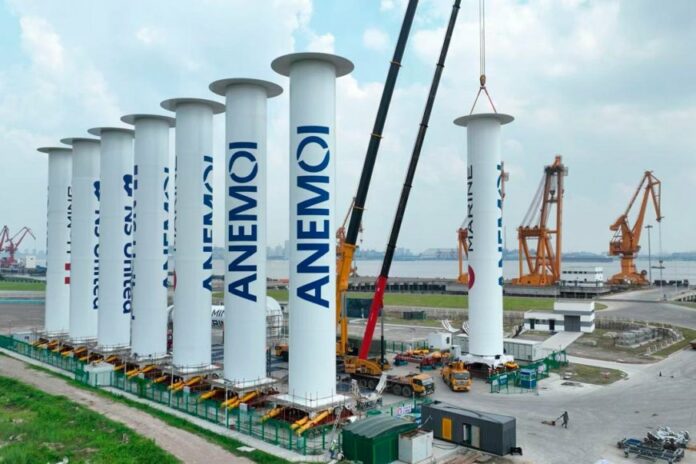
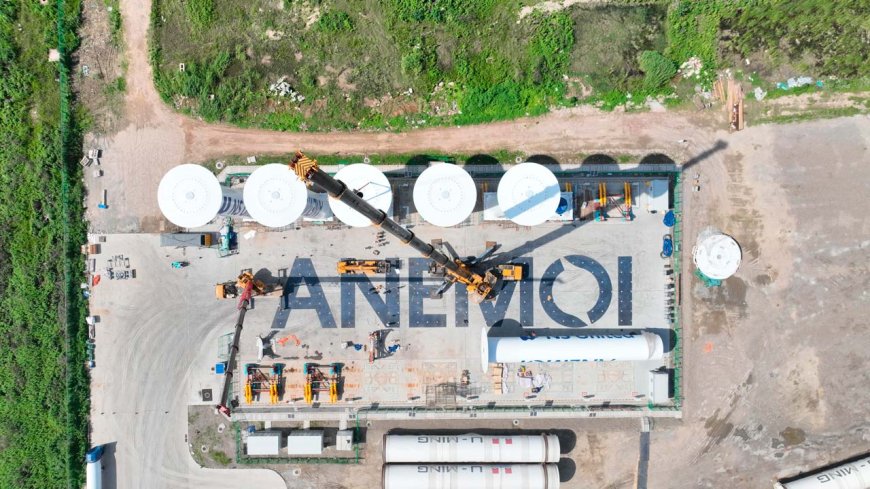
Anemoi Marine Technologies announces the official opening of its new Rotor Sail production facility in China.
Strategically located on the banks of the Yangtze River, Anemoi’s facility is located in Jingjiang City, Jiangsu Province, within Daming Heavy Industry’s manufacturing base. The facility provides direct access to port infrastructure, enabling seamless logistics for import, export, and delivery. With barge transport available on-site, Rotor Sails can be transported efficiently and installed directly at nearby major shipyards, streamlining operations and minimising environmental impact.
Clare Urmston, CEO of Anemoi, said: “It’s a fully integrated, end-to-end production hub where every stage, from steel fabrication and precision assembly to rigorous testing and quality assurance, is handled under one roof. That means faster turnaround, uncompromised quality, and complete oversight by our expert team, on site, from start to finish. Anemoi’s strategy is quality first and this site enables exactly that.”
Anemoi has been working in China since its pilot installation in 2018, and subsequently established its Chinese entity, ANEMOI Marine Technologies (Changzhou) Co., Ltd. The company has built strong strategic partnerships over time. For example, Anemoi has maintained close cooperation and formed a strategic partnership with CRRC Qishuyan Institute Co., Ltd., a first-tier subsidiary of CRRC, the world’s largest rail transit equipment manufacturer.
Importantly, Rotor Sails align seamlessly with the CRRC Qishuyan Institute’s development strategy of “High-end Transportation Equipment + Clean Energy Equipment” in the clean energy sector. Moving forward, both parties are committed to advancing global efforts in maritime energy conservation and emissions reduction.
“We are proud to support this milestone project, which reflects the power of international cooperation. By combining British innovation in wind propulsion with China’s advanced manufacturing expertise, we are delivering impactful solutions on a global scale,” Shared by Mr Fang Jun, Vice General Manager of CRRC Changzhou Tech-Mark Industrial Co.,Ltd.
Anemoi has also built a long-term, successful collaboration with Lianyungang Zhongfu Lianzhong Composite Material Group Co., Ltd. (Zhongfu) to produce its composite rotor skins using Anemoi’s patented filament winding manufacturing process. This method, which is unique to Anemoi, ensures additional strength, durability, and uniformity across every product, which is vital for high-performance and withstanding cargo operations. Composite skins are thoroughly tested, painted, and inspected before being transported to Anemoi’s facility in Jingjiang for Rotor Sail assembly.
Ms. Xu Xiuming, Marketing Director of Zhongfu, a leading manufacturer of wind turbine blades, said “We are proud to be contributing to the shipping industry’s decarbonisation journey through our close partnership with Anemoi since 2020, producing high-quality composite Rotors at scale.”
Now, Anemoi has partnered exclusively with Daming Heavy Industries, a global leader in high-end precision manufacturing services for steel fabrication and port services. The collaboration strengthens Anemoi’s position, drives consistent quality in delivery and provides flexibility to scale as global demand for wind-assisted propulsion grows.
Mr. Ren Lei, Marketing Director of Daming said: “Our partnership with Anemoi reflects a shared commitment to quality, efficiency, safety, and timely delivery. With our one-stop, fully integrated facility, we are confident in our ability to support Anemoi’s vision and contribute to a more sustainable maritime future.”
With an annual production capacity of 250 Rotor Sails, and the option to expand further and store units for fast turnaround, the new site positions Anemoi to meet surging global demand and support its customers in achieving critical decarbonisation goals.
McDermott has been awarded a sizeable offshore transportation and installation contract by BRAVA Energia, the most diversified independent oil and gas company in Brazil, for the Papa-Terra field in the Campos Basin and the Atlanta field in Block BS-4 within the Santos Basin, both offshore Brazil.
Under the contract scope, McDermott will execute the transportation and installation of flexible pipelines, umbilicals and associated subsea equipment for two new wells at the Papa-Terra field and two new wells for the Atlanta Phase 2 development. The scope also includes pre-commissioning and onshore base support services.
“This award highlights the vital role of subsea infrastructure in enabling long-term production and asset value for deepwater developments,” said Mahesh Swaminathan, McDermott’s Senior Vice President, Subsea and Floating Facilities. “We will leverage our proven integrated delivery model, marine capabilities and expertise in delivering brownfield deepwater solutions to support Brazil and the broader South American offshore market.”
Operated by BRAVA Energia, the new wells at the Papa-Terra and Atlanta fields will support production ramp-up as part of the company’s ongoing strategy to increase output and extend the life of deepwater infrastructure. McDermott previously delivered the Papa-Terra tension leg wellhead platform – the first dry-tree floating production system offshore Brazil and the first tension leg platform installed in South America at the time.