1.2 C
New York
Home Blog Page 505

IKM Elektro to maintain electrical equipment on Vår Energi’s offshore platforms

0

The agreement covers inspection, service and maintenance of electrical equipment and rotating machines, and will optimize daily operations and maintenance work offshore.

IKM Elektro is well acquainted with Vår Energi’s portfolio from previous collaborations, and will strengthen operational continuity and reliability. 

VP Contracts and Procurement in Vår Energi Annethe Gjerde says:

“We are very pleased to award such an important contract to IKM Elektro. The company is Norwegian with a strong local presence together with us in the Stavanger region and in Hammerfest. We know IKM Elektro from previous work, and look forward to a continued close collaboration, now on deliveries to all our installations on the shelf.”

Vår Energi is strongly positioned with ownership in 35 producing fields on all parts of the NCS. The company aims to use Norwegian and local suppliers where possible, among other things to ensure optimal logistics solutions, reduced CO2 emissions and to create local ripple effects.

Gjerde says:

“We work actively to generate local value, such as industrial and societal development. We want to facilitate increased settlement, industrial and competence development in all areas where we operate.”

Managing Director of IKM Elektro Carl-Johan Almestad says:

“We greatly appreciate the trust Vår Energi shows with the award of this new contract. Since 2015, we have established a very good collaboration, and it is really rewarding that we can build on this foundation in the time ahead, and which will also strengthen IKM Elektro’s investment in specialized maintenance services.”

In addition to inspection, service and maintenance of electrical equipment and rotating machines, ignition source and condition control are also included in the framework contract. The agreement has a duration of up to 5 years including options.

Woodfibre LNG awards EPFC contract to McDermott

0

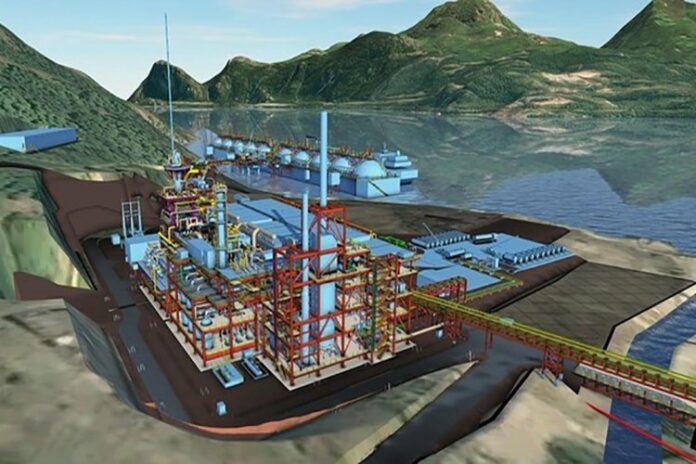
Woodfibre LNG has signed an Engineering, Procurement, Fabrication, and Construction (EPFC) contract with McDermott International. 

The EPFC contract is an important step in advancing detailed engineering and construction scheduling work in advance of Woodfibre LNG issuing a notice to proceed.

Responsibly produced natural gas is a necessary part of making a successful global transition from heavy-emitting fuels to renewables. By harnessing the low-carbon gas resources of British Columbia’s Montney region to replace coal-fired energy sources in Asia, Woodfibre LNG will reduce global emissions by 3.5 million tonnes CO2e per annum, equivalent to removing 5 percent of B.C.’s annual emissions from the atmosphere each year. McDermott and Woodfibre’s collaboration on front-end engineering and facility design, relative to typical LNG facilities, is expected to result in a reduction of approximately 86 percent of the carbon dioxide emissions per tonne of LNG produced.

Woodfibre LNG will be the cleanest liquefied natural gas export facility on earth, achieved through the adoption of a low-emission philosophy across every element of engineering and design. The facility will use hydroelectricity for the main liquefaction process, and includes state of the art technology that enables liquefaction machinery to restart without flaring, a recycling system for “boil-off” gas, and additional transformers, switchgear and transmission lines. 

Altogether, this results in the most groundbreaking technical achievement in the world of LNG, and sets a new standard for efficient plant design. This next-generation LNG production is in high demand. Woodfibre LNG has two offtake agreements signed with BP, meaning over 70 percent of Woodfibre’s annual throughput has already been sold.

McDermott’s industry-leading NetZero Modular LNG strategy has been fully utilized during the development of this advanced onshore gas processing and liquefaction facility with floating storage near Squamish, British Columbia, Canada. The strategy provides multiple pathways through design, execution and construction to reduce operational and project emissions.

Christine Kennedy, president of Woodfibre LNG, said:

“Our contract with McDermott is a positive step forward for this substantial piece of clean energy infrastructure. Together, we will be building the lowest-emission, most sustainable and innovative LNG export facility in the world. A particular point of pride for us is that the Squamish Nation serves as a full environmental regulator for this project. Serving as a unique example of economic Reconciliation, this is the first arrangement of its type for an LNG facility.”  

McDermott will manage onshore construction, leveraging Canadian-based contractors and commitments included in Woodfibre LNG’s Impact Benefit Agreements with the Sḵwx̱wú7mesh Úxwumixw (Squamish Nation). It is estimated that 650 people will be working on the Woodfibre LNG site at peak construction. The EPFC contract commits McDermott to Woodfibre LNG’s hiring priority for qualified Squamish Nation members and local workers first, followed by British Columbians and then Canadians. The joint priority is to create a safe, inclusive and respectful workplace that brings benefits to the project’s Indigenous partners and community.

Samik Mukherjee, Executive Vice President and Chief Operating Officer of McDermott, said:

“This is another example of how we are applying our unique integrated capabilities to solve challenges and create successes for our customers. This award is a tremendous opportunity to further demonstrate how our LNG and modularization expertise enables a new generation of sustainable energy solutions.”

In addition to the EPFC work, McDermott will also be responsible for commissioning and start-up services. Pre-installation work for the project is planned for early 2022 and will gradually ramp up to September 2023, when major construction is targeted to begin. Major works will continue through to substantial completion, expected in Q3 2027.

Prysmian to develop a new submarine power link between Elba island and mainland Italy

0

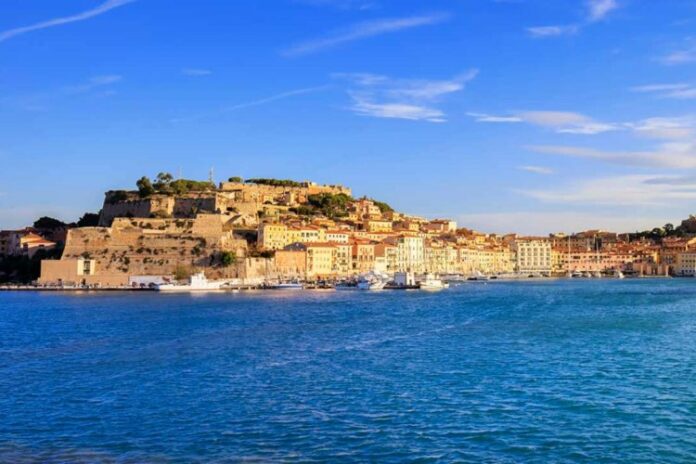
Prysmian Group, world leader in the energy and telecom cable systems industry, has received the Letter of Award for a project worth approximately €68 million for the new submarine cable connection between the island of Elba and Italian mainland (Piombino). The project has been awarded by Terna Rete Italia S.p.A., a company fully owned by Terna S.p.A., the Italian electricity grid operator (TSO).

The project involves marine and civil works for the design, supply, installation, and commissioning of an HVAC 132 kV three-core power cable with XLPE insulation and single-wire armouring between the power stations located on Elba island and in Piombino, along a 34 km submarine and 3 km land route.

The submarine cables will be manufactured in the Arco Felice plant (Naples), one of the Group centres of technological and manufacturing excellence. Land cables will be produced at the Pignataro plant. Cable laying will be performed by the Prysmian vessel Leonardo da Vinci, with delivery and commissioning scheduled by 2023.

This project is the third of its kind for Terna, after Capri–Torre Annunziata and Capri–Sorrento.

Hakan Ozmen, SVP Projects Business of Prysmian Group, stated:

“This award further consolidates our leadership in the submarine cable sector in Europe, and our strong relationship with Terna. We are proud to be a partner of Terna as it invests to develop and modernise Italy’s energy grid, making it more sustainable and smarter.”

The new cable will double the island’s energy supply, guaranteeing a more secure energy flow, particularly during the heavy tourist season in the summer months.

Prysmian Group has completed a number of important infrastructure projects in the Mediterranean basin. In detail, it has developed several submarine links for Terna in recent years, connecting the Italian mainland to Sardinia (SA.PE.I.) and Sicily (Sorgente Rizziconi), in addition to the aforementioned links with the islands of the Campania region. To date, a Prysmian cable with an innovative armouring technology has been installed at a 1000-metre depth in two interconnectors in Greece.

Keppel secures contract for offshore wind farm substations

0

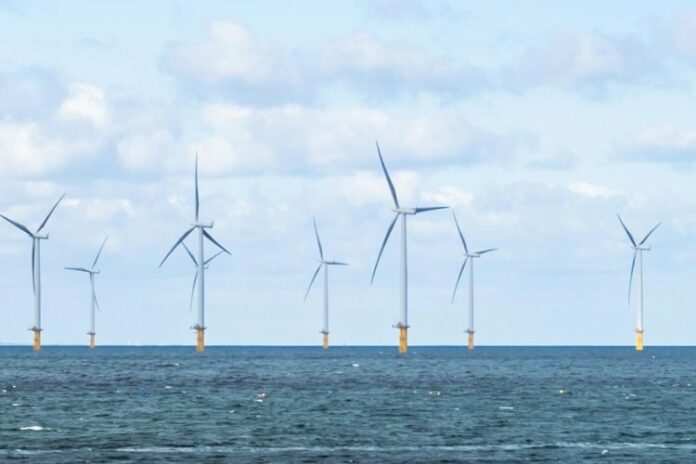
Keppel Offshore & Marine Ltd’s wholly-owned subsidiary Keppel FELS Ltd has secured a contract from a renewable energy company for the construction of two offshore substations (OSS) worth around S$110 million. 

Keppel O&M’s work scope comprises the engineering, procurement, construction, testing and commissioning for the topside modules of two OSS. This excludes the OSS foundations, as well as certain electrical components to be furnished by the client. It is scheduled to be completed in 2024 to be deployed in an offshore wind farm. 

Mr Chris Ong, CEO of Keppel O&M, said:

“We are pleased to secure this contract, which reflects Keppel O&M’s continuing pivot towards renewables and cleaner energy solutions. It is testament to Keppel O&M’s execution excellence, as well as our ability to deliver reliable, consistent, and quality solutions for the offshore wind industry.” 

In line with Keppel’s Vision 2030 which puts sustainability at the core of the Company’s strategy, Keppel O&M is strengthening its foothold across the value chain of offshore renewables. It recently completed two OSS for Taiwan’s Greater Changhua 1 & 2a offshore wind farms, and is currently building a HVDC converter station for offshore wind farms in the German sector of the North Sea as well as the first wind turbine installation vessel in the United States. 

The above contract will be on progressive payment milestones and will have neutral project cashflow. It is not expected to have a material impact on the net tangible assets or earnings per share of Keppel Corporation Limited for the current financial year. 

Kraken awarded $7.1 million of contracts for offshore subsea inspections

0

Kraken Robotics Inc., Canada’s Ocean Company™, has announced that its wholly owned subsidiaries Kraken Robotic Systems Inc. and PanGeo Subsea Inc. have been awarded $7.1 million for two contracts from the Newfoundland Offshore Oil and Gas Industry Recovery Assistance (OOGIRA) Fund. 

The combined projects valued at $9.2 million will be executed from Q4 2021 through Q4 2022. Kraken and PanGeo’s inspection and survey platforms will assist the offshore energy sector to acquire better, faster, and more valuable data. This will enable offshore energy operators to make better-informed decisions regarding asset integrity, enhance energy recovery and reduce carbon emissions during inspection and survey operations.

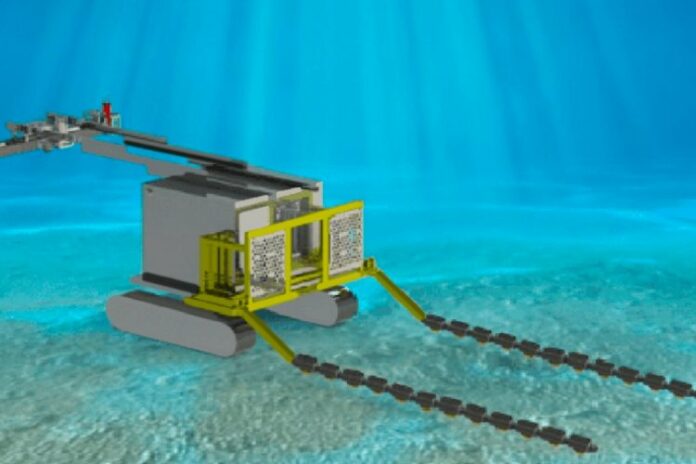
Kraken has been awarded $2.3 million in funding as part of a $4.0 million Fast Remote 3D Digital Inspection (FR3DI) Technology Demonstration Project. During the FR3DI project Kraken will demonstrate the inspection of critical subsea infrastructure for Cenovus Energy Inc. and Suncor Energy Inc. using Kraken’s SeaVision® 3D underwater laser scanning technology. The offshore demonstration campaign will consist of several inspection scopes of work to create digital twins of subsea infrastructure as prioritized by Cenovus and Suncor. The applications include inspection of infrastructure in the water column and critical seabed assets including flowlines, spider buoys, and manifolds.

Under the project, Kraken will receive approximately $1.0 million in funding for equipment and salaries and will also contribute approximately $0.4 million in equipment and salaries. The remaining $2.6 million of project funding is comprised of operational expenses, materials and consumables and will be supported by OOGIRA and project partners Cenovus and Suncor. 

This project avails of joint engineering efforts from Kraken and its recently acquired subsidiary, PanGeo Subsea, leveraging an existing PanGeo sled design with Kraken SeaVision® electronics and significant software integration.

Karl Kenny, Kraken’s President and CEO, said:

“Over past few years, the term ‘digital twinning’ has become synonymous with innovation in the offshore energy sector, and vital to corporate strategy as operators seek to take advantage of new and emerging technologies. Sensors, robotics, artificial intelligence and data analytics initiatives are key to enabling real-time information systems. Remote operations in the offshore market provide multiple benefits. These include risk mitigation as more personnel are removed from the offshore environment, significant cost reductions, more flexible and scalable operations, and environmental sustainability as operational carbon footprints can be dramatically reduced.”
 

Elia Group and Energinet signed two new cooperation agreements

0

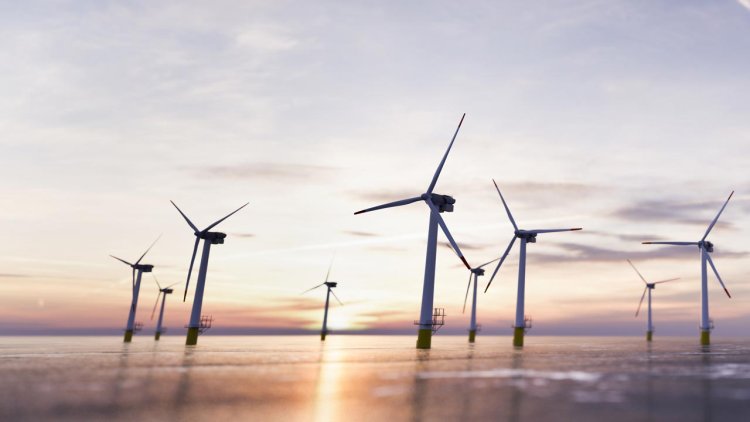
The connections will boost large-scale, offshore electricity generated by wind turbines in the European electricity system, replacing fossil energy to a great degree. 

Today, Elia Group and Energinet signed two new cooperation agreements: 

One between Energinet and Elia that moves an interconnector between the Danish energy island in the North Sea and Belgium a big step closer, and one between Energinet and 50Hertz that brings a connection between the Danish energy island Bornholm in the Baltic Sea and Germany much closer to realization. The agreements were signed by the three companies’ CEOs at the WindEurope Electric City 2021 conference in Copenhagen.

A meshed grid connected to several countries is important to transport renewable energy from the large offshore wind farms and energy islands to consumers around Europe and also crucial in providing the greatest possible value in relation to zero carbon electricity.

Thomas Egebo, CEO, Energinet, said:

“I see the cooperation agreement as a big step towards Danish energy islands becoming a reality and with huge gains for a greener Europe. Today’s agreements show not only that the whole idea of energy islands and connections to several countries is a good idea, but also that the countries are very keen to implement the huge offshore wind projects.”

The agreements mean that the three TSOs now specifically cooperate on, among other things, the initiation of feasibility studies and the business cases that are to be used as a basis for national approvals in Belgium, Germany and Denmark.
Chris Peeters, CEO Elia Group, said:

“The realisation of the Belgian-Danish cable is an important next step in making our electricity system more sustainable. Thanks to the hybrid technology, we will have direct access to large wind farms in the far northern North Sea with different climatic conditions. This will provide greater security of supply and help our energy-intensive industry to further decarbonise. In addition, we will continue to pioneer innovative technologies, giving our companies an edge on the international stage.”

The new and more binding cooperation agreements are the first steps towards final investment decisions.

Stefan Kapferer, CEO of 50Hertz, said:

“The Bornholm Energy Island project builds on the good cooperation between 50Hertz and Energinet that exists between our companies over many years now. The world’s first hybrid interconnector, Kriegers Flak – Combined Grid Solution, which was commissioned last year, now connects Danish and German wind farms. With Bornholm Energy Island, we now want to go one step further and realise the first real electricity grid hub for the Baltic Sea. This is technically and economically demanding, but together we will master this challenge”.

The cooperation agreements were signed at the same time as the Danish Minister of Climate, Energy and Utilities Dan Jørgensen and the Belgian Minister of Energy Tinne van der Straeten signed a formal political Memorandum of Agreement to establish a connection between the countries incl. the Danish energy island in the North Sea. Andreas Feicht, Head of Secretary at the German Ministry of Economic Affairs and Energy, also took part in the signing ceremony and put a few words into the prospects for cooperation in the Baltic Sea between Denmark and Germany. 

All three stressed the importance of large-scale wind production at sea and meshed offshore grids to reach the goal of zero carbon energy in Europe. 

Also Giles Dickson, CEO of Wind Europe, stresses the importance of both the agreements between the three TSOs and the political agreement.

Giles Dickson, CEO Wind Europe, said:

“Offshore wind is entering a new era. Connecting offshore wind projects to more than one country will improve electricity flows across Europe. By pooling generation and transmission infrastructure these “hybrid” offshore wind farms reduce costs and save space. Today’s announcement from the Elia Group and Energinet is good news for Belgium, Denmark and Germany – and for all of Europe. We will need many more of these hybrid projects”.

British Antarctic Survey selects DriX USV to enhance its scientific capabilities

0

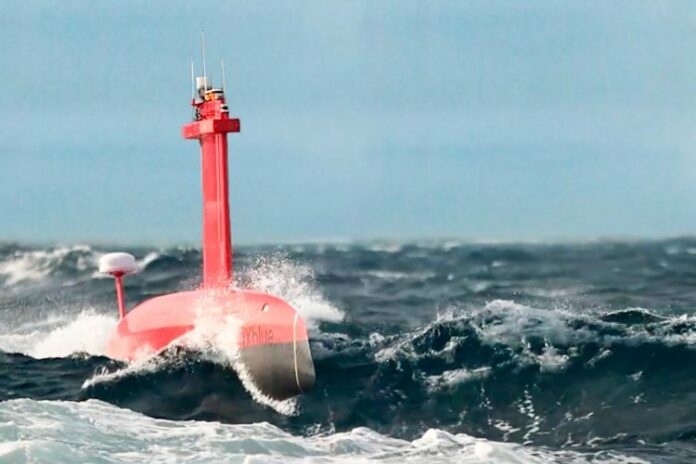
The British Antarctic Survey (BAS), a world-leading centre for polar science and operations, adds iXblue DriX Uncrewed Surface Vessel (USV) to its advanced robotic survey means.

Deployed from polar research stations and from the British polar research ship RRS Sir David Attenborough, the DriX USV will help BAS conduct multi-disciplinary sciences such as surveying the impact of ocean currents on melting ice flow or mapping the seabed in the polar regions.

A versatile platform able to deploy various sensors with multiple missions’ capabilities, the DriX USV will be equipped with CDT, ACDP, MBES and MetOcean sensors and will help BAS capture data from the extreme polar environments.

Pierre Dutrieux, Ocean and Ice Research Scientist at BAS, explains: “DriX offers a mix of excellent sea-keeping and mission endurance to observe treacherous near-glacier ocean and seabed processes repeatedly with high data accuracy, opening new perspectives for polar discoveries.”  

Regis Blomme, Sales Director at iXblue, comments:

“We would like to thank the British Antarctic Survey for trusting our DriX USV as they turn to unmanned systems for their cutting-edge scientific operations in the challenging environments of polar regions. We’re very proud to have been selected by such a leading-edge research institute and it is an honor for iXblue to be part of the BAS ocean exploration operations.”

Woodside sanctions US$12 billion Scarborough and Pluto Train 2 project

0

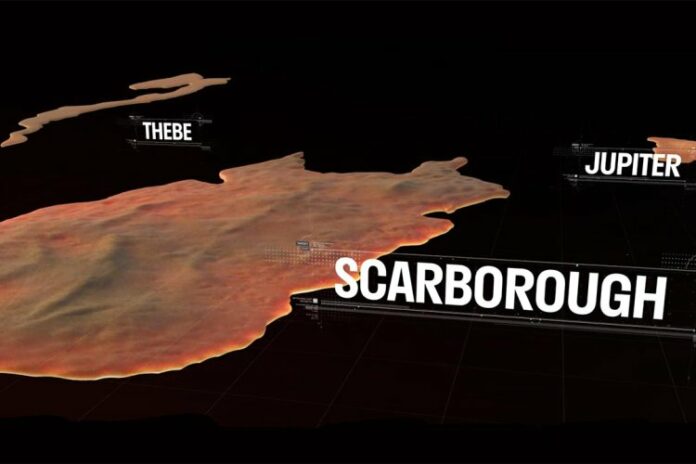
Discovered over four decades ago, the development is both low carbon and globally cost competitive. Woodside stated the project has a payback period of six years. If this can be achieved, it would be decades shorter than the payback period for the projects delivered in Australia’s last LNG wave.  

Wood Mackenzie senior analyst Daniel Toleman said:

“Aware of Australia’s lamentable track record in LNG project delivery, Woodside has wisely focused on reducing the risk of cost overruns. Pluto Train 2 is a brownfield expansion with site works complete, while Scarborough’s contracting approach shifts much of the cost overrun risk to the contractors. 

“Scarborough plus Pluto Train 2 represent not only the first new LNG infrastructure sanctioned in 10 years (since INPEX progressed Ichthys), but also the biggest single upstream investment in Australia of the last decade. 

“Scarborough is the last remaining giant undeveloped resource outside of Browse. With the latter still struggling to progress, the Scarborough sanction raises big questions for the North West Shelf (NWS) JV.  

“With Scarborough confirmed to Pluto, the forward plan for the NWS now needs urgent clarification. The once-mighty NWS is maturing and needs new resource to keep its five trains full. Third-party agreements have been struck with Waitsia and Pluto. But these only provide a stopgap as we see spare capacity increasing to more than 8 mmtpa by 2030. A sizeable backfill development is needed to change this course.” 

The FID also comes at an interesting time in the global LNG market. Spot prices are at record highs and prices are expected to remain strong through to 2026, when Scarborough is expected online. Cashflow from these high prices will help Woodside fund the development. But there is a risk that the project will start up as the next supply glut – led by Qatar – begins in the mid-2020s.   

Toleman said:

“Woodside is not the only LNG player looking to take advantage of rising prices and strong demand. Over the next 12 months we expect several low-cost projects to move towards sanction. These include Cheniere’s Corpus Christi Stage 3 and Venture Global’s Plaquemines project in the US, North Field South in Qatar and Arctic LNG-1 in Russia. 

“Nonetheless, for Woodside, Scarbrough plus Pluto Train 2 is a company-making project. It will bring over 20 years of strong cashflow, and locks in production growth through to 2030 and beyond. The next question is around participation. Having recently brought a partner into Pluto Train 2, does it intend to do the same with Scarborough?” 

Damen Stan Patrol 4207 delivered to the Jamaican Defence Force

0

Construction on the vessel had already begun when the global pandemic struck and the rapid spread of the virus meant that upon completion of the vessel, pandemic travel restrictions made it unfeasible to arrange a crew to deliver her on own keel since the crew would not be permitted to return to their home countries once they arrived in Jamaica. 

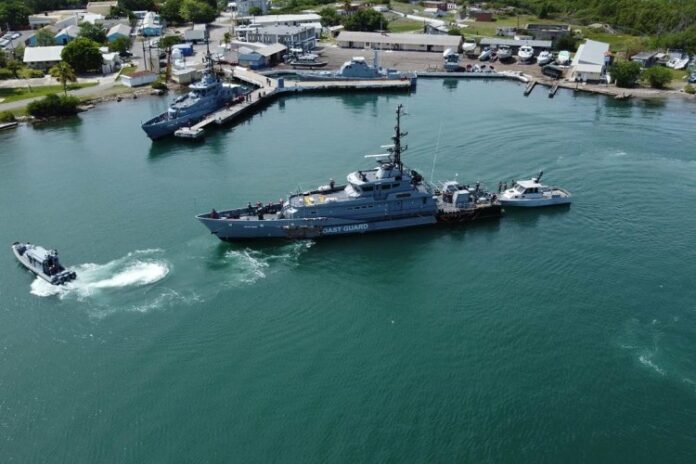
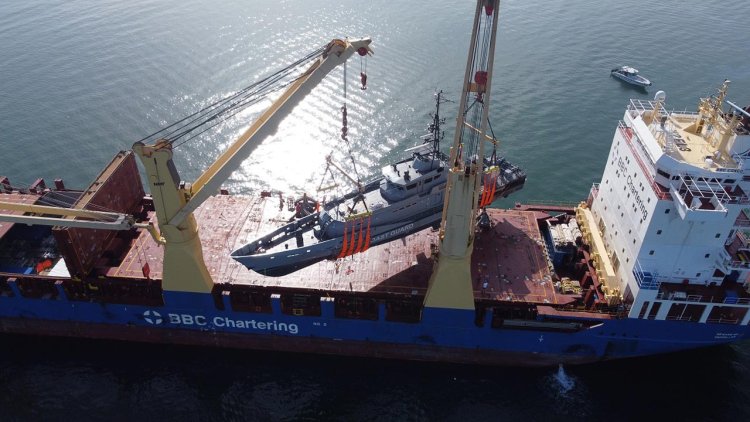
Not to be deterred, the Damen Services vessel delivery teams worked to devise an alternative arrangement. The vessel left Damen Song Cam Shipyard in Vietnam, not on her own keel as is usual for this model, but on board the BBC Congo, a heavy transport vessel.

The SPa 4207 was loaded in Hai Phong Harbour in June 2021. COVID measures prevented Damen’s heavy lift team from being present to supervise her loading, but a local team was called upon to ensure the vessel was carefully loaded and properly secured. Once final checks had been made, the BBC Congo, and her precious cargo, sailed East across the South Pacific and through the Panama Canal, before arriving, just under two months later, in Kingston, Jamaica. On the morning of her arrival, the JDF’s new vessel was offloaded and, with a support fleet of smaller craft, was delivered to its base nearby. Due to changes in travel restrictions, Rimmert Berlijn, Service Coordinator, Delivery, Damen Heavy Lift, was able to safely travel to Jamaica to coordinate the logistics and supervise the offload. 

Mr. Berlijn stated:

“The successful delivery of this vessel really came down to teamwork, collaboration, and everybody’s willingness to be flexible in finding solutions to the challenges of these times. It is always nice working with the JDF, and we are proud to continue our partnership with them”.

Damen Services has been contracted for ILS services for this vessel as well.

Bram van der Plas, Damen’s Sales Manager, Caribbean, said:

“We are very pleased to have completed this latest project for the JDF. The delivery of this vessel demonstrated the collaboration between and the adaptability of both the JDF and the Damen organizations. Keeping operations running smoothly has been an all-hands-on-deck situation with team members around the world stepping up to offer ideas that keep us on-track for our clients.”

The four-vessel contract between Damen and the JDF saw the delivery of a FCS 5009 Patrol in 2020. Another SPa 4207 and a second FCS 5009 Patrol will be delivered in the years to come. 

Van Oord and Seaqualize test world’s first Active Heavy Compensator offshore

0

In no less than 62 hours of rigorous offshore testing, tech scale-up Seaqualize successfully completed offshore trials for its inline Active Heave Compensator (iAHC), the ‘Delta600’. Together with testing partners Van Oord and nautical research institute MARIN, the offshore lifting tool was tested for fixed-to-floating, floating-to-fixed and floating-to-floating transfers of 300mT loads. The Delta600 is DNV certified and ready for work.

Since December 2019, Seaqualize, developed the world’s first iAHC: a tool specifically designed for heavy lift, in-air load control. The tool can balance and transfer loads of up to 600mT in mid-air, while the barge or crane vessel is heaving up and down in heavy seas of up to Hs2,5m. 

This functionality is of great benefit during offshore wind turbine installations or when lifting delicate loads to and from floating supply vessels or barges. By engaging the Delta, the operational time for installation contractors greatly increases, especially in the hard-to-work winter, autumn or spring seasons. It offers contractors greater planning flexibility, and lifting crew a higher level of control, safety and efficiency. With the worldwide increase in demand in the offshore wind sector, increased capacity and efficiency is greatly needed. In the wider offshore community, perfectly controlled lifts are equally essential to safe, timely and efficient operations.

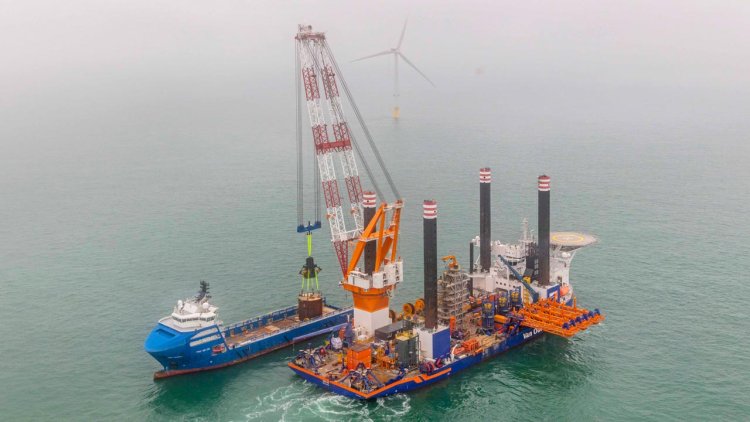
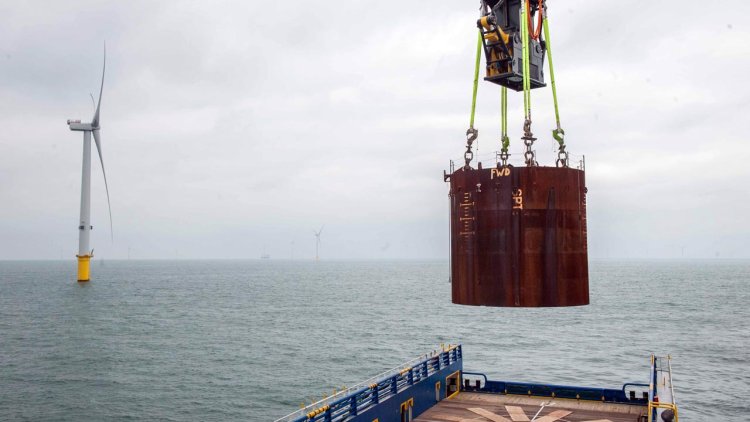
During these offshore trials, the Delta600 lifted a test weight to and from the floating supply vessel REM TRADER, using Van Oord’s jack-up crane vessel AEOLUS in both jacked and floating conditions. These floating-to-floating and floating-to-fixed lifts were operational tests of typical challenges in the offshore wind industry: installing turbine components using a floating vessel, or picking up components from a floating supply vessel. Such ’feeder barge’ operations are essential in for example the US wind market. 

Transferring the most delicate parts of a wind turbine offshore is new to the market, and such operations comprise demanding lifting conditions and a new set of tools.

Wouter Dirks, Innovation Manager at Van Oord, said:

“The offshore tests showed that the unique technology in the Delta will enable controlled offshore lifts during challenging feeder barge operations”.

During the tests, several very gentle set downs and quick liftoffs have been performed. MARIN observed that the tool is able to control the load within an envelope of 5cm, with minimal accelerations and dynamic crane forces. Liftoffs where performed with a solid 90% of the load already in the hook of the crane before liftoff, while still fully compensating all waves. This significantly reduces impact loads on the load, crane and rigging and results in a controlled and stable liftoff. Finally, the tool showed off its “follow-mode”, where the test weight could actively match all heave motions of the target vessel, to further minimize set-down impact for floating to floating set downs.

This offshore trial was also the last step in full DNV product certification as a standard offshore lifting tool. The research project was executed with a grant from the Ministry of Economic affairs of the Netherlands, and included Dutch research agency TNO besides the offshore testing partners MARIN, Van Oord Offshore Wind and Seaqualize.