0.8 C
New York
Home Blog Page 504

Interior Department approves second offshore wind project in U.S. federal waters

0

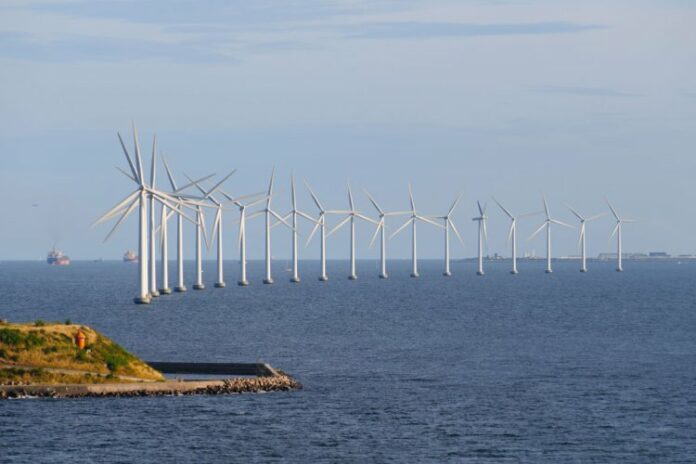
The Department of the Interior has approved the construction and operations of the South Fork Wind project offshore Rhode Island. 

Secretary of the Interior Deb Haaland said:

“We have no time to waste in cultivating and investing in a clean energy economy that can sustain us for generations. Just one year ago, there were no large-scale offshore wind projects approved in the federal waters of the United States. Today there are two, with several more on the horizon. This is one of many actions we are taking in pursuit of the President’s goal to open the doors of economic opportunity to more Americans.”

The approximately 130-megawatt South Fork Wind project will be located approximately 19 miles southeast of Block Island, Rhode Island, and 35 miles east of Montauk Point, New York. It will create about 340 jobs and provide enough power for about 70,000 homes.

Principal Deputy Assistant Secretary for Land and Mineral Management Laura Daniel-Davis, said:

“Achieving the 30 GW goal can result in the creation of tens of thousands of good-paying union jobs across the country, as America moves to ramp up domestic supply chains for all aspects of offshore renewable energy development. Today’s announcement, coupled with critical investments in the Bipartisan Infrastructure Law, will help us meet our goals for sustainable economies, clean energy, and climate resilience.”

Today’s Record of Decision (ROD) documents the decision to approve South Fork Wind, LLC’s plan to install 12 or fewer turbines off Rhode Island. The ROD adopts a range of measures to help avoid, minimize, and mitigate potential impacts that could result from the construction and operation of the proposed project. These requirements were developed after consultation with Tribes; Federal, state, and local government agencies; as well as industry, ocean users, and other key partners and stakeholders.

The ROD is jointly signed by and addresses permitting decisions by Interior Department’s Bureau of Ocean Energy Management (BOEM) and the National Marine Fisheries Service within the National Oceanic and Atmospheric Administration.

Prior to construction, South Fork Wind, LLC must submit a facility design report and a fabrication and installation report. These engineering and technical reports provide specific details for how the facility will be fabricated and installed in accordance with South Fork’s approved plan for construction and operations.

DNV and Applied Risk join forces to create industrial cyber security powerhouse

0

DNV will acquire industrial cyber security specialist Applied Risk. The two companies will join forces with the aim to build the world’s largest industrial cyber security practice, defending critical infrastructure against emergent cyber threats.

Threats to industrial cyber security are becoming more common, complex and creative. In 2020, nine in ten companies in the manufacturing, energy and utilities, healthcare and transportation sectors suffered an attack on the computing systems managing their industrial operations. Recovery from an attack can cost organizations hundreds of millions of dollars and companies face are facing increasing pressure to comply with tighter regulation.

Attacks are also becoming increasingly dangerous: Gartner forecasts that cyber criminals will go beyond making attacks for financial gain this decade, and progressively weaponize industrial control systems to cause harm to human life. According to Forrester Research, 63% of organizations within industrial sectors said the safety of their employees was highly or critically impacted by cyber security breaches.

Remi Eriksen, Group President and CEO, DNV, said:

“Industrial assets such as windfarms, oil and gas infrastructure, ships, manufacturing facilities and medical equipment, are now at higher risk of new forms of cyber-attack as their control systems become increasingly connected. Life, property and the environment are at stake. DNV is making significant investment in helping our customers build a powerful force of defence. By joining forces with Applied Risk, we aim to build an industrial cyber security powerhouse to support our customers in managing these emerging risks.”

Established in 2012, Applied Risk is a thought leader in next generation cyber security solutions for industrial sectors. The company’s team of engineering and cyber security professionals headquartered in Amsterdam, the Netherlands, have contributed to a wealth of industry standards and led the development of security strategies for national governments. Applied Risk works with a broad client portfolio, including Fortune 500 companies across Europe, the Middle East and Asia, advancing capabilities in industries including energy, maritime, pharmaceuticals, transport, mining, utilities and manufacturing.

Applied Risk’s experts will join forces with DNV’s cyber security specialists, who work with governments, corporations, and industrial operators to keep projects and operations secure. DNV provides real-world cyber security expertise to some of the world’s most complex infrastructure projects, helping customers identify their cyber risks, build a powerful force of defence against threats, recover from attacks and win stakeholder trust and support.

Jalal Bouhdada, CEO, Applied Risk, said:

“DNV and Applied Risk share a common vision of safeguarding industrial assets from the growing volume and complexity of cyber-attacks. This partnership brings together two highly respected organizations in industrial assurance and cyber security solutions. We will combine the strengths of Applied Risk and DNV with significant investments in security research and innovation to build and grow a cutting-edge industrial cyber security business that helps our customers outpace new threats posed by cyber criminals.”

Applied Risk and DNV will operate together under the DNV brand. A combined leadership team from both companies will be tasked with scaling a merged cyber security business with ambitions for significant growth by the end of 2025.

BAE Systems launches next-generation power and propulsion system

0

BAE System has launched its next-generation power and propulsion system for the marine market. The HybriGen® Power and Propulsion system is a flexible solution to help operators reach zero emissions – improving electrical efficiency and vessel range, increasing propulsion power, and simplifying installation.

The HybriGen Power and Propulsion system uses smaller and lighter components for vessels, building on the company’s 25 years of experience in electric propulsion systems. Its modular accessory power system (MAPS) and modular power control system (MPCS) allow for a scalable, tailor-made solution to fit the specific power and propulsion requirements of a range of vessels, from sailboats and tugs to passenger ferries.

Steve Trichka, vice president and general manager of Power & Propulsion Solutions at BAE Systems, said:

“Our investment in this next-generation technology will provide marine operators with cutting-edge capabilities to create clean transportation. Using a modular design, we can customize our solution to meet the exact needs of each customer, simplifying the installation and improving system reliability. The increased propulsion power and electrical efficiency mean our customers can now accelerate their journey to zero emissions.”

BAE Systems’ electric propulsion technology supports low and zero emission applications with proven controls and components that are available in multiple system configurations.

BAE Systems has more than 14,000 power and propulsion systems in markets around the globe. Each year, those systems contribute to a cleaner world by saving more than 30 million gallons of fuel and eliminating 335,000 tons of carbon dioxide each year – the equivalent of taking 59,000 cars off the road or planting 4.5 million trees.

Work on the HybriGen Power and Propulsion System will be conducted at the company’s facility in Endicott, N.Y.

KM and Norsepower MoU agreement facilitates Rotor Sail integration for shipowners

0

The collaboration between these industry leaders will facilitate the addition of wind propulsion to KM’s integrated power and propulsion systems.

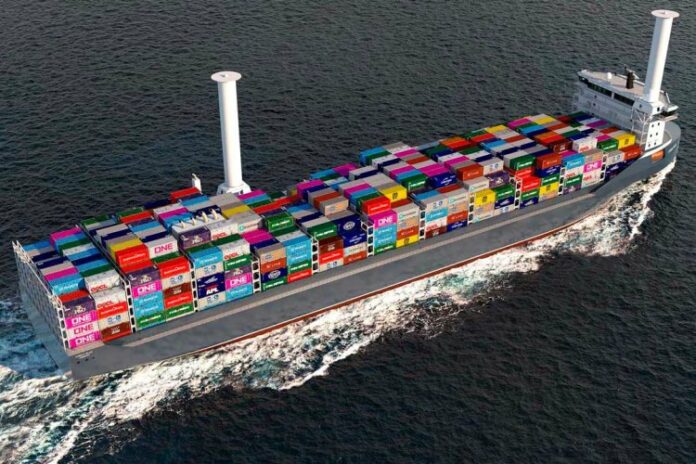
Under the MoU, ship owners and shipyards will be able to choose between fully integrated systems, or solutions incorporating stand-alone products. Firmly focused on sustainability and efficiency, KM already delivers comprehensive integrated equipment packages comprising advanced propellers, power management, energy optimisation, propulsion drive train products, power take off and take in (PTO/PTI) systems, and energy storage. By teaming up with Norsepower, KM adds wind propulsion to its portfolio of strategies to facilitate greener operations, aided by its innovative controllable pitch propeller (CPP) solutions, which can easily manage the variable power delivered by Rotor Sail systems.

Oskar Levander, SVP Business Concepts, Kongsberg Maritime, comments:

“This co-operation with Norsepower is an additional step towards KM’s ambition to become the leading integrator of green shipping technology, such as auxiliary wind power, alternative fuels/energy sources and energy saving devices. There is an increasing demand for the use of modern wind propulsion in shipping, and we are excited to work with Norsepower to deliver this. Together we will offer support to shipowners and shipyards looking for the most efficient and effective ways of applying Rotor Sail technology, and collaborate on new ship designs to integrate these technologies and improve energy efficiency overall.”

The Norsepower Rotor Sail solution is the first third-party verified and commercially operational auxiliary wind propulsion technology for the global maritime industry. The solution is fully automated and detects whenever the wind is strong enough to deliver fuel and emission savings, at which point the Rotor Sails start automatically. Norsepower has completed six installations to date, including the latest installation of five tilting Rotor Sails on a bulker.

Tuomas Riski, CEO, Norsepower, comments:

“The shipping industry is under intensifying pressure to decarbonise.  As the industry combines clean technology solutions to accelerate progress towards reaching net zero, it is important that the optimal design points are considered on installation for all systems. This partnership will help fast-track optimising operations for shipowners and yards developing complete solutions.

“We are very pleased to be collaborating with Kongsberg Maritime, as we can accelerate more access to the benefits of the Rotor Sail in supporting shipping’s decarbonisation pathway and further improve performance of the Rotor Sails, alone and alongside other energy transition technologies. Current savings of between 5-25% could be further improved with KM’s advanced automation systems, efficient propulsion and other novel design solutions.”

Levander concludes:

“This MoU is a great way to strengthen KM’s capability to consult customers when planning their future fleet additions and reflects our innovative approach to providing integrated solutions and upgrades to enable operators to achieve optimum environmental and economic performance. Norsepower Rotor Sails are a great fit with our strategy as they are a proven and economical solution. We look forward to working with Norsepower and making a difference.”

Assessment of carbon capture and storage in natural systems within the English North Sea

0

Three quarters of the UK is in the sea. Among the diversity of marine wildlife found within UK seas lies a reservoir of carbon stored in natural habitats like sand, mud, saltmarsh and seagrass.

This report begins to fill in the gaps in our knowledge of where carbon can be found within the English North Sea, how much carbon is being stored and the capacity to lock carbon away in the future. This research paves the way for better understanding and protection of marine carbon and in doing so tackling the dual climate and biodiversity crises.

Key report findings

  • Carbon stocks in the English North Sea amount to nearly 20% of that held in UK forests and woodlands. The top 10cm of English North Sea seabed sediments is estimated to store 100.4Mt carbon. To put this into context, UK forests are estimated to store 529Mt carbon. Yet these sediments are likely to be tens to hundreds of meters in depth so these figures should be considered an underestimate of the total organic carbon stored in the seabed sediments including the significant buried peat deposits in some areas.
  • 98% of the total organic carbon is stored in seabed sediments like sand and mud. Seabed sediments are thus by far the most important habitat for carbon storage in the region. We have no mechanism for ‘restoring’ these habitats—their protection relies on spatially managing activities so as not to disturb these sediments.
  • The current English North Sea MPA network contains 51.9% of the total organic carbon stores in the English North Sea and 42.1% of total inorganic carbon stores in the English North Sea. Almost all of these MPAs are still subjected to broadscale disturbance.
  • Some areas with the greatest carbon stock density, for example the Devil’s Hole region to the north of the study area, do not lie within an MPA designation and so remain vulnerable to degradation. A huge opportunity exists here to protect significant carbon sinks from disturbance.
  • 0.74 MT of organic carbon are stored in the saltmarsh and seagrass beds of the region. This low figure highlights the significant reduction in saltmarsh and seagrass extent that has taken place across the UK in recent decades rather than its lack of capacity for storing carbon. In fact, both habitats are able to sequester significant amounts of carbon and commitments to restoring such habitats should be made.
  • While it’s estimated that a potential 1.2 Mt organic carbon are added annually to the sediment stores, disturbance to the seabed from activities including fishing, aggregate dredging, infrastructure development and others means it is unclear how much of this carbon enters the long-term stores. While we continue to disturb the seabed so extensively we undermine this natural process of locking carbon away.

ABS approves 3D printed spare parts after successful testing

0

ABS, ConocoPhillips Polar Tankers, Sembcorp Marine Ltd and 3D Metalforge have taken a significant and tangible step to make additive manufacturing (AM) – also known as 3D printing – a reality in the marine industry through a joint development project. Parts fabricated by AM and installed on an oil tanker by Sembcorp Marine six months ago have been validated to be in good working condition.

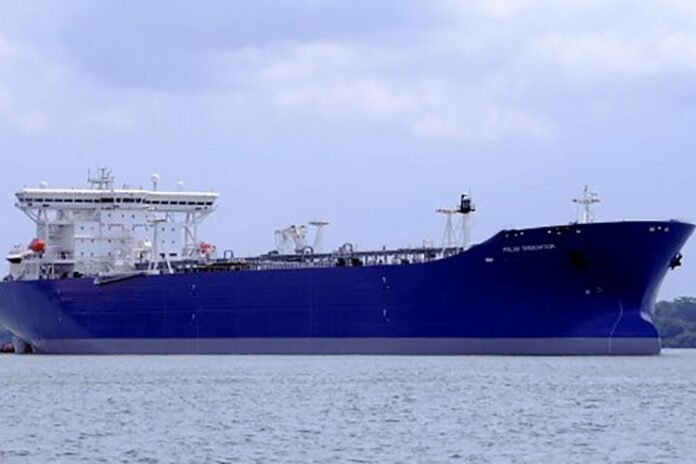
This pioneering AM project started in February 2021 with the fabrication and lab-testing of functional additive manufactured parts, which were then installed on board the oil tanker Polar Endeavour. After six months in operation, all parts have since been retrieved and inspected by the vessel’s crew, followed by a remote survey by ABS.

Patrick Ryan, ABS Senior Vice President, Global Engineering and Technology, said:

“We are delighted with the performance of the parts and the successful completion of the project. It’s an important step forward for a technology that certainly has a significant role to play in the future of the marine industry. ABS is committed to ensuring these types of parts are introduced without compromising safety.”

Additive Manufacturing or 3D printing is the fabrication of parts by adding material layer by layer. It means products and components can be fabricated locally or potentially on board ships and offshore assets, shrinking the supply chain and lead times for specialized and complex parts, introducing new efficiencies driven by design innovation, reduced manufacturing time, and improvements in parts availability.

Traditional parts used in shipbuilding and repair are manufactured via casting or forging techniques. For this project, the consortium utilized AM to fabricate three types of parts that meet or may even exceed conventionally manufactured products in terms of quality. ABS has now approved these additive manufactured spare parts after successful onboard testing on an oil tanker.

The three parts were:

  • Gear set and gear shaft for boiler fuel supply pump: The gear set comprises a drive gear which rotates the idle gear connected to the pump which creates a suction force to fill the void with fluid. The shaft connects the impeller to the motor/engine, which is the power source.
  • Flexible coupling for marine sanitation devices pump: The flexible coupling connects a driver shaft to a driven shaft for power transmission.  The two shafts include metal components for two coupling sleeves and non-metallic components for coupling spider which permit misalignment adjustments.
  • An ejector nozzle for fresh water generator which increases the fluid velocity to transform high static pressure into velocity pressure.

Robert Noyer, ConocoPhillips Polar Tankers Engineering Superintendent, said:

“The superior performance of these parts in service is a testament to the rigorous engineering, manufacturing and post-production testing put in place by the team involved with this venture. We look forward to future opportunities to support our vessels with this technology.”

Sembcorp Marine Head of Research & Development, Simon Kuik, said:

“The success of this project augurs well for the adoption of AM in the marine industry. Through AM, Sembcorp Marine is able to customize parts for our customers and reduce material wastage and remove supply chain inefficiencies. This augments our value proposition as a one-stop innovative solutions provider for the offshore, marine and energy industries and affirms our sustainability ethos.”

Matthew Waterhouse, 3D Metalforge Managing Director, added:

“We are proud to work as a trusted partner, with companies like ABS, Sembcorp Marine and ConocoPhillips Polar Tankers to provide greater value through new and innovative manufacturing solutions, and to help meet changing component manufacturing, supply chain and sustainability challenges. The inspection and validation of these additively manufactured components support our belief in this technology and its application. This exposure to Additive Manufacturing’s capabilities will broaden its commercial applications and acceptance in the future.”
 

Verifavia launches industry’s first real-time Carbon Intensity Indicator dashboard

0

Verifavia Shipping has launched the world’s first real-time Carbon Intensity Indicator (CII) Dashboard to determine the operational efficiency and CII rating of ships over 5,000GT. The flexible digital platform ensures simple and accurate recording of vessel ratings as well as ongoing guidance for vessel efficiency to meet emission regulations.

Verifavia’s CII Dashboard is the industry’s first online platform which provides shipowners, operators, charterers and other users with access to a vessel’s current and predictive CII rating. One of the main features of the dashboard is a calculator which can forecast a vessel’s CII rating for a single voyage, time period or reporting period. As the emission reduction rates for each year increase compared to 2019 levels, the calculator provides a roadmap for shipowners to understand when vessels, and specific voyages will comply with CII regulation, and to anticipate any changes required to meet compliance. The CII dashboard requires very little internet bandwidth and offers a clear, efficient and accurate management system for emissions data.

The Carbon Intensity Indicator (CII) is a new measure based on an operational approach that supports the International Maritime Organization’s (IMO) objective of reducing the carbon intensity of international shipping by 40% by 2030, compared to 2008 levels. The CII rating scheme will apply to all cargo and cruise ships of 5000GT and above, which equates to all the ships which are already subject to the requirements of the IMO Data Collection System.

To comply with regulation, the actual annual operational CII achieved (attained annual operational CII) must be documented and verified against the required annual operational CII. This will determine the operational carbon intensity rating on a scale – A, B, C, D or E – indicating the performance level. The performance level will be recorded in the ship’s Ship Energy Efficiency Management Plan (SEEMP).

A ship that is rated D for three consecutive years or E for one year should come up with a corrective action plan showing how the required index of C or above will be achieved. As charterers, administrations and port authorities are being encouraged to provide incentives to ships rated as A or B, maximising vessel efficiency will provide competitive advantage for the long term.

Julien Dufour, CEO, Verifavia Shipping, commented:

“Launching shipping’s first real-time CII Dashboard ensures the industry has access to a simple, reliable, digital solution to meeting the latest emissions regulation. Using transparent data, the dashboard can predict the emissions of specific voyages, helping shipowners to plan ahead and simulate future situations, and understand where vessels do not comply and what can be done to meet compliance. It makes reporting clear and simple, as well as providing transparent data for charterers.

“As the CII rating will be based on verified reports of IMO’s Fuel Oil Data Collection System, experience in the verification of carbon emissions the additional requirement of CII seamlessly falls into Verifavia’s verification process for IMO DCS. The deadline for compliance is January 2023, which will be here before we know it. We believe our new dashboard is a cost-effective means of allowing shipowners and operators to plan and prepare ahead of time, anticipating the need for any operational or vessel design changes in advance, and making vessels more attractive to charterers.”

Wärtsilä Voyage signs a partnership with MPA Singapore

0

Wärtsilä Voyage has signed a landmark Memorandum of Understanding (MoU) with the Maritime and Port Authority of Singapore (MPA) to further strengthen their collaboration in smart port innovation and digitalisation. 

The main objectives of this strategic partnership are to initiate, develop and promote innovative solutions that accelerate digitalisation; foster interoperability in e-navigation and ship-to-shore secure data communications to enable port-to-port optimisation and establish reliable, cyber safe and cost-effective information exchange pathways between all ecosystem partners to increase operational efficacy.

The scope of the collaboration also covers the development and field-testing of intelligent vessel capabilities to improve interoperability of onboard and onshore systems for well-coordinated and sustainable operations.

Chris Chung, Director of Digital Innovation and Strategic Projects at Wärtsilä Voyage, explained:

“Together, we will work with other industry stakeholders, such as Wärtsilä’s customers whose vessels would be calling on the Port of Singapore. Subject to their consent, we will use the vessel’s nautical data to test-bed reliable and secure information exchanges using applications like Wärtsilä Navi-Port. This will help implement standard Application Programming Interfaces (API) between participating vessels and MPA’s Just-In-Time (JIT) coordination platforms in digitalPORT@SG, and digitalOCEANS to enable optimal arrival and departure of vessels from the port.”

In addition, Wärtsilä Voyage and MPA will assess data and cyber threats to vessels’ shipboard systems, ship-to-shore communications system and MPA’s JIT operations.  

Increasing traffic, the pandemic, and the general unpredictability of weather conditions have acted as catalysts for ports to adopt digital technologies that help mitigate such disruptions.

Koh Chin Yong, Chief Information Officer / Acting Director (IT), MPA, said:

“At MPA, we have been leading the development and implementation of digital port clearance technology to improve efficiency in the world’s leading hub port. This collaboration with industry partners like Wärtsilä, using its Navi-Port for Just-in-Time planning and coordination on the digitalPORT platform, further solidifies our commitment towards digitalisation to support port-to-port optimisation and maritime decarbonisation.”

This partnership builds on Wärtsilä Voyage’s recent successes as the technology provider has already deployed Navi-Port at many other major ports worldwide, including TangerMed, Hamburg Vessel Coordination Centre (HVCC), Port of Valencia, Port of Rijeka, and Bulgarian Ports.

Bruce Mills, Business Development Manager, Ship Traffic Control at Wärtsilä Voyage, said:

“Wärtsilä Voyage is a world-leader in smart port technology, having worked with leading ports on Just-in-Time implementation. With our technology that enables any connected vessel to coordinate with ports using a simple software application, we are a strong strategic partner for ports, ship owners and operators to unlock their port-to-port optimisation, enabling Just-In-Time arrivals.”

Wärtsilä Voyage and MPA have a long-standing relationship built with a series of commercial and R&D initiatives over the years, such as the IntelliTug Project, next-generation navigational simulator for Centre of Excellence in Maritime Safety, a Ship Traffic Control Simulator, and a Full mission bridge simulator for enhancing the port’s training capabilities.

Sean Fernback, President, Wärtsilä Voyage and Executive Vice President, Wärtsilä, said:

“MPA is our strategic customer and influential regulator. Signing this MoU further strengthens and elevates our relationship from a standard and traditional supplier-customer relationship and towards a deeper and long-term strategic partnership.”

Singapore is the busiest transhipment hub in the world, and considering Asia has nine out of ten busiest ports in the world, this is also a crucial case that sets a precedent for other port authorities to have similar conversations.

Fernback added:

“Connected ports are the nodal points in the connected maritime ecosystem that’s necessary for decongesting harbours, enabling on-time arrivals and departures, reducing anchorage time, fuel waste and increasing sustainability of the whole supply chain. The more ports get connected, the further it’ll encourage the uptake of connected vessels among ship owners and operators, helping them optimise their operations too, cascading the positive effect on the whole shipping industry, the planet and the people.”

As ship sizes and global traffic grow, congestion has become another major contributor to shipping emissions.  As per industry estimates, bad planning, early arrivals, and the subsequent time spent waiting in ports mean that the industry is unnecessarily burning bunker totalling USD 18 billion annually – that is around 160 million tons of unnecessary CO2 expelled into the air.

Better ship-to-shore coordination and shortening port stays just by 10% will give a massive reduction in fuel consumption — a big low hanging fruit that is now being realised with the smart port technology and JIT solutions like Wärtsilä Navi-Port.

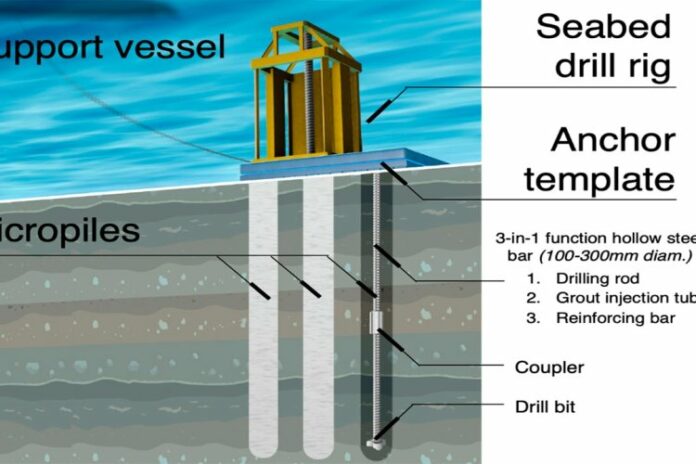
New robotic seabed drilling system to install micropile anchor foundations

0

Design and engineering consultancy, Houlder, is supporting Subsea Micropiles, a foundations company leading the adaption of land-based micropiling technology to create superior marine foundation and anchor solutions. 

Houlder is providing marine operations and engineering support to accelerate market development and the deployment of Subsea Micropiles’ technology.

Innovative foundation technology is essential to reducing costs and environmental impact as the offshore wind industry expands and tackles increasingly difficult seabed conditions. Subsea Micropiles will use a new robotic seabed drilling system to install and grout micropile anchor foundations. Mimicking the root piles of trees, the design is capable of withstanding significant axial and horizontal loads with a stable and consistent connection point.

Micropiling has grown to become a widely used foundation and anchoring solution for onshore infrastructure since the 1950s, as a proven low-noise and low-impact approach to soil interventions.

Advances in underwater robotics are enabling micropiling for offshore piling and anchoring, which has the potential to disrupt the renewable energy industry and benefit the wider offshore sector.

Mark Williamson, Energy Transition & Marine Operations Director, Houlder, said:

“At Houlder we believe in supporting organisations with new technologies that have the potential to play an essential role in the development of offshore fixed and floating wind. This particular project is a game-changer – everyone is excited about this technology! Subsea Micropiles can provide a single connection point on even the most complex of sea beds, even if the field profile changes considerably across many miles.

“It is a really exciting time to be working in this rapidly expanding market and we are proud to be supporting innovative technology which has the potential to accelerate progress. From consultancy, to engineering and design, and then implementation, we are providing tangible support for organisations with answers to the questions posed by the offshore floating wind industry.”

Derek Robertson, CEO, Subsea Micropiles, commented:

“Offshore wind is fundamental to achieving global emissions reductions targets and, today, we’re overly reliant on legacy solutions from oil and gas. Moving forward, we have to embrace new, more sustainable approaches, which we believe demands the introduction of a more biomimicry approach to soil interventions – the way the trees intervene in the soil with their root pile structures. As a young company with a bold vision and potentially game-changing technology, we recognised the need for quality partners and the depth and breadth of expertise that Houlder offers helps enable us to bring our offering to the marketplace.”

ABB launches entry-level ship monitoring system

0

Increased insight and continuous learning about the ship performance enable smarter decision making to improve operational efficiency and reduce fuel consumption. Based on the information, shipowners can calculate fuel consumption and evaluate the possible need for further action to ensure compliance with the International Maritime Organization EEXI (Energy Efficiency Existing Ship Index) and CII (Carbon Intensity Indicator) targets.

Antto Shemeikka, Head of Digital Services, ABB Marine & Ports, said:

“With many in merchant shipping seeking a cost-efficient way to kick-start their digital transformation journey, we are delighted to add OneBox to the solutions ABB offers to market. OneBox can be implemented quickly, cost-efficiently and with minimum effort, and upgraded seamlessly to keep pace with changing digital demands. Owners with no previous experience of digitalizing the operations of their vessels can gain valuable information about ship performance and transform their operational decision making onboard existing ships, for example by utilizing integrated signals from the Electronic Chart Display and Information System (ECDIS), fuel systems, engines, and shaft power meter.”

OneBox is straightforward to install and maintain, with commissioning performed either on board or remotely, and future-proof, as it is compatible with any platform that allows data analysis and interpretation and can be scaled up to include sensors from additional equipment. Vessel operating data can be visualized using ABB analytics software such as ABB Ability™ Marine Fleet Intelligence real-time fleet monitoring and analysis, ABB Ability™ Genix Industrial Analytics and AI Suite, or a third-party web-based platform.

Shemeikka said:

“OneBox demonstrates our commitment to supporting shipping companies with their digitalization strategies. By continuing to provide shipowners with intelligent digital solutions, we are contributing to a smarter, greener and more efficient marine environment.”