1.4 C
New York
Home Blog Page 500

Maersk Drilling re-enters one-well contract with Petrogas

0

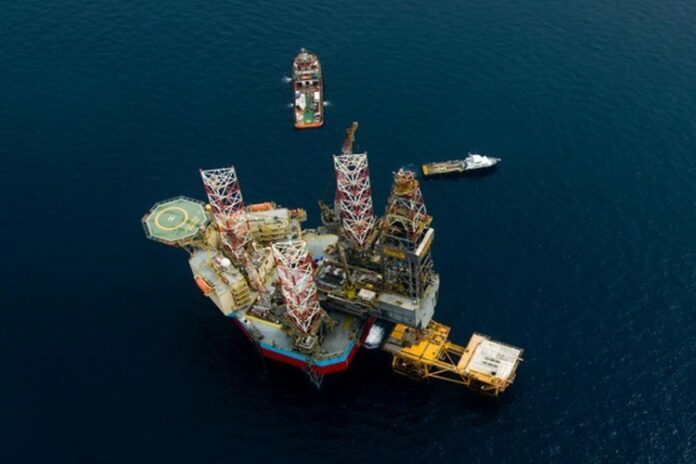
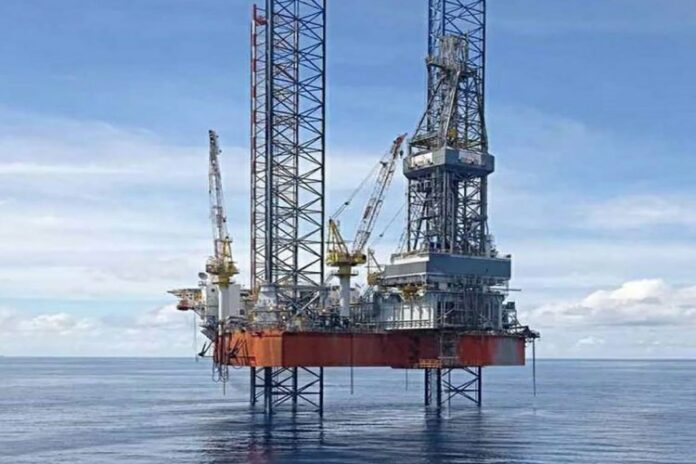
Maersk Drilling and Petrogas North Sea Ltd have agreed to exercise the previously agreed exclusive option to employ the harsh-environment jack-up rig Maersk Resilient to drill an appraisal well at the Birgitta field in the UK sector of the North Sea.

The contract is expected to commence in end-2021, in direct continuation of the rig’s current work scope. The contract has an estimated duration of 60 days and a value of approximately USD 5.4m.

Claus Bachmann, Head of North Sea Division in Maersk Drilling, says:

“We’re very pleased to get this opportunity to re-start the Birgitta project which was temporarily halted due to the global pandemic and the challenging market conditions the industry experienced last year. This is another testament to our strong relationship with Petrogas.”

Maersk Resilient is a 350 ft., Gusto-engineered MSC CJ 50 high-efficiency jack-up rig which was delivered in 2008. It is currently operating in the UK sector of the North Sea for NAM.

Keppel O&M signs agreement with Ørsted on future offshore substation projects

0

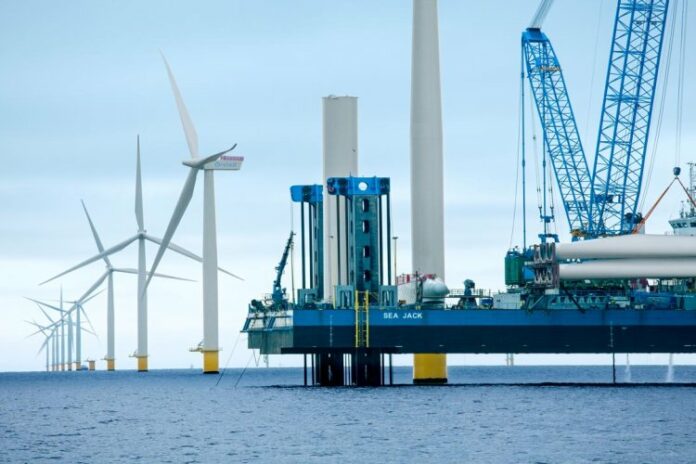
Keppel Offshore & Marine Ltd’s (Keppel O&M) wholly-owned subsidiary Keppel FELS Ltd (Keppel FELS) has signed a global framework agreement with Ørsted to potentially undertake future offshore substation (OSS) projects.

The agreement is part of a strategic initiative to strengthen the long-term partnership of the two companies and streamline processes for future OSS projects. This follows Keppel O&M’s recent completion of its first project for Ørsted in Singapore in September 2021 – two OSS for Taiwan’s Greater Changhua 1 & 2a offshore wind farms. 

Mr Chris Ong, CEO of Keppel O&M, said:

“We are pleased that Ørsted, the world’s biggest offshore wind developer, has signed a framework agreement with us so we can provide value-added solutions for the long term. It reflects the partnership and trust we have built with Ørsted, as well as the quality of work demonstrated by Keppel O&M on the first two offshore substations we built for them. We look forward to strengthening our partnership with Ørsted as we grow our track record in delivering innovative and cost-efficient solutions for the offshore wind industry.” 

With sustainability at the core of Keppel’s Vision 2030 strategy, Keppel O&M has been actively expanding its footprint across the value chain of offshore renewables. Having delivered two OSS to Ørsted for offshore wind farms in the Taiwan strait, it is currently also building an offshore HVDC converter station for TenneT for offshore wind farms in the German sector of the North Sea. More recently, it secured a contract to build two OSS for a renewable energy company and is building the first wind turbine installation vessel, Charybdis, in the U.S for Dominion Energy. 

According to Global Wind Energy Council’s 2021 Offshore Wind Report, offshore wind has the biggest growth potential of any renewable energy technology. 235 GW of new offshore wind capacity is forecasted to be installed over the next decade under current policies, a capacity which is seven times bigger than the current market size, and is a 15 per cent increase on the previous year’s forecasts.  

Oceanbird wind propulsion technology accelerates its way to market with JV company

0

With Niclas Dahl as Managing Director, the partnership will make good on the promise of sustainable wind-assisted and wind propulsion.

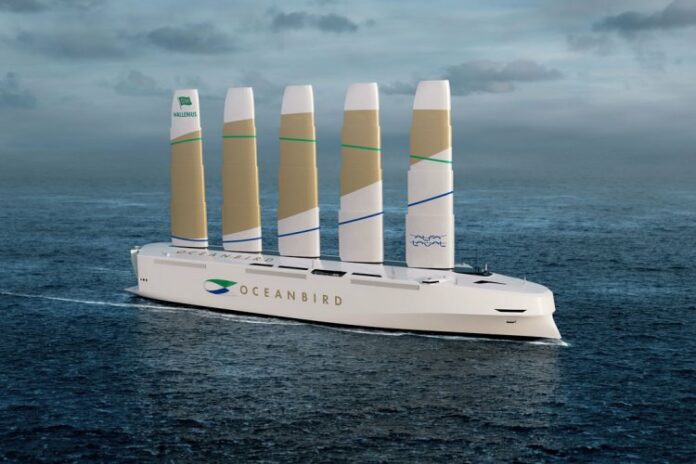
Through the joint venture, formally named AlfaWall Oceanbird, the two companies will intensify the development of Oceanbird wind power technology. Conceived by Wallenius, this innovative system for vessel propulsion uses wing sails that have more in common with modern planes than traditional sailing ships. Fully applied it can reduce emissions by 90% on the largest ocean-going vessels.
 
Niclas Dahl, Managing Director, Oceanbird, who assumed his position on 1 December, says:

“COP26 put the need for accessible technology in the spotlight. Decarbonizing shipping is imperative, and wind is a free source of power with a substantial role to play, and minimum need of infrastructure.”

Niclas Dahl comes from the role of Vice President of Marine Separation & Heat Transfer Equipment at Alfa Laval. Overseeing Oceanbird’s development continues a sustainability journey for Dahl, whose long career includes several years of development and launch of Alfa Laval PureBallast, a market-leading ballast water treatment solution that was also created in partnership with Wallenius.

Already, the Oceanbird team has considerable momentum. Oceanbird was among the winners of the Wind Propulsion Innovation Awards 2021, which was organized by the International Windship Association (IWSA) to promote wind-powered shipping during COP26. Selected by jury as a finalist, Oceanbird carried the Wind Propulsion Products Award category in open voting with 40,000 participants.
 
Niclas Dahl says:

“We’re proud of the recognition from our marine industry colleagues, which confirms that Oceanbird is on the right path. As the enthusiasm for wind power grows, we’re moving rapidly to build on what we’ve achieved. Our next wing sail prototype is on the horizon, and we’re on target to have a transatlantic car carrier fully propelled by Oceanbird technology in 2025.”

Niclas Dahl expects further vessel designs and retrofit applications to follow, sooner rather than later. He concludes:

“Wind is an opportunity we must seize now. There’s simply no time to waste in phasing out fossil fuels.”

PETRONAS awards FEED contracts for Sabah’s nearshore LNG project

0

PETRONAS has awarded two Front End Engineering Design (FEED) contracts to a JGC Corporation-Samsung Heavy Industries consortium and to SAIPEM Spa as part of an international dual FEED design competition for a nearshore liquefied natural gas (LNG) project in Sabah.

The project, with a minimum capacity of 2.0 million tonnes per annum (MTPA) is a first of its kind in Malaysia. 

The FEED design competition is expected to take place over the course of 10 months with the Final Investment Decision (FID) planned for end of 2022. 

Subject to FID, the winning FEED contractor will be rolled over to the Engineering, Procurement, Construction and Commissioning (EPCC) phase. The nearshore LNG plant is planned to be Ready for Start Up (RFSU) by end of 2026.

The design and construction of the nearshore plant is expected to be simpler and upon completion, has the potential for improved production uptime as it will be located within a protected bay area as compared to an offshore floating LNG facility in the open seas. 

PETRONAS Executive Vice President and Chief Executive Officer of Gas and New Energy Adnan Zainal Abidin said:

“PETRONAS continues to provide greater access to cleaner energy sources such as natural gas. The development of Sabah’s first nearshore LNG plant reflects our technological expertise where we continue to innovate modern solutions to monetise gas resources in an optimised and environmental-friendly manner.” 

Upon completion, the nearshore LNG plant will increase PETRONAS’ LNG production from floating LNG facilities from 2.7 MTPA to 4.7 MTPA. Currently, PETRONAS operates two floating LNG facilities, the PFLNG SATU and PFLNG DUA, at the Kebabangan and Rotan offshore gas fields respectively. 

PTTEP makes second discovery in Block SK417 offshore Malaysia

0

PTT Exploration and Production Public Company Limited (PTTEP) announced a successful gas discovery from its second exploration well, Nangka-1, in Block SK417, located offshore Sarawak, Malaysia. The discovery is the latest of PTTEP’s continued exploration success in Malaysia.

Mr. Montri Rawanchaikul, PTTEP Chief Executive Officer, disclosed that PTTEP, through a wholly-owned subsidiary PTTEP HK Offshore Limited (Malaysia Branch) or PTTEP HKO, commenced the drilling of the second exploration well, Nangka -1, in Block SK417 in June 2021 following the discovery from the first exploration well Dokong-1 earlier this year. Nangka-1 exploration well was drilled to a total depth of 3,758 meters and encountered gas pay in sandstone reservoir.

The PTTEP CEO said:

“The discovery at Nangka-1 is another discovery that PTTEP has made in Malaysia this year following the success at Sarawak SK417’s Dokong, SK410B’s Lang Lebah, SK405B’s Sirung, and SK438’s Kulintang fields. The consecutive exploration successes were made possible through decades of dedication, expertise, and our strong partnership with PETRONAS. PTTEP will continue expanding exploration possibilities in Malaysia to bring about more successes to serve energy demand.”

Block SK417 is located in the shallow waters, around 90 kilometers off the coast of Sarawak, covering an area of approximately 1,540 square kilometers. PTTEP HKO is the operator with 80 percent participating interest and PETRONAS Carigali Sdn. Bhd. holds the rest.

Apart from the Sarawak SK417, there are also Blocks SK405B, SK410B, SK438, SK314A, PM407 and PM415, all still in the exploration stage. Major projects in PTTEP’s portfolio in Malaysia include the producing assets in Blocks K, SK309, SK311, the Rotan-Buluh field in Block H and the jointly operated gas fields with PETRONAS Carigali in the Malaysia–Thailand Joint Development Area.

Brittany Ferries takes delivery of Salamanca

0

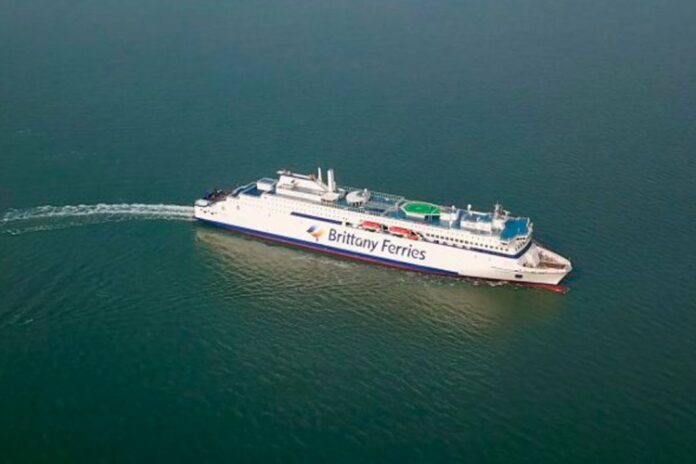
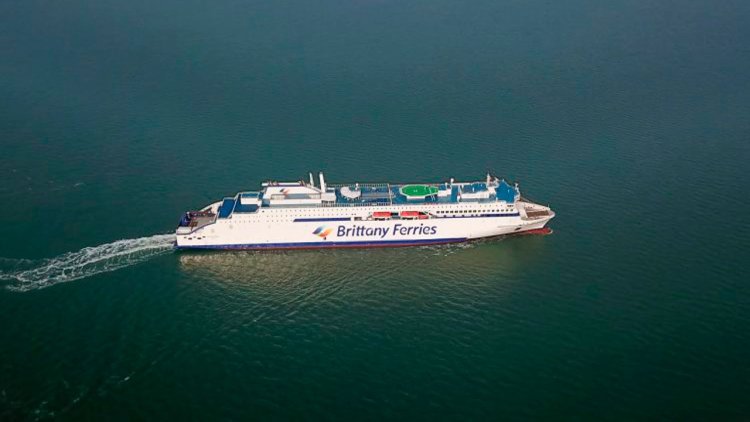
Senior executives including CEO Christophe Mathieu attended the hand-over ceremony in Sweden at the head office of construction partners Stena RoRo. Delivery refers to the transfer of ownership from ship builder to end user, rather than a voyage.

Christophe Mathieu, CEO Brittany Ferries speaking from Sweden, said:

“Fleet renewal is key to our business strategy. It is one of the pillars that will drive our recovery from the Covid crisis and deliver another successful 50 years for Brittany Ferries.

“So it is with gratitude that we thank our partners at Stena RoRo and everyone involved in her construction. From customers and suppliers, to the crew that will sail with her, we all look forward to welcoming Salamanca to the Brittany Ferries family ahead of her sister ship Santoña a year later.”

Closer to home, preparation for her arrival in February 2022 is well under way. Brittany Ferries’ French crews are busy training. A dedicated LNG simulator opened at the company’s Atalante training centre in St Malo and has been used to train staff for the last two months.

Teams are learning the skills needed to bunker (re-fuel) Salamanca, as well as new safety procedures relating to a fuel that promises very few air quality emissions and lower CO2 upon combustion.

Work has also recently started on LNG bunkering terminals in the ports of Bilbao and Santander. These will store fuel for Salamanca and sister ship Santoña, the latter of which will join the fleet in 2023. Both vessels will serve UK-Spain routes.

Salamanca is the next ship in Brittany Ferries’ fleet renewal programme and the first to be powered by LNG. She is one of four new vessels to come in the years ahead, following the arrival of Galicia last December.

Salamanca and Santoña will be powered by LNG. Two hybrid LNG-electric vessels will follow in 2024/2025 as replacements for Bretagne (constructed in 1989) and Normandie (1992). The hybrids will carry passengers on routes connecting France with the UK and will be shore-side power ready.
Commenting on preparations for her arrival Mathieu added:

“Our training centre at Atalante in St Malo is a state-of-the-art facility that was opened in 2019. It is equipping our sailors with the tools they need to be ready for Salamanca and her sister ships in the years to come.”

Jean-Marc Roué, president Brittany Ferries added:

“Continued investment is necessary to ensure that we do not fall behind in the renewal of our fleet. More efficient and competitive ships are the guarantee of our recovery.”

Sea trials serve two purposes for a new vessel.  Firstly, they present the opportunity to test systems and sea-worthiness under realistic conditions for the first time.

This includes things like the main and auxiliary engines, pumps, alarms and safety systems such as firefighting equipment. The schedule also includes speed and manoeuvrability tests and an assessment of noise and vibration at sea. Propellor reversal tests demonstrate the ability of a ship travelling at top speed to stop within a limit specified in SOLAS* regulations.

Sea trials are also the opportunity for a ship builder to demonstrate to the end-user that contractual conditions have been met, paving the way to “delivery” of a vessel. Delivery refers to the passing of ownership from ship builder to user, rather than a physical voyage which in Salamanca’s case will take place from China to Europe in December.

With four LNG vessels on the horizon, Brittany Ferries has begun to instil a culture of gas-readiness among all staff. Training is of course key.

The LNG simulator in St Malo is a digital mock-up of the Salamanca‘s LNG fuel-loading, storage and preparation systems. It enables teams to be trained in their operation, reproducing any situation with which they may be faced.

Virtual bunkering (re-fuelling) can be undertaken in a wide variety of simulated situations. The simulator also allows staff to train in maintenance, and to practise specific procedures such as the complete shut-down of the LNG system.

This simulator is also compact and transportable. It can therefore be used for training onboard the ship when she arrives. Training modules were finalised in September and the first to undertake the programme have been Salamanca‘s crew who will be involved in LNG fuel operations.

*SOLAS – International Convention for the Safety of Life at Sea

CIP secures world-class global contractor group for energy island project

0

CIP acts as project developer on behalf of an investor consortium composed of PensionDanmark and PFA, two of Denmark’s largest pension funds, and Denmark’s largest utility company, Andel (collectively known as the “VindØ consortium”).

The four chosen contractors, together called the “NJORD Group”, are ACCIONA, Boskalis, DEME and MT Højgaard International. The NJORD Group will be advised by engineering consultancy NIRAS.

The energy island in the North Sea will be located approximately 80-100 kilometres off the Danish west coast, where conditions for green energy production based on offshore wind are optimal. The island will be able to connect 10 GW of offshore wind to Denmark and other neighbouring markets, host an innovation zone with potential for large-scale energy storage and Power-to-X technologies, and provide accommodation and operation and maintenance services from onsite harbour facilities.

Thomas Dalsgaard, Partner in CIP, says:

“Copenhagen Infrastructure Partners has thoroughly screened the most experienced experts and the world’s best-suited contract partners for the Energy Island project. We are confident that the NJORD Group offers the experience and capabilities needed for a successful project execution in a safe and reliable manner, even in a harsh marine environment far offshore in the Danish North Sea.”

“ACCIONA, Boskalis, DEME and MT Højgaard International display, individually and as a group, extensive and complementary experience and equipment, and have successfully developed and constructed many similar projects around the world.”

A selection of NJORD Group’s projects and relevant operational experiences include a range of innovative construction projects designed to cater for rigorous environmental and regulatory requirements. The reference projects include:

  • Barrow Island Project: An island constructed in a very strictly regulated natural environment offshore Western Australia with logistical challenges from the project’s remoteness and the harsh weather conditions.
  • Tuas Port Expansion Project: A greenfield port expansion project in Singapore with extensive dredging, excavation and land reclamation, including the design, construction, and installation of concrete caissons for quay walls.
  • Viking and Vulcan Decommissioning Project: An offshore decommissioning project in the Dutch part of the North Sea, including removal, transportation and disposal services of the Viking and Vulcan oil platforms.
  • Follo Line and Øresund bridge Projects: Two mega-projects in a Scandinavian setting with the Norwegian Follo Line project, 19.5 kilometres of twin tunnels under construction, and the 7.8 kilometres long Øresundbridgeconnecting Denmark and Sweden.
  • Fehmarnbelt Tunnel: A link between Rødbyhavn on Lolland, Denmark and the German island of Fehmarn to be built as an immersed tunnel.

The Danish Energy Agency is currently in dialogue with potential bidders for the energy island tender, which is expected to be launched by Q3 2022. CIP intends to bid in the upcoming tender.

Artificial intelligence could be used to accurately predict tsunamis

0

Researchers say their analysis of ocean soundwaves triggered by underwater earthquakes has enabled them to develop artificial intelligence (AI) that allow prediction of when a tsunami might occur. The results are published in the journal Scientific Reports.

It is hoped this technology could assist experts in gaining accurate real-time assessments of these geological events.

Dr. Usama Kadri, from Cardiff University’s School of Mathematics, said:

“Tsunamis have a devastating impact on communities. Developing accurate methods to detect them quickly is key to saving lives.

“Our findings show we are able to classify the type of earthquake and retrieve its main properties from acoustic signals, in near real time. These methods will complement existing technology for real-time tsunami analysis and provide another tool for experts working to detect them.

“This work is an integral part of a larger project for creating a more reliable early tsunami warning system.”

For their research, the team analyzed deep ocean sound recordings following 201 earthquakes that happened in the Pacific and the Indian Ocean.

Tsunamis often occur after vertical earthquakes, where tectonic plates on the earth’s surface move mainly up and down rather than horizontally. This motion causes the displacement of a large amount of water, creating very long waves that can cause widespread damage onshore.

The vertical motion results in compressing the water layer which sends specific sound signals that carry information on the dynamics and geometry of the fault. Mr Bernabe Gomez, a Ph.D. student in the research team, used this information to train artificial intelligence (AI) algorithms to recognize when a vertical earthquake has occurred, which, they say, could be used to pinpoint future tsunamis in real-time.

Dr. Kadri added:

“Tectonic movements are very complicated, with horizontal and vertical elements. Some earthquakes have higher capability to generate tsunamis than others. Employing digital signal processing techniques, we can analyze sound recordings of underwater earthquakes, that train artificial intelligence (AI) algorithms to classify the type of earthquake and its moment magnitude. This is a significant step for a reliable early tsunami warning system since the type of earthquake can dictate if a tsunami will be generated at all.”

SBM Offshore signs FPSO Alexandre de Gusmão contracts

0

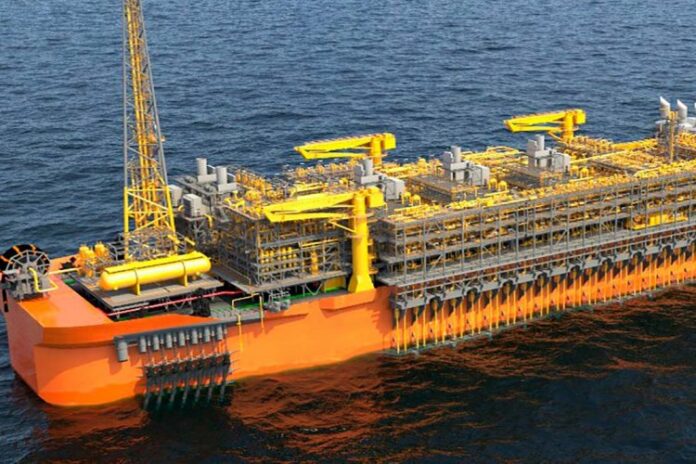
SBM Offshore has signed contracts with Petróleo Brasileiro S.A. (Petrobras) for the 22.5 years lease and operation of FPSO Alexandre de Gusmão. These contracts follow the signing of the binding Letter of Intent as announced on August 3, 2021.

FPSO Alexandre de Gusmão will be deployed at the Mero field in the Santos Basin offshore Brazil, approximately 160 kilometers from Arraial do Cabo, Rio de Janeiro state.

Mero is a project under Libra Consortium responsibility, in which Petrobras is the operator with 40 percent and with the following partners: Shell Brasil with 20 percent, TotalEnergies with 20 percent, CNODC and CNOOC Limited with 10 percent each, together with Pré-sal Petróleo S.A. (PPSA) as manager of this contract.

SBM Offshore is progressing with the design and construction using its Fast4Ward® program. First oil is expected in 2025.


World’s first methanol-fuelled towboat to launch in 2023

0

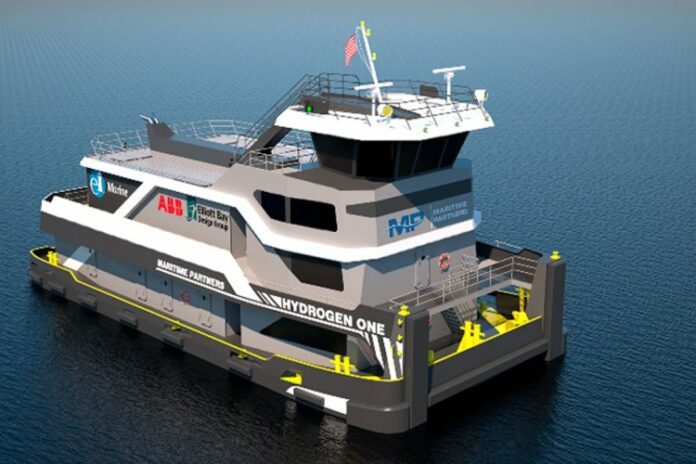
Maritime Partners in cooperation with Elliott Bay Design Group,  e1 Marine, and ABB, today announces that the M/V Hydrogen One, the world’s first methanol-fuelled towboat, will join Maritime Partners’ fleet and become available for charter in 2023 to meet the pressing demand for sustainable towboat operations.

Decarbonising the towboat sector poses substantial challenges, particularly due to towboats’ inherent size, space, and weight limitations. Batteries are only suitable if you operate on fixed routes and can recharge daily, and a towboat’s limited storage capacity restricts the use of pressurised or cryogenically stored gases as fuels. There are also very few dockside facilities to load such marine fuels, which severely constrains a vessel’s range and functionality.

M/V Hydrogen One will be IMO 2030 compliant, and meet all requirements of the US Coast Guard’s Subchapter M regulations. The ship has been designed by Elliott Bay Design Group using proven, efficient technology throughout, from ABB’s electrical power distribution and automation to e1 Marine’s methanol-to-hydrogen fuel cell, and it will be able to perform at standard operational speeds for up to 550 miles before it needs to refuel. 

Methanol is a common towboat cargo, and it is available in 88 of the world’s top 100 ports. This availability enables you to refuel safely almost anywhere without the need for costly diversions. The M/V Hydrogen One’s use of e1 Marine’s reformer technology generates hydrogen from methanol on-demand, which also makes it considerably safer than transferring and storing hydrogen directly, and the ship’s crew will require minimal additional training to use the technology.

Austin Sperry, Co-Founder and Chief Operating Officer at Maritime Partners, commented:

“Shipowners have been understandably reluctant to commit to low carbon fuels until the infrastructure is available to refuel their vessels. The M/V Hydrogen One solves that problem by using methanol, which is safe and readily available worldwide. When the M/V Hydrogen One joins our fleet of 1,600 vessels, it will not only provide excellent emissions reduction capabilities but highly functional, reliable, and cost-effective operations.”

Dave Lee at ABB Marine & Ports, commented:

“The US towboat market is one of the most traditional in the world, so it’s important to recognise what this represents: the first step in a shift from diesel electric to methanol electric, and a major advancement towards zero emissions. Governed by ABB’s power management and distribution technology, the system consumes methanol fuel on-demand. This philosophy is much more efficient than a traditional towboat, where you need both main engines as well as a generator online at all times. Through this design and our technology we’re enabling not only huge operational and cost efficiencies, but making the most environmentally friendly mode of transport even more sustainable.”

Robert Schluter, Managing Director at e1 Marine, commented:

“Converting methanol to hydrogen reduces the CO2 output and our reformer technology eliminates the complexities of direct fuelling and storage of gas marine fuels. By producing hydrogen at the point of consumption from a mixture of methanol and water, e1 Marine’s system enables the safe, efficient, and economic use of hydrogen as a marine fuel. The technology is ideal for anything that requires continuous power over extended periods, including work boats and medium-range passenger vessels, or to provide backup power in ports and harbours.” 

Mike Complita, Principal and Vice President of Strategic Expansion at Elliott Bay Design Group, commented:

“M/V Hydrogen One is the model for what is likely to be the only practical and commercially available technology that will enable smaller vessels to run for multiple days on a single fuel load and without the need for dedicated refuelling facilities. Our naval architects have optimised the balance between reformers, fuel cells and batteries to maximise range and power while minimising operational costs. This design and the technologies it uses can be easily scaled to suit any vessel with a similar need to operate on variable routes with multiple-day transit times, and further enhances Elliott Bay Design Group’s market-leading expertise in this growing sector.”