1.1 C
New York
Home Blog Page 498

Russian ship with drunk crew detained in Poland

0

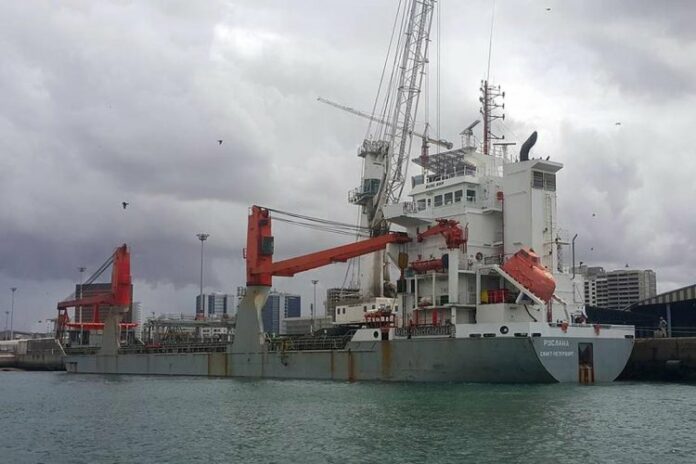
The incident happened off the coast of Poland at 4 am on Saturday, the state PAP news agency reported. A Russian ship, MS Ruslana, was sailing from Klaipeda, Lithuania, when it suddenly left the fairway and was heading for Poland’s Sobieszewska island at great speed. 

Magdalena Kierzkowska, the spokeswoman for Poland’s Sea Authority, told PAP:

“The vessel did not respond to signals from Polish Rescue Radio, so we reported the case to the Border Guard.”

The portalmorski.pl website reported:

“About a kilometre from the island, the Russian ship made a sharp, 180-degree turn and moved away from the coast, after which it anchored in the port of Gdańsk.”

Andrzej Juźwiak, the spokesman for Border Guard’s office in the city of Gdańsk, told PAP:

“A Border Guard vessel was immediately dispatched to the Russian ship and officers found about 1 per mille of alcohol in the captain’s blood, while his two assistants both had around 1.5 per mille of alcohol in their blood.”

Poland’s Maritime Office in Gdynia has confirmed that a Russian dry cargo vessel was detained in the Baltic Sea’s Gdansk Bay:

“Currently, the vessel is lying in the anchorage. An inspector of the state port inspection of the Maritime Office in Gdynia and officers of the border service inspected the vessel. A note on the ship’s detention was drawn. The police were informed about the incident.”

MS Ruslana has been detained until its owner addresses technical issues and further decisions will be taken following another inspection, PAP reported.

The China-made Russian dry-cargo ship is almost 120 metres long and 15-metres wide, with a carrying capacity of 7,697 tonnes and a load displacement of 10,301 tonnes, the portalmorski.pl website noted.

Source: PAP, portalmorski.pl, polskieradio.pl

First Greek port adopts blockchain technology through integrating with TradeLens

0

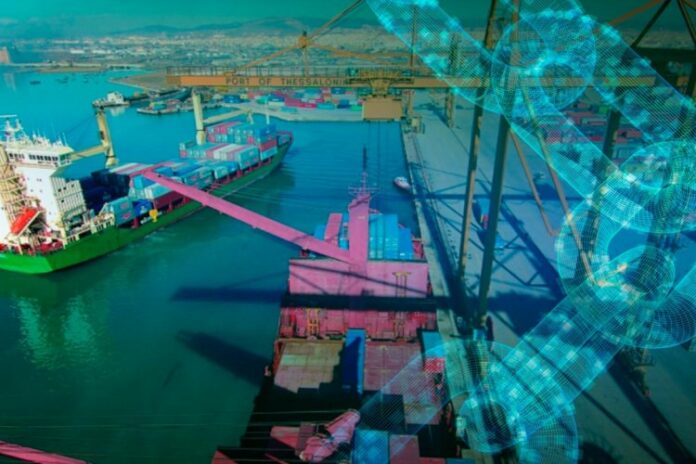
Port of Thessaloniki is the first Greek Port to adopt blockchain technology through integrating with TradeLens, a digital logistics platform supported by five of the six largest ocean carriers globally.

ThPA S.A. is focused on the transformation of the Port of Thessaloniki into a “smart port” through smart technologies for the digitization of systems, to provide innovative and high-end services with simplified procedures, creating surplus value for the wider port community.

As ThPA S.A. – Port of Thessaloniki is the Gateway Port to South East, Central and Eastern Europe, detailed visibility movements of container shipments is a very important factor. The TradeLens platform promotes the efficient, transparent and secure exchange of information to foster greater collaboration and trust across the global supply chain. Furthermore, TradeLens platform provides visibility across the entire supply chain and is built on a wealth of input from the industry including direct integrations with more than 180 ports and terminals, 15+ customs authorities around the world and an increasing number of intermodal providers.

Integration of ThPA S.A. – Port of Thessaloniki to the Tradelens platform, significantly improves asset and yard management by leveraging information from partners earlier, as well as simplifies and reduces the cost of connecting to each individual shipping line and the wider port community. The transformation of manual, paper-based and time-consuming administrative processes into digital processes optimizes and accelerates the decision-making process for ThPA S.A. and associated ecosystems.

The Executive Chairman of the BoD of ThPA S.A., Thanos Liagkos, noted:

“The use of the Tradelens platform contributes to the increase of operational efficiency, through better visibility of container flows across multiple modes, while improving the impact on the climate change. Joining the TradeLens platform is a great step forward for ThPA S.A. – Port of Thessaloniki to lead the change in the Greek intermodal logistics industry, pioneering in the digitization of the South East European supply chain.”

Thomas Sproat, Sr. Director Network Development said:

“TradeLens is an open and neutral platform, that has a goal to digitalize and connect the global supply ecosystem. We are thrilled to add ThPA S.A. – Port of Thessaloniki (the 1st Greek Port Container Terminal) to the TradeLens ecosystem as we have an important partner in Greece and South East Europe to provide efficient end to end movement of containers and thus helping our joint customers to reduce overall logistics costs.” 

♡ Chastity Device Lancelot Diamond Tube 84be53

0

Links Dealer

wholesale sex toys

SH2IPDRIVE hydrogen consortium gets boost from the Dutch R&D Mobility Fund

0

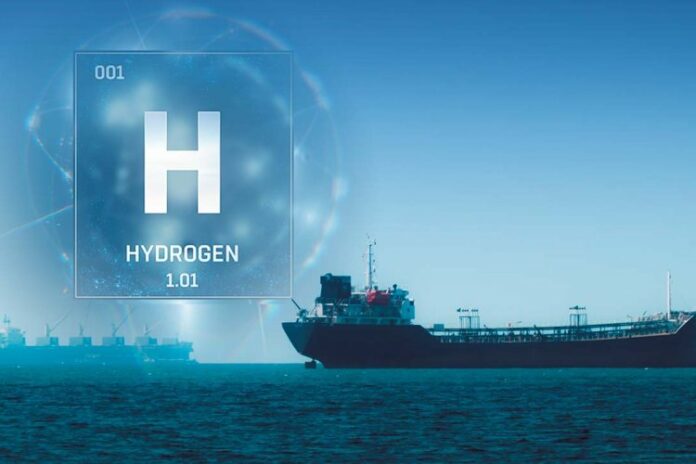
SH2IPDRIVE, (Sustainable Hydrogen Integrated Propulsion Drives) a Dutch project consortium focused on maritime hydrogen applications, today announces the receipt of a subsidy of 24.2 million EUR from the R&D Mobility Fund in the Netherlands.

SH2IPDRIVE consists of a diverse group of 25 companies and knowledge institutions from across the maritime sector working together on a broad and ambitious innovation project to accelerate the introduction of hydrogen as a marine fuel. Developing the application of hydrogen is one of the pillars of the Dutch Maritime Master Plan, of which this consortium contributes extensively. The total project fund of 34 million EUR affords extensive research and development into multiple avenues for hydrogen application and accelerates the move to zero-emission shipping.

Klaas Visser, Ship Design, Production & Operations – TU Delft, said:

“SH2IPDRIVE will ensure the Dutch maritime sector is in a prime position to respond to the expected market demand for hydrogen systems by providing the necessary innovation stimuli to the technology developers, suppliers, shipowners and shipbuilders and will strengthen the country’s competitive position as a leader in the field of maritime hydrogen applications.”

SH2IPDRIVE is laying the foundation for a strong maritime hydrogen economy in the Netherlands. The results of SH2IPDRIVE align entirely with the objectives formulated in the Dutch Maritime Master Plan, aimed at strengthening the position of the Netherlands as a world leader in sustainable shipbuilding and shipping.
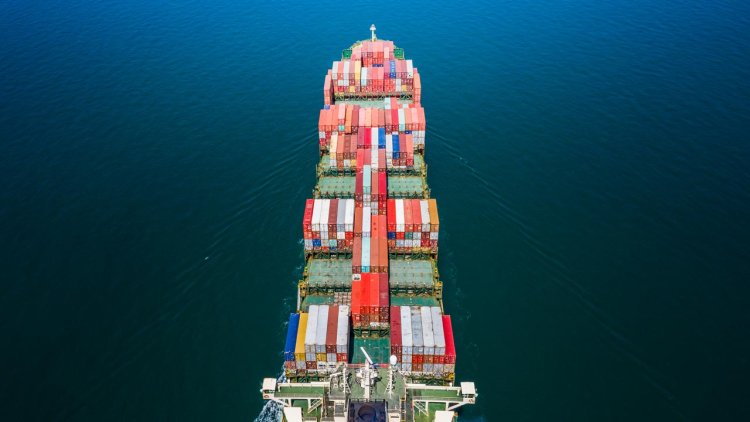
The project activities cover the full scope of hydrogen research and development and are organised in nine different work packages including Bunker and Storage Systems, Hydrogen Carriers, Fuel Cells, Data Collection and System Validation, System Integration, Modular Testing, Ship Design and Safety.

Marjon Castelijns, Manager Business Development – Future Proof Shipping (FPS), said:

“This is the project we need to boost knowledge and technology in the field of hydrogen applications in the maritime sector and to create a strong Dutch ecosystem. We already know that hydrogen can be produced completely carbon-free through green electricity. With the electrochemical conversion of hydrogen in a fuel cell, power can be generated onboard to drive ships fully emissions-free with no greenhouse gases, nitrogen oxides, or particulate matter being released. However, to achieve a fully zero-emissions shipping sector quickly and cost-effectively, a lot more research is required in optimal techniques, applications and standardisations. This is exactly what all parties of SH2IPDRIVE are working on.”

The main objective of SH2IPDRIVE is the development of reliable, safe, standardised, scalable and cost-effective solutions for zero-emission propulsion and energy systems for hydrogen-based ships.

The project will conduct new research into the development of safe applicable technologies for hydrogen in four different forms: (1) compressed hydrogen gas and (2) liquid hydrogen, and hydrogen bound to carriers such as (3) liquid organic hydrogen carriers and (4) borohydrides.

Another main area of exploration for the team is research into new fuel cell systems with a greater power density, and a longer lifespan, the use of residual heat and the scaling up of fuel cells.

The team will also work on developing technical standards for bunkering and storage of hydrogen for shipping, integration of hydrogen technology onboard ships and ship design. For this purpose, data collection and system validation are included in the project and the integral safety concept of these new systems is also taken into account.

Developments of technological components and subsystems are validated in five concept designs representative of different ship types that are important for the Dutch shipping sector, inland shipping new construction, Inland shipping retrofit, coastal/shortsea shipping, passenger vessels and specialist ships.

Greek-flagged ship caused Brazil mystery 2019 oil slick: police

0

A mystery oil slick that caused environmental disaster along a vast stretch of Brazilian coastline in 2019 and 2020 was caused by a Greek-flagged vessel, federal police said Thursday after a two-year investigation.

The police said “there is sufficient evidence that a Greek-flagged oil tanker was responsible for leaking” the oil that afflicted more than 2,000 kilometers (1,200 miles) of coast between August 2019 and March 2020.

The slick affected more than 1,000 towns in 11 coastal states, investigators said, without naming the company that owns the ship.

The vessel’s owners, as well as the ship’s captain and chief engineer, faced charges of “crimes of pollution, non-compliance with environmental obligations and damage to natural reserves,” police said.

In November 2019, Brazilian authorities identified the Greek oil tanker Bouboulina, owned by the Delta Tanker company, which is also based in Greece, as “the main suspect.”

But at the time Delta Tankers denied all responsibility for the environmental catastrophe, which threatened mangroves, humpback whale sanctuaries, coral reefs and numerous beaches in northeastern coastal cities, a poor region whose economy is highly dependent on tourism.

The police estimated that the costs incurred by federal, state and municipal public powers alone for the clean-up of beaches and the ocean ran to some 188 million reais ($47.7 million).

During the disaster, the government of far-right President Jair Bolsonaro, whose environmental policies have been broadly criticized, mobilized some 5,000 soldiers for clean-up operations and more than 4,500 tons of oil residue were collected.

© 2021 AFP

LMG Marin to design world’s first zero-emission fuel tanker

0

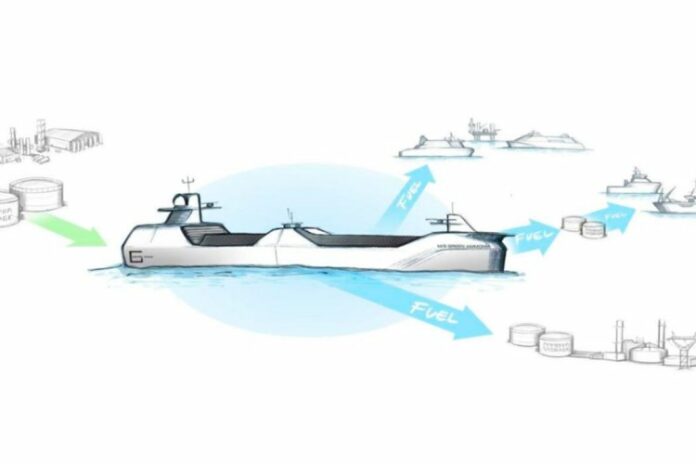
LMG Marin AS (LMG Marin), a wholly-owned subsidiary of Sembcorp Marine Ltd, has secured a contract to design the world’s first green ammonia-fuelled tanker, the MS Green Ammonia, for Grieg Edge, the dedicated innovation unit of the Grieg Maritime Group.

Powered by green ammonia, the zero-emission vessel will transport and distribute green ammonia fuel from a production facility in Berlevåg, Norway, to Svalbard, a Norwegian archipelago between mainland Norway and the North Pole from 2024, replacing coal-fired power.

Conventional ammonia, also known as grey ammonia, is manufactured by mixing hydrogen and atmospheric nitrogen under pressure, with the production of every tonne of grey ammonia producing two tonnes of carbon dioxide (CO2), negating its green benefits. In contrast, green ammonia is produced with hydrogen derived from water electrolysis powered by renewable sources of energy such as wind and solar, making it an environmentally-friendly fuel.

LMG Marin Managing Director Mr Torbjørn Bringedal said:

“LMG Marin is pleased to be selected by Grieg Edge to provide design services for MS Green Ammonia. We appreciate the opportunity to work with Grieg Edge who is at the forefront of developing new business opportunities within the maritime industry with sustainability as a pre-requisite. Together with Grieg Edge, we are excited in pursuing new green technologies and making it a future reality.”

Sembcorp Marine President & CEO Mr Wong Weng Sun added:

“As LMG Marin commences design work on the world’s first green ammonia-fuelled tanker, it is able to leverage the Group’s integrated marine and offshore engineering capabilities, deep R&D domain expertise and technological bench strength in designing and building high-performance and specialised vessels.”

Maersk Drilling awarded one-well exploration contract with OMV in Norway

0

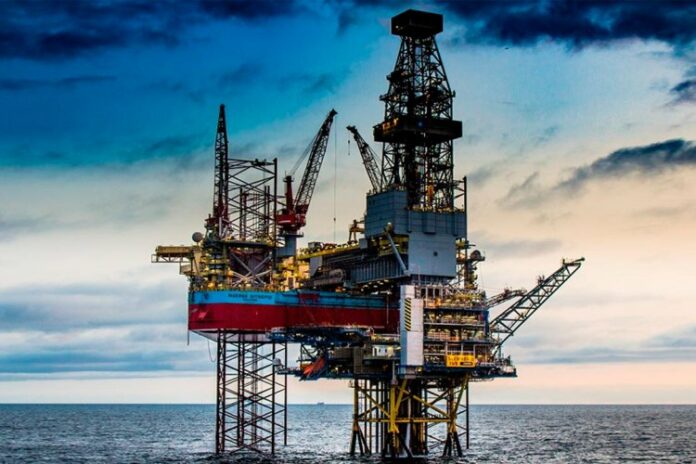
Maersk Drilling has secured a one-well contract with OMV (Norge) AS, which will employ the low-emission jack-up rig Maersk Intrepid to drill a high pressure, high temperature exploration well in the Oswig prospect in Block 30/5C of the Northern North Sea basin offshore Norway. 

The contract is expected to commence in mid-2022, and Maersk Drilling and OMV (Norge) AS are in discussions to add additional services to the scope. The contract includes a one-well option to drill the Eirik exploration well.

As the first of Maersk Drilling’s rigs to be upgraded to a hybrid, low-emission rig, Maersk Intrepid produced an initial data point showing fuel consumption and CO2 emission reductions of approximately 25% compared to the rig’s average baseline, along with NOx emission reductions of approximately 95%. The contract with OMV (Norge) AS contains an emission reduction bonus scheme based on rewarding CO2 emission reductions in addition to operational performance bonuses.

COO Morten Kelstrup of Maersk Drilling, says:

“We’re delighted that OMV once again trusts us with the exploration of their prospects and look forward to building further on the close and extremely efficient collaboration we established during Maersk Integrator’s campaign for the customer earlier this year.”

Maersk Intrepid is an ultra-harsh environment CJ70 XLE jack-up rig, designed for year-round operations in the North Sea and featuring hybrid, low-emission upgrades. It was delivered in 2014 and is currently operating for Equinor Energy AS offshore Norway.

WAB joins the OCEaN initiative to promote hydrogen production from offshore wind

0

The association fosters the production of green hydrogen from wind energy with the German-based company now set to explore and support the initiative and its hydrogen ambitions.

One of the main targets of the OCEaN alliance is to cooperate on the sustainable use of offshore wind energy while ensuring harmony with nature conservation and healthy marine ecosystems.

With hydrogen’s zero-emission benefits that can be partnered to further complement offshore wind, the initiative sees hydrogen as a vital cog in achieving its sustainable practices.

Heike Winkler, managing Director of WAB, said:

“We are happy to join the Offshore Coalition for Energy and Nature to tap the full potential of offshore wind in the North and Baltic Seas sustainably, ensuring alignment with nature protection and healthy marine ecosystems.

“A close dialogue among stakeholders will help achieve this goal. This becomes even more significant in light of the growing need for green hydrogen.”

NASSCO begins construction on fifth ship in the ESB Program for the U.S. Navy

0

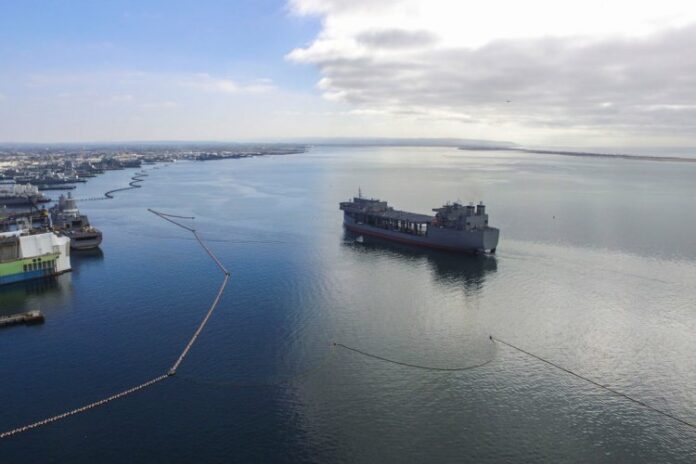
Dennis DuBard, a long-time NASSCO employee and the Start of Construction honoree, initiated the first cut of steel that will be used to construct the vessel.

Dave Carver, president of General Dynamics NASSCO, said:

“Today, we start construction of the ship that honors the life and service of the ship’s namesake, Marine Corps Private First Class Robert E. Simanek. This ship represents the thousands of men and women who will spend roughly 2 million hours building this ship.”

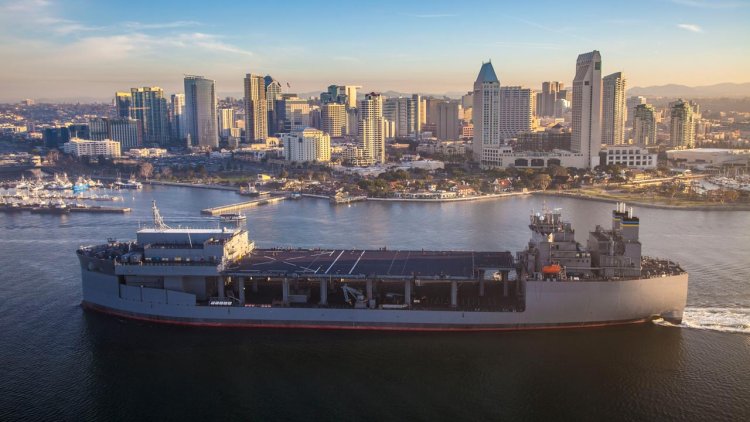
ESB ships are highly flexible platforms designed to support multiple maritime-based missions, including Air Mine Counter Measures (AMCM), Special Operations Forces (SOF), and limited crisis response. Acting as a mobile sea base, this 784-foot ship will be configured with a 52,000 square-foot flight deck to support MH-53, MH-60, MV-22 tilt-rotor, and H1 aircraft operations.

The future USS John L. Canley (ESB 6), the fourth ship in the ESB program, is scheduled to be launched in the summer of 2022. The first three ships in the ESB program for the U.S. Navy – USS Lewis B. Puller (ESB 3), USS Hershel “Woody” Williams (ESB 4), and USS Miguel Keith (ESB 5) – have been delivered.

Costa Cruises takes delivery of Costa Toscana

0

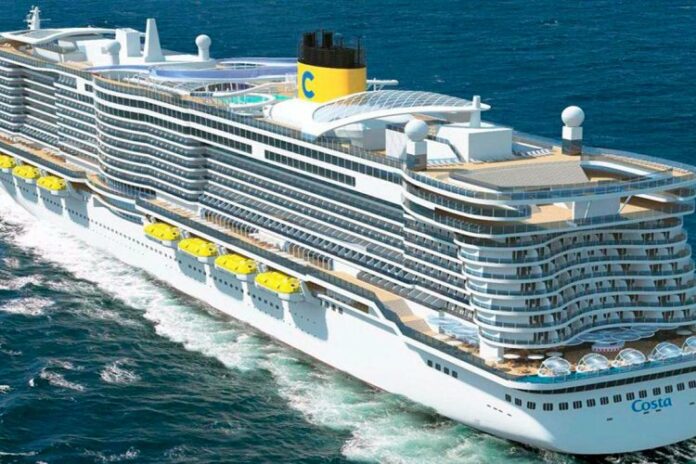
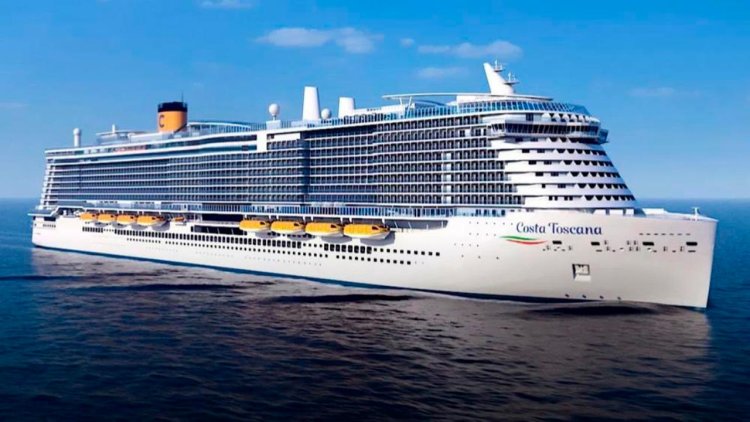
Today, at the Meyer shipyard in Turku (Finland), Costa Cruises has taken delivery of its newest ship, Costa Toscana, powered by liquefied natural gas (LNG), the maritime sector’s most advanced technology for reducing emissions.

The Costa Group – which includes the Costa Cruises and AIDA Cruises brands – was the first in the world to pioneer  liquefied natural gas on cruise ships. Its LNG-powered ships include AIDAnova and Costa Smeralda, already in service; Costa Toscana, delivered today; and AIDACosma, coming soon.

Mario Zanetti, President of Costa Cruises, said:

“Costa Toscana reinforces our commitment to sustainable  innovation by further contributing to the use of LNG applied to cruise ships, a technology that we pioneered. It is an innovation that is part of a constantly evolving path of ecological transition. Indeed, we are also working on testing further innovations, such as fuel cells and batteries, with the aim of eventually achieving  the first cruise ship with net zero emissions. At the same time, thanks to her excellent and innovative features and services, Costa Toscana will be able to attract new cruise guests,  supporting us in consolidating our presence in the Mediterranean and our gradual restart plan”.

Costa Toscana’s first cruise will depart from Savona, Italy, on March 5, 2022, with a week-long itinerary visiting Marseille, Barcelona, Valencia, Palermo and Civitavecchia/Rome. Following her debut, the new flagship will remain deployed in the Western Mediterranean throughout the year. During the summer season, she will call at Savona, Civitavecchia/Rome, Naples, Ibiza, Valencia, Marseille, while during the autumn season Palma de Mallorca will replace Ibiza.

Costa Toscana features a series of cutting-edge technological innovations designed to further reduce environmental impact. The entire daily water requirement is met by transforming seawater using desalination plants. Energy consumption is minimized thanks to an intelligent energy efficiency system. In addition, 100% separate waste collection and recycling of materials such as plastic, paper, glass and aluminum will be carried out on board, as part of an integrated approach aimed at implementing circular economy projects.

The driftwood used to furnish the islands of the new Archipelago restaurant has been collected thanks to the “Guardians of the Coast”, the environmental education program for the protection of the Italian coastline promoted by the Costa Crociere Foundation. For every dinner served at Archipelago, Costa Cruises will donate part of the proceeds to the Costa Cruises Foundation to support environmental and social projects.

Costa’s new flagship is a tribute to Tuscany, the result of an extraordinary creative project, curated by Adam D. Tihany, designed to enhance and bring to life in a single location the best of this wonderful Italian region, which gives its name to the ship, its decks and main public areas.