1.1 C
New York
Home Blog Page 499

World’s first dual-fuel LNG battery hybrid PCTC delivered

0

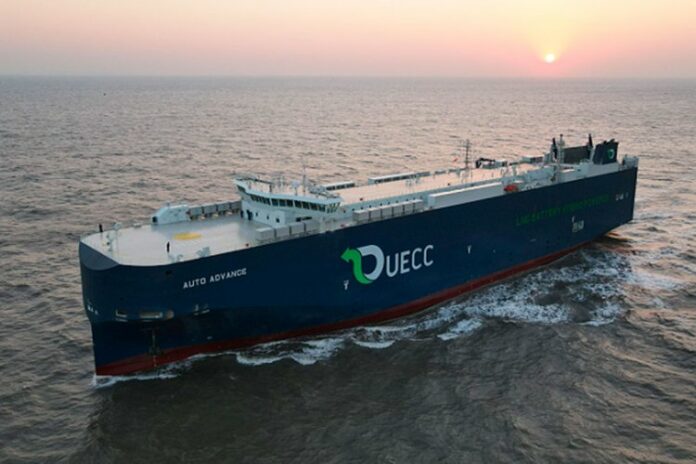
On November 26, United European Car Carriers (UECC), which is equally owned by NYK and Wallenius Lines, took delivery of the world’s first dual-fuel LNG battery hybrid pure car and truck carrier (PCTC).

The vessel was built by Jiangnan Shipyard (Group) Co. Ltd. in China and will be named “Auto Advance.” The ship will be used to transport finished vehicles within Europe.

Additionally, the ship comes equipped with the world’s first dual-fuel LNG battery hybrid system, allowing the vessel to further improve fuel consumption by operating the main engine and power generation engine more efficiently than before.

The battery hybrid system uses a combination of a shaft generator driven by the main engine and a battery to efficiently supply onboard power and reduce the environmental burden. In addition, in the event of a generator failure, power is supplied from the battery to the ship to avoid power loss and thus contribute to safe operation. 

The use of LNG fuel, in addition to the battery hybrid system to improve fuel economy, will result in virtually 90% less sulfur oxide (SOx) emissions, 85% less nitrogen oxide (NOx), and 25% less carbon dioxide (CO2) compared to conventional vessels fueled with heavy oil. As a result, the vessel will also meet the IMO’s Tier 3 NOx emissions limitations for the North Sea and Baltic Sea.

ABS awards sustainability notations to two Harvey Gulf vessels

0

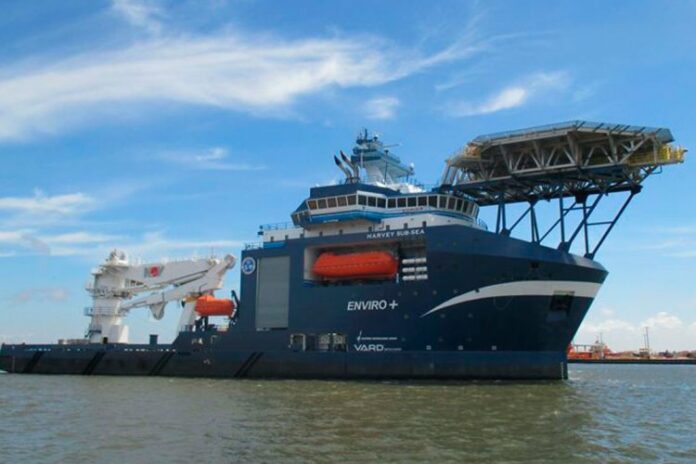
A pair of Harvey Gulf International Marine Offshore Support Vessels have been awarded the ABS SUSTAIN 1 Notation recognizing how their design and operation is aligned with UN Sustainable Development Goals (UNSDGs).

To earn the notation, the Harvey Blue-Sea and Harvey Sub-Sea vessels were among 12 of the Harvey Gulf fleet evaluated by ABS for their performance against six of the UNSDG’s criteria. The remaining 10 vessels are also being considered for Sustain notations.

The ABS Sustain notations demonstrate adherence to certain UNSDGs related to vessel design, outfitting and layout that can be controlled, measured and assessed. They establish a pathway for sustainability certification and reporting.

Georgios Plevrakis, ABS Director, Global Sustainability, said:

“The notations recognize forward-looking operators’ commitment to supporting the UNSDGs and to maintaining a sustainable fleet. It reflects the operators’ commitment to a holistic as opposed to an incremental approach toward Sustainability. I am delighted that we are able to support Harvey Gulf on its sustainability journey and to help them demonstrate to the industry their environmentally sound approach.”

Shane Guidry Harvey Gulf, Chairman and CEO, said:

“I am pleased to, once again, partner with ABS in order to be the first offshore vessel operator in America to achieve Sustainability Class 1 Notation for Harvey Gulf’s two, 250-metric-ton MPSVs and to be working closely with ABS on achieving Sustainability Class 2 for our tri-fueled PSV fleet, which no company in our sector will be able to achieve. When Harvey made the 400 million dollar investment into our dual-fuel PSVs, and then began the process of converting all of them to tri-fuel, I had no idea how important Environmental, Social, and Governance sustainability would become for operation of vessels in the oil and gas service industry. Well, it’s crystal clear. It’s here to stay. And it’s here to grow in a big way.  I have set the stage for Harvey Gulf to be the leader and will continue to do so with this great partnership we have with ABS.”

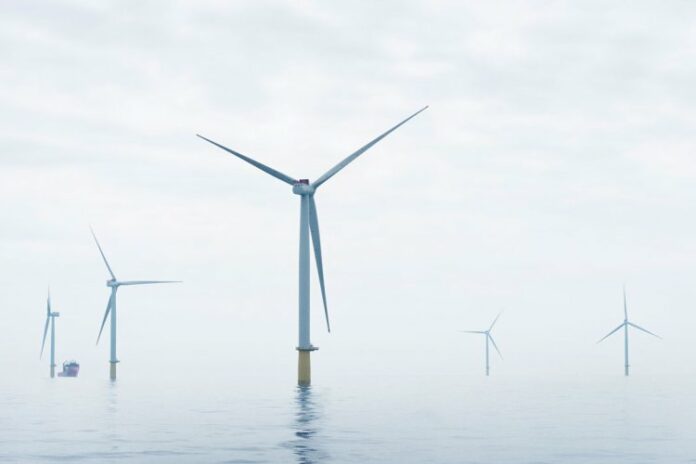
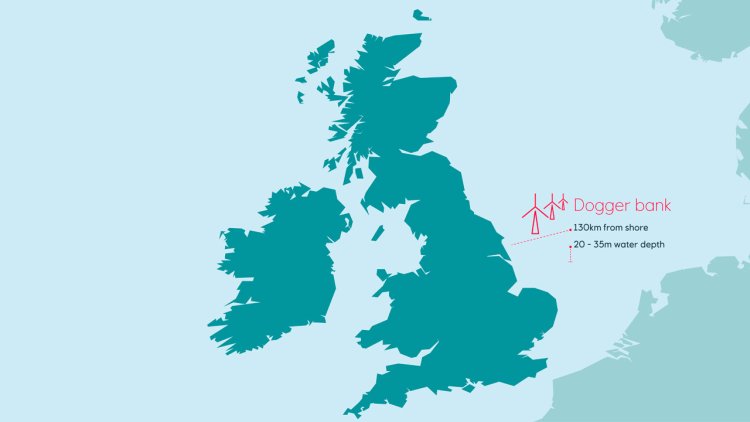
Equinor and partner reach financial close on the third phase of Dogger Bank C

0

The terms achieved are some of the best ever for a construction offshore wind project in the UK.

Pål Eitrheim, Equinor’s executive vice president of Renewables, says:

“Reaching financial close on the third phase of Dogger Bank is a significant milestone as it demonstrates that we are on track with developing what will become the world’s largest offshore wind farm. The significant appetite from lenders underpins the attractiveness of UK offshore wind assets and the confidence in SSE and Equinor as developers. The level of interest achieved reflects the quality of the project and combined with capturing significant value from divestments enables a strong return on equity. As the wind farm’s future operator, we will leverage our offshore capabilities and continue to deliver value for years to come.”

The total senior debt facilities are GBP 2.5 billion, plus ancillary facilities of around GBP 0.4 billion. Dogger Bank C is being project financed with gearing of approximately 70% for the generation assets. Gearing on the transmission facilities is approximately 90% in anticipation of Offshore Electricity Transmission (OFTO) sale post construction.

With the strong interest from lenders, Dogger Bank C was able to secure highly competitive terms, despite continued impact from the coronavirus pandemic on the macroeconomic environment. The final group of lenders, comprising 28 banks and 3 export credit agencies, includes experienced lenders in the sector, many of which are relationship lenders of both SSE and Equinor. The majority of lenders were the same as for Dogger Bank A and B.

Equinor and SSE announced earlier this month that Eni has entered into an agreement to purchase a 20% (10% each) interest in Dogger Bank C. Extended partner alignment will enable further synergies, both in the construction and operations phase of Dogger Bank wind farm.

Eni will enter the asset effective from financial close of project financing. The farm down transaction is expected to close in Q1 2022, subject to regulatory and lenders approvals and customary purchase price adjustments. Once the transaction is complete, the new overall shareholding in Dogger Bank C will be SSE Renewables (40%), Equinor (40%) and Eni (20%).

Eitrheim says:

“Equinor is committed to being a leading company in the energy transition and deliver profitable growth within offshore wind. We are an offshore energy company playing to our strengths. We have achieved a competitive project financing, contributing to a nominal equity return within the interval of 12-16%, including farm downs.”

The Dogger Bank wind farm will enable the UK Government to reach its ambitious renewables targets and will generate renewable electricity for British homes, whilst creating jobs and attracting significant investment to the UK. The project is being built in three 1.2 GW phases, with Dogger Bank C being third in line. Dogger Bank C will require total capital expenditure of around GBP 3 billion, including the capex for the offshore transmission station (OFTO).

Rolls-Royce to supply eight mtu engines for new Svitzer tugs in Brazil

0

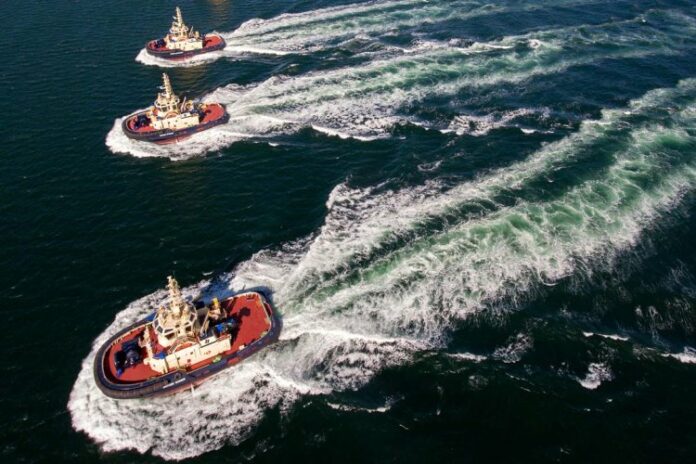
Rolls-Royce is supplying eight 16V 4000 M63 mtu engines to Brazilian shipyard Rio Maguari. 

The engines will be delivered by May 2022. The four new tugs of the Ramparts 2300 series designed by Robert Allan have a bollard pull of 70 tons and are to be used in ports in Brazil. With the new vessels, Svitzer will operate a total of eleven mtu-powered tugs in Brazil. About one in five tugboats in Brazil operates with mtu propulsion.

Daniel Reedtz Cohen, Managing Director at Svitzer Brazil, said:

“The four new tugs are an important addition to our fleet in Brazil and play an important role in our plans for the future. We are pleased to have found the right propulsion partner for this project in Rolls-Royce and its mtu engines.”

Christof von Bank, Director Sales, Marine, Americas at Rolls-Royce business unit Power Systems, said:

“There is no more demanding customer than Svitzer in the tugboat market – we are delighted to have once again convinced Svitzer of our mtu propulsion solutions and to continue our growth trajectory together in Brazil.”

BAE Systems installs propulsion system on board U.S. marine vessel

0

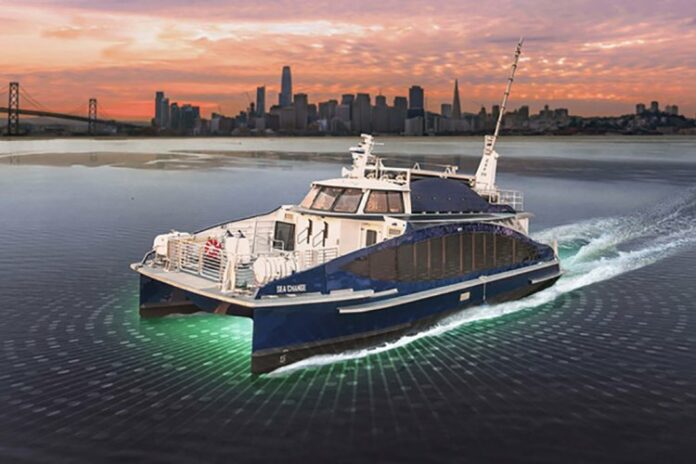
BAE Systems provided its HybriGen® Power and Propulsion solution to Zero Emission Industries for integration on the Sea Change vessel that will operate in the San Francisco Bay Area. 

The Sea Change project is funded and owned by SWITCH Maritime, an impact investment firm building the first fleet of zero-carbon, electric-drive maritime vessels for adoption by existing ship owners and operators.

BAE Systems’ propulsion system interfaces with a hydrogen and fuel cell system provided by Zero Emission Industries and lithium-ion batteries to power the vessel without the need for a traditional combustion engine. The all-electric system eliminates diesel fuel use and reduces engine maintenance to create a clean mode of transportation.

Steve Trichka, vice president and general manager of Power & Propulsion Solutions at BAE Systems, said:

“We are committed to getting our customers to zero emissions with highly reliable and flexible systems that are proven on land and in the water. This historic milestone is the next step on that journey, as we provide San Francisco with an innovative solution that reduces emissions and creates a new clean form of daily transportation for hundreds of commuters.”

BAE Systems worked with the vessel’s builder, All American Marine, and designer, Incat Crowther, after previously teaming with both companies on multiple projects. BAE Systems uses proven controls and components that have passed certification and inspection by the U.S. Coast Guard.

The project is also partially funded by a $3 million grant from the California Air Resources Board (CARB), administered by the Bay Area Air Quality Management District (BAAQMD), that comes from the California Climate Investments initiative, a California statewide program that puts billions of cap-and-trade dollars to work reducing greenhouse gas emissions, strengthening the economy, and improving public health and the environment—particularly in disadvantaged communities.

NAPA and Korean Register partner to facilitate 3D-Model-Based Approval

0

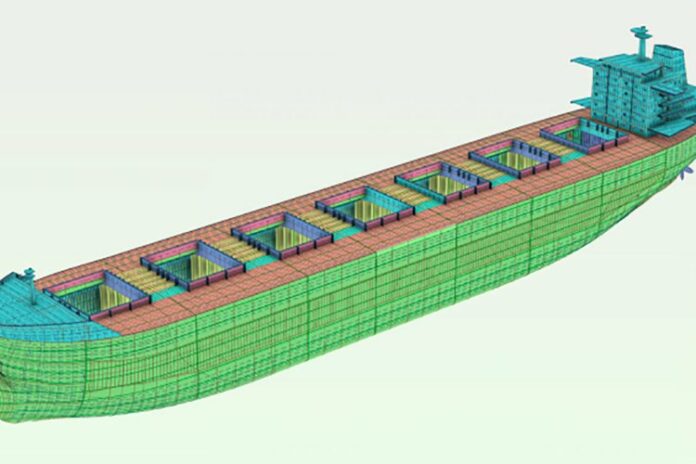
NAPA and class society Korean Register (KR) have completed the development of an interface linking structural design software – NAPA Steel – to KR’s SeaTrust-HullScan rule-checking software.

SeaTrust-HullScan performs structural analysis for vessels to which common structural rules are applied and is widely supported by shipbuilding companies around the world. NAPA Steel is used for designing, viewing, and evaluating 3D designs, enabling designers, engineers, and class societies to rely on a single source of truth.

Many Korean shipyards use SeaTrust-HullScan for class approval after designing with NAPA Steel. Because each software previously used its own file format, users had to enter data into SeaTrust-HullScan based on 2D drawings, even though the data already existed in NAPA Steel.

This live interface now allows SeaTrust-HullScan users to access critical information such as Section, Compartment, and Principle Particulars for Rule Scantling in real-time from NAPA Steel’s 3D model at the click of a button. The developers expect that this will lead to a significant increase in design productivity and quality, as users are now enabled to access accurate information within seconds, as opposed to the previously inputting information over several hours.

3D model-based approval (3D MBA) also opens the door to greater use of digital twins for asset life-cycle management, where real-world data can be compared against a virtual model of a ship, and vice versa, to identify problems and validate performance data.

Daeheon KIM, the Executive Vice President of KR’s R&D division, said:

“This live interface function jointly developed with NAPA can share accurate information from NAPA Steel in seconds, with a single click. This is a dramatic improvement from the previous arrangement which took several hours to input data to SeaTrust-HullScan. We expect that this dramatic improvement will make SeaTrust-HullScan even more popular with users while contributing to productivity and quality of ship design.”

Yong-Sook Lee, Managing Director, NAPA Korea, said:

“NAPA has long pioneered the shift from 2D to 3D in design and approval. This co-development was implemented to realize the technical developments required to give users of KR and NAPA software the real benefits in assessing the scantling of a structure via 3D models – finally making 3D MBA a reality.”

“By continuing to rely on 2D drawings, the sector wastes hundreds of thousands of manhours each year, as well as increases the likelihood of avoidable errors in designs. Thus, 3D model-based approval is an essential part of naval architecture’s future. Ships are three-dimensional objects, and we need to be able to assess them in every plane. This development from the cooperation between KR and NAPA demonstrates that the technology is available and ready to be implemented globally.”

KR and NAPA plan to provide the live interface functions soon and to also expand the interface area through additional joint development, further accelerating the adoption of 3D MBA throughout the maritime industry.

KDI and Aker BP extends collaboration agreement to accelerate data utilization

0

The purpose of the agreement is to provide an enterprise-scale solution for real-time data aggregation and visualization, helping Aker BP to improve performance, safety and optimize well operations.

Building on an existing collaboration that has been ongoing since Aker BP was established, KDI will continue to contribute to accelerating Aker BP’s digitalization process by enabling real-time cloud-based data access, supporting decision-making, and improving efficiency.

Pedro Alcântara, SVP Digital Wells, Kongsberg Digital, says:

“We are happy to further strengthen our collaboration with Aker BP through this extended agreement. We appreciate that Aker BP continues to place their trust in the quality and performance that we offer with SiteCom”.

The SiteCom Enterprise Cloud is a centralized repository for real-time and historical data from drilling and well operations with an advanced platform where subscribers get access to powerful “plug and play” applications. The new agreement is delivered as a Software as a Service (SaaS), allowing Aker BP to scale according to operational requirements.

Tommy Sigmundstad, SVP Drilling & Wells, Aker BP, says:

“It suits us to be the first company to take advantage of SiteCom Enterprise Cloud and the opportunities it enables. This will liberate more data and is another step in the digital transformation of our industry – a transformation where we not only intended to be first but also best.”

The contract was signed between Kongsberg Digital and Aker BP on 2nd November 2021, and the upgraded system integrations are expected to take place within the coming months.

HHI receives AiP for Hi-Float Floating Offshore Wind Turbine Foundation

0

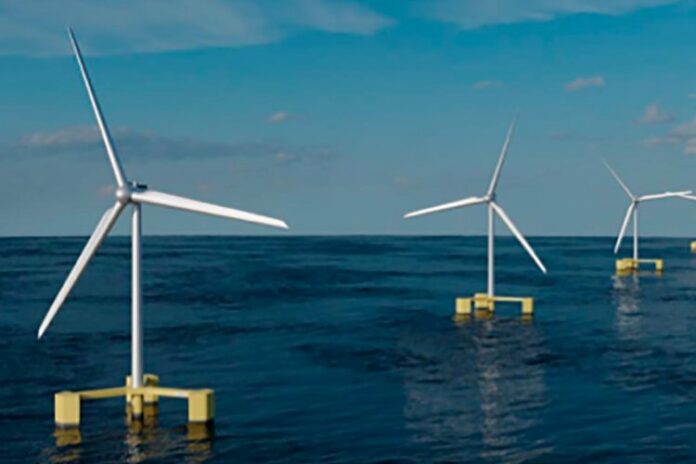
Bureau Veritas (BV), a world leader in testing, inspection, and certification, has delivered an Approval in Principle (AiP) to Hyundai Heavy Industries Co., Ltd (HHI) for its design and development of “Hi-Float”, a floating offshore wind turbine foundation. 

The certificate was delivered to Seon Mook LIM, Executive Vice President of HHI, by Christophe CAPITANT, Chief Country Executive of BV Korea, at a ceremony hosted by HHI Offshore & Industrial Division in Ulsan, Republic of Korea.

Based on HHI’s vast experience with offshore projects, the offshore floating wind substructure “Hi-Float” is designed to support a 10MW wind turbine with proven semi-submersible and mooring technology. A passive ballast system ensures that risk is kept to a minimum during offshore operations. The good performance of Hi-Float in offshore environment was verified through numerical analysis and wave basin model testing.

Seon Mook LIM, Executive Vice President of HHI, said:

“Obtaining the AiP for these innovative floating offshore wind turbine foundations is a meaningful technological milestone that will enable our solutions to contribute to the global decarbonisation effort. In addition, Hi-Float provides higher productivity considering the construction yard infrastructure and efficiency of marine operations. These projects are part of our continuous endeavors and commitment to a sustainable future that is aligned with HHI Group’s ESG vision, “Beyond Blue Forward to Green”. We also promise that HHI Group will encourage new value creation to lead the market, responding to customers’ desire for the achievement of net zero emissions”.

Alex GREGG-SMITH, Executive Vice President for Bureau Veritas Marine & Offshore, commented:

“This announcement demonstrates the importance of this technology, which will enable the development of future clean energy with zero carbon emissions, while managing risks of floating offshore wind farm development with efficient and safe operation of large scale wind turbines. We are also confident that our cooperation on technology development will lead to further successes to both HHI and BV within the developing renewable energy and floating offshore wind technology sectors, which will play a major role in the fight against climate change.”

There has been an increase in the number of floating wind projects emerging worldwide. Market projections show that, as new regional markets emerge, offshore wind growth will continue apace and it is also going to diversify. While to date the majority of offshore wind installations are bottom-fixed, in the coming decades the industry will witness an increase in floating wind capacity. While many technologies are still under development, floating wind has the potential to complement bottom-fixed technologies by enabling feasibility and competitiveness in deep water zones.

Currently, however, the share of floating installations in the offshore wind market remains limited. In 2019, out of Europe’s total offshore wind capacity of 22 GW, the largest regional capacity worldwide, floating wind still only represented 0.2% (45 MW) compared to bottom-fixed installations. 

Since 2016, Asia has represented an increasing share of the offshore wind market. While wind turbine technologies have now had time to mature, the floating foundations that provide the base for floating offshore wind turbines are still going through stages of development. Coupling wind turbines’ aerodynamic loads with floaters’ hydrodynamic ocean loads also represents a complex challenge. To address this, it is not only necessary to apply lessons learned from the offshore wind and oil and gas sectors, but also to work with partners who can provide a holistic view of an floating offshore wind technology and project.

Neptune Energy uses innovative technology for decommissioning work

0

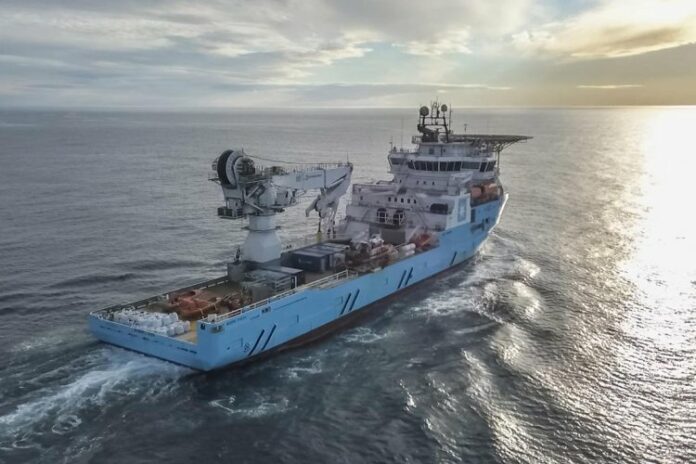
Neptune Energy has announced the award of a decommissioning contract to Maersk Supply Service (MSS) for the Juliet field in the UK Southern North Sea, which will deploy innovative technology to reduce the time and costs associated with the removal of the subsea infrastructure.

Piping spools and umbilicals will be removed using the Utility ROV Services system (UTROV), a remotely-operated tool carrier equipped with multiple attachments for the recovery of subsea equipment, reducing the necessity for multiple vessels and equipment providers to carry out the complex work. 

The UTROV system was previously used for work on the Juliet field in 2019 and will be deployed from the Maersk Forza Subsea Support Vessel. 

Neptune Energy’s UK Managing Director, Alexandra Thomas, said:

“Work on decommissioning Juliet is progressing well and the activities undertaken by MSS will finalise the work on the pipelines and enable us to move forward with plugging and abandonment operations.

“The use of such innovative technologies is enabling operators to reduce the time, costs and environmental impacts associated with such operations, and ensures the safe and efficient removal of decommissioned subsea infrastructure.” 

Maersk Supply Service’s Head of Integrated Solutions, Olivier Trouvé, said:

“We are looking forward to mobilizing our engineering capabilities and specialised assets to provide safe and efficient operations.”  

The Juliet subsea assets were installed in 2013. Production ceased in 2017 and formal cessation of production was approved in December 2018 by the OGA. The Juliet Subsea completion is located in block 47/14b of the UK Southern North Sea. The Juliet facilities comprise two subsea wells tied back to the Pickerill ‘A’ Platform, which is owned and operated by Perenco (PUK). 

The decommissioning work will be carried out in early 2022.

Wärtsilä to supply Cargo Handling System for new LNG bunker barge

0

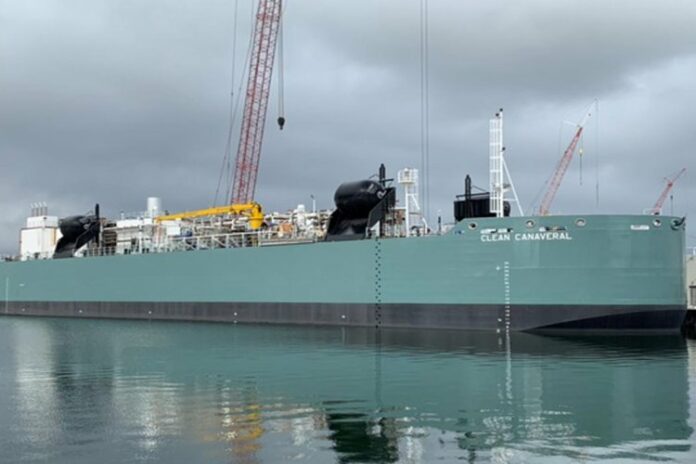
The ship will be built at Fincantieri Bay Shipbuilding (“FBS”) in Wisconsin, USA for Polaris New Energy (PNE). This is the second of two such barges built at the yard for PNE, the same Wärtsilä solution having been ordered for both. The first barge is scheduled for delivery from FBS in December 2021. This latest order with Wärtsilä was placed in November 2021.

In addition to the equipment scope, Wärtsilä will also provide the detailed design for the system as well as all necessary integration requirements. The second barge will be able to load LNG from the major terminals thanks to an elevated manifold feature. Wärtsilä’s leading position as a provider of LNG systems for the marine sector enables the company to offer solid support for owners and operators as the acceptance of LNG fuel continues to grow.

Justin Slater, Director of Sales & Marketing at Fincantieri Bay Shipbuilding, says:

“When delivered, these two barges will be the largest LNG bunker barges in the U.S., which further solidifies Fincantieri Bay Shipbuilding’s reputation as the ‘go-to’ shipyard for LNG bunker vessels. We are very pleased to once again partner with Wärtsilä for this second PNE barge, and we thank them for the excellent way in which the first vessel project was executed.”

Kjell Ove Ulstein, Sales and Marketing Director for Wärtsilä Gas Solutions, says:

“This repeat order comes based on the success of the first vessel’s cargo handling project, and Wärtsilä’s unmatched reputation for high quality LNG system solutions. The North American maritime sector is increasingly turning to LNG fuel as a means to reduce its carbon footprint, and this project represents an important addition to the supply infrastructure. Our depth of experience certainly adds significant support to this trend.” 

The Wärtsilä scope includes four 1350 m3 insulated LNG cargo tanks, the cargo control system, deepwell pumps, a ship-to-shore transfer system, a nitrogen generator, all necessary safety equipment and systems, a custody transfer measurement system, and the gas combustion unit. Deliveries to the yard will commence in November 2022.

The two barges will be capable of delivering fuel to both ocean-going and inland waterway vessels operating on LNG.