0.5 C
New York
Home Blog Page 497

ABS grants Alfa Laval the marine industry’s first AIP for firing boilers with methanol

0

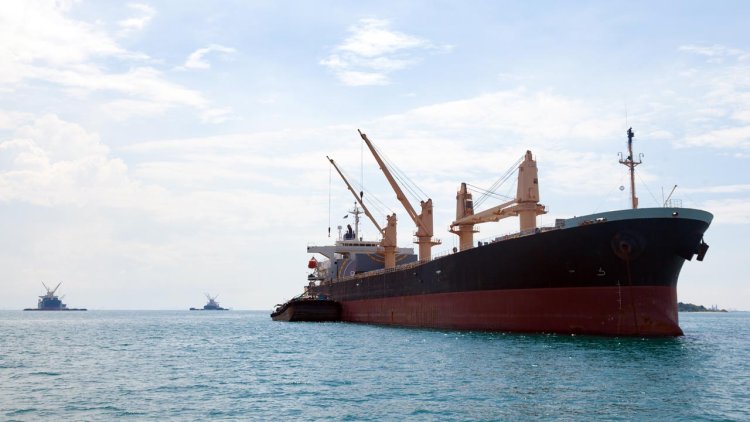
Maritime classification society the American Bureau of Shipping (ABS) has granted Alfa Laval the first marine approval for operating boilers on methanol. 

Methanol, which is liquid at ambient temperatures and carbon-neutral if produced from green sources, is the next likely fuel step in decarbonizing the marine industry. While methanol can be found on a handful of vessels and is planned for many more, its use has so far been limited to main engines. In the future, methanol operations will need to extend to boilers.
 
Lars Skytte Jørgensen, Vice President Technology Development, Energy Systems, Alfa Laval Marine Division, says:

“Alfa Laval is looking at the full scope of methanol’s influence on board. The most natural choice for boilers is to fire them with the vessel’s primary fuel, but methanol’s low-flashpoint nature and the differences in its energy density require a new approach to the burner and fuel supply systems. It was important for us to develop that approach, and we are proud to have it validated by ABS.”

Alfa Laval has been testing boiler operations with methanol since early 2021 at the Alfa Laval Test & Training Centre, where engine combustion tests with methanol are also underway. Tests have been conducted using a pressure-atomizing MultiFlame burner on an Alfa Laval Aalborg OS-TCi boiler, as well as a methanol valve unit (MVU) designed by Alfa Laval to meet the class requirements from ABS.
Initial results, obtained with both pure methanol and a methanol-water mixture, showed as expected that methanol is easy to ignite and results in very low emissions. Focus was therefore placed on securing the same steam output with methanol – despite its lower heat value – as would be the case using oil or gas as fuel. A solution was reached after a few adaptations, ensuing that a boiler of a given size can produce the same amount of steam regardless which fuel is used. This meant that development could move rapidly to optimizing the fuel supply system and working with ABS on the methanol AIP.

Vassilios Kroustallis, ABS Senior Vice President, Global Business Development, said:

“ABS is a leader in maritime sustainability and supporting the industry’s move to alternative fuels like methanol is a high priority. We are proud to partner with Alfa Laval and support this pioneering industry development.”

With the AIP in hand, the next step for Alfa Laval will be a pilot installation on an oceangoing vessel. Results from field testing will be crucial in fine-tuning the methanol boiler solution and arriving at a commercial design.

Meanwhile, Alfa Laval is pursuing wider optimization possibilities that will compensate for methanol’s lower energy density and higher price. One of these is the use of an Alfa Laval Aalborg Micro economizer in conjunction with the OS-TCi. By absorbing waste heat from the boiler’s exhaust gas, the Aalborg Micro would recover valuable energy and reduce boiler-related fuel consumption by roughly 10%.

Jørgensen says:

“Moving to methanol will require many changes on board, especially when it comes to energy management. The Aalborg Micro is a versatile boost in energy efficiency, suitable for the boiler and elsewhere. Together with other Alfa Laval solutions in development, it will help vessels fulfil energy needs while minimizing the methanol they consume.”

Wärtsilä partners with Microsoft to industrialise Marine IoT

0

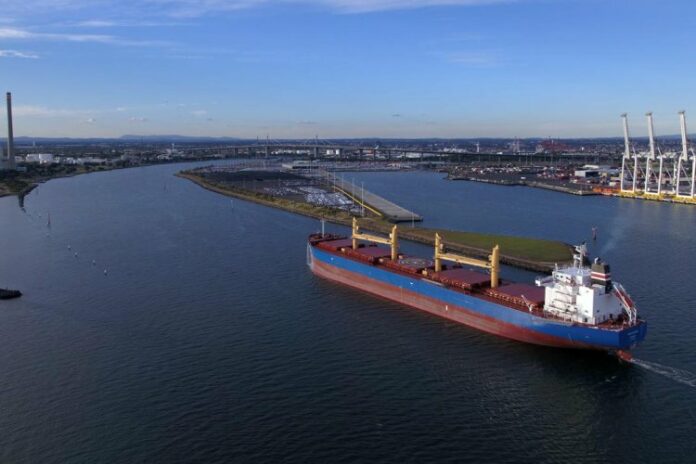
Wärtsilä Voyage has entered into a strategic partnership with Microsoft. Through an integration with Microsoft Azure IoT Edge, the company plans to accelerate its efforts towards industrialising IoT for shipping through a highly scalable cyber-secure platform. The Wärtsilä platform will help the company and its partners deploy digital solutions to the market faster and more easily.

This collaboration signals Wärtsilä Voyage’s strong focus and commitment towards the deployment of streamlined Intelligent Edge technology, an essential enabler to meet the industry’s decarbonisation targets as well as large-scale application of autonomous technology.

Sean Fernback, President, Wärtsilä Voyage and Executive Vice President, Wärtsilä, said:

“The maritime world is entering the digital era where mutualising our investments into common platforms and standards are a prerequisite to successful innovations for a more sustainable and efficient maritime industry. The Wärtsilä common platform will act as an enabler to deploy future technology for autonomy and emissions reduction. We want to focus our efforts on those fields with commonly shared standards that give vessels easier access to innovative solutions.”

Wärtsilä Voyage will also focus on strategic themes spanning industrial remote operation capabilities, state-of-the-art cybersecurity with active monitoring, runtime, and commonly shared data standards to ease collaboration between maritime stakeholders.

Pierre Guillemin, Vice President, Technology Office, Wärtsilä Voyage, said:

“The same way smartphone and some automobile manufacturers are able to update, deploy new features, and improve their systems remotely, the new generation of digital ships needs to constantly adapt, update to keep up with their evolving ecosystems while staying cyber secure at all times.”

Through its secured-by-design remote operation capabilities, the Wärtsilä platform will enable immediate access to the latest solutions onboard. Asset commissioning, diagnostic, updates, and upgrades will be performed remotely — streamlining maintenance, speeding up deployment, and increasing vessel uptime.

Wärtsilä Voyage will also integrate several Microsoft Security and IoT solutions to strengthen the platform with monitoring, security updates and asset management services.

Ralph Haupter, President of Microsoft EMEA, said:

“Wärtsilä Voyage is innovating with solutions that reduce carbon emissions and enhance autonomous shipping. Its vision of the secure and connected vessel will be anchored by Microsoft IoT Edge and Security solutions. We look forward to help drive this significant step in the industry’s transformation.”

With this, Wärtsilä Voyage will accelerate its efforts towards building an open development environment with standardised data formats and APIs that reduce fragmentation, integrate systems to reduce the complexity of digital services lifecycle, and have multi-layered cybersecurity built into every smart ship and maritime ecosystem solution.

Guillemin said:

“There is a need to reinforce and scale what has already been developed in specific segments of the industry, for instance, in the cruise business where sensor systems are already widely integrated. Our 15 years of experience in this segment puts us in an ideal position to lead this effort.” 

Building on Wärtsilä Voyage’s existing IoT experience, the collaboration will further help unlock autonomous capabilities.

Guillemin explained:

“Digital systems essential for vessel autonomy, such as extending existing sensor technologies, require a paradigm shift in processing power and integration to enable the next generation of autonomous vessel systems. Wärtsilä Voyage’s long experience in machine learning, for instance, gained through the development of vessel optimization systems and flagship autonomous projects such as Intellitug, help us in scaling integration capabilities across the maritime industry.”

NORDEN leverages digital tech to provide transparency on carbon emissions

0

NORDEN is to provide all customers with a carbon emissions estimate prior to each and every freight transport, as well as a post-voyage carbon emissions report, as the first step in its strategy to bring down emissions in the supply chain.

Adam Nielsen, head of Logistics & Climate Solutions at NORDEN, said:

“Today many of our customers simply do not know what the environmental impact of shipping their product is. Before we can have a meaningful discussion with clients about reducing emissions in the supply chain, we need to provide complete transparency over emissions data before and after each voyage. We want our customers to start asking questions – such as why one voyage emits more than another, and to start demanding greener shipping solutions.” 

The pre-voyage estimates are based on a sophisticated algorithm developed by NORDEN’s Advanced Analytics team, using data from 58 million voyage simulations. The algorithm analyses voyage description, vessel performance and weather conditions to make a highly accurate prediction of carbon emissions per voyage. 

Post-voyage, all customers will receive an accurate reporting of emitted CO₂ together with cargo size and transported distance. The report can be fed automatically into customers’ data systems for ease of reporting.

Christian Vinther Christensen, Chief Operating Officer, NORDEN, said:

“We have already trialled the system with a select group of clients and have been extremely encouraged by the positive feedback received, with customers happy to see us taking the lead on this.”

Providing emissions transparency is the first of NORDEN’s five climate commitments, announced earlier this month. As well as a long-term commitment to zero-emissions by 2050. 

SAFEEN Feeders bolsters UAE-Coastal Feeder Service Fleet

0

SAFEEN Feeders has announced acquisition of a container ship that will join its feeder service fleet in the Arabian Gulf.

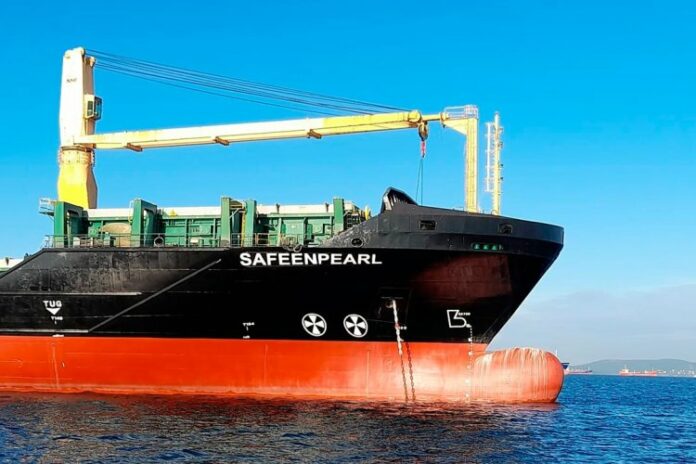
SAFEEN Pearl, formerly called Vega Virgo, will be deployed in its UAE Coastal Service (UCO) providing seamless connection to UAE coastal ports via its hub at Khalifa Port. 

The UAE-Coastal Feeder Service provides shipping customers with a perfect connectivity solution that accelerates last leg deliveries between the Group’s flagship, Khalifa Port, and the coastal ports of Ajman, Umm Al Quwain, Ras Al Khaimah, Sharjah and Fujairah, while supporting movement of goods and optimising local logistic chains.

Additionally, the cost-effective service complements SAFEEN Feeder’s UAE-Indian Sub-Continent Gulf Service (UIG) that benefits exporters operating from India’s West Coast and Pakistan by enabling them to connect their volume to UAE coastal ports. It also provides a hub and spoke network option to major shipping lines calling on Khalifa Port.

Captain Maktoum Al Houqani, Chief Corporate Authority Officer and Acting Head of Maritime Cluster – AD Ports Group, Managing Director – Abu Dhabi Maritime Academy said:

“We welcome the addition of SAFEEN Pearl, which further strengthens our unique feeder proposition in the Arabian Gulf, and also brings a host of enhanced capabilities and much needed capacity into the ranks of our esteemed service fleet.

“As part of the UAE-Coastal Feeder Service, SAFEEN Pearl will greatly improve our ability to provide customers with a flexible, agile, sustainable, and cost-effective solution that meets their demand of a coastal service in the UAE from our hub at Khalifa Port. It will also develop our ability to target customers in the Indian subcontinent and the Arabian Gulf region and connect them with some of the world’s leading shipping liners.”

SAFEEN Pearl has a gross registered tonnage (GRT) of 10,000 tonnes and a nominal handling capacity of 966 TEU. It has a LOA of 139 metres, breadth of 22.6 metres and a draft of 8.8 metres. It was built in South Korea in 2012.

Capt. Abdulla Darwish Al Hayyas, Director of Maritime Transport Affairs at the Ministry of Energy and Infrastructure, said:

“The UAE has consolidated its pioneering position among the best maritime hubs in the world. The UAE’s ports rank among the top 10 internationally in the volume of container handling. The UAE ports handled over 19 million TEUs during 2020. Adding SAFEEN Pearl to AD Ports Group’s feeder service fleet in the Arabian Gulf will enhance the UAE’s position and its seaborne trade and transhipment capabilities. Registering the ship, which carries the UAE flag confirms that it fulfils all the requirements set by international organisations regarding the Flag State in accordance with regulations and procedures that ensure safety, protecting the environment and maritime security. Moreover, the move also supports the UAE’s re-election bid to the International Maritime Organization (IMO) Council under category B, which will take place next month; supporting the UAE’s active role in serving the shipping sector and international trade.”

Launched in 2020, SAFEEN Feeders was created to deliver premium feeder services linking Abu Dhabi to other crucial ports across the UAE, the wider-Gulf region, and the Indian subcontinent. SAFEEN Feeders currently operates its services through a joint commercial agreement with Bengal Tiger Line (BTL), a renowned feeder service operator. The current service network offered by SAFEEN Feeders covers nine key ports across the targeted region and intends to expand its network coverage to Africa, other ports in the Middle East and Asia.

CSA concludes deepwater environmental baseline survey offshore Barbados

0

CSA Ocean Sciences Inc. (CSA), a US-based marine environmental consulting firm, has announced details of a recently completed two-year Environmental Baseline Survey (EBS) in waters offshore southeast Barbados, at depths of up to 2,400 meters. 

Scientists from CSA’s local Trinidad and Tobago office conducted a series of EBSs in the Carlisle Bay Block and Bimshire Block during the wet and dry season in 2019 and 2021, respectively, to assess temporal variability of environmental parameters.

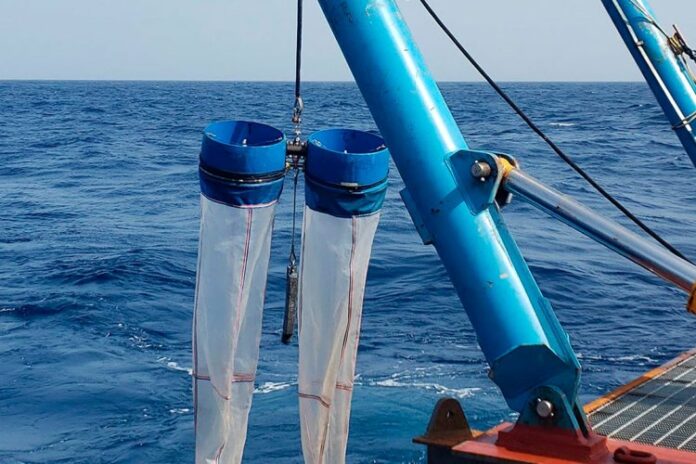
The survey campaign, designed to characterize the existing physical, chemical, and biological marine resources within a study area of approximately 5,000 km2 included the collection of hydrographic profile data to depths of 2,000 meters; sediment and water samples; air quality data; characterization of plankton; and high-definition imagery to help document the existing condition of the local seabed environment.

CSA deployed two “l”-shaped moorings within the study area (one in each block) to measure baseline current data within the water column at depths of approximately 2,000 meters. The moorings incorporated two 55-kHz Nortek Signature 55 Acoustic Doppler Current Profilers (ADCPs), flotation buoys, dual acoustic releases, and weights. The ADCPs, deployed from November 2019 through April 2021, successfully captured hydroacoustic data from depths not previously achieved in the region.

Ms. Candice Leung Chee, CEO of CSA Ocean Sciences (Trinidad) Ltd., said:

“Despite the operational challenges presented by the COVID-19 pandemic, CSA’s field team and scientists were able to plan, execute, and demobilize a series of multidisciplinary Environmental Baseline Surveys on time and on budget. This achievement is not only representative of the local CSA team’s resolution and professionalism, but was also made possible thanks to the our extensive pool of deepwater sampling and surveying equipment, based in Trinidad, available for rapid mobilization in the region and deployment at record depths.”

ExxonMobil plans for net zero emissions in Permian Basin operations by 2030

0

ExxonMobil has said it plans to achieve net zero greenhouse gas emissions from operated assets in the U.S. Permian Basin by 2030, accelerating and expanding its emission-reduction plans for unconventional operations in New Mexico and Texas. The plans are part of the corporate-wide effort to reduce Upstream greenhouse gas emissions intensity by 40-50% by 2030, compared to 2016 levels.

Darren Woods, chairman and chief executive officer, said:

“Our groundbreaking plans to reach net zero for Permian Basin operations further demonstrate our commitment and support of society’s ambitions for a lower-emissions future. We have plans to reduce greenhouse gas emissions intensity across our businesses by deploying the capabilities and technical strengths that are foundational to ExxonMobil.”

The greenhouse gas emission-reduction efforts in the Permian will be supported by electrifying operations, continuing investments in methane mitigation and detection technology, eliminating routine flaring, upgrading equipment, and employing emissions offset technology, which may include nature-based solutions.

The company plans to electrify its operations with low-carbon power, which may include wind, solar, hydrogen, natural gas with carbon capture and storage, or other emerging technologies. ExxonMobil plans to expand its methane detection programs utilizing satellite surveillance and a network of ground-based sensors for continuous monitoring, and aerial flyovers that identify leaks for rapid repairs.

By year-end 2021, ExxonMobil anticipates reduced flaring volumes across its Permian Basin operations by more than 75% compared to 2019. The company plans to eliminate all routine flaring in the Permian by year-end 2022, in support of the World Bank’s Zero Routine Flaring initiative. The company is also securing alternative natural gas delivery points across the basin to minimize non-routine flaring.

Bart Cahir, senior vice president of unconventional at ExxonMobil, said:
“Our goal of net zero for Scope 1 and Scope 2 greenhouse gas emissions is one of the most ambitious and wide-reaching in the Permian Basin. Throughout the value chain, our people are working hard to help reduce the greenhouse gas emissions associated with the products that enable modern life.” 

ExxonMobil is on track to exceed its 2025 greenhouse gas emission-reduction plans announced in December 2020. Year-end 2021 results are expected to show a reduction of 15-20% in greenhouse gas intensity from Upstream operations compared to 2016 levels, four years ahead of schedule. This is supported by an anticipated reduction of 40-50% in methane intensity and 35-45% in flaring intensity compared to 2016.

Plans for the Permian Basin further support ExxonMobil’s corporate methane reduction objectives and are aligned with the U.S. and European Union-led Global Methane Pledge to reduce methane emissions by 30% by 2030.

To validate its emissions-reduction efforts, ExxonMobil is working with an independent validator, non-profit MIQ through a pilot program initially focused on Poker Lake facilities in New Mexico. Through the program, natural gas will be certified based on a series of factors including methane intensity and will be marketed to customers early next year. The certification process could be expanded to other production areas based on demand.

ExxonMobil’s 2030 net zero goal for the Permian Basin will require the support of well-designed policies and advances in technology that increase availability and reliability of carbon-neutral power in the region, including wind and solar. Through long-term purchase contracts, the company supports the development of wind and solar power generation.

At the end of the third quarter 2021, ExxonMobil reported producing an average of 500,000 barrels of oil equivalent per day from its unconventional assets in the Permian Basin, accounting for more than 40% of the company’s U.S. net production. As production increases in the Permian, greenhouse gas emissions are expected to be mitigated accordingly. Costs associated with lower-emissions technology are included in the corporate plan through 2027, which was announced earlier this month.

Boskalis consortium secures research grant to advance emission-free shipping

0

A broader maritime consortium in which Boskalis is participant has been awarded a EUR 24 million grant to conduct research into accelerating the use of methanol as a low-carbon fuel within the shipping industry. 

Methanol can enable significant reductions in CO2 emissions compared to traditional fuels and is viewed within the international maritime sector as one of the most feasible ‘clean’ fuels for large-scale adoption by the industry.

The program is entitled Methanol as an Energy Step Towards Zero-Emission Dutch Shipping and sponsored by the Dutch Government’s Rijksdienst voor Ondernemend Nederland (Netherlands Enterprise Agency). The research project aims to develop clean energy technology with a high degree of flexibility and broad applications within the shipping industry, from yacht building to offshore work ships and high-powered dredgers. The total research budget amounts to approximately EUR 38 million including a contribution from Boskalis. The consortium, which includes ship owners, yards, suppliers of specialist maritime equipment and knowledge institutions, will retrofit six different vessel types to test the viability of methanol fuel systems.

Peter Berdowski, CEO of Boskalis, said:

“Alternative fuel types are the most significant driver for developing a more sustainable maritime industry and we continue to be at the forefront of initiatives exploring the emission-reduction potential presented by methanol and other clean technologies. This research program looking into the use of methanol as a low-carbon fuel is another important step along the road to realizing net-zero objective.”

‎Boskalis is already part of a joint industry project known as the Green Maritime Methanol Consortium which has previously investigated the feasibility of methanol as a sustainable fuel for the maritime sector. A 2020 study supported by TKI Maritiem and the Dutch Ministry of Economic Affairs and Climate Policy demonstrated that the use of methanol is not yet economically viable for retrofit in Boskalis’ vessels, however further research is currently being carried out with regard to its suitability for new-build vessels.

Svitzer introduces TRAnsverse Tug

0

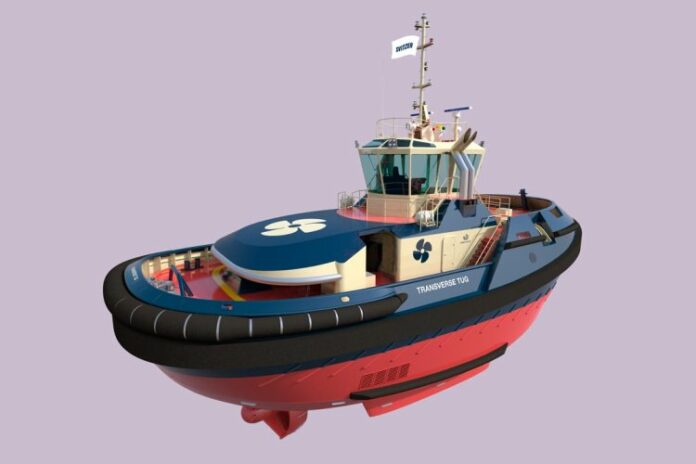
The innovative TRAnsverse Tug is able to generate higher steering forces than most designs of similar dimensions and comes with an innovative staple design and unique ability to push, pull and manoeuvre in all directions – all neatly wrapped in a smaller and nimbler tug boat.

With omni direction hull form and propulsion, steering forces over the full range of speeds & manoeuvres, and a unique towing arrangement, the compact and more fuel-efficient TRAnsverse Tug is scalable and suitable for all types of harbour and terminal towage operations.

The TRAnsverse Tug will be fitted with the Svitzer Catcher and other equipment to automate operational elements. It brings together the best of Svitzer innovations and looking ahead, it will be the ground design for the recently announced carbon neutral methanol fuel cell tug that Svitzer and Maersk are developing together with Robert Allan Ltd.

Commenting on the announcement of the TRAnsverse Tug, Svitzer COO Ingrid Uppelschoten Snelderwaard said:

“This tug is a game changer. Our customers expect us to deliver flexible and environmentally friendly towage services at a competitive price and it is our passion to think out of the box and deliver innovative solutions to meet these expectations.”

Together with a core Svitzer team, Thomas Bangslund, Svitzer’s Head of Technical Innovation, has led the invention of the new tug design that after a series of successful tank tests and simulations is now ready to be built by Sanmar with Robert Allan Ltd as the designer.

Thomas Bangslund said:

“It is highly rewarding to see this multipurpose and very versatile tug become a reality. It started as a wish to improve efficiency in our operations and is now materialising as a powerful and cost-efficient tug with the potential to reduce both operational cost and CO2 emissions, while improving the safety margins in operations. The design combines the best of our innovative powers and I truly believe that this kind of customer focused innovation is what the towage industry needs to stay relevant.”

In collaboration with Robert Allan, the first-ever Svitzer TRAnsverse Tug will be built for harbour towage in Svitzer Europe, with expected delivery in Q3 2023.

Commenting on the TRAnsverse Tug, James R. Hyslop, Manager, Project Development, Robert Allan Ltd., said:

“Integrating all these technologies into one vessel has never been done before and it was a real challenge to do it in a way that is safe, functional, and economic. It was only after an exhaustive tank testing program at HSVA Hamburg, with valuable input from Svitzer’s Masters, that the final layout was determined. Our design team is looking forward to the opportunities that will come with the construction and testing of this tug, as it paves the way for future newbuilds in the Svitzer fleet.”

Equinor invests in battery storage company

0

Equinor has signed an agreement with Noriker Power Limited, a leading battery storage developer in the United Kingdom focusing on the engineering and project development of utility scale storage and stability services. The agreement includes the acquisition of a 45% stake in Noriker, with an option to acquire the full company at a later stage.

In addition to the equity investment, Equinor and Noriker have agreed on a strategic cooperation which will grant Equinor the opportunity to directly participate in projects being matured by Noriker.

Equinor sees a solid opportunity to create profitable businesses by deploying batteries and storage assets to satisfy the growing need to stabilise power markets. In addition, Equinor could complement its existing renewables portfolio in the UK by deploying batteries in proximity of its offshore wind assets to enhance returns.

This would grant the ability to store electricity when the prices are low and sell it to the grid at later stages when prices are higher, improving returns from its renewable projects.

Olav Kolbeinstveit, senior vice president for power and markets within Renewables at Equinor, says:

“Battery storage is going to be a key part of the energy transition as the world increases its share of intermittent renewable power. Large-scale batteries can be charged when there is good access to low-cost electricity and discharged when supply is limited. This will enable businesses to establish profitable services around the need to balance markets, stabilise the electricity grid and improve security of supply. The UK’s high degree of renewables make the country an interesting investment case for a battery storage business.”

Noriker Power, headquartered in Gloucester, has developed and constructed over 250 MW of battery storage across the United Kingdom and has a near term pipeline in excess of 500 MW in battery storage, hybrid energy and stability service projects. Noriker will use the investment from Equinor to enhance its project development platform, including engineering development, control systems innovation and algorithmic optimisation.

Bureau Veritas and MolyWorks partner on green solutions for maritime

0

Bureau Veritas Marine & Offshore Singapore (BV M&O) and MolyWorks Materials Corporation have signed a Memorandum of Understanding (MoU) aimed at promoting additive manufacturing through several initiatives that will support innovation, decarbonisation and sustainability in the maritime, offshore, and renewable energy sectors.

The signing ceremony took place at the Singapore BV M&O Office and was attended by representatives from both companies.

The MoU will see both parties reinforce their collaborative efforts to promote sustainable business opportunities, including maritime innovation, pilot trials and other initiatives.

This announcement follows the recent opening by BV of a Singapore-based Centre of Excellence – named innovation, Centre for Alternative and Renewable Energy (iCARE) – by which BV aims to increase the collaborative efforts between the global networks and continue to empower organizations to implement, measure and achieve their sustainability objectives.

With its R&D and production metal powder manufacturing and recycling facility in Singapore, MolyWorks aims to support Singapore and local enterprises in reducing their carbon footprint through material reuse and recycling. The foundry offers a wide range of metal powders, including custom alloys/small batches for R&D and high volume for large-scale industrial production.

David Barrow, Vice President, Bureau Veritas Marine & Offshore, South Asia Zone, said:

“Bureau Veritas sees this partnership directly supporting both organisations and the industry as a whole. Both organisations are clearly aligned in their vision and strategy for success in this area. This is a great example of industry collaboration to ensure that we can achieve industry ambitions relating to innovation and green agendas.”

Phil Ward, CEO, MolyWorks Materials Corporation, said:

“MolyWorks is delighted and honoured to formally partner and collaborate with BV Singapore to jointly promote additive manufacturing and other emerging business opportunities to the maritime and marine companies, tapping into MolyWorks’ metal powder production and recycling capabilities and BV’s green services.”

Following this MoU signing ceremony, there will be further discussion between the two companies on potential future projects.