4.2 C
New York
Home Blog Page 492

Mubadala and Fincantieri will embark on collaborations to develop advanced technologies

0

Mubadala Investment Company PJSC (Mubadala) and Fincantieri have signed a Memorandum of Understanding (MoU) to start potential collaborations in the field of advanced technologies and services in the naval, marine and industrial sectors.

The agreement was signed by Abdulla Abdul Aziz Al Shamsi, Head of UAE New Initiatives at Mubadala, and Giuseppe Giordo, General Manager of Fincantieri Naval Vessels Division.

The two groups will work together through specialized subsidiaries to jointly advance a number of leading innovation and industrial projects. Moreover, studies to identify other areas of collaboration, such as the development of integrated industrial services for waste transformation platforms for small and medium commercial and industrial facilities, will be carried out in line with the circular economy. Mubadala, through its subsidiary Sanad, will also offer after sales services to Fincantieri products as well as other original equipment manufacturer products.

Commenting on the importance of this collaboration, Abdulla Abdul Aziz Al Shamsi, said:

“As a responsible long term investor, and an active player in the global energy transition sector, Mubadala has long pioneered and championed a balanced energy mix through a holistic and diversified energy portfolio in the UAE and abroad. Through this agreement, we are committed to advancing the role innovation in energy technologies can play to meet future energy demand with our partners at Fincantieri, and other technology developers, operating companies and like-minded organizations”.

Giuseppe Bono, CEO of Fincantieri, commented:

“This is a first step to strengthen our presence in the UAE, and is a demonstration of the great versatility of our Group, which today is able to offer unique management skills and technologies in the Naval, Maritime and Industrial sectors. Thanks to this agreement we will leverage our mutual know-how and investment capabilities to identify projects of common interest in the UAE and contributing to the development of the country’s advanced fields of technologies”.

DEME secures inter-array cable contract for Dogger Bank C wind farm in the UK

0

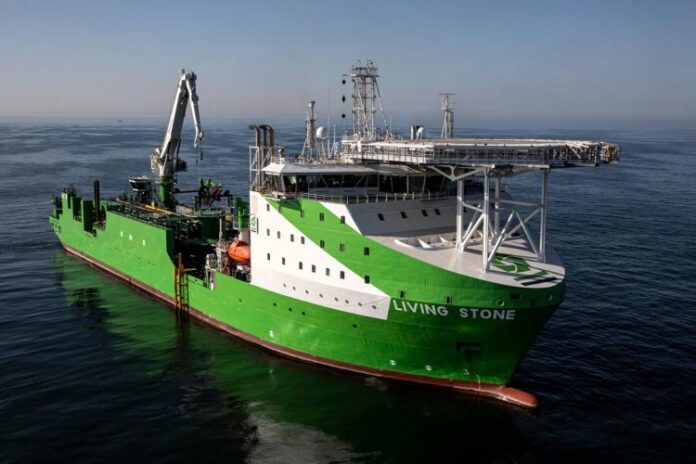
Earlier today, DEME Offshore, subsidiary of the DEME Group, announced it has been awarded a sizable (1) EPCI contract for the inter-array cables at the Dogger Bank C wind farm in the UK.  Dogger Bank C is the third phase of the 3.6 GW Dogger Bank Wind Farm which currently is the world’s largest offshore wind farm under development. Today’s announcement follows the earlier awarding of Dogger bank A and B inter-array cable contract in early 2021.

The scope of this new EPCI agreement includes the engineering, procurement, construction and installation of the subsea cables for the 1.2 GW phase of the wind farm.  DEME Offshore will supply, install and protect approximately 250 km of 66 kV inter-array cables and all related accessories.

Dogger Bank Wind Farm is located more than 130km off the North East coast of England and is currently being delivered by joint venture partners SSE Renewables, Equinor and Eni. The wind farm is being developed in three 1.2 GW phases, A, B and C. Upon completion, Dogger Bank will be the world’s largest offshore wind farm and will generate energy to power up to 6 million homes every year.

Production of the cable for Dogger Bank C is set to start in 2023.  The cables will be installed in 2025 and DEME will once again be deploying its DP3 cable installation vessel ‘Living Stone’. Living Stone boasts an inhouse designed dual-lane system, consisting of two cable highways – this allows cable laying using one lane whilst the next cable can be simultaneously prepared and have the cable protection system (CPS) installed on the other lane. As previously demonstrated, this significantly reduces the time needed for preparing the cables, minimises manual handling, increases the vessel’s workability and ultimately, improves production rates.

Bart De Poorter, General Manager of DEME Offshore comments:

“After securing the Dogger Bank A and B inter-array cable contract earlier this year, we are proud to now also confirm the inter-array cable contract for the Dogger Bank C wind farm. This contract not only demonstrates the unrivalled cable-laying capabilities by our DEME Offshore team, it is also further testament to the stellar reputation of our DP3 cable installation vessel ‘Living Stone’.”

Simon Bailey, Commercial Director for Dogger Bank Wind Farm says:

“We are delighted to award the contract for the supply, installation and protection of the inter-array cables at Dogger Bank C wind farm to DEME Offshore, extending our existing relationship with DEME on phases A and B to the third phase of this project. This will ensure continued synergies across the construction activities of the offshore wind farm, including the deployment of DEME’s state-of-the-art cable installation vessel ‘Living Stone’ which will install the almost 250 km of 66 kV inter-array cables required to connect Dogger Bank C’s offshore turbines.”

Dogger Bank A and B is a joint venture between SSE Renewables (40%), Equinor (40%) and Eni (20%). On 2 November 2021 SSE and Equinor announced the sell down of a combined 20% share in Dogger Bank C to Eni (10% each). The transaction is expected to close in Q1 2022, subject to regulatory and lenders approvals and customary purchase price adjustments. Eni will enter the asset effective from completion of the sell down transaction. Once the transaction is complete, the new overall shareholding in Dogger Bank C will be SSE Renewables (40%), Equinor (40%) and Eni (20%).


NASA-NOAA tech will aid marine oil spill response

0

Just off the coast of Santa Barbara, California, thousands of gallons of oil seep through cracks in the seafloor and rise to the surface each day. But this isn’t a disaster zone: It’s one of the largest naturally occurring oil seeps in the world and is believed to have been active for thousands of years.

The reliability of these seeps makes the area an important natural laboratory for scientists, including those with the Marine Oil Spill Thickness (MOST) project, a collaboration between NASA and the National Oceanic and Atmospheric Administration (NOAA) to generate operational automated oil spill detection, oil extent geospatial mapping analytics, and oil thickness characterization applications.

The MOST team is working to develop a way for NOAA—the lead federal agency for detecting and tracking coastal oil spills—to use remote sensing data to determine not just where oil is, but where the thickest parts are, one of the critical missing pieces to direct response and remediation activities. The team recently concluded a fall field campaign in Santa Barbara.

Cathleen Jones, MOST co-investigator at NASA’s Jet Propulsion Laboratory in Southern California, said:

“We’re using a radar instrument called UAVSAR to characterize the thickness of the oil within an oil slick. This thicker oil stays in the environment longer and damages marine life more than thin oil. And if you know where it is, you can direct responders to those problematic areas.”

NASA’s UAVSAR, or Uninhabited Aerial Vehicle Synthetic Aperture Radar, attaches to the fuselage of an airplane that collects a roughly 12-mile-wide (19-kilometer-wide) image of an area.

But SAR images are unlike those acquired from other sensors. The instrument sends radar pulses down to the surface of the ocean, and the signals that bounce back are used to detect roughness, caused by waves, at the ocean’s surface. When oil is present, it dampens the waves, creating areas of smoother water. These smooth, oily areas appear darker than the surrounding clean water in the SAR imagery—the thicker the oil, the darker the area will appear.

The airborne observations must then be validated, meaning the scientists have to go to the same area on a boat to measure the thickness of the oil by hand.

Ben Holt, also a JPL co-investigator for MOST, said:

“We put the sampler, which is like a tube that’s open on both ends, in the water and let it sit there for a moment. And then when you close off the tube, a small layer of oil and water is collected. After the oil layer settles, you can measure the oil layer thickness and compare that with the UAVSAR observations to see how closely they match up.”

As another key layer of validation, the ship deploys a drone carrying an optical sensor, which is capable of observing the slick and measuring its thickness over a broader area than can be observed from the ship.

Initially, UAVSAR seemed an unlikely candidate to track or characterize oil. It was developed to measure changes to Earth’s surface—for instance, after an earthquake or volcanic eruption. But during the 2010 Deepwater Horizon oil spill in the Gulf of Mexico, Elijah Ramsey, a scientist with the U.S. Geological Survey, reached out to Jones about trying to use the instrument to identify the oil coming ashore in Louisiana.

Jones said:

“The indications were that it wouldn’t work because the instrument uses too long of a wavelength for that purpose. But we said, “Let’s try it anyway.'”

Jones said:

“It was just incredible what you could see with UAVSAR because it is so much more sensitive than satellite-based instruments. UAVSAR is more sensitive to low returns from oil covered areas than typical satellite SAR instruments. So we were able to identify the oil and to calculate the oil concentrations present.”

Their findings were a proof of concept and were published in 2012. In subsequent years, the feasibility of scaling this innovation for further risk analysis and assessment has been examined.

In 2018, Frank Monaldo, a scientist at the University of Maryland who had worked with NOAA for many years, partnered with Jones, Holt, and a team from NOAA, the U.S. Coast Guard, and the private sector, in addition to researchers in Canada and Norway, to formulate the MOST proposal. In 2019, NASA’s Disasters program selected this concept for implementation to reduce disaster risk and strengthen resilience, and the four-year MOST project was launched.
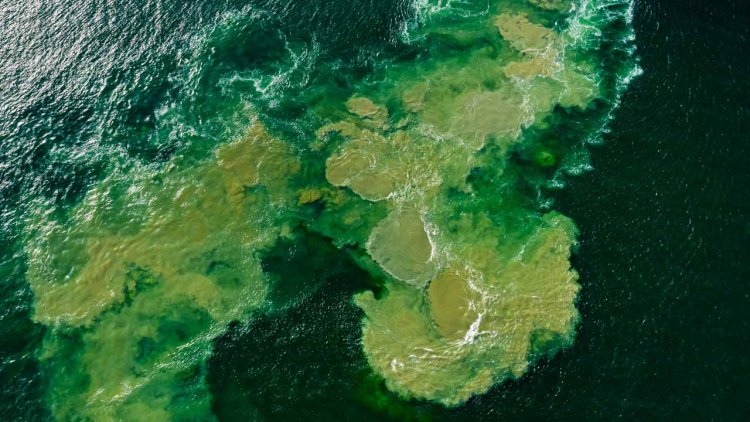
As the MOST team was preparing to head out for their fall field campaign, scheduled to kick off the first Monday in October, authorities were responding to reports of an oil spill off the coast of Huntington Beach, California—just 130 miles (209 kilometers) south of the Santa Barbara field campaign location.

Several members of the MOST team quickly became involved with providing data on the spill. What was supposed to have been a practice campaign in controlled circumstances quickly became a real-world test of UAVSAR’s utility during an actual oil spill emergency.

She said:

“It was really different from doing a practice run because people were overwhelmed running the response,” Jones said. “But when NOAA got the UAVSAR data, they used it to delineate oil, and then they released a Marine Pollution Surveillance Report based on it. It was the first time that had ever been done using data from an airborne instrument.” 

While UAVSAR proved valuable in this situation, the deployment couldn’t replace the field campaign for scientific purposes, because they were unable to take measurements by boat. 

Holt said:

“We really had no in-situ measurements for comparison. The real value was the efforts by Cathleen and other members of the UAVSAR team to get the UAVSAR data processed and uploaded and then utilized by NOAA.”

The fall field campaign took place several weeks later in Santa Barbara.

Although UAVSAR’s capabilities in oil spill thickness detection are useful, flying an airplane over every oil slick isn’t practical. So once the data from the spring and fall field campaigns is validated, it’ll be used to train algorithms to calculate oil thickness from SAR data automatically.

UAVSAR is a prototype for an upcoming satellite mission called NASA-ISRO Synthetic Aperture Radar, or NISAR, which is a partnership between NASA and the Indian Space Research Organisation (ISRO). If all goes according to plan, the methods and algorithms developed during the MOST project can be applied to data from the new mission, as well.

Jones said:

“The idea here is that in two years or so when the MOST project is over, we’ll have a prototype system for detecting oil thickness that NOAA can use and distribute during oil spill response. With NASA partnering with NOAA, we can transfer this information to those who can use it practically.”

ZeroNorth launches industry-first CII analytics and optimisation solution

0

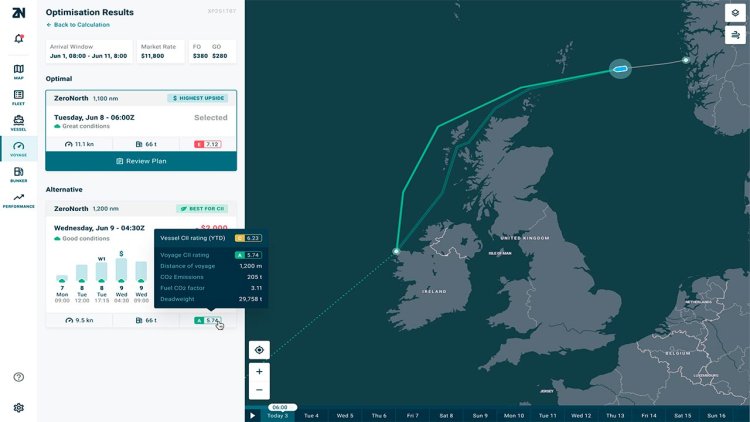
Maritime technology company ZeroNorth has today announced the launch of its interconnected Carbon Intensity Indicator (CII) analysis and optimisation solution within Optimise. 

The new functionality’s analytics tools will enable users to access real-time monitoring of CII-related performance and simulate a vessel’s future CII rating. Meanwhile, the optimisation solution will enable operators to access recommended voyage routing options to improve or maintain a vessel’s CII rating. 

Because the functionality is integrated with real-time weather route optimisation and voyage optimisation, CII recommendations will be made alongside options that reduce emissions and improve revenue, ensuring that owners and operators maximise their competitive advantage. 

The service will be the most comprehensive CII offering on the market to date. It will consider necessary vessel factors, such as type and deadweight tonnage, to provide a CII rating for the year-to-date, as well as year-by-year performance, monitoring and alerts for when a vessel is at risk of becoming non-compliant. 

By combining in-depth analysis of all the factors affecting voyage and vessel performance with sophisticated algorithms and human expertise, owners and operators will be provided with an informed decision-making platform to either sustain or improve their vessels’ CII ratings whilst maintaining a focus on commercial performance. The data will also be available for owners and operators to distribute via an API or in file format.

The offering has been developed in line with the International Maritime Organization’s (IMO) rules on Carbon Intensity Indicator (CII) reporting. Introduced by the IMO at its 76th Marine Environment Protection Committee (MEP76), CII will be implemented in 2023 to support the IMO’s longer-term objective of reducing the carbon intensity of international shipping by 40% by 2030, compared to 2008 levels. 

A vessel’s CII rating will be derived from the Annual Efficiency Ratio (AER), which measures the carbon emissions of a ship’s operations over the course of a year and applies to vessels at 5000GT and above. The ranking is measured on an A – E scale, with the most operationally efficient vessels receiving an A rating. Ship owners and operators will be required to record their vessel data via a vessel’s Ship Energy Efficiency Management Plan (SEEMP). In the case that a vessel is rated D or E, a plan of action must be submitted on SEEMP outlining how the rating will be improved. 

Over time, ZeroNorth will iterate and update its CII analysis and optimisation solution proactively and in line with any amendments made by the IMO to CII legislation, to ensure the calculation continues to be accurate and considers all of the baseline factors that influence CII ratings. 

Søren Christian Meyer, CEO, ZeroNorth, said:

“As shipping becomes increasingly influenced by charterers, shippers, institutions and consumers seeking to be more sustainable and meet decarbonisation targets, vessels with a low CII rating will cease to become commercially attractive. Ship owners and operators must therefore look to sustain or improve operational efficiency or risk their commerciality. 

“Through our new CII analysis and optimisation offering, we can help support owners and operators with managing the transition and enable them to proactively implement plans to help them improve revenue and reduce their emissions, so it’s good for both profit and the planet. Our offering is unique in its depth of analysis and comprehensive level of integration.”

Pelle Sommansson, CPO, ZeroNorth, said:

“We are proud to announce the launch of our new CII analysis and optimisation service, which will enable our users to intelligently route against USD, emissions, and now CII objectives. With the rating thresholds set to become increasingly stringent towards 2030, doing nothing is not an option if owners and operators want their vessels to remain commercially viable. By using ZeroNorth, you are preparing for a profitable and sustainable future.”

ABS AIP for Anglo-Eastern’s ammonia-fueled Newcastlemax

0

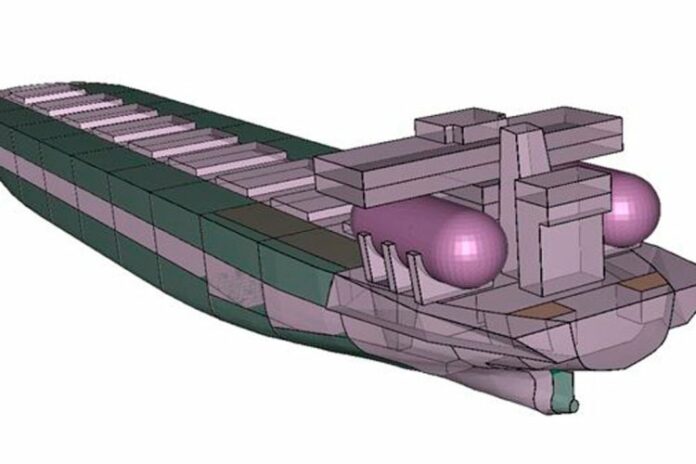
The dual-fuel vessel design sacrifices no cargo space by using deck-mounted IMO Type C tanks under the accommodation block on each side of the vessel. AETS has designed the system for retrofit to existing vessels as well as ammonia-fueled and ammonia-ready newbuildings.

Christopher J. Wiernicki, ABS Chairman, President and CEO, said:

“Ammonia is a fuel with high potential as a solution for shipping companies looking to decarbonize their operations. ABS is committed to supporting its safe adoption by the industry and is working with forward-thinking companies such as AETS to develop the systems the industry will require. We are proud to be able to use this industry-leading insight to support their innovative approach.”

Bjorn Hojgaard, CEO of Anglo-Eastern Univan Group, said:

“The transition to alternative fuels is an unavoidable part of our industry’s journey towards net-zero propulsion technologies. Having in place advanced alternative ship designs of equivalent safety as conventional vessels will facilitate the rate of adaptation. We are proud to be a first mover at this critical juncture of decarbonizing international shipping.”

Arunava Sengupta, Managing Director of AETS, said:

“We are delighted to partner with leading classification societies like ABS on such novel projects as our zero-emission, zero-cargo-volume-loss vessel design, the screening and validation of which is an important step towards our decarbonization efforts.”

As the potential of ammonia to contribute to shipping’s decarbonization objectives is increasingly recognized, ABS has moved to support its adoption with publication of industry-leading guidance for the design and construction of ammonia-fueled vessels.

MHI and e5 Lab to provide ROBOSHIP design for biomass fuel carrier

0

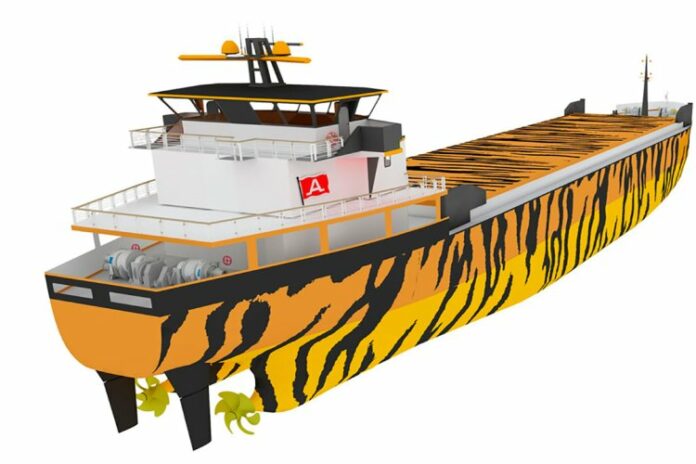
Tokyo-based firm e5 Lab Inc. and Mitsubishi Shipbuilding Co., Ltd., a part of Mitsubishi Heavy Industries (MHI) Group, have agreed to provide the design for “ROBOSHIP,” a standard hybrid electric propulsion vessel the two companies are seeking to promote as a vision for the future of ships, for a 499-tonne biomass fuel carrier being built by Honda Heavy Industries Co., Ltd.

The widespread adoption of the futuristic ROBOSHIP has the potential to reduce CO2 emissions in the coastal vessel industry, and lessen the workload for crews.

ROBOSHIP utilizes a standard system package comprising the hardware for electric propulsion, including propellers, motors, switchboards, storage batteries, and generators, together with the software to safely and efficiently control this equipment. The system is able to handle a cargo ship of up to around 749 tonnes. The ship foregoes conventional diesel engines that require fossil fuel in favor of a hybrid system of large-capacity storage batteries and generators to drive the propulsion motors. 

The adoption of Mitsubishi Shipbuilding’s high-performance twin skeg ship design lowers propulsion horsepower by more than 20%, reducing CO2 emissions during cruising, and allowing the ship to navigate completely CO2-free during port operations such as freight loading and unloading, pier docking and undocking, and entering or leaving port. The generators are capable of switching between eco-friendly fuels including liquefied natural gas (LNG), hydrogen, ammonia, biofuel, and synthetic fuel, allowing all operations, including navigation, to be CO2-free.

Additional benefits of the system include reduced noise and vibration for greater comfort inside the vessel, less need for troublesome diesel engine maintenance by highly experienced and knowledgeable engineers, and improved steering capabilities that make pier docking and undocking operations easier, reducing the workload on the crew. Further, in the future, the mass production of ships equipped with this standardized system will lower costs, which will accelerate the widespread adoption of electric propulsion vessels. As the use of such vessels becomes common, it will allow for the accumulation of feedback based on actual navigation to support the maintenance and improvement of system quality.

The vessel to be equipped with this system is being built by Honda Heavy Industries for Asahi Tanker Co., Ltd. After completion and handover in April 2023, the ship is expected to operate as a biomass carrier for Aioi Bioenergy Corporation. It will also be equipped with the Marindows digital platform developed by Marindows Inc., utilizing communications and digital technologies to support the digital transformation (DX) of the coastal vessel industry.

Ship-to-ship LNG bunkering in Hong Kong moves a step closer with Kai Tak study

0

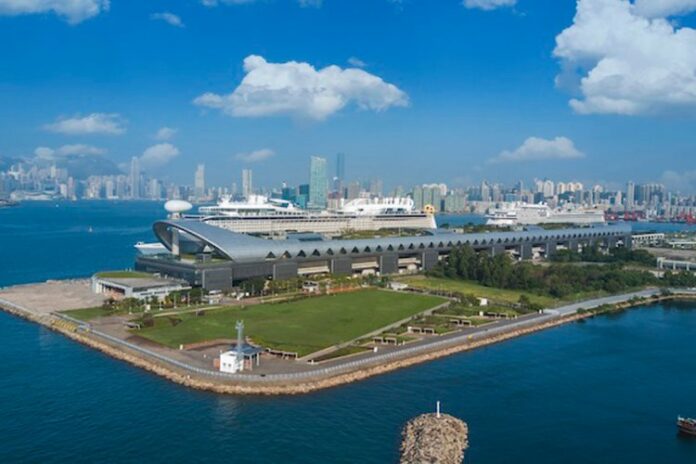
The study was undertaken by Bureau Veritas Solutions Marine & Offshore for Worldwide Cruise Terminals, manager, and operator of the Kai Tak Cruise Terminal. The study made use of industry gas dispersal models and representative scenarios based on LNG fuelled cruise ships and LNG bunkering vessels currently in use and under construction.

Jeff Bent, managing director for WCT, said:

“We are proud to support the Hong Kong government’s Clean Air 2035 and Climate Action 2050 Plans, which indicate that the HKSAR government intends to pursue LNG bunkering for ocean-going vessels to greatly reduce air pollution and greenhouse gas emissions. 

“With this study, we establish that the Kai Tak Cruise Terminal is a suitable facility for ship-to-ship LNG bunkering to take place, simultaneously with standard passenger operations, for the rapidly growing number of LNG-powered cruise ships. 

“Many leading ports have commenced LNG bunkering, and we look forward to joining their ranks. We stand by to assist regulators to craft detailed policies and procedures for an earlier start for the use of this fuel.”

Huw Coffin, general manager BV Solutions M&O (North Asia Zone) and lead researcher for the study, said:

“The LNG industry has an excellent safety record, which thankfully is being replicated across the maritime industry with the increasing use of natural gas as a marine fuel. Switching to LNG from traditional fuel oil has the potential to reduce GHG emissions by around 20% as well as the added benefit of reducing NOx emissions by up to 80% and being almost SOx and particulate matter free. 

“LNG continues to be the most viable alternative fuel for the foreseeable future which is reflected in the newbuilding order book with 30% of the tonnage in GT terms due to be installed with LNG capable engines. This includes 29 cruise ships equating to around 50% of the cruise ship capacity on order. The introduction of LNG bunkering in Hong Kong would support Hong Kong’s Clean Air Plan and increase the attractiveness of the port by expanding bunkering services to the rapidly increasing LNG fuelled fleet.”

Mr Bent said the next step will include discussing the results of the study with relevant government departments and industry participants, to determine the best path forward for timely realization of this aspect of Hong Kong’s clean air and carbon neutrality goals.

Meanwhile, Hong Kong utility giant CLP Holdings has also taken note of the Government’s Clean Air 2035 and Climate Action 2050 Plans, as it may impact the new offshore LNG terminal, which has the ability to bunker vessels, targeted for completion next year.

In September this year CLP was cited in the Port of Hong Kong Handbook and Directory 2021:

“CLP has noticed with interest the Government’s Clean Air Plan for Hong Kong 2035, including the intention to examine measures to take forward the adoption of LNG in ocean-going vessels. Of specific interest to the shipping sector is the possible supplementary use of the offshore LNG terminal as a bunkering facility.

“Given Hong Kong’s position as an international transport and maritime hub, and the importance of these sectors to the economy, LNG bunkering could help the city capture more cargo business. CLP will discuss this with the Government at the appropriate time.” 

CLP did not offer a timeframe for discussions. It is to be hoped that the Kai Tak initiative might kick start a move by CLP.

Rival maritime centre Singapore began ship-to-ship bunkering operations in March 2021.

Falck Renewables and BlueFloat Energy announce floating OWF in Calabria

0

The Falck Renewables / BlueFloat Energy partnership set up to develop floating offshore wind farms off the Italian coast has announced the creation of Minervia Energia, an ad hoc company to develop a floating offshore wind farm off Catanzaro.

The partnership builds on Falck Renewables’ strong local presence and development track record in Italy combined with BlueFloat Energy’s expertise in floating offshore wind around the world.

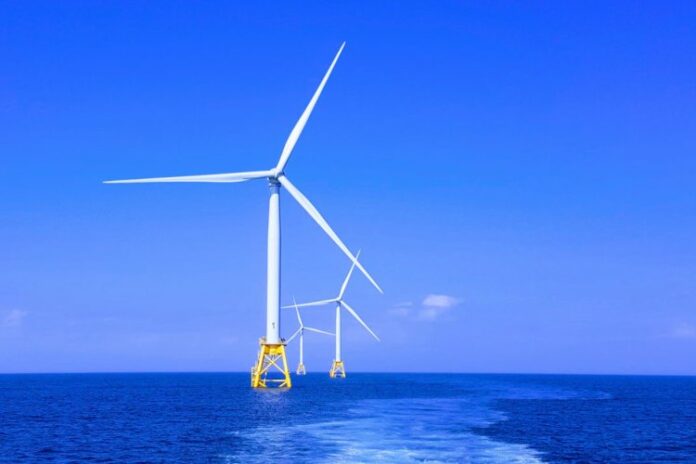
Floating offshore wind farms have a key role to play in the energy transition and in achieving the Italian national decarbonization goals set for 2030 as they can make a significant contribution to the energy independence of the country while protecting the environment. Floating technology allows wind turbines to be positioned in deep open sea where the wind resource is highest without the need for fixed foundations, minimizing impact on the environment and increasing the efficiency of the wind farm. 

Recognizing the potential for this technology in Italy, the developers have chosen Calabria as a location for the proposed 45-turbine Minervia Energia floating wind farm in the Gulf of Squillace, between 13 and 29 km from the coast. The proposed wind farm would have an installed capacity of 675 MW, producing 2.4 terawatt hours annually, equivalent to the energy consumption of more than 600,000 households, and avoid 1 million tons of carbon dioxide emissions each year. Energy from the development could also be used to produce 45,000 tons of green hydrogen annually.

The developers submitted a request for a maritime concession to the Ministry of Infrastructure and the Port System Authority of the Southern Tyrrhenian and Ionian Seas at the beginning of December and have started the preliminary consultation (scoping) process which will define the Environmental Impact Assessment study. In addition to generating clean energy, the Minervia Energia project is based on a collaborative approach which shares value with the communities near the wind farm. In line with their other projects the developers are holding a series of meetings with local stakeholders to share more information about the proposed project.  

It is estimated that the floating offshore wind farm could create 2,500 direct jobs during the manufacturing, assembly and construction phase, with the goods and services for the construction and maintenance of the development primarily sourced from local companies. The developers are also proposing using the region’s main port during construction and long-term maintenance of the wind farm, providing an added economic boost to the area. Partnerships with universities and technology companies would be an opportunity to promote the area as a future hub for innovation, research and development.

Vuosaari fairway deepening project completed

0

The project was completed on schedule and under budget. The project, which started in spring 2020, cost 26.5 million euros. The original budget estimate was over 10 million euros more. The project has also been awarded a 20% EU CEF grant to improve transport efficiency and reduce environmental hazards. The project was under budget thanks to a favourable market situation, good advance planning and the competence of the contractor.

Seppo Paukkeri, Project Manager at the Finnish Transport Infrastructure Agency, says:

“The biggest single factor contributing to staying under budget was that the Vuosaari contract was tendered at the same time as the City of Helsinki’s Hernesaari dredging and filling contract, which made it possible to get a good bid for both. The chosen contractor, Terramare Oy, also has high-quality equipment and experienced personnel, which make for efficient work.”

For Terramare, the project was a typical dredging project in terms of difficulty. According to Vyyryläinen, the special characteristics of the project included the busy vessel traffic and the water intake of the power plant in the work area.

The project to deepen the Vuosaari harbour basin and fairway was completed on schedule, with 70 per cent of the budget spent. 

Paukkeri appreciatively says:

“The Vuosaari fairway has the busiest vessel traffic in Finland. The dredging and excavation work had to be carried out in the fairway in such a way that large cargo ships could safely pass. Although the work required additional signage and speed restrictions, all parties involved in the project were willing to be flexible and contribute to the safe implementation of the project.”

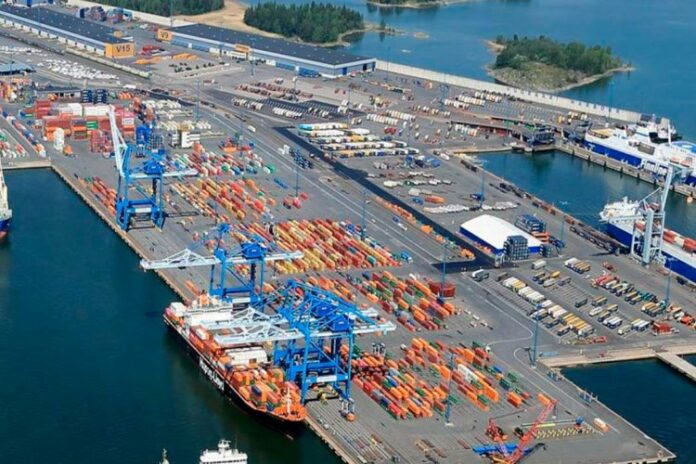
Vuosaari Harbour is Finland’s busiest container harbour. The fairway is used by approximately three thousand vessels per year. Thanks to the deepening, Vuosaari Harbour will be able to receive larger container ships in the future. This will reduce the environmental impact of container transport, as larger loads can be transported at a time. At the same time, the use of larger ships will reduce transport costs.

Jukka Kallio of the Port of Helsinki says:

“Vuosaari is Finland’s most important main port for international trade. The project is important for the Port, but even more important for the Port’s customers and, by extension, for Finland’s international trade.”

Most of the rock excavated during the project, 800,000 cubic metres, was transported by water 21 km away to Hernesaari, where it was used for sea filling in the area. The amount of rock transported could fill the Finnish Parliament House approximately seven times. Transporting the materials exceptionally by sea reduced the environmental impact, traffic congestion and costs of transport.

Mikko Suominen, Land Mass Coordinator of the City of Helsinki, says:

“The transport by sea significantly reduced lorry traffic on the streets of Helsinki. The solution replaced about 40,000 lorry loads and reduced fuel consumption by 1.1 million litres and carbon emissions by about 2,500 tonnes.”

Aker BP awards contracts worth 440 million kroner

0

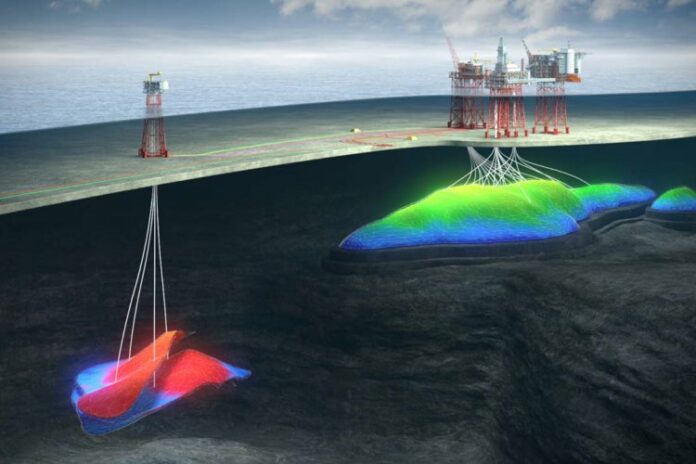
The contracts cover a new central platform on Valhall, as well as a new platform and tie-in of the King Lear field. The joint development will contribute to extended lifetime and increased value creation from Valhall.

SVP Operations & Asset Development Ine Dolve, says:

“This is an important milestone in the further development of the Valhall area. Through this development, Aker BP can maximise value creation from an existing field. Moreover, it will contribute to significant value creation for Aker BP, its partners, owners and the Norwegian society.” 

The concept consists of a new process and wellhead platform (NCP) which has a bridge connection to the Valhall field centre, and an unmanned platform on King Lear around 50 km from the field centre. New infrastructure will be laid on the seabed to connect the two fields. A total of 19 wells are planned, and the concept also includes considerable modification work on the Valhall field centre.​

Dolve says:

“This development will allow Aker BP to secure continued high production from the Valhall field centre and the flank platforms in the area after 2028. The development also provides access to resources from Valhall and King Lear. Aker BP is planning pre-investments for extra well space on both installations and secure flexibility to tie in of new discoveries as there is still additional upside potential in the area.”

The Valhall area is powered from shore resulting in close to zero emissions during normal operations. The plan is to connect the new installations to the existing power from shore solution. ​

Pandion Energy is Aker BP’s partner in the Valhall licence. PGNiG is the partner in King Lear, which was discovered in 1988. The partnerships have decided to proceed with the selected concept for NCP and King Lear. Further maturing will now follow through the FEED phase, until a final investment decision and submission of plan for development and operation is planned in late 2022.​

SVP Projects Knut Sandvik says:

“Aker BP has a record-breaking investment programme going forward to 2028. NCP and King Lear will become one of the company’s largest development projects. A large part of the contracts is expected to be awarded Norwegian suppliers. We are talking about significant investments and the development will provide ripple effects throughout the entire country. This will contribute to further development of the Norwegian supplier industry, and secure work at the yards as we move into the energy transition.”

The plan is to execute NCP and King Lear in the alliance model where Aker BP works together with strategic partners as one team with shared goals and incentives. ​