1.3 C
New York
Home Blog Page 485

IMO to support electronic data exchange in Nigeria’s ports

0

From January to June 2022, IMO will work with the Nigerian Ports Authority (NPA) to conduct a detailed needs assessment mission.

The assessment team will conduct analysis of the current situation and  put forward recommendations on the governance, business model, technology and identify any gaps to be addressed. This will ensure that Nigerian ports benefit from an effective operational country-wide PCS to enhance the economy of the country.

Port Community Systems are neutral platforms that allow the exchange of electronic information between various stakeholders, have become an increasingly important part of simplifying cross-border trade.

The assessment mission is phase two of a project which began in 2021 with a series of IMO-led webinars (between August and November 2021) which , aimed to raise awareness among Nigerian stakeholders about  key aspects of a PCS. This series identified  the opportunities and challenges for developing a national PCS in Nigeria. 

More than 60 senior management participants from Nigerian Ports Authority (NPA), Nigeria Maritime Administration and Safety Agency, Customs Service, Immigration, Health services, Agricultural services, Ministry of transportation, as well as port terminal operators, shipping companies, ship agents, importers and exporters participated. 

Invasive species ‘hitchhiking’ on ships threaten Antarctica’s unique ecosystems

0

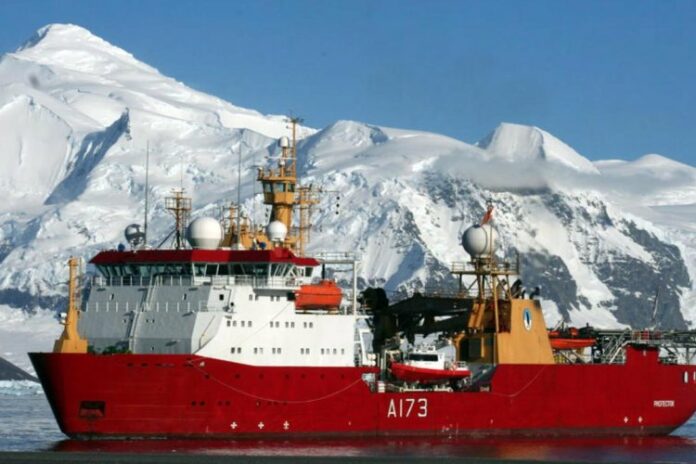
New research by the University of Cambridge and British Antarctic Survey has traced the global movements of all ships entering Antarctic waters. It reveals that Antarctica is connected to all regions of the globe via an extensive network of ship activity. Fishing, tourism, research and supply ships are exposing Antarctica to invasive, non-native species that threaten the stability of its pristine environment. The study is published in the journal PNAS.

The researchers identified 1,581 ports with links to Antarctica, and say that all could be a potential source of non-native species. The species – including mussels, barnacles, crabs and algae – attach themselves to ships’ hulls, in a process termed ‘biofouling’. The finding suggests that they could arrive in Antarctic waters from almost anywhere across the globe.

Lead author Arlie McCarthy, a researcher in the University of Cambridge’s Department of Zoology and British Antarctic Survey, says:

“The species that grow on the hull of a ship are determined by where it has been. We found that fishing boats operating in Antarctic waters visit quite a restricted network of ports, but the tourist and supply ships travel across the world.

“We were surprised to find that Antarctica is much more globally connected than was previously thought. Our results show that biosecurity measures need to be implemented at a wider range of locations than they currently are. There are strict regulations in place for preventing non-native species getting into Antarctica, but the success of these relies on having the information to inform management decisions. We hope our findings will improve the ability to detect invasive species before they become a problem.”
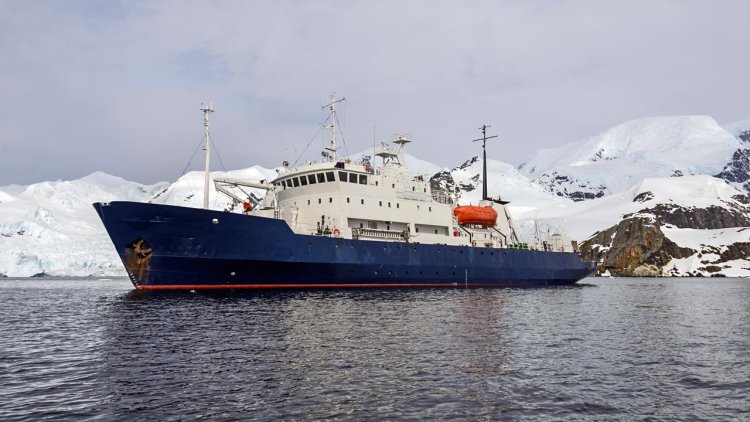
The scientists say they are particularly concerned about the movement of species from pole to pole. These species are already cold-adapted, and may make the journey on tourist or research ships that spend the summer in the Arctic before travelling across the Atlantic for the Antarctic summer season.

Research vessels were found to stay at Antarctic ports for longer durations than tourism vessels. Fishing and supply ships stay for even longer, on average. Previous research has shown that longer stays increase the likelihood of non-native species being introduced.

Due to its remote, isolated location, there are many groups of species that Antarctic wildlife has not evolved the ability to tolerate. Mussels, for example, can grow on the hulls of ships and currently have no competitors in Antarctica should they be accidentally introduced. Shallow-water crabs would introduce a new form of predation that Antarctic animals have never encountered before.

Professor David Aldridge in the Department of Zoology at the University of Cambridge, senior author of the report, said:

“Invasive, non-native species are one of the biggest threats to Antarctica’s biodiversity – its native species have been isolated for the last 15-30 million years. They may also have economic impacts, via the disruption of fisheries.”

The study combined verified port call data with raw satellite observations of ship activity south of -60° latitude, from 2014–2018. Vessels were found to sail most frequently between Antarctica and ports in southern South America, Northern Europe, and the western Pacific Ocean.

The Southern Ocean around Antarctica is the most isolated marine environment on Earth. It supports a unique mix of plant and animal life, and is the only global marine region without any known invasive species. Increasing ship activity in this region is escalating the threat of non-native species being accidentally introduced.
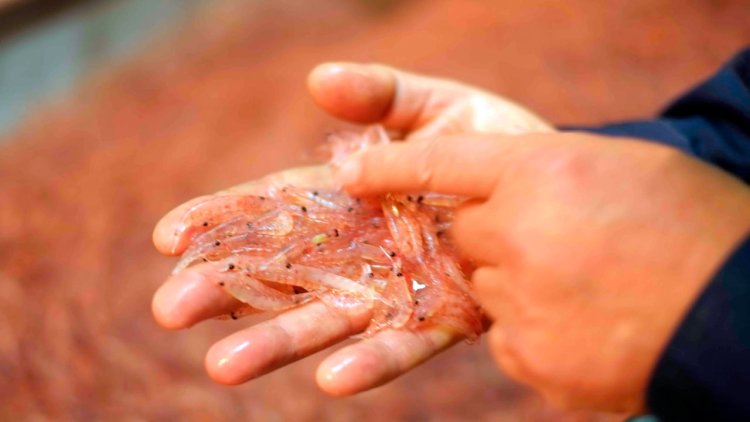
Large krill fisheries in the southern oceans could also be disrupted by invasive species arriving on ships. Krill is a major component of the fish food used in the global aquaculture industry, and krill oil is sold widely as a dietary supplement.

Professor Lloyd Peck, a marine biologist at British Antarctic Survey, who was also involved in the study, said:

“Biosecurity measures to protect Antarctica, such as cleaning ships’ hulls, are currently focused on a small group of recognised ‘gateway ports’. With these new findings, we call for improved biosecurity protocols and environmental protection measures to protect Antarctic waters from non-native species, particularly as ocean temperatures continue to rise due to climate change.”

This research was funded by a Whitten Studentship, the General Sir John Monash Foundation and the Natural Environment Research Council (NERC).

Wärtsilä signs an agreement with NYK Shipmanagement

0

The technology group Wärtsilä has signed a long-term Optimised Maintenance Agreement with Singapore based NYK Shipmanagement. The 13-year contract is designed to ensure maximum uptime and equipment reliability, with assured maintenance costs, for an LNG carrier vessel featuring three Wärtsilä 50DF dual-fuel engines. The agreement was signed in November 2021.

The agreement covers maintenance and planning support. It includes Expert Insight, which enables dynamic, data-driven maintenance planning, optimising maintenance needs and monitoring equipment and systems in real-time through the use of artificial intelligence (AI) and advanced diagnostics.

Real-time monitoring allows specialists at Wärtsilä Expertise Centres to provide customers with proactive support. By providing advice and suggestions for resolving potential operational disturbances, this greatly reduces the need for unplanned servicing. As a result, the vessel’s uptime and availability are notably increased.

Henrik Wilhelms, Director, Agreement Sales, Wärtsilä Marine Power, says:

“Our lifecycle customer support approach, as emphasised by these agreements, is a value-adding benefit that works to lower operating costs, reduce fuel consumption, and support the customer in their decarbonisation journey. We have enjoyed a long and close relationship with NYK group, and this agreement further strengthens the cooperation between our companies.”

McDermott wins Scarborough EPCIC contract

0

After successfully completing the Front-End Engineering Design (FEED) for the Scarborough Project, McDermott International has been awarded a contract by Woodside, as Operator for and on behalf of the Scarborough Joint Venture, for the engineering, procurement, construction, installation and commissioning (EPCIC) services for its Floating Production Unit (FPU) offshore Western Australia.

The integrated scope also includes the design, fabrication, integration, transportation and installation of the hull and topsides. 

Samik Mukherjee, Executive Vice President and Chief Operating Officer, said:

“McDermott brings the engineering and execution expertise to deliver integrated deepwater subsea projects and offshore FPUs to the highest standards. After a long engagement on the project, the collaborative execution model with Woodside—from pre-FEED through to EPCIC—de-risks execution. Further, the facilities incorporate energy efficiency in design to reduce Scarborough’s offshore emissions.”

The topside, which will be approximately 30,000 tons, will be fabricated by McDermott’s joint venture fabrication yard, Qingdao McDermott Wuchuan, in China. The project scope includes a battery energy storage system to reduce emissions on the topsides and support Woodside’s net emissions reduction targets.

Mahesh Swaminathan, Senior Vice President, Asia Pacific, said:

“McDermott will apply our long history of successful integrated project delivery for the Scarborough Project, along with our deepwater expertise and industry-leading health and safety standards to drive this incredible project to completion.”

Engineering expertise will be leveraged from McDermott’s Kuala Lumpur and Gurgaon offices, with McDermott’s long-established subsea team in Perth supporting transport, installation, hook up and commissioning activities.

The FPU processes natural gas, which includes gas separation, dehydration and compression as well as mono ethylene glycol regeneration and produced-water handling. Designed for a production capacity of up to 1.8 billion standard cubic feet per day, the topside will be connected to the semi-submersible hull and pre-commissioned prior to transportation and installation in a water depth of 3,100 feet (950 meters), approximately 248 miles (400 kilometers) offshore Western Australia. The FPU will be capable of being remotely operated and minimally staffed during normal production operations.

Emerson to help accelerate green hydrogen production

0

US manufacturing company Emerson has confirmed that it is working to develop the new technologies, which will manage the desalination and electrolyser units, gas blending and balance of plant equipment, for the PosHYdon project.

The company is developing software and systems to enable safe and efficient operation of the world’s first offshore green hydrogen production process on an operational gas platform.

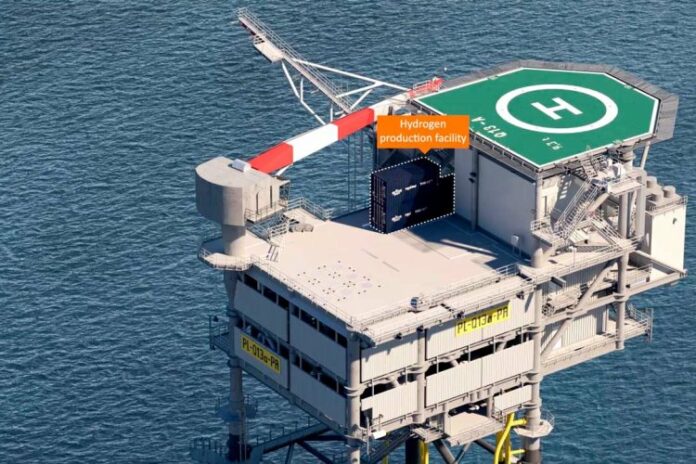
The PosHYdon project is a pilot that aims to validate the integration of offshore wind power and offshore natural gas and hydrogen production at sea—generating renewable fuels by harnessing a green energy source. The Neptune Energy-operated platform Q13a-A in the Dutch North Sea will host the project, which will provide insight into electrolyzer efficiency from a variable power supply and the cost of installing and maintaining a green hydrogen production plant on an offshore platform.

Green electricity will be used to simulate the fluctuating supply from wind turbines and power the production process, which will convert sea water into demineralized water and then safely produce hydrogen via electrolysis. The hydrogen is then blended with the natural gas and transported to the coast, via the existing gas pipeline, and fed into the national gas grid. The 1 MW electrolyzer is expected to produce up to three tons of hydrogen per week.

Mark Bulanda, executive president of Emerson’s Automation Solutions business, said:

“Hydrogen is regarded as the ‘fuel of the future,’ but with ambitious decarbonization and net zero emission targets, it is essential to expand production capacity and accelerate the transition to hydrogen produced using sustainable energy. Through the PosHYdon project, we – together with the consortium partners – hope to provide a pathway to large-scale offshore green hydrogen production and make a significant contribution to the energy transition process.”

Emerson’s DeltaV™ distributed control system, DeltaV safety instrumented system and DeltaV Live operator interface software will manage the desalination and electrolyzer units, gas blending and balance of plant equipment. By meeting the unique application challenges, including variable desalinated water feedstock and power supply, DeltaV software and systems will provide enhanced safety, process uptime and operational efficiency. The solution will ensure the existing natural gas operations remain unaffected and blended gas meets its required specification. Integration with the existing offshore systems and communication with onshore operations will maximize process visibility and prevent unforeseen issues.

Bulanda said:

“The PosHYdon project creates a unique opportunity to develop the steps required to ensure safe, large-scale green hydrogen production at sea. Emerson’s experience across the hydrogen value chain, wind power and offshore energy industries will help achieve successful project execution, and our proven technology will ensure safe and efficient operations in this first of a kind application.”

PosHYdon is being developed by consortium partners Nexstep, TNO, Neptune Energy, Gasunie, Noordgastransport, NOGAT, DEME Offshore, TAQA, Eneco, Nel Hydrogen, InVesta, Hatenboer, Iv-Offshore & Energy and Emerson. The project has been awarded a 3.6 million-euro grant from The Netherlands Enterprise Agency (RVO) under the agency’s Demonstration Energy and Climate Innovation scheme, which invests in renewable energy developments, including hydrogen pilots.

Nakilat partners with ABS to develop decarbonization strategy

0

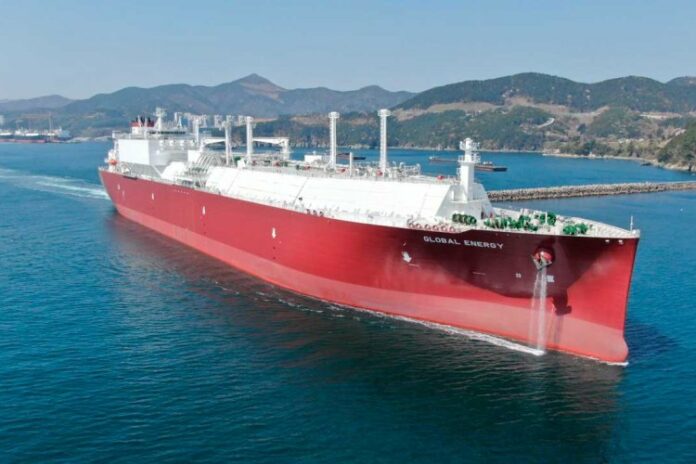
Nakilat, one of the world’s largest LNG shipping operators, has partnered with ABS to develop an industry-leading decarbonization strategy.

Over the past months, Nakilat’s project team has worked closely with ABS sustainability specialists to map out decarbonization pathways for the company’s fleet of 69 LNG carriers and four Very Large LPG Gas Carriers. These efforts come as part of Nakilat’s drive to become a global maritime sustainability leader.

The project will ultimately see Nakilat’s vessels receive the ABS SUSTAIN notation, which demonstrates alignment with the United Nation’s Sustainable Development Goals (SDGs) and establishes a pathway for sustainability certification and reporting. 

Nakilat CEO Eng. Abdullah Al Sulaiti said:

“Nakilat has rapidly grown over the years to be a leader in the global energy transportation sector. We recognize the important role we play in reducing our carbon footprint and are committed to carry out our operations in a sustainable manner. In addition to this partnership with ABS, we are also leading a working group with our joint venture partners to ensure our global fleet operations meet with IMO’s decarbonization targets.  Our focus is on sustainable development of Nakilat’s fleet beyond 2030, which contributes towards the realization of Qatar National Vision 2030 and our own vision to be a global leader and provider of choice for energy transportation and maritime services.”

The SUSTAIN notations were introduced with the ABS Guide for Sustainability Notations to help marine and offshore operators meet the Environmental, Social and Governance (ESG) requirements outlined in the SDGs. The Guide focuses on sustainability aspects of vessel design, outfitting and layout that can be controlled, measured, and assessed. These include: pollution and waste; coastal and marine ecosystems; energy efficiency and performance monitoring; low-carbon fuels; human-centered design; and asset recycling. 

Heerema scores decommissioning contract for DNO’s Ketch and Schooner platforms

0

Heerema Marine Contractors has announced that DNO has awarded a decommissioning contract for the integrated engineering, preparation, removal, and disposal (EPRD) of the Ketch and Schooner platforms.

Michel Hendriks, Heerema’s Decommissioning Director, said:

‘Heerema is proud to be the contractor of choice for the decommissioning of the Ketch and Schooner platforms. The EPRD award is the result of our ambition to remove offshore structures of all sizes in a safe and sustainable manner. We are especially pleased to contribute to the circularity of the project by being the installation and removal contractor, which is in line with our own sustainable circular ambitions.’

The Ketch and Schooner platforms are located in the Southern North Sea in the UK sector and were installed by Heerema in the 1990s. Both platforms are tied-back to the Murdoch complex, which also will be removed by Heerema Marine Contractors.

The Ketch platform is located in a water depth of 54m, and the Schooner platform is located at 71m of water depth. After removal, both structures will be responsibly disposed of and will be reused or recycled up to 97%.

ZeroNorth acquires US-based bunker market platform ClearLynx

0

Technology company ZeroNorth, founded to accelerate the green transition of global trade, has announced the acquisition of ClearLynx, the industry’s leading online platform for the bunker fuel market. 

Adding ClearLynx to the ZeroNorth platform will provide ship owners and operators with an integrated and end-to-end solution for the cost and environmentally efficient optimisation of bunker fuel, from initial enquiry through to supply. 

ZeroNorth users will be able to take advantage of ClearLynx’s best-in-class procurement, pricing and analytics, business intelligence, optimisation and planning, Sulphur Cap compliance and data feed products.

Once ClearLynx is integrated into the ZeroNorth platform, users will be able to make informed decisions through connected voyage, vessel, and bunker optimisation recommendations. 

The increased revenue generated by connected voyage, vessel and bunker optimisation recommendations can be injected back into the industry’s decarbonisation efforts, supporting the development of the future fuels and clean technologies that the industry needs to meet carbon targets. 

ClearLynx will continue to offer its current bunker services via its platform and will also over time be integrated within the ZeroNorth platform, bolstering optimisation benefits to customers of both platforms, the industry and the planet. The ClearLynx team will give ZeroNorth a physical presence in the US and create a foundation for continued growth and sales within the region. 

ClearLynx will forge ahead and execute its product enhancement roadmap over the coming months with further features and developments for its customers to use within their operations. The company also plans to scale leveraging ZeroNorth’s experience. 

Commenting on the announcement, Søren Meyer, CEO, ZeroNorth, said:

“Today’s announcement is another big step forward in ZeroNorth’s mission to support and enable decarbonisation in the maritime value chain. Adding ClearLynx and their considerable expertise to our offering means that our customers will be able to make the most of a powerful trio of voyage, vessel and bunker optimisations that are linked and working in tandem.

“Our industry needs to act now, and we think this announcement provides players across the sector with an effective and accessible way to take immediate action. Optimising voyages, vessels, and bunkers will not only be important to cut emissions and improve revenue today, but will also enable us to navigate the significant, imminent and urgent complexity of the coming decade.”

CBH and Oldendorff lead Australia-first biofuel trial

0

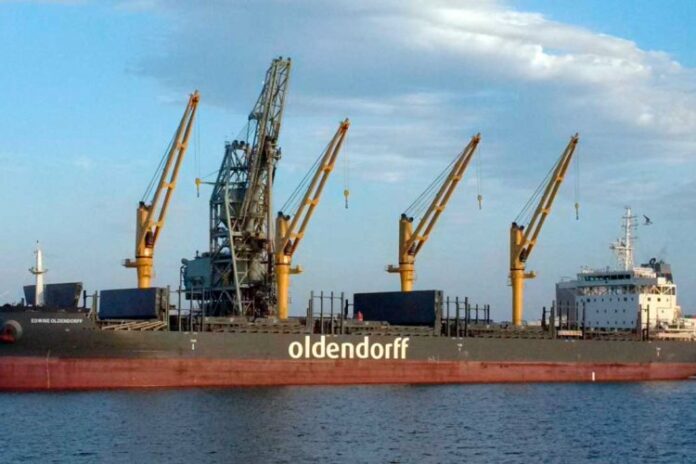
The vessel loaded 30,000 tonnes of sustainably certified malting barley from the Albany Grain Terminal in Western Australia for discharge in Vietnam using biofuel, supplied by BP. The vessel was bunkered with an advanced biofuel blend, which is expected to result in 15% emissions avoided compared to conventional fossil fuels, according to the supplier.

This trial of a 2nd-Generation biofuel will help to test the biofuel supply chain and also provid both CBH and Oldendorff Carriers greater experience with the practical issues involving voyages powered by renewable energy blends. The emission reduction potential has been analyzed as part of Oldendorff Carriers’ research agreement with MIT in Cambridge, Massachusetts.

Jason Craig is the Chief Marketing and Trading Officer of CBH and said that the co-operative is proud to be pioneering efforts, alongside global partners, to reduce its carbon footprint along the supply chain. He said:

“Customers across the world are increasingly seeking to source sustainable products, including sustainable grain. It is our role, as Australia’s leading grain exporter, to take the necessary steps to lower carbon emissions along our supply chain. Biofuel is one low-carbon option that could be part of the solution to reducing emissions in the shipping industry.”

The malting barley will be delivered to Vietnam’s leading malting company, Intermalt. They service a number of brewing customers, the largest being Heineken, which has also set a target of a carbon neutral value chain by 2040. In 2020-21 CBH sold 1.2 million tonnes of sustainable certified grain and reduced Scope 1 and 2 carbon emissions on a per tonne basis by 38 percent.

Mr. Craig said:

“We need to meet the growing market demand for sustainable or carbon reduced grain by being proactive, practical and adapting. By doing this, we are making sure we can continue to keep our Western Australian growers competitive.” 

Ben Harper, Managing Director at Oldendorff Carriers, Melbourne, commented:

“We are very pleased to be collaborating with industry leaders CBH to trial biofuel in our vessel Edwine Oldendorff. Collaboration is crucial for us all to learn and share information about the best paths in our efforts to decarbonize the supply chain.”

McDermott awarded mega EPCI projects by QatarEnergy

0

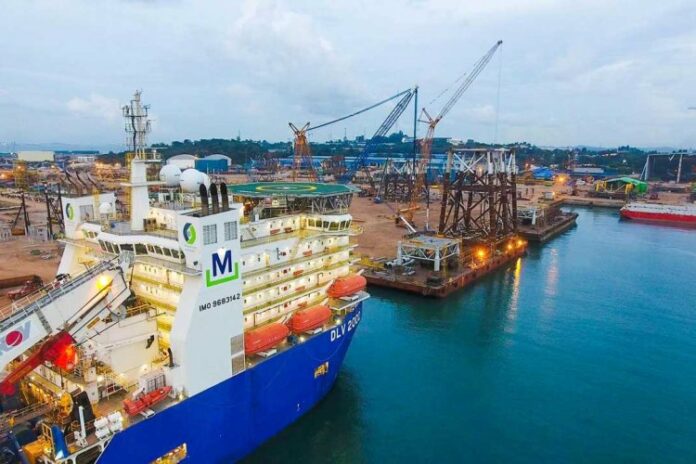
McDermott International signs a mega offshore contract from QatarEnergy, a long standing key customer, to deliver engineering, procurement, construction and installation (EPCI) for the North Field East (NFE) Topsides and the North Field East (NFE) Offshore Pipelines and Subsea Cables projects, with an option included to also award the North Field South (NFS) Offshore Topsides—representing one of the largest single contracts McDermott has been awarded in its company history.

The project will be managed and engineered from the McDermott Doha office with significant fabrication taking place at QFAB, the McDermott-Nakilat joint venture fabrication yard in Qatar, building end-to-end execution capability in Qatar and significantly enhancing the localization Program.

Samik Mukherjee, McDermott’s Executive Vice President and Chief Operating Officer, said:

“We are very pleased to be awarded this strategic project by QatarEnergy—it’s a perfect example of McDermott’s Offshore shallow water strategy using our FEED (front-end design) expertise to develop an optimized design one, build many concept for offshore structures followed through with strong in-house engineering, supply chain management and utilization of our proven fabrication facilities and marine pipelay assets, all using our industry leading GeminiXD digital project delivery tools.

As part of the NFE LNG complex, the offshore facilities are an essential contributor toward the energy transition goals of COP-26. In line with McDermott’s overarching sustainability commitments, we will continue to use our digital carbon footprint tool, ArborXD, to monitor and proactively manage GHG emissions during the project. The structures delivered from our yard in Batam will be the first to be fabricated there following our recent commitment to import a low-carbon or renewable power into the facility.”

Tareq Kawash, McDermott Senior Vice President, Europe, Middle East and Africa, said:

“For McDermott, this contract shows that we are back stronger than ever and our key customers have confidence in our ability to deliver strategically significant energy infrastructure. Our technology, fabrication-driven approach, along with our involvement in this specific offshore development, which began with the front-end engineering design—make us the ideal partner to provide QatarEnergy with the confidence and assurance required to execute a project of such complexity and magnitude.”

The NFE development will provide feed gas into the four new LNG Trains currently under construction and, together, with the NFS infrastructure, which will provide feed gas for the future additional two LNG trains, will enable an increase in total LNG production in Qatar from 77 million tons per annum (MTPA) to 126 MTPA.

The scope of the contract includes the fabrication and installation of eight wellhead topsides (WHT) for NFE and a further five WHT for NFS. The significant subsea pipeline scope includes over 300 miles (500 kilometers) of pipelines and, in addition, McDermott will install over 140 miles (225 kilometers) of 33kV subsea cables and associated works. For the first time, four of these WHT, plus all subsea infrastructure, will be fabricated in QFAB, improving the in-country execution platform to support future energy developments. The remaining fabrication will be done in collaboration with McDermott’s facility in Batam, Indonesia.