1.3 C
New York
Home Blog Page 484

Titan LNG collaborates with Corsica Linea on delivery of LNG and bioLNG

0

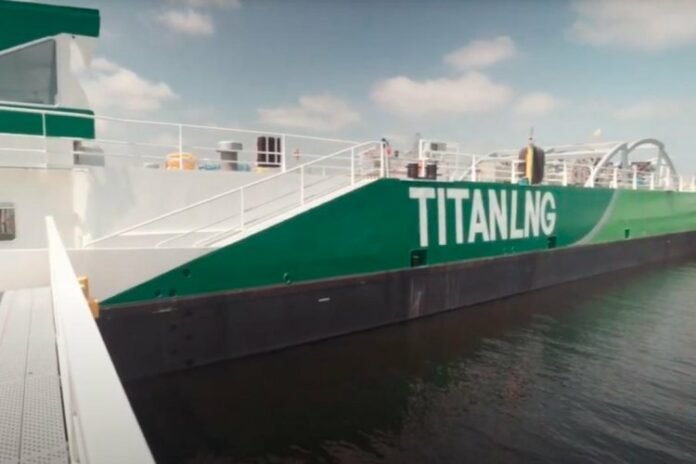
This partnership marks the significant expansion of Titan’s operations into the Mediterranean which will enhance the availability of LNG, bioLNG, and in the longer run hydrogen-derived LNG in the region. Titan will start with Truck-to-Ship operations for a period of time until the Krios vessel – a 4,500 cbm LNG bunker vessel – arrives that will be able to supply the wider Mediterranean region with LNG and bioLNG as a marine fuel. 

Corsica Linea’s new LNG-fuelled ferry, A Galeotta, which is currently under construction at the Visentini shipyard in Italy, marks the company as a frontrunner in the region when it comes to decarbonisation. The LNG-powered ferry is set to begin sea trials in May 2022.

Since the vessel is designed to be powered by LNG, it will be versatile and future-proof. Lower and zero carbon variations of LNG such as bioLNG and hydrogen-derived LNG can be dropped into its fuel tanks with no changes required to the infrastructure. These can even be blended with conventional LNG to reduce emissions further. GHG emissions and local emissions will be reduced immediately by using readily available LNG and bioLNG, while a safe, practical pathway to zero carbon hydrogen-derived LNG is open.

Increasing collaboration and strong partnerships are essential for the maritime industry to successfully decarbonise. Close cooperation between the Port of Marseille, Corsica Linea and Titan, as well as the expansion of Titan’s business to the Mediterranean region, highlights the trust in LNG and its derivatives as leading sustainable marine fuels. It also shows that investments in LNG infrastructure and LNG-fuelled vessels pose less risk than some alternatives fuels.

Niels den Nijs, CEO, Titan LNG, commented:

“Expanding our operations to the Mediterranean region will enhance the availability of LNG and bioLNG. Expanding infrastructure will help consolidate LNG as a leading sustainable marine fuel across the region. As a result, we hope to see more shipowners investing in LNG and bioLNG. I am delighted to be able to announce this partnership and I look forward to further expansion of LNG in the Mediterranean region and beyond.”

Pierre Antoine Villanova, CEO, Corsica Linea said:

“Having access to LNG and bioLNG infrastructure and bunkering allows us to take a significant positive step towards the decarbonisation of our fleet. When choosing LNG, the ability to act now on greenhouse gas emissions in the Mediterranean Sea stood out. We also recognised the pathway to full decarbonisation using LNG, bioLNG and hydrogen-derived LNG as a strong, clear and flexible option. Our exciting new ferry, A Galeotta, will be able to switch between LNG and bioLNG, and even blend the two, with no changes required onboard.”

NAPA Logbook awarded DNV type approval for MARPOL electronic record keeping

0

NAPA has announced that it has been awarded type approval certification by the leading classification society DNV for NAPA Logbook’s MARPOL electronic record keeping.

The approval follows the implementation of MARPOL Annex I, II, V, VI and the NOx Technical Code and will support the shipping industry’s transition from traditional hard copy record books to electronic record books. The NAPA Logbook can replace all paper logbooks and meets the data requirements set out by the MARPOL and NOx Technical Code amendments.

The DNV approval is significant in that it will streamline and quicken the approval process, as electronic logbooks are subject to approval by flag states and require notable validation. In turn, this approval process will increase the accessibility of the NAPA Logbook for owners and operators, allowing them to secure the time savings, data validation and data sharing benefits required to unlock more efficient, modern operations.

For example, by switching to NAPA Logbook owners and operators can reduce the administrative burden associated with paper record-keeping, saving a significant amount of a crew’s administrative time. By resolving the challenges associated with duplicated reporting and achieving fewer errors through automated data collection, the NAPA Logbook provides a rigorous backup system for all recorded data.

As the world’s leading electronic logbook, NAPA Logbook has been in service on vessels for over a decade. Currently, NAPA Logbook has more than 8,000 users and is approved by more than 20 major flag states.

Jussi Siltanen, Senior Product Manager, Safety Solutions at NAPA, commented:

“We are proud to have been awarded DNV type approval for our NAPA Logbook. By increasing the accessibility of our software to owners and operators around the world, we will be better enabled to support shipping’s digital transformation. The benefits of using electronic logbooks instead of paper for the industry, for owners and operators and for the crew are undeniable and the approval of our leading logbook will help drive the transition.”

Jan Tore Grimsrud, Head of Section for Bridge & Control Systems, DNV, said:

“We fully support shipping’s transition to electronic record-keeping and are therefore pleased to announce our approval for the NAPA Logbook. The improved data insights and time benefits secured via switching from paper to electronic will be fundamental in streamlining the shipping industry’s processes and implementing greater quality control. This is in line with DNV’s general digitalization initiatives, and we can say that the NAPA Logbook stood up to rigorous testing and will serve as a benchmark in the industry for electronic record books.”

OneOcean Group launches the industry’s first Environmental Planner

0

OneOcean Group has expanded its platform capability to include a new and Environmental Planner, which uses a dynamic timeline to provide a real-time look ahead at the environmental rules and restrictions in force during a voyage. 

For the first time, navigational and environmental planning can be done in a simple integrated workflow. With the addition of the advanced environmental timeline, the software platform enhances its offering for a Total Voyage approach that integrates and visually presents data, to both minimize risk and support effective decision-making. The timeline displays a comprehensive list of environmental events that can safely and legally take place aboard a vessel during a rolling 12-hour window, based on the ship’s departure time, its current position, and speed.

The Active Environmental Timeline can be generated as part of the ship’s official passage plan, as a section in the pdf document. Access to the environmental planner in the passage plan and the active timeline enables a coordinated approach for better decision-making in both the planning and monitoring stages of a voyage. Should the departure be delayed, both the timeline and document can be dynamically adjusted to reflect an accurate representation of the ship’s position in relation to the environmental regulations in place along the route. If the vessel speed is increased, the timeline will adjust to accurately reflect that, as is refreshes every three minutes.

Tony Brown, Deputy CTO, said:

“Traditionally, if a ship’s actual departure time doesn’t match the one on the passage plan, then all the environmental considerations have to be re-calculated. The new Active Environmental Timeline saves a great deal of effort by performing these re-calculations based on real-time information in just one click, enabling dynamic updates to all relevant data. This delivers real value to customers because they can now truly operationalise environmental planning, weaving environmental events and cadence into the planning stages for effective fulfilment throughout the voyage.” 

Decision makers can access an accurate picture of when and where environmental events can safely and legally take place aboard. This makes it much easier to plan operations with peace of mind that the ship is in full compliance. All relevant data is easily viewed on a single screen with information specific to the vessel, and the company requirements and policies in place. 

Actions, such as discharges and emissions, are detailed by category and can be grouped in line with the user’s specifications. The timeline indicates how long the ship is likely to remain in the zone where vessels must comply with regulations or stringent company guidelines. Colour codes indicate whether the status is green: legal, amber: legal with conditions, or red: illegal. This high visibility significantly reduces the risk of non-compliance.

Nicholas Bourque, Chief Strategy Officer commented:

“In order to meet the ever-growing regulatory challenges, companies will need to implement a more connected and simplified approach to operationalise environmental planning. The enhanced OneOcean platform represents a better way of preparing for any voyage.”

The connected software approach from OneOcean significantly reduces workload for mariners in the planning process by combining all aspects of voyage planning, including outfit management, routing, calculations, weather, due diligence on notices and risks, and the monitoring of environmental restrictions to provide optimised decision making. Navigational planning events and environmental events are automatically calculated dynamically, saving significant time and effort in the planning stages, and providing real-time agility in the monitoring stage. The result is a comprehensive planning solution that visually presents all relevant data based on routing criteria, situational factors, and vessel details, resulting in a highly effective planning process.

Tankers International and Vertree launch climate compensation voyage programme

0

Tankers International has announced the launch of its new climate compensation voyage programme for the tanker sector. The initiative will be delivered with Vertree Partners Limited (Vertree), a wholly owned subsidiary of Hartree Partners, which enables organisations to accelerate and deliver climate commitments through nature-based solutions.

The international shipping industry accounts for approximately 1 billion tonnes of greenhouse gas emissions annually1, with a trajectory that is set to see that figure rise. Shipping is also deemed by the UNFCCC – along with aviation – as facing major technological difficulties in decarbonising compared to land-based transport and industries; with new, substantially more costly low and zero carbon marine fuels the main option for the sector to transition.

The partnership with Vertree will allow Tankers International to assess and understand the carbon footprint of its pool and offer its customers a facility to compensate their unavoidable value chain emissions.

The process is not onerous. Vertree uses scientifically recognised methodologies and proprietary data to calculate an emissions baseline on a per voyage, monthly or annual basis. Customers can then choose from a range of nature-based options to compensate the carbon footprint, tailored to price, geographies and impact targets.

These range from afforestation projects in Uruguay to avoided deforestation and degradation in Cambodia. All projects promote a positive social impact, meeting multiple Sustainable Development Goals set by the United Nations (UN SDGs). To ensure the highest levels of environmental and social integrity, all Vertree projects are verified and certified by third parties, including the Verified Carbon Standard; Architecture for REDD+ Transactions; Gold Standard; and Climate, Community, and Biodiversity Standard.

Matthew Smith, Senior Vice President Commercial & Operations, Tankers International, commented:

“We have been working hard to bring a climate compensation voyage programme to customers through an accurate and transparent mechanism, and are delighted to have found such a trusted, experienced and progressive partner in Vertree. The project further enhances our relationship with Hartree Partners, which joined our VLCC pool in 2019, as one of the original members of Tankers International’s dedicated scrubber fitted VLCC Pool.

“As an organisation, we recognise that the world is changing fast and the energy transition is something we need to embrace and adapt to. With the cost of fuel and the cost of using carbon only set to rise, this partnership will provide a high quality, cost effective and transparent solution to compensating currently unavoidable voyage emissions, contributing to overall efforts to reduce the environmental impact of global supply chains. While compensation is not the total solution to GHG emissions reduction in shipping, it can play an immediate and meaningful contribution to efforts to reduce cumulative emissions in the atmosphere – helping to prevent catastrophic heating while the industry pursues efforts to reduce its actual emissions.”

Ariel Perez, Managing Director at Vertree, added:

“The use of carbon climate compensation is becoming increasingly important, as companies look to meet higher ESG standards from their customers, as well as meet ever tighter compliance standards. Our agreement with Tankers International allows us to support organisations that charter cargo and catalyse environmental action that’s increasingly demanded by their customers. Although within value chain emissions abatement should remain the priority, nature-based compensation is among the most scalable and effective way to reduce emissions, protect and restore biodiversity and support the United Nations’ Sustainable Development Goals.”

PIRIOU sign contract with TOWT

0

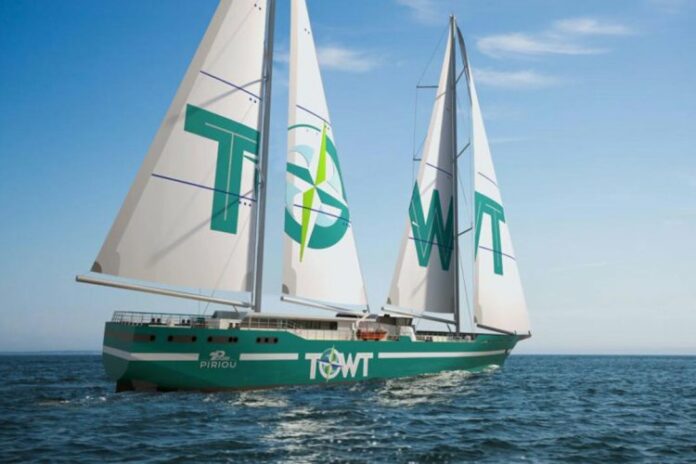
After the design studies phase, the ship construction will take 18 months. This unit will be outfitted in Concarneau and the launch is planned for summer 2023.

The ship is designed for 320 days at sea per year. Navigation is principally sail-powered, but the ship also has a hybrid power mode, with one or two engines operating, at different levels of power. The ship will be designed and built with wind as the principal power source, with a sail rigging spread over two masts. 

In addition to its wind propulsion, it is equipped with of two turbocharged 4-stroke marine diesel engines. On the bridge, there will be a single command station and its ergonomics will allow the officer of the watch to carry out all the commands and course adjustment operations, excluding manoeuvres, alone.

The ship and all its equipment will comply with the regulations on cargo vessels performing international trips and will comply with the regulations relating to cargo vessels with a gross register tonnage greater than 500 UMS.

Vincent Faujour, Chairman of the PIRIOU group declared:

“A few weeks after announcing the signing of a contract for the construction of Jean-Louis Etienne’s sailboat “Septième Continent”, Piriou is proving that the shipyard is at the forefront of innovation regarding the progress of sailing technologies and the decarbonization of maritime transport”. 

Guillaume Le Grand, Chairman of TOWT-Transport wind transport, added:

“Today, TOWT is going further by ordering a ship from Piriou that will make it possible to massify its environmental impact by transporting up to 20,000 tonnes of goods per year by sail power. The sailing cargo ship, which will be completed by PIRIOU Shipyard in 2023, will make it possible to reduce CO2 emissions by more than 90% and to economise 20 g of CO2 per tonne transported per kilometre. It will therefore save 3,000 tonnes of CO2 per year. In addition to the carbon savings, principally wind-powered propulsion will allow a significant reduction in the air pollution caused by the heavy fuel oil generally used by merchant ships.”

DEME further reinforces fleet with acquisition of offshore installation vessel

0

Representing a substantial investment, this move highlights DEME’s commitment to its customers, and supports the continued growth of the offshore wind industry. This latest addition to its vessel fleet also confirms DEME’s mission to build future-proof, sustainable and environmentally friendly operations.

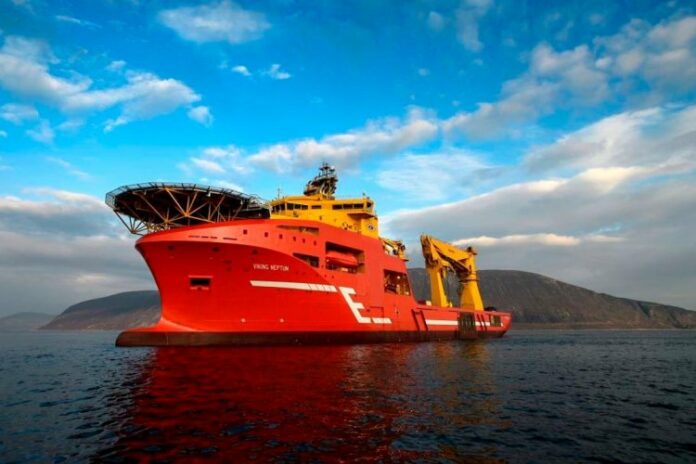
Built to the highest Norwegian quality standards, ‘Viking Neptun’ currently has a turntable capable of handling 4,500 tonnes of cables below deck, but DEME will further boost its capacity by adding a second, 7,000 tonne cable turntable on deck.

The addition of the vessel is in line with DEME’s strategy to deploy the most versatile and high-tech fleet in the industry. DEME already operates the pioneering, DP3 cable installation vessel ‘Living Stone’, renowned as one of the fastest and most efficient vessels in the cable installation sector.

Continuing DEME’s efforts to provide a future-proof, sustainable fleet, the vessel is fully compliant with the latest emission standards and features the latest environmental technology, including a battery pack for best in class fuel efficiency and more sustainable operations.

The 145 m long vessel is also equipped with a large, unobstructed deck and a 400 tonne Active Heave Compensated Knuckle Boom crane, which also makes ‘Viking Neptun’ ideal for the construction of floating wind farms.

Hugo Bouvy, Managing Director DEME Offshore, comments:

“DEME is always keen to anticipate the future demands of our clients and to support them in their growth. Acquiring a second, large cable-laying vessel ensures that we are ready to serve their needs now and in the future, and that we take a proactive role in helping to facilitate the energy transition. Since its introduction, our DP3 offshore installation vessel ‘Living Stone’ has made its mark on the industry, with unrivalled capabilities.

We are sure that ‘Viking Neptun’ will have an equally impressive career in the DEME fleet and it underlines our efforts to meet and exceed our customers’ requirements. At DEME, we also share Eidesvik’s team focus on pushing for more environmentally friendly operations and we will also investigate opportunities for further cooperation between our two companies.”

‘Viking Neptun’ is set to join the DEME fleet in the last quarter of 2022.

Bay Shipbuilding begins construction of largest U.S.-built LNG barge

0

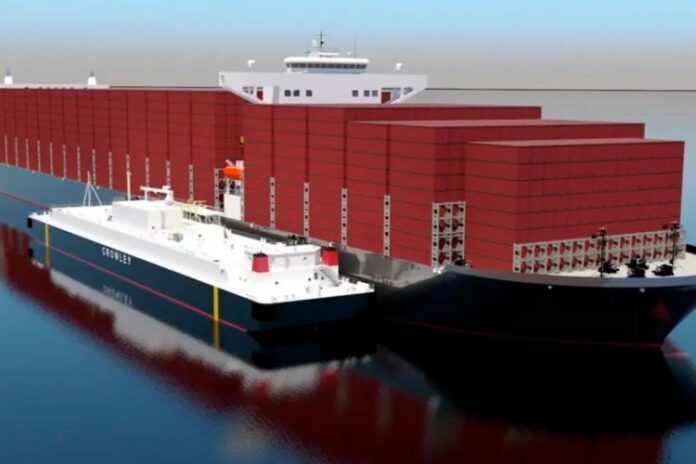
Bay Shipbuilding is expected to complete construction on the barge in late 2023 under contract with Crowley, the largest independent operator of tank vessels in the U.S. Crowley will operate the vessel under a long-term charter with Shell NA LNG, LLC (“Shell”).

The 416-ft. vessel, which will have the capacity for 12,000 m3 (3.17 million gallons) of LNG, will be the largest Jones Act-compliant vessel of its kind, and the second Jones Act-compliant bunker barge Shell has under charter in the U.S.

Serving the U.S. East Coast, it will be used to help expand current LNG network capacity and meet demands for cleaner energy sources for ships.

Craig Perciavalle, Vice President & General Manager of Fincantieri Bay Shipbuilding, said:

“We are excited to get this project started, and equally pleased that it builds on our relationship with Crowley and Shell. Our team is committed to giving our customers the best value, and we are happy to get started on this important project.”

Tucker Gilliam, vice president, Crowley Shipping, said:

“We congratulate the men and women of Bay Shipbuilding on the start of this innovative, landmark vessel that will help the maritime industry meet demand for cleaner operations with reduced emissions. In partnership with Shell, this vessel will expand the availability of LNG to vessels and help advance the transition to lower-emission fuels as the industry seeks to reduce emissions.”

Dean Sahr, Crowley’s manager of new construction and LNG engineering, pushed the button on the state-of-the-art metal cutter to cut the first piece of steel in Sturgeon Bay on Jan. 6. The vessel is designed by Crowley Engineering Services, the company’s naval architecture and marine engineering solutions group.

Tahir Faruqui, general manager, Global DLNG for Shell, said:

“As we continue to expand our LNG bunkering network, we are excited to see work underway on this vessel, one which will support the shipping sector’s continued progress toward decarbonization.”

Navis Engineering turns to KVH Watch Cloud Connect for maritime IoT solution

0

KVH Industries has announced that Navis Engineering, a maritime dynamic positioning (DP) control system manufacturer, has joined the KVH Watch Solution Partner program and will offer KVH Watch Cloud Connect services to deliver a remote monitoring solution for their DP and joystick maneuvering control systems.

Navis’s primary markets are the oil and gas and renewables industries, where DP systems provide highly accurate positioning and control of vessels that must be kept stable in deep sea while operating in proximity to offshore installations.

Alexander Mordvintsev, area sales manager for Navis Engineering, says:

“DP and joystick control systems are crucial to the precise maneuvering of almost any modern vessel and we look forward to offering our customers added value with a range of remote services including real-time monitoring thanks to KVH Watch. In addition, the industry sees DP as a gateway to autonomous vessels and we do expect that remote monitoring and advanced connectivity solutions will become mandatory. KVH services can definitely open the door to the maritime future for industry players.”

Sven Brooks, senior director of IoT business development for KVH, says:

“The ability to offer real-time monitoring to clients is so important for an OEM like Navis, whose DP control systems are essential to critical O&G operations with the highest standards for cybersecurity and safety at sea. We are thrilled to welcome Navis as a key KVH Watch Cloud Connect partner.”

KVH recently expanded its suite of KVH Watch maritime IoT solutions with Cloud Connect, a service designed to address the complexity of managing data from hundreds of onboard sensors with a comprehensive package containing data source definitions, data mappings, and associated dashboards. An onboard Cloud Connect Edge Server aggregates and processes data from vessel sensors and provide a containerized, hybrid cloud architecture to enable downsampling, data storage, and data access for analysis, cloud-based data reporting, and dynamic visualizations.

Cloud Connect is part of the KVH Watch maritime IoT suite, which includes the ability to perform on-demand Remote Expert Interventions using video, voice, or text via KVH’s global HTS network. KVH Watch is designed with stakeholder budgets in mind as a Connectivity as a Service (CaaS) program offered for an all-inclusive monthly fee with no equipment purchase CAPEX or maintenance costs for the Watch terminal, Cloud Connect equipment, or Remote Expert Intervention equipment for the subscription duration. 

For cybersecurity, the KVH Watch antenna provides an isolated-for-purpose LAN, data connectivity at the sensor level, a secure Wi-Fi network for SOLAS-regulated spaces, and a dedicated connectivity solution separating IT and OT as recommended by IMO 2021.

thyssenkrupp to install 200 MW green hydrogen facility for Shell in port of Rotterdam

0

Under the contract, thyssenkrupp Uhde Chlorine Engineers will engineer, procure and fabricate a 200 MW electrolysis plant based on their large-scale 20 MW alkaline water electrolysis module. First construction work for the electrolysers will likely begin in Spring 2022.

Shell’s final investment decision to build the ‘Holland Hydrogen I’ is expected in 2022, after which the intended start of production will be in 2024.

Dr. Christoph Noeres, Head of Green Hydrogen at thyssenkrupp Uhde Chlorine Engineers, says:

“We are looking forward to support building a major hydrogen hub in central Europe and to contribute to Europe’s transition to green energy. With our large-scale standard module size, we will further strengthen Shell’s hydrogen strategy. Our partnership perfectly combines our engineering excellence with Shell’s competence of a large global energy player.”

The center of the “Hydrogen Holland I” hydrogen project facility will be a hall, covering 2 hectares, the size of three football fields. Green hydrogen will be produced for industry and the transport sector, with electricity coming from offshore wind farm Hollandse Kust (Noord), by means of guarantees of origin.

The hydrogen can be transported through a pipeline with a length of about 40 kilometers that will run from the plant to Shell’s Energy and Chemicals Park Rotterdam. Net zero is a number one priority for the plant: Reusable construction materials will be applied wherever possible and solar panels will be incorporated in the outside walls of the plant. The factory will be open to selected visitors once fully operational.

TECO 2030 signs MoU with Gen2 Energy

0

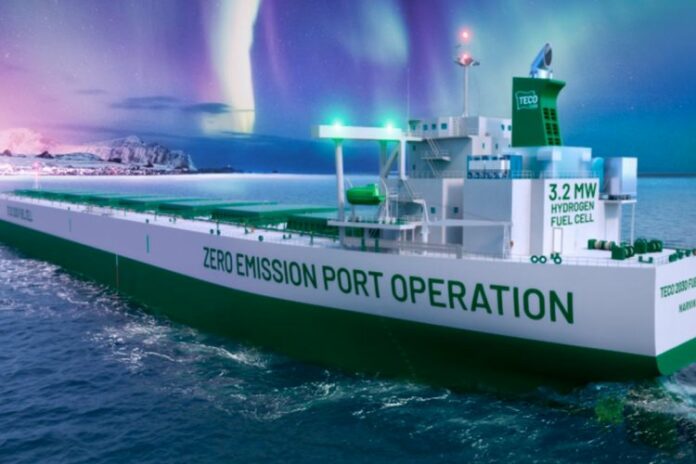
The parties jointly commit to investigate supply of green hydrogen from Gen2 Energy for relevant projects where customers need hydrogen and power conversion through fuel cells either in ports, offshore fish farms or other heavy-duty customers. 

Further, Gen2 Energy will involve TECO 2030 Marine Fuel Cells in Gen2 Energy’s seaborn value chain, allowing hydrogen to be transported onboard vessels powered by hydrogen fuel cells.

The parties intend to work together for soft funding regarding maritime hydrogen applications and develop a complete hydrogen value chain, through the project “Hydrogen Hub Nordland”. Together, the parties will work to develop and establish a functional and effective value chain for hydrogen industry in northern Norway and enabling zero emission sailing along the Norwegian coastline.

The MoU is intended to support the opposing party with the establishment of their shared vision of an emissions-free ocean and heavy-duty industry space in the Nordic region. Jointly the parties will promote each other’s products and services towards the hydrogen community.

Tore Enger, CEO of TECO 2030 Group, says:

“We are excited to continue the development of creating a maritime hydrogen value chain. Gen2 Energy is an exciting industry leader aiming to supply the UK and mainland Europe with green hydrogen from Norway. Together we can create a world-class maritime and heavy-duty hydrogen infrastructure foundation to build our zero-emission future upon.”

Jonas Meyer, CEO of Gen2 Energy, says:

“We are pleased to sign this MoU with TECO 2030. The company has strong presence in the maritime sector and has taken an attractive early mover position towards fuel cells. Together, we aim to reduce emissions in the maritime- and heavy-duty sector by making green hydrogen accessible and easy to adapt for our customers.”