-0.8 C
New York
Home Blog Page 451

GTT entrusted by SHI to design fuel tanks for four new LNG-fueld container vessels

0

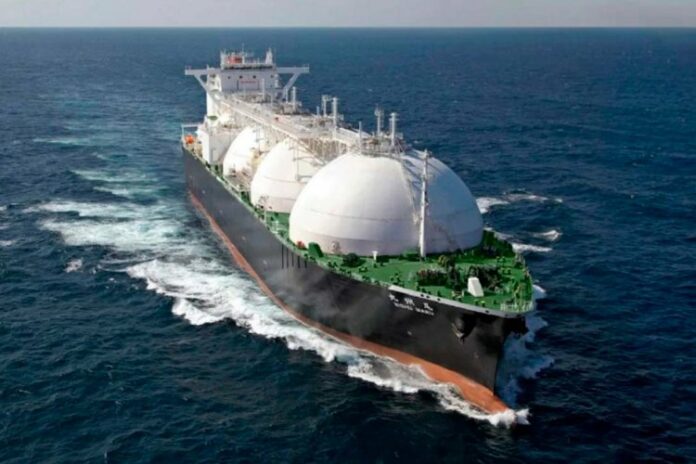
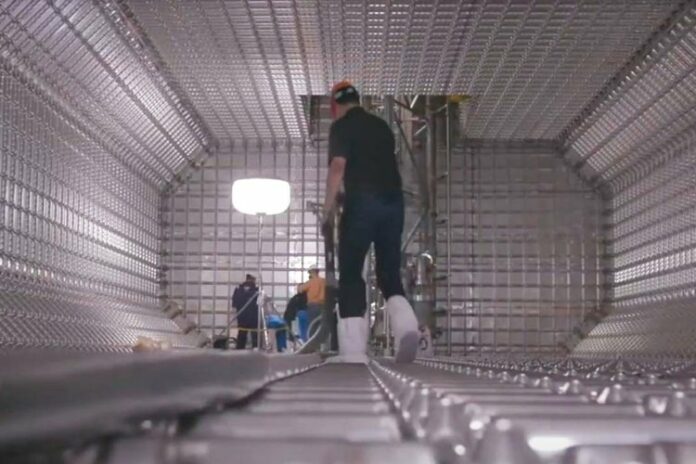
Each LNG fuel tank will be fitted with the Mark III membrane containment technology, demonstrating that GTT technology is as attractive for mid-size container vessels as for very large ones.

The vessels deliveries are scheduled to occur between the second and fourth quarter of 2024.

In addition to the engineering services and technical assistance at the shipyard, GTT will assist the operator throughout every step of its first LNG-fueled projects (commissioning of the LNG tank, first LNG bunkering operations, specific LNG operations and maintenance of the vessels). Moreover, GTT will provide LNG training for the crews, supported by its proprietary G-Sim® training simulator, which replicates the future LNG operations of the vessels. GTT will also offer its HEARS® emergency response service with 24/7 technical assistance.

In addition, GTT will fit these four vessels with its “GTT Digital” platform, to monitor and optimize the operational performance of the vessels and further reduce their energy consumption and environmental footprint.

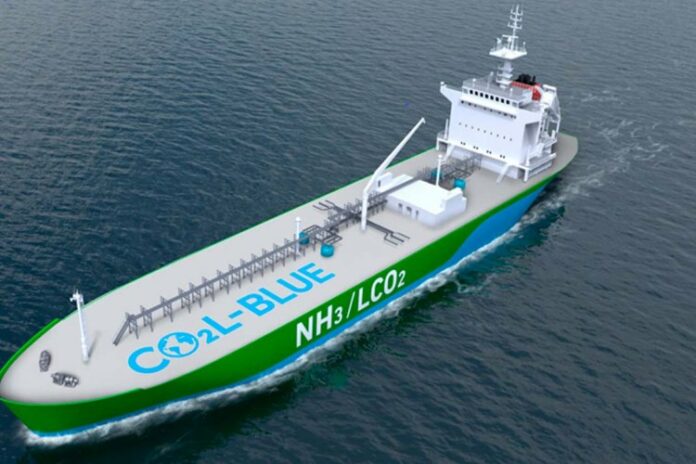
Mitsubishi completes conceptual study for ammonia/LCO2 carrier

0

Mitsubishi Shipbuilding, a part of Mitsubishi Heavy Industries (MHI) Group based in Yokohama, has completed a conceptual study for the design of an “Ammonia/Liquefied CO2 Carrier” capable of transporting both ammonia and liquefied carbon dioxide (LCO2). 

The extensive study conducted with Mitsui O.S.K. Lines, Ltd. provides the basis for a type of vessel with potential to become mainstream in the LCO2 carrier market by flexibly meeting the projected increase in demand for transporting ammonia and LCO2.

Ammonia is a source of stable clean energy projected to be used widely in the future, and LCO2 carriers play an important role in the carbon dioxide capture, utilization, and storage (CCUS) value chain, which is attracting attention as a means to achieve a decarbonized world, by providing a way to efficiently transport recovered LCO2 to storage sites and facilities for effective utilization. MHI Group estimates that the volume of CO2 reduction due to CCUS will amount to 4.3 to 13.0 billion tonnes annually by 2050.

The vessel for transporting ammonia and LCO2 developed through this conceptual study is designed to carry ammonia on its outward journey, and LCO2 on the return trip. Specific carriers for each material normally run empty on their return voyage, so a ship able to handle both substances will increase operational efficiency, and contribute to enhanced transport efficiency overall.

Polish polar explorers refused the services of Russian icebreaker

0

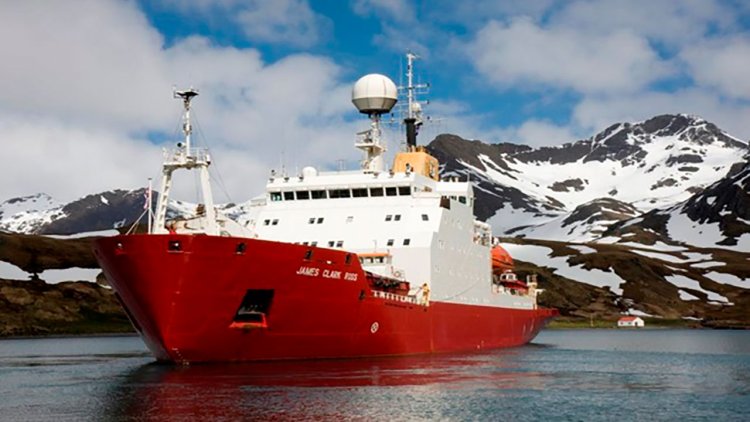
The Ukrainian icebreaker Noosfera (Noosphere) has already delivered some cargoes to the Polish Arctowski station at the end of March, during a flight from Chile to the Ukrainian Akademik Vernadsky station.

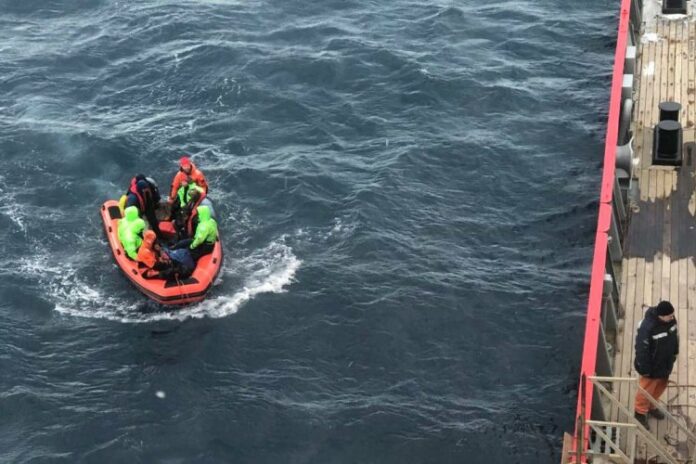
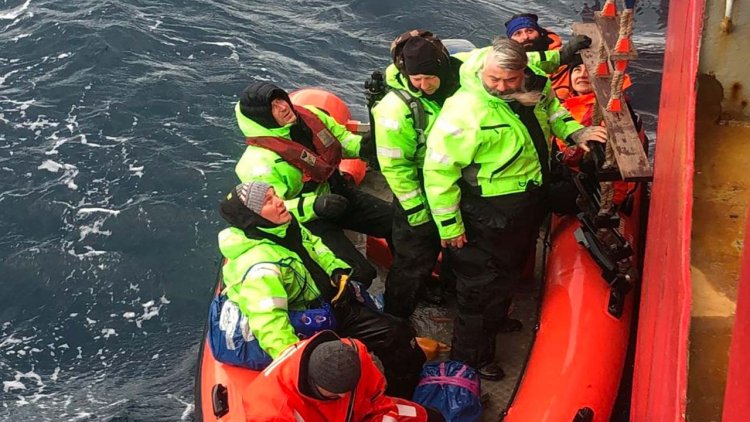
On the way back, Noosfera took on board members of the Polish Antarctic Expedition, who will be transported with Ukrainian polar explorers to the Chilean port of Punta Arenas.

Dr. Evgen Dykyi, Director of the National Antarctic Scientific Center of Ukraine (NASC), said:

“Literally a week after the start of the war, Polish colleagues approached us asking if our new icebreaker would not agree to service their Antarctic station. Before that, they chartered a Russian ship, but after the treacherous Russian invasion of Ukraine, they no longer want to spend a penny on them. That is, the Poles also sent a “Russian ship” in a known direction.”

According to Dr. Dykyi, the Center agreed to this proposal, as it will expand cooperation between Ukraine and Poland, and is very beneficial for both parties. He explained:

“Poland is giving us incredible support during this difficult time, in particular, it was the Polish Antarctic Program that helped us send our next expedition to Vernadsky.

And their “Arctowski” is located on the way from our “Vernadsky” to Chile, on the island of King George, which is quite convenient. King George is usually a stopover for ships before entering the world’s most turbulent Drake Strait.”

While Polish colleagues loaded onto the Noosphere, Ukrainian biologists returning home from work on Vernadsky took soil and plant samples from King George Island. Thus, Ukrainians received valuable material for comparison with what was collected in the Vernadsky district. Therefore, even in difficult times of war, the work of Ukrainian scientists and fruitful international cooperation continues.

The Henryk Arctowski Polish Antarctic Station was opened on February 26, 1977. It is named after Henryk Arctowski, a prominent Polish geologist, geophysicist, and professor at Lviv University. 

Currently, the station is a year-round research center where oceanographic, geological, meteorological, biological, environmental and other research is conducted. 

Like the Ukrainian Antarctic Expedition, it has two detachments: annual and seasonal. The annual team changes during the Antarctic spring, and the season runs from the end of the Antarctic spring to the beginning of the Antarctic autumn. 

At one time, when for some reason women were not allowed on Vernadsky, it was on Arctowski that one of the first Ukrainian polar scientists, Ph.D. Iryna Kozeretska, now Deputy Director of the National Academy of Sciences.

Evergreen ship lodged in Chesapeake for a month moving again

0

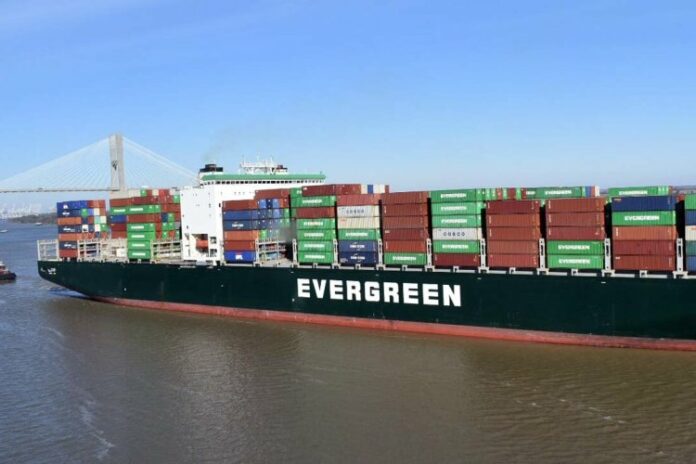
The Evergreen Marine Corp. container ship that had been stuck in Chesapeake Bay mud for more than a month is moving again, vessel-tracking data show.

The navigational status changed Sunday to “under way using engine” after being classified as “aground” since it got bogged down just off the bay’s main shipping channel after departing the Port of Baltimore on March 13, according to mapping data compiled by Bloomberg. Several attempts to free the Ever Forward with tugs failed, and officials recently offloaded some containers to lighten the load.

The Ever Forward was refloated and following underwater inspections at a nearby anchorage, “will return to the Port of Baltimore and reload the cargo that had been discharged earlier this month and then continue on its previously scheduled voyage,” Evergreen Marine said in statement late on April 17. It added that throughout the refloating efforts, the ship had “been found to be free of damage from the incident” and showed no indication of fuel leakage or pollution.

Ship blockages are another physical hiccup in the global supply chain that has helped fueled U.S. inflation to a 41-year high. Another Evergreen vessel lodged itself in a narrow portion of the Suez Canal last year, disrupting global shipping for months. 

A salvage team led by the U.S. Coast Guard had waited until this weekend with hopes that a full moon and high tides would be able to dislodge the ship after the latest attempt failed. The carrier has close to 5,000 containers on board, while at full capacity it can handle around 12,000 20-foot containers. The company declared general average, which requires owners of the cargo to split the recovery costs. 

William P. Doyle, executive director at the Port of Baltimore, said on Twitter Sunday, said:

“Outstanding leadership by the U.S. Coast Guard, Maryland Department of Environment, Maryland Port Administration, and Maryland Environmental Services. A tremendous execution by Don Jon-Smit, the salvage team. Hats off to the Jones Act dredging, marine construction, tug and barge.”

Source: Bloomberg

Plan announced for shovel-ready offshore wind cable plant in NJ

0

As part of its Outerbridge Renewable Connector project, Rise announced it is prepared to invest millions to develop a shovel-ready site for a submarine cable manufacturing facility at DRP-owned Repauno Port & Rail Terminal in Greenwich Township (Repauno).

The proposed submarine cable manufacturing facility will have a footprint of approximately 30 acres, along with dock access.  Upon approval of the Outerbridge Renewable Connector project, pending before the BPU, Rise and DRP will commence development and permitting work to make the site shovel-ready and to attract an offshore wind cable manufacturer, who would ultimately construct and operate the facility. Submarine cable manufacturing facilities of similar size typically generate approximately 500 jobs during construction and over 100 good-paying, full-time jobs during operations.

Clint Plummer, CEO of Rise Light & Power, said:

“This opportunity will bolster New Jersey’s leadership in offshore wind with a major investment to create good-paying jobs and become a national supply chain leader. The Outerbridge Renewable Connector will revitalize and repurpose infrastructure to meet New Jersey’s bold clean energy goals.”

Hank Alexander, DRP’s CEO, said:

“The Repauno Port & Rail Terminal is an ideal location for this project. Conveniently situated along the Delaware River, we are accessible and fully capable of meeting the offshore wind industry’s needs.”

Senator Edward Durr, representing the District of New Jersey in which Repauno is located, said:

“Wind power is coming to Jersey. Atlantic Shores, Ocean Wind, New York Bight are underway and I’m sure others will follow. Submarine cables taking the power generated by offshore wind to the Rise Light & Power site for distribution is a sensible plan. Manufacturing those submarine cable at Repauno is a great opportunity to bring good paying jobs to the Third Legislative District and help generate additional economic development in our community.”

Vince Giovannitti, Mayor of Gibbstown, said: “New Jersey’s first cable manufacturing facility will inject new life into Greenwich Township’s manufacturing sector and provide good-paying local jobs for our residents.  This is an ideal re-use of the former DuPont property and will be a driver of our local economy.”

Upon hearing of the new effort to develop the facility in Gibbstown, Christina M. Renna, President & CEO of the Chamber of Commerce Southern New Jersey (CCSNJ), said:

“CCSNJ proudly welcomes this new partnership between Repauno Port & Rail and Rise Light & Power. Having a shovel-ready site will attract manufacturers to our region, paving the way for hundreds of new manufacturing jobs and connecting our community with the on-going clean energy transition in New Jersey.”

With a demand for 800 to 1,000 miles of cable per year in the U.S. and growing, the addition of a new submarine cable manufacturing factory positions New Jersey as a critical link in the offshore wind supply chain to meet this growing demand. Currently, there is only one operational U.S. offshore wind cable manufacturing facility out of South Carolina. A typical offshore wind cable manufacturing plant may produce approximately 120 miles of cable per year, depending on size.

Rise and DRP will develop the site to be shovel-ready and collaborate to attract manufactures of two types of subsea cables required for offshore wind farms. First are inter-array cables that connect turbines within the offshore wind farm to an offshore substation, and the second are export cables that connect the offshore substation to the onshore grid.

NOAA’s Ocean Exploration Cooperative Institute takes delivery of DriX USV

0

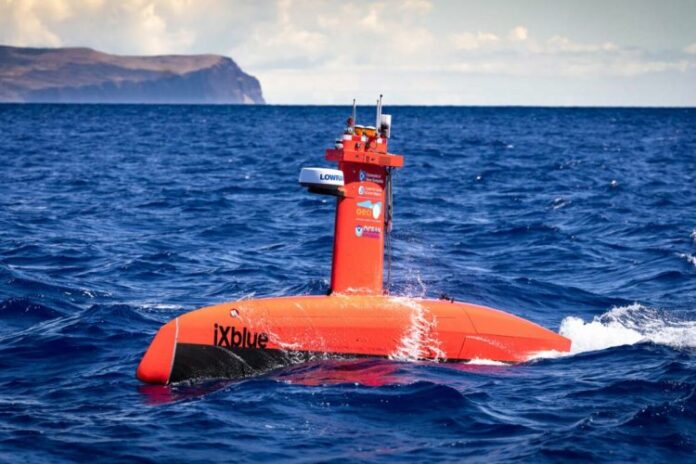
The University of New Hampshire’s Center for Coastal and Ocean Mapping (UNH CCOM), as a member of the Ocean Exploration Cooperative Institute (OECI), funded by NOAA Ocean Exploration, has taken delivery of an iXblue DriX Uncrewed Surface Vehicle (USV) and its Universal Deployment System. 

Delivered in July to UNH CCOM, DriX and its novel Universal Deployment System have successfully completed sea acceptance trials and extensive personnel training during the summer of 2021 as well as integration and a first shakedown cruise onboard Ocean Exploration Trust’s E/V Nautilus in March 2022.

UNH CCOM Director Larry Mayer said:

“We are delighted to embark on this exciting endeavor, working collaboratively with our partners to develop and enhance autonomous technologies that will expand the limits of our capabilities and bring new efficiencies to our efforts to explore and characterize the vast unknown areas of our oceansю” 

NOAA Ocean Exploration Director Jeremy Weirich said:

“NOAA Ocean Exploration is pleased to see the operations of this new DriX technology successfully integrated with Exploration Vehicle Nautilus. Being able to operate DriX over the horizon and away from a ship will increase the rate at which we can explore the U.S. Exclusive Economic Zone in support of the National Strategy for Ocean Mapping, Exploration, and Characterization.”

Selected by OECI for its mission endurance, ability to operate at high-speed, and excellent offshore seakeeping ability, DriX will support NOAA Ocean Exploration’s mission by providing mapping and characterization capabilities and supporting other autonomous vehicles that are independent of the activities of the mother ship, greatly expanding the efficiency and effectiveness of ocean exploration operations. The research being conducted with DriX will serve to inform NOAA on the potential use of autonomous systems in support of the broad NOAA mission.

Dr. Adam Soule, Executive Director of OECI, said:

“We are thrilled to add DriX to the OECI collection of vehicles. It is critical to our vision of expanding the footprint of ocean exploration by collecting valuable ocean exploration data independently and simultaneously with a research vessel and at the same time providing communications and support for submerged assets. This is a linchpin for the future of ocean exploration.”

Naval Group delivers the last multi-mission offshore patrol vessel for Argentina

0

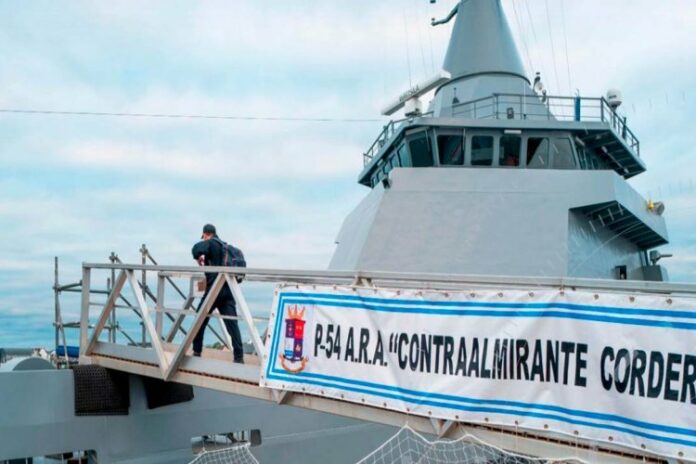
A.R.A. Contraalmirante Cordero has been delivered to the Argentine Navy in Concarneau. It is part of the contract signed by Naval Group with Argentina in 2019 for the supply of four Offshore Patrol Vessels (OPV).

The A.R.A. Contraalmirante Cordero is the last vessel of the series and its delivery marks the success of a program that has met all its deadlines: the A.R.A. Bouchard (ex-L’Adroit) was delivered in December 2019 two months ahead of schedule, and the second and third offshore patrol vessels A.R.A Piedrabuena and A.R.A Storni were delivered in April and October 2021, in line with the original schedule.

This success was made possible thanks to the close collaboration between Naval Group, Kership and Piriou, who worked side by side with the Argentinean Navy. The excellent overall customer satisfaction rate, measured at 97%, confirms the excellent conduct of this program.

Captain Santiago Villemur, representative of the Argentinian Navy in France said:

“We are conscious that delivering 4 ships in 3 years, training the crews and providing the associated logistics services was a real challenge. Our thanks and gratitude go to all the men and women of Naval Group and its industrial partners who have worked tirelessly to achieve this feat. These ships are already contributing to the defence of Argentina’s sovereign interests by enabling the Argentine Armada to carry out its missions at sea.”

Stéphanie Giroud, director of the program at Naval Group added:

“It is with great pride and emotion that we are delivering the last vessel of the series to Argentina on the exact date stipulated in the contract and are witnessing the raising of the Argentinean flag in Brittany for the fourth time. The success of this project is a collective one and is due to the excellence of the relationship established with the Argentinean Armada, whose high standards and confidence have motivated our teams to meet the client’s expectations to the maximum. It is also the result of a constructive and innovative industrial partnership between the teams of Naval Group, Kership and Piriou.”

The Argentine offshore patrol vessels benefit from innovations developed by Naval Group and proven by the French Navy, which has operated L’Adroit in several oceans for six years for multiple maritime security operations, alone or in cooperation. The three patrol vessels of the series constructed in Concarneau offer the same assets and features as those of the A.R.A. Bouchard. Several developments have been incorporated to meet the needs of the Argentine Navy as closely as possible. Better armed and motorised than the Bouchard, equipped with an active stabilisation system and a bow thruster, it is also Ice proven, i.e. adapted to navigation in the cold waters of Antarctica. They offer:

  • very high endurance and excellent sea-worthiness;
  • a 360° visibility from the bridge and a unique mast for a panoramic radar coverage;
  • the rapid, safe and discrete deployment of intervention crafts launched by a double system of ramps at the stern of the patrol vessel.

The A.R.A Contraalmirante Cordero is equipped with the POLARIS® system and NiDL® tactical data link system, specifically developed by Naval Group for state action missions at sea and sea-proven by the French Navy

The Offshore Patrol Vessel is able to stay on high seas during more than three weeks, to reach a speed of 20 knots and to accommodate a helicopter. Implemented by a reduced crew of 40 members, it is also able to accommodate about twenty extra passengers.

  • Length: 87 meters
  • Beam: 14 meters
  • Displacement: 1,650 tons
  • Max. speed: over 20 knots
  • Accommodation: 59 (crew and passengers)
  • Endurance: > 7,000 nautical miles
  • Boarding capacity: two light crafts of 9 meters and one 10-ton class helicopter

Damen delivers Multi Cat 2409 for maintenance of Port de Kamsar in Guinea

0

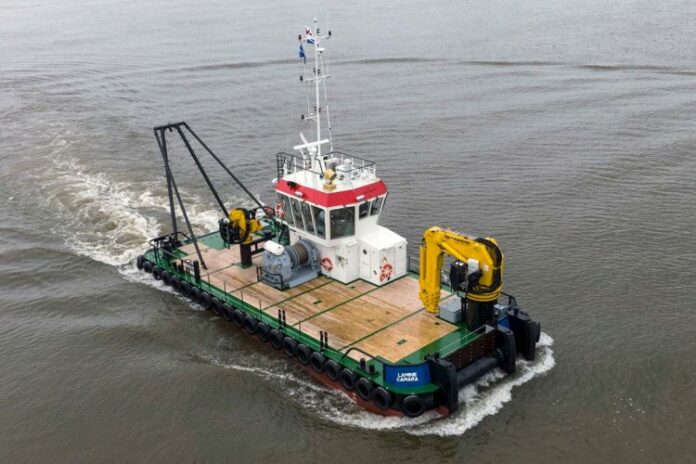
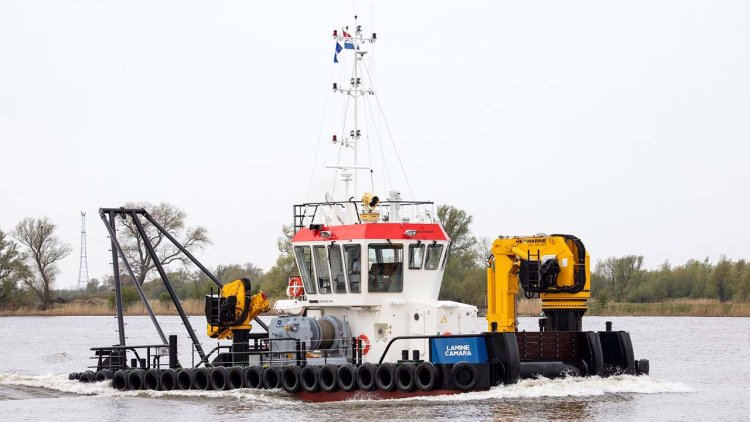
Within the exceptional short delivery time of just 4.5 months, Damen Shipyards Group has been able to deliver a customized Multi Cat 2409 for port and fairway maintenance at the Guinean Port of Kamsar. Great cooperation of Compagnie des Bauxites de Guinée (CBG) and Damen, overcoming covid restrictions in the process, has led to the outfitting of the vessel for a multitude of operations in the West-African port.

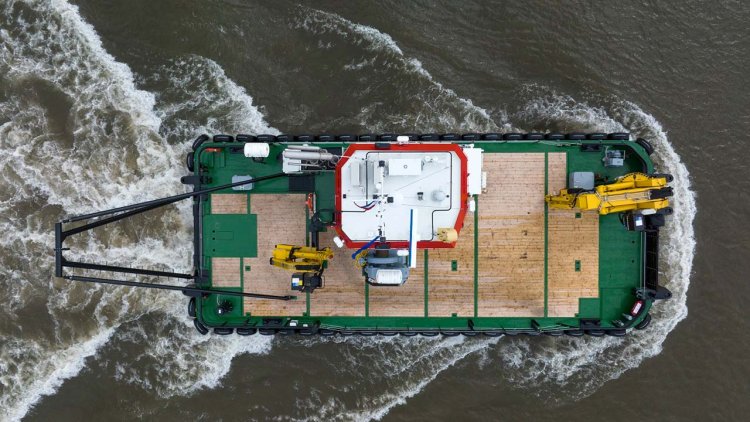
Damen will bring the new vessel to Guinea on its own keel, departing from the Hardinxveld yard in The Netherlands end of April for a journey of about four weeks. GBG will take delivery of the vessel and name her Lamine Camara. The vessel is equipped with two cranes. On the fore deck an exceptionally powerful crane is installed that can lift a weight of more than 18 tonnes at a range of 7 meters, while a second crane on the aft deck can lift more than 4.5 tonnes at a range of more then 5 meters. This is key equipment for lifting and laying buoys that mark the harbour entrance. CBG is responsible for port maintenance as the single largest user of the Port of Kamsar.

Maintenance of the buoys that guide bauxite ore carriers to and from the Port of Kamsar is crucial, especially in the rainy season with its limited visibility. Shallow waters with sand banks that move with tidal and river flows in the mouth of the Nunez river require careful navigation for which clearly laid out fairways marked with buoys are essential. Train tracks go from this port to the ore mines inland, bauxite is shipped from here to aluminium producers round the world.

Two Caterpillar CAT C32 engines provide a total propulsion power of 1268 kiloWatt resulting in a bollard pull of 22.5 tonnes. The vessel offers 109 square meters of deck space. A winch with 72 tonnes brake holding power adds to the flexibility of the vessel, that is equipped for a multitude of operations. A special tool is the 8 meter plough, installed aboard on an A-frame at the stern of the vessel. CBG will use the Multi Cat to plough the sea bed near the quays to keep the water deep enough and take away excess underwater vegetation that may obstruct manoeuvring and berthing at the harbour.

The Damen Multi Cat 2409 is part of the standardised range of Damen Multi Cats that consists of vessels from 9 meters up to 37 meters of overall length. All vessels are the result of years of experience from operators and ship builders and offer practical and safe working conditions in a high quality and durable construction and outfitting. Damen builds vessel beforehand and has them in stock for quick delivery to clients. Only weeks are needed to equip the Multi Cats to operator specifications, so the vessel can be engaged in actual operations very quickly.

ABS AIP for K LINE and JGC’s innovative FLNG design

0

An innovative concept for a floating LNG (FLNG) vessel utilizing storage tanks from older LNG carriers has been granted approval in principle (AIP) by ABS.

The design, jointly developed by Kawasaki Kisen Kaisha, Ltd. (“K” LINE) and JGC Corporation (JGC), supported by Japan’s Ministry of Land, Infrastructure, Transport and Tourism, involves transferring and reusing LNG storage tanks from spherical tank (Moss tank) LNG carriers in the hulls of new FLNG facilities.

By re-using existing LNG vessels’ Type B storage tanks, the potential number of shipyards globally able to build FLNG units is increased, which supports the forecasted demand for a wider and quicker adoption of FLNG technology.

Tor Ivar Guttulsrod, ABS Director, FLNG and FSRU, said:

“In many areas of the world, FLNG represents a potential solution to the challenge of meeting increasing demand for natural gas without the need for an export pipeline to shore and the associated infrastructure. ABS is committed to supporting development of FLNG globally while retaining a laser focus on safety.”

Satoshi Kanamori, Executive Officer of “K” LINE, said:

“This innovative FLNG leverages “K” LINE’s expertise in LNG carrier business and contributes to reuse of existing assets to support the world’s environment. “K” LINE will continue to make relentless efforts and generate new values to meet the diversifying needs of our customers.”

Hiroyuki Ishizaki, Executive Officer of JGC Corporation, said:

“This is based on our technical capabilities accumulated in FLNG EPC projects. This results in the enhancement of the customer’s FLNG business since it is potentially an optimized CAPEX solution. JGC will continue to develop FLNG technologies for open seas and nearshore.”

ILO, IMO call for urgent action on stranded seafarers in Ukraine

0

The heads of the International Labour Organization (ILO) and the International Maritime Organization (IMO) have called for urgent action to protect seafarers and vessels stranded in Ukrainian ports and nearby waters following the Russian aggression against the country.

In a joint letter to the heads of the United Nations High Commissioner for Refugees (UNHCR), International Committee of the Red Cross (ICRC) and Médecins Sans Frontières (MSF), ILO Director-General, Guy Ryder and IMO Secretary-General, Kitack Lim, outline the plight of seafarers on more than 100 trading vessels who are unable to leave the ports of Ukraine and nearby waters.

According to the IMO, as many as 1,000 seafarers are trapped, including in the besieged city of Mariupol, and on vessels in the Sea of Azov.

‘As well as the dangers arising from bombardment, many of the ships concerned now lack food, fuel, fresh water and other vital supplies. The situation of the seafarers from many countries is becoming increasingly untenable as a result, presenting grave risks to their health and well-being.’

The letter asks the three agencies to ‘take urgent action’ to assist in the reprovisioning of the ships concerned with the vital supplies needed by seafarers on board.

The move by the ILO and IMO follows urgent communications about the situation sent by the International Chamber of Shipping (ICS) and the International Transport Workers’ Federation (ITF).

ILO, IMO, ICS and ITF are working together to provide these relief agencies with information that may assist them to address this situation.

In March, the ILO’s Governing Body passed a resolution calling on the Russian Federation to ‘immediately and unconditionally cease its aggression’ against Ukraine.