-0.8 C
New York
Home Blog Page 452

Guadeloupe newbuild showcases Incat Crowther’s Digital Shipbuilding

0

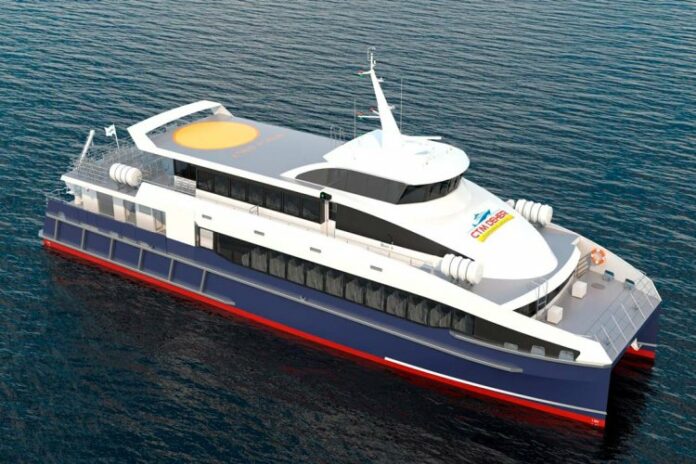
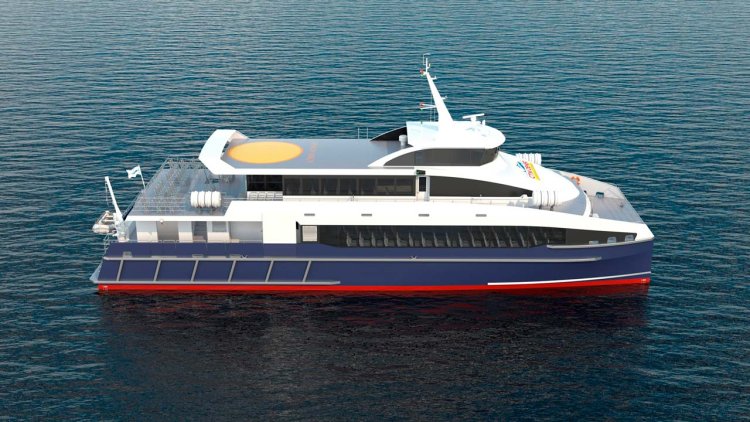
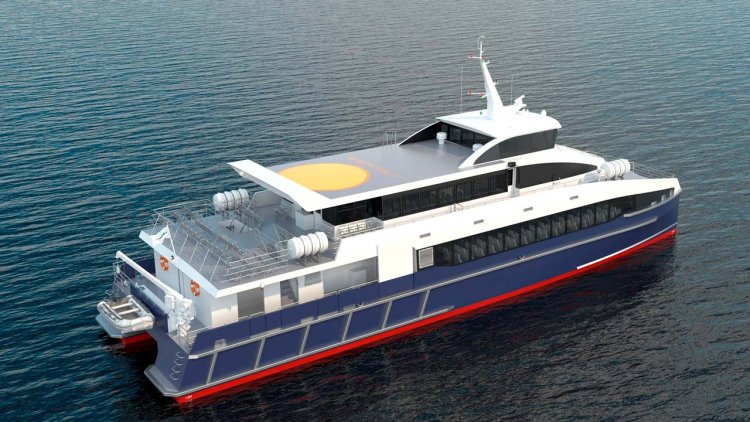
The Incat Crowther 35 is being built by PT Kim Seah Shipyard Indonesia, a wholly owned subsidiary of Singapore’s publicly listed Penguin International Limited, using Incat Crowther’s Digital Shipbuilding solution.

Incat Crowther’s Digital Shipbuilding solution brings together the designer, the shipyard and the owner under one cohesive process from conception through delivery.

Incat Crowther was instrumental in the development of the project and, by working in close collaboration with the operator, facilitated shipyard selection and the contracting solution, and will be involved in quality assurance throughout the shipbuilding and delivery process.

A key feature of Incat Crowther’s Digital Shipbuilding solution is a comprehensive 3D digital model of a ship, comprising all its structural parts, mechanical and systems components, and associated data. This complete model of the ship allows rigorous control of the construction and quality management processes, as well as the weight of the vessel, to ensure it will perform and function exactly as required.

Additionally, Incat Crowther will be providing its Quality Management System, a sustainable model overseeing the construction of operationally-optimised vessels at trusted shipyard partners. An on-site representative, working closely with the shipyard’s engineering team, will report directly to the owner.

The newbuild ferry will carry 316 passengers over two decks in two distinct classes. A large midship staircase links the two decks and houses additional luggage racks. A kiosk is located at the aft end of the main deck, with bathrooms aft. A large luggage room is located aft of the main deck cabin, with separate access. Overhead gantries assist with the movement of large, heavy luggage trolleys.

The aft exterior portion of the mid deck features exterior seats for 48 passengers. The wheelhouse is elevated for good all-round visibility.

The vessel will be powered by twin MTU12V4000 main engines, producing 1380 kW each, driving five-bladed propellers. The vessel will have a service speed of 25 knots at reduced MCR.

Russian navy evacuates flagship in Black Sea. Ukraine claims it was hit by a missile

0

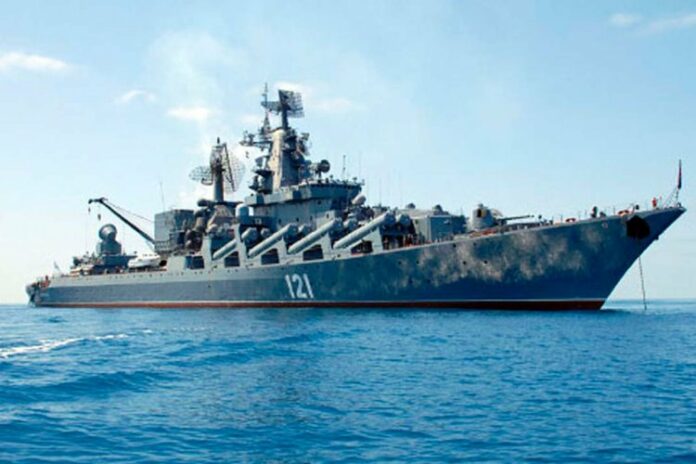
Russian sailors have evacuated the guided-missile cruiser Moskva, the flagship of its Black Sea fleet, after a fire that detonated ammunition aboard, Russian state media reported Wednesday.

State media outlets TASS and RIA, citing the Russian Defense Ministry, said the Moskva had been seriously damaged in the incident and that the cause of the fire was being investigated. The Russian reports gave no information on possible casualties.

But hours earlier, a Ukrainian official claimed the Russian warship had been hit by cruise missiles fired from Ukraine.

Due to large storms over the Black Sea obscuring satellite imagery and sensory satellite data, CNN has not been able to visually confirm the ship has been hit or its current status, but analysts noted that a fire on board such a ship can lead to a catastrophic explosion that could sink it.

Whatever the reason for the fire, the analysts say it strikes hard at the heart of the Russian navy as well as national pride, comparable to the US Navy losing a battleship during World War II or an aircraft carrier today.
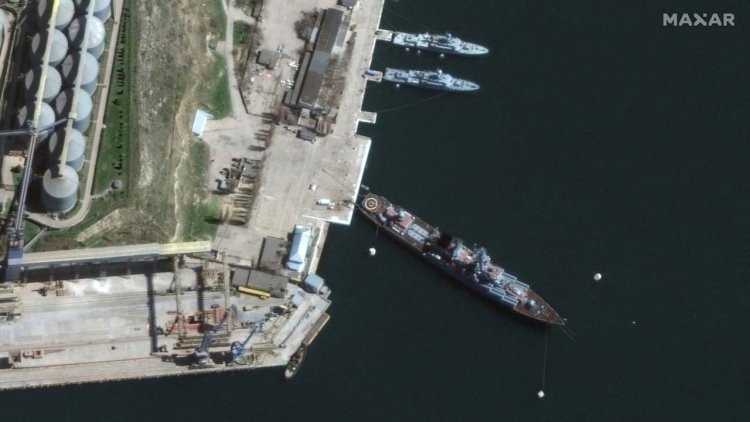
Photo: The Russian Navy cruiser Moskva, bottom, is seen in port in Sevastopol, Crimea, on April 7.

“Only the loss of a ballistic missile submarine or the Kutznetsov (Russia’s lone aircraft carrier) would inflict a more serious blow to Russian morale and the navy’s reputation with the Russian public,” said Carl Schuster, a retired US Navy captain and former director of operations at the US Pacific Command’s Joint Intelligence Center.

Alessio Patalano, professor of war and strategy at King’s College in London, said losing the warship would be a “massive blow” for Russia.

“Ships operate away from public attention and their activities are rarely the subject of news. But they are large floating pieces of national territory, and when you lose one, a flagship no less, the political and symbolic message — in addition to the military loss — stands out precisely because of it,” he said.

The 611-foot-long (186 meters) Moskva, with a crew of almost 500, is the pride of the Russian naval fleet in the Black Sea. Originally commissioned into the Soviet navy as the Slava in the 1980s, it was renamed Moskva in 1995 and after a refit reentered service in 1998, according to military site Naval-Technology.com.
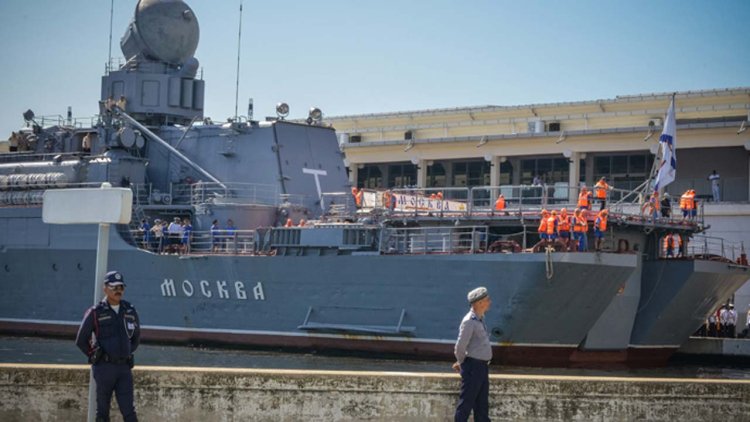
The Moskva is armed with a range of anti-ship and anti-aircraft missiles as well as torpedoes and naval guns and close-in missile defense systems.

All those represent massive amounts of explosive ordnance in its ammunition magazines. Any fire nearing them would have given the crew limited options to deal with the threat, Schuster said.

“When a fire reaches your ammunition magazine(s), you have two choices; 1) flood them or 2) abandon ship,” Schuster said. “Otherwise your crew is onboard to be wiped out by the catastrophic explosion that follows a fire reaching several hundred tons of ordnance.”

Odesa state regional administrator Maxim Marchenko claimed in a post on Telegram that Ukrainian forces had used Neptune cruises missiles to attack the Moskva. If that’s true, the Moskva would potentially be the largest warship ever taken out of action by a missile, Schuster said.

Such an achievement would represent a big advance for Kyiv’s forces. The Neptune is a Ukrainian weapon, developed domestically based on the Soviet KH-35 cruise missile. It became operational in the Ukrainian forces just last year, according to Ukrainian media reports.

If it was used to attack the Moskva, it would be the first known use of the Neptune during the war, according to a post on the website of the Center for International Maritime Security (CIMSEC) from Lt. Cmdr. Jason Lancaster, a US Navy surface warfare officer.

His post for the CIMSEC on Tuesday said the threat posed by mobile shore-based cruise missiles like the Neptune “changes operational behavior” of an enemy.

Russian “ships will operate in ways to minimize the risk of detection and maximize their chances to defend themselves,” Lancaster wrote. “These behavioral changes limit Russia’s ability to utilize their fleet to their advantage. The added stress of sudden combat increases fatigue and can lead to mistakes.”

According to Patalano, the war professor: “It would appear the Russians have learned that the hard way today.”

The Moskva also poses symbolic significance to Ukraine as it was one of the ships involved in the famous exchange at Snake Island in February, according to Oleksiy Arestovych, an adviser to Ukrainian President Volodymyr Zelensky.

According to a purported audio exchange in late February, as the Russians approached the Ukrainian garrison on Snake Island, also known as Zmiinyi Island, in the Black Sea, a Russian officer said: “This is a military warship. This is a Russian military warship. I suggest you lay down your weapons and surrender to avoid bloodshed and needless casualties. Otherwise, you will be bombed.”

A Ukrainian soldier responded: “Russian warship, go f*** yourself.”
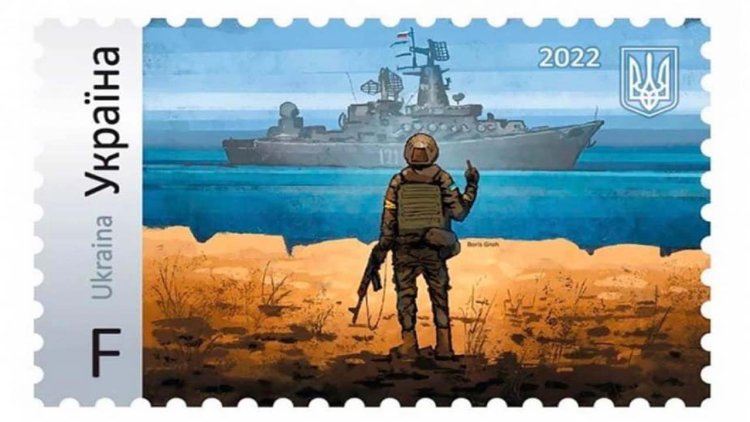
Image: On April 12, 2022, Ukrposhta presented and put into circulation the first in martial law conditions postage stamps with a “Russian warship, go…!” slogan.

If the Moskva is lost, it would be the second large-sized Russian naval vessel to suffer that fate during Moscow’s war with Ukraine. In late March, Ukraine said a missile strike had destroyed a Russian landing ship at the port of Berdiansk.

Source: CNN

Boskalis retrofits selected offshore vessels resulting in significant emissions reductions

0

The conversions, which entail a sizable capital investment, will reduce the vessels’ fuel consumption and associated carbon dioxide and nitrogen oxide emissions by an average of up to twenty percent.

The systems also provide a power supply and energy storage facility while the vessels are docked and contribute to quieter and more efficient operations offshore.

The modifications, which will be completed over the next two years, will be carried out on the versatile crane vessels Bokalift 1 and Bokalift 2, two construction support vessels and two diving support vessels, all of which have dynamic position DP2 capabilities.

Boskalis already employs a range of technologies on board of its vessels, including special dashboards to enhance efficient fuel usage and the use of biofuels as an alternative to fossil fuels. Within Boskalis’ fleet of trailing suction hopper dredgers, these measures have contributed to a twenty percent reduction in the vessels’ carbon intensity since 2011.

Boskalis is committed to reducing its emissions in the near term using currently available technologies and to becoming climate neutral across its global operations by 2050.

Reductions in emissions are, in part, dictated by the readiness and global availability of suitable alternatives to fossil fuels within the maritime industry. For this reason, as a member of a consortium, Boskalis is participating in a comprehensive, multi-year research program to accelerate the use of methanol as an alternative fuel within the sector.
 

PETRONAS and Titan LNG partner to deliver LNG to VLCC Yuan Rui Yang

0

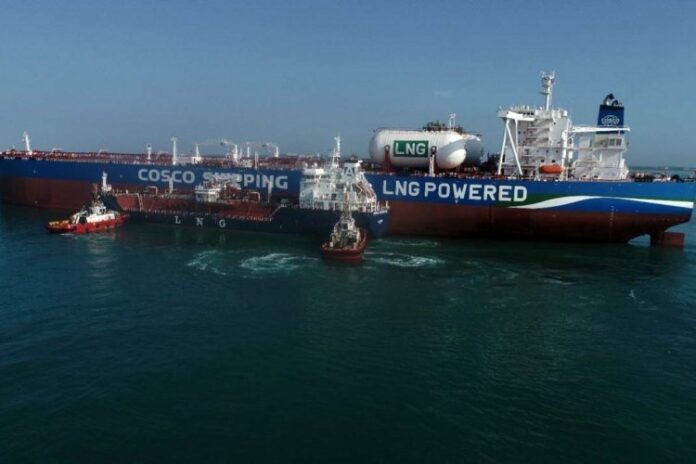
World-leading independent alternative fuels supplier, Titan LNG has partnered with PETRONAS Marine – the marine solutions arm of energy multinational, PETRONAS, to deliver LNG under a Term Supply Agreement to VLCC Yuan Rui Yang, chartered by Koch Industries and owned by Cosco. 

The ship-to-ship transfer (STS) bunkering of the world’s first LNG-fuelled VLCC took place in the port of Pasir Gudang, Malaysia using the Avenir Advantage – PETRONAS’ long term-chartered barge.

Delivered in February this year, the Yuan Rui Yang is the world’s first LNG-fuelled VLCC. The vessel is 333 metres long, 60 metres wide and 30.5 metres deep. It has a WinGD low-pressure dual-fuel main engine and two 3,500 cubic metre LNG storage tanks.

This is the first delivery under contract agreement between Titan LNG and Koch Industries and marks another milestone for the PETRONAS-Titan collaboration, which has previously supplied LNG across Asia to vessels including the Siem Aristotle and several other smaller vessels that were en route from Asia to Europe. This demonstrates Titan LNG and PETRONAS’ shared purpose to create a cleaner future.

Global access is now a reality as the LNG bunkering pioneers collaborate to deploy expertise worldwide. As the expansion of LNG infrastructure continues to build momentum in meeting cleaner energy demand, multiple players are coming together to ensure availability and supply, as well as technical assistance and compatibility. As an independent supplier, Titan LNG assists customers and partner suppliers in realising the common goal of making LNG the preferred fuel for a sustainable future, helping both sides to optimise the LNG supply process and providing technical knowledge for efficient compatibility checks.

Michael Schaap, Titan LNG’s Commercial Director Marine commented:

“We are proud of the strong and ongoing relationship with our supply partner, PETRONAS Marine, and the faith shown by our long-term customer, Koch Industries. As the LNG pathway gains recognition and momentum, taking a collaborative approach enables us to continue to deliver LNG safely across Europe, Asia and around the world.

“Shipping companies such as Cosco and Koch are becoming much more aware of how to meet the 2030 and 2050 decarbonisation targets and recognise that the use of LNG as a marine fuel has a multitude of benefits. Not only its negligible local emissions profile but its clear global emissions reduction pathway through the introduction of bioLNG and hydrogen-derived LNG. This is why Titan is committed to providing access to LNG, and all commercially viable alternative fuels, enabling more shipping companies to start the journey towards a zero-carbon future today.”

Titan LNG’s collaboration with PETRONAS Marine has reached yet another milestone with the safe and smooth LNG bunkering supply to Koch Industries. The collaborators believe that LNG, as the cleanest burning fossil fuel, is currently the best option for the energy transition. PETRONAS Marine as a one-stop marine solutions partner in the region, will continue to ensure reliable and competitive LNG supply for the Asia-Pacific and Europe Trading route.

Wärtsilä optimises maintenance and emissions for MMS gas carriers

0

The technology group Wärtsilä has signed Optimised Maintenance Agreements (OMAs) covering two LNG carrier vessels technically managed and operated by the Japanese shipping group MMS Co., Ltd.

The agreements, signed in February 2022, are designed to deliver maximised engine uptime and long-term cost predictability, optimising maintenance for highest efficiency and lowest carbon footprint.

Central to the OMAs value is Wärtsilä’s latest digital predictive maintenance solution, Expert Insight. Using artificial intelligence (AI) and advanced diagnostics, the service enables onboard equipment and systems to be monitored in real-time. Anomalies are flagged to specialists at Wärtsilä Expertise Centres, allowing them to support customers proactively with an appropriate resolution.

Henrik Wilhelms, Director, Agreement Sales at Wärtsilä, said:

“When we introduced Expert Insight we said that it would take predictive maintenance to the next level, and this has proven to be the case. It is a hugely beneficial service that forms the basis for better asset management decisions and increased operational efficiency. This lowers both operational cost as well as emissions.”

The two vessels operate with Wärtsilä 50DF dual-fuel engines. In addition to Expert Insight’s asset diagnostics and anomaly detection capabilities, under the terms of the agreements Wärtsilä will also provide all spare parts, dynamic maintenance planning, remote operational support, field services, and workshop services.

TECO2030 receives BWTS order from Avangard Shipyards

0

This BWTS order was landed by TECO2030’s team in Miami, USA. This confirms TECO2030’s position in the market as a preferred BWTS partner and proves our capabilities to cooperate with clients around the world.

Ballasts are reservoirs used to stabilize ships according to their load. In order to prevent invasive species from travelling from one region to another, and possible health issues, a ship’s ballast water needs to be treated before being discharged back to sea. Our system complies with the new G8 rules which were put in force in October 2020. TECO2030 Ballast Water Treatment System complies with International Maritime Organization and United States Coast Guard rules.

Tore Enger, CEO of TECO2030 ASA, says:

“The sale of existing and proven technology to reduce emissions and pollution from ships, means TECO2030 will have meaningful revenue streams while we work on our most ambitious project, the development of the TECO2030 Marine Fuel Cell, a hydrogen-based fuel cell specifically developed for maritime use.”

Minesto launches plan for build-out of tidal energy arrays in the Faroe Islands

0

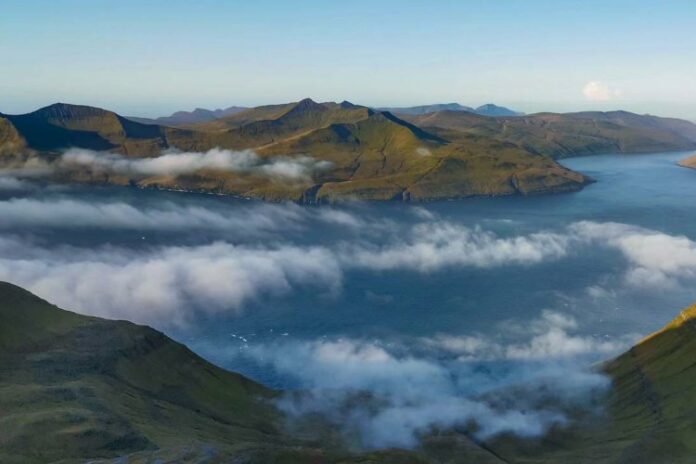
The plan includes four new verified sites that would supply 40% of the nation’s growing electricity consumption, enabling the Faroe Islands to reach its policy goal of 100% renewable energy by 2030. Together with utility company SEV, Minesto has presented the plan to a wide range of policy and local community stakeholders – including the Prime Minister and Minister of Environment, Industry and Trade – and it has been received very positively.

The large-scale build-out plan sets out a stepwise installation of tidal kite arrays, each with 20-40 MW installed capacity, at four verified locations. In addition to Minesto’s existing grid-connected site in Vestmannasund, the company points out Hestfjord, Leirviksfjord, Skopunarfjord and Svinoyarfjord as ideal arrays. With a total capacity of 120 MW tidal energy, generating an estimated 350 GWh per year, the arrays would supply 40% of the Faroe Islands’ growing electricity consumption.

Martin Edlund, CEO of Minesto, said:

“We’re very pleased with the outcome of the joint presentation tour together with SEV, and the interest and positive response of our build-out plan. In our dialogue with the Faroese community, all key aspects of full integration of Minesto’s tidal technology into the islands´ energy system have been covered. This includes environmental permitting, legislation for sea-bed access, local partnerships regarding port-access, manufacturing, and funding.”

During 2022, the first step is to expand the existing grid-connected site in Vestmannasund, establishing a mini array with three systems at a total installed capacity of 1.4 MW. The second step, planning and permitting ongoing, is a 10 MW array in Hestfjord, with direct electricity distribution to nearby capital Torshavn. After that further build-out of Hestfjord will follow, as well as stepwise build-out of Leirviksfjord, Skopunarfjord and Svinoyarfjord. In total, this makes it possible to deliver a cost-effective path to 100% renewable energy by 2030.

As every nation seeks to secure a clean, reliable, and independent energy system, there’s a rising need for complementary components such as energy storage and predictable production of energy. The Faroe Islands has one of the world’s most ambitious schemes for green transition, where tidal energy can be crucial to balance the seasonal variations and unpredictability of wind and solar.

Terji Nielsen, head of SEVs R&D department, said:

“If we can unlock the potential of tidal energy in the Faroe Islands, in both economic and technical terms, to deliver predictable energy to the Faroese energy system, it can disrupt the energy mix in the islands. A diversified renewable energy mix, including tidal energy, can lower the total installed capacity and the need for energy storage.”

Furthermore, the phase shift of the tidal flows in the different fjords provides valuable flexibility and a continuous supply of electricity into the grid. This approach reduces the investment significantly.

Martin Edlund said:

“As we’re in the forefront of creating a completely new industry, where we intend to add predictable tidal energy to the global energy mix, we’re thrilled to support the Faroe Islands in their explorative and ambitious journey towards a balanced energy system.”

Hákun Djurhuus, CEO of SEV, said:

“We’re a small country, but we’re a complete country. We are small scale but full scale. We can lead the way also for other island and coastal communities. We are looking forward to this journey together, still a lot of work remains, but very promising.”

Emissions monitoring campaign kicks off over the Baltic Sea

0

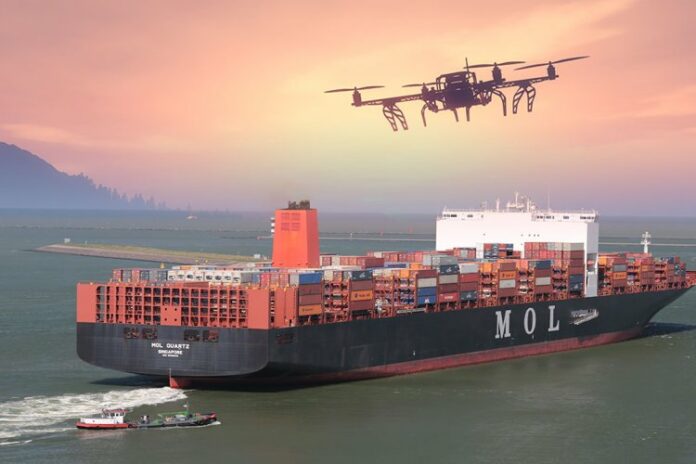
Together with the Federal Maritime and Hydrographic Agency, the European Maritime Safety Agency (EMSA) is conducting a large-scale emissions monitoring campaign using remotely piloted aircraft, scheduled to begin later this month. 

Over a three-month period, a specially equipped drone will measure the sulphur content in the exhaust plumes of ships transiting the Baltic Sea in order to be able to detect violations of the applicable limits. At the same time, image data will also be collected for hydrographic surveying purposes.

The remotely piloted aircraft will take off from the German Armed Forces’ Staberhuk site on the east coast of Fehmarn and fly over selected ships operating in the Fehmarn Belt and the Kadetrinne/Kadetrenden in order to measure the sulphur content of their exhaust plumes using specific sensors. In this way, it will be possible to infer the sulphur content of the ship’s fuel, which must not exceed a level of 0.10% in the Baltic Sea Emission Control Area (SECA).

The measurement results are made available in real time to responsible authorities in all European ports via THETIS-EU, the Port State Control information system operated by EMSA. In this way, ships can be specifically selected for inspection at their next port of call and samples of the fuel can be taken. If violations of the strict sulphur limits can be proven, those responsible face heavy penalties.

In addition to ship exhaust gas measurements, multispectral aerial imagery is acquired. For shallow waters, bathymetric values can be extracted from images. Furthermore, imagery allows for three-dimensional mapping of the shore zone. The drone survey campaign will investigate whether aerial imagery can provide complementary information for the German hydrographic surveying service.

The drone flights are operated by the Norwegian company Nordic Unmanned on behalf of EMSA. The sensor technology and analysis capabilities for the emission measurements is supplied by the Danish company Explicit ApS.

SHI and Seaborg partner to develop Floating Nuclear Power Plant

0

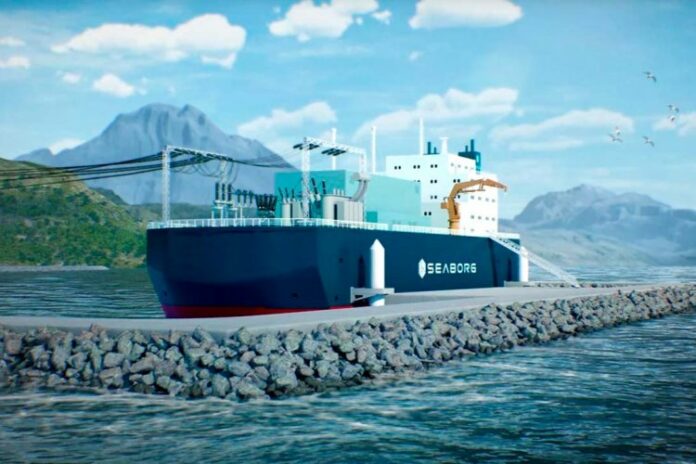
Samsung Heavy Industries (SHI) and Seaborg have announced signing a partnership agreement to develop floating nuclear power plants based on Seaborg’s inherently safe Compact Molten Salt Reactor (CMSR). The agreement includes development of hydrogen production plants and ammonia plants, as the CMSR is an ideal power source for supply of stable, clean, and safe electricity.

​Jintaek Jeong, president of Samsung Heavy Industries, says:

“CMSR is a carbon-free energy source that can efficiently respond to climate change issues and is a next-generation technology that meets the vision of Samsung Heavy Industries. In addition, when an abnormal signal occurs inside the reactor, the liquid nuclear fuel, molten salt, is solidified to prevent serious accidents at the source, and provides high safety and high efficiency power and hydrogen production at the same time.

Through this agreement, We plan to pioneer the CMSR-based floating nuclear power plant market as part of strengthening its future new business opportunity.”

​Troels Schönfeldt, CEO and co-founder of Seaborg, says:

“We are honoured and proud to have formed this partnership with Samsung Heavy Industries, one of the World’s largest and most experienced shipyards. It is another step forward in our quest to introduce a new generation of nuclear reactors that are clean and safe and can be built using industrial technology with all the benefits of scalability, speed, and lower costs.”

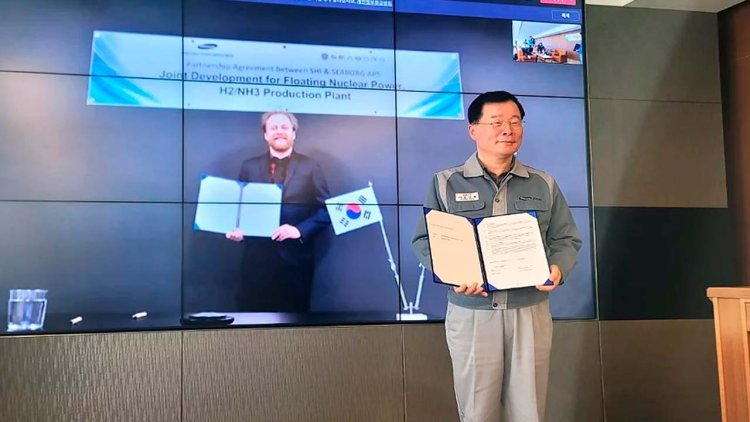
The partnership agreement was signed at an online event by Mr. Jintaek Jeong, President and CEO of SHI, and Mr. Troels Schönfeldt, co-founder and CEO of Seaborg. The aim of the strategic partnership is to manufacture and sell turn-key power plants, ready to be moored at industrial harbors and connected to the electric grid onshore.

The floating nuclear power plant comes as a turn-key product, ready to be moored at an industrial harbor. In the harbor, a transmission cable will be connected to the electric grid onshore. An optional solution is to place a hydrogen or ammonia production plant next to the floating nuclear power plant utilizing the CO2-free fission energy to produce hydrogen and ammonia.

The floating nuclear power plant design is modular delivering up to 800 MW-electric for the 24-year lifetime and cost competitive whether it plugs into the grid in an existing coal port or power production of hydrogen and ammonia.

When an abnormal signal occurs inside the reactor, it is designed to solidify molten salt, a liquid nuclear fuel, to prevent serious accidents at the source, providing high safety and high-efficiency power and hydrogen production at the same time.

Impact of digital technology on maritime sustainability explored in new report

0

Inmarsat has published a new decarbonisation report  exploring the impact digital technology can make on shipping’s greenhouse gas (GHG) emissions. 

Compiled by maritime innovation consultancy Thetius, and sponsored by the Inmarsat Research Programme, The Optimal Route – The Why and How of Digital Decarbonisation in Shipping provides evidence that digital optimisation offers a key strategy for owners set on meeting International Maritime Organization (IMO) CO2 targets for 2050.

Opening by identifying three key digital steps to achieve their decarbonisation objectives, the report recommends that shipowners ‘Know your numbers’ as Step 1 in the process. Owners should be in a position to measure vessel performance against metrics including the Carbon Intensity Index (CII) and the Energy Efficiency Existing Ship Index (EEXI). Based on the findings, Step 2 recommends developing a roadmap for decarbonisation, to include a flexible approach to asset purchasing and development. Step 3 advises owners to participate in green corridor schemes to gain access to favourable ship finance.

The report goes on to outline the industry’s ‘pathway to 2050’, highlighting the policy-based initiatives that will play the most significant role in guiding shipping towards decarbonisation. These include ‘Just-in-time clauses for voyage charter parties 2021’; the Poseidon Principles ship finance charter, which seeks to encourage financial institutions to invest in greener vessels; global maritime carbon levies to accelerate the uptake of zero-carbon fuels; and the Sustainable Shipping Initiative’s ‘beyond compliance’ scheme.

Ben Palmer, President at Inmarsat Maritime, said:

“New regulations and changes to the way cargo owners are selecting transport partners mean that ‘business as usual’ is no longer an option and this report from Inmarsat and Thetius demonstrates a positive way forward for shipowners. Shipping lines that act decisively on digitalisation and decarbonisation will move ahead; those that don’t will be frozen out of preferential financing, green incentive schemes and the most lucrative charter and cargo carriage agreements.”

Technology itself is also a focus, with several software tools developed to enhance shipping efficiency described in detail. According to the report, software that facilitates the remote execution of surveys and inspections, training and certification, and vessel pilotage can support environmentally friendly operations, as can those enabling paperless trade and voyage optimisation.

In its concluding chapter, ‘Spotlights on success’, the report further explores some of the applications featured, presenting case studies to highlight the way performance management platforms can be used to offer significant reductions in GHG emissions.

Nick Chubb, Founder and Managing Director at Thetius, commented:

“We need to act now to decarbonise the world fleet but alternative fuels won’t be available at a large enough scale for at least ten years. Digitally-driven optimisation is the only tool we have to improve carbon intensity that is available today and can be quickly scaled to every ship.”