0.6 C
New York
Home Blog Page 44

Japanese consortium to assess corrosion risks in ammonia fuel tanks

0

ClassNK announced that a consortium it formed with IHI Corporation, JFE Steel Corporation, Tohoku University, and Institute of Science Tokyo was selected by New Energy and Industrial Technology Development Organization (NEDO) to participate in the Feasibility Study Program on Energy and New Environmental Technology. 

The consortium will promote the development of Stress Corrosion Cracking (SCC) Probability Evaluation Tools for Fuel Ammonia Storage Tank and Transportation Equipment. The consortium’s proposal to carry out the project was approved in May 2025 and an outsourcing agreement was concluded with NEDO recently.

Initially, the consortium will conduct a detailed study of the SCC mechanism involved in steel cracking due to the combined effects of mechanical stress and corrosion caused by liquid ammonia. Thereafter, the consortium plans to develop tools for easily and accurately assessing SCC probability. Finally, opinions will be solicited from stakeholders to formulate risk-based maintenance procedures for fuel ammonia storage and transportation facilities, and marine fuel tanks ultimately to promote the expanded use of fuel ammonia.

Ammonia, which does not emit CO2 when burned, offers great potential under Japan’s Green Growth Strategy as a low-impact fuel for thermal power stations and ships. Accordingly, the safe and rational operation of fuel ammonia storage tanks and transportation facilities is critical. However, because liquefied ammonia for storage and transportation poses SCC risks to steel surfaces, reasonable and practical assessment procedures for inspection and maintenance are required.

In this project, ClassNK will be responsible for investigating SCC mechanism of liquid ammonia and the actual use and condition of marine ammonia transport equipment, conducting long term SCC testing, and developing tools for easily and accurately assessing SCC probability. The findings obtained through this project are planned to be reflected and released in ClassNK’s various guidelines.
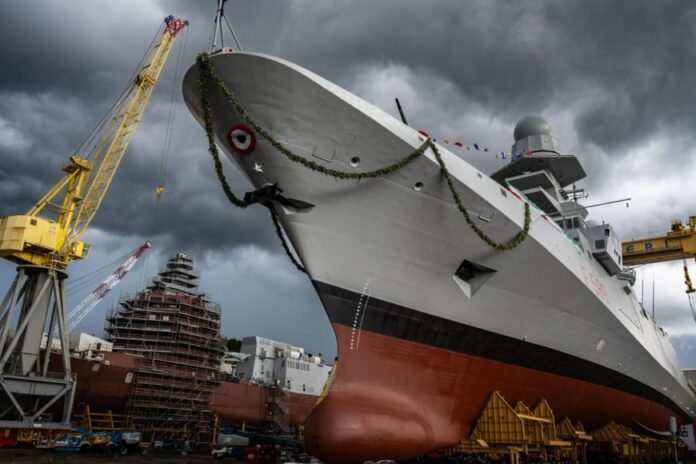
Tenth Fremm Unit “Emilio Bianchi” delivered to the Italian Navy

0

This is the tenth unit of the FREMM (European Multi-Mission Frigates) class commissioned from Orizzonte Sistemi Navali as part of the Italy-France international cooperation agreement, whose contract was signed with OCCAR (Organisation Conjointe de Coopération en matière d’Armement).

With the delivery of the “Emilio Bianchi,” the construction of the naval units in the Anti-Submarine Enhanced configuration under the FREMM program has been completed. This is one of the most ambitious European initiatives in naval defense, launched in 2005, with the first ship delivered in May 2013. The program involved the construction of ten units: four in the General Purpose configuration, four in the Anti-Submarine Warfare configuration, and two in the Anti-Submarine Enhanced configuration.

In line with the objectives of the FREMM project, two next-generation “EVOLUTION” frigates – called “FREMM EVO” – are currently under construction at Fincantieri’s integrated shipyards in Riva Trigoso and Muggiano, with delivery scheduled for 2029 and 2030, respectively.

The “Emilio Bianchi,” built at Fincantieri’s Integrated Shipyard in Riva Trigoso and Muggiano, is equipped with the most advanced systems developed by Fincantieri, Leonardo, MBDA, and Elettronica. Like the other FREMM units, it is characterized by high operational flexibility and is capable of operating in all tactical scenarios. The ship is 144 meters long, 19.7 meters wide, and has a full-load displacement of approximately 6,700 tons. It can reach speeds of over 27 knots and accommodate up to 200 people onboard.

FREMM frigates represent a technological benchmark in Europe, standing out for their innovative features and high cyber resilience, the result of extensive design and management work. The high degree of automation, state-of-the-art onboard systems, and optimized maintenance operations ensure excellent operational availability. Comprehensive Human Factors studies have contributed to the creation of functional environments designed to improve operational efficiency and crew quality of life. The ship also offers significant autonomy – about 6,000 nautical miles at 15 knots – allowing it to operate for extended periods beyond the Mediterranean.

The FREMM (European Multi-Mission Frigate) program is the most important joint initiative developed between European naval industries and represents the state-of-the-art of Italian and European defense.

Port of Oakland joins effort to protect whales and the environment

0

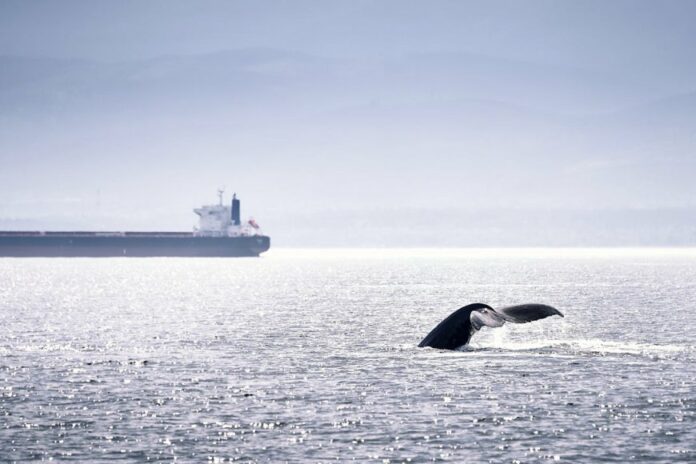
The Port of Oakland is joining Protecting Blue Whales and Blue Skies (BWBS) as one of its Program Ambassadors to help protect migrating whales and coastal air quality. 

Ambassadors work with participating shipping lines and help encourage greater industry participation in voluntary efforts that reduce fatal strike risk to endangered whales, air and underwater noise pollution, and greenhouse gas emissions.

BWBS is a voluntary Vessel Speed Reduction (VSR) verification and recognition program, formed by the National Oceanic and Atmospheric Administration (NOAA), National Marine Sanctuaries, Bay Area Air District and California coastal county-based air pollution control districts. Participating shipping companies’ fleets travel at 10 knots (11.5 mph) or less in the VSR zones from May to December, which coincides with peak ozone and endangered whale presence. Traveling at decreased speeds significantly reduces whale and environmental impacts.

“The Port’s participation is another example of our commitment to environmental stewardship,” said Port of Oakland Environmental Director Colleen Liang. “This program will help our shipping partners meet the demands of commerce in a more sustainable way.”

As an ambassador, the Port of Oakland will help raise awareness of the program and encourage full participation from all shipping lines calling the Port. Carriers CMA CGM, MSC, Evergreen, Cosco, Hapag-Lloyd, Hyundai, Maersk, ONE, OOCL, Swire, Wan Hai, and Yang Ming‒which represents 84% of all vessel calls to the Port of Oakland last year‒have participated in the program.

BWBS independently verifies participants’ cooperation rates and quantifies the environmental benefits. Shippers are provided recognition to encourage further adoption of responsible shipping practices that help support and protect marine biodiversity, air quality and coastal communities.

“Blue Whales and Blue Skies is impactful, because of our rigorous verification of industry cooperation rates and quantification of environmental benefits. Support from our ambassadors enhances awareness and helps us express appreciation to high-performing shipping lines and encourage further industry adoption of measures to protect endangered whales and coastal air quality,” said Becca Tucker, BWBS Director of Corporate Engagement. “BWBS is proud to welcome one of the top ten ports in the country–the Port of Oakland–to this great program as an ambassador.”

Protecting Blue Whales and Blue Skies (BWBS) is a partnership between federal and local government agencies, foundations, and environmental nonprofits, including NOAA, the California Marine Sanctuary Foundation; Channel Islands, Chumash Heritage, Monterey Bay, Greater Farallones and Cordell Bank National Marine Sanctuaries; and the Ventura, Santa Barbara, San Luis Obispo, and Monterey Bay Air Pollution Control Districts, and the Bay Area Air District.

Fincantieri: “Viking Mira” launched in Ancona

0

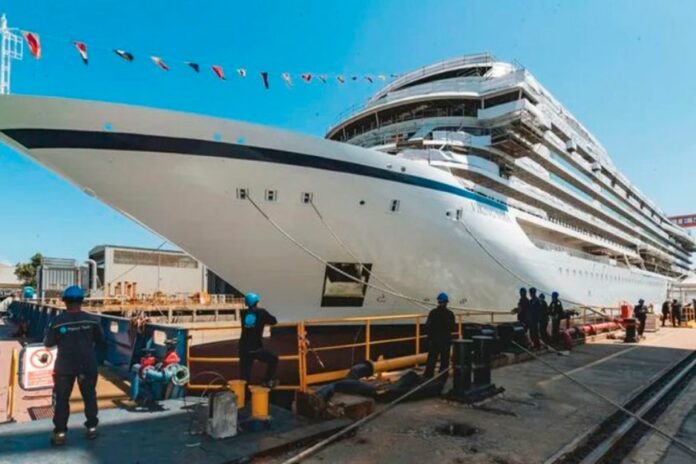
The “Viking Mira”, a new cruise ship under construction for Viking, was launched today at the Ancona shipyard. 

The ceremony, which marks the ship’s transition to the final outfitting phase, was attended by Gilberto Tobaldi, Director of the Ancona Shipyard, and Gastone Lazzari, New Building Site Team Manager for Viking.

With a gross tonnage of approximately 54,300 tons, “Viking Mira” will feature 499 staterooms and accommodate up to 998 passengers on board. The vessel belongs to the small cruise ship segment and is part of the Viking ocean fleet, entirely built by Fincantieri.

The long-standing relationship between the shipowner and the Group currently includes a total of 28 ships, taking into account the units already delivered, those on order, signed contracts, and recently secured option agreements.

All Viking units are built in accordance with the latest international regulations on navigation and safety and are equipped with high-efficiency engines and advanced exhaust gas treatment systems, designed to meet the most stringent environmental standards.

The Ancona shipyard confirms its position as one of the most strategic production hubs of the Group. Covering an area of 360,000 m², it boasts a production capacity of 60,000 GT, lifting systems of up to 500 tons, and hull construction capabilities of 1,200 tons per month. 

Since 2009, 20 vessels have already been delivered, thanks to the daily commitment of approximately 3,700 workers from various nationalities, backgrounds, and generations, united by a shared and tangible industrial goal. In line with innovation, the shipyard plays an active role in the Operations Excellence program, which entails the introduction of advanced technologies, robotics, and AI to increase efficiency and improve work quality.

Fugro partners with SDG Data Alliance to strengthen climate resilience in the Caribbean

0

Fugro is teaming with the SDG Data Alliance to help Caribbean nations confront the growing risks of climate change. 

Through a newly formalised agreement, the partnership will support locally led efforts to strengthen coastal resilience by building technical capacity and improving access to decision-ready geospatial insights.

Many Caribbean SIDS face challenges in accessing the high-quality geospatial data, digital infrastructure and technical expertise needed to assess risk and plan effective adaptation strategies. Drawing on a history of success in the region, Fugro will help close these gaps by providing high-resolution mapping, expert analysis, data visualisation and hands-on training. These efforts will be channelled through the SIDS Global Data Hub, a digital platform within the SIDS Centre of Excellence. The work will also be aligned with the Antigua and Barbuda Agenda for SIDS (ABAS), a roadmap adopted at the 2024 UN SIDS4 Conference to help island nations achieve resilient prosperity.

Greg Scott, Executive Director of the SDG Data Alliance, said: “The Data Alliance was founded as a multi-stakeholder partnership and is driven by public-private collaboration that is focused, practical and built for impact. Fugro brings the kind of technical depth and regional experience that can turn ambition into action. Their support will help us expand the reach and impact of the SIDS Global Data Hub and deliver on the promise of ABAS.”

Céline Gerson, Fugro’s Group Director for the Americas and President of Fugro USA, said: “We know that real progress happens when communities lead. Our work with the Data Alliance is about equipping government and community stakeholders with the Geo-data tools to drive their climate response on their terms and timelines. We’re excited to continue this work in collaboration with the Alliance and contribute to a more resilient future for Caribbean SIDS.”

This new partnership follows Fugro’s recent agreement with Esri, a founding member of the Data Alliance, to expand access to essential data and tools for climate resilience. It also comes ahead of next week’s fifteenth session of the UN Committee of Experts on Global Geospatial Information Management (UN-GGIM), where Dr. Valrie Grant, a geospatial professional and Caribbean lead in Fugro’s Climate and Nature practice, will represent the company. Dr Grant, who joined Fugro in May, will play a key role in advancing the impact of both partnerships across the region.

Sanctioned Russian oil tankers left stranded off India as refineries turn them away

0

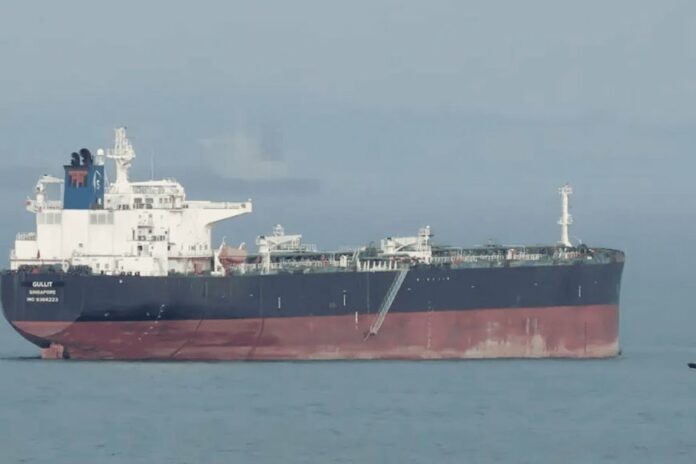
At least four tankers carrying Russian oil are reportedly idling off India’s western coast after local refineries refused to accept the shipments, Bloomberg reported on August 1, citing vessel tracking data.

The Achilles and Elyte tankers, each carrying around 700,000 barrels of Urals crude, are anchored near the port city of Jamnagar. The vessels loaded their cargo in late June from the Russian ports of Primorsk and Ust-Luga and were scheduled to offload on August 2 and 3. Both ships are under EU and UK sanctions, raising compliance concerns for potential buyers.

Two additional tankers—Destan and Horae—are also waiting offshore with Russian oil loaded between June 24 and July 1. The Destan, which is also sanctioned by the EU and UK, is expected to reach the port of Sikka in the coming days. The Horae, not currently subject to Western sanctions, has yet to declare a destination.

According to Bloomberg more than a third of India’s oil imports come from Russia, making it one of the country’s most significant energy partners. However, the flow of Russian crude has come under renewed scrutiny following the EU’s latest round of sanctions in mid-July.

This week, the Trump administration cited India’s continued purchases of Russian oil as grounds for imposing steep import tariffs, also warning of further unspecified penalties. In response, New Delhi has asked domestic refiners to prepare and share contingency plans for sourcing crude from alternative suppliers, Bloomberg reported.

Despite mounting pressure, remains confident in its energy security. Minister of Petroleum and Natural Gas Hardeep Singh Puri said the country can meet its oil needs through alternative sources if Russian supplies are affected.

“I’m not worried at all. If something happens, we’ll deal with it,” Puri said at an industry event in New Delhi. “India has diversified the sources of supply and we have gone, I think, from about 27 countries that we used to buy from to about 40 countries now.”

Earlier, it was reported that the US President Donald Trump is reportedly weighing a major escalation of sanctions on Russian oil exports, including the introduction of a sweeping 500% global tariff on Russian crude.

According to the report by The Times, Trump is now “closely studying” a proposed bill that would impose the tariff not only on Russia, but also on countries such as China, India, and Turkey that continue to import Russian energy.

Source: united24media

Saipem: extension of contract with Aker BP for drilling activities offshore Norway

0

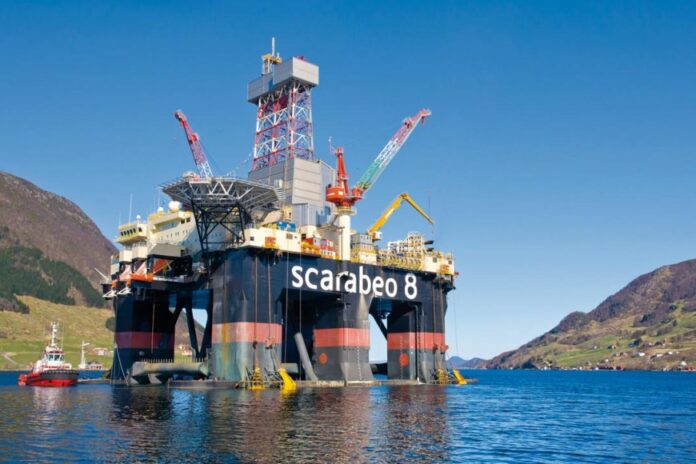
Saipem informs that Aker BP has exercised the option for the extension period under the existing contract for the semi‑submersible drilling unit Scarabeo 8, originally awarded in March 2022.

This option, which is in direct continuation of the previous one-year contract extension, prolongs the contract until December 31, 2027.

The Scarabeo 8, a sixth‑generation drilling unit owned by Saipem, is designed to operate in demanding offshore environments.

It is equipped with a dynamic positioning system (DP) and an advanced mooring system, fully compliant with the strictest regulatory standards. The unit has a proven track record in projects with major oil companies, operating across the Norwegian Continental Shelf including the Barents Sea.

MODEC secures AiP for an innovative offshore wind turbine design from ABS

0

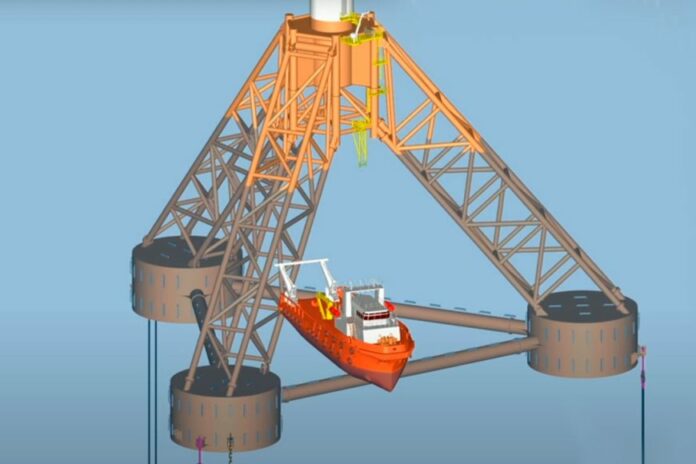
MODEC received Approval in Principle (AiP) from the American Bureau of Shipping for its groundbreaking concept, “iTLP2-FOWT”, referred to as “i-TLP™2”.

This development is part of MODEC’s commitment to contributing to the energy transition by providing innovative offshore wind turbine solutions that deliver electricity at Low Levelized Cost of Energy (LCOE).

In addition to CAPEX reduction, the development of i-TLP™2 is guided by the following principles:

  • Use of turbines already available on the market.
  • Maximum power output from limited wind farm area.
  • Fast, large-scale supply —quickly operational.
  • Installation on any seabed.

Currently, bottom-fixed offshore wind turbines are typically installed at sea depths of up to 50 meters. Beyond this depth, floating offshore wind turbines, such as semi-submersible and spar designs, have been used. However, these floating concepts involve catenary mooring; which demand turbines to cope with large waveinduced motion and require a large footprint for each unit.

With its TLP-oriented features, i-TLP™2 minimizes floater motions and seabed footprint. It incorporates significant improvements from the first-generation MODEC TLP, enabling rapid construction and turbine integration at land-based sites, as well as in-situ heavy maintenance of the turbines after installation.

“Our goal is to deliver a solution that enables affordable electricity with low greenhouse gas emissions,” said Koichi Matsumiya, Chief Technical Officer of MODEC. “We chose not to announce the previous i-TLP1 design, despite its lower LCOE compared to semi-submersibles and first-generation MODEC TLP, because we aim to address all known challenges. We also strive to tackle unknown challenges with humility to deliver the best solution we can. To make the concept into reality, we seek partners to help us demonstrate our concept through practical applications.”

MODEC is also developing an innovative bottom-fixed wind turbine platform concept, designed to install up to 100 meters water depth. While recognizing significant challenges that exist compared to the development of i-TLP™2, MODEC is committed to addressing these challenges with humble and diligent efforts. The company will continue to explore innovative solutions to advance further its deep-water bottom fixed concept.

Stena Bulk completes reflagging of Stena Sunrise to Swedish flag

0

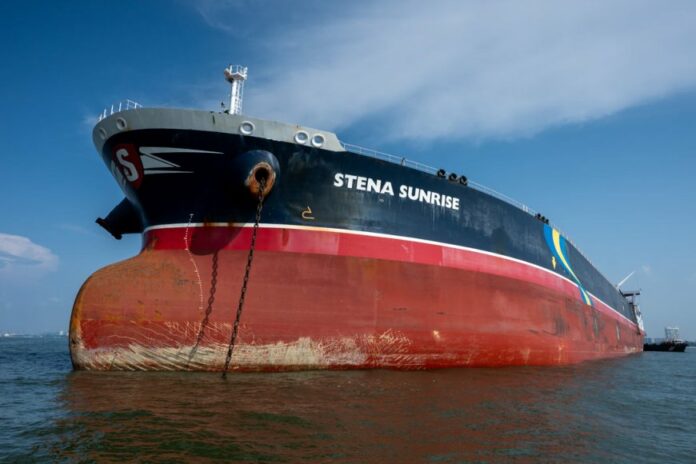
Leading tanker shipping company Stena Bulk has today announced that its Suezmax tanker, Stena Sunrise, has been officially registered under the Swedish flag during a ceremony in Singapore. 

The vessel is the first Suezmax tanker in modern times to operate under the Swedish flag, marking a significant step for Sweden’s maritime presence in the global crude oil trade.

This milestone represents a historic moment for Sweden’s shipping industry. While Swedish shipyards built several large crude carriers during the 1970s and 1980s, most were delivered under foreign flags. Over the past few decades, Sweden has had very limited representation in the largest crude tanker segments, with rare exceptions including the ULCC TT Nanny (1978–1984) and VLCC Vanadis (in the early 1990s), which briefly operated under Swedish registry.

Based on available records and internal knowledge, Stena Sunrise becomes the first Suezmax-class vessel to be flagged in Sweden and among only a handful of large crude carriers ever to do so.

The reflagging ceremony was attended by the Swedish Ambassador to Singapore, Anders Sjöberg, and the General Manager and Head of Stena Bulk Singapore, Johan Zander, who participated in the formal handover of the Swedish flag onboard the vessel. 

Stena Sunrise is the first of five Suezmax tankers that Stena Bulk plans to transition into the Swedish Register of Shipping. The remaining vessels – Stena Superior, Stena Suede, Stena Surprise, and Stena Sunshine – will be reflagged in the coming months in accordance with commercial and operational schedules.

Erik Hånell, President and CEO of Stena Bulk, said: “We’re proud to see Stena Sunrise officially come under the Swedish flag and to have celebrated this milestone with a ceremony in Singapore. This step has only been made possible by the strong collaboration we have enjoyed with Swedish government authorities and maritime unions. We are excited to continue working together to bring four more of our Suezmax tankers under the Swedish flag in the coming months.” 

As Stena Sunrise officially joins the Swedish fleet, the occasion underscores how public–private cooperation can drive meaningful progress in revitalising Sweden’s role in international shipping.
 

Port of Oakland applauds expansion of free water shuttle between Oakland and Alameda

0

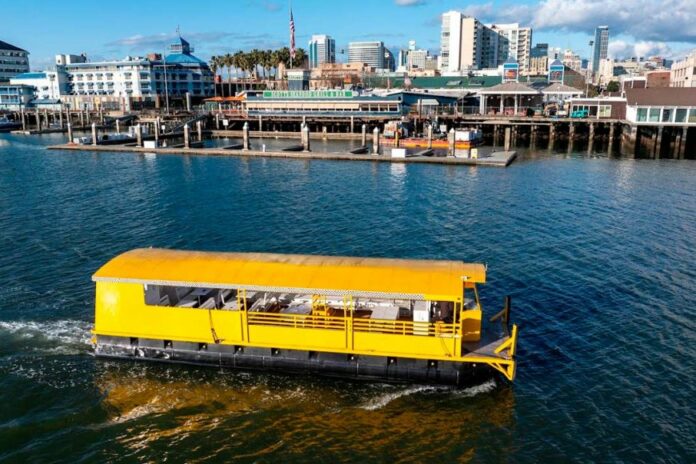
The Port of Oakland celebrates the expansion of the Oakland Alameda Water Shuttle, a free pilot program initiated by the City of Alameda, offering public water transit between Oakland’s Jack London Square and Bohol Circle Immigrant Park, at the foot of 5th Street in Alameda. 

As of July 8th, the service now includes Tuesdays and extended weekend hours—increasing total weekly trips by 35%.

“We’re excited to see such strong demand for the water taxi in just its first year,” said Jonathan Veach, Chief Real Estate Officer for the Port of Oakland. “This expansion underscores the growing need for transportation options that reduce congestion and strengthen connections between Alameda and our waterfront businesses. The Port is proud to support enhanced mobility, and we see the shuttle as a vital part of our broader vision for a sustainable, inclusive, and well-connected waterfront.”

Initiated by the City of Alameda and partially funded by the Port, the shuttle operates Tuesday through Thursday from 7:20 a.m. to 8:03 p.m., and extends service Friday through Sunday from 7:20 a.m. to 10:16 p.m. Each vessel accommodates 31 passengers and 14 bicycles, and all rides are wheelchair accessible and free of charge.

The Oakland dock is located at the foot of Broadway in the heart of Jack London Square, a vibrant waterfront destination known for locally owned restaurants, independent retailers, live music, outdoor events, and year-round markets. With expanded shuttle service, it’s now even easier to reach Jack London Square—whether for a weekday lunch meeting, a weekend outing, or an evening event.

Launched in July 2024 as a two-year pilot program, the service has already logged more than 100,000 rides. Its early success earned the 2025 Transportation Planning Award of Excellence from the American Planning Association – California Northern Section. Additional work is underway among regional transportation partners to support continued growth of the service and the eventual integration into the broader Bay Area public transit network.

“The shuttle isn’t just about transit—it’s about connection,” said Matt Davis, Chief Public Engagement Officer for the Port of Oakland. “We’re creating stronger ties between our communities, supporting local economies, and giving people an enjoyable way to travel across the Estuary.”