-0.4 C
New York
Home Blog Page 45

Boskalis-Allseas consortium awarded large offshore natural gas pipeline project in Taiwan

0

Boskalis and Allseas announce that their 50/50 consortium has been awarded a large contract by CPC Corporation Taiwan for the second offshore gas pipeline from Yongan to Tongxiao (YT2). 

The total contract value is approximately EUR 1.2 billion. This energy project is intended to support the acceleration of energy transition in Taiwan and improve the gas supply capacity in northern Taiwan.

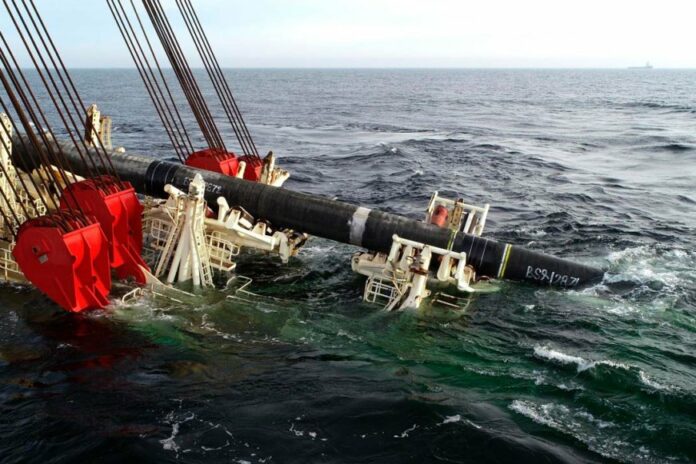
Under the contract, the consortium will design, construct, install and pre-commission the new YT2 36-inch offshore natural gas pipeline, which will run approximately 232 kilometers parallel to the existing YT1 pipeline, connecting the Yongan LNG terminal in the Southwest with the Tongxiao transfer station in the Northwest. The comprehensive scope of work includes trenching, pipeline installation with 34 crossings over existing and future infrastructure and assets, backfilling and two landfalls.

Within the consortium, Boskalis will be responsible for the landfalls and associated microtunnelling activities, as well as nearshore and offshore trenching, backfilling, and the installation of rocks for the 34 pipeline crossings. For these activities, Boskalis will deploy two large hopper dredgers, a large backhoe dredger, and a subsea rock installation vessel.

Allseas will carry out the pipeline installation and pre-commissioning, including the pre-lay installation of concrete mattresses. For these activities, Allseas will deploy two of the most advanced pipelay vessels in the industry.

Project execution is scheduled to commence in 2026, with completion anticipated in 2028.
Carbon Ridge and Scorpio Tankers deploy first centrifugal carbon capture

0

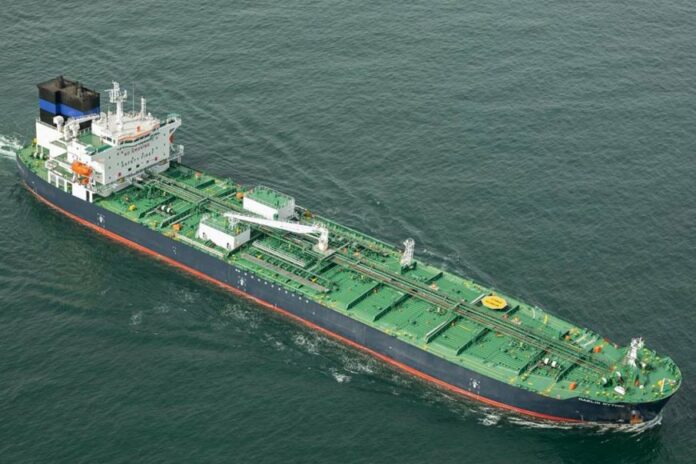
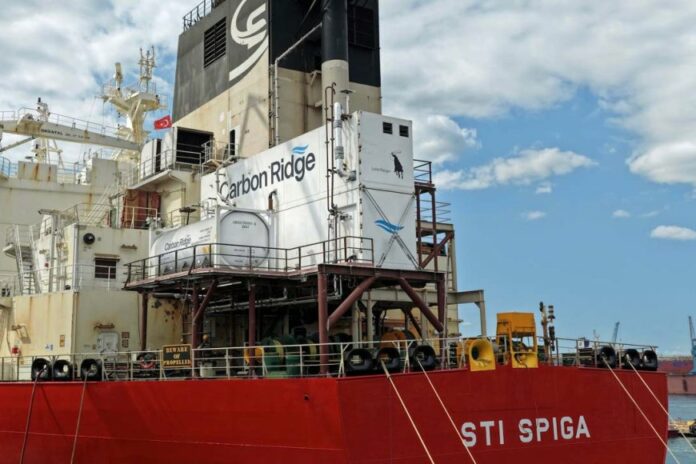
Carbon Ridge has achieved a shipping industry first with the successful deployment of a centrifugal onboard carbon capture system (OCCS) aboard an LR2 product tanker owned by Scorpio Tankers Inc.

Conducted in partnership with Scorpio Tankers Inc., a global leader in the seaborne transportation of refined petroleum products, the pilot aboard the vessel signals a significant milestone in the development and scaling of advanced OCCS solutions within the shipping industry.
 
The pilot commenced in July at Besiktas Shipyard in Turkey aboard the STI SPIGA.

Carbon Ridge’s technology offers a modular design that reduces both initial capital investment and ongoing operational costs while delivering superior capture efficiency compared to conventional technologies. The technology’s compact design means that space requirements are reduced by up to 75% compared to conventional OCCS columns, while its flexible installation options – vertical or horizontal, depending on vessel constraints – accommodate the requirements of shipping’s diverse and globally operational fleet. Captured CO2 is compressed, liquefied, and stored safely for the duration of the voyage.

Combining optimized onboard OCCS technology with an end-to-end logistics solution for captured CO2, Carbon Ridge offers a turnkey solution that ensures full value-chain compliance with maritime and regional regulations.

Designed for both retrofit and seamless newbuild integration, the technology is future-proof and scalable, agnostic to fuel type, and offers ship owners flexibility within their fleet decarbonization strategies without requiring major propulsion system overhauls. By integrating proven centrifugal technology into a compact, purpose-built system for the marine environment, Carbon Ridge is unlocking a scalable pathway for shipowners and charterers to meet increasingly stringent regulatory and climate targets.

Carbon Ridge also completed an additional financing led by Katapult Ocean and Alfa8, with participation from Crosscut Ventures and Berge Bulk. This brings the company’s total funding to over $20M USD.
 
Speaking on the pilot, Chase Dwyer, CEO and Founder, Carbon Ridge said:

“Unlike other CCS solutions, which are designed to be deployed on land and then adapted for ocean operation, we have specifically designed and developed this technology for the maritime industry. The centrifugal carbon capture system is unlike anything that has been deployed on a vessel before and, offers a cost-effective, flexible and modular solution to support the maritime industry in its decarbonization efforts. Our ambition is to lead the way for CCS in shipping, and we are excited to see the results of this deployment with our partner Scorpio Tankers.”

Cameron Mackey, Chief Operating Officer of Scorpio Tankers Inc. said:

“We’re proud to be part of this pilot project with Carbon Ridge, as they not only represent the leading edge of CCS technology, but they also have the requisite understanding of our industry to develop and implement practical solutions. We look forward to the results of the pilot and our continuing partnership as we face the challenges of decarbonisation for shipping.”


First monopile stands at 660 MW Nordseecluster A offshore wind farm in Germany

0

The Nordseecluster offshore wind project has reached a significant milestone: the first turbine foundation has been successfully installed around 50 kilometres north of the German island of Juist.

Sven Utermöhlen, CEO RWE Offshore Wind:

“With the 1.6-gigawatt Nordseecluster we together with our partner Norges Bank Investment Management are delivering what is currently the largest offshore wind project off the German coast. Installing the first monopile is a significant milestone for the entire team, following years of planning and preparation. My thanks go to our supply chain partners and all colleagues who contributed to this success.”

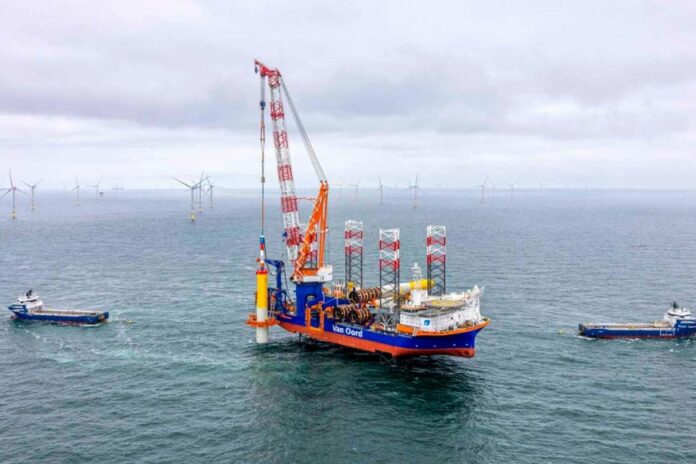
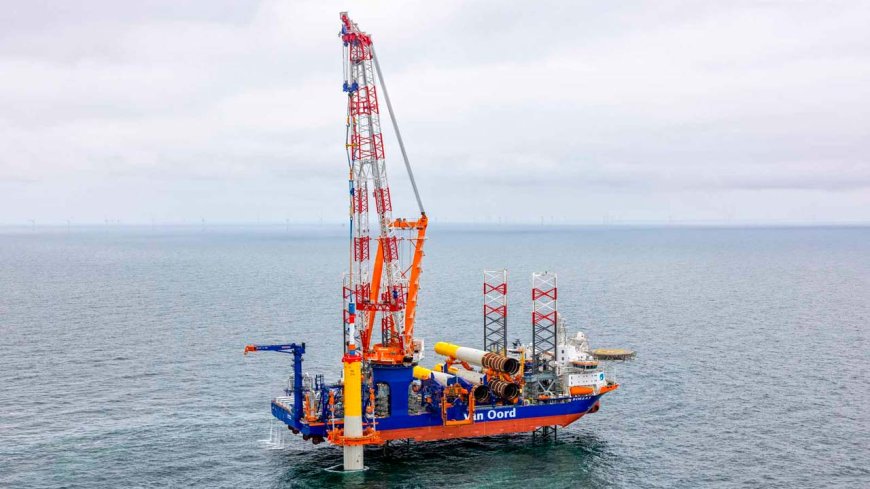
The monopiles were shipped from the heavy-lift terminal in Eemshaven, the Netherlands, to the construction site in the German North Sea by Van Oord’s brand-new offshore installation vessel Boreas. Four monopiles can be loaded in one shipment. Each monopile foundation measures 85 metres in length and weighs approximately 1,500 metric tons, which is roughly equivalent to the weight of 1,000 small cars.

Rather than using a monopile foundation topped with an overlapping separate transition piece, extended single monopiles are installed and secondary steel structures, which include e.g. boat landings, will be fitted offshore. This so-called transition piece-less design significantly reduces the total amount of steel needed.

The Nordseecluster will be constructed in two phases. Foundation installation works for Nordseecluster A as now kicked-off with the successful installation of the first monopile.

Installation of the 44 wind turbines is expected to start in 2026, with commercial operation beginning in early 2027. After full commissioning Nordseecluster A will have a total capacity of 660 megawatts (MW). The second expansion stage, Nordseecluster B, will contribute an additional 900 MW through its 60 wind turbines, commencing commercial operation in early 2029.

With a total capacity of up to 1.6 gigawatts (GW) Nordseecluster will be able to generate enough green electricity to supply the equivalent of 1.6 million German households. Nordseecluster is a joint offshore wind project between RWE (51%) and Norges Bank Investment Management (49%). RWE is responsible for the construction and operation of the Nordseecluster offshore wind farms throughout their entire life cycle.

Marella Cruises contracts V.Ships Leisure for ship management services

0

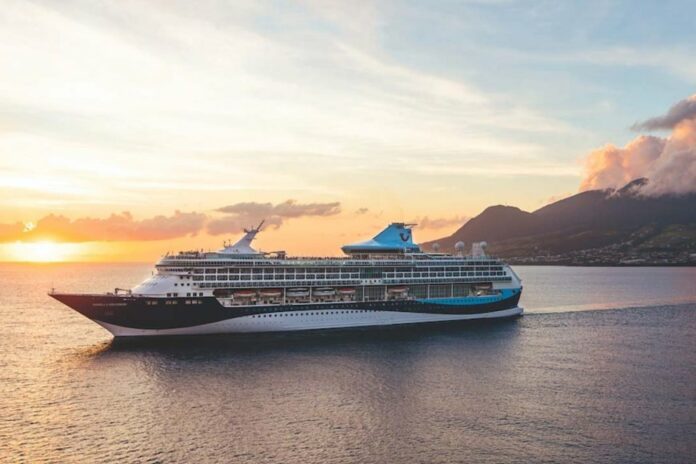
 to providing Marella Cruises with local expertise backed by global scale, reach and experience.

V. will leverage its ShipSure platform to enable data-driven decision-making across fleet maintenance and operations, supporting more efficient and proactive management and giving Marella Cruises enhanced transparency to the operations.

Marella Cruises will benefit both from V.’s end-to-end management services and from V.ERDE, our dedicated decarbonisation and environmental compliance programme.

Adrian Hibbert, Cruise Operations Director at Marella Cruises, commented: “Throughout the tender process, we were hugely impressed by the calibre of the team at V.Ships Leisure and the depth of their industry expertise. We look forward to working together to deliver safe, reliable and sustainable operations across our fleet.”

Per Bjørnsen, CEO of V.Ships Leisure, said: “This contract is a clear endorsement of our talented team, commitment to ESG and our digital first approach. Above all, it’s testament to our track record and further reinforces our leadership in the cruise sector. We are extremely proud to be working with Marella Cruises and are looking forward to collaborating to achieve operational excellence.”

NYK begins continuous use of bio-LNG fuel on car carriers

0

As part of its commitment to realizing a decarbonized society, NYK has commenced the continuous use of bio-LNG fuel on its LNG-powered car carriers. 

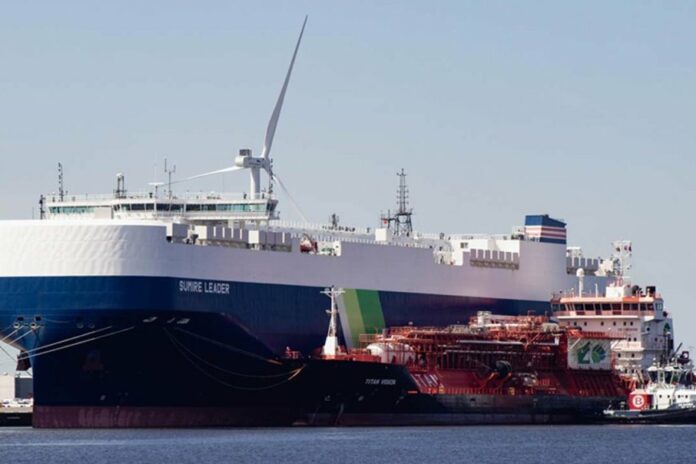
The bio-LNG is supplied by Titan Supply B.V. (Titan) at the port of Zeebrugge in Belgium. The first vessel to receive the fuel was Daisy Leader on June 15, and the second was Sumire Leader on July 18.

Bio-LNG, also known as liquefied biomethane, is purified liquefied methane gas (biogas) produced from biomass feedstock, such as animal manure and food wastes. By capturing methane that would otherwise be released into the atmosphere, greenhouse gas (GHG) emissions over the entire life cycle can be significantly reduced. The bio-LNG fuel supplied by Titan under the mass balance method is recognized as carbon neutral in the whole process from production to consumption (well-to-wake) and is ISCC EU certified, an international standard for sustainability, ensuring compliance with EU regulations and traceability throughout the supply chain.

NYK has long been at the forefront of efforts to decarbonize the shipping industry through the operation of LNG-fueled vessels and usage of biofuel. In November 2023, the NYK Group Decarbonization Story  was released, outlining the goal of achieving net-zero GHG emissions by 2050. The expanded use of bio-LNG fuel is one of the key initiatives to achieve this goal. NYK remains dedicated to proactively utilizing bio-LNG and other environmentally friendly fuels to pave the way toward a sustainable future for marine transportation.

Titan CEO Niels den Nijs said:

“I would like to express my sincere respect for NYK’s decision to start using bio-LNG fuel. Titan’s mission is to provide solutions to help the shipping industry transition to cleaner fuels. We are very pleased to be able to accelerate our decarbonization efforts together with NYK through this replenishment.”

NYK Fuel Group General Manager Kaori Takahashi said:

“We are very pleased to begin the continued use of bio-LNG fuel. Bio-LNG fuel is a highly effective option for decarbonizing the shipping industry, and we will continue actively promoting its use. This initiative will be an important step toward reducing our environmental impact further and achieving a sustainable future.”

K-SURE and Trafigura sign USD200 million financing agreement to support Korean shipping companies

0

The agreement marks the first time that an Export Credit Agency (ECA) has offered mid- to long-term financial support grounded in time charter agreements – an innovative approach aimed at expanding Korea’s shipping service exports and enhancing the competitiveness of its mid-sized maritime companies.  

The financing provided through K-SURE will help cover costs such as time charter fees paid by Trafigura to Korean shipping companies as part of its global freight operations. Trafigura charters vessels from around the world and is planning to expand chartering activities with Korean partners in the coming years.

The agreement is expected to play a key role in helping mid-sized Korean shipping companies to strengthen their negotiating power and operational capabilities. It also expands the scope of K-SURE’s export credit programs beyond traditional capital goods into new sectors including consumer goods and services.  

For Trafigura, this landmark facility marks its inaugural transaction with K-SURE and first ECA financing not linked directly to commodity trading volumes. The USD200 million facility was supported by three banks: Crédit Agricole Corporate and Investment Bank, who acted as coordinating and structuring bank for the facility, Barclays Bank Plc and Oversea-Chinese Banking Corporation Limited.  

Jang Young-jin, President of K-SURE, commented:

“This support will be an important turning point for enhancing the competitiveness of the domestic shipping industry. In the future, we will continue to actively identify overseas blue-chip charterers and provide financing solutions that support the expansion of Korea’s shipping service exports. We will also actively explore new financial opportunities in sectors such as services to promote national interests.”  

Andrea Olivi, Global Head of Shipping at Trafigura, said:

“This innovative financing structure with K-SURE underscores our long-term commitment to developing strategic partnerships in Korea. The support enables us to work more closely with Korean shipping companies and contributes to building a more resilient and diversified maritime supply chain. We are proud to support Korean exporters and strengthen our collaboration with K-SURE.”  

Econowind receives repeat order from Terntank for two more vessels

0

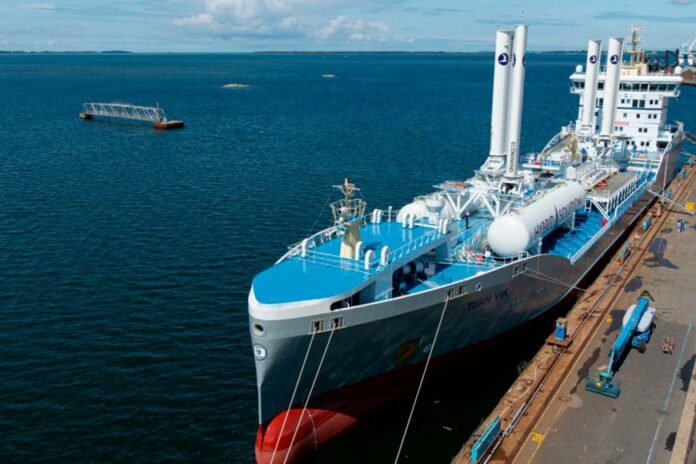
Econowind has received a repeat order from Terntank for the installation of eight VentoFoil units on two additional methanol-ready hybrid tankers. 

The first vessel, Tern Vik, was delivered in April 2025 by China Merchants Jinling Shipyard (Yangzhou). The entire series is equipped with Kongsberg’s advanced energy and propulsion management system. Under the K-Sail concept, wind can take the lead when conditions are favorable. Combined with battery packs and dual-fuel engines capable of running on methanol or diesel, the vessels are designed for zero-emission operations and fully aligned with the IMO 2050 targets.

Terntank operates in the Nordic region and focuses on the transport of sustainable fuels. Its newbuilds are among the most environmentally advanced in the market. Wind-Assisted Ship Propulsion is a key element of the design. The VentoFoils are lightweight, foldable for safe and efficient port operations, and fully ATEX-certified to meet tanker safety requirements.

“At Terntank, we are always looking for ways to reduce fuel consumption. It’s part of our DNA,” said Claes Möller, CEO of Terntank. “The installation of the VentoFoils and their integration with the Kongsberg system went seamlessly. It’s great to see that the actual fuel savings match what was predicted. We’re very pleased with the results.”

This repeat order follows strong performance results from the first installations, demonstrating the contribution of Wind-Assisted Ship Propulsion to fuel savings and emission reductions. Terntank’s confidence in VentoFoil technology is also a signal to the broader market that wind propulsion is no longer a future concept, but a working solution available today.

Econowind’s engineering team has worked closely with Terntank and Kongsberg to ensure seamless integration of the VentoFoils into the vessel’s overall energy system. The collaborative approach allows real-time optimisation of power sources, where wind, batteries, and fuel-based engines work together to minimise emissions and maximise efficiency.

“We are proud to continue our collaboration with Terntank and support their leadership in sustainable shipping,” said Chiel de Leeuw, CCO of Econowind. “This repeat order confirms the performance of our VentoFoils and the shared ambition to decarbonize maritime transport.” With this latest order, Econowind has now sold over 130 VentoFoil units. These are being deployed across a wide range of vessel types, including dry bulk carriers, tankers, ro-ro and container ships, reflecting growing momentum for Wind-Assisted Ship Propulsion across the industry. 

Floating Wind Centre of Excellence to research key cost saving technology for offshore wind farms

0

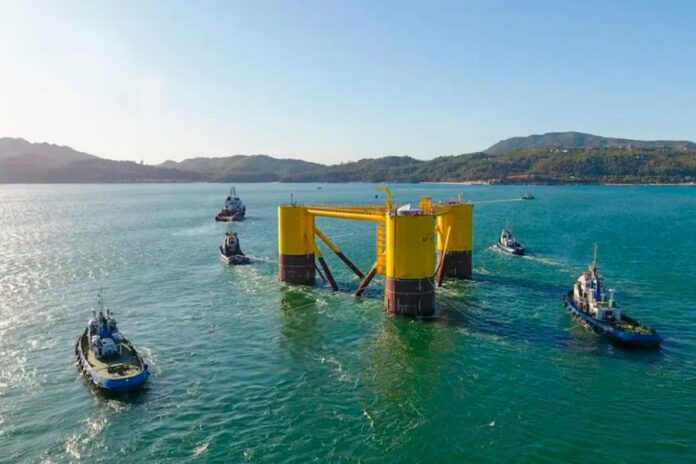
Floating offshore wind presents unique operations and maintenance challenges, such as monitoring and replacing mooring lines and dynamic cables. For floating wind to successfully transition to commercialisation, the industry needs a stronger understanding of component failure modes, the time and cost of repairs, and their impact on operational expenses.

ORE Catapult’s Floating Offshore Wind Centre of Excellence will deliver the project alongside Apollo Engineering and DOF Subsea UK.

Sean Snee, Floating Offshore Wind Team Leader at ORE Catapult said:

“Operating and maintaining a floating offshore wind farm creates challenges not previously faced in fixed offshore wind, including the monitoring and replacement of mooring lines and dynamic cables.

“More data is required to accurately assess key component failures and what leads to them. In identifying preventative measures and innovative technologies, the learnings from this project could reduce the overall cost of floating offshore wind mooring line and dynamic cable repairs and replacement across the UK and internationally.”

The ‘Mooring line and dynamic cable monitoring and replacement methodologies’ project will provide comprehensive insight into the monitoring and maintenance requirements for floating wind dynamic cable and mooring line components. Historically, mooring repair costs for oil production assets have exceeded £400 million for a single incident, while cable failures have accounted for 70%-80% of UK offshore wind insurance claims.

Will Brindley, Lead Naval Architect, Apollo Engineering said:

“Understanding the specific requirements of mooring and cable repair is essential to minimise floating wind costs. The insight gained from this study will allow the next generation of gigawatt scale arrays to be designed, built, and operated with long-term integrity and maintainability in mind.”

Russians test naval strike drone during July Storm exercises

0

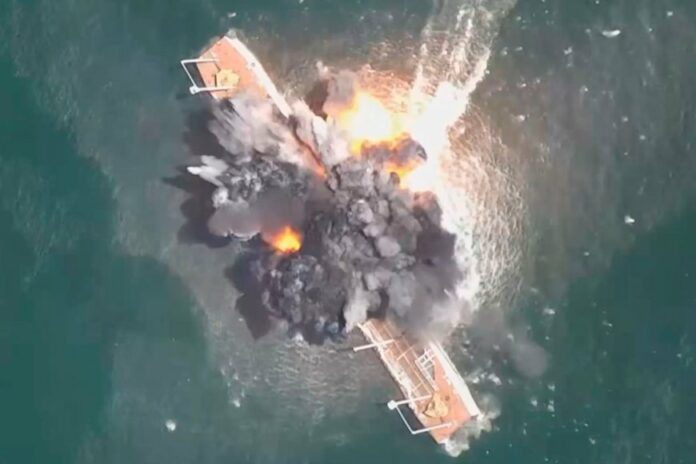
The Russian Ministry of Defense released a video showing an unmanned surface vessel (USV) striking and destroying a maritime target. According to the exercise scenario, the target simulated a warship.

In addition to the naval drone, the drills also involved FPV drones and unmanned surface vessels. Their purpose and specifications have not yet been officially disclosed.

All operational-strategic formations of the Russian Navy are participating in the exercises, except for the Black Sea Fleet. They are practicing tasks involving the detection and destruction of maritime and coastal targets.

In May 2024, the Russian Navy announced the formation of specialized naval regiments for unmanned systems, a new element in the structure of Russia’s armed forces.

The new units are expected to be equipped with a variety of robotic platforms, including aerial, ground, surface, and underwater drones. This diversification is intended to expand the tactical capabilities of the Russian Navy.

The tasks of the new regiments include conducting reconnaissance, striking enemy targets, protecting their own vessels, countering enemy drones, and neutralizing naval mines.

The development of naval drones in Russia first became widely known in 2023, when one of the unmanned surface vessels attacked a railway bridge in Odesa in an attempt to destroy strategic infrastructure.

That same year, the Russian company KMZ unveiled a strike naval drone called Oduvanchik (Dandelion), which resembled Ukrainian unmanned boat models in its design.

Two years later, Russia opened a unified center for naval drone production at the Kingisepp Machine-Building Plant in Saint Petersburg. The center became part of Russia’s defense industry.

To support serial production of the drones, a testing facility was established, featuring an indoor pool and equipment for evaluating control and data transmission systems. This setup allows for year-round testing.

The intensified development and deployment of naval drones reflects Russia’s intent to expand its capabilities in unmanned surface vessels, both on the front lines and behind them.

Source: Militarnyi

Unmanned aerial vehicle enables faster, more precise seafloor earthquake monitoring

0

Megathrust earthquakes are large earthquakes that occur on faults found along the boundaries between tectonic plates.

The Nankai Trough is a megathrust earthquake zone lying off the southwestern coast of Japan, and experts estimate that this zone could generate a potentially devastating (magnitude 8 or 9) large earthquake sometime in the next 30 years. In addition to the direct catastrophic impact of such powerful ground shaking, a seismic event of this magnitude could trigger cascading hazards such as destructive tsunamis.

Developing the technologies for efficient and reliable seafloor monitoring is paramount when considering the potential for socioeconomic harm represented by megathrust earthquakes. Traditionally, seafloor measurements have been obtained using transponder stations located on the seafloor that communicate with satellites via buoys or ocean-going vessels to produce accurate positional information. However, data collection using such systems has problems such as low efficiency and speed.

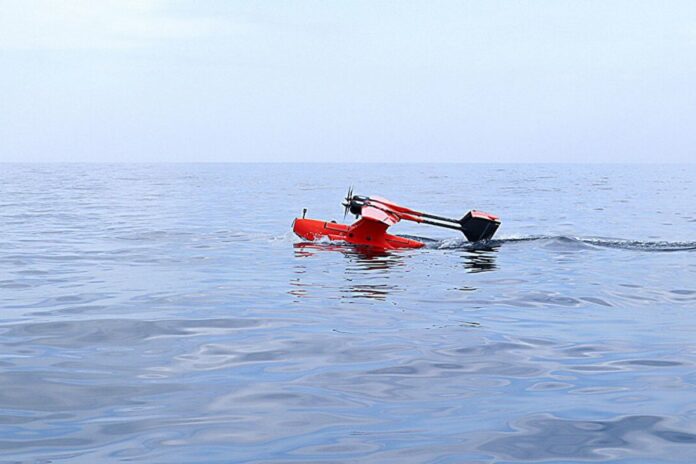
In a study published in Earth and Space Science, researchers at the Institute of Industrial Science, The University of Tokyo, have addressed the challenge of acquiring reliable, high-precision, real-time seafloor measurements by constructing a seaplane-type unmanned aerial vehicle (UAV) that can withstand ocean currents and wind. This vehicle is intended for use with the Global Navigation Satellite System–Acoustic (GNSS-A)—a system that uses satellites to determine locations on Earth—to provide a communication link with seafloor transponder stations.

“We conducted initial experiments in a water tank,” explains lead author of the study Yuto Yoshizumi, “and found that the proposed system can detect distances to an accuracy within 2.1 cm.”

To further evaluate the system, at-sea trial tests were performed by landing the UAV on the sea surface off the coast of Japan under optimal sea conditions.

“The results were hugely encouraging,” says senior author Yusuke Yokota. “These seafloor positioning measurements are the first ever achieved using a UAV, and we attained a horizontal root mean square error of approximately 1–2 cm, which is easily comparable to that of existing vessel-based systems.”

The rapid real-time acquisition of seafloor information using the UAV system is expected to provide the foundation for advanced research into earthquake disaster prevention. Such data is urgently needed, given the speed and frequency of occurrences of megathrust earthquakes on the Nankai Trough.