-0.6 C
New York
Home Blog Page 43

New maps published of Alexander Island, Antarctica

0

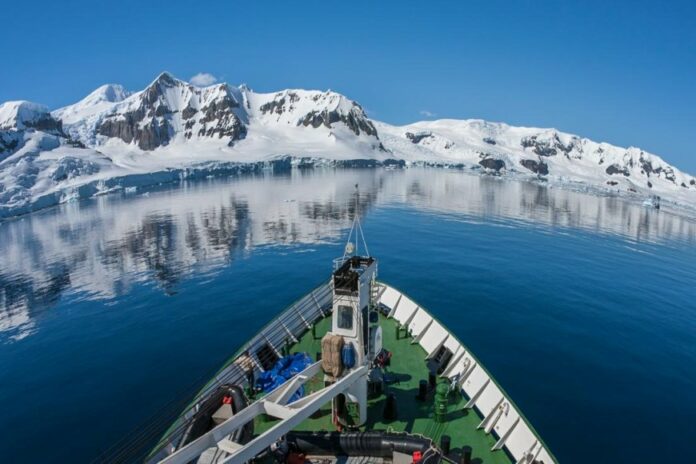
The Mapping and Geographic Information Centre (MAGIC) at the British Antarctic Survey have produced new maps of the topography (physical features) and geology of Alexander Island in Antarctica. 

New maps like this not only demonstrate the success of new technologies to map remote locations but are vital tools in aiding navigational and scientific endeavours in the region. 

Alexander Island lies off the west coast of the Antarctic Peninsula and it is the largest island in Antarctica and the second largest uninhabited island in the world. The region surrounding Alexander Island is shown on the map, including the well-studied Wilkins and George VI ice shelves, and the smaller islands of Rothschild, Charcot and Latady.

The history of the region is a very interesting one. The island was first sighted and roughly charted in 1821, although it took until 1940 to confirm that the island was entirely disconnected from the mainland by the George VI Sound. The first detailed reconnaissance map of the region was compiled in 1959 by the Falkland Island Dependencies Survey (FIDS), the predecessor to BAS. Further maps were released in the 1980s, but none of these are comparable to modern standards of mapping. The island itself is constantly changing  in this volatile polar environment, meaning new maps are needed to be made. 

The topographic map contains information including the coastline and ice shelf extents, contours, mountain spot heights, rock outcrop extents, and place names. It displays the information in an easy-to-read manner. 

Alexander Island has extensive mountain ranges reaching over 3000 metres in elevation. Due to the inhospitable conditions in these regions, exploration can be treacherous and very few of these mountains have been summited as a result. The team used satellite derived data to extract the heights of mountains.  Mount Stephenson has long been thought the highest mountain on the island at 2944 m, but these new findings confirmed thinking in BAS that Mount Hall is the tallest at 3078 m!  

Ice shelves in the region are another important feature to show accurately. The Wilkins Ice Shelf has undergone dramatic changes in recent years. Once connected to Charcot Island via ice bridge, the final remnants linking them collapsed in 2009 after years of gradual thinning. The retreat has continued since then, meaning the ice shelf remains vulnerable and is expected to recede further, much like many ice shelves along the Antarctic Peninsula. The extents displayed on the map show its position as of late 2024 and early 2025, but in some areas it will have already changed. 
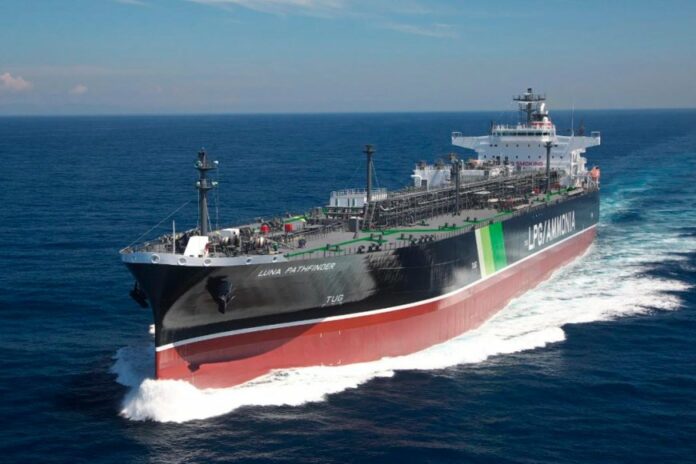
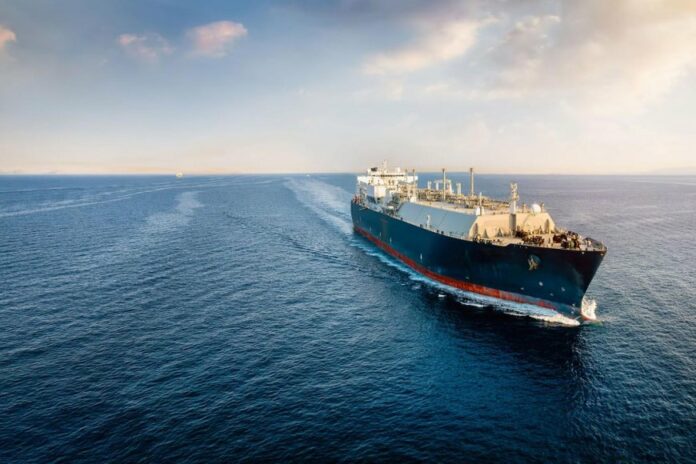
Newly built LPG carrier named “Luna Pathfinder”

0

On August 5, a naming ceremony took place at the Sakaide Works of Kawasaki Heavy Industries Ltd. for a newly built very large gas carrier (VLGC). 

This vessel marks the sixth dual-fuel LPG (liquefied petroleum gas) carrier ordered by NYK, following the delivery of Liberty Pathfinder in October of the previous year. Upon its completion, the ship will be chartered by Astomos Energy Corporation, one of the world’s leading LPG companies, for the domestic and global transportation of LPG.

The ceremony was attended by about 50 people, including Toshinobu Sato, vice president of Astomos Energy, and Hironobu Watanabe, managing executive officer of NYK. During the event, Sato officially named the vessel “Luna Pathfinder,” after which his wife performed the ceremonial ribbon-cutting.

“Pathfinder” denotes a guiding marker, while “Luna,” the Roman goddess of the moon, evokes imagery of tranquility and peaceful voyages under the night sky.

The vessel is equipped with a dual-fuel engine capable of using both heavy oil and LPG as fuel. By utilizing the rotation of the shaft connected from the main engine to the propeller to generate electricity, the diesel generators can be shut down during regular navigation, enabling operation primarily on LPG fuel. When using LPG, emissions of sulfur oxides (SOx) are reduced by more than 95% and greenhouse gases (GHG) by over 20% compared to conventional heavy fuel oil.

Moreover, in addition to LPG the vessel can carry ammonia, for which demand is expected to increase as it is attracting attention as a means of realizing a decarbonized society in the future.

Vessel Particulars

  • Length overall: 229.90 m
  • Breadth: 37.20 m
  • Depth:21.90 m
  • Summer draft: 11.65 m
  • Tank capacity: 86,920 ㎥

Samskip pioneers Morocco’s first fast container route to the UK and Netherlands

0

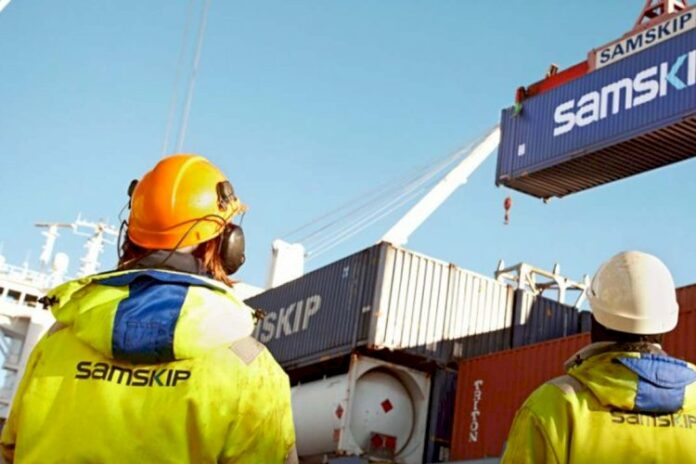
Samskip announces the launch of its long-anticipated Moroccan Reefer Service, a new shortsea container route connecting Agadir and Casablanca directly with the UK and the Netherlands. 

Specially designed to meet the needs of the fresh produce sector, this service provides the fastest door-to-door transit time in the market offering a true alternative to traditional road transport for Moroccan fruits and vegetables. To support this impactful milestone, Samskip has also signed a long-term agreement with the Moroccan Fruit Board covering the export of key fresh produce.

With weekly non-stop sailings and a reliable, integrated door-to-door solution, the service provides seamless customs clearance and inland transport for perishable goods bound for key European markets. This is the only container service on the market fast enough to carry vegetables, setting a new benchmark for fresh produce logistics between North Africa and Europe.

“This new connection marks a major milestone, not just for Samskip, but for the entire supply chain between Morocco and Northern Europe,” said Ólafur Orri Ólafsson, Chief Business Officer at Samskip. “We’ve listened to growers, importers, and retailers, and will deliver a service that’s faster, greener, and more reliable. It’s a powerful example of what we can achieve when we combine local expertise with the strength of Europe’s largest multimodal network.”

Samskip’s transshipment and cross-docking capabilities mean that customers can deliver throughout Europe, to Norway, Poland, Sweden, Finland, and the Baltic states in just a matter of days after arrival in Rotterdam. Deliveries to Ireland can be achieved within just six days of departure from Agadir, which Samskip proudly promotes as a compelling new option for Irish importers looking for fresher, faster, and more sustainable logistics from North Africa.

The new reefer route brings a host of benefits to the market:

  • Dedicated shortsea service designed for Moroccan perishable
  • A weekly direct sailing to the south UK and the Netherlands (Rotterdam)
  • Significantly faster transit than other container alternatives
  • Compatible with 45ft reefer containers, matching the capacity of standard trailers
  • Up to 80% CO₂ reduction compared to full road transport

Calling at Casablanca and Agadir ports, the new service continues to Rotterdam ensuring smooth and efficient cargo flows into the heart of European retail markets.

Vard receives new order from North Star for two hybrid SOVs

0

Vard, the Norwegian subsidiary of the Fincantieri Group, has signed a new contract with North Star, the UK’s largest shipowner-operator, for the design and construction of two hybrid Service Operation Vessels (SOVs), further strengthening the strategic partnership between the two companies and reaffirming their joint commitment to sustainable maritime innovation. The value of the contract is considered as very important.

This contract represents the ninth and tenth vessels commissioned by North Star from VARD, following previous contracts for four SOVs, two Construction Service Operation Vessels (CSOVs), in addition to two Vard Designs at an external yard.

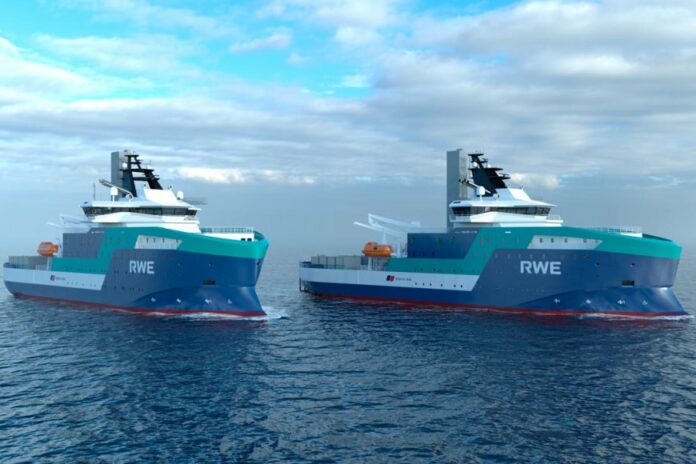
The new SOVs will be developed by Vard Design in Ålesund, Norway, leveraging the proven VARD 4 19 platform, tailored specifically for offshore windfarm operations. Each vessel will measure 87.5 meters in length with a beam of 19.5 meters and will accommodate up to 120 personnel. They will be equipped with a battery hybrid system and ready for future conversion to operation on methanol, underlining the companies’ shared drive toward decarbonization in the maritime sector. The onboard features include a height-adjustable motion-compensated gangway integrated with an elevator system, a boat landing system for safe personnel transfers, and advanced energy management solutions.

Vard Electro will supply its comprehensive SeaQ package, integrating systems for power, control, bridge and communications to ensure optimized and energy-efficient vessel performance. Vard Interiors will provide HVAC-R systems and interior concepts to guarantee high standards of comfort and functionality onboard.

Construction of the first vessel’s hull will take place at Vard Shipyards Romania – Brăila, followed by outfitting and delivery from one of VARD’s Norwegian shipyards, with delivery scheduled for the fourth quarter of 2027. The second vessel will be entirely built and delivered from Vard Vung Tau in Vietnam, with delivery planned for the fourth quarter of 2028.

North Star owns the largest wholly UK-owned fleet engaged in the North Sea. The firm has committed to delivering 40 hybrid offshore wind ships by 2040 to meet the evolving demand of operations and maintenance (O&M) logistical support across the UK and Europe. 

Northern Endurance Partnership awards Halliburton contract for carbon capture and storage monitoring

0

Halliburton announces a contract award to provide completions and downhole monitoring services for the Northern Endurance Partnership (NEP) carbon capture and storage (CCS) system in northeast England’s East Coast Cluster (ECC).

Halliburton will manufacture and deliver the majority of the equipment required for this project from its U.K. completion manufacturing facility in Arbroath. For more than 50 years, the center has supported North Sea operations and provides on-site product development and testing resources alongside advanced manufacturing capabilities to support efficient production and the delivery of equipment.

Jean-Marc Lopez, senior vice president, Europe, Eurasia, and Sub-Saharan Africa region, Halliburton, said: 

“The NEP infrastructure includes a CO2 gathering network and onshore compression facilities, as well as a 145-km offshore pipeline, and subsea injection and monitoring systems for the Endurance saline aquifer, located around 1000 m below the seabed. The infrastructure will transport and permanently store up to an initial 4 million tonnes/yr of CO2.”

NEP is a joint venture that includes bp, Equinor, and TotalEnergies. It was formed in 2020 as the ECC CO2 transportation and storage provider, which will transport and store CO2 emissions from the Teesside and Humber regional industrial clusters.

DNV and RSI complete study on decarbonizing the short sea dry bulk fleet

0

Amid increasing pressure on shipping to achieve the IMO 2050 decarbonization targets, the Responsible Shipping Initiative (RSI) and DNV have completed a new study: “Decarbonization of the short sea dry bulk fleet”, co-funded by the Swedish Transport Administration. 

Europe’s short sea general cargo fleet is ageing rapidly, with many vessels nearing the end of their operational life and few replacements on order. Most of these ships fall below the 5000 GT compliance threshold for international and EU emissions regulations, which means that shipowners often have litte incentive to invest in lower-emission vessels in line with decarbonization trajectories. As a result, cargo owners who rely on these vessels, including RSI members EFO AB, Lantmännen, SSAB, Stockholm Exergi and Södra, face a strategic challenge: how to secure future transport capacity that helps them meet their climate goals.

Sebastian Tamm, Chairman of RSI and Manager Logistics Development at EFO, said “Through RSI, we’ve long promoted responsible shipping, focusing on working conditions, health, and safety. During the COVID lockdown, we shifted our focus to decarbonization. However, our typical short-term Contracts of Affreightment limit shipowners’ ability to invest in radically different vessels. This study highlights the need to turn long-term decarbonization goals into actionable short-term targets for contracting. This will help with planning, investment, and compliance with new regulations. We appreciate DNV’s insights and support in developing this study with us.”

The project was divided into three work packages (WP). WP1 established emissions baselines for each RSI member using automatic identification system (AIS)-based modeling, due to the lack of primary emissions data. This helped identify key cargo segments for green fleet renewal based on transported volumes and emissions. WP2 examined the costs of introducing green ships and calculated the “green premium” for vessels powered by e-methanol compared to marine gas oil (MGO). Measures such as government support and improved transport efficiency were evaluated to reduce costs and workshops were held with shipowners and fuel providers. WP3 used a fleet renewal model to assess the pace of renewal required to meet climate targets, comparing this with alternative strategies such as biofuel blending and operational efficiency improvements.

Hannes von Knorring, Principal Consultant and Global Cargo Owner Segment Lead at DNV Maritime, said: “A major challenge in adopting low-emission fuels is the uncertainty shipowners face around long term costs and market demands. Cargo owners may also lack insights into fuel options and their impact on supply chain emissions. While the smaller vessels used by RSI members are not yet regulated they must report from this year on emissions to the EU, making it easier for cargo owners to collect data and set actionable targets. Through this project, RSI’s mission is to share knowledge, set standards, and find common ground for future shipping needs, and we are pleased to support their efforts.”

GTT completes the acquisition of Danelec

0

GTT, a technology and engineering group specialising in containment systems for liquefied gases, today announced the completion of its acquisition of Danelec, a leading provider of advanced digital solutions for maritime data collection and analysis.

The transaction is expected to have an accretive impact on GTT’s earnings per share from the first year and unlocks significant growth and synergy potential across the Group’s digital activities.

With Danelec joining Ascenz Marorka and Vessel Performance Solutions in GTT’s Digital division, the Group now supports an installed base of more than 17,000 vessels worldwide, offering the industry’s most comprehensive suite of high-quality data and digital solutions. These capabilities empower customers to enhance safety, optimise ships operational performance, and achieve ambitious decarbonisation goals.

To lead the expanded Digital division, GTT has appointed Casper Jensen, current CEO of Danelec, as Executive Vice President Digital at GTT. As part of his new responsibilities, Casper Jensen also joins GTT Group’s Executive Committee.

Following the acquisition of Danelec, GTT’s Digital division will be structured into two key business units to better serve customer needs: Performance & Monitoring Solutions and Safety & Equipment. Under Casper Jensen’s leadership, the combination of Danelec, Ascenz Marorka, and Vessel Performance Solutions will aim to bring to market a unified, best-in-class digital platform, while delivering significant synergies.

Anouar Kiassi, current CEO of Ascenz Marorka, becomes Senior Vice President (SVP) of the Performance & Monitoring Solutions business unit, while Christian Kock, current Executive Vice President Safety at Danelec, takes on the role of SVP of the Safety & Equipment business unit within GTT’s Digital division.

‍Philippe Berterottière, Chairman and CEO of GTT group, said:

“With the acquisition of Danelec, GTT takes a decisive step forward in the digital sector. This transaction positions us as the world’s leading player in vessel performance management and enhances our ability to deliver advanced solutions for safety, efficiency, and decarbonisation. I am pleased that Casper Jensen, CEO of Danelec, will lead our Digital division and join GTT Group’s Executive Committee, bringing his expertise and vision to this next phase of growth. In a rapidly expanding digital maritime market, this acquisition reinforces our leadership and creates significant value for both our customers and our shareholders.”

Casper Jensen, Executive Vice President Digital at GTT, said: 

“I am honoured to lead GTT’s Digital division at this pivotal moment. By bringing together the strengths of Danelec, Ascenz Marorka, and Vessel Performance Solutions, we are creating a unified digital offering that empowers our customers to navigate their most pressing challenges, from operational performance to safety and decarbonisation. Our priority is to ensure continuity and deliver the high standards of innovation and service our clients expect, while accelerating the development of the industry’s leading digital platform.”

Sallaum Lines celebrates delivery of first in series of six green PCTCs from China

0

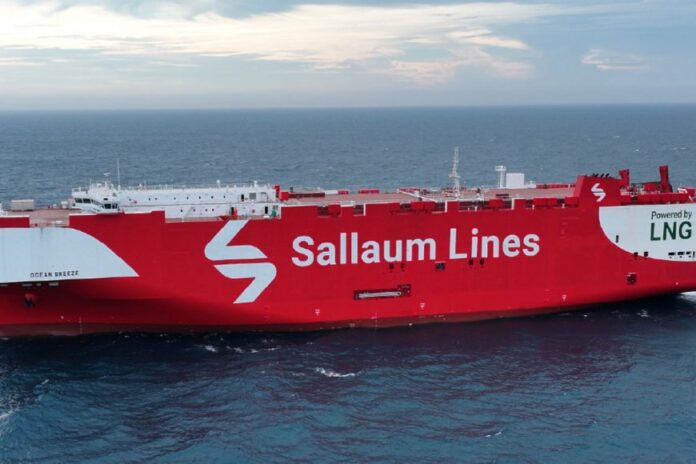
Sallaum Lines announces the successful early delivery of the MV Ocean Breeze, a next-generation LNG dual-fuel Pure Car and Truck Carrier (PCTC) built by Fujian Mawei Shipbuilding in China. 

The Ocean Breeze was delivered on July 18, an impressive four months ahead of schedule, setting a new standard for green shipbuilding speed and precision. 

This delivery marks a significant deepening of the partnership between Europe’s leading automotive RORO carrier and China’s advanced maritime manufacturing sector. It also highlights the key role of Chinese financial institutions in supporting sustainable shipping, with Shenzhen Capital Group Co., Ltd providing tailored leasing solutions to support the transaction.  

Key Features of Ocean Breeze:  

  • Capacity: 7,500 CEU (Car Equivalent Units)  
  • Dimensions: 199.9m length × 38m beam, with 13 vehicle decks  
  • Technology: LNG dual-fuel main engine, electric RORO systems, and ultra-low emission profile  
  • Versatility: Equipped to carry conventional vehicles, new energy vehicles (NEVs), and packaged hazardous cargo  
  • Compliance: ABS-classed, exceeding IMO decarbonization standards  

The Ocean Breeze is part of a broader strategy by Sallaum Lines to establish a China focused global logistics network. The company has:  

  1. Ordered six additional green PCTCs from Chinese shipyards Fujian Mawei and CMHI Jinling.
  2. Opened a new office in Shanghai to support Chinese automotive manufacturers (OEMs) directly. 
  3. Committed to long-term collaboration across shipbuilding, financing, and service in China. 

“Our relationship with Chinese partners is rooted in trust, performance, and a shared commitment to sustainable maritime development,” said Mr. Sami Sallaum, Chairman of Sallaum Lines. “The Ocean Breeze showcases not just cutting-edge green technology, but also the power of international cooperation to accelerate the future of shipping.”  

Anemoi wins major UK funding to advance Rotor Sail design

0

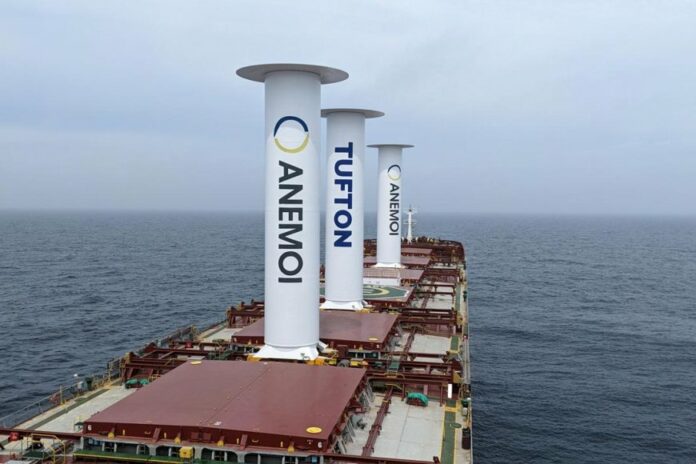
Anemoi Marine Technologies, the UK’s leading developer of wind-assisted ship propulsion systems, has won funding under the sixth round of the Clean Maritime Demonstration Competition. 

The £1.2 million project will include the development of a next-generation folding sail system tailored to Kamsarmax and Panamax bulk carriers, as well as aerodynamic design enhancements that will significantly increase fuel savings.

The UK Clean Maritime Demonstration Competition has so far directed £136 million in government funding to engineering innovators developing cutting-edge maritime decarbonisation solutions, with the aim of driving growth for coastal communities and cementing UK’s position as a clean energy leader. 

Clare Urmston, CEO of Anemoi, said: “This funding will support Anemoi in advancing the next generation of Rotor Sail technology. While our Rotor Sails are already efficient and high-performing, ongoing innovation is essential to unlock further efficiency gains, adapt to evolving vessel designs, and meet increasingly ambitious environmental targets. This investment underscores Anemoi’s potential to support the UK in sustainable shipping as the maritime industry works to cut emissions.”

Under the seven-month project, Anemoi will design, build and test a prototype of a new folding system for its 3.5m Rotor Sail. The result will be an industry-first for Rotor Sails of this size, as folding systems have previously only been used on larger 5m sails. By allowing sails to be lowered during port operations, the design will significantly reduce operational obstacles to the uptake of wind-assisted propulsion. Operational seamlessness is a core element of Anemoi’s offering, as the company also offers a unique rail deployment system, which allows the Rotor Sails to move along the deck of the ship.

In addition to the folding system development, the project will cover additional design optimisations, which are expected to improve the aerodynamic performance of wind-assisted vessels, delivering increased fuel savings and emissions reductions compared to Anemoi’s current state-of-the-art Rotor Sails.

The test rig will be manufactured by UK company Pressure Design Hydraulics Engineers, with aerodynamic enhancements developed in partnership with Cape Horn Engineering, supported by Stehr Consulting. Victoria Steamship, a UK-based shipbroker, will contribute insights based on its fleet of nine vessels operating globally in the bulk carrier segment, a primary market for folding Rotor Sails. The UK innovation accelerator Connected Places Catapult will conduct market research and a port and vessel integration study.

Triton completes the acquisition of MacGregor

0

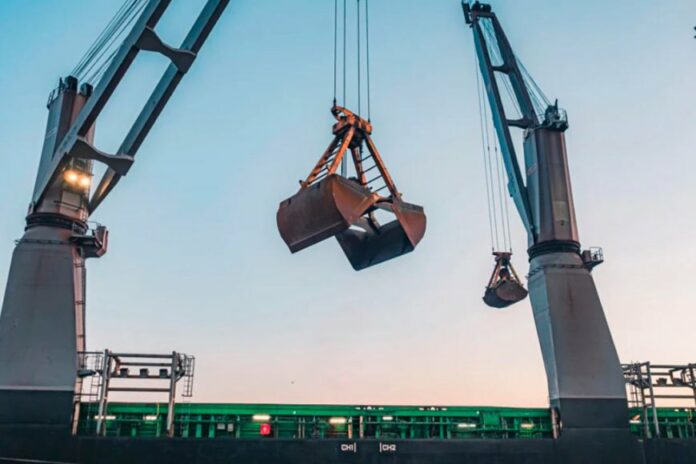
MacGregor is a global leader in sustainable maritime and offshore cargo and load handling, specialized in providing integrated solutions and services designed to perform with the sea. 

In 2024, MacGregor’s sales totalled approximately EUR 800 million and the company employs about 2,000 people across 30 countries.The acquisition of MacGregor is aligned with Triton’s strategy of investing in industrial technology leaders with strong engineering capabilities and a focus on mission-critical services. 

“The acquisition of MacGregor is aligned with Triton’s strategy of investing in industrial technology leaders with strong engineering capabilities and a focus on mission-critical services,” Triton said. “MacGregor’s trusted brand, high-quality equipment, and significant aftermarket potential make it a compelling addition to the portfolio.

“With a long track record of executing carve-outs, Triton is well positioned to support MacGregor’s transition to an independent company and its continued development as a global market leader.”