4.9 C
New York
Home Blog Page 4

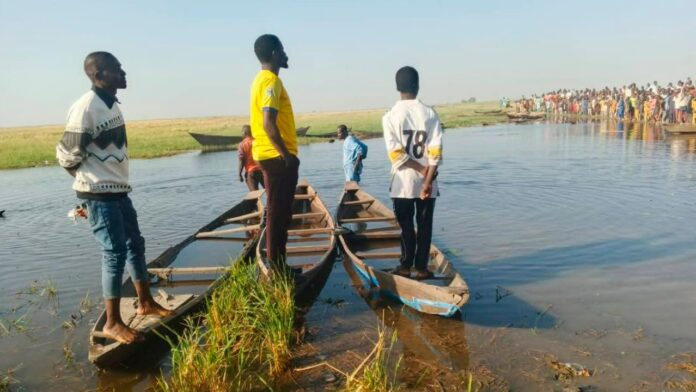
Boat capsizes in Nigeria’s Yobe state, leaving 29 dead

0

The Yobe State Emergency Management Agency provided the update, noting that of the 29 recovered bodies, 24 were from Nguru LGA, two from Yusufari LGA, and three from Gurin LGA in Jigawa State.

According to the agency, 12 persons were rescued and discharged, three were hospitalised, and two have since been discharged while search-and-rescue operation is still ongoing for another eight.

Meanwhile, the Director-General of the National Emergency Management Agency (NEMA), Mrs Zubaida Umar, has activated the agency’s Maiduguri Operations Office to deploy an Emergency Response Team to support ongoing rescue efforts following the tragic boat mishap.

This was contained in a statement from the agency, which indicated that the NEMA team will coordinate with the Yobe State Emergency Management Agency and other relevant stakeholders to strengthen search-and-rescue operations.

Boat accidents are common in Nigeria’s remote areas where water transportation is common due to its convenience for business owners and to the absence of good roads.

Past accidents have been often caused by overloaded and poorly maintained vessels, many of them operating without carrying life jackets.

Finland makes progress in cable breach investigation, police say

0

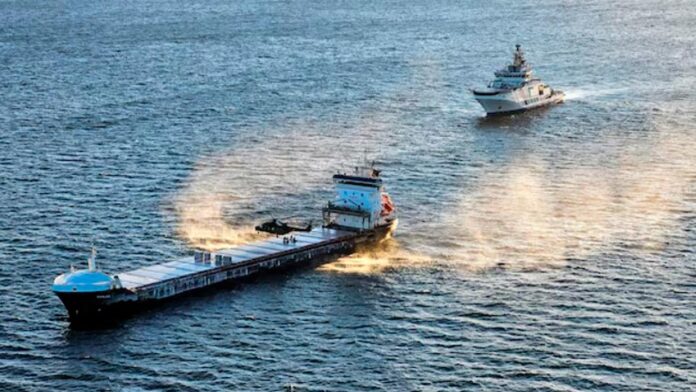
Finnish police had made progress in a criminal investigation into damage caused to an undersea telecommunications cable owned by operator Elisa.

Police has seized the cargo vessel “Fitburg” while it was en route from Russia to Israel on suspicion that it had sabotaged the telecoms cable running across the Gulf of Finland from Helsinki to Estonia.

Investigators said on Thursday they had arrested two of the 14 crew members, imposed a travel ban on two others and had begun questioning them. The 14 crew members were nationals of Russia, Georgia, Kazakhstan and Azerbaijan.

“The interviews have clarified the course of events and the different roles of the crew members,” Detective Chief Superintendent Risto Lohi of Finland’s National Bureau of Investigation said in a statement on Friday.

The Fitburg, which carried a cargo of steel products, was seen dragging its anchor in the ocean at the time of the incident, and was boarded by Finnish authorities and brought to shore for inspection, investigators have said previously.

Finnish authorities have said the telecommunications cable is currently inoperable but the full extent of the damage will not be known for some time.

Estonian President Alar Karis said on Wednesday the incident was hopefully not a deliberate act, but that the investigation would clarify matters.

The Baltic Sea region, of which the Gulf of Finland is part, has been hit by a string of incidents in recent years in which gas pipelines, power cables and telecoms links on the seabed were damaged, triggering extensive criminal probes.

Concern is growing in Europe at what officials see as an increase in hybrid threats from Russia since it launched its war in Ukraine, which Moscow denies.

Russia’s embassy in Helsinki said it was in contact with Finnish authorities.

“We hope that the situation will be resolved in a spirit of cooperation and in accordance with the relevant legal norms,” it said in a statement.

Source: Reuters

Alfa Laval launches FCM LNG fuel supply system leveraging advanced cryogenic technology

0

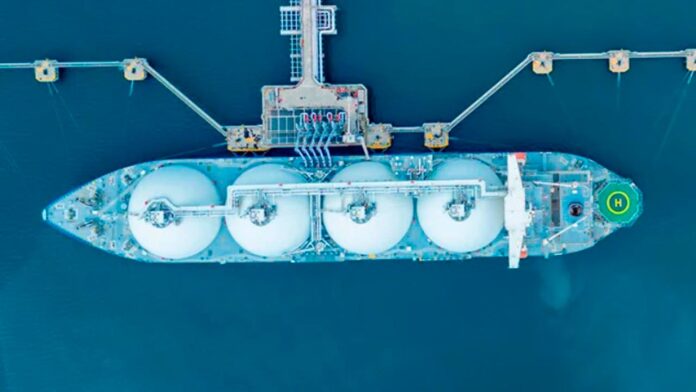
Alfa Laval announces the launch of a new fuel-conditioning module (FCM) which prepares Liquified Natural Gas (LNG) for seamless use in marine engines.

The new module marks the expansion of Alfa Laval’s portfolio for alternative fuels, integrating cryogenic technology to deliver a holistic and highly reliable fuel supply solution for shipowners adopting LNG as a fuel.

The LNG fuel supply system features advanced cryogenic technology, a new technology for Alfa Laval following a recent acquisition of the French company Fives Energy Cryogenics. This enables Alfa Laval to deliver a high-performance system that enables customers to adopt LNG efficiently and safely as a marine fuel.

“Transitioning to new fuels is at the forefront of our product development, and over the past five years, we have seen clear demand from shipowners for solutions that support this shift. Our customers are proactively preparing for the future, and this momentum will only accelerate. LNG continues to be the leading alternative fuel in the maritime industry, and by leveraging advanced cryogenic technology, we can deliver a highly reliable system that provides tangible value and addresses the evolving market needs for LNG adoption,” says Martijn Bergink, President of Marine Division, Alfa Laval.

The first test benches for the FCM LNG will be delivered during 2026, with the system ready for marine delivery in 2027.

New study finds rate of U.S. coastal sea level rise doubled in the past century

0

A July 2025 report from the U.S. Department of Energy (DOE) claims that U.S. tide gauge measurements “in aggregate show no obvious acceleration in sea level rise beyond the historical average rate.”

However, a new study by Chris Piecuch, a physical oceanographer with the Woods Hole Oceanographic Institution (WHOI), reaches a dramatically different conclusion.

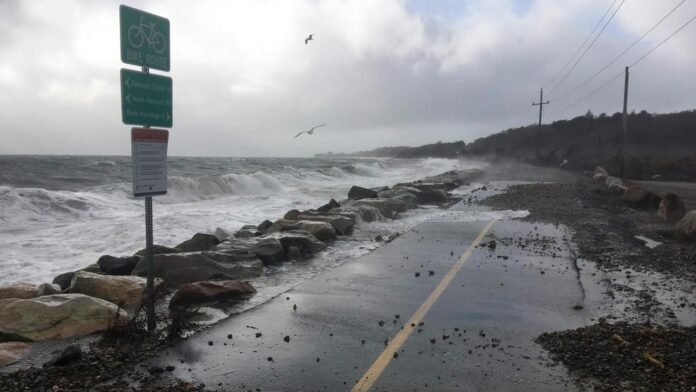
The study finds that the rate of U.S. coastal sea-level rise has more than doubled in the past 125 years, from a rate of less than 2 millimeters per year in 1900 to more than 4 millimeters per year in 2024, and that present rates are well above the historical average. This translates to a rise in U.S. coastal sea level of about 40 centimeters, or nearly 16 inches, over that time.

“This represents conclusive evidence that coastal sea level in the U.S. is accelerating, likely due to climate change,” according to the study, “The Rate of U.S. Coastal Sea-Level Rise Doubled in the Past Century,” published in the journal AGU Advances. Piecuch said the acceleration of U.S. coastal sea level is consistent with what is happening on a global scale related to ongoing ocean warming and expansion and to continuing loss of ice from glaciers and ice sheets.

The authors of the DOE report base their conclusion on analysis of data from five tide gauge records “that may be heavily impacted by local effects and not representative of true large scale aggregate RSL [relative sea level] behavior,” according to Piecuch’s study, which adds that the DOE report’s conclusions “should be treated with caution,” due to the small number of locations considered.

In contrast to the DOE report, the Piecuch study uses data from 70 tide gauges distributed along the contiguous U.S. coast. The data set comprises all active U.S. tide-gauge stations with more than 30 years of data.

Piecuch’s results “directly contradict” the claims made in the DOE report that are based on a cursory discussion of tide gauge time series from just a handful of locations, the study states. “U.S. tide-gauge records taken collectively do show an obvious RSL acceleration above the long-term historical average trend.”

“The DOE report paints an incomplete picture of the rates of sea level change by picking just a handful of locations that are subject to local effects and that are not representative of the large-scale aggregate relative sea level behavior,” said Piecuch.

The locations in the DOE report – including Grand Isle, Louisiana, and Galveston, Texas – are known to feature vertical land motion from human activity and geological processes unrelated to anthropogenic climate change, the Piecuch study indicates. For example, Grand Isle exemplifies several local and regional processes that can cause sea level change along the Gulf coast, such as long-term compaction and sediment transport related to the dynamics of the Mississippi River as well as oil and gas extraction, Piecuch said. “These local and regional processes are thought to have caused significant land loss and subsidence, or sinking of coastal land, particularly during the 1960s and 1970s.”

Piecuch’s study acknowledges that spatially variable vertical land motion is an important control on relative sea level changes. However, the study adds that it is unlikely that land motion explains the acceleration in sea level rise.

The DOE study’s conclusion “rests largely on cursory analysis of a small number of tide-gauge records that are known to be unrepresentative of large-scale RSL behavior,” the Piecuch study states.

“You can’t argue that U.S. sea level rates are not increasing by looking at just five cherry-picked sites,” Piecuch said. “When you consider all the available observations, the data point in the opposite direction—that U.S. coastal sea level is clearly on an accelerating course.”

No federal funding supported the author’s work associated with writing this paper.

Subsea7 awarded contract offshore US

0

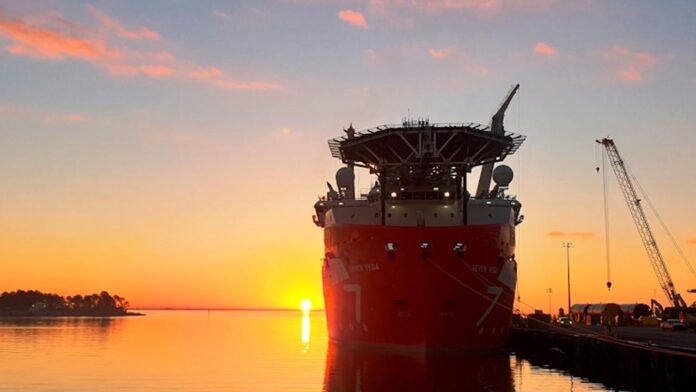
Subsea7 has announced the award of a sizeable contract by LLOG Exploration Offshore L.L.C., for the Buckskin South Expansion project. The Buckskin field is located approximately 305 kilometres off the coast of Texas, in the US.

The scope of work includes the transportation and installation of a subsea umbilical and a rigid flowline in water depths of up to 2,100 metres.

Project management and engineering activities will begin immediately from Subsea7’s Houston, Texas office, with offshore operations scheduled for 2026 and 2027.

Craig Broussard, Senior Vice President for Subsea7 Gulf of Mexico, said: “We are proud to continue working alongside LLOG to deliver greater value from their US developments, building on successes such as the innovative Salamanca project, which recently achieved first oil.”

Black Sea oil pollution after Russian attack could last for years – Greenpeace Ukraine

0

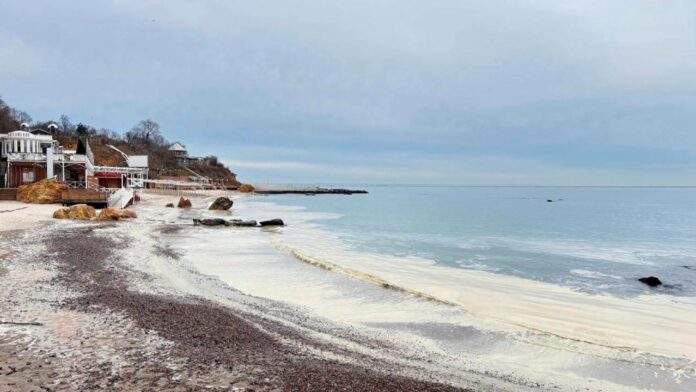
Following Russian attacks on December 20th on sunflower oil storage facilities at the port of Pivdenny near Odesa, tanks were damaged, triggering significant and potentially damaging marine pollution.

Witnesses reported that the vegetable oil quickly covered neighboring areas, and soon reached the Adzhalik estuary. Unfortunately, the spill was not contained within the estuary in time; by December 24th, the oil spill had reached the shoreline within the city of Odesa, Ukraine. The pollution has affected waterbirds, with around 300 birds reported to be rescued and taken to the Odesa Zoo for rehabilitation.

What does it mean for wildlife? In its initial stages, while liquid, a spill of food oil stays at the top of seawater. This results in smothering and coating in a physical way similar to a fossil fuel spill, though it is not as toxic if ingested. Wildlife suffers physical effects becoming coated with the oil that can result in death through hypothermia, dehydration, diarrhea, starvation, or suffocation from the clogging of nostrils, throats, or gills. Often the numbers of birds rescued is just a fraction of the total numbers lost.

What to expect? Vegetable oil normally breaks down more quickly as bacteria and fungi can metabolize it more easily than crude or refined fossil oils. However, the speed depends on the temperature; at winter temperatures, sunflower oil can congeal and partially solidify, slowing the breakdown and prolonging the physical impacts. If it does break down in the sea, it will consume oxygen from the water, resulting in a reduction of oxygen available for fish and other aquatic fauna.

After polymerization, oxidation, or mixing with debris, vegetable oils become denser than water. They sink to the seabed and form a layer on the sediment that can smother bottom-dwelling species and cut off oxygen there for some time. This can be accelerated by contact with salt water and debris and by partial breakdown as the fats and oils congeal at low temperatures (like fatbergs in sewers).

According to NOAA, a marine spill of sunflower oil that sinks and forms a cap on benthic (seafloor) habitats, as well as concrete-like lumps in intertidal sandy sediments, can persist for more than 6 years. At the same time, unpolymerized vegetable oils (which could be the case if an accident happened in summer) biodegrade rapidly and completely, even under anaerobic conditions. Thus, to answer what to expect, research should be conducted to determine if polymerization has occurred.

APM Terminals invests in new services to accommodate Nigerian growth

0

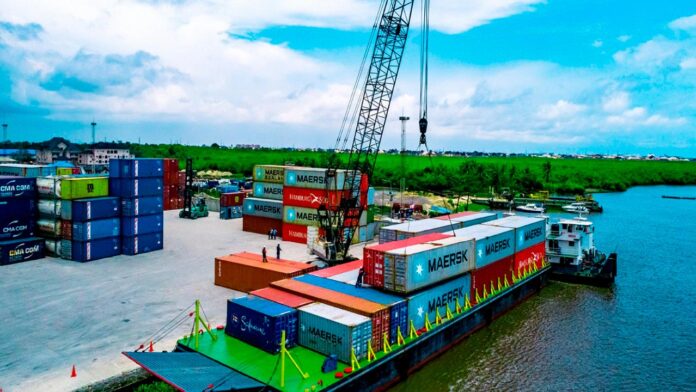
APM Terminals and Barging Marine Solutions Ltd have signed an exclusive lease agreement until September 2031 to expand services in and around Apapa, underlining the terminal operator’s long-term commitment to develop Nigerian trade opportunities.

The aim of the agreement is leveraging the close collaboration between the two parties to increase capacity and to provide enhanced landside and barge connections to benefit both customers and shipping lines.

As Keith Svendsen, CEO of APM Terminals, said on signing the agreement: “The Nigerian market has shown solid growth throughout 2025 and APM Terminals strongly believes in the development of the market in the years ahead. Therefore, it is important that we take the necessary steps to develop and realise the potential of the terminal, while also looking at the future potential to invest and modernise further in Lagos. Barging Marine Solutions have been running a resilient business, and we look forward to developing the synergies we see by entering this collaboration.”

“This important collaboration with APM Terminals builds on the strong existing business that we have together and will provide enhanced logistics solutions for APM Terminals’ customers and shipping lines by leveraging BMS’s barging and terminal operations for additional capacity and reliable delivery,” says Karim Said, CEO Barging Marine Solutions Ltd.

The facilities include two waterfront and inland container terminals as well as barge services that will offer an alternative to road transportation and thereby easing the pressure on road-side transport via trucking, reducing traffic congestion, and reducing logistics-related costs.

“We believe that the improved barge services as well as Barging Marine Solutions’ position as market leader within inland container depots has the ability to improve both reliability and speed for our customers as well as optimising our coordination across the supply chain, which will give a more seamless customer experience,” says Frederik Klinke, MD, APM Terminals Nigeria.

Under the agreement, Barging Marine Solutions Ltd — part of GMT Nigeria Ltd — will operate the services for APM Terminals and the companies will jointly develop solutions to add value for customers.

Hikawa Maru to undergo long-term preservation

0

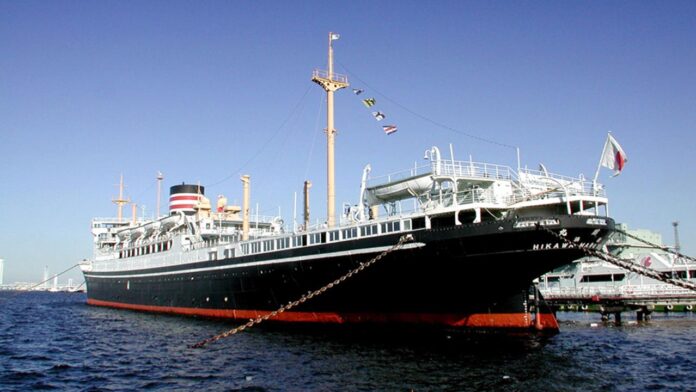
On January 8, 2026, NYK will launch an expert committee dedicated to the long-term preservation of Hikawa Maru, a national Important Cultural Property moored in front of Yokohama’s Yamashita Park.

Since 2024, NYK has been conducting surveys on the hull of Hikawa Maru to assess its safety and structural integrity in preparation for large-scale repairs. This long-term preservation project aims not only to ensure the ship’s structural soundness but also to enhance public engagement with the ship’s rich historical legacy.

Based on our findings, NYK will convene an expert committee specializing in ship preservation and architecture. This committee will establish technical and conservation policies for repairs, determine best practices for upkeep, and create exhibition strategies to help revitalize the Yokohama waterfront area.

Built in 1930, the 95-year-old Hikawa Maru needs preservation to remain safely accessible and educational. This project aims to preserve its historic shipbuilding and design heritage while ensuring safety through expertise from Japan and abroad.

Hikawa Maru

The vessel, which NYK built in 1930 for the Japan–Seattle line, remains the only extant passenger-cargo ship constructed in pre-war Japan. Its luxurious amenities and elegant appearance attracted numerous prominent individuals. Since 1961, the ship has been maintained and preserved at its mooring in front of Yamashita Park serving as an enduring symbol of Yokohama. It was designated a National Important Cultural Property in 2016.

Imperial-built quantum sensor travels to the Arctic for GPS-free navigation

0

The test, carried out in collaboration with the Royal Navy, is the latest step in a years-long effort to turn quantum-enhanced inertial sensors from a physics experiment into a real-world technology. 

The quantum sensors being developed at Imperial College London use quantum phenomena (the wave-like behaviour of cold atoms) to accurately measure accelerations and rotations. If we know our initial position, measurements of acceleration and rotation can be used to work out our location during a journey, without ever having to send or receive a signal remotely. They are highly accurate, remain stable over long periods of time, and are resilient to spoofing attempts.

Designing and building the sensors in a lab in South Kensington is one thing, making them rugged and robust enough to operate onboard a ship is another.

Dr Joseph Cotter, Lead scientist for the quantum sensor project, said:

“The Arctic field trial lets us test how these devices perform in unpredictable environments, and helps us work out what we still need to do to make them shock resistant, and able to withstand life at sea.”

Quantum-enhanced inertial sensors could revolutionise industries such as aerospace, agriculture, maritime and transport.

The first Imperial quantum sensors for navigation were demonstrated in 2018, and first deployed aboard the Royal Navy research ship the XV Patrick Blackett in 2023. The Imperial quantum sensor has also been deployed on the London Underground, and may one day enable more reliable signalling systems in rail. 

Commander Matt Steele Royal Navy, SO1 Future Technology for the Royal Navy’s Disruptive Capabilities and Technologies Office, said: “As Head of Futures in the Royal Navy’s Disruptive Capabilities and Technologies Office (DCTO), I am delighted that Dr Joseph Cotter’s team at Imperial College London was able to test its revised Quantum Inertial Navigation Sensing (INS) technology, onboard MV Anvil Point.

“This experiment builds on previous sea trials, using the RoRo fleet, which has enabled iterative development and performance improvements to the sensor.

“The DCTO looks forwards to continuing this long-term collaboration with Imperial College London to develop a GNSS-independent INS prototype and demonstrate quantum operational advantage for the Royal Navy.”

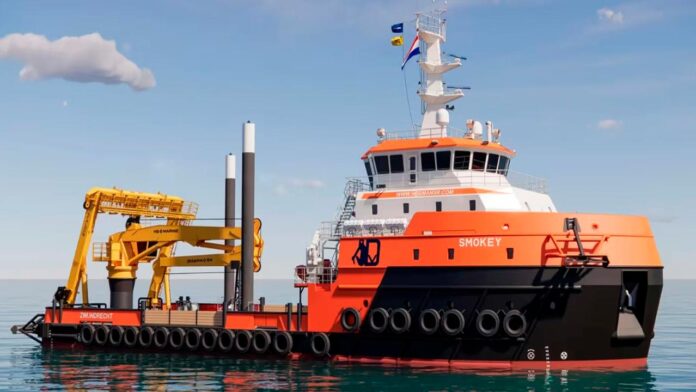
Damen lays keel for Herman Senior’s MPV 4916 Smokey

0

Damen Shipyards Group has held a keel-laying ceremony for Herman Senior’s Multi-Purpose Vessel (MPV) 4916. The milestone moment in the construction of this first-in-series vessel took place at the Albwardy Damen shipyard in Sharjah, United Arab Emirates (UAE).

Herman Senior has named the latest addition to its fleet Smokey in keeping with the company tradition of giving vessels names for famous bears. Tradition was also observed during the ceremony when two coins were welded to the keel. The coins selected were a historic Rijksdaalder from the Netherlands and a UAE Dirham, to reflect both the vessel’s Dutch heritage and the construction location.

Herman Senior is a long-standing client of Damen and operates numerous vessels from the shipbuilders’ portfolio in its fleet. As in this case, the company is often the launching customer for first-in-series Damen vessels.

Speaking on the occasion of the keel-laying, Leon Fijnekam, Commercial Manager at Damen Shipyards Hardinxveld, said, “We are very proud to continue to support Herman Senior with this latest order for an MPV 4916. Our two companies have been working together for almost 80 years. I believe the key to the long-standing success of our relationship is our shared values as family businesses. Both parties have a keen focus on quality and a strong vision for the future. We look forward to many more years of collaboration.”

Erwin van Dodewaard, Managing Director at Herman Senior said, “The keel laying of MPV Smokey marks an important step in the further expansion of our offshore capabilities. With this vessel, which is a first of a kind once again, we are investing in versatility, reliability and long term operational value. Our long-standing cooperation with Damen, built on trust, craftsmanship and shared family values, enables us to translate these ambitions into a vessel that is truly fit for the future offshore energy market.”

Smokey is designed to perform a wide range of tasks in the offshore energy sectors. Her versatility is assured by DP2 dynamic positioning capabilities, a four-point mooring system and spud poles, which allow her to keep station in diverse environments and water depths. The vessel will also feature a 45 tonne hydraulic A-frame, and an active heave compensated winch on the crane, which allows for safe, precise lifting, even in challenging conditions.

The MPV 4916 is prepared for a sustainable future. The vessel features the Damen Marine NOX Reduction System, a selective catalytic reduction system (SCR) that lowers both noise and emissions in a single, compact unit and allows compliance with IMO Tier III requirements. It is, furthermore, prepared for conversion to either full electric or hybrid methanol propulsion in the future.

Safety and comfort are also focal points in the design. Smokey is designed in accordance with SPS Code (Code of Safety for Special Purpose Ships), MLC (Maritime Labour Convention) 2006 and COMF-3 notation to ensure the well-being of up to 34 persons on board.