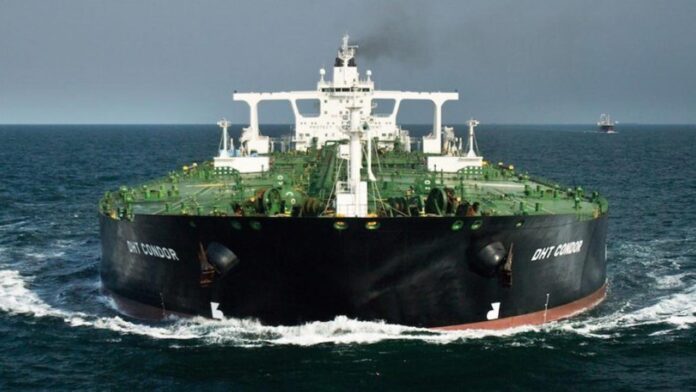
DHT Holdings has taken delivery of a very large crude carrier (VLCC) newbuilding from South Korean shipbuilder Hanwha Ocean.
The vessel, named DHT Antelope, has entered the spot market and represents the first in a series of four newbuildings scheduled for delivery during the first half of 2026.
The vessel has an overall length of 331 metres and a beam of 60 metres. It features a summer deadweight capacity of 281,800 and is Tier III compliant.
DHT Holdings said the acquisition is part of a fully funded programme intended to increase the customer offerings and earnings power of the company.
The next newbuilding in the series is scheduled for delivery in early March 2026.
The delivery comes shortly after the company announced the sale of two 2007-built VLCCs, DHT China and DHT Europe, for a combined price of $101.6 million. These older vessels are expected to be handed over to their new owner in the first quarter of 2026.
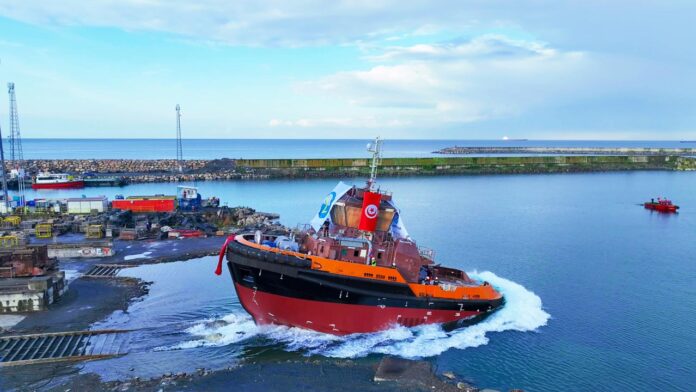
MED MARINE has launched the sixth and final RAmparts 2800 series ASD tugboat constructed under the six-vessel fleet programme for Tunisia’s Office de la Marine Marchande et des Ports (OMMP).
Held at MED MARINE’s EREGLI SHIPYARD in late November, the launch marks the concluding phase of this strategically planned series.
Measuring 28 metres in length and delivering a 60-tonne bollard pull, the vessel is built to reflect the precision, reliability, and robust performance associated with Robert Allan Ltd.’s RAmparts design. Fully compliant with Class FIFI-E requirements and powered by twin medium-speed diesel engines, the tug is engineered for dependable operation in demanding harbour conditions.
Its refined hull form delivers excellent manoeuvrability, stability, and energy efficiency, enabling seamless performance across towing, mooring, escorting, firefighting, pollution control, and coastal assistance tasks. The vessel continues MED MARINE’s approach to creating versatile, operator-focused maritime solutions.
The launch concludes the six-vessel RAmparts 2800 programme, underscoring MED MARINE’s consistent project execution and OMMP’s commitment to strengthening Tunisia’s port capabilities with modern, high-performance assets.
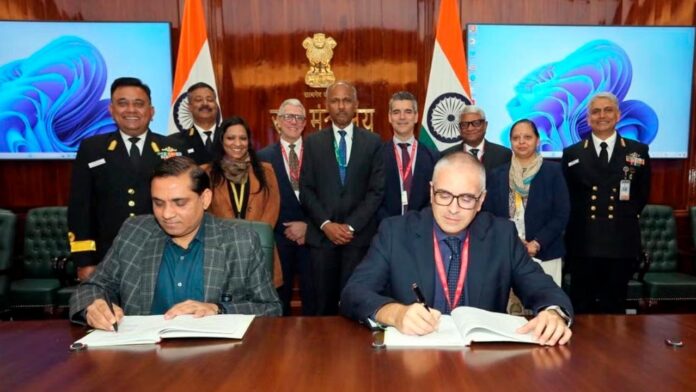
Fincantieri, through its subsidiary WASS Submarine Systems, has secured a significant order from the Indian Navy for the supply of Black Shark Advanced (BSA) heavyweight torpedoes, to be deployed on the six Scorpène-class submarines in service with the Indian fleet.
With a total value of over 200 million euros, this agreement represents the largest contract in the history of WASS, secured in the year of its 150th anniversary.
Deliveries are scheduled between 2028 and 2030, with production taking place at the WASS facility in Livorno, a center of excellence in underwater systems.
The Black Shark Advanced (BSA) is already in service with the navies of Italy and other 6 countries, confirming its status as an international benchmark for performance, reliability, and reduced lifecycle costs. The BSA stands out for its innovative operational capabilities and advanced technological features, representing Italian leadership in the underwater defence sector.
In addition to the heavyweight torpedoes, the contract includes the supply of launching network for Scorpène submarines, maintenance equipment, and related spare parts, ensuring comprehensive and integrated support for the Indian Navy. This operation represents a unique opportunity for WASS to expand its footprint in the Indian market in which fincantieri is increasingly focused, creating the base for cross-selling synergies.
Pierroberto Folgiero, Chief Executive Officer and General Manager of Fincantieri, commented: “This agreement marks a key strategic step for Fincantieri in India, a market of central importance in our long-term international growth strategy and one of the most dynamic naval hubs globally. Strengthening our presence in India means building enduring industrial and institutional partnerships in a region that plays an increasingly pivotal role in global maritime security. We are proud to deepen our cooperation with the Indian Navy and to position Fincantieri as a trusted long-term partner in this strategic geography.”
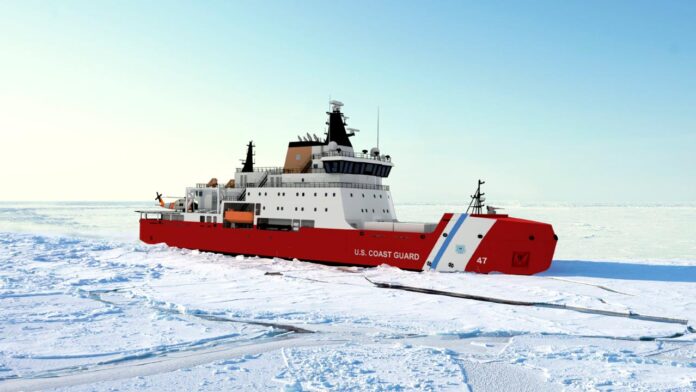
The U.S. Coast Guard announced the award of two contracts to build up to six Arctic Security Cutter (ASC) icebreakers — ships designed to break through and navigate ice-covered waters — between the United States and Finland.
Contracts were awarded to Rauma Marine Constructions Oy of Rauma, Finland, and Bollinger Shipyards Lockport, L.L.C. of Lockport, Louisiana.
The contract with Rauma Marine Constructions Oy includes up to two ASCs to be built in Finland, with delivery of the first vessel expected in 2028. The contract with Bollinger Shipyards Lockport, L.L.C. includes up to four ASCs to be built in the United States, with delivery of the first domestically built cutter expected in 2029.
Work on the four Bollinger-built ASCs will be based at its shipyard in Houma, Louisiana. Construction of the ASCs will be supported by the company’s workforce at multiple facilities across America’s Gulf Coast to meet the aggressive schedule set forth by President Trump.
“The Arctic Security Cutter is one of the most consequential and time-sensitive shipbuilding programs in U.S. Coast Guard history, and today’s contract award is a clear vote of confidence in the men and women of Bollinger,” said Ben Bordelon, President and CEO of Bollinger Shipyards. “The program will be Bollinger’s fifth class of cutters built for the Coast Guard, building on our current Sentinel and Polar Security Cutter programs and more than 40 years of experience in delivering over 187 cutters for the service.”
Acquisition of ASCs continues the Service’s modernization through Force Design 2028, an initiative introduced by Secretary Noem to transform the Coast Guard into a more agile, capable and responsive fighting force.
After months of work to integrate complex and custom systems to operate the remotely operated vehicle (ROV) Doc Ricketts, MBARI’s marine operations team has now conducted the ship’s first ROV science dives.
Operated by pilots in a control room at the heart of the David Packard, ROV Doc Ricketts can dive up to 4,000 meters (approximately 2.5 miles) underwater. This robotic submersible has been a vital tool for MBARI’s research on marine life, ecosystems, and processes deep beneath the ocean’s surface, increasing our understanding of life in the midnight zone and on the abyssal seafloor.
After sea trials in early November and early December to test launch and recovery procedures and the ROV video recording process, MBARI’s first ROV science mission was a collaboration with our education and conservation partner, the Monterey Bay Aquarium. This three-day expedition to collect animals for the Aquarium’s Into the Deep / En lo Profundo exhibition afforded an opportunity to further refine ROV operations, including use of the vehicle’s manipulator arms and other advanced sampling systems.
MBARI and the Monterey Bay Aquarium have a rich history of collaboration. They work closely together to introduce Aquarium visitors to the wonders of the deep sea and inspire stewardship of the largest living space on Earth.
Aquarium biologists were able to take advantage of the expanded capabilities of the David Packard to explore waters farther offshore at Sur Ridge, a deep-sea coral garden teeming with life. The longer dives—up to 12 hours underwater—allowed the team to collect more animals, critical for a new Aquarium research project aiming to better understand the diet and growth of deep-sea comb jellies. The expedition also provided an opportunity to deploy an “elevator” developed by MBARI engineers that allows Aquarium biologists to safely stow deep-sea animals for transport to the surface.
On the evening of December 30, Russian troops struck the port infrastructure of Chornomorsk. As a result of the shelling, a vegetable oil tank caught fire.
This was reported by the Ukrainian Sea Ports Authority (USPA) press service.
Fortunately, there were no casualties, and since the evening of December 30, all relevant services have been working at the site – work is ongoing to eliminate the fire and the consequences of the shelling.
“To prevent possible pollution of the water area, boom barriers have been installed at certain berths. Specialized vessels are ready to collect pollutants in case they enter the port area,” the department noted.
The USPA added that this attack was another on the port infrastructure of Ukraine, as the enemy is purposefully trying to destroy the logistical capabilities and export potential of the state.
“At the same time, despite the constant threat and shelling, the ports continue to operate – thanks to the professional and coordinated actions of the port workers and all the services involved,” the department summarized.
The oil tanker fleeing American forces in the Atlantic Ocean has been formally renamed and added to an official Russian database of vessels registered in that country, potentially complicating U.S. efforts to board the runaway ship.
According to the Russian Maritime Register of Shipping, the vessel, previously known as the Bella 1, is now registered as the Marinera. The database lists the vessel as flying the Russian flag, with a home port of Sochi.
Under international law, ships flying a country’s flag are under that nation’s protection. But the vessel’s efforts to stay out of U.S. jurisdiction might still be a long shot, because American officials said it was not flying a valid national flag when it was initially approached by the Coast Guard more than a week ago.
The register is a state-controlled enterprise acting as an official arm of the Kremlin’s maritime authority.
The Russian government’s stance on the ship is not clear. The Russian Embassy in Washington did not respond to a request for comment. The White House, the Defense Department and the Department of Homeland Security also did not respond to requests.
American officials said the Bella 1 was not flying a valid flag when it was approached by the Coast Guard in the Caribbean Sea late on Dec. 20, making it a stateless vessel susceptible to boarding under international law. The tanker, which was not carrying oil, refused to be boarded and has been on the lam ever since.
David Tannenbaum, a former sanctions compliance officer at the Treasury Department, said it was “unclear” whether Russia’s providing “overnight flag registration” to the ship would prove valid.
The move, he said, was part of a broader pattern of Russia’s operating as a sanctuary of last resort for the so-called dark fleet. Those are vessels that move oil from Russia, Iran and Venezuela in violation of sanctions from the United States and other countries.
The Bella 1 had previously been registered in Panama, Palau, Liberia and the Marshall Islands, according to the International Maritime Organization, which regulates international shipping.
U.S. forces have a seizure warrant for the ship that was issued before the boarding attempt. The court order was authorized because of the vessel’s history transporting Iranian oil, which U.S. authorities say is sold to finance terrorism.
American officials have suggested that they still intend to seize the ship. But boarding a moving vessel with a potentially hostile crew could prove dangerous, and the Coast Guard has so far only tracked the Bella 1.
A Prysmian led joint venture with Fincantieri has signed an agreement to acquire Xtera Topco Limited (“Xtera”) enabling Prysmian to become a competitive global player in submarine telecom solutions.
The acquisition of Xtera from an affiliate of H.I.G. Capital, LLC (“H.I.G.”), a leading global alternative investment firm with $72 billion of capital under management, will be carried out through the aforementioned joint venture between Prysmian (80% stake) and Fincantieri (20% stake).
Prysmian and Fincantieri have also established a partnership which includes the development of innovative installation and security services to become a one-stop shop for comprehensive submarine telecom solutions. Fincantieri’s position as a leading integrator of advanced subsea systems is strengthened thanks to the partnership and joint venture.
Submarine telecom cables are major strategic assets and have long-term growth prospects as telecom operators look for new solutions as the adoption of AI is fueling the expansion of data centers and hyperscalers that will require regional and long-haul submarine connections. Security will be central to Prysmian’s offer, as its established assets in monitoring and know-how in installation and cable production will be combined with Fincantieri which confirms its role as a leader for the development of integrated solutions in the underwater domain, focusing on unmanned and security solutions.
Raul Gil, EVP Transmission at Prysmian, said: “Thanks to the acquisition of Xtera we have made a significant leap forward in submarine telecoms, where growth is accelerating driven by the adoption of AI. As the market leader in submarine energy cables, we will now be competitive in delivering regional and long-haul telecom connections globally. Security is a differentiator for our customers, and also thanks to the partnership with Fincantieri, we will offer unique and technologically advanced solutions to the market in a one-stop shop.”
Pierroberto Folgiero, CEO and Managing Director at Fincantieri, commented: “This operation marks a significant step forward in implementing our industrial vision, which positions the underwater sector as one of the Group’s strategic pillars, both now and in the future. By covering every area of this field—including through partnerships with leading companies such as Prysmian—we are strengthening our ability to anticipate global challenges and drive innovation across the entire value chain. In a world where subsea infrastructures are increasingly vital, Fincantieri aims to be a leader and a benchmark for the development of integrated and sustainable solutions.”
Keith Henderson, CEO at Xtera, added: “This investment marks a significant milestone in Xtera’s journey to further strengthen our competitive position in subsea telecom systems. We look forward to partnering with Prysmian and Fincantieri to deliver even greater breadth across the value chain to telecom operators and private subsea system owners.”
Equinor and its partners have discovered oil/condensate/gas in the “Tyrihans Øst” prospect, about 250 kilometres southwest of Brønnøysund.
Exploration well 6407/1-B-2 H is the first one drilled in production licence 1121, which was awarded in February 2021 (APA 2020).
The preliminary calculation of the size of the discovery is between 0.2 and 1.3 million standard cubic metres of recoverable oil equivalent. This corresponds to between 1 – 8 million barrels of recoverable oil equivalent.
The licensees will assess the discovery with a view toward a potential production well from the same location, with production over Tyrihans to the Kristin installation.
The well was drilled by the Transocean Encourage rig, which is leaving the location to drill a production well on Åsgard.
The primary exploration target for the well was to prove petroleum in reservoir rocks in the Garn Formation (Fangst Group) in the Middle Jurassic. The secondary exploration target was to prove petroleum in reservoir rocks in the Ile Formation in the Middle Jurassic.
Well 6407/1-B-2-H encountered an approx. 6-metre condensate/light oil column in the Garn Formation in sandstone with poor to moderate reservoir properties. The well encountered an approx. 63-metre gas/condensate column in the Ile Formation in sandstone with poor to good reservoir properties.
The well was not formation-tested.
Well 6407/1-B-2 H was drilled to a measured depth of 4590 metres (4045 metres vertical depth) below sea level, and was terminated in the Ror Formation in the Middle Jurassic.
Water depth at the site is 275 metres. The well will now be temporarily plugged and abandoned.
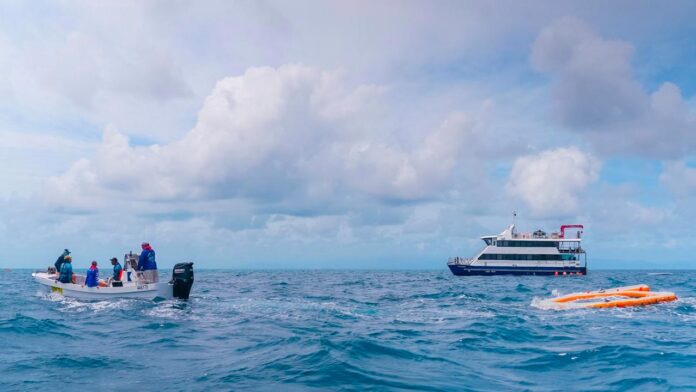
The Australian Institute of Marine Science (AIMS) has led one of the world’s largest reef restoration tests on a coral reef ecosystem during the recent mass spawning on the Great Barrier Reef.
Under the Pilot Deployments Program (PDP), spawn was collected in partnership with locally based groups in far north Queensland, to rear millions of young corals. These were placed onto test reefs near Cairns, Port Douglas and around the Keppel Islands, further south.
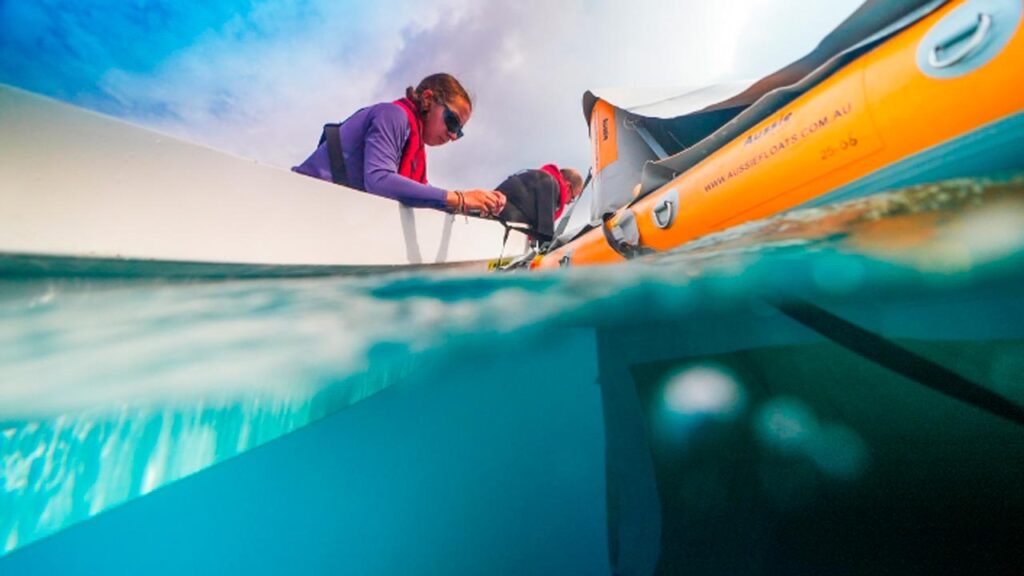
This was done using two different science techniques and the power of people — their skills, vessels and local knowledge.
The aim of the reef restoration methods being tested is to create a means to fast-track coral recovery on degraded reefs, when needed.
The methods were developed under the Reef Restoration and Adaptation Program (RRAP), a collaboration of experts across Australia developing and testing novel scientific solutions to help the Great Barrier Reef and other coral reefs survive in the decades ahead, as the world endeavours to arrest global warming.
AIMS’ PDP Director Dr Mark Gibbs and his team are teaching tourism and fishing operators and other marine businesses how to coral seed on a large scale, while also harnessing their local knowledge and expertise.
“We’ll gain first-time insights into best-practice approaches, supply chains, technology and the people power needed to build a large-scale operational reef restoration program and a supporting aquaculture industry.”
“Over the next three years, we’ll be improving the efficacy of deploying RRAP interventions at scale on the Great Barrier Reef.”
Dr Gibbs said the best future for coral reefs to survive the effects of climate-induced marine heatwaves required global carbon emissions reduction alongside best-practice reef management and innovative scientific interventions.
Cairns Reef Fishing General Manager Corey Brown said participating in the program had connected himself and his crew to the lifecycle of the Reef and reminded them of its essential role in sustaining healthy marine populations.
“As operators who spend our lives on the water, we see firsthand that the Reef is under pressure,” he said.
“Being part of this program reminds us how vital a healthy reef is — not just for tourism and fishing, but for the entire ecosystem that depends on it.
“We want the Reef to be thriving for future generations of anglers, families and visitors. Supporting this work is one way we can give back and help protect the place that supports our livelihoods.”
AIMS will monitor these corals over the next 12 months to assess the effectiveness of the restoration methods in terms of coral survival, growth and response to stressors such as bleaching and competition with algae.
The northern test reefs are: Elford, Arlington and Agincourt.
The Pilot Deployments Program is funded by the Australian Government’s Reef Trust and led by the Australian Institute of Marine Science. RRAP is funded by the partnership between the Reef Trust and the Great Barrier Reef Foundation.