-11.1 C
New York
Home Blog Page 382

Deepest scientific ocean drilling sheds light on Japan’s next great earthquake

0

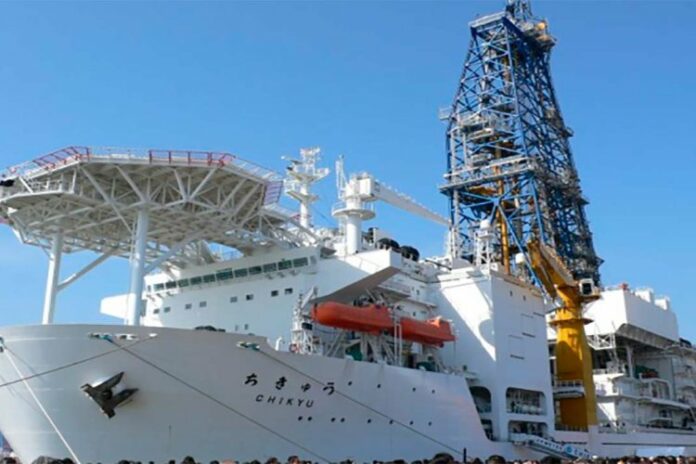
Scientists who drilled deeper into an undersea earthquake fault than ever before have found that the tectonic stress in Japan’s Nankai subduction zone is less than expected, according to researchers at The University of Texas at Austin and the University of Washington.

The U.S. National Science Foundation-supported findings, published in the journal Geology, are a puzzle because the fault produces a great earthquake almost every century and was thought to be building for another big one.

Kevin Johnson, a program director in NSF’s Division of Ocean Sciences, said:

“Scientific ocean drilling has shown that the risk of magnitude 9 earthquakes at Nankai and other subduction zones is much greater than previously modeled and demonstrates in this study that distribution of subduction zone stress remains poorly understood. Only by direct observation through scientific ocean drilling can be subduction zone stress be directly determined.”

Demian Saffer, director of the University of Texas Institute for Geophysics, who co-led the scientific mission that drilled the fault, said:
“This is the heart of the subduction zone, right above where the fault is locked, where the expectation was that the system should be storing energy between earthquakes. It changes the way we’re thinking about stress in these systems.”

Although the Nankai fault has been stuck for decades, the study shows that it is not yet showing major signs of pent-up tectonic stress. According to Saffer, that doesn’t alter the long-term outlook for the fault, which last ruptured in 1946 — when it caused a tsunami that killed thousands — and is expected to do so again during the next 50 years.

Instead, the findings will help scientists home in on the link between tectonic forces and the earthquake cycle and potentially lead to better earthquake forecasts, both at Nankai and other megathrust faults such as Cascadia in the Pacific Northwest.

Harold Tobin, a researcher at the University of Washington, who is the first author of the paper, said:

“Right now, we have no way of knowing if the big one for Cascadia — a magnitude 9 scale earthquake and tsunami — will happen this afternoon or 200 years from now. But with more direct observations like this, we can start to recognize when something anomalous is occurring and that the risk of an earthquake is heightened in a way that could help people prepare.”
Companies join Port of Amsterdam to develop large-scale hydrogen import facilities

0

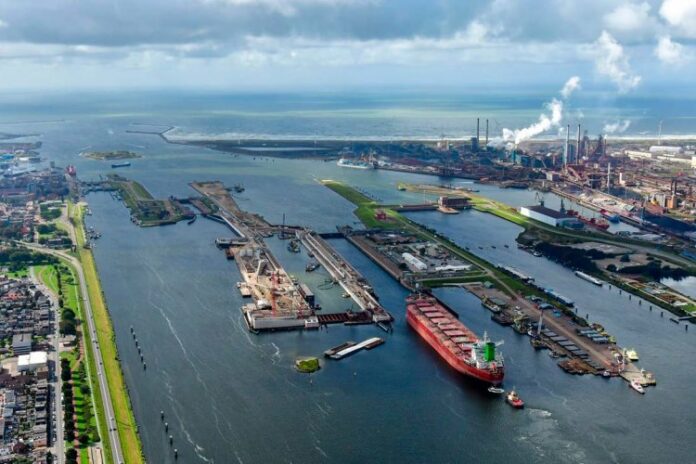
The three partners have signed a Memorandum of Understanding (MoU), ratifying their intention to jointly realize large-scale import facilities for hydrogen at the port of Amsterdam. 

The facilities will comprise a LOHC dehydrogenation plant with a final release capacity of up to 100-500 tonnes of hydrogen per day as well as related storage and handling facilities. All three parties are founding members of the H2A platform, a platform that focuses on the development of supply chains for green hydrogen imports through the port of Amsterdam.  

The realisation of a LOHC import terminal and a plant for the continuous, large-scale release of hydrogen are important additions to other planned activities in the port. Such activities include the development of the regional and national backbone and various planned projects for hydrogen production in the North Sea Canal Area. The next phase of this initiative will focus on exploring the spatial, infrastructural, and financial requirements to establish the terminal over the next years. The objective is to have the first plants for delivery of hydrogen to local off-takers in operation before 2028, with the potential of further upscale. In total, the handled LOHC volumes will be at least 1 million tons per annum.

Following a completed feasibility study on different liquid hydrogen carriers, Evos, Hydrogenious and Port of Amsterdam are now taking this next step in putting Hydrogenious’ unique LOHC technology into action. This study confirmed that LOHC technology is a compelling solution for use in the port of Amsterdam, compatible with the existing infrastructure. The Evos Amsterdam terminals need only relatively minor modifications to store and distribute LOHC in the port and beyond.  

The liquid organic hydrogen carrier used by Hydrogenious, thermal oil benzyl toluene (LOHC-BT), is already well-established in the industry as a heat transfer medium and has ideal properties for safe handling in ports. Due to its characteristics as a flame retardant and non-explosive carrier with a high volumetric energy density, benzyl toluene can be handled like a fossil liquid fuel within existing infrastructure, at ambient pressure and temperature. After dehydrogenation, it can be reused many hundreds of times to bind hydrogen.

By making use of existing nautical infrastructure in the port, Hydrogenious’ LOHC technology offers a compelling, cost-effective, and safe solution, with only minor modifications needed to enable storage at Evos Amsterdam. This unique project is therefore a key step in the development of pan-European hydrogen value chains connected to the port of Amsterdam. As such, it contributes to accelerating the decarbonisation of European industries.  

Port of Amsterdam, Koen Overtoom, CEO Port of Amsterdam:

“The location of the port of Amsterdam and the companies operating here and in the wider North Sea Canal Area, make our port ideally suited for such a terminal and plant. This region also offers large potential for offtake, with our connection to Schiphol Airport and the presence of large industrial clusters. Additionally, we collaborate with duisport to facilitate the distribution of hydrogen to the German and European hinterland, further increasing the offtake potential.”  

Hydrogenious LOHC, Dr Daniel Teichmann, founder and CEO:

“In order to realize Europe’s ambitious plans to import 10 Mio. tons of hydrogen already in 2030, we need to make use of existing infrastructure. Therefore, the H2A consortium has focused on LOHC technology that can rely on existing oil handling and storage capacities and significantly reduces potential risks of handling molecular hydrogen or other derivatives. For a port and industrial region like the Port of Amsterdam, that is located very closely to the city, this is of paramount importance. The build-up of LOHC-based supply chains will also facilitate the transport of hydrogen to the ‘hinterland’ and to Germany. Besides the development of import projects, H2A will also provide political and regulatory support to technology companies and project developers at the location, as well as structured access to funding.”

WinGD’s latest X-DF technology to power QatarEnergy newbuilds

0

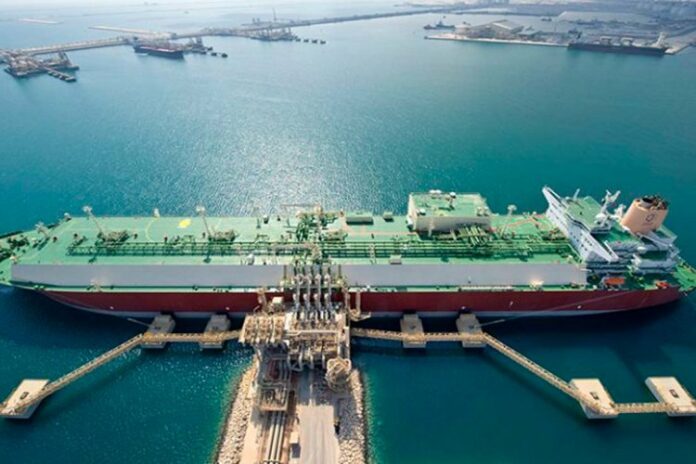
The 50 dual-fuel engines which feature the new on-engine iCER were selected by multiple shipyards and shipowners highlighting strong confidence in WinGD’s proven and reliable low-pressure dual-fuel engines.

The new on-engine configuration of WinGD’s intelligent control by exhaust recycling (iCER) was released in May of this year and has been met with swift uptake, providing improved fuel efficiency in both gas and diesel modes and a 50% reduction in methane slip compared to the first-generation X-DF.

One order as part of the Qatar NFE programme is for two 174,000-cbm LNG carriers to be built for TMS Cardiff Gas at Korean shipyard Daewoo Shipbuilding & Marine Engineering (DSME). The two vessels will be the first ships built by DSME to feature on-engine iCER.

Volkmar Galke, Director, Global Sales, WinGD said:

“This huge order intake with on-engine iCER technology shows the need for proven and reliable dual-fuel engines as the LNG carrier ordering surge continues. Owners and operators are seeking fuel flexibility without compromising efficiency, emissions or CAPEX. And the fact that all have chosen our latest compact, cost-saving configuration confirms that WinGD delivers the best possible solution to customers, giving them confidence in their investment for today and for the future.”

The advantages of X-DF low-pressure dual-fuel engines include low CAPEX, low maintenance costs and ultra-low air pollution, reaching IMO Tier III NOx limits without aftertreatment. Since its debut in 2015, the entire X-DF fleet has grown to more than 350 engines in operation lending the deep in-service experience to the technology advancements available today.

WinGD’s X72DF engine has become the standard for LNG carriers, with 224 in service and more than 130 engines on order.

Port of Rotterdam to test new drone

0

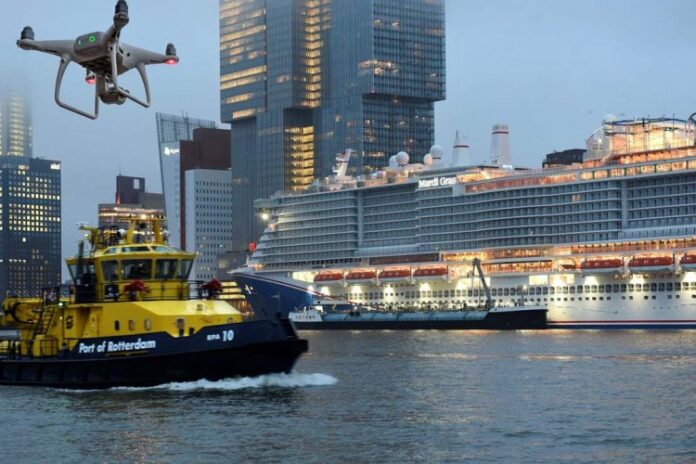
To test in practice how we should organise the airspace over the port and keep it safe, the Port Authority has entered into a partnership agreement with software supplier Airwayz.

Drones will be a common phenomenon in the skies over the port of the future. To make the port more efficient and safer, drone companies will provide more services in the next few years. It is also expected that drones will be deployed for longer-distance flights, manned as well as unmanned.

Airwayz supplies the Unmanned Traffic Management system (UTM), which offers air traffic control services for very-low-level (VLL) airspace. These services are used by drone operators and include flight permission and deconfliction services. First of all, it is essential that manned and unmanned flights in the lowest airspace are visualised.

The protocols, procedures, agreements and risk profiles with respect to airspace are drawn up by the Port of Rotterdam Authority as the port manager and by the government as the legislator. This makes the Port Authority the first body in the Netherlands to organise its own airspace to ensure smooth and safe drone traffic.

The prototype will take two years and will start in December 2022. The prototype is intended to identify the practical implications of controlling the lowest airspace and to gain insight into what the role of the Port Authority in all of this might look like. In addition, it should reveal prerequisites of keeping drone airspace safe, the opportunities for drone operators in the port, and the impact of drone traffic control on the organisation.

The U-Space Airspace prototype will also play an exemplary role in the roll-out in the Netherlands and the rest of Europe. After all, the prototype has been prepared in line with the stipulations of European regulations.

Ardmore Shipping uses 3D training to enhance safety on board

0

Ardmore Shipping developed a new learning medium in 2021. This training method involved the recreation of actual incidents and near misses in the format of 3D animated videos. The videos are created digitally, and can be specific to a vessel or scenario. 

The core objective of this initiative is to encourage seafarers to recognize areas for improvement, learn from past actions and have the opportunity to ask questions. These videos provide a clear visual overview of incidents/near misses and enable the crew to have a better understanding of how incidents have, or could, happen. The format of 3D learning ensures they can see the whole scenario as a whole and is an effective learning method, which can contribute significantly to avoiding similar incidents in future.

As an example, the first two videos created depicted a mooring operation scenario and a heavy weather-related injury. Both scenarios were chosen as they can be common occurrences that might be experienced by crew. The videos are kept short as to enable quick and easy share with every crew member in the fleet, either through WhatsApp, or any other online medium where crew can have direct access anytime as per their convenience.

All efforts have been made to ensure such videos are as accurate as possible to the actual near-miss event or real life accident. This will result in crew becoming more conscious of the risks involved and will raise their level of situational awareness while performing similar tasks in future.

Mark Cameron, COO at Ardmore Shipping, commented on the new program:

“Ardmore Shipping is always looking for new ways and processes to develop advanced training for both our shore and sea staff, but in a format which is simple and easy to digest for crew of all nationalities, backgrounds, and experience levels. Safety is of utmost importance, and being able to provide training which is as close to life as possible, or recreating various scenarios, ensure we improve skill and understanding both on specific ships or in particular circumstances. This new approach can contribute significantly to protecting seafarers, vessels, and cargo operations, and we look forward to developing further programs in the future.”

U.S. Coast Guard selects KVH for new 5-year small cutter connectivity contract

0

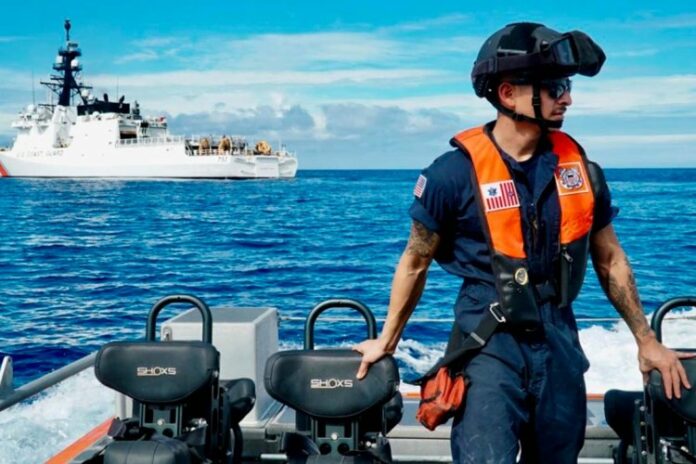
KVH Industries was selected by the U.S. Coast Guard to supply the next-generation satellite communications solution for its small cutter fleet of more than 140 vessels/platforms. 

Chosen following a full and open competitive procurement process, KVH’s TracPhone® V7-HTS Ku-band satellite communications system and mini-VSAT Broadbandsm service will be the U.S. Coast Guard’s Small Cutter Connectivity (SCC) Ku-band System and Airtime Support Services solution. The USCG also anticipates that approximately 20 new cutters will join the small cutter fleet over the next five (5) years, requiring the same level of support that KVH will provide to the already deployed vessels.

Brent Bruun, President and CEO of KVH, stated:

“We are honored to have delivered critical satellite communications technology, service, and support to the dedicated professionals of the U.S. Coast Guard for 12 years. And we are very proud to have been selected to continue to service them with this new award. Our TracPhone V7-HTS provides reliable, secure connectivity and coverage and will serve as a vital tool in the Coast Guard’s mission to ensure the safety and security of U.S. ports and waterways.”

The rugged, commercial-grade TracPhoneV7-HTS is a 60 cm (24 in) VSAT-only system with speeds as fast as 10/3 Mbps (down/up), already deployed on the small cutters as part of the original contract. It promotes uninterrupted communications through automatic fast switching among high-speed network beams, through KVH’s multi-layered, high-throughput satellite (HTS) network, powered by Intelsat.

The 3-axis gyro-stabilized antenna includes a 4th axis of automatic skew adjustment, ideal for rough seas and fast speeds. KVH’s hardware and services will continue to be used for remote connectivity to the Coast Guard’s data network, CGOne, for mission essential applications.

Ørsted and CIP to develop 5.2 GW of offshore wind projects in Denmark

0

The partnership can accelerate the green transformation greatly, create value in the offshore wind industry, strengthen value- and job creation, and create a Danish business and export stronghold within Power-to-X.

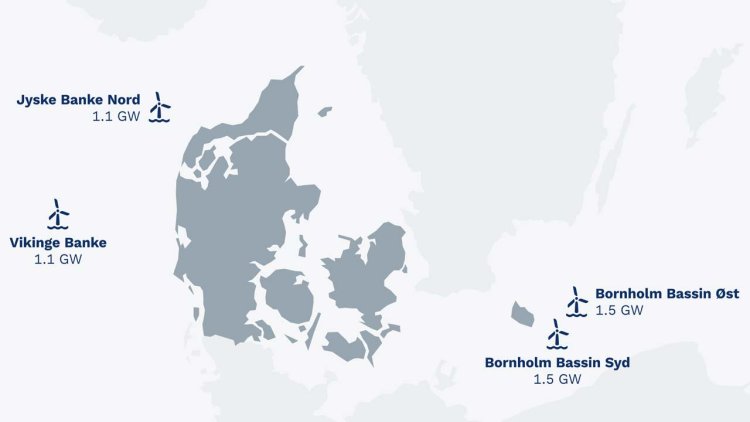
Ørsted and CIP have decided to join forces in a new 50/50 partnership to develop a number of offshore wind projects under the open-door scheme in Denmark. The projects are ‘Vikinge Banke’ (1.1 GW) and ‘Jyske Banke Nord’ (1.1 GW) in the North Sea, and ‘Bornholm Bassin Syd’ (1.5 GW) and ‘Bornholm Basin Øst’ (1.5 GW) in the Baltic Sea. Together, the projects correspond to more than double Denmark’s current installed offshore wind capacity, and they represent a key contribution to the green transformation of Denmark and Europe. The offshore wind farms will be established without support from Danish taxpayers and they will contribute significantly to growth and job creation in Denmark.

The partnership between Ørsted and CIP encompasses the development, construction, and operation of the offshore wind farms as well as the related transmission assets. The partnership envisages that the open-door projects can create a Danish Power-to-X stronghold by delivering large-scale renewable electricity as soon as possible and with a target of 2027/2028 if feasible.

Rasmus Errboe, Head of Region Continental Europe at Ørsted says:

“Denmark has been a pioneer in offshore wind and is a front-runner in the green transformation. The four major open-door projects can help consolidate Denmark’s continued leadership position and create the foundation to kick-start the next phase of a Danish business adventure around the production of renewable hydrogen and green fuels. I’m very excited about the partnership with CIP where we combine our unique skills and knowledge to develop a substantial part of Denmark’s offshore wind resources.”

Torsten Lodberg Smed, Senior Partner at Copenhagen Infrastructure Partners, says:

“It’s an obvious and good idea for the most experienced Danish offshore wind developers to join forces to ensure that Denmark’s largest build-out of offshore wind takes place as efficiently as possible and with due respect for the environment and biodiversity in Danish waters.

If we succeed in completing the projects, we’ll also ensure the renewable electricity needed to give the Danish Power-to-X industry a much-needed boost, and we’re pleased with the support from the Danish pension funds and their members, who prioritise and invest in the green transition.”

Globally, more renewable energy is urgently needed to ensure regional energy independence and fight the climate crisis. Denmark has some of the world’s best offshore wind resources and is consequently able to supply large volumes of renewable electricity for the continued decarbonisation of Denmark and Europe. Ambitious political plans have already been made to harvest Denmark’s offshore wind resources, which Ørsted and CIP fully support. Ørsted and CIP also believe that the partnership’s large-scale offshore wind projects can, in parallel with the government tenders, contribute to further pace, value creation and innovation of Denmark’s green transition in several areas.

The partnership is subject to merger clearance, which is expected before the end of 2022.

Damen Shoalbuster 2711 ICE delivered to Fairplay Towage Polska

0

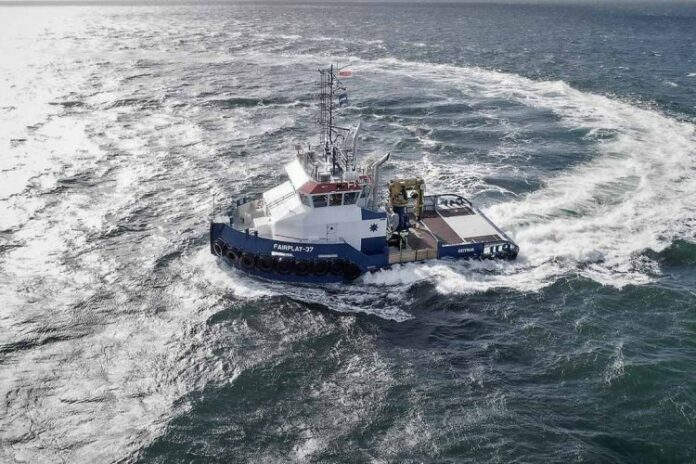
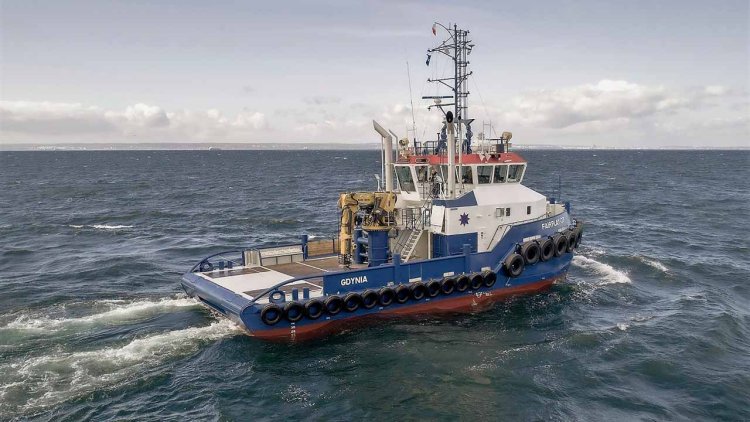
With a festive ceremony, Damen Shipyards Group delivered the Fairplay-37 to Fairplay Towage Polska in Gdynia, Poland on October 13th. 

This Damen Shoalbuster 2711 ICE is set to play an important role in the development of the emerging offshore wind energy sector in the Polish sector of the Baltic Sea and beyond. Thanks to her Ice-class properties, the vessel can operate all year round in the Baltic.

The shallow draft tug can perform towing operations in both shallow an in deep waters, it can assist with installation operations thanks to her line handling equipment and a deck crane. The 27,06 meters length vessel has a max beam of 11,55 meters and a working draft of 2,90 meters. She is propelled by twin Caterpillar 3512C engines, driving two propellers in nozzles and providing a bollard pull of 47 tons. Fairplay-37 is IMO Tier III certified, indicating that she produces minimal emission. Fairplay Towage Polska will be able to engage the vessel in sustainable operations, adding to the purpose of offshore wind park installations, to provide clean energy.

This vessel to the standardized Damen Shoalbuster Design was built by Damen Shipyards Hardinxveld at SAFE shipyard in Gdansk. Damen engineers have provided detailed engineering to client demand and provided supervision during the construction at the yard. While the standard design was presented with the option to build the Shoalbuster 2711 to ice-class, this is the first vessel of this type to actually be constructed for operations in icy conditions.

Offshore Wind project manager Arkadiusz Ryz from Fairplay Towage Polska, says:

“This vessel will be the first in our fleet of this power that is able to enter Baltic and North Sea ports with limited depths. I am convinced that this Shoalbuster, meeting IMO Tier III emission requirements, will open up new markets for us. She has the potential to play an important role in developing our presence in the emerging offshore wind industry in Poland.”

Building on the success of the first order ever placed by Fairplay Towage Polska in a new Damen vessel, the companies have meanwhile signed further newbuilding orders bolstering the Group’s capacity. Those tugs of Damen’s proven RSD2513 design will be delivered ex yard in Q1 2023.

SAFEEN expands subsea service capabilities with acquisition of new vessel

0

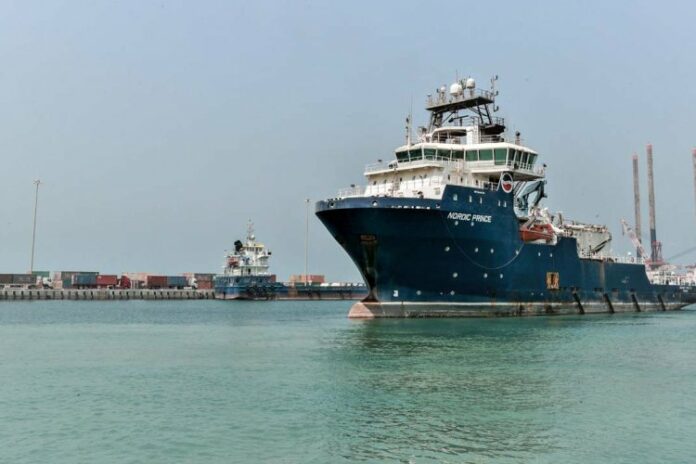
SAFEEN Group’s offshore division, part of AD Ports Group, has announced the acquisition of a support vessel to enhance the Group’s subsea service capabilities.

Built in 2014, the vessel will operate under the name ‘SAFEEN Surveyor’ and will undergo an extensive conversion prior to commencing operations, including installation of an integrated dive system to support pipeline repair and maintenance. 

The vessel has a successful track record in projects in the Middle East, where it has provided a range of support services including subsea inspection, repair and maintenance (IRM), and remotely operated vehicle (ROV) works.

‘SAFEEN Surveyor’ is a dynamic positioning system-equipped Vik-Sandvik Design VS460 MKIII subsea service vessel that can accommodate 60 people, with an overall length of 75.5 metres and 6,300 deadweight tonnage. It has a built-in 80T active heave compensation (AHC) Offshore Crane for service in water depths of up to 2,000m.

Captain Ammar Al Shaiba, Acting CEO – Maritime Cluster and SAFEEN Group, AD Ports Group, said:

“The acquisition of ‘SAFEEN Surveyor’ is part of our wider expansion strategy to build capacity and enhance the portfolio of services we can offer customers around the world. We see significant potential for growth in the subsea support sector, particularly in inspection, repair and maintenance, and the ‘SAFEEN Surveyor’ has already performed admirably in these areas.”

“The maritime services sector is extremely dynamic in the MENA region, and we believe we have a compelling proposition supported by the most advanced infrastructure and fleet.”

Wärtsilä to provide electrical package for German research vessel

0

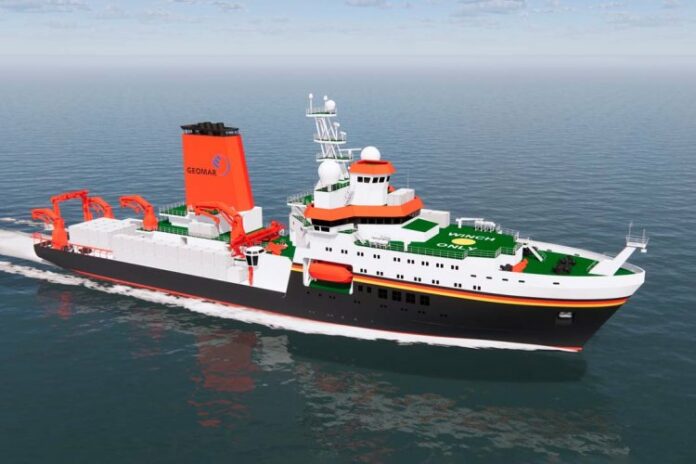
The Meteor IV project has been contracted by Germany’s Federal Ministry of Education and Research, and the ship will be constructed by the Meyer-Fassmer-Special Shipbuilding Division consortium. The Wärtsilä order was included in its order book in September 2022.

Wärtsilä will be involved throughout the entire duration of the project. This will include detailed design work during the engineering phase, and will continue with all the appropriate installation and connection requirements at the manufacturing shipyards in northern Germany. Wärtsilä will also take responsibility for commissioning of its scope of supply, as well as the entire cabling system.

Harald Fassmer, Managing Partner of the Fassmer shipyard, says:

“With Wärtsilä, we have a strong and competent systems partner at our side. Wärtsilä SAM Electronics is already supporting us with its extensive know-how in the construction of two 50-metre test and survey vessels for the German Navy. We are, therefore, happy to continue this good cooperation for this highly complex research vessel.” 

Harald Baumgarten, Managing Director of Wärtsilä SAM Electronics, says:

“We are delighted that Wärtsilä has been selected as the trusted partner for this challenging project. We are happy to contribute our depth of experience in the construction of research vessels and are confident that, together with the expertise of Fassmer and Meyer, we will make this project a success.” 

Wärtsilä’s scope of systems and services for the 125-metre long vessel comprises the design integration of all the electrical systems. The company will also provide the switchboards, the electrical distribution and drive systems, generators, as well as the entire lighting system and special systems for energy supply. The vessel will be outfitted with a truly integrated Navigation and Automation system – NACOS Platinum. Furthermore, Wärtsilä will deliver the bridge consoles and solid state radar technology.

When delivered, the Meteor IV will carry out international and inter-disciplinary missions, focusing on climate and environmental research in the Atlantic waters.