-12.3 C
New York
Home Blog Page 381

Approval in Principle from BV for a new concept of LNG carrier

0

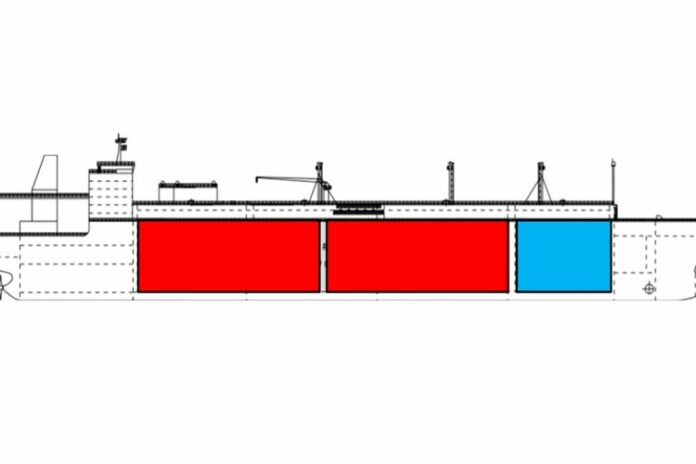
Bureau Veritas has delivered an Approval in Principle to GTT for a new LNG carrier based on a three cargo tanks arrangement.

The new LNG carrier design features a total cargo capacity of 174,000 m3. In comparison to conventional LNG carriers, this new concept is based on a three cargo tanks arrangement instead of four.

The main ideas which have led to this innovative design are the reduction of boil-off gas (BOG) and the cost optimizations for the ship (both CAPEX and OPEX). The concept is designed to fit either with Mark III or NO96 technologies, developed by GTT. In fact, the effect of an increase in tank length has been specifically investigated by GTT in order to address the specific challenges of this new concept (tank length increased by up to 55%).

To support and better understand the sloshing pressures caused by the liquid motion inside the tank, BV has developed specific tools that can now be leveraged for other large tanks.

Ulrik (Dan) Frorup, Chief Commercial Director at Bureau Veritas Marine & Offshore commented:

“Collaborating with GTT to develop this innovative design has been truly interesting as it has direct benefits for our clients. Class is here to address risks and opportunities.”

Jean-Baptiste Boutillier, Vice-president Development, Innovation, Technical Strategy of GTT, declared:

“We highly appreciate the collaboration with BV to obtain this AiP for a three-tank LNG carrier concept. Over the years, GTT continues to improve the application of its technologies in order to provide its customers ever more efficient and optimal solutions. We hope to see this concept become the standard in the near future.”

Kongsberg Digital to digitalize Soechi Lines’ Fleet

0

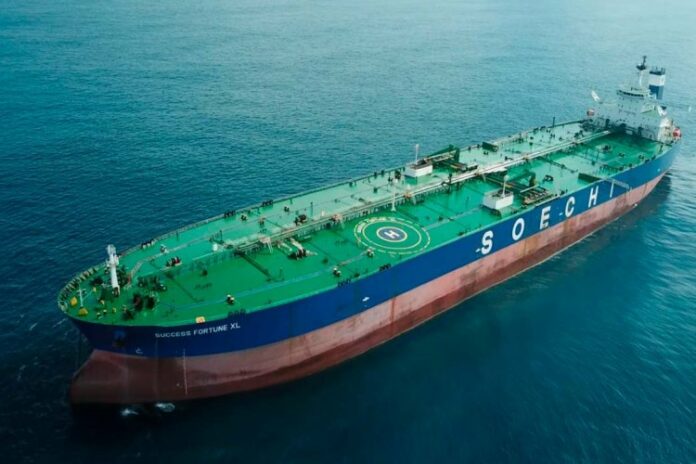
Once the initial rollout is complete, the remaining vessels in the fleet will be connected.

OECHI Lines is one of Indonesia’s largest tanker operators and shipyard companies, transporting oil, gas and chemicals in Indonesia, Southeast Asia, India and the Middle East.  

Christopher Bergsager, VP Growth Digital Ocean at Kongsberg Digital, says: 

“We proudly announce this contract with SOECHI Line, one of Indonesia´s most prominent marine tanker companies. SOECHI Line is determined to take measures to become more sustainable and ensure efficient and safe operations. We are pleased that the company has chosen Kongsberg Digital to support their digital journey. This contract is another significant step towards the global digitalization of the shipping industry.”

Kongsberg Digital is an industrial software company that provides SaaS solutions to enable vessel-to-cloud data infrastructure, automatic contextualization, capturing and aggregating quality data cost-effectively and securely. The solution provides instant and easy access to fleet overview, vessel-specific dashboards, and data analysis tools to optimize fleet operations.  

Once connected, SOECHI Line will access Kognifai Marketplace, where they can find and use a wide range of quality applications and services to turn their data into business value. 

Mr. Kamran Mahmood khan, Director Fleet VM at Soechi Group, says:

“We are very pleased to sign this contract with Kongsberg Digital. Vessel Insight will provide valuable analysis and contextual data, which will be used to optimize operations. With continuous improvement, we are one step closer to more transparent and greener shipping.”   

Major crane upgrade for offshore installation vessel Aeolus

0

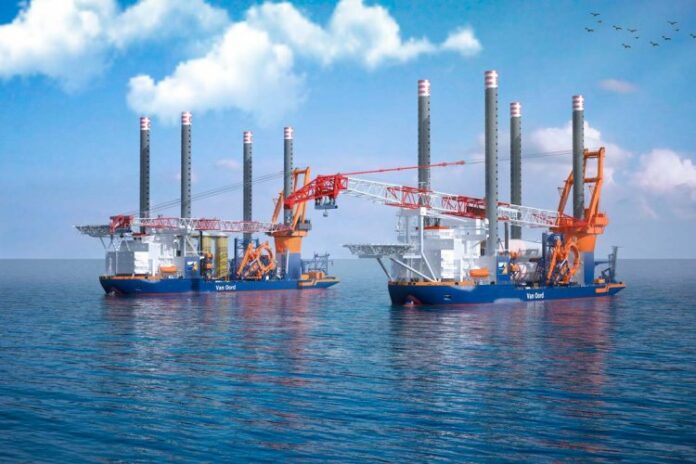
By installing a new, longer boom on Aeolus’ existing crane, the vessel will be ready to handle the newest generation up to 15 MW turbines for offshore wind projects. 

Van Oord decided to upgrade the Aeolus to ensure that the vessel remains competitive in a rapidly changing market and, in particular, the increase in turbines sizes.

The new 133m long boom is being designed and built by Huisman. The Aeolus will be fit for duty with the new boom as from early 2023. The vessel will then be capable of installing the new generation 12-15MW turbines while maintaining its lifting capacity of 1,600t for foundation installations.

The modification plan of the Aeolus fits in the strategy of Van Oord which is aimed to continuously invest in state-of-the-art sustainable technology. To keep delivering innovative solutions to the rapidly growing offshore wind industry, Van Oord also invested in a new offshore installation vessel, Boreas and a cable-laying vessel, Calypso.

Boreas is currently being built in China can operate on methanol and install wind turbines capable of up to 20 MW with a low carbon footprint. The vessel will be 175- metre long and can lift more than 3,000 tonnes. In August the steel cutting ceremony was performed and construction is running on schedule. Boreas is expected to enter the market in 2024.

Calypso will be operational next year. This new DP2 vessel will be equipped with a below-deck cable carousel and a second carousel on deck, with total cable-carrying capacity of 8,000 tonnes. Apart from the ability to run on biofuel, this hybrid vessel has future-fuel ready engines with built-in flexibility to anticipate e-fuels. It will have a large battery pack, a shore supply connection and a state-of-the-art energy management system.

Pieter Van Oord, CEO, said:

‘These investments prepare us for the increase in scale in the offshore wind industry, strengthens our leadership position and reduce our carbon footprint during offshore wind installation.’

VisionH2 finalises conceptual layouts for its project in the North Sea Port

0

The Company’s Phase 1 Development Plan is designed for the construction of approximately 400,000 cubic meters (CBM) of renewable liquid bulk storage capacity comprising 150,000 CBM allocated to Green Ammonia, 180,000 CBM allocated to Renewable Methanol and 70,000 CBM allocated to Biofuels and Liquid Organic Hydrogen Carriers (LOHC).

Phase 1 CAPEX is estimated at EUR €450 million, including jetty infrastructure.

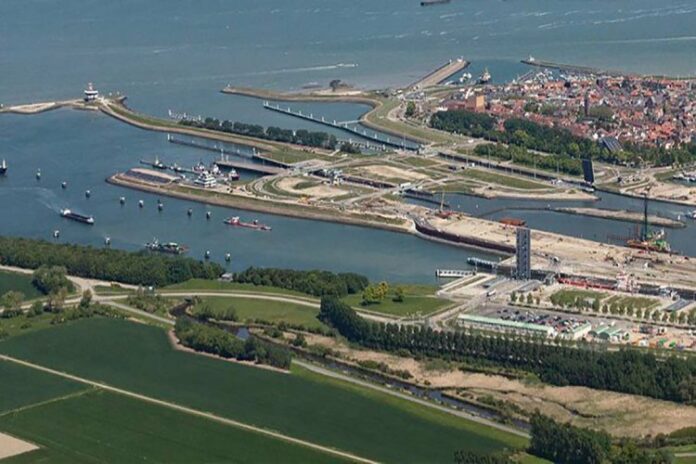
Through its wholly owned subsidiary Evolution Terminals BV, VisionH2 is pioneering a Green Energy Hub for the storage and distribution of low carbon Renewable Fuels and Hydrogen carriers, strategically located in Vlissingen (Flushing) at the mouth of the Westerschelde estuary in the Netherlands. The Company’s Green Energy Hub is well positioned to be the first terminal in Europe focussed on the storage of low carbon and renewable fuels with the Company on schedule to file for the remaining construction and environmental permits by December 2022.

The concept layouts and functional requirements include provision for the further expansion of the Company’s storage capacity, to facilitate increasing volumes of Renewable Methanol and Green Ammonia as efficient carriers of Hydrogen for import and distribution to North-western Europe.

MOL and EnviroNor sign MoU to collaborate on floating desalination vessel

0

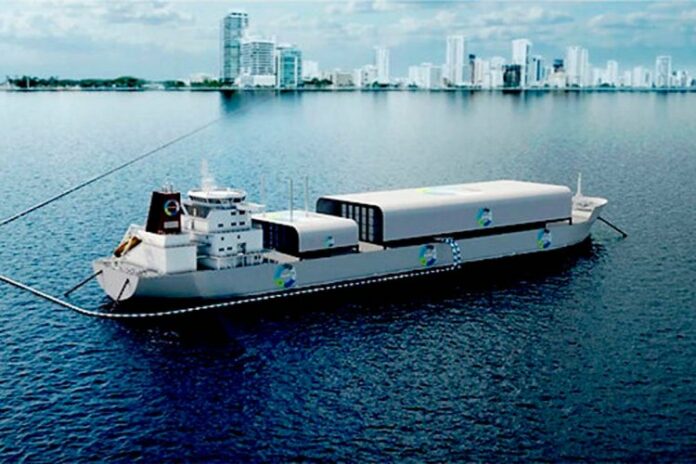
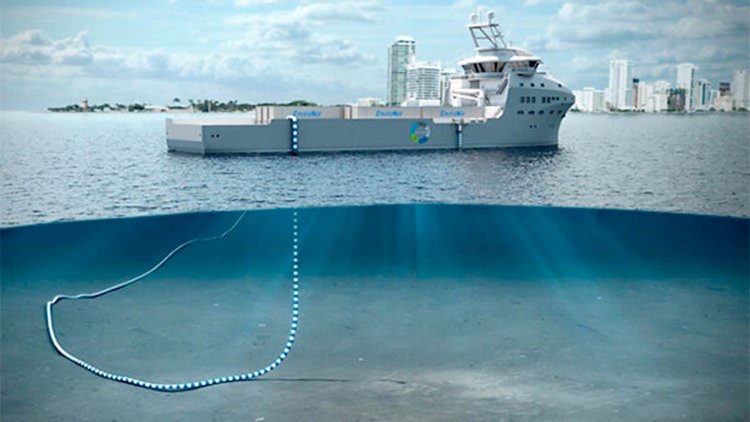
Compared to a seawater desalination plant on land, FDVs do not require the acquisition of land and is built by converting a used ship, so it offers advantages such as the ability to start water supply in a short time.

Mitsui O.S.K. Lines, Ltd. and EnviroNor AS have signed a memorandum of understanding to discuss collaboration on a Floating Desalination Vessel and have begun collaboration toward commercialization.

MOL said:

“By combining MOL’s extensive experience in building, owning and operating ships over many years with EnviroNor’s expertise within shipping and desalination, we aim to build FDVs and capture business opportunities as a means of providing new fast-track solutions all over the world where water shortages are a current and rapid growing challenge.

Commercialization of Floating Desalination Vessel was suggested through the MOL Group Employee Proposal System “MOL Incubation Bridge”, and resulted in a memorandum of understanding with EnviroNor.”

GoodFuels announces successful test of isotopic tracer for marine biofuels

0

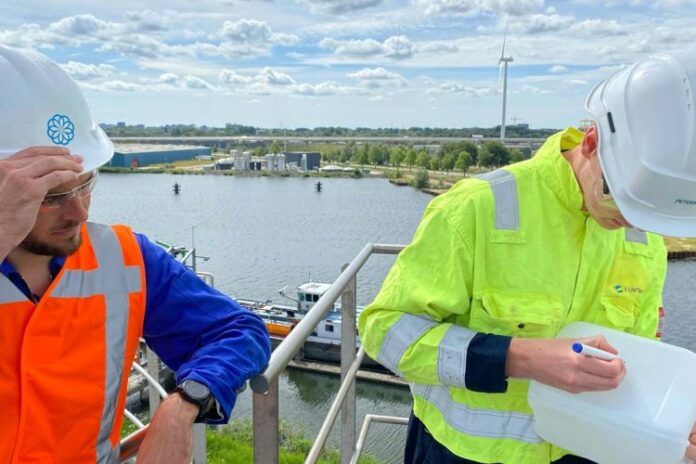
GoodFuels has announced the results of a new partnership with global certification organisation Control Union and France’s IDS Group to test the effectiveness of a unique isotopic tracer for biofuels.

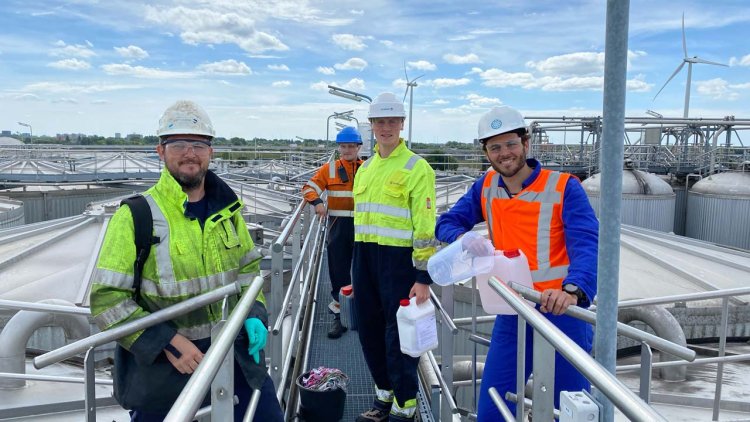
A successful pilot, conducted during a recent delivery of 500 tonnes of biofuel to the NORDEN-owned tanker Nord Gardenia, has proven the effectiveness of the tracer technology in real-life applications.

The partnership, which commenced in early 2022, has seen the companies collaborate to create the new tracer, which can be added to marine fuels as a unique ‘fingerprint’ and verification tool.

The isotopic tracer stays within the fuel throughout the entire downstream of fuel delivery. It then can be tracked and traced by inspectors to verify that a fuel product has not been diluted or tampered at any stage in the supply chain. The trial has demonstrated that the tracer does not adversely impact the physical properties, quality and stability of the biofuel, and that tracing and testing activities could be performed without any impact on bunker operations.

The pilot also showed that the isotopic tracer can successfully measure for fuel dilution, when biofuels are used in a blend, for example.

The tracer can be applied at any stage in the supply chain and is based on natural elements so as not to compromise the sustainability of the biofuel product. It has been specifically designed to trace fuels at different granularity levels, making it suitable to be used within fuel products whether they are 100% biofuel or part of a blend with conventional marine fuels.
It can also be used to support carbon calculations and provide evidence for carbon pricing and tax reductions, giving shipowners and operators assurance on the amount and quality of biofuel they are deploying in their pursuit of sustainable shipping.

Henrik Røjel, Head of Fuel Efficiency & Decarbonisation at NORDEN, said:

“Biofuel is a key transition fuel on NORDEN’s journey to zero-carbon shipping, as it can be used onboard our current vessels to make an immediate reduction on carbon emissions. We continue to bunker biofuel on a regular basis and support efforts of adding more transparency on the green fuels we bunker.”

Commenting on the partnership, Dirk Kronemeijer, CEO of GoodFuels, said:

“Following the world’s first bunker delivery using blockchain technology in 2018, we continue to introduce cutting-edge solutions, together with our partners, to increase traceability in the shipping industry. Using a physical marker that combines with software is the likely next step in this trend. We are focused on driving even greater trust and transparency in the marine fuels supply chain – two values that are inherent to GoodFuels and GoodShipping.”

Johan Maris, CEO of the Royal Peterson and Control Union Group emphasised the importance of the successful trial:

“Through this trial we have now proven this tracer technology, and that proof brings endless potential. The tracer technology can, for example, ensure that fuel doesn’t originate from banned countries but can also be used for many other purposes, in other liquids like oil or even champagne, and in almost any type of solid materials like meat, plants, and metal.”

The tracer project is just the start of a wider partnership between GoodFuels, Control Union and IDS Group. All three companies share an ambition to increase transparency in the fuel supply chain, and the tracer will help to advance a shared vision of a standard label for biofuels that would be recognised worldwide as a sign of quality by the fuel market.

DNV awarded owner’s engineer contract for South Korea’s offshore wind farm

0

When completed in 2027, the Chujin plant will be the largest commercial-scale offshore wind farm in the country. 

As the owner’s engineer, DNV will drive the pre- Front End Engineering Design (FEED) and supervise contractors in the final design, procurement, construction, commissioning and operations phases to mitigate risks and prepare optimal solutions for the building stages of the project.   

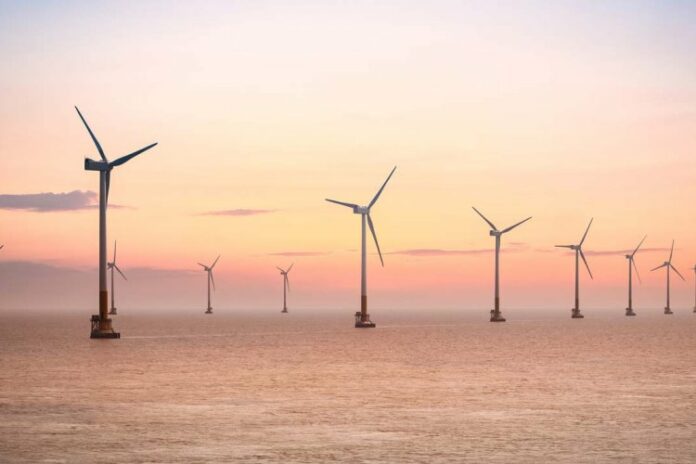
The wind farm will be located 10 km east of Chuja-do in Jeju City in southern Jeonam province, South Korea and will consist of approximately 100 wind turbines. This project is backed by strategic investor Namsung Shipping, a South Korea-based shipping carrier. The Chujin wind farm will be constructed in three stages, consisting of 500MW for Phase I and an additional 1 GW for Phases II & III. 

This offshore wind project has been designed to support the “Green New Deal,” South Korea’s national development strategy to advance low carbon technology initiatives and transition to a green economy.    

With South Korea’s high offshore wind speeds and low renewable energy penetration at 4 per cent (coal plants contribute over 40 per cent of the country’s power generation) offshore wind presents significant opportunities to contribute to the country’s energy mix. 

Elenergy Executive Director, Seung Han, said:

“Most offshore markets in Asia Pacific are only just starting to develop. Navigating and managing technical risks and local market regulations are crucial. This is why we selected DNV as our technical advisor for this project – DNV is not only a global leader in offshore wind power engineering but also has an in-depth understanding of the reasons behind failures and non-conformities of the electrical infrastructure inside an offshore wind farm. We aim to perform projects smoothly and that does require a partner with insight and knowledge on preventing failures and managing risks. With the wide experience of DNV’s experts on electrical infrastructure and especially on submarine power cables, we will be in an optimal position with their help, to keep the project on track with respect to scope, schedule and cost.”  

Young Seok Choi, Managing Director, Namsung Shipping, added:

“This project is an exciting opportunity to combine the latest developments in offshore wind technology to produce clean energy, power the electricity grid from coastal locations and pave the way for this model to be used more widely around the world. It also is an impetus to grow the pool of specialized vessels to support offshore windfarm work.” 

Fixed offshore wind is maturing at a significant pace and has become an essential component of decarbonization. By offering access to stronger and more consistent wind, offshore wind has now become firmly cost-competitive with fossil fuel alternatives. This offers abundant business opportunities for South Korean EPC contractors, component and technology providers and project developers.

Lim Dong Ho, Market Area Manager – Korea, Energy Systems at DNV, said:

“Wind technologies have played a crucial role in developing South Korea’s renewable energy ecosystem. The construction of the Chujin offshore wind farm off the coast of Chuja-do will fuel Korea‘s green economy and will enable power companies to provide clean energy at a scale not seen before. We look forward to supporting both local and international developers in deploying their offshore wind farms and building a world-class renewable energy system for Korean communities and enterprises.” 

Brice Le Gallo, Vice President and Regional Director APAC, Energy Systems at DNV said, “With the demand for reliable clean energy rising in South Korea and elsewhere around the world, the success of offshore wind farms is important for the industry. Wind farms have traditionally been built on land. But offshore wind technology has the potential to harness wind power at greater wind speeds, providing commercial-scale clean energy to help countries deliver on their net-zero targets.”   

With higher and more-reliable wind speeds and less constraints on hub heights and site locations, DNV’s Energy Transition Outlook forecasts offshore wind will show a 13% average annual growth from 2020 to mid-century.

Carnival Corporation expands installation of innovative air lubrication systems

0

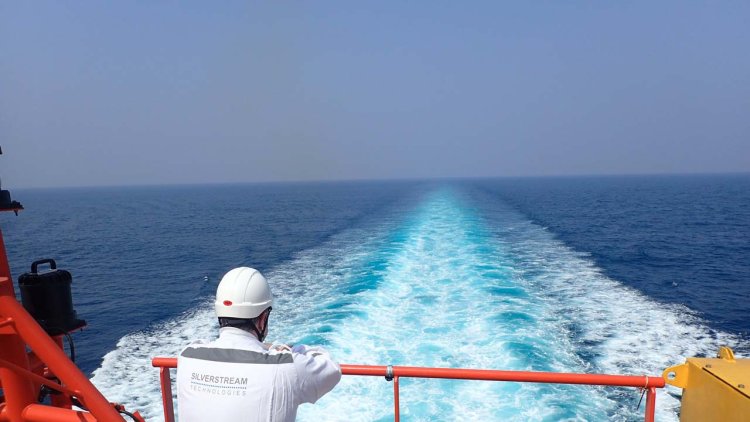
Carnival Corporation has announced plans to expand the program for installation of Air Lubrication Systems (ALS) to a majority of the cruise line brands in its fleet through 2027, which is expected to generate significant savings in fuel consumption and carbon emissions by reducing hull drag by approximately 5% per ship.

Carnival Corporation is currently installing the Silverstream® System ALS on five total ships, including two ships in 2022 for its Princess Cruises and P&O Cruises (UK) brands. In addition, the company is planning at least 10 more installations for existing and newbuild ships across more than half of its cruise line brands, and it expects continued expansion of the ALS program over time. The expansion plans build on the success of four systems currently operating on ships from its AIDA Cruises and Princess Cruises brands.

The Silverstream® System operates by generating a uniform carpet of air bubbles that reduces friction between a ship’s hull and the water. The system is effective in all sea conditions and is suitable for both newbuild and retrofit installations.

ALS technology, which first saw service within the Carnival Corporation fleet in 2016 with the introduction of AIDAprima, generates a cushion of air bubbles to lubricate the flat bottom of a ship’s hull, reducing friction between the ship and surrounding water, resulting in savings in energy and fuel consumption across a wide speed range.

Bill Burke, chief maritime officer for Carnival Corporation, said:

“The installation of air lubrication technology is another example of our ongoing efforts to drive energy efficiency and reduce fuel consumption and emissions throughout our fleet. We look forward to expanding the ALS program and furthering our long-term sustainability strategy to continually invest in a broad range of energy reduction initiatives, which has included over $350 million invested in energy efficiency improvements since 2016.”

As part of its longer-term sustainability plan, Carnival Corporation remains focused on its commitment and efforts to establish a pathway to decarbonization. Having peaked its absolute carbon emissions in 2011, the company has made significant progress over the past 15 years reducing its carbon emission intensity – despite significant capacity growth during that time – and achieved its 2020 carbon intensity reduction goal three years ahead of schedule (in 2017).

Deepest scientific ocean drilling sheds light on Japan’s next great earthquake

0

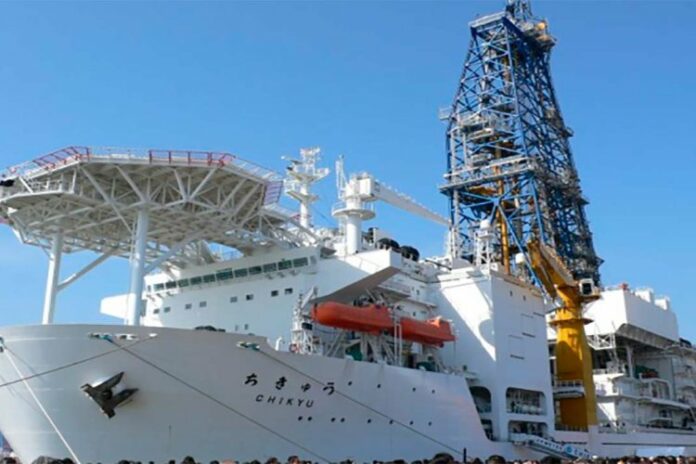
Scientists who drilled deeper into an undersea earthquake fault than ever before have found that the tectonic stress in Japan’s Nankai subduction zone is less than expected, according to researchers at The University of Texas at Austin and the University of Washington.

The U.S. National Science Foundation-supported findings, published in the journal Geology, are a puzzle because the fault produces a great earthquake almost every century and was thought to be building for another big one.

Kevin Johnson, a program director in NSF’s Division of Ocean Sciences, said:

“Scientific ocean drilling has shown that the risk of magnitude 9 earthquakes at Nankai and other subduction zones is much greater than previously modeled and demonstrates in this study that distribution of subduction zone stress remains poorly understood. Only by direct observation through scientific ocean drilling can be subduction zone stress be directly determined.”

Demian Saffer, director of the University of Texas Institute for Geophysics, who co-led the scientific mission that drilled the fault, said:
“This is the heart of the subduction zone, right above where the fault is locked, where the expectation was that the system should be storing energy between earthquakes. It changes the way we’re thinking about stress in these systems.”

Although the Nankai fault has been stuck for decades, the study shows that it is not yet showing major signs of pent-up tectonic stress. According to Saffer, that doesn’t alter the long-term outlook for the fault, which last ruptured in 1946 — when it caused a tsunami that killed thousands — and is expected to do so again during the next 50 years.

Instead, the findings will help scientists home in on the link between tectonic forces and the earthquake cycle and potentially lead to better earthquake forecasts, both at Nankai and other megathrust faults such as Cascadia in the Pacific Northwest.

Harold Tobin, a researcher at the University of Washington, who is the first author of the paper, said:

“Right now, we have no way of knowing if the big one for Cascadia — a magnitude 9 scale earthquake and tsunami — will happen this afternoon or 200 years from now. But with more direct observations like this, we can start to recognize when something anomalous is occurring and that the risk of an earthquake is heightened in a way that could help people prepare.”

Companies join Port of Amsterdam to develop large-scale hydrogen import facilities

0

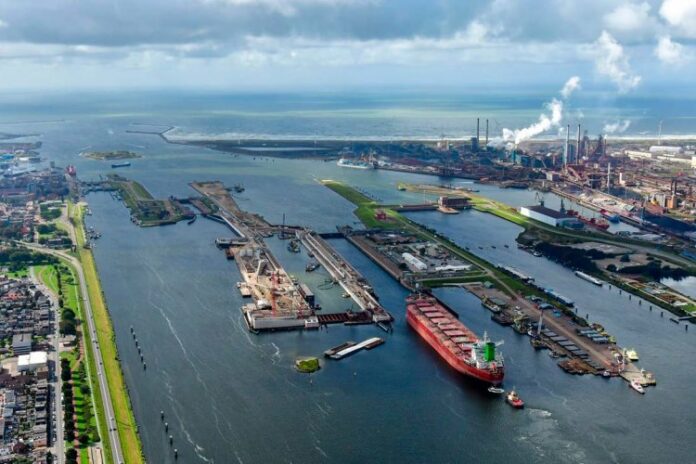
The three partners have signed a Memorandum of Understanding (MoU), ratifying their intention to jointly realize large-scale import facilities for hydrogen at the port of Amsterdam. 

The facilities will comprise a LOHC dehydrogenation plant with a final release capacity of up to 100-500 tonnes of hydrogen per day as well as related storage and handling facilities. All three parties are founding members of the H2A platform, a platform that focuses on the development of supply chains for green hydrogen imports through the port of Amsterdam.  

The realisation of a LOHC import terminal and a plant for the continuous, large-scale release of hydrogen are important additions to other planned activities in the port. Such activities include the development of the regional and national backbone and various planned projects for hydrogen production in the North Sea Canal Area. The next phase of this initiative will focus on exploring the spatial, infrastructural, and financial requirements to establish the terminal over the next years. The objective is to have the first plants for delivery of hydrogen to local off-takers in operation before 2028, with the potential of further upscale. In total, the handled LOHC volumes will be at least 1 million tons per annum.

Following a completed feasibility study on different liquid hydrogen carriers, Evos, Hydrogenious and Port of Amsterdam are now taking this next step in putting Hydrogenious’ unique LOHC technology into action. This study confirmed that LOHC technology is a compelling solution for use in the port of Amsterdam, compatible with the existing infrastructure. The Evos Amsterdam terminals need only relatively minor modifications to store and distribute LOHC in the port and beyond.  

The liquid organic hydrogen carrier used by Hydrogenious, thermal oil benzyl toluene (LOHC-BT), is already well-established in the industry as a heat transfer medium and has ideal properties for safe handling in ports. Due to its characteristics as a flame retardant and non-explosive carrier with a high volumetric energy density, benzyl toluene can be handled like a fossil liquid fuel within existing infrastructure, at ambient pressure and temperature. After dehydrogenation, it can be reused many hundreds of times to bind hydrogen.

By making use of existing nautical infrastructure in the port, Hydrogenious’ LOHC technology offers a compelling, cost-effective, and safe solution, with only minor modifications needed to enable storage at Evos Amsterdam. This unique project is therefore a key step in the development of pan-European hydrogen value chains connected to the port of Amsterdam. As such, it contributes to accelerating the decarbonisation of European industries.  

Port of Amsterdam, Koen Overtoom, CEO Port of Amsterdam:

“The location of the port of Amsterdam and the companies operating here and in the wider North Sea Canal Area, make our port ideally suited for such a terminal and plant. This region also offers large potential for offtake, with our connection to Schiphol Airport and the presence of large industrial clusters. Additionally, we collaborate with duisport to facilitate the distribution of hydrogen to the German and European hinterland, further increasing the offtake potential.”  

Hydrogenious LOHC, Dr Daniel Teichmann, founder and CEO:

“In order to realize Europe’s ambitious plans to import 10 Mio. tons of hydrogen already in 2030, we need to make use of existing infrastructure. Therefore, the H2A consortium has focused on LOHC technology that can rely on existing oil handling and storage capacities and significantly reduces potential risks of handling molecular hydrogen or other derivatives. For a port and industrial region like the Port of Amsterdam, that is located very closely to the city, this is of paramount importance. The build-up of LOHC-based supply chains will also facilitate the transport of hydrogen to the ‘hinterland’ and to Germany. Besides the development of import projects, H2A will also provide political and regulatory support to technology companies and project developers at the location, as well as structured access to funding.”