-11.1 C
New York
Home Blog Page 383

SAFEEN expands subsea service capabilities with acquisition of new vessel

0

SAFEEN Group’s offshore division, part of AD Ports Group, has announced the acquisition of a support vessel to enhance the Group’s subsea service capabilities.

Built in 2014, the vessel will operate under the name ‘SAFEEN Surveyor’ and will undergo an extensive conversion prior to commencing operations, including installation of an integrated dive system to support pipeline repair and maintenance. 

The vessel has a successful track record in projects in the Middle East, where it has provided a range of support services including subsea inspection, repair and maintenance (IRM), and remotely operated vehicle (ROV) works.

‘SAFEEN Surveyor’ is a dynamic positioning system-equipped Vik-Sandvik Design VS460 MKIII subsea service vessel that can accommodate 60 people, with an overall length of 75.5 metres and 6,300 deadweight tonnage. It has a built-in 80T active heave compensation (AHC) Offshore Crane for service in water depths of up to 2,000m.

Captain Ammar Al Shaiba, Acting CEO – Maritime Cluster and SAFEEN Group, AD Ports Group, said:

“The acquisition of ‘SAFEEN Surveyor’ is part of our wider expansion strategy to build capacity and enhance the portfolio of services we can offer customers around the world. We see significant potential for growth in the subsea support sector, particularly in inspection, repair and maintenance, and the ‘SAFEEN Surveyor’ has already performed admirably in these areas.”

“The maritime services sector is extremely dynamic in the MENA region, and we believe we have a compelling proposition supported by the most advanced infrastructure and fleet.”
Wärtsilä to provide electrical package for German research vessel

0

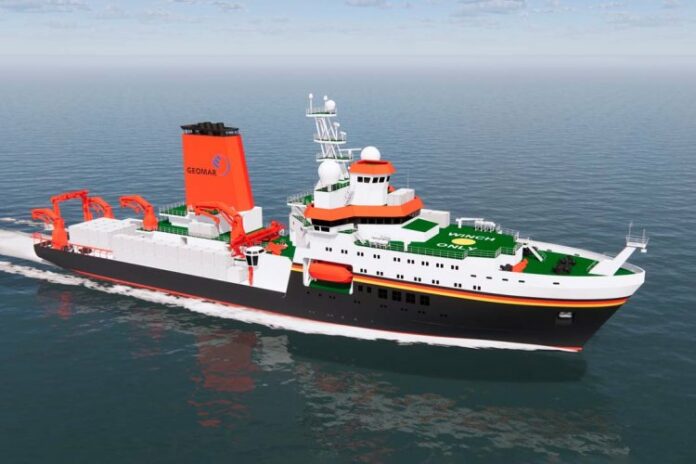
The Meteor IV project has been contracted by Germany’s Federal Ministry of Education and Research, and the ship will be constructed by the Meyer-Fassmer-Special Shipbuilding Division consortium. The Wärtsilä order was included in its order book in September 2022.

Wärtsilä will be involved throughout the entire duration of the project. This will include detailed design work during the engineering phase, and will continue with all the appropriate installation and connection requirements at the manufacturing shipyards in northern Germany. Wärtsilä will also take responsibility for commissioning of its scope of supply, as well as the entire cabling system.

Harald Fassmer, Managing Partner of the Fassmer shipyard, says:

“With Wärtsilä, we have a strong and competent systems partner at our side. Wärtsilä SAM Electronics is already supporting us with its extensive know-how in the construction of two 50-metre test and survey vessels for the German Navy. We are, therefore, happy to continue this good cooperation for this highly complex research vessel.” 

Harald Baumgarten, Managing Director of Wärtsilä SAM Electronics, says:

“We are delighted that Wärtsilä has been selected as the trusted partner for this challenging project. We are happy to contribute our depth of experience in the construction of research vessels and are confident that, together with the expertise of Fassmer and Meyer, we will make this project a success.” 

Wärtsilä’s scope of systems and services for the 125-metre long vessel comprises the design integration of all the electrical systems. The company will also provide the switchboards, the electrical distribution and drive systems, generators, as well as the entire lighting system and special systems for energy supply. The vessel will be outfitted with a truly integrated Navigation and Automation system – NACOS Platinum. Furthermore, Wärtsilä will deliver the bridge consoles and solid state radar technology.

When delivered, the Meteor IV will carry out international and inter-disciplinary missions, focusing on climate and environmental research in the Atlantic waters.

Second Multipurpose Offshore Patrol ship Francesco Morosini delivered

0

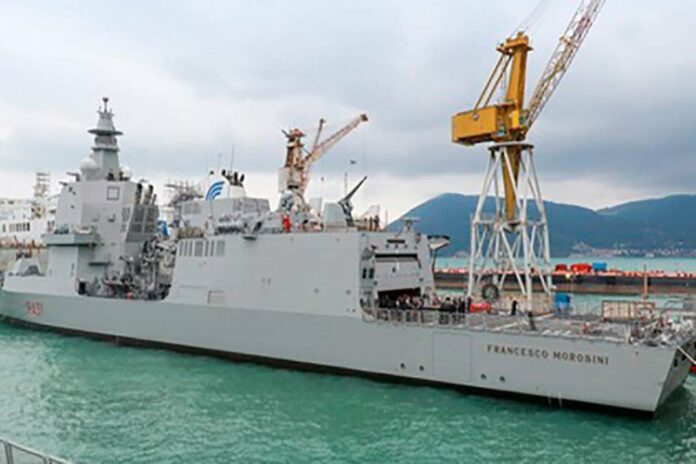
Italian shipbuilder Fincantieri delivered the second of seven PPA (Pattugliatore Polivalente d’Altura) Multipurpose Offshore Patrol ship “Francesco Morosini” to the Italian Navy during a ceremony held on 22 October 2022 at the Muggiano (La Spezia) shipyard.

The PPAs are part of the renewal plan of the operational lines of the Italian Navy vessels, approved by the Government and Parliament and started in May 2015 under the aegis of OCCAR (Organisation Conjointe de Cooperation sur l’Armement, the international organization for cooperation on arms).

Attended the event, among others, the Chief of the Italian Navy, Admiral OF-9 Enrico Credendino, and the General Manager Naval Vessels Division of Fincantieri, Dario Deste.

The multipurpose offshore patrol vessel is a highly flexible ship with the capacity to serve multiple functions, ranging from patrol with sea rescue capacity to Civil Protection operations and, in its most highly equipped version, first line fighting vessel. For the seven vessels of the program there will be indeed different configurations of combat system: starting from a “soft” version for the patrol task, integrated for self-defence ability, to a “full” one, which means equipped for a complete defence ability. The patrol ship is also capable of operating high-speed vessels such as RHIB (Rigid Hull Inflatable Boat) up to 11 meters long through lateral cranes or a hauling ramp located at the far stern.

  • 143 meters long overall
  • Speed up to 32 knots according to vessel configuration and operational conditions
    approx. 135 crew members and accommodation capacity up to 181 beds
  • Combined diesel and gas turbine propulsion system, ie with electric motors for low speeds
  • Capacity to supply drinking water to land

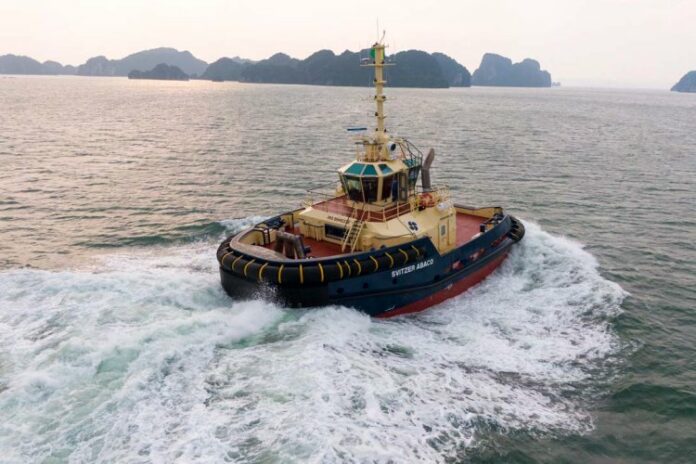
Svitzer Americas expands its fleet with three newbuilds

0

Svitzer has announced that it will take delivery of two new ASD tugboats and one workboat and thereby further modernising and expanding the fleet in the Americas region.

Based in Panama, Svitzer Americas is heavily engaged in the region with harbour towage and terminal towage as the main market segments. With the three newbuilds, the fleet will reach 82 vessels operating in ports and terminals across 12 different countries in the Americas.

Commenting on the three newbuilds, Arjen van Dijk, Managing Director Svitzer Americas said:

“I look forward to welcoming Svitzer Abaco, Svitzer Isabela and Svitzer Moín to the Svitzer Americas fleet. They are all vital to our fleet renewal and expansion strategy, which will enable us to continue to meet our customers’ demands as well as ensure safe, reliable and efficient operations.

We will continue to expand and renew our fleet in the coming years, and in 2023 we will start taking delivery of the newbuilds that were ordered for our Brazil operations last year.”

The two new tugboats will service Svitzer’s operations in the Bahamas and the Dominican Republic, while the new workboat will service Svitzer’s operations in Costa Rica.

The Svitzer Isabela, which will be deployed to the Dominican Republic, is named after the first established Spanish town in the Dominican Republic. She is a 70 tonnes bollard-pull ASD tug from the Ramparts 2400SX series and will be delivered by Turkish shipyard Sanmar.

The Svitzer Abaco, which will be deployed to the Bahamas, is also a 70 tonnes bollard-pull ASD tug but from the Damen 2312 series. She is named after a Bahamian Island and will delivered by the Damen shipyard in Vietnam.

The Svitzer Moín is a survey vessel, which will service Svitzer’s operation in Costa Rica and perform regular surveys of the water depths at the APM Terminal Moín in Costa Rica to determine when dredging is required as the port is slowly silting. The survey vessel is built at Besiktas Shipyard in Turkey.

All three newbuilds are expected to be fully operational by the end of November 2022.

Wintershall Dea expands presence in Mexico

0

Wintershall Dea has signed an agreement with Hokchi Energy, the Mexican subsidiary of Pan American Energy, to acquire a 37% non-operated participating interest in the Hokchi Block, with a conditional option to increase its participation up to 40% at a later stage. 

Wintershall Dea is thus expanding its presence in Mexico and consolidating its position as one of the leading independent gas and oil companies in the country.  

Thilo Wieland, member of Wintershall Dea’s Management Board responsible for Latin America, emphasises:

“Mexico is a growth country for Wintershall Dea, and the acquisition of the Hokchi Block interest is a clear sign of this. With Hokchi, we are gaining a producing asset that fully meets our strategic requirements, also in terms of efficiency and emissions. We are excited about continuing and further expanding our partnership with Hokchi Energy and its shareholder Pan American Energy.”

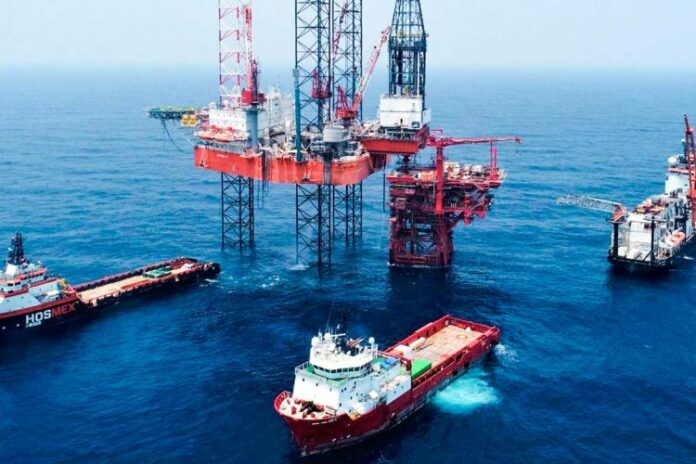
The Hokchi Block was awarded in Mexico’s licensing round 1.2 and is operated by Hokchi Energy. The shallow-water block is developed as a subsea tie-back to two offshore platforms, Satellite and Central, and was brought on-stream in May 2020 following an appraisal campaign.

The well stream is piped over a distance of 24 kilometres from the two offshore platforms to an onshore processing facility where oil and gas is separated and treated for further sale to the Mexican state company Pemex. The block is a key contributor to the total production led by private companies in Mexico. It currently produces around 26,000 barrels of oil equivalent per day with a planned ramp-up to a gross production of 37,000 barrels of oil equivalent per day by 2023.

Martin Jungbluth, Managing Director of Wintershall Dea in Mexico, underlines the importance of this new asset:

“The Hokchi Block is located in the Sureste Basin, where we already have a strong portfolio of promising licences and which is therefore familiar to us. It’s near our Zama, Polok and Chinwol discoveries as well as our own operated exploration block 30. We are looking forward to contributing our expertise and working together with the operator to efficiently and safely produce the Hokchi Block.”

In Mexico, Wintershall Dea and Hokchi Energy are already partners in Block 2, located in the southeast of the Gulf of Mexico. In Argentina, Wintershall Dea and Pan American Energy have also enjoyed a long-standing partnership. Both companies share a focus on efficient production, technological innovation, social responsibility and the sustainable development of the assets in which they are engaged.

The transaction is subject to obtaining government approvals, including from Mexico’s National Hydrocarbons Agency (CNH) and antitrust agency (COFECE) and is expected to be closed before the end of the first quarter 2023.

Three companies to study converting organic waste on vessels into fuel

0

Astomos Energy Corporation (Astomos Energy), Sustainable Energy Development Co. Ltd. (Sustainable Energy), and Nippon Yusen Kabushiki Kaisha (NYK) have agreed to a memorandum of understanding (MoU) to jointly study the establishment of a marine transportation system having less environmental impact through the effective use of organic substances generated on board ships. With the signing of this MoU, the three companies will take initiatives aimed at addressing social problems and contributing to decarbonization.

Waste generated on board is stored on the ship’s deck and discharged at ports of call, where it is then collected. Through the process of transport and incineration of the waste, CO2 is generated. For example, approximately 5,000 liters of waste, mainly plastic dust, is generated from a large LPG carrier (VLGC) for every 45-day voyage between Japan and the Middle East.

To address this issue, NYK has agreed to an MoU with Astomos Energy, an LPG distributor, and Sustainable Energy, a company working to realize a recycling-oriented society by converting unused resources into energy, to start a joint study with a view to develop an organic fuel conversion business by installing Sustainable Energy’s ISOP system (ISOP) on board ships. ISOP generates biofuel from combustible garbage and other materials.

Sustainable Energy’s ISOP is a new organic waste treatment system that converts waste into energy. ISOP can reduce CO2 emissions from the entire organic waste treatment process by converting the bio-components of the waste into fuel. ISOP is characterized by the fact that it does not require waste segregation. Also, its treatment system can be made smaller. By installing ISOPs on oceangoing vessels, CO2 emissions from marine transportation as a whole are expected to be reduced by utilizing the treated bio-components as energy.

In addition, more onboard storage space can be made available through onboard processing of organic materials generated during the voyage. ISOP is thus expected to improve the working environment of seafarers in terms of sanitary conditions.

The three companies will proceed with a joint study targeting completion of the onboard demonstration test and implementation of ISOP on a vessel by the mid-2020s.

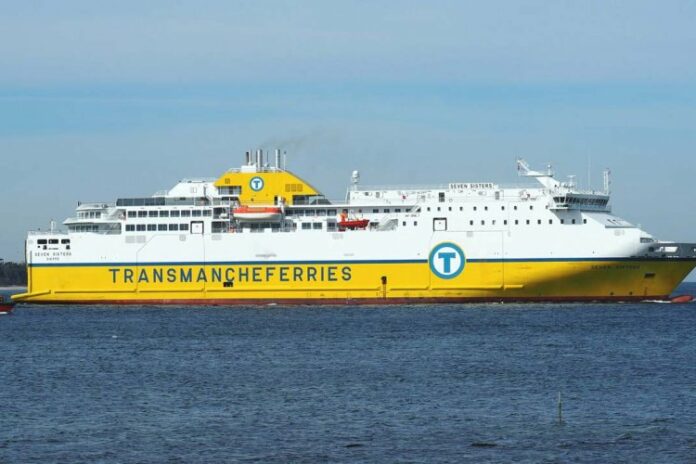
DFDS wins Newhaven-Dieppe tender

0

The new contract will begin on 1 January 2023, where DFDS will operate the contract on behalf of the French authority, the Syndicat Mixte de Promotion de l’Activité Transmanche (SMPAT).

Jean-Claude Charlo, Head of French Organisation and Route Director, says:

“We are delighted to be awarded the contract to continue operating the important ferry link between Newhaven and Dieppe. This secures hundreds of local DFDS jobs and enables us to continue our ambitious plans to invest in the route.

We look forward to growing the traffic and will bring significant improvements to the route including new branding and a new schedule, which will increase the frequency during the key summer period. We have a clear vision for the route’s future, and we are excited by the opportunity to realise this over the next five years.”

DFDS has operated the ferry route from the Sussex coast to Normandy since 2012 and will now enter the third contract period. DFDS currently offers two sailings per day on the Newhaven-Dieppe route between October and April and three sailings in each direction during the peak summer months from May to September.

Samskip confirms 90% cut in ship CO2 emissions

0

Samskip has extended its commitment to sustainable biofuels in shortsea shipping operations, calculating that it will make 45,000 tonnes in additional CO2 emissions savings before the year is out as a result.

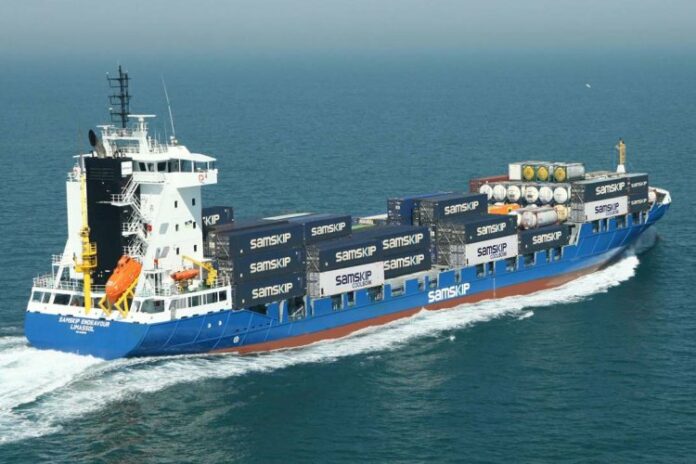
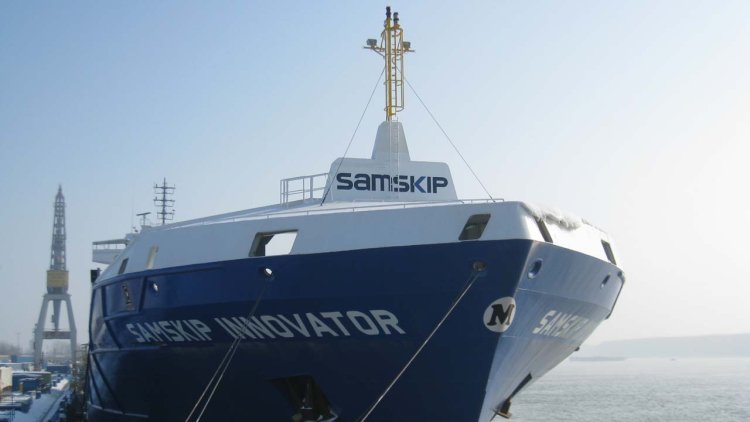
The leading European multimodal group has signed a new agreement with supplier GoodFuels, committing the Samskip container ships Endeavour, Innovator, Hofell and Skatafell to run on marine grade bio-residual fuels.

Offering a drop-in replacement that cuts 90% cuts off the CO2 emissions generated by conventional fuel oils, GoodFuels MDF1-100 biofuel is formulated entirely from sustainable waste streams from the EU’s Renewable Energy Directive list. It has also earned International Sustainability and Carbon Certification.

Erik Hofmeester, Head of Vessel Management, Samskip, said:

“Sustainable marine biofuels offer a viable way for Samskip to cut CO2 emissions by 90% so that our ships and freight customers reduce their carbon footprint in the interests of the planet. It would take the equivalent of 1.7 million trees to offset this amount of CO2 emissions.”

“As part of Samskip’s relationship with GoodFuels, freight owners also become part of a scheme where the lower ocean carbon footprint is auditable as carbon credits in the supply chain.”

Following biofuel trials in 2019, Samskip began running main engines onboard the 800-TEU Samskip Endeavour as a routine part of services between the Netherlands and Ireland. The company extended terms to include Samskip Innovator on the Netherlands-UK service last year, before adding Samskip Hoffell and Samskip Skatafell on the Iceland-UK-Netherlands route in 2022. Bunkering for all four ships takes place in Rotterdam.

Initially using a biofuel blend which achieved a 30% CO2-reduction, more competitive pricing enabled Samskip to integrate a 100% biofuel from 2021 and achieve the 90% reduction. The IMO has a 2030 target to cut greenhouse gas emissions from ships by 40%, with a 50% cut envisaged for 2050, but Samskip recently set its sights on ‘Net-Zero’ by 2040.

Max Verloop, Marketing Lead, GoodFuels, said:

“Verifiable performance is proving to be a key advantage for sustainable marine biofuels as a drop-in replacement for conventional oils. Clearly, several solutions are required to decarbonize shipping overall, but biofuels are proving their case on scalability – one of the key challenges facing any low carbon fuel alternative.” 

Hofmeester said that biofuel performance had been “excellent, without exception”. Positive cooperation with Flag, Class and national authorities, ship managers and crews had proved pivotal in the acceptance of the fuelling alternative on a licensed basis, he added.

In June, IMO’s Marine Environment Protection Committee published a new “Unified Interpretation” which makes the first explicit acknowledgement that marine biofuels satisfy the requirements of MARPOL (The International Convention on Marine Pollution).

Negotiations are already underway covering a 2023 GoodFuels supply contract. Hofmeester said one scenario involved extending the agreement to chartered vessels.

Port of Valencia tests 5G for ship docking operations

0

The head of Valenciaport has participated in the PORTWIN event ‘5G private and radars in the Port of Valencia: Pilot for assistance to the berthing of vessels’, a solution based on 5G technology to assist in real-time decision making and increase the safety of these operations.

The PORTWIN project, which is co-financed by the Agència Valenciana de la Innovació, combines cutting-edge technologies such as 5G, Edge Computing, Artificial Intelligence and Radar to digitise the ship docking operation by providing real-time assistance with highly accurate data on any ship approaching the Port of Valencia’s facilities.

The solution designed in PORTWIN, based on 5G smart radars, contributes to facilitate this berthing process, thanks to the real-time communication of the distance, speed and orientation of the vessels with respect to the berthing dock. This information is obtained through the use of radars, transmitted via 5G technology, processed in the Edge, and represented in an application that, thanks to its graphic interface, allows the position and distance of the vessel with respect to the dock to be visualised in real time from any device.

By using this application, masters, tugs, pilots and moorers can know the position of the ship with millimetric precision during the entire docking phase, thus enabling more efficient decision making that contributes to optimising operations and increasing efficiency and safety in this complex process.

At the event, the result of the implementation of a sensorisation layer of the infrastructure for the monitoring of the assistance process for the berthing of ships was presented at the Cruceros 1 pier of the north extension, which will help in real-time decision making and increase the safety of this operation, all based on 5G technology.

The project has been presented by the technology company Fivecomm, whose technological partners are Cellnex, A4Radar, Fundación Valenciaport and the PAV. In this case, Valenciaport has carried out a controlled transfer of the space in the Cruceros dock, the IT facilities at the quayside and has provided the pilot with electricity supply, with the help of the Digital Transformation department and the electricity service.

Qatargas awards $4.3bn offshore contract to Saipem

0

The award represents the largest single offshore contract by total value in the company’s history

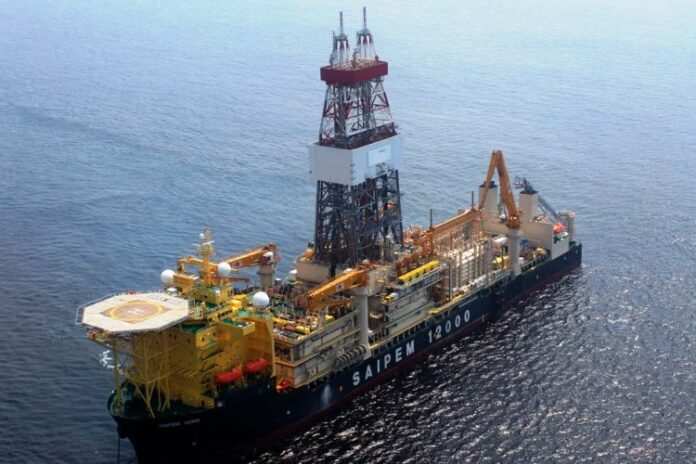
Saipem has been awarded a contract by Qatargas for the North Field Production Sustainability Offshore Compression Complexes Project – EPC 2 located offshore the north-east coast of Qatar. The contract value amounts to approximately 4.5 billion USD.

The scope of work encompasses the engineering, procurement, fabrication and installation of two offshore natural gas compression complexes aimed at sustaining the production of the North Field, including two of the largest fixed steel jacket compression platforms ever built, flare platforms, interconnecting bridges, living quarters and interface modules.

To execute this project, Saipem will leverage on its own assets, know-how and competences on offshore engineering, installation and fabrication, as well as its capability to maximize local content.

This prestigious award represents the largest single offshore contract by total value in the company’s history. It follows the award in early 2021 related to offshore facilities for extraction and transportation of natural gas for the same field and demonstrates the continuity and the quality of Saipem’s performance in Qatar.