-11.6 C
New York
Home Blog Page 379

NYK to order two LNG-fueled large coal carriers

0

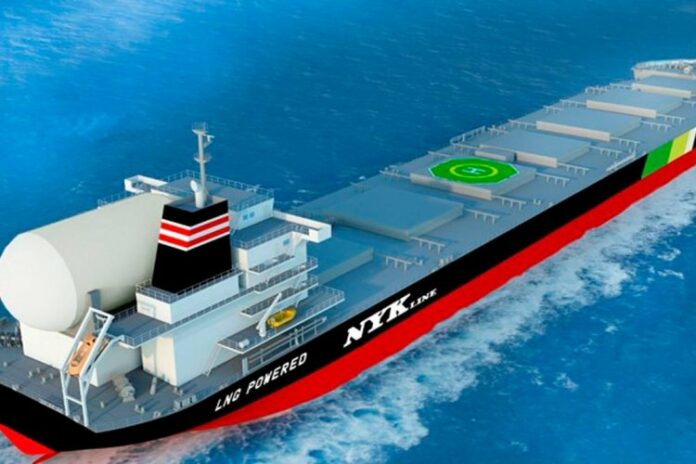
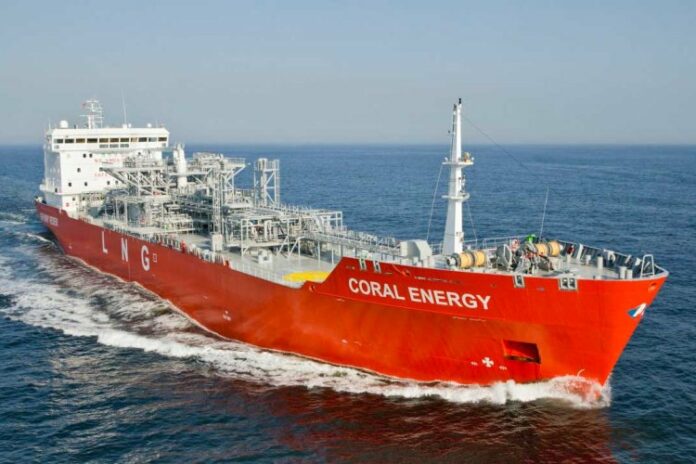
NYK will order two LNG-fueled large coal carriers from Oshima Shipbuilding Co., Ltd. 

This ship order is a part of a bulk carrier fleet development aimed at achieving net-zero greenhouse gas (GHG) emissions in the NYK Group’s oceangoing businesses by 2050. 

The two ships will emit approximately no sulfur oxides (SOx), 80% less NOx, and 30% less carbon dioxide (CO2) compared to existing conventional heavy oil-fueled vessels. Additionally, the vessels will be compliant with the IMO’s NOx (nitrogen oxide) emission regulations (Tier III).*

NYK is positioning LNG fuel as a bridge solution until future zero-emission ships can be realized. The company ordered the world’s first LNG-fueled large coal carrier in 2019 and its first LNG-fueled capesize bulk carrier in 2021, in addition to four more LNG-fueled capsize bulk carriers in January 2022.

Going forward, we will continue with the gradual planned introduction of LNG-fueled vessels until the realization of zero-emission vessels that use marine fuels such as hydrogen or ammonia, which would have an even lower environmental impact.

TECO 2030, Shell and partners to receive €5m to realise hydrogen-powered tanker

0

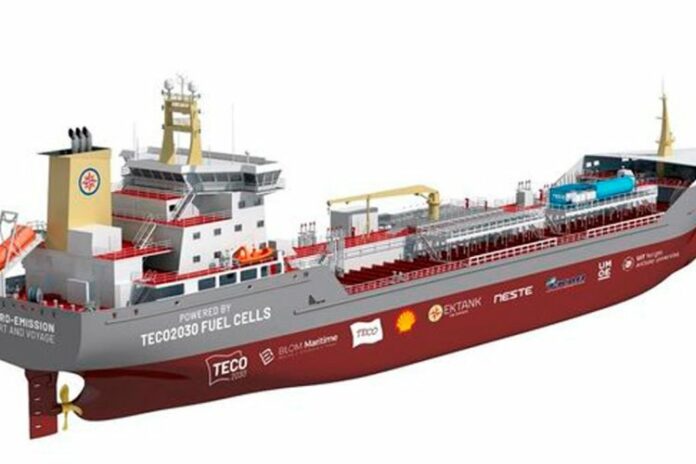
TECO 2030 with partners have been invited for HORIZON EUROPE funding of EUR 5 million to realise the hydrogen powered tanker concept, HyEkoTank. All beneficiaries have now signed the GA Declaration of Honour, stating that they are committed to participate in the project. The consortium expects to finalise the Grant Agreement process within the end of this year, and plans project startup by February 1st, 2023.

In addition to TECO 2030, Shell International Trading and Shipping Company Limited and Shell International Exploration and Production BV, the HyEkoTank project involves partners Ektank AB, Blom Maritime AS, TECO Solutions AS, Umoe Advanced Composites AS (UAC), FKAB Marine Design, Neste Oyj, and UiT – The Arctic University of Norway.

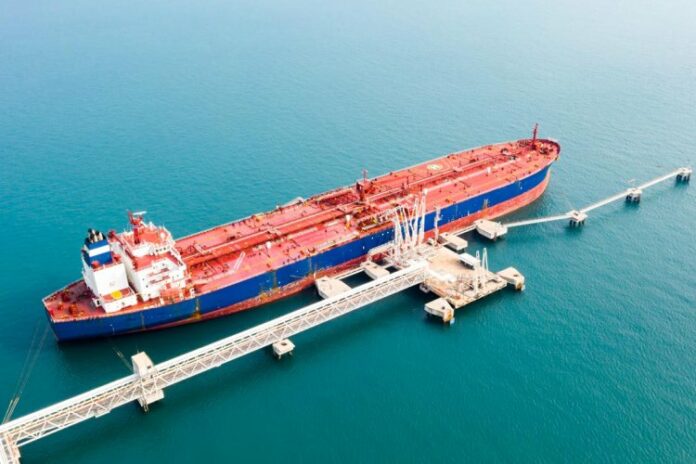
The HyEkoTank project will retrofit a 18.600 DWT product tanker with a 2.4 MW fuel cell system by TECO 2030 and 4000 kg compressed hydrogen storage for demonstration in 2024.

The HyEkoTank hydrogen powered tanker will demonstrate zero emission at berth and 60% reduction of GHG emissions during voyage. This pioneering project could become a first mover in this maritime shipping segment and contribute to achieving the ambitious climate targets set by the European Union. As part of the European Green Deal, the EU has committed to reducing GHG emissions by 55% by 2030, and a binding target of achieving climate neutrality by 2050. Under the ‘Fit for 55 package’ the EU is currently developing its climate, energy and transport-related legislation to align current laws with the 2030 and 2050 ambitions.

Tore Enger, Group CEO, TECO 2030, says:

“The hydrogen tanker concept will be a state-of-the-art vessel retrofitted to reduce up to 100% of GHG emissions during voyage and at berth. There is no doubt that zero emission is the way forward if we have any ambition to reach the targets in the Paris Agreement.”

Carl Henrickson, General Manager Technology, Innovation & Digitalisation, Shell Shipping and Maritime, says:

“Shell is proud to be a part of this fuel cell project, which aims to demonstrate the viability of hydrogen as a zero-carbon fuel for the maritime sector. Our target is to be a net-zero emissions energy business by 2050 and to accelerate this transition we are partnering with customers and businesses from across the sectors. Shell will purchase the fuel cell system and provide the renewable hydrogen to power this pioneering project as we continue to drive innovation to deliver the cleaner energy solutions that our customers need.” 

Lauri Helin, Vice President, Logistics & Operations Oil Products, Neste, says:

“Supporting the shipping industry towards carbon neutrality requires partnerships, new innovations and utilizing all available solutions. As maritime is one of the largest sources of transport emissions, there is an urgent need for lower-emission solutions that are available already today. This is again another step towards decarbonizing the industry and well aligned with our sustainability targets to enable low carbon shipping of renewable fuels.”

MODEC awarded FEED contract for ExxonMobil’s Uaru project in Guyana

0

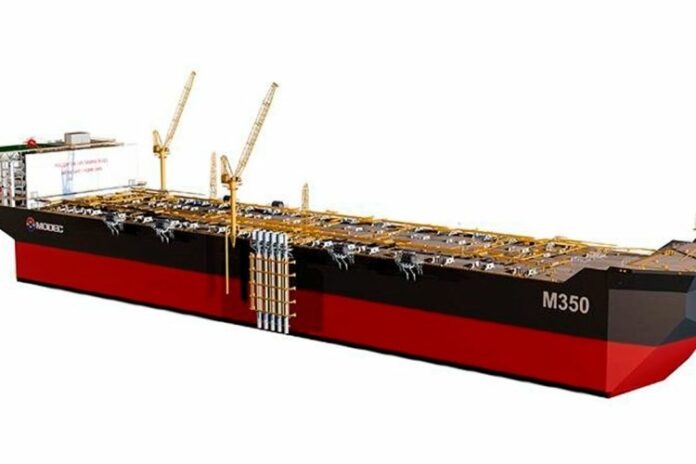
MODEC has signed a contract to perform Front End Engineering and Design (FEED) for a Floating Production, Storage and Offloading vessel (FPSO) for the “Uaru” development project. 

The FEED contract award relates to the initial funding by ExxonMobil’s subsidiary, Esso Exploration and Production Guyana Limited (EEPGL), to begin FEED activities related to the FPSO design and to secure the second M350TM hull for FPSO service.

Following FEED and subject to government approvals in Guyana of the development plan, project sanction including final investment decision by ExxonMobil, and EEPGL’s release of the second phase (EPCI) of work, MODEC is expected to construct the FPSO and install in Guyana. MODEC is also anticipated to operate the FPSO for an initial duration of 10 years, with potential options for continuation.

MODEC will design and construct the FPSO based on its M350 new-build design. Uaru will be the second M350 hull used for FPSO service. The FPSO will be designed to produce 250,000 barrels of oil per day, will have associated gas treatment capacity of 540 million cubic feet per day and water injection capacity of 350,000 barrels per day.

The FPSO will be installed in a water depth of about 2000 meters, using a SOFEC Spread Mooring System and will be able to store around 2 million barrels of crude oil.

Takeshi Kanamori, President and CEO of MODEC, commented:

“We are extremely honored and proud to be selected to provide the FEED services for an FPSO for the UARU project. We are equally proud of our robust track record of successful project deliveries in the South America region, and we look forward to cooperating closely with the client and its partners to make this project a success.”

The FPSO will be MODEC’s first for use in Guyana, however it will be the 18th FPSO/FSO vessel delivered by MODEC for use in South America.

Amon Maritime launches ammonia supply vessel and targets offshore sector

0

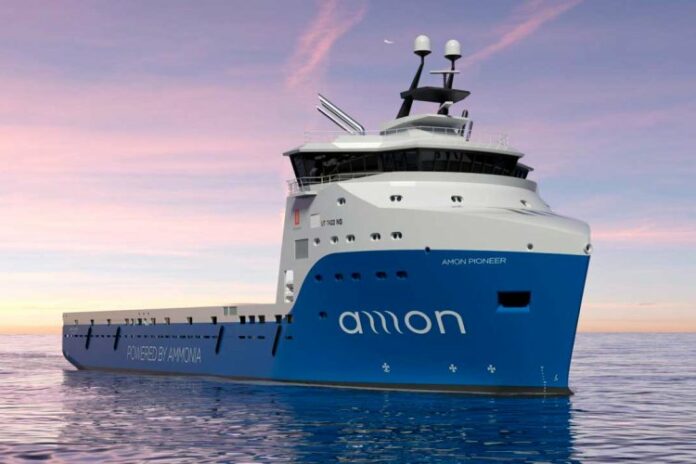
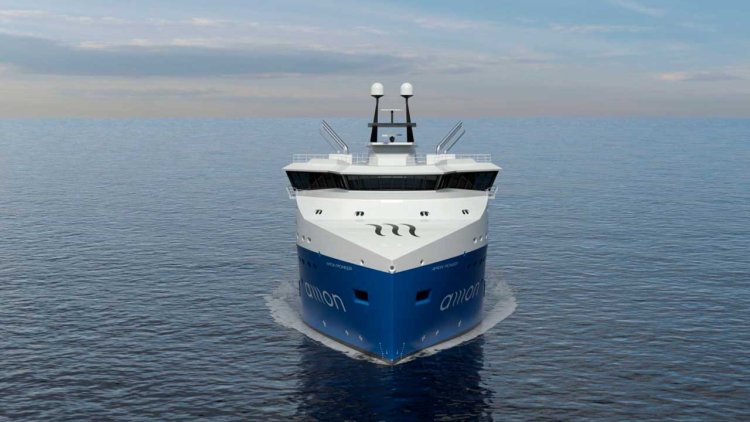
Amon Maritime launches a new company specializing on the offshore market – Amon Offshore, and a carbon free PSV (platform supply vessel). 

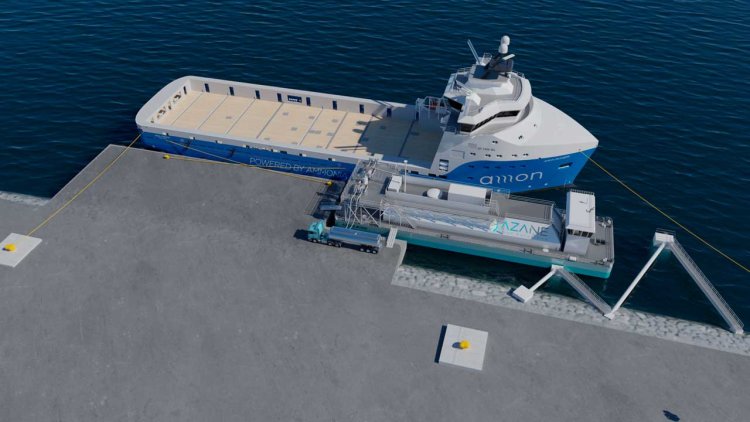
Amon Offshore has been created to build, own and operate a fleet of ammonia-powered supply ships for the Norwegian Continental Shelf. The ships have been developed to meet oil companies’ current and future offshore logistics needs, setting a new standard for North Sea PSVs – while drastically reducing emissions.

André Risholm, Founder & CEO of Amon Maritime, says:

“This is the next generation. We are combining new technologies with future requirements, enabling capabilities only available for newbuildings. Our vessels will be carbon free, future proof, and holistically designed for ammonia fuel from the ground up.”

Ammonia fuel will be made available with a floating bunkering terminal at the selected supply base from affiliated company Azane Fuel Solutions – with fuel provided by project partner Yara Clean Ammonia.

The vessels will be managed by Amon Maritime’s in-house, fully integrated new ship management setup in Norway – Ula Ship Management. The company is a joint venture with Bernhard Schulte Shipmanagement, the third largest ship manager in the World.

The Norwegian Government has stated in the Hurdal Platform that all PSVs on the Norwegian Continental Shelf shall release zero emissions by 2030. This requires approximately 80 newbuilds or significantly modified/rebuilt to be delivered between 2025-2030 and will be a massive boost for innovation and value creation in the maritime industry.

The Amon PSV has been developed for full compliance with 2030 requirements, offering carbon free operations with best-in-class energy efficiency. Amon Offshore is working closely with clients to obtain charter contracts, enabling the first ships to be delivered in 2025.
 
The Amon PSV has been developed with the customer in focus, collaborating with oil companies on the Norwegian Continental Shelf to ensure that cargo capacities and operational capabilities are just as future proof as the power technology and emissions reductions. The project started in 2020.

Jørn Heltne, Vice President for Ship Design sales in Kongsberg Maritime, says:

“These vessels will represent the next generation platform supply vessel (PSV) and Amon Maritime will set a new standard in the logistics in the segment with these new-buildings. We are proud of working with them to lead the green shift in shipping, designing what we believe will be a game changer for the market.”

The Amon PSV received approval in principle for gas-fuelled (ammonia) notation from DNV in March 2022. In May 2022 Norwegian Maritime Authorities issued its letter of preliminary assessment. This is the World’s first preliminary flag approval for an ammonia-powered ship.

Arnstein Eknes, Segment Director, Special Ships at DNV, says:

“It is great to see a modern PSV design developed for ammonia as fuel. Innovations like this, coupled with close collaboration between all stakeholders in the value chain is key to accelerating maritime decarbonization. We congratulate Amon Offshore for this timely and important contribution in supporting the energy transition.”
 

Anthony Veder renews its connectivity agreement with Inmarsat

0

Rotterdam-based gas-shipping company Anthony Veder has renewed its connectivity agreement with Inmarsat to increase its Fleet Xpress bandwidth allowance in line with its evolving business requirements. The contract applies to every vessel in Anthony Veder’s tanker fleet.

The agreement was reached following a successful trial in which Anthony Veder used the upgraded-bandwidth Fleet Xpress plan to run a data-intensive video-conferencing platform in a busy shipping lane. As well as supporting Anthony Veder’s increasing use of enterprise applications for more efficient business processes and seamless collaboration, the high-bandwidth package will allow the company to adopt and deploy advanced digital solutions as its requirements evolve.

Benne Engelen, Chief Information Officer, Anthony Veder, said:

“With a roadmap for innovation that looks ahead five to 10 years and beyond, safe and reliable connectivity is imperative for Anthony Veder. We are looking continuously for ways to conquer the physical distance between our ships and shore-based operations, and to optimise collaboration by deploying the same tools on land and at sea. I am happy we can continue to rely on the coverage and stability of Inmarsat’s leading global network, its continuous technology improvement and its global support offer to achieve our development aims.”

Committed to promoting crew welfare across its fleet, Anthony Veder will share the benefits of the new high-bandwidth package with its seafarers, providing them with free and reliable access to communication services, with data allowances managed by its in-house IT department.

Anthony Veder’s growing bandwidth requirements reflect wider industry trends. In a recent Inmarsat study, modern maritime business operations and crew welfare imperatives were identified as two of the key factors driving a threefold increase in data consumption on board commercial vessels. Monthly average network usage for maritime business operations was 32% higher in 2022 (as of June) than in 2021. Comparing the same time frames, network usage for crew connectivity was up almost 50%.

Ab Argam, Senior Sales Manager, Inmarsat Maritime, said:

“We have a strong relationship with Anthony Veder dating back many years and encompassing several generations of our VSAT services. By renewing its Fleet Xpress agreement, Anthony Veder has demonstrated its satisfaction with the solution and its trust that Inmarsat will continue to deliver the fast, reliable connectivity its evolving operations require.”

Also included in Anthony Veder’s renewed Fleet Xpress contract is Inmarsat’s Fleet Care service package, ensuring global, round-the-clock maintenance, repair and support for all onboard antennas and communication equipment, which were upgraded as part of the agreement.

Bunker platform Prosmar becomes part of tech company ZeroNorth

0

Technology company ZeroNorth has today announced it has acquired Prosmar Bunkering AS, the online platform supporting the bunker fuel market. The acquisition will aim to accelerate digitalisation and transparency in the bunker industry and further support the decarbonisation transition within the marine value chain.

The deal sees ZeroNorth acquire Prosmar’s Bunker Dashboard solution and Bunker Pricer module, which will operate under the name Prosmar Bunkering AS. Prosmar’s two other services, Prosmar Risk and Prosmar Price Matrix, which offer freight risk management services, are not included as part of the deal with ZeroNorth.

Investment and commercial support from ZeroNorth will enable Prosmar Bunkering to accelerate its already impressive growth journey by increasing the company’s commercial presence in relevant markets, spurring continued development of its product portfolio, as well as enhancing customer experience.

Prosmar Bunkering will operate as an independent, standalone business, with the same management team currently running the company. The company will continue to offer a cross-functional dashboard to simplify and streamline the bunker process, as well as support suppliers, buyers, and brokers with their bunker fuel needs.

The move to acquire Prosmar Bunkering directly supports ZeroNorth’s ambitious growth strategy within the bunker space, allowing the company to offer more accurate bunker prices.

This is the first acquisition by ZeroNorth since its capital equity raise of $50M earlier this year. In December 2021, ZeroNorth acquired ClearLynx – now ZeroNorth Bunker – another industry leading online bunker platform.

Commenting on the announcement, Søren Meyer, CEO, ZeroNorth, said:

“The bunker industry and its full value chain are integral to the process of decarbonising shipping. The ‘business as usual’ way of operating must now be fundamentally challenged if we are to propel the industry forward rapidly enough to save the planet and meet tightening regulations.

“We have a clear ambition to help the industry with its transition to clean fuels. By acquiring Prosmar Bunkering, we believe that we can further accelerate and pursue our goal to decarbonise shipping, together with the industry.”

Ali Jourabchi, CEO, Prosmar, said:

“Prosmar Bunkering will continue to provide its customers with practical software to simplify the bunker process. This partnership with ZeroNorth will now enable us to further develop our products, rapidly bring new solutions to market and propel change in the bunker space, while operating as an independent company. We will also place increased focus on growing Prosmar Bunkering’s presence in new markets, bringing us closer to customers and supporting their needs through this dynamic and changing landscape.”

Four concept designs to decarbonize icebreaking

0

The long-term overall aim in shipping is to become completely carbon-free. Initially, it means moving away from purely fossil fuels – heavy fuel oil, marine diesel oil and liquefied natural gas (LNG) – to alternative carbon-neutral fuels such as biogas and bio-methanol. In the long run, the goal is to transition fully to carbon-free fuels, such as ammonia and hydrogen, produced with renewable energy.

By 2030, carbon dioxide emissions per transport work (ton-miles of cargo) should be reduced by 40% from 2008 levels, and, by 2050, the International Maritime Organisation (IMO) has set the ambitious target of a minimum reduction of 50% for total annual greenhouse gas emissions from 2008 levels.

High power demand in icebreaking

Despite continuous improvements in icebreaking and propulsion technology, breaking ice remains an energy-intensive process. An icebreaker needs high propulsion power to be able to break ice, perform towing duties, clear pathways for commercial vessels, and keep harbours open.

However, with the technology already available today and the technology currently under development, it is already possible to design carbon-neutral and even zero-carbon icebreakers. To illustrate what they could look like and how they would perform, Aker Arctic’s naval architects have made a study of a smaller icebreaker for Baltic Sea conditions based on four alternative energy sources: hydrogen, ammonia, batteries, and methanol.

The sketch concepts are evaluated against a baseline design, fuelled by renewable diesel such as hydrotreated vegetable oil.

Common characteristics

All concepts share the same general design, main dimensions, and icebreaking capability. With a length of 86.6 m, beam of 22.4 m and draught of 7.5 m (7.0 m with hydrogen), the icebreakers are only slightly bigger than Voima, the oldest and smallest member of the Finnish icebreaker fleet.

The 12-megawatt twin-azimuth propulsion system gives the icebreakers superior manoeuvrability, improving safety and efficiency when operating near other ships. With a modern double acting icebreaker hull form, they can achieve a speed in excess of 8 knots in 80-centimetre level ice, an icebreaking capability similar to the renowned Otso class.

The ice class of the vessels, Polar Class 4 Icebreaker(+), is the same as that of the newest Finnish icebreaker Polaris and considered sufficient for all escort icebreaking operations in the Baltic Sea, including the most severe ice conditions in the Bothnian Bay.

When developing the alternative fuel concepts, some forward-looking assumptions have been made. For example, it has been assumed that the alternative fuel can be burned in internal combustion engines without mixing it with another fuel such as diesel oil or natural gas. This is in line with the stated development goal of the world’s leading engine manufacturers.

Baseline concept: Renewable diesel

Renewable diesel oil, which can be stored in normal structural hull tanks and has a higher energy density compared to the fuel alternatives, provides the baseline concept with the longest autonomy time: 22.4 days at full icebreaking power.

As hydrotreated vegetable oil can be readily used as fuel in any marine diesel engine, the power plant technology is already available on the market. However, in order to meet IMO Tier III emission limits for nitrogen oxides (NOx), selective catalytic reduction with urea solution is required.
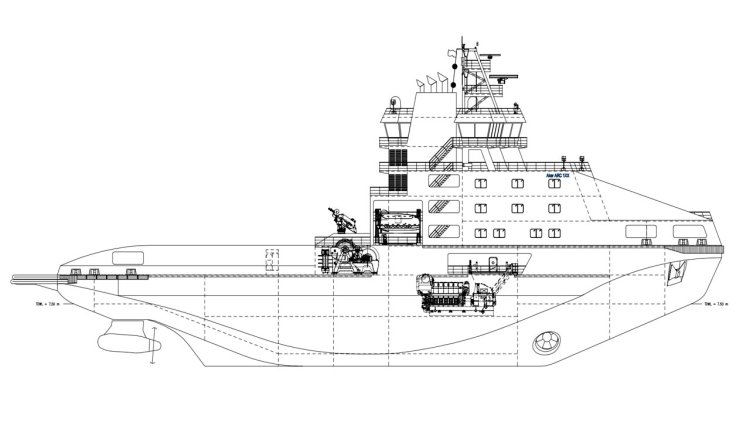
The baseline icebreaker concept, fuelled with renewable diesel oil, has the longest autonomy time.

Concept 1: Hydrogen

The hydrogen-fuelled icebreaker concept has four cylindrical vacuum-insulated IMO Type C tanks for storing cryogenic liquefied hydrogen with a total net volume of about 1400 m³. Due to the low density of liquefied hydrogen, the fuel capacity is restricted by volume rather than weight and, consequently, the draught of the icebreaker has been reduced by 0.5 m compared to the other concept alternatives.

The achievable autonomy time is 4.6 days at full icebreaking power or 21% of the baseline concept.

In addition to hydrogen-burning internal combustion engines, hydrogen can also be used in fuel cells; both technologies are still in development. Hydrogen-burning gas engines may be able to meet IMO Tier III limits for NOx emissions without exhaust gas after treatment.
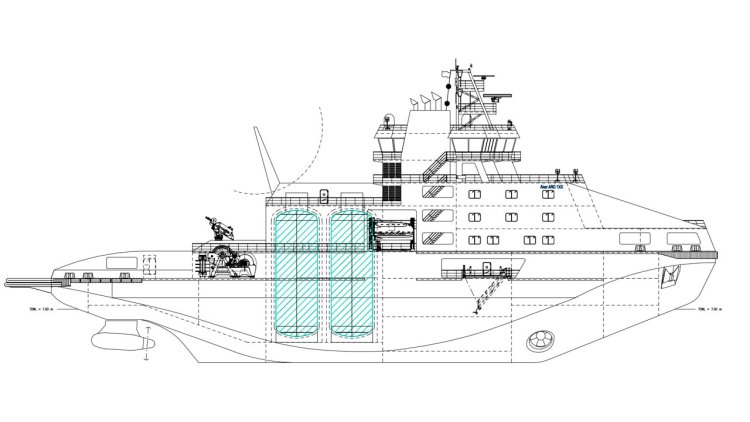
The hydrogen-fuelled icebreaker concept requires large-volume fuel tanks.

Concept 2: Ammonia

The ammonia-fuelled variant requires a special tank – in this case an IMO Type A prismatic tank – for storing refrigerated liquid ammonia. The significantly lower net calorific value of ammonia and the added weight of the storage tank limit the achievable autonomy time to 7.3 days at full icebreaking power or 33% of the baseline concept.

Ammonia-burning internal combustion engines are currently in development and the technology is expected to become available in a few years. In order to meet IMO Tier III requirements for NOx emissions, ammonia-fuelled ships will require emission abatement with selective catalytic reduction.
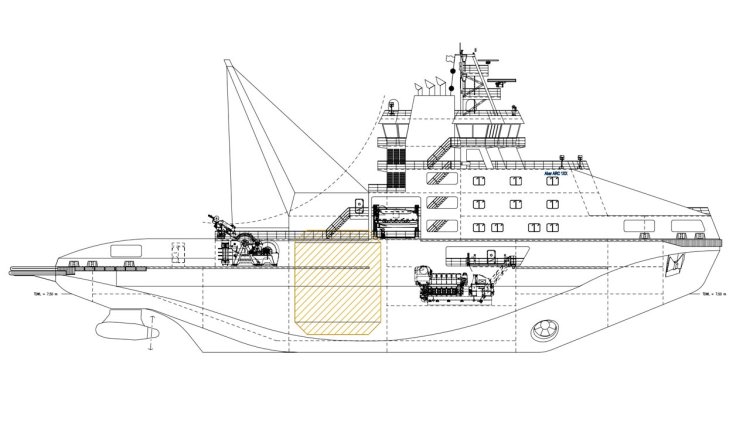
The ammonia-fuelled icebreaker concept has a single IMO Type A prismatic tank for storing refrigerated liquid ammonia.

Concept 3: Battery-powered icebreaker

In the fully electric battery-powered variant, the conventional power plant and its auxiliary systems have been replaced entirely with a large energy storage system consisting of battery packs. As the battery-powered icebreaker produces no emissions of any kind, even the funnel has become obsolete.

With the energy density of present-day battery technology, achievable autonomy time is limited to less than 6 hours at full icebreaking power or about 1% of the baseline concept, even if energy required for heating is not considered.
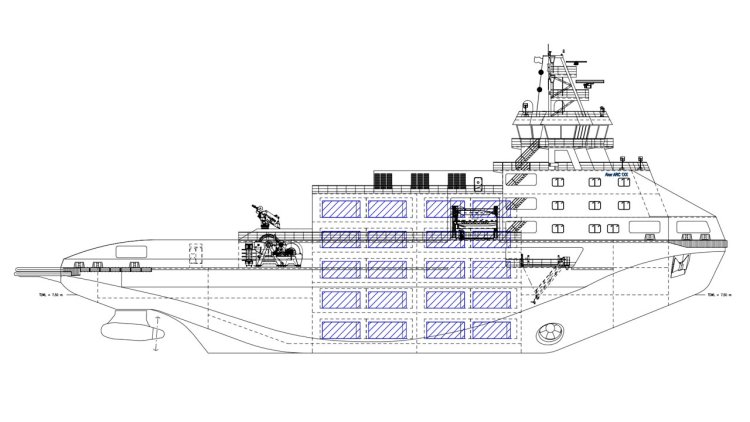
With a fully electric battery-powered icebreaker, the autonomy time is about 1% of the baseline concept.

Concept 4: Methanol

In the methanol-fuelled variant, fuel is stored in a structural steel tank separated from other compartments with a cofferdam. The achievable autonomy time is 9 days at full icebreaking power or 40% of the baseline concept. Similar to ammonia, the fuel capacity is limited by the displacement of the icebreaker and the lower achieved autonomy time is a consequence of lower net calorific value of methanol.

Methanol-burning internal combustion engines are already available on the market. These engines may be able to meet IMO Tier III limits without selective catalytic reduction.
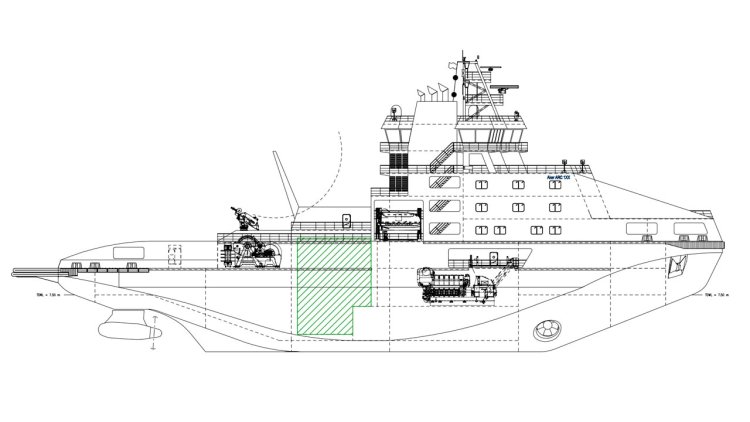
In the methanol-fuelled variant, fuel is stored in a structural steel tank separated from other compartments with a cofferdam.

New inventions bring new possibilities

As focus turns increasingly to a green transition, intense research and development efforts are bringing new engines suitable for new fuels to the market and better ways to produce and distribute energy are invented. Decisions to invest in new distribution infrastructures are also underway.

Reko-Antti Suojanen, Managing Director for Aker Arctic Technology, says:

“The timeframe from a ship’s design to final product is at least 2-3 years, which means that bunkering infrastructure in the intended area can also be built during that time.

“However, choosing a zero-carbon fuel may not be worth the effort if the alternative fuel is produced using fossil energy or if it has to be transported over long distances with conventional tankers.”  

Reduced range and autonomy time

Another aspect that needs to be considered carefully is the reduced operating range and autonomy time of icebreakers using alternative fuels with lower energy density.

Suojanen says:

“The impact of more frequent bunkering stops or refuelling voyages on vessel availability and overall energy consumption need to be evaluated in both fleet-level operations planning and when drafting the performance requirements of future icebreakers.” 

“Perhaps in the future, icebreakers will come into port once per week instead of once every two weeks.”

Source: Aker Arctic

Research project to extend application of bottom-fixed wind turbines

0

ABL Group and Dr. Agathoklis Giaralis, through an Industrial Research Fellowship from the Royal Academy of Engineering, will cooperate on a research project to extend the application of bottom-fixed offshore wind turbines to deeper waters with higher wind energy generation potential.

Dr. Agathoklis Giaralis, who is Associate Professor (Reader) in Structural Dynamics at City, University of London, said:

“Currently, the application of the very mature bottom-fixed offshore wind turbines is limited to 60-70 metres water depth, as the required dimensions and the self-weight of offshore wind turbine supporting structures to safely resist dynamic loads due to wind and wave loads, become uneconomical for deeper waters installation. Yet, it is known that the offshore wind energy generation potential increases further offshore, in deeper waters.”

The project will therefore pursue a step-change in the current design of bottom-fixed offshore wind turbines, with a view to extend their range of applicability to deeper waters and to reduce costs in turbines in conventional water depths (≤60metres).

This will be achieved by developing a novel integrated optimisation-driven design protocol for bottom-fixed offshore wind turbines, in which the foundation and the turbine tower are sized for minimum weight together with the optimal tuning of dynamic vibration absorbers, for minimising wind/wave loads to the substructure and the turbine.

Dr. Giaralis will be seconded into ABL Group to work on the research project. Tim Camp, ABL Group’s director of turbine engineering, will be project responsible from ABL Group’s side.

There are multiple ABL Group companies that support the offshore wind industry, including ABL, OWC, INNOSEA, Longitude Engineering and Add Energy.

Dr. R. V. Ahilan, chief energy transition officer at ABL Group, says:

“The industrial fellowships from the Royal Academy of Engineering are highly prestigious. They are only awarded to projects that address significant societal challenges. Extending the operational envelope of bottom-fixed turbines can be a cost-efficient way of both driving further growth of offshore wind and the required global energy transition.”

Two 3,500 tonne oil spill response barges completed for WCMRC

0

Robert Allan Ltd. has announced that two 3,500 tonne oil spill response barges, Sentinel 303 and Sentinel 304, were recently completed at ASL Shipyard in Singapore. 

WCMRC will receive delivery of the barges in October, with arrival in Canada by the end of 2022. The response barges will join WCMRC’s fleet of pollution response vessels stationed along the south coast of British Columbia. These new additions represent a significant enhancement to the pollution response capabilities already in place and will benefit the entire local maritime industry.

Key particulars of the response barges are:

  • Length, overall: 76.0 m
  • Beam, moulded: 20.0 m
  • Depth, least moulded: 6.4 m
  • Maximum draft (navigational): 4.6 m
  • Gross Tonnage: 2822

The response barges were constructed to ABS rules with the following notation:

Tank capacities of the response barges are:

  • Recovered oil: 3,785 m3
  • Fuel oil: 125 m3
  • Potable water: 150 m3
  • Sewage tank: 100 m3
  • Grey water: 100 m3

Accommodations are outfitted to high, MLC compliant standards for a crew of up to 20 personnel. The ten double crew cabins are located on the accommodation deck with, the galley, mess/lounge, and office/control room located on the fo’c’sle deck.

The electrical plant comprises four (4) identical Caterpillar C4.4 diesel gensets each with a power output of 118 ekW.

The aft deck is the main working deck and contains all the oil spill response equipment. The spill containment systems consist of four unsheltered booms stored in containers with hydraulic reels, Current Buster No. 4 and Current Buster No. 6 stored in a single container with hydraulic reels, and four containers of general-purpose boom. There is ample storage for absorbents, mission-specific containers, general equipment, decontamination gear, dry storage, and a containerized workspace.

Two small vessel docks are stored onboard and can be deployed on port and starboard sides to allow other response vessel crews to embark/disembark to/from the response barges and facilitates the transfer of recovered oil from the response vessels to the response barge. A Desmi Terminator skimmer and hose reel allows the response barges to recover oil floating on the surface. Two mini storage barges are stowed on deck and can be deployed in the field to aid in the response.

A Norcrane fixed-boom crane with a SWL of 9 tonnes at 19 metres is fitted aft to handle the above-mentioned oil spill response gear and hoses.

Kraken receives $1.1 million synthetic aperture sonar order for NATO navy customers

0

Kraken Robotics announces a $1.1 million purchase order from an unnamed customer for several of its AquaPix® synthetic aperture sonars (SAS). 

Delivery is expected in the first half of 2023.

Kraken’s AquaPix® is an off the shelf, configurable SAS that replaces high end sidescan systems at an affordable price, while delivering higher resolution, range, and area coverage rates (ACR). The increased range, resolution, and therefore higher useable ACR of SAS over traditional Side Scan Sonar systems significantly expand the capabilities of naval, scientific, and commercial applications. 

Kraken’s AquaPix is capable of 2 cm x 2 cm Ultra High-Definition SAS imaging at long ranges. AquaPix is uniquely positioned within the industry to bring this capability to the increasingly popular small, man-portable vehicle class. 

AquaPix is modular and has been integrated and deployed on over 20 different underwater vehicle platforms from shallow water to full ocean depth. Kraken’s SAS is modular and versatile, demonstrated by being one of only two companies in the world that has sold and integrated SAS into small, man portable vehicles, towed systems, and deep-water vehicles.  This ability to cross several platforms enables military customers to streamline their Post Mission Analysis by having the same sonar resolution and ATR performance across their entire fleet of vehicles and mission requirements.