-12.3 C
New York
Home Blog Page 380

BOEM designates two wind energy areas in Gulf of Mexico

0

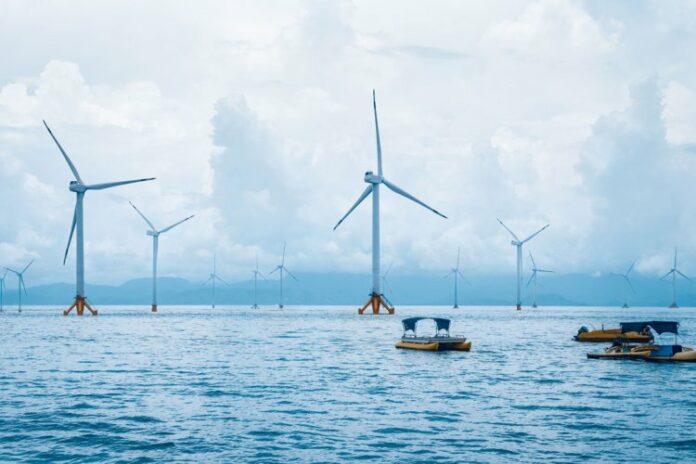
As part of the Biden-Harris administration’s goal of deploying 30 gigawatts of offshore wind energy capacity by 2030, the Bureau of Ocean Energy Management (BOEM) has announced it has finalized two Wind Energy Areas (WEAs) in the Gulf of Mexico, with the potential to produce enough clean wind energy to power nearly 3 million homes.

The first WEA is located approximately 24 nautical miles (nm) off the coast of Galveston, TX. The area totals 508,265 acres and has the potential to power 2.1 million homes. The second WEA is located approximately 56 nm off the coast of Lake Charles, LA. The area totals 174,275 acres and has the potential to power over 740,000 homes.

Under President Biden’s leadership, the administration has approved the nation’s first large-scale offshore wind projects, held record-breaking lease sales, and ushered in billions of dollars in private investment. This growing industry will provide Americans with cleaner and cheaper energy, create thousands of good-paying jobs, and invest billions in new American energy supply chains, manufacturing, shipbuilding and servicing.
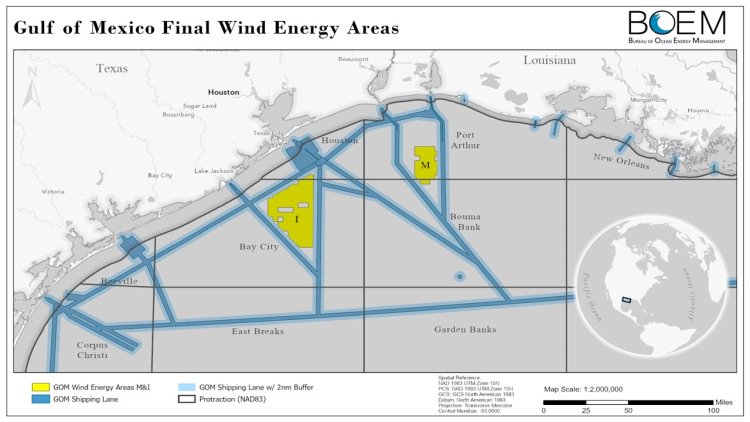
BOEM uses its renewable energy competitive leasing process to identify the offshore locations that appear most suitable for development, taking into consideration potential impacts to resources and ocean users. BOEM collaborated with the National Oceanic and Atmospheric Administration to build an ocean model that analyzed the entire Gulf of Mexico ecosystem to find areas that have the least conflict with other uses and the lowest environmental impact.

BOEM Director Amanda Lefton said:

“These two wind energy areas represent exciting progress toward having the first offshore wind lease sale in the Gulf of Mexico, where there is a mature industry base and the know how to advance energy development in the OCS. The Region can play a central role in our nation’s clean energy transition to support good paying jobs, fight climate change. BOEM will continue to work with the coastal states and communities as we advance our work and do so in a manner that seeks to avoid or minimize conflicts with other ocean uses and marine life in the Gulf of Mexico.”

Maritime Data Cluster launched to accelerate the green smart port revolution

0

A group of leading international ports are collaborating through the UK’s 2050 Maritime Innovation Hub to launch a Maritime Data Cluster aimed at accelerating the green smart port revolution.

The first of its kind, the Maritime Data Cluster has been created to facilitate sharing of non-commercial data between ports to achieve collective, workable solutions for the industry in areas such as health and safety, clean energy, decarbonisation, cyber security and asset management. The collaboration builds on the themes of the recent Maritime Innovation Week hosted by the 2050 Maritime Innovation Hub in June.

The 2050 Maritime Innovation Hub has created a strategic partnership with the National Innovation Centre for Data (NICD) to develop the cluster and provide guidance on elements including GDPR, data platforms, data security and methods of sharing. Founding members include Port of Tyne, ABP, the Bristol Port Company, Poole, Shoreham, Belfast, Aberdeen, Amsterdam and Forth Ports, with more expected to join over time.

Dr Jo North, Technology & Transformation Director at Port of Tyne commented:

“The Maritime Data Cluster is a really exciting project that will see progressive, likeminded ports working together in a maritime data sharing discussion around non-commercial data. It’s great to have so many players from the industry collaborating to push the industry forward and make tangible improvements for all.”

John Chaplin, Director of External Affairs & Special Projects at The Bristol Port Company commented:

“Ports are facing a multitude of common challenges, from the rising cost of energy to maintaining a safe working environment; from embracing digital technology to efficient utilisation of cargo handling equipment.  With collaboration and data sharing Ports can benefit and The Bristol Port Company is delighted to actively participate in this significant initiative led by our colleagues at the Port of Tyne”

RCL first cruise company in US to sail using renewable diesel fuel

0

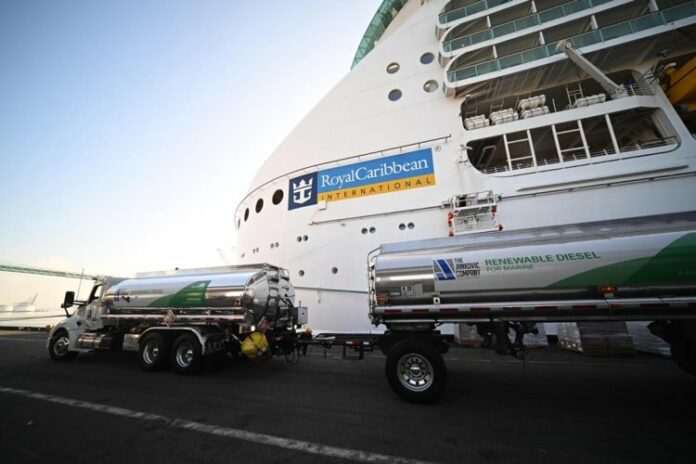
Royal Caribbean Group became the first major cruise line operator to sail a cruise ship from a U.S. port while using renewable diesel fuel to meet part of the ship’s fuel needs when Navigator of the Seas set sail from the Port of Los Angeles. 

Part of the Group’s award-winning cruise line, Royal Caribbean International, the use of renewable fuel will reduce the ship’s carbon emissions.

This key step in the Group’s pursuit of alternative fuels comes less than a year after the unveiling of Destination Net Zero, Royal Caribbean Group’s comprehensive decarbonization strategy.

Laura Hodges Bethge, Royal Caribbean Group’s Executive Vice President, Shared Services Operations, said:

“We are committed to investing in technologies and innovations that will help us reduce emissions and fulfill our purpose to deliver great vacations responsibly. As we celebrate this milestone, we continue to set our sights on other leading alternative solutions to meet our net zero goals.”

The renewable fuel being used by Navigator of the Seas contains less carbon than traditional marine fuels. While this fuel is produced from renewable raw materials, the production process for this fuel makes it molecularly identical to traditional marine gas oil — creating a “drop in” fuel that can be safely used with the ship’s existing engines.

The cruise company plans to continue using lower carbon fuel to meet part of the Los Angeles-based ship’s fuel needs as it evaluates the feasibility for long-term use, with ambitions to expand its usage to other ships across the fleet. This follows a similar trial by the Group’s joint venture partner, Hapag-Lloyd Cruises, which is exploring a different process for developing a sustainable biofuel.

For the trial, Royal Caribbean Group has partnered with World Fuel Services to supply the renewable fuel to Navigator of the Seas. The Jankovich Company will deliver the fuel on behalf of World Fuel Services to the ship while at the Port of Los Angeles. Once fueled, Navigator of the Seas will set sail to Mexico.

Michael J. Kasbar, Chairman and Chief Executive Officer, World Fuel Services Corporation, said:

“We are extremely proud to be a part of Royal Caribbean Group’s journey toward making the cruise industry more sustainable by leveraging our renewable fuel distribution capabilities and technical expertise to facilitate the use of renewable fuel in a marine application.”

Windea Leibniz returns to Ulstein Verft for an upgrade

0

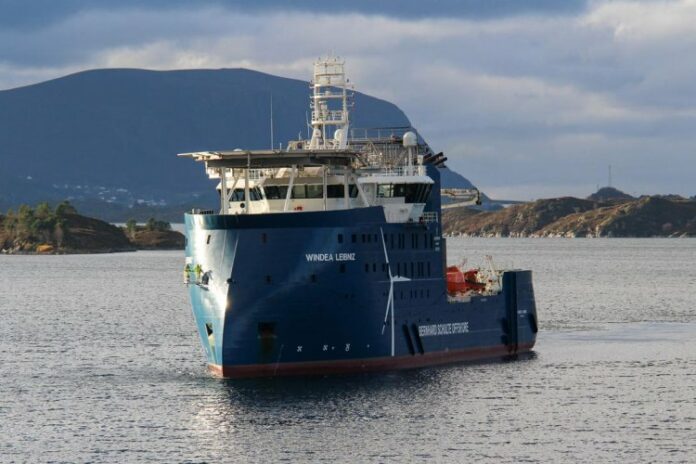
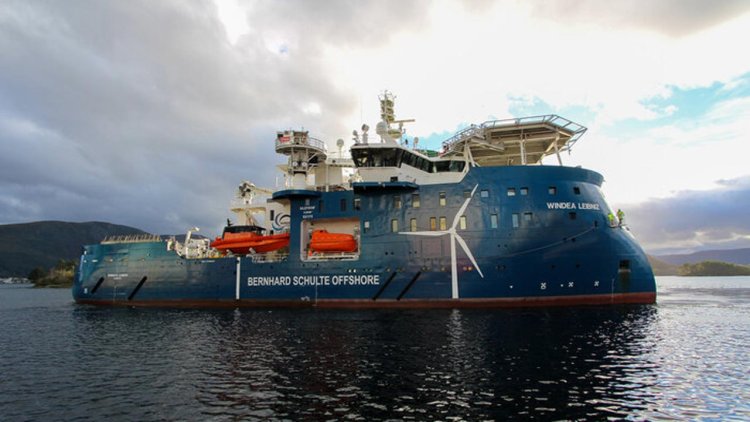
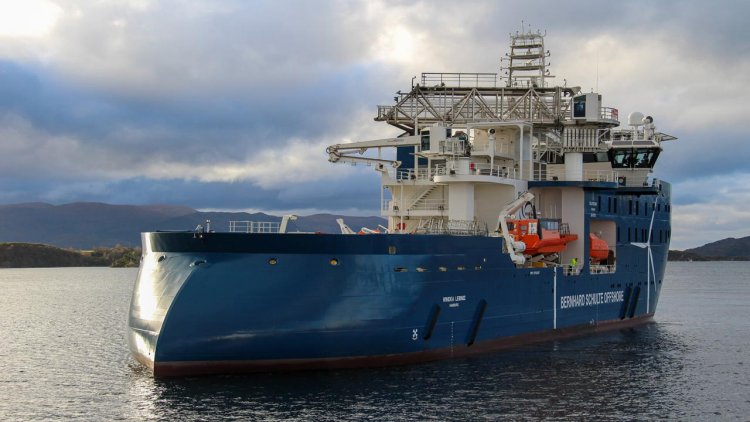
After installation of an adjustable pedestal for the gangway, and a 50 per cent increase of single cabins for charterers, the vessel will be ready for assignments in the Baltic Sea as well as the North Sea, and with a status as a CSOV.

Managing Director Matthias Müller at Bernhard Schulte Offshore says:

“The vessel was delivered by Ulstein Verft in 2017 and appears brand new as if delivered yesterday. The quality and finishing are outstanding. That is one of the reasons why we choose to do the upgrade at Ulstein Verft.”

“After the conversion, this will be one of very few vessels with 60 single cabins for charterers, compared to the current 40. This means that we can take more people in, enabling the vessel to operate as a Construction-SOV. Further, the installation of an adjustable pedestal for the Uptime gangway means that the vessel can cater all TP heights of the North Sea. Furthermore, it will be one of the few purpose-built SOVs which can work in the Baltic Sea which has lower TP heights.”

The Windea Leibniz has proven to be a very capable vessel from the start. 

Müller explains:

“She has successfully worked five years for Siemens Gamesa, performing efficient service at the Sandbank and DanTysk offshore wind farms as part of their Service Train Concept. After that, she did a summer campaign for GE at the Merkur Offshore wind farm. Lately, she has supported the installation of the infield cables for a wind farm under construction in the Baltic Sea.”

The Windea Leibniz arrived at Ulstein Verft on 31 October 2022 and the upgrade is scheduled for completion in February 2023. 

Müller ends:

“We have high expectations of this vessel, she is already a top-of-the-class vessel with a very low fuel oil consumption in DP mode. Now we intend to further strengthen her operational flexibility.”

ABB to maximize fuel efficiency on world’s first CO2 carriers

0

ABB has been selected to deliver the shaft generator system with permanent magnet technology for the first dedicated CO2-storage vessels ever to be built. The vessels will be constructed by the Chinese shipbuilder Dalian Shipbuilding Industry Company (DSIC).

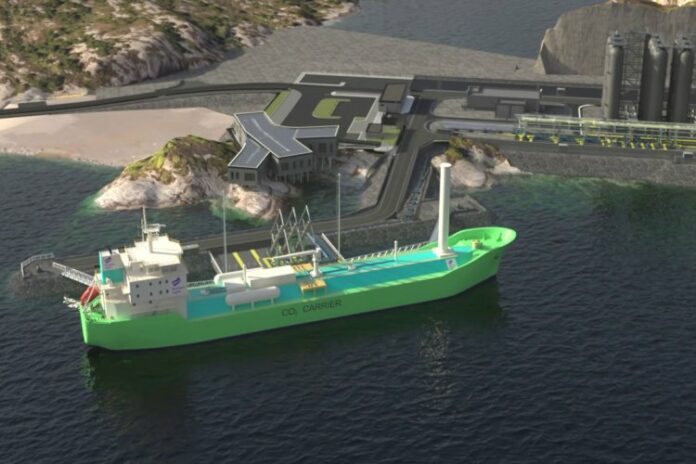
Due for delivery in 2024, the two vessels will support the Northern Lights carbon capture and storage (CCS) project by transporting greenhouse gas from industrial emitters to an onshore terminal in Øygarden, Norway. From there, the CO2 will be delivered by pipeline to dedicated reservoirs 2,600 meters under the seabed in the North Sea for permanent storage. Each of the 130-meter ships will be able to carry up to 7,500 cubic meters of liquefied CO2 in purpose-built pressurised cargo tanks.

ABB’s permanent magnet shaft generator system will increase the fuel efficiency of these vessels, reducing emissions as a result. Combining this technology with variable speed engines allows harvesting power for all onboard systems through the rotating force of the shaft, significantly improving performance compared to a traditional setup with fixed speed engines.

ABB announced in June 2022 that it will also deliver the main electrical, automation and safety systems for the Northern Lights project, enabling the remote operation of the terminal and ensuring that the facility runs at optimum efficiency. ABB’s permanent magnet shaft generator system further supports the project’s ethos by offering enhanced vessel fuel economy and reduced emissions.

“We look forward to collaborating with ABB on this landmark project, and ensuring that these innovative ships are also distinguished by operational excellence,” said a Dalian Shipbuilding Industry Company spokesperson. “As a longstanding partner of ABB, we are delighted to offer shipping companies the efficiencies, ease of installation and space savings enabled by permanent magnet shaft generator systems.”

Northern Lights, a joint venture between Equinor, Shell and Total, is the first CCS project to develop an open and flexible infrastructure to store CO2 from industries across Europe. The first phase of the project is due to be completed mid-2024 and will have the capacity to permanently store up to 1.5 million tons of CO2 per year, with the ambition to expand to over five million tons annually in a second phase.

CCS plays an important role in meeting global climate and energy goals. Today, CCS facilities around the world have the capacity to capture more than 40 million tons of CO2 from power and industrial facilities1. While the transport of trapped CO2 to permanent storage locations by pipeline is already deployed at large scale, it can present a challenge when the point of capture is further removed from a storage facility. Ships offers a flexible solution for long-distance CO2 transportation.

“Addressing the world’s energy challenges requires a constant push for innovation, and we are proud to make a difference with our leading technology. Transporting captured emissions by ships will be key to the success of the Northern Lights project, paving the way for further developments to help accelerate decarbonization in heavy industry sectors,” said Rune Braastad, Global Business Line Manager, Marine Systems at ABB Marine & Ports.

ABB’s permanent magnet shaft generator system is driven by the main engine, enabling increased efficiencies for vessels with fewer or smaller gensets and minimizing both capital and operating costs. In addition, ABB’s solution has a smaller weight and installation footprint compared to a conventional solution, as well as high reliability and redundancy to enable over 99 percent uptime, and built-in safety features to help protect crew and equipment. The system’s customizable design and interface make it suitable for any vessel type.

ABB’s scope of supply also covers full engineering and commissioning services. In addition, the vessels will have access to the ABB Ability™ Marine Remote Diagnostic System for continuous equipment monitoring, optimized machinery and planned-maintenance activities, and reduced maintenance costs.

World food supplies at risk as Russia withdraws from Black Sea deal

0

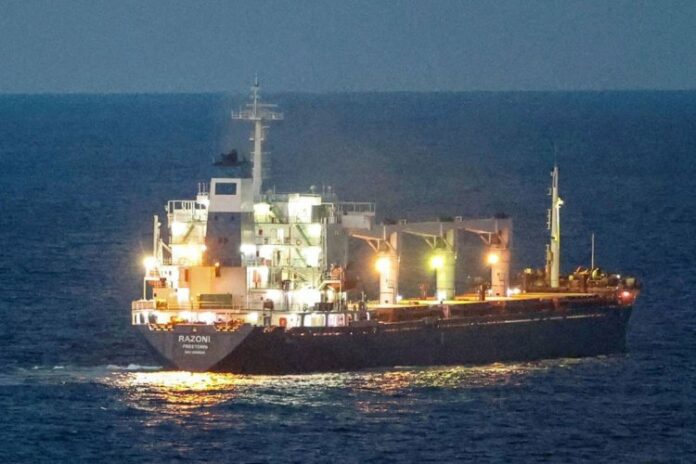
Hundreds of thousands of tonnes of wheat booked for delivery to Africa and the Middle East are at risk following Russia’s withdrawal, while Ukrainian corn exports to Europe will get knocked lower, two Singapore-based traders said.

Russia on Saturday suspended participation in the U.N. grain deal for an “indefinite term”, after what it said was a major Ukrainian drone attack on its Black Sea fleet in Crimea.

“If I have to replace a vessel which was due to come from Ukraine, what are the options? Not much really,” said one Singapore-based grains trader who supplies wheat to buyers in Asia and the Middle East.

Chicago wheat futures on Monday jumped more than 5% and corn rose over 2% from the fears over supplies.

Earlier this year global wheat prices jumped to an all-time high and corn hit a 10-year top as Russia’s invasion of Ukraine added fuel to a rally set off by adverse weather and COVID-19 supply disruptions.

No ships moved through the established maritime humanitarian corridor on Sunday. The United Nations, Turkey and Ukraine, however, pressed ahead to implement the Black Sea grain deal and agreed on a transit plan for Monday for 16 vessels to move forward, despite the withdrawal of Russia.

Source: Reuters

Navtor and Hoppe Marine join forces on big data drive

0

The partnership allows customers of the firms to feed critical real-time operational data into the NavFleet application, giving onshore teams complete awareness, understanding and control of their maritime assets.

It is, says Arild Risholm Sæther, CBDO NavFleet, NAVTOR:

“the key to better business decisions that impact on performance, profitability and sustainable fleet management.”

“HOPPE is an established industry giant in the field of sensor technology, control systems and the digitisation of fleets. By tapping into the wealth of data their advanced maritime systems harvest, NavFleet can deliver enhanced operational understanding and performance for users worldwide.

“It will empower onshore teams; delivering an ability to ‘have eyes on the ship’ like never before, with full operational insight and awareness. From there they have the means to use our powerful analytics platform – which offers dual validation to ensure the best quality data – to continually benchmark, manage and improve vessel, and business, performance. This kind of agreement is essential for an industry targeting greater sustainability, connecting the data with the means to act on it. ”

Alongside the performance monitoring, management and optimisation benefits, NavFleet will also radically reduce administration at sea and on shore, auto-populating reports, automating tasks, reducing human error, and simplifying compliance.

Hauke Hendricks, Head of Sales, HOPPE MARINE, sees real value for customers in aligning itself with the Norwegian-headquartered firm.

“NAVTOR, like us, is a trusted industry partner with an ambition of enabling efficient, environmentally friendly operations that help shipowners and operators tackle challenges today, and seize opportunity tomorrow. Data is central to that and our systems – of which we have more than 9000 installed worldwide – will deliver the foundation for improved ways of working and seamless asset understanding.”

Atlantic Shores Offshore Wind Project 1 selects Ramboll to design turbine foundations

0

Located approximately 10-20 miles off the coast of Atlantic City, New Jersey, the project will generate enough clean energy to power more than 700,000 homes and bring $848 million in guaranteed local economic benefits to the state.

This is the largest single project in New Jersey and third largest in the United States. Atlantic Shores is also making significant economic development investments, including a comprehensive job training program and an innovative 10 MW green hydrogen pilot.

Ramboll is a global leader in the design of offshore wind turbine foundations and will contribute its decades of experience and knowledge in the offshore wind industry to the design of wind turbine foundations for Atlantic Shores Project 1.

Rain Byars, Technical & Delivery Director for Atlantic Shores Offshore Wind, said:

“Atlantic Shores Project 1 is thrilled to partner with Ramboll on our foundation design and helping us set industry benchmarks for safety, reliability, and efficiency. Ramboll is the right choice to perform this critical work as Atlantic Shores literally lays the foundation for New Jersey’s clean energy transition. With our recent announcement of Vestas as preferred turbine supplier, adding the expertise and experience of Ramboll to our 1.5 GW offshore wind project is yet another vote of confidence in Atlantic Shores Project 1 and Atlantic Shores’ entire 5+ GW portfolio.”

Ramboll will provide a comprehensive design service to be led by a group of experts across the United States and Europe. This work will accelerate the deployment of offshore wind resources and support New Jersey’s thriving clean energy economy by creating jobs and local employment opportunities over the life of the project.

CMA CGM and YKIP sign reservation agreement for Honmokufuto D5 Terminal

0

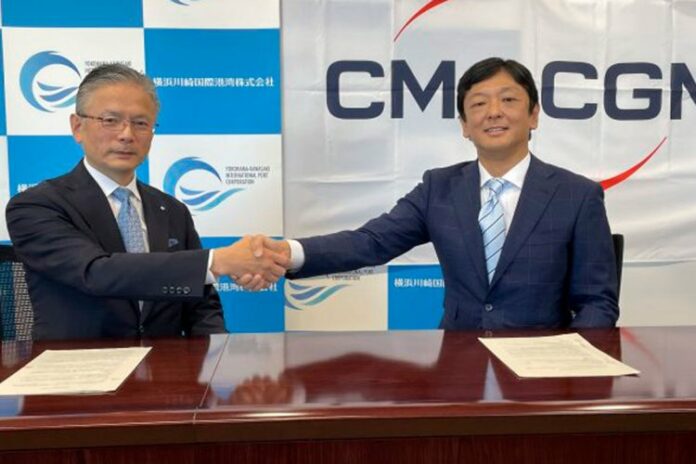
The move was announced by the Yokohama Kawasaki Port Corp (YKIP) saying that CMA CGM signed a reservation deal with CMA CGM to relocate from terminal D4 at the port to D5 by October 2026.

The new D5 terminal will have the capacity to accommodate vessels of up to 15,000TEU and its container yard capacity will be 20% increased. The terminal is also expected to have approximately 120% more container reefer plugs.

The D-5 container terminal is planned to have a quay with a length of 400 meters and a draft of 16 meters, allowing CMA CGM to have greater flexibility when handling large vessels of up to 15,000 TEU.

The eco-friendly container terminal will also be fitted with three gantry cranes capable of handling up to 20 rows of containers and up to nine containers high on deck, as well as eleven electric rubber tyred gantry cranes (RTGs). The terminal will also be equipped with cold-ironing facilities enabling CMA CGM’s vessels to plug into shore power to cut emissions while in port.

In addition, an LNG bunkering vessel is scheduled to go into service at Yokohama Port, enabling CMA CGM’s LNG-fuelled ships to refuel with LNG. CMA CGM currently has 32 LNG-powered vessels, which are e-methane-ready, and this number is set to reach 77 e-methane-ready vessels by 2026.

Hideki Uchida, president of CMA CGM Japan., said that switching to the D-5 container terminal will enable the company to strengthen its business and decarbonize its operations.

Shinya Hitomi, President and CEO of YKIP added that the redevelopment project of the D-5 Container Terminal was part of the company’s mid-term management policies and that it was working to open the D-5 container terminal as soon as possible.

Marlink signs a new agreement with Odfjell

0

Marlink has signed a new agreement with Odfjell Management AS, providing seamless access to global enterprise and crew applications across 52 vessels.

The contract includes 43 vessels managed by Odfjell Management Norway and a further nine operated by Thome Management Singapore. Marlink will deploy its hybrid connectivity solution to the fleet, including high throughput VSAT, L-band and 4G services using software-defined routing (SD-WAN) for seamless, intelligent data flow via Marlink’s onboard XChange router.

The fleet uses standard IT tools including Microsoft Office 365 in its daily operations with MS-Teams used for meetings and document sharing. Odfjell will also take advantage of the growing availability of 4G coverage from shore and will utilize Marlink’s global 4G service for business connectivity when in range, benefiting from low latency and high throughput speeds.

Odfjell’s decision to select Marlink was driven by the company’s digitalisation strategy, which involved moving IT services to the cloud, with the philosophy that all ships should have similar tools and services to its shore-based offices.

This hybrid approach is enabled by Marlink’s SD-WAN solution, which assigns key applications to different connectivity links, enabling software to be configured and delivered ‘as a service’ rather than as installed programs subject to performance and connectivity issues.

Odfjell Ship Management provides an integrated solution that promotes safe, reliable and efficient operations, including crewing, Quality, Health, Safety, Security, Environment (QHSSE) management, technology support and digital innovation, newbuilding, energy efficiency solutions and overall fleet management. Its vessels must comply not just with international regulations but with the industry’s environmental management systems such as Tanker Management Self-Assessment.

Gunnar Eide, Manager Digital Applications at Odfjell, says:

“Odfjell is continuously seeking new ways of using technology to develop digital solutions that fuel growth and value creation, while reducing cost and increasing operational efficiency and safety. The Marlink smart hybrid connectivity approach gives us better access to and response from the fleet’s ERP systems. This will greatly improve the communication between ship and shore, it will provide extra efficiency during port rotations, and increase the crew’s opportunities to keep in touch with their family and friends at home.”

Tore Morten Olsen, President, Maritime, Marlink, says:

“Shipowners, operators and managers are changing the conversation around what a technology partner like Marlink can bring to them that supports their business and meets long term customer needs. By combining the best in connectivity choices with new software tools, we can help them achieve their goals for voyage efficiency, remain compliant and retain the best people to support their mission.”